Category Archives: education

The Teacher Curse No One Wants to Talk About

I (Clare) read this really interesting article on Edutopia

I believe it has relevance for both teachers and teacher educators. Having to unpack and remember how we learned a topic/skill is hard. How do you break down the steps to learning so that our students can acquire the knowledge and skills.  This article has some highly useful examples and suggestions.  As a teacher educator I often make assumptions about my student teachers. They all have university degrees so they should be able to master the content easily. Wrong assumption! It takes time and good teaching. Here is the link to the full article. The Teacher Curse No One Wants to Talk About 


Knowledge is a curse.
 Knowing things isn’t bad itself, but it causes unhealthy assumptions — such as forgetting how hard it was to learn those things in the first place. It’s called the Curse of Knowledge.

In this post, we’ll identify how the Curse of Knowledge affects educators. Then we’ll outline seven ways to alleviate the curse. The ultimate goal is to improve instruction.

The Curse of Knowledge

The Curse of Knowledge has been variously described in articles by Chip and Dan Heath, Carmen Nobel, and Steven Pinker, and also in books such as The Sense of Style and Made to Stick. It has been applied to a variety of domains: child development, economics, and technology are just a few.

All of the resources describe the same phenomena — that a strong base of content knowledge makes us blind to the lengthy process of acquiring it. This curse has implications for all teachers:

  • We do not remember what it is like to not know what we are trying to teach.
  • We cannot relive the difficult and lengthy process that learning our content originally took.

As a result, we end up assuming that our lesson’s content is easy, clear, and straightforward. We assume that connections are apparent and will be made effortlessly. Assumptions are the root cause of poor instruction. And acknowledgment is the first step to recovery.

Lifting the Curse

Here are seven ways to make learning easier for your students.

1. Emotion

Barbara Fredrickson, a champion in the field of positive psychology, has studied the effects of mild positive emotions on desired cognitive traits like attentiveness and ability to creatively solve problems. In what she coined the broaden-and-build theory, Fredrickson found that pleasant and mild emotional arousal before experiencing content leads to greater retention. A quick joke or humorous movie can serve as the positive emotional stimulant. So learning is easier and the Curse of Knowledge is potentially circumnavigated when injecting a bit of emotion into your lesson.

2. Multi-Sensory Lessons

Though Howard Gardner’s influential work states that we each have a preferred learning modality, new research highlights the fact that effective lessons need not be unisensory (only kinesthetic, only auditory, etc.) but multi-sensory. Multi-sensory experiences activate and ignite more of the brain, leading to greater retention. So use a multisensory approach in your lessons to make learning easier.

3. Spacing

Blocked practice is ancient and is no longer considered best practice. An example of blocked practice is cramming. Though it feels like learning, blocked practice results in learning that is shallow, and the connections quickly fade. The preferred alternative is the opposite of blocked practice: spaced practice.

Exposing yourself to content and requiring your brain to recall previously learned concepts at spaced intervals (hours, days, weeks, or months) makes the content sticky and results in deeper retention with solid neural connections. As spaced practice is the way that you learned the content you teach, it makes sense to employ the same technique with your students. So thinking of your content as a cycle that is frequently revisited makes learning easier for your students while helping alleviate the curse.

For more information on spacing content, check out Make It Stick or 3 Things Experts Say Make A Perfect Study Session.

4. Narratives

Everyone loves a great story because our ancestral past was full of them. Stories were the dominant medium to transmit information. They rely on our innate narcissistic self to be effective learning tools — we enjoy stories because we immediately inject ourselves into the story, considering our own actions and behavior when placed in the situations being described. This is how we mentally make connections, and if students are listening to a story interlaced with content, they’re more likely to connect with the ideas. So connecting with content through a story is at the heart of learning and can help alleviate the stress associated with the Curse of Knowledge.

5. Analogies and Examples

An analogy is a comparison of different things that are governed by the same underlying principles. If understanding a process is what we’re after, looking at the result of the process proves informative. An analogy compares two unlike things by investigating a similar process that produces both. Said differently, an analogy highlights a connection, and forming connections is at the core of learning.

Whereas an analogy compares similar processes that result in different products, an example highlights different processes that result in similar products. Copious use of examples forces the brain to scan its knowledge inventory, making desirable connections as it scans. So learning is easier when analogies and examples are used to facilitate mental connections.

6. Novelty

New challenges ignite the risk-reward dopamine system in our brains. Novel activities are interesting because dopamine makes us feel accomplished after succeeding. Something that is novel is interesting, and something interesting is learned more easily because it is attended to. So emphasis on the new and exciting aspects of your content could trip the risk-reward system and facilitate learning.

7. Teach Facts

Conceptual knowledge in the form of facts is the scaffolding for the synthesis of new ideas. In other words, you cannot make new ideas with out having old ideas. Disseminating facts as the only means to educate your students is wrong and not encouraged. However, awareness that background knowledge is important to the creation of new ideas is vital for improving instruction. Prior knowledge acts as anchors for new incoming stimuli. When reflecting on the ability of analogies and examples to facilitate connections, it is important to remember that the connections need to be made to already existing knowledge. So providing your students with background knowledge is a prerequisite in forming connections and can make their learning easier.

Making It Easier

The Curse of Knowledge places all of our students at a disadvantage. As educators, it’s not enough to simply recognize that we are unable to remember the struggle of learning. We need to act. By incorporating facts, highlighting novelty, liberally utilizing examples and analogies, cycling our content, telling content-related stories, making our lesson multi-sensory, and harnessing the power of emotion, we can make learning easier for our students.


By incorporating facts, novelty, examples, analogies, and emotion; and cycling content, telling content-related stories, and making lessons multisensory, we can make learning easier for our students.

Source: The Teacher Curse No One Wants to Talk About

Is School Making Our Children Ill?

In the New York Times on January 3, I (Clive) came across a fascinating column by Vicki Abeles (Sunday Review section) about the negative impact current school “reforms” are having on children. According to her, they are undermining the health of students, both rich and poor and from kindergarten to high school.

Abeles has written a book (which I plan to get asap) aptly titled “Beyond Measure: Rescuing an Overscheduled, Overtested, Underestimated Generation,” and has produced documentaries “Race to Nowhere” (as distinct from Race to the Top) and “Beyond Measure.” But in the column her focus is on research conducted by Stuart Slavin at Irvington High School in Fremont, California, “a once-working-class city that is increasingly in Silicon Valley’s orbit.” In cooperation with the school, he anonymously surveyed two-thirds of Irvington’s 2,100 students and found that “54 percent of students showed moderate to severe symptoms of depression [and] 80 percent suffered moderate to severe symptoms of anxiety.” The school is trying to address the problem, for example by re-examining homework demands and counseling students on achieving a manageable course load.

Based on her own inquiries and reflections, Abeles attributes much of this anxiety and depression to the enormous pressure young people are under today to climb the ladder of schooling, with a view to getting into a good college and/or job. “Even those not bound for college are ground down by the constant measurement in schools under pressure to push through mountains of rote, impersonal material as early as preschool.” Apart from opposing this general approach to schooling, Abeles sees practical lessons that can be learned from Irvington’s approach. Toward the end of the article she suggests:

“Working together, parents, educators and students can make small but important changes: instituting everyday homework limits and weekend and holiday homework bans, adding advisory periods for student support, and providing students opportunities to show their growth in creative ways beyond conventional tests.”


5 More Years for Our Longitudinal Study of Teachers

In mid-December, I (Clive) received a nice holiday gift: word came that we had ethical approval from the University of Toronto to continue our longitudinal study of teachers for another 5 years (news of the extended funding by SSHRC came earlier). This is not a “high risk” study, but it is always a relief when the approval comes. We can now look forward to following the first cohort of 20 participants into their 16th year of teaching and the second cohort, also of 20, into their 13th year. This is a welcome development, as a longitudinal study obviously becomes more significant as the years pass.

Clive BeckThis study, co-directed by Clare Kosnik (who also directs her SSHRC study of 28 teacher educators) – and involving a wonderful team of researchers – began in 2004 with 22 new teachers; the second cohort of 23 was added in 2007. Over the years, 3 participants have left the study but are still teaching, while another 2 have left teaching and hence the study; so the total is now 40. This is an unusually high retention rate both for teaching and for a longitudinal study.

It is likely the high retention is due in part to the teachers’ participation in the study itself, which they often tell us is very beneficial to them; sometimes they say it is the most useful PD they experience all year! This is a limitation of the study, since it means they are a relatively motivated group (although it is not something we could have avoided). However, it is interesting that teachers would find it so helpful to have someone listen to their experiences and views about teaching for an hour of so once a year. Perhaps it is a form of “PD” that should be used more often, as an alternative to top-down lectures by “experts” on how to teach!


The Future of Education?

I (Cathy) recently read a blog posted on the The Huffington Post.  If you are not familiar with the Huffington Post, it is an American online news aggregator and blog, that has been public for 10 years.   In 2012, The Huffington Post became the first commercially run United States digital media enterprise to win a Pulitzer Prize.

I qualify the source only because I am always suspect of individuals or groups that make claims or forecasts about education, yet  know little about the systems. As I consider The Huffington Post a relatively reliable and informative source, I gave the claims made by , a guest blogger who was the Former President for the  Society for Quality Education a second look.

In this blog, Dare proposes that all education systems are cartels  (an association of manufacturers or suppliers with the purpose of maintaining prices at a high level and restricting competition) and these cartels will be disrupted by the world of technology.  Dare suggests:

A software company might put together a complete online curriculum, with built-in testing and reporting, that allows students to progress at their own speed using tablet computers. Already much of this software exists, although it is not yet well organized. Another (or the same) software company might make it possible for parents to access individuals, or groups of individuals, who are willing to coach a group of other people’s children, possibly in their own homes or in a community centre, for a reasonable fee. Part of the software company’s services could be to vet the coaches and ensure they pass health and safety checks.

Dare uses Uber and Airbnb as examples of disrupters to systems and claims educational systems are next.  He goes on to say:

In fact, disruption is already taking place in the post-secondary sector — see UoPeople, the world’s first non-profit, near tuition-free, accredited online university. Currently, students can earn an undergraduate degree in business administration and computer science for $4,000 US, and more programs are being added.

I am fascinated by this blog for a number of reasons.  First, Dare assumes that a young adults  seeking to educate themselves  are comparable to young child who are learning to read and learning to socialize. I have taught children to read (and socialize) and I simply do not  think a  computer can do it.  There is a lot more to education than just text book learning!  Secondly,  Dare implies in the blog that teachers are oblivious to the affordances of technology and reject it for fear it will disrupt the “cartel” in which they participate.   Every teacher I know (from K to HE) incorporates (in degrees) technology into the teaching and learning in their classroom.  They are also aware that students can go online and teach themselves many things. They even encourage it.  The Khan Academy was designed for such learning and is largely responsible for the premise of flipped classrooms which are very popular right now  in Canadian colleges.  I do not think technology will disrupt the educational system.  I think it will just continue to enhance both teaching and learning. Technology and education will evolve together.

Lastly, Dare is completely oblivious to the most significant aspect of education – the relationship.  Countless studies have suggested a caring, attentive teacher can do more for a student than any other factor. Personally, I just can’t see technology completely replacing a good teacher, especially in the education of the young. People simply need people.

Thoughts?

http://www.huffingtonpost.ca/malkin-dare/ontario-education-future_b_8916284.html

Supporting Students With Autism Spectrum Disorder

In my (Clare) course on Current Issues in Teacher Education one of the Image_Karastudents, Kara Dymond, did her final project on autism. She is a member of the Autism Team Program to Assist Social Thinking in the Toronto Catholic District School Board. I learned so much about autism in particular how to help children that I asked Kara if I could post some of suggestions on our blog. I know that teachers would find them useful and teacher educators may want to share them with their student teachers. Thank you Kara for letting me share your work with the wider education community.

An Autism Spectrum Disorder (Autism/ASD) is a complex neurological condition which has implications for many aspects of functioning, including learning. The education system needs to be increasingly prepared to meet the diverse needs of these students, as Autism is the fastest-growing developmental disability in the United States (Safran & Safran, 2001; Sansosti, 2010). Last year, the US Centers for Disease Control and Prevention reported that, as of 2010, rates of ASD were 1 in 68 children. Only ten years before, the prevalence was reported as 1 in 150 children. In this paper, rates from the US are reported, as Canada does not have a comparable federal ASD surveillance system at this time, though one is in development (Health Canada, 2012).

HOW TEACHERS CAN SUPPORT LEARNING IN THE CLASSROOM (for high functioning autistic students)

Establish a Rapport

When a teacher has a positive relationship with a child with HFA, it decreases the child’s anxiety and rigidity. It also increases their receptivity to feedback and their willingness to try what is being asked. This is the most important strategy to employ when working with a student with HFA. Some methods to improve your relationship include:

  • Ask them questions about and listen to them talk about their interests
  • Include their interests in word problems, tasks, and books available in the room
  • Have them present as an expert to the class on their interests
  • Reinforce the positive behaviours you see with praise and rewards when possible
  • Use humour with them (but avoid or explain sarcasm, which may be confusing)

Understand Their Need for Safety

  • Make things predictable by having a posted schedule and routines that are consistent
  • When changes happen, explain why they are happening and what is expected, as early in advance as possible
  • Follow up challenging activities with something calming for that student
  • Make your expectations for work and behaviour clear
  • Speak in a calm tone of voice and be consistent with what you say
  • Use clear language or explain language that is complicated or idiomatic

Manage the Environment

  • Help the child to know what they can do if they need a break (e.g. a safe spot to go to for a certain length of time, break options such as getting a drink, pacing in the back of the class, etc.) and what your expectations are regarding when and for how long they can take a break
  • Offer them a quiet place to work, such as a desk carrel, if needed
  • Start the day with a task they like to decrease any anxiety upon arrival, if possible
  • Seat them in an area facing a section of the class with fewer visuals to decrease distraction
  • Seat them with supportive classmates
  • Pay attention to sensory stimuli that distract or agitate them and do what you can to minimize these. Create a plan with the student on what to do if there is a factor (e.g. heat) that you cannot control (e.g. they have permission to go to the bathroom and splash cool water on their face at any point, and they can sit near a window)

See from Their Perspective

  • Monitor their understanding of different situations and relationships
  • When you notice a behaviour or thinking pattern that is different from same-age peers, consider its long-term impact and what skills need to be taught instead
  • Have private check-ins with the child to discuss misunderstandings and help them to see the perspective of others and how their choices can affect how others feel
  • Explain things logically
  • Include them in problem-solving and making a plan for how to cope when they are stressed
  • Recognize that when they are stressed, you will have to reduce your expectations

Be Specific

  • Explain logically and clearly what is expected or not expected
  • Give genuine, specific praise that lets them know what you liked about what they did (they may not know what you are referring to if you simply tell them “good job”. Instead say, “I like how you raised your hand – good job!”)
  • Give specific constructive feedback (e.g. “Please stop tapping your pencil. It is distracting.”) so they know what to do and why
  • If you want to see a skill again, remind them to do it again, before the lesson or activity when they are expected to exhibit the skill

Explicitly Teach Their Areas of Need

  • Point out the hidden curriculum when you notice they do not know it.
  • Consider teaching them about the hidden curriculum of tests. This includes what concepts are most important; how to tell what questions require a more in-depth answer (e.g. how much space is there to write in and how many points is the answer worth); how to determine what a question is really asking (e.g. short-answer questions beginning with “What is …” often mean “Tell me everything you know about…”)
  • Draw their attention to intentions and feelings of others – both students and characters in books. (e.g. “How does that character feel when…” and “how do you know?”)

Structure Opportunities for Interaction

  • Help send them out to recess with a plan of what to do and who to play with
  • Engage peers to invite them to talk or play a game they like at certain recesses
  • Teach recess games at gym time so they know the rules and can practice
  • For longer recesses, consider having them be office monitors or library assistants with other peers
  • Highlight their strengths in front of peers and in group projects

Re-Conceptualize Challenging Behaviours

  • Try to understand why a child might be feeling overwhelmed
  • Remember that behaviours signal a lack of skills and can improve with teaching
  • Prevention is key. Recognize you may have to change your approach or things in the environment to set the child up for success next time
  • Anxiety is like a teeter-totter. Your reaction can either bring them gently down or send them flying into a meltdown or complete withdrawal
  • Know your student. Learn their body language so you know when they are in the early stages of frustration and you can prompt them to take a break or reduce task demands
  • Always de-brief after a challenging moment, once the child is calm (this may be the next day). Find out what was upsetting them – they may share important insights that can help you create a plan for next time
  • Stop talking. Children with HFA cannot process language when they are upset

Teach Them Organizational Skills

  • Provide time each day or week to clean their desk and describe your expectations
  • If packing up is problematic, have them pack up what is needed from the morning before lunch and what is needed from the afternoon at the end of the day
  • Instead of the agenda, create a daily homework checklist where subjects are prewritten and materials needed for home can be circled. The only writing needed will be page numbers and questions required
  • Instead of numerous duotangs and notebooks, provide students with a binder for all subjects, divided by subject, and with pockets for loose sheets to be filed later. This may improve students’ ability to locate what is needed and to be ready for each lesson
  • Take and print small photos of subject materials (e.g. textbooks, notebooks) and put them up on the board as a visual reference for what is needed for that subject

Increase Their Productivity & Output

  • Whenever possible, reduce the writing requirement as writing can be laborious for students with HFA. Use visual organizers, fill-in-the-blanks, true or false, or circle the correct answer
  • Task instructions should be given one by one, with exemplars if possible
  • For large tasks, give students with HFA broken-down components of a task to do one at a time. Sometimes too much work on one page can seem overwhelming
  • Change how work or tests look on the page by increasing the font, reducing the number of questions, and having more space on the page
  • Giving some options can help with open-ended tasks (but not too many options!)
  • Give time countdowns so students know when they are expected to transition to another task. This can be difficult for students with HFA
  • Give processing time. Ask a question once and wait. You may have to ask again in a different way. Too much talking might mean they have to re-start their thinking process all over again. (Too many prompts can also be frustrating for a child who is trying to process the first instruction you gave)
  • Consider alternative ways of expressing knowledge. Most students with HFA are visual thinkers, so can express their knowledge better in comic strips than orally or in writing
  • Consider allowing them to type
  • Consider a break schedule to increase motivation and productivity
  • Harness their interests, especially if they are going to elect to do them anyway. If it is a half-hour work period and you know they tend to only be productive for ten minutes and then get distracted by doodling or reading their favourite book, give them a special interest break when they are at their productivity limit. Pair it with praise and tell them they have earned five minutes of their interest for working so hard. Breaks help to free up working memory and re-focus the child, and giving them a special interest break (rather than taking it away) builds your relationship. After their time is up, ask them to get back to work
  • Consider providing breaks during tests. More time does not help without giving breaks to free up working memory
  • Implement a reward system if they are still struggling to meet your expectations. They may need motivation to attempt something that is very difficult for them (your school board’s Autism Support Team can help you to design a successful model)

Respect, Support, & Develop Their Independence

  • Give students help when they need it, but also give them time and space to try work on their own. Give an instruction and then circulate around the room, returning later to see what they can do independently
  • Gradually increase in your expectations for their independence
  • Reward trying to do something that is hard for them
  • Encourage them to take on positions of responsibility in the classroom and around the school (but do not surprise them with this – ask in advance what they would like to do from a list of options)

A New Book on Participatory Culture and Digital Technologies

pcul

I (Pooja) have long been interested in the notions of participatory culture. Often considered  the opposite of consumer culture, participatory culture is defined by Henry Jenkins (2009, p. 5-6) as a culture in which there are:

1. relatively low barriers to artistic expression and civic engagement

2. strong support for creating and sharing creations with others

3. some type of informal mentorship whereby what is known by the most experienced is passed along to novices

4. members who believe that their contributions matter

5. members who feel some degree of social connection with one another (at the least, they care what other people think about what they have created).

I was excited when I learned authors Henry Jenkins, Mizuko Ito, and danah boyd authored a new book titled: Participatory Culture in a Networked Era: A Conversation on Youth, Learning, Commerce, and Politics (2015). I have provided the blurb on  the back of the book for those potentially interested in learning more about participatory culture in the 21st century like I am:

In the last two decades, both the conception and the practice of participatory culture have been transformed by the new affordances enabled by digital, networked, and mobile technologies. This exciting new book explores that transformation by bringing together three leading figures in conversation. Jenkins, Ito and boyd examine the ways in which our personal and professional lives are shaped by experiences interacting with and around emerging media.

Stressing the social and cultural contexts of participation, the authors describe the process of diversification and mainstreaming that has transformed participatory culture. They advocate a move beyond individualized personal expression and argue for an ethos of “doing it together” in addition to “doing it yourself.”

Participatory Culture in a Networked Era will interest students and scholars of digital media and their impact on society and will engage readers in a broader dialogue and conversation about their own participatory practices in this digital age.


Current Issues in Teacher Education: A Video Series by Said Sidani

In my graduate course, Current Issues in Teacher Education, I (Clare) gave the students lots of choice for their final assignment. Said Sidani took an incredibly interesting approach – he created a series of videos. I was so impressed I asked him if I could post them on this blog. Some are specific to Ontario but the first one, perceptions of teacher education, was applicability beyond our context.

             For my culminating project, I wanted to examine asaid-image
few topics that stood out to me throughout our course. As a recent graduate from a teacher education program and a beginning teacher, I wanted to focus on themes that resonated with me and that I wanted to learn more about. Instead of writing an academic paper, I decided to use a video series to present my findings.

This video series is divided into 4 parts that focus on: 1) Perceptions of Teacher Education, 2) Occasional Teaching, 3) Hiring Regulations, & 4) Teacher Induction. Each video consists of a narrated Prezi that presents relevant literature related to the topic. I draw on course readings, research in the field, and personal experience.

My intended audience is teacher candidates, teacher educators, professors, students, and anyone interested in the teaching profession. Since there is a large number of stakeholders in education, I believe that almost any viewer will be able to take something away from watching. My goal is not to deter anyone from joining the teaching profession, but rather to inform them of some of the issues that exist and the work that needs to be done.

The position I present is that teacher education is in need of reform. Instead of deregulating teaching, we must focus our efforts on improving people’s perceptions of teacher education programs. Also, occasional teaching and hiring regulations in Ontario are part of a broken system. They discourage new people from entering the profession which in turn impacts the quality of education that students receive. Finally, teacher induction programs that promote mentorship are essential to a beginning teacher’s journey. However, when they are delivered through the use of a transmission model instead of a transformative model, they are not nearly as effective.

The videos are available on YouTube and can be accessed via these links. For the best viewing experience, the video quality should be set to 480p (this is usually automatic). Thanks for watching.

1) Perceptions of Teacher Education:
https://www.youtube.com/watch?v=wWMtBGAoeZQ

2) Occasional Teaching:
https://www.youtube.com/watch?v=45caUBGrqRw

3) Hiring Regulations:
https://www.youtube.com/watch?v=unzh1QiWnVg

4) Teacher Induction:
https://www.youtube.com/watch?v=tNxXqZSHGm8

This link will play all four videos in sequential order:
https://www.youtube.com/watch?v=S8SgF7ohrls&list=PLdOXV0MCo16GcNDd9DSy4DIuw_GgMAYWi

The Children’s Books That Took Our Breath Away in 2015 by Devon Corneal

I (Clare) was reading the Huffington Post education section and it listed some of the top books of 2015. I want to read them all! Here is the link: http://www.readbrightly.com/best-childrens-books-2015/?ref=72E6CF384C67

ImageHenkesWaiting

by Kevin Henkes

It seems funny to choose Kevin Henkes’s Waiting as the book that blew me away in 2015. Waiting is a quiet, gentle picture book about a group of toys on a windowsill looking at the window, each one waiting for something to happen. Henkes’s pastel illustrations and crystalline prose are enchanting. This is the perfect before-bedtime book. I can’t wait to read it to my 6-month-old niece.

Polar Bear’s Underwear

by Tupera Tupera

Image_PolarBearUnderwearPolar Bear’s Underwear shocked me by being a book about underwear I was actually willing to read to my children. It was so cute, clever, and fun without being crass or gross. I didn’t even know it was possible!

All the Lost Things

by Kelly Canby

A young girl follows her heart and changes the world she lives in. The gorgeous illustrations and hope-filled message are what make this one of my favorite books of 2015.

The Penderwicks in Spring

by Jeanne Birdsall

The Penderwicks in Spring is the fourth book in Jeanne Birdsall’s charming series about the adventures of four sisters. Nana gave my Penderwick-crazy 8-year-old a copy, and she promptly disappeared until she devoured the whole thing. My daughter bubbled over with desire to tell me what’s happening to all her favorite characters, and I shushed her right back, because I love them too, and I want my own turn to sit back and get my Penderwick fix.

·

Lockwood & Co.: The Hollow Boy

by Jonathan Stroud

Jonathan Stroud books make me happy. I hoard them like a miser, waiting, just waiting until I can share them with my daughter and slowly but surely blow her mind. Stroud’s best works fall into the category of “supernatural YA,” which might be one of the most over-saturated genres in literary history, but his stories are so good, his worldbuilding so confident, his characters so vivid that they stand above the rest. In Stroud’s latest series, we follow a group of pre-teen ghost hunters trying to make a difference in a spirit-plagued London and, with the newest volume, The Hollow Boy, I have become as invested in this story as I have been for any beloved TV series that I’ve ever binged on Netflix or Hulu. I can’t wait for the next one.

The Jumbies

by Tracey Baptiste

My daughter was thrilled when Baptiste held a reading at a local bookshop — meeting a Black woman writer reminds her that she has the power to tell the stories she wants to tell. Then she heard an excerpt from this book about a courageous girl who takes on supernatural forces with flair, and that was it! She dove into the story (to the point where I was saying that “Put that book down NOW and eat/do your homework/go to bed” type of thing I’d thought I’d never say) and devoured it in what seemed like minutes. Then she hounded me to read it too — she wanted to talk about the chills and magic, yes, but was especially intrigued by the nuanced story of power, culture, and ownership that Baptiste tells. I loved that my daughter wanted to talk about the book with me; I picked it up, and yep, could NOT put it down. Left me breathless for sure, and thinking … and left both of us absolutely itching for a sequel!

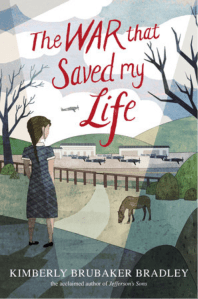
The War That Saved My Life

by Kimberly Brubaker Bradley

Image_WarThatSavedThis wonderful historical fiction novel is a page-turning adventure set in England in World War II. The story centers on Ada, a 10-year-old girl born with a clubfoot who has been hidden away in a cupboard her whole life and led to believe she is worthless. When she escapes her apartment in London with other children being sent to the countryside due to the impending attacks from Hitler’s German army, a new world unfolds to her. There are so many important themes that come alive in this story — from what’s it like to live with a disability to what defines a family to the impact of war on our society. The many layers of this story, coupled with the intriguing characters and perfectly paced plot, took my breath away. I’ve been recommending this book to mature fourth graders and up who loved Number the Stars or other historical adventure stories.

Every Last Word

by Tamara Ireland Stone

Every Last Word by Tamara Ireland Stone is a beautifully written story of a girl struggling to find herself and her own voice (literally and figuratively) while working through her OCD. Stone’s empathy toward the subject of OCD comes shining through in this gem of contemporary young adult literature.

Orbiting Jupiter

by Gary D. Schmidt

Orbiting Jupiter by Gary D. Schmidt is a heartbreaking story that still lingers with me months after reading it. It made me weep. It made me think. It made me see love in a new way. It also reminded me that each of us have a story, even a 14-year-old foster boy on a dairy farm, desperate to see the child he fathered by the only love he ever knew, a love that is now gone.

The Thing About Jellyfish

by Ali Benjamin

And me? I’m having a hard time choosing between The Thing About Jellyfish and The Marvels and since I get to compile the list this year, I don’t have to! The Thing About Jellyfish is a rare middle grade novel that realistically captures the emotional conflict of late elementary school and provides readers with a protagonist they can really relate to. Handling death and survivor’s guilt in a developmentally appropriate and compassionate way is no small feat, but Ali Benjamin manages it beautifully.

The Marvels

by Brian Selznick

In The Marvels, Brian Selznick continues to highlight his talents as both an author and an illustrator in a tale that covers generations of a single family and their adventures on sea and on the stage. The illustrations alone are extraordinary, but the story is equally engaging.


Ho Ho Ho!

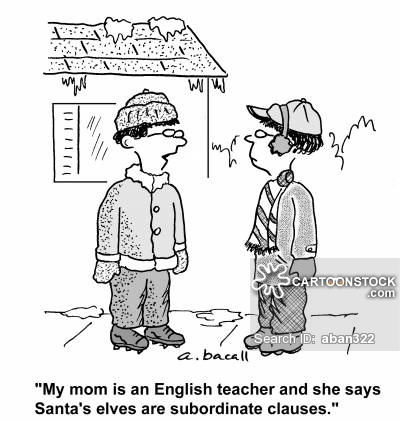
"My mom is an English teacher and she says Santa's elves are subordinate clauses."
“My mom is an English teacher and she says Santa’s elves are subordinate clauses.”


Wishing you and yours a very merry season filled with laughter!                                                   Cathy

Neil Gaiman: Why our future depends on libraries, reading and daydreaming

I (Clare) read this amazing article from Neil Gaiman. Here is the link to the article: www.theguardian.com/books/2013/oct/15/neil-gaiman-future-libraries-reading-daydreaming It is a must read for all those interested in literacy — including policy-makers!

Image_Neil-Gaiman-013It’s important for people to tell you what side they are on and why, and whether they might be biased. A declaration of members’ interests, of a sort. So, I am going to be talking to you about reading. I’m going to tell you that libraries are important. I’m going to suggest that reading fiction, that reading for pleasure, is one of the most important things one can do. I’m going to make an impassioned plea for people to understand what libraries and librarians are, and to preserve both of these things.

And I am biased, obviously and enormously: I’m an author, often an author of fiction. I write for children and for adults. For about 30 years I have been earning my living though my words, mostly by making things up and writing them down. It is obviously in my interest for people to read, for them to read fiction, for libraries and librarians to exist and help foster a love of reading and places in which reading can occur.

So I’m biased as a writer. But I am much, much more biased as a reader. And I am even more biased as a British citizen.

And I’m here giving this talk tonight, under the auspices of the Reading Agency: a charity whose mission is to give everyone an equal chance in life by helping people become confident and enthusiastic readers. Which supports literacy programs, and libraries and individuals and nakedly and wantonly encourages the act of reading. Because, they tell us, everything changes when we read.

And it’s that change, and that act of reading that I’m here to talk about tonight. I want to talk about what reading does. What it’s good for.

I was once in New York, and I listened to a talk about the building of private prisons – a huge growth industry in America. The prison industry needs to plan its future growth – how many cells are they going to need? How many prisoners are there going to be, 15 years from now? And they found they could predict it very easily, using a pretty simple algorithm, based on asking what percentage of 10 and 11-year-olds couldn’t read. And certainly couldn’t read for pleasure.

It’s not one to one: you can’t say that a literate society has no criminality. But there are very real correlations.

And I think some of those correlations, the simplest, come from something very simple. Literate people read fiction.

Fiction has two uses. Firstly, it’s a gateway drug to reading. The drive to know what happens next, to want to turn the page, the need to keep going, even if it’s hard, because someone’s in trouble and you have to know how it’s all going to end … that’s a very real drive. And it forces you to learn new words, to think new thoughts, to keep going. To discover that reading per se is pleasurable. Once you learn that, you’re on the road to reading everything. And reading is key. There were noises made briefly, a few years ago, about the idea that we were living in a post-literate world, in which the ability to make sense out of written words was somehow redundant, but those days are gone: words are more important than they ever were: we navigate the world with words, and as the world slips onto the web, we need to follow, to communicate and to comprehend what we are reading. People who cannot understand each other cannot exchange ideas, cannot communicate, and translation programs only go so far.
Image_A-boy-reading-in-his-scho-004The simplest way to make sure that we raise literate children is to teach them to read, and to show them that reading is a pleasurable activity. And that means, at its simplest, finding books that they enjoy, giving them access to those books, and letting them read them.

I don’t think there is such a thing as a bad book for children. Every now and again it becomes fashionable among some adults to point at a subset of children’s books, a genre, perhaps, or an author, and to declare them bad books, books that children should be stopped from reading. I’ve seen it happen over and over; Enid Blyton was declared a bad author, so was RL Stine, so were dozens of others. Comics have been decried as fostering illiteracy.

No such thing as a bad writer…
It’s tosh. It’s snobbery and it’s foolishness. There are no bad authors for children, that children like and want to read and seek out, because every child is different. They can find the stories they need to, and they bring themselves to stories. A hackneyed, worn-out idea isn’t hackneyed and worn out to them. This is the first time the child has encountered it. Do not discourage children from reading because you feel they are reading the wrong thing. Fiction you do not like is a route to other books you may prefer. And not everyone has the same taste as you.

Well-meaning adults can easily destroy a child’s love of reading: stop them reading what they enjoy, or give them worthy-but-dull books that you like, the 21st-century equivalents of Victorian “improving” literature. You’ll wind up with a generation convinced that reading is uncool and worse, unpleasant.

We need our children to get onto the reading ladder: anything that they enjoy reading will move them up, rung by rung, into literacy. (Also, do not do what this author did when his 11-year-old daughter was into RL Stine, which is to go and get a copy of Stephen King’s Carrie, saying if you liked those you’ll love this! Holly read nothing but safe stories of settlers on prairies for the rest of her teenage years, and still glares at me when Stephen King’s name is mentioned.)

And the second thing fiction does is to build empathy. When you watch TV or see a film, you are looking at things happening to other people. Prose fiction is something you build up from 26 letters and a handful of punctuation marks, and you, and you alone, using your imagination, create a world and people it and look out through other eyes. You get to feel things, visit places and worlds you would never otherwise know. You learn that everyone else out there is a me, as well. You’re being someone else, and when you return to your own world, you’re going to be slightly changed.

Empathy is a tool for building people into groups, for allowing us to function as more than self-obsessed individuals.

You’re also finding out something as you read vitally important for making your way in the world. And it’s this:

The world doesn’t have to be like this. Things can be different.

I was in China in 2007, at the first party-approved science fiction and fantasy convention in Chinese history. And at one point I took a top official aside and asked him Why? SF had been disapproved of for a long time. What had changed?

It’s simple, he told me. The Chinese were brilliant at making things if other people brought them the plans. But they did not innovate and they did not invent. They did not imagine. So they sent a delegation to the US, to Apple, to Microsoft, to Google, and they asked the people there who were inventing the future about themselves. And they found that all of them had read science fiction when they were boys or girls.

Fiction can show you a different world. It can take you somewhere you’ve never been. Once you’ve visited other worlds, like those who ate fairy fruit, you can never be entirely content with the world that you grew up in. Discontent is a good thing: discontented people can modify and improve their worlds, leave them better, leave them different.

And while we’re on the subject, I’d like to say a few words about escapism. I hear the term bandied about as if it’s a bad thing. As if “escapist” fiction is a cheap opiate used by the muddled and the foolish and the deluded, and the only fiction that is worthy, for adults or for children, is mimetic fiction, mirroring the worst of the world the reader finds herself in.

If you were trapped in an impossible situation, in an unpleasant place, with people who meant you ill, and someone offered you a temporary escape, why wouldn’t you take it? And escapist fiction is just that: fiction that opens a door, shows the sunlight outside, gives you a place to go where you are in control, are with people you want to be with(and books are real places, make no mistake about that); and more importantly, during your escape, books can also give you knowledge about the world and your predicament, give you weapons, give you armour: real things you can take back into your prison. Skills and knowledge and tools you can use to escape for real.

As JRR Tolkien reminded us, the only people who inveigh against escape are jailers.

Tolkien’s illustration of Bilbo’s home, Bag End. Photograph: HarperCollins

Another way to destroy a child’s love of reading, of course, is to make sure there are no books of any kind around. And to give them nowhere to read those books. I was lucky. I had an excellent local library growing up. I had the kind of parents who could be persuaded to drop me off in the library on their way to work in summer holidays, and the kind of librarians who did not mind a small, unaccompanied boy heading back into the children’s library every morning and working his way through the card catalogue, looking for books with ghosts or magic or rockets in them, looking for vampires or detectives or witches or wonders. And when I had finished reading the children’s’ library I began on the adult books.


They were good librarians. They liked books and they liked the books being read. They taught me how to order books from other libraries on inter-library loans. They had no snobbery about anything I read. They just seemed to like that there was this wide-eyed little boy who loved to read, and would talk to me about the books I was reading, they would find me other books in a series, they would help. They treated me as another reader – nothing less or more – which meant they treated me with respect. I was not used to being treated with respect as an eight-year-old.

But libraries are about freedom. Freedom to read, freedom of ideas, freedom of communication. They are about education (which is not a process that finishes the day we leave school or university), about entertainment, about making safe spaces, and about access to information.

I worry that here in the 21st century people misunderstand what libraries are and the purpose of them. If you perceive a library as a shelf of books, it may seem antiquated or outdated in a world in which most, but not all, books in print exist digitally. But that is to miss the point fundamentally.

I think it has to do with nature of information. Information has value, and the right information has enormous value. For all of human history, we have lived in a time of information scarcity, and having the needed information was always important, and always worth something: when to plant crops, where to find things, maps and histories and stories – they were always good for a meal and company. Information was a valuable thing, and those who had it or could obtain it could charge for that service.

In the last few years, we’ve moved from an information-scarce economy to one driven by an information glut. According to Eric Schmidt of Google, every two days now the human race creates as much information as we did from the dawn of civilisation until 2003. That’s about five exobytes of data a day, for those of you keeping score. The challenge becomes, not finding that scarce plant growing in the desert, but finding a specific plant growing in a jungle. We are going to need help navigating that information to find the thing we actually need.

Libraries are places that people go to for information. Books are only the tip of the information iceberg: they are there, and libraries can provide you freely and legally with books. More children are borrowing books from libraries than ever before – books of all kinds: paper and digital and audio. But libraries are also, for example, places that people, who may not have computers, who may not have internet connections, can go online without paying anything: hugely important when the way you find out about jobs, apply for jobs or apply for benefits is increasingly migrating exclusively online. Librarians can help these people navigate that world.

I do not believe that all books will or should migrate onto screens: as Douglas Adams once pointed out to me, more than 20 years before the Kindle turned up, a physical book is like a shark. Sharks are old: there were sharks in the ocean before the dinosaurs. And the reason there are still sharks around is that sharks are better at being sharks than anything else is. Physical books are tough, hard to destroy, bath-resistant, solar-operated, feel good in your hand: they are good at being books, and there will always be a place for them. They belong in libraries, just as libraries have already become places you can go to get access to ebooks, and audiobooks and DVDs and web content.

A library is a place that is a repository of information and gives every citizen equal access to it. That includes health information. And mental health information. It’s a community space. It’s a place of safety, a haven from the world. It’s a place with librarians in it. What the libraries of the future will be like is something we should be imagining now.

Literacy is more important than ever it was, in this world of text and email, a world of written information. We need to read and write, we need global citizens who can read comfortably, comprehend what they are reading, understand nuance, and make themselves understood.

Libraries really are the gates to the future. So it is unfortunate that, round the world, we observe local authorities seizing the opportunity to close libraries as an easy way to save money, without realising that they are stealing from the future to pay for today. They are closing the gates that should be open.

According to a recent study by the Organisation for Economic Cooperation and Development, England is the “only country where the oldest age group has higher proficiency in both literacy and numeracy than the youngest group, after other factors, such as gender, socio-economic backgrounds and type of occupations are taken into account”.

Or to put it another way, our children and our grandchildren are less literate and less numerate than we are. They are less able to navigate the world, to understand it to solve problems. They can be more easily lied to and misled, will be less able to change the world in which they find themselves, be less employable. All of these things. And as a country, England will fall behind other developed nations because it will lack a skilled workforce.

Books are the way that we communicate with the dead. The way that we learn lessons from those who are no longer with us, that humanity has built on itself, progressed, made knowledge incremental rather than something that has to be relearned, over and over. There are tales that are older than most countries, tales that have long outlasted the cultures and the buildings in which they were first told.

I think we have responsibilities to the future. Responsibilities and obligations to children, to the adults those children will become, to the world they will find themselves inhabiting. All of us – as readers, as writers, as citizens – have obligations. I thought I’d try and spell out some of these obligations here.

I believe we have an obligation to read for pleasure, in private and in public places. If we read for pleasure, if others see us reading, then we learn, we exercise our imaginations. We show others that reading is a good thing.

We have an obligation to support libraries. To use libraries, to encourage others to use libraries, to protest the closure of libraries. If you do not value libraries then you do not value information or culture or wisdom. You are silencing the voices of the past and you are damaging the future.

We have an obligation to read aloud to our children. To read them things they enjoy. To read to them stories we are already tired of. To do the voices, to make it interesting, and not to stop reading to them just because they learn to read to themselves. Use reading-aloud time as bonding time, as time when no phones are being checked, when the distractions of the world are put aside.

We have an obligation to use the language. To push ourselves: to find out what words mean and how to deploy them, to communicate clearly, to say what we mean. We must not to attempt to freeze language, or to pretend it is a dead thing that must be revered, but we should use it as a living thing, that flows, that borrows words, that allows meanings and pronunciations to change with time.

We writers – and especially writers for children, but all writers – have an obligation to our readers: it’s the obligation to write true things, especially important when we are creating tales of people who do not exist in places that never were – to understand that truth is not in what happens but what it tells us about who we are. Fiction is the lie that tells the truth, after all. We have an obligation not to bore our readers, but to make them need to turn the pages. One of the best cures for a reluctant reader, after all, is a tale they cannot stop themselves from reading. And while we must tell our readers true things and give them weapons and give them armour and pass on whatever wisdom we have gleaned from our short stay on this green world, we have an obligation not to preach, not to lecture, not to force predigested morals and messages down our readers’ throats like adult birds feeding their babies pre-masticated maggots; and we have an obligation never, ever, under any circumstances, to write anything for children that we would not want to read ourselves.

We have an obligation to understand and to acknowledge that as writers for children we are doing important work, because if we mess it up and write dull books that turn children away from reading and from books, we ‘ve lessened our own future and diminished theirs.

We all – adults and children, writers and readers – have an obligation to daydream. We have an obligation to imagine. It is easy to pretend that nobody can change anything, that we are in a world in which society is huge and the individual is less than nothing: an atom in a wall, a grain of rice in a rice field. But the truth is, individuals change their world over and over, individuals make the future, and they do it by imagining that things can be different.

Look around you: I mean it. Pause, for a moment and look around the room that you are in. I’m going to point out something so obvious that it tends to be forgotten. It’s this: that everything you can see, including the walls, was, at some point, imagined. Someone decided it was easier to sit on a chair than on the ground and imagined the chair. Someone had to imagine a way that I could talk to you in London right now without us all getting rained on.This room and the things in it, and all the other things in this building, this city, exist because, over and over and over, people imagined things.

We have an obligation to make things beautiful. Not to leave the world uglier than we found it, not to empty the oceans, not to leave our problems for the next generation. We have an obligation to clean up after ourselves, and not leave our children with a world we’ve shortsightedly messed up, shortchanged, and crippled.

We have an obligation to tell our politicians what we want, to vote against politicians of whatever party who do not understand the value of reading in creating worthwhile citizens, who do not want to act to preserve and protect knowledge and encourage literacy. This is not a matter of party politics. This is a matter of common humanity.

Albert Einstein was asked once how we could make our children intelligent. His reply was both simple and wise. “If you want your children to be intelligent,” he said, “read them fairy tales. If you want them to be more intelligent, read them more fairy tales.” He understood the value of reading, and of imagining. I hope we can give our children a world in which they will read, and be read to, and imagine, and understand.

  • This is an edited version of Neil Gaiman’s lecture for the Reading Agency, delivered on Monday October 14 at the Barbican in London. The Reading Agency’s annual lecture series was initiated in 2012 as a platform for leading writers and thinkers to share original, challenging ideas about reading and libraries.