Category Archives: Literacy teacher educators

The Canadian Society for the Study of Education

conference

This week The Canadian Society for  the Study of Education (CSSE) is being held in St. Catharines, Ontario at Brock University.

The team, Clare, Clive, Lydia, Cathy, Pooja, and me (Yiola) will be sharing a number of presentations over the course of the week. Some of these presentations include the following titles:

Teachers’ Professional Identity Development Over Their First 8 Years, With Implications for Preservice and Inservice Teacher Education

Teachers’ Ongoing Learning over Their First 8 Years, with Implications for In-Service Professional Education

Exploring literacy teacher educators’ negotiations of a critical stance in pre-service teacher education

Teachers’ critical literacy practices in the early years classroom

Instructional Practices of Critical Literacy within an Inquiry-Based Learning Environment

Presenting at conferences is a great way to share research with the community.  For more information about the CSSE conference click here:  

Conference


Wonder is Wonderful

I (Cathy) download audio books from audible.com onto my Ipod nano and listen while I walk, garden or cook. I just finished the book Wonder by R. J. Palacio. It is a very touching juvenile fiction novel about a ten year old boy with severe syndromes that dramatically alter his facial features. The story takes us on his journey surviving his first year in a public school as a grade five student. I cried a lot. This wasn’t so bad when I was in the kitchen cooking or even in my own back yard planting and digging. But walking?   Hmmm. People notice. Oh well. When people asked me if I was all right, I just said, “It’s the power of great literature,” smiled and thanked them for their concern. This is a must read my friends, but keep the Kleenex handy and warn the family in case they ‘wonder’ about you!

wonder

Multifaceted Role of the Professor: Conducting Research Includes ….

As mentioned in a previous blog post, Clive and I (Clare) are interviewing teachers who are part of our longitudinal study of teachers. Many of our teachers have had life-changing events – including becoming a parent. The teacher we were interviewing in northeast US this past week is a new Mom and is home on maternity leave. We did a division of labour: while I was interviewing the teacher, Clive babysat the new baby who is four months old.  The question is: who had more fun? Me doing the interview with an amazing teacher or Clive babysitting an adorable youngster? It was a toss up because we both had a great time. So for budding researchers …. Do not be surprised that your role includes some unexpected duties (which no one told you about in grad school) – such as babysitting.
On a more serious note, a number of teachers in our study over the last 7-10 years have become parents (including adopting a child). It is interesting to see how they change once they become moms or dads:

  • Juggling being a new parent and a teacher has led to changes in practices and views. All have found the dual role draining.
  • New parents definitely have to shorten their work days! Working morning, noon, and night and all weekend which many had done as new teachers was no longer feasible.
  • They developed a number of strategies to streamline planning and marking.
  • When we asked how their views and/or values changed now that they are a parent many have commented they have become more compassionate. They appreciate how much parents have to trust teachers to care for their child (as they would) and how vulnerable children are. Their views towards parents in many cases have becoming more understanding while with the students they say are more flexible.
  • Interestingly, a number have commented that now as a parent, they are not as focused on covering the curriculum (standards or expectations); rather, they have become more focused on the individual child to ensure he/she is happy and thriving.
  • Some have said they have become less critical of themselves. They can only do so much and do not feel so guilty putting boundaries around their personal life.

There is so much more to being a teacher than covering the curriculum. There is so much more to being a researcher than just working with the data. You have to be flexible and be willing to assume some untraditional duties – just ask Clive.

Study of Literacy Teacher Educators: Remarkable Individuals

New York City BuildingsWe (Clive and Clare) are in NYC interviewing literacy/English teacher educators who are part of our large-scale study which includes participants from four countries: Canada, US, UK, and Australia. To date, we have conducted two interviews and are now starting the third round of interviews. The first interview focused on their backgrounds and interests; the second on their pedagogy; and the third on their use of digital technology and future plans. (For the interview questions click on the tab About Our Research then on the drop down menu, click on the tab for Instruments.) To say this research has been fascinating is an understatement! I feel I have gotten to know 28 outstanding teacher educators both personally and professionally. I have learned so much through this research:

  • their approach to literacy teacher education is thoughtful and complex (e.g., consistently they believe you need to start with the student teacher’s own views of literacy and to help them “unlearn” in order to develop a more expansive view of literacy);
  • most did not plan to do a PhD or become a teacher educator (e.g., their journey to becoming a professor/lecturer were serendipitous with a key figure/mentor influencing them);
  • they have very heavy workloads in part because they are so committed to their student teachers (e.g., they develop tutoring programs in schools in order to provide student teachers with authentic experiences)
  • the political context is impacting on them in untold ways (e.g., the pressure from external credentialing agencies to conform to a narrow view of literacy – phonics – is complicating their work. They cannot always teach what they feel student teachers need to know).
  • they must hold multiple identities – as teacher educators, as teachers, and as researchers

I feel truly lucky to have had the opportunity to interview these 28 remarkable teacher educators. We as an education community can learn much from them. We have published two papers from the study so far. Click on the Link Publications then click on the Link Clare’s Publications for copies of our papers. Literacy Teacher Educators book cover

You might also be interested in our edited book on literacy teacher educators. https://www.sensepublishers.com/catalogs/bookseries/other-books/literacy-teacher-educators/

Engaging with Suffixes

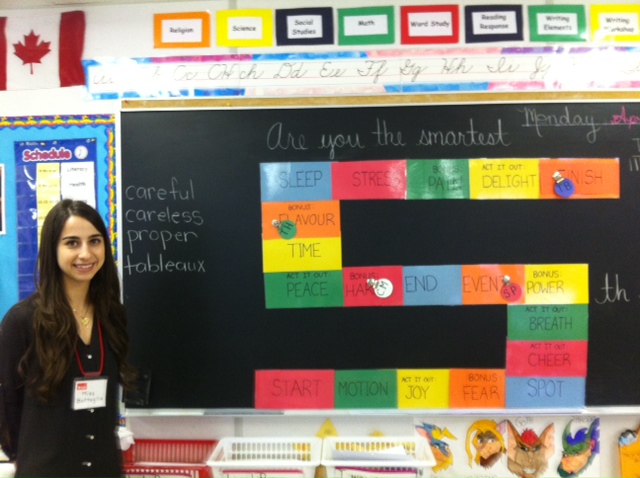
“How to engage students in the understanding and use of suffixes?” was the pressing question on my (Cathy’s) student teacher’s mind. Erica told me she mulled this over for several days, trying to get the pieces to fit together just right.    Her final creation – a suffix game. The wonderfully large, colourful game board alone was enough to grab her grade five students’ attention. Played in teams, each group had to role a gigantic die to move their magnetic counter on the board.   Some spaces on the game board depicted words (e.g. effort, bonus, time) which each team had to add either the suffix ‘less’ or ‘full’ to, and then write each word correctly in a sentence. Small white boards were provided to each team for this task.   Other spaces on the board instructed the teams to create a tableaux depicting the new meaning of the word once the correct suffix was added. A few  spaces on the board provided bonus points.

I have always had a concern about student teachers being focused on ‘fun’ over learning and wondered about the level  of learning these students would experience with this game. This concern, however, was mollified when I witnessed the mistakes the teams were making which forced them to rethink their answers.  The animated group discussions regarding which was correct were very interesting to observe.  When the nutrition bell rang and the grammar lesson came to an end, there were groans and moans of protest. Imagine, grade fives liking grammar. Erica wisely told them they could play again soon.

Erica's Game


Sharing Our Research

Today the research group will be presenting work from the project Literacy Teacher Educators: Their Backgrounds, Visions and Practices, at the Ministry of Education/Faculties of Education Forum – Research Practice: Nurturing relationships for teaching, learning and well-being. It will be an interesting and exciting day.

Literacy Teacher Educators: Preparing Teachers for a Changing World (Book Cover)
Literacy Teacher Educators: Preparing Teachers for a Changing World

Electricity and the Joy of Learning

One of the greatest joys of my (Cathy’s) job is observing student teachers in their teaching practicums. In my next few blogs I will be happily sharing some of the highlights from these visits.

Yesterday I was observing a student teacher instruct a grade six science class exploring electrical currents. The student teacher wisely arranged his students into collegial groups and then gave each group a paper bag full of various parts (batteries, wires, light bulbs, switches etc.). The students were expected to find a way to put the put the parts together that would create an electrical current, hence lighting up the light bulb. It was fascinating watching the students trouble shoot their way through the process. They were so engaged. I was proud of the student teacher for setting up the investigation so well. Suddenly there was a squeal from the corner group. One of the boys was holding up a lit light bulb. His smile was brighter than the bulb. “What did you do?” I asked him. He was silent for a few seconds, staring in amazement at the lit bulb. Then he said, “I have no idea.” Everyone laughed. The process of deduction then began as the group tried to figure out why it worked. And next week I get to observe completely different classes, making entirely new discoveries. Lucky me.

circuit


Teacher Educators, Literacy Educators, and Digital Technology Experts Working Together

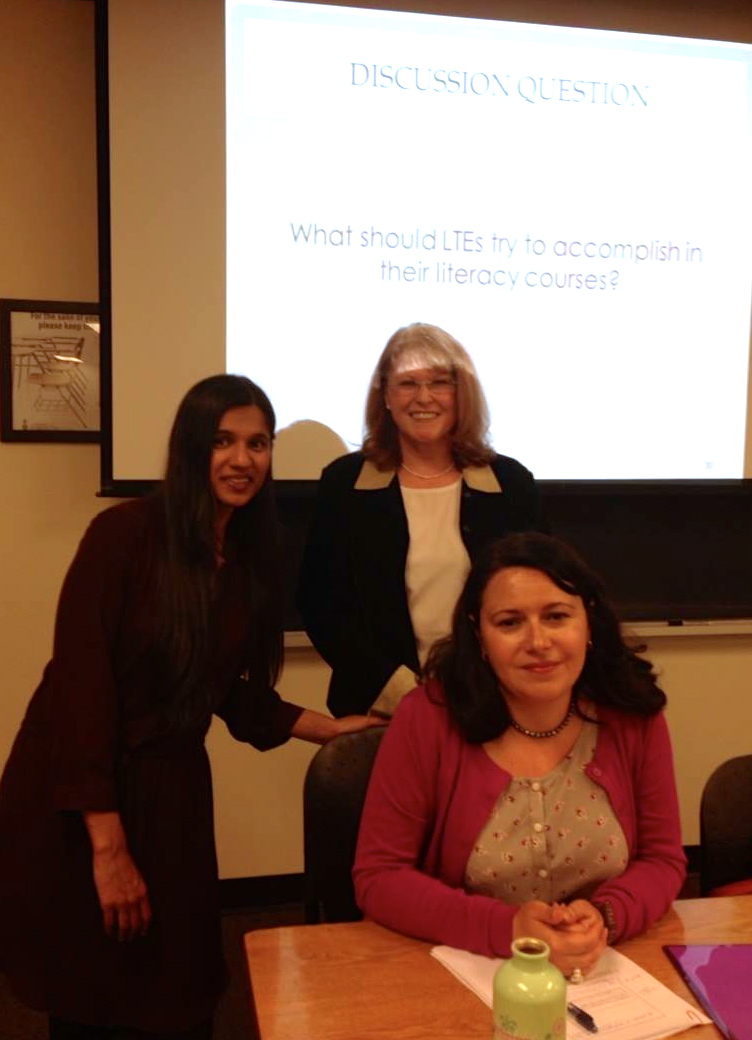
Making ConnectionsI (Clare) am pleased to share some good news. We submitted a proposal to the Social Sciences and Humanities Research Council of Canada (SSHRC) to fund the project Rethinking Literacy Teacher Education for the Digital Era: Teacher Educators, Literacy Educators, and Digital Technology Experts Working Together. One of the main activities of the project will be bringing together 16 experts from three fields and 4 countries (Canada, US, UK, and Australia) to address the following questions.

  • How is our understanding of literacy evolving in light of the new ways we communicate?
  • How can literacy/English teacher educators (LTEs) prepare student teachers to develop and implement literacy programs that capitalize on digital technology (DT)?
  • What teacher education curriculum changes are required to better prepare future teachers to integrate technology in their own teaching?
  • What professional learning support do LTEs need to develop courses that will integrate and make greater use of DT?

As a team we are going to work together to:

  • develop a statement on literacy teacher education that offers direction on how to integrate digital technology into teacher education literacy courses;
  • extend our website http://www.literacyteaching.net to include video interviews of all the participants discussing their views and current research and their course outlines and supplementary course materials;
  • produce an edited book Crossing Boundaries: Literacy/English Teacher Educators Incorporating Digital Technology in Their Courses

 Click here to read the summary of the proposal. Final Summary of Proposal

As academics we tend to work in our “silo” which although allows us to specialize it has Connecting Peoplelimitations. The symposium will provide an opportunity to work in an inter-disciplinary manner which may help us move forward the field of literacy teacher education. My co-applicants for the proposal are Lin Goodwin (Teachers College), Simone White (Monash University), Bethan Marshall (King’s College UK), Jean Murray (University of East London), and Clive Beck (University of Toronto). I will continue to provide updates on our work.

Murmurations Prank?

I know April Fools just passed, but I (Cathy)  just had to share this with you.  My husband emailed me the  link below and I thought it was an internet prank.  In this age of photoshopping and creating a personalized zombie face, I simply didn’t believe it.  So, I Googled ‘murmurations’ and was delighted to discover there are dozens of videos depicting this spring phenomenon.  Live and learn.
Fascinating that this new digital age has made me so skeptical, but I guess that is being critical isn’t it?  Have a look and see how a natural phenomenon can be so amazing, it is hard to believe.