Category Archives: literacy

Intertwining Digital Technology Into Literacy Methods Courses

Pooja and I (Clare) did an analysis of 6 literacy teacher educators who truly intertwined digital technology into their literacy methods courses. (Book chapter will be published soon and we will post that info.) In the meantime I thought this chart might be useful for literacy teacher educators who are preparing for the upcoming school year.

Overall Goal: Teaching 2.0
Specific Goals Example
Make literacy classes participatory ·      Post comments on each other’s work (e.g., Wall Wisher, Text tagging, Voice Thread)

·      Post comments in asynchronous time

·      Provide student teachers with feedback on-line and encourage them to respond to the feedback

·      During class student teachers post questions or contribute comments to a shared space

·      Before class student teachers post comments about the readings

·      Create Wordles when analyzing a text

Create an infrastructure for accessing resources and for sharing resources ·      Develop a repository of resources on a university platform (e.g., Blackboard) or on their own website

·      Share books, videos, websites on a class Wiki

·      Use DT tools (e.g., Smartboard) to access info on the spot while teaching

·      Access materials/videos for use in teaching (e.g., Globe Theatre productions of Shakespearean plays)

Provide authentic learning experiences ·      Student teachers make an iMovie on a specific topic (e.g., on bullying)

·      Analyze videos student teachers created during their practice teaching

·      Skype with authors they are reading

·      Participate in teacher communities by contributing to blogs and Twitter feeds

·      Participate in teacher-focused events (e.g., contribute a piece to a BBC competition on current affairs/news)

·      Student teachers create podcasts on an aspect of literacy to share with broader community

·      Watch videos of authors they are reading (both scholarly articles and children’s literature)

·      Student teachers post photographs of themselves on the university platform as a way to introduce themselves to their classmates

Gain an understanding of the increasingly globalized nature of literacy

·      View videos from other countries (e.g., teachers in Japan) to see similarities and differences with their own context

·      Participate in world-wide teacher communities

·      Participate in crowd-sourcing

·      Share statistics on literacy beyond home country

·      Use visual representations (e.g., photographs) to move student teachers beyond their immediate world to unpack a range of issues (e.g., gender representation in children’s literature)

Reframe issues related to literacy and literacy teaching ·      Watch videos of teaching (exemplary or poor practice) and analyze them

·      Use videos from their practice teaching classes as “data” for their inquiry projects

·      Student teachers select a picture from a photo array and relate the action in the photograph to a theory they have been working on

Bridge practice teaching and the academic program ·      Reflect on practice teaching by sharing and analyzing photographs/videos they took

·      Use email and social media to remain connected during practice teaching and as a place for student teachers to ask questions or share concerns

·      Create a video case study of pupils which relates to a theory of literacy

We also created a graphic to capture the elements of their pedagogy:

Literacy Graphci

Their courses were fundamentally different because they had truly reconceptualized their teaching, not simply tinkering by adding glitzy DT; rather, they constructed highly participatory experiences that occurred before, during, and after the official 3-hour class. Learning occurred in multiple ways: readings, f2f discussions, online communities, viewing, analyzing, and providing feedback on texts which immersed student teachers into the issues of literacy. It went far beyond introducing “methods” to teach literacy; it was framed by learning to teach literacy as a global citizen. This ambitious goal was matched with unparalleled support by the professors. Their multimodal/technology-rich teaching practices modeled the possibilities available to teachers and students; however, they were constantly trying to balance preparing student teachers to address the traditional forms of literacy, which they will probably observe in schools, with more expansive understandings. They had not discarded typical elements of literacy methods courses such as teaching the writing process or components of a balanced literacy program.

Technology vs Attention

lap top for pet owners_n

A friend of mine (Cathy) is a writer and she frequently complains about her darling cat sitting on her key board, especially when she has a deadline to meet.  The cartoon above reminded me of her, yet I doubt her cat would accept the new lap top model depicted.  I not not so sure it’s about closeness as it is about the attention.  Looking.  Listening.  Touching.  Speaking. I once tried to read  book while bottle feeding my son and he fussed and cried until I put it away.    At six months he knew where my attention was, and it wasn’t on him.  Holding him wasn’t enough.  Feeding him wasn’t enough.  That was our time and the book was cheating him.  I was amazed he could register that at such a young age.  It was a good lesson.   After that, I saved my reading for when he was napping.   I’m sure my friend’s cat would know too.   Although I was amused by the cartoon, I also saw it as a warning.  Our devices are seductive;  our lives are busy and demanding; but I’m not so sure we really get ahead by multitasking when it comes to attending to the ones we love.

Why I Can No Longer Teach in Public Education

Stephanie Keiles wrote this powerful letter on why she can no longer teach in public education. It is a true indictment of public education in the U. S. We cannot and should not be losing teachers like Stephanie. I (Clare) would recommend that you have a hankie or two available as you read it! Share it with public officials.

http://www.huffingtonpost.com/stephanie-keiles/why-i-can-no-longer-teach-in-public-education_b_7974784.html

ImagesTeacher'sDesk

Posted: 08/12/2015 8:35 am EDT Updated: 08/12/2015 8:59 am EDT

I am sitting here in my lovely little backyard on a beautiful Michigan summer day, drinking a Fat Tire Amber Ale, and crying. I am in tears because today I made one of the hardest decisions of my life: I resigned from my job as a public school teacher. A job I didn’t want to leave — but I had to.

A little background. I didn’t figure out that I wanted to be a math teacher until I was 28. As a kid I was always told I was “too smart” to be a teacher, so I went to business school instead. I lasted one year in the financial world before I knew it was not for me. I read a quote from Millicent Fenwick, the (moderate) Republican Congresswoman from my home state of New Jersey, where she said that the secret to happiness was doing something you enjoyed so much that what was in your pay envelope was incidental.

I quit my job as an analyst at a large accounting firm determined to find my passion. I floundered for a while, and then eventually got married and decided I would be a stay-at-home mom, but only until my kids were in school. Then I would need to find that passion.

I was pregnant with my oldest child, sitting on a sofa in Stockholm, Sweden, when I had my epiphany: I would be a math teacher — a middle school math teacher! I thought about it and it fit my criteria perfectly. No, I wasn’t thinking about the pension, or the “part-time” schedule, or any of the other gold-plated benefits that ignorant people think we go into the profession for. Two criteria: I would enjoy it, and I would be good at it.

Nine years and four kids later, I enrolled in Eastern Michigan University’s Post-Baccalaureate teacher certification program, and first stepped into my own classroom at the age of 40. I was teaching high school, because that’s where I had my first offer, and I was given five classes of kids who were below grade-level in math. And I still loved it.

I knew I had found my calling.

After three years, I switched districts to be closer to home and to teach middle school, where I belonged. I felt like I had died and gone to heaven! I was hired to teach in my district’s Talented and Gifted program, so I had two classes of 8th graders who were taking Honors Geometry, and three classes of general 8th grade math.

This coming year, I was scheduled to have five sections of Honors Geometry — all my students would be two, and sometimes three, years advanced in math. I was also scheduled to have my beloved first hour planning period, and I was excited to work with a new group of kids on Student Council. It was looking to be a great year — and I’m still walking away.

My friends, in real life and on Facebook, know what a huge supporter of public schools I am. I am a product of public schools, and my children are the products of public schools. Public education is the backbone of democracy, and we all know there is a corporatization and privatization movement trying to undermine it.

I became an activist after Gov. Rick Snyder and his Republican goons took over Michigan and declared war on teachers. I am part of a group called Save Michigan’s Public Schools. Two years ago, we put on a rally for public education at the Capitol steps that drew over 1,000 people from all over the state with just three weeks’ notice and during summer break.

I have testified in front of the Michigan House Education Committee against lifting the cap on charter schools, and also against Common Core. I attended both NPE conferences to meet with other activists and bring back ideas to my compadres in Michigan. I have been fighting for public education for five years now, and will continue to do so.

But I just can’t work in public education anymore.

Coming from the Republicans at the state level and the Democrats at the national level, I have been forced to comply with mandates that are not in the best interest of kids. I am tired of having to perform what I consider to be educational malpractice, in the name of “accountability.”

The amount of time lost to standardized tests that are of no use to me as a classroom teacher is mind-boggling. And when you add in mandatory quarterly district-wide tests, which are used to collect data that nothing is ever done with, it’s beyond ridiculous.

Sometimes I feel like I live in a Kafka novel.

Number one on my district’s list of how to close the achievement gap and increase learning? Making sure that all teachers have their learning goals posted every day in the form of an “I Can” statement. I don’t know how we ever got to be successful adults when we had no “I Can” statements on the wall. (sarcasm)

In addition, due to a chronic, purposeful underfunding of public schools here in Michigan, my take-home pay has been frozen or decreased for the past five years, and I don’t see the situation getting any better in the near future. No, I did not go into teaching for the money, but I also did not go into teaching to barely scrape by, either.

As a 10th-year teacher in my district, I would be making 16 percent less than a 10th-year was when I was hired in 2006. Plus, I now have to pay for medical benefits, and 3 percent of my pay is taken out to fund current retiree health care, which has been found unconstitutional for all state employees except teachers. And I’m being asked to contribute more to my pension.

Financial decisions were made based on anticipated future income that never materialized, for me and for thousands and thousands of other public school teachers. The thought of any teacher having to take a second job to support him/herself at any point in his/her career is disgusting to me, yet that’s what I was contemplating doing. At 53, with a master’s degree and twelve years of experience.

If I were poorly compensated but didn’t have to comply with asinine mandates and a lack of respect, that would be one thing.

And if I were continuing my way up the pay scale but had to deal with asinine mandates, that would be one thing. But having to comply with asinine mandates and watching my income, in the form of real dollars, decline every year? When I have the choice to teach where I will be better compensated and all educational decisions will be made by experienced educators? And I will be treated with respect? Bring it on.

So as of today I have officially resigned from my district, effective August 31, which is when I will start my new job as a middle school math teacher at an independent school. I am looking forward to being treated like a professional, instead of a child, and I’m pretty sure I will never hear the words, “We can’t afford to give you a raise”, or worse (as in the past two years), “You’re going to have to take a pay cut.” I am looking forward to not having to spend hundreds and hundreds of dollars on classroom supplies. And the free lunch, catered by a local upscale market, will be pretty sweet, too.

I will miss my colleagues more than you could ever know, especially my math girls and my Green Hall buddies. It really breaks my heart to leave such a wonderful group of people. In fact, it’s pretty devastating. But I have to do what’s best for me in the long run, and the thought of making more money and teaching classes of 15 instead of 34, and especially not having to deal with all the BS, was too much to refuse.

I will always be there to fight for public education. I just can’t teach in it.

Unlearning in Teacher Education

 Unlearned-640x199

As a literacy teacher educator, do you feel you spend a lot of time encouraging your student teachers to forget what they have previously learned?  Lortie (1975) refers to the perceptions of teaching our student teachers developed (as elementary and secondary school students) as an  “apprenticeship-of-observation”. Lortie suggests “education students have spent years assessing teachers and many enter training with strong perceptions based on firm identifications” and maintains that these strong perceptions affect student teachers’ “pedagogical decision-making”.  This makes unlearning as important as learning.  How do you get your student teachers to unlearn?

Lortie, D. C. (1975). Schoolteacher. Chicago, IL: Chicago University Press.


Practicing Situated Practice through Storytelling

As mentioned before, I (Cathy) am a committed supporter of  implementing a pedagogoy of mulitliteracies (New London Group, 1996) in the classroom.  There are many components to multiliteracies, but for this post I will highlight my use of  only one  component- situated practice.    The situated practice component suggests that pedagogy must consider “the affective and sociocultural needs and identities of all learners” (NLG, 1996, p. 85).  By the inclusion of  students’ “lifeworlds” or home-life and culture, a classroom environment is created where students feel secure and will take risks (NLG, 1996, p. 65).

In a recent storytelling workshop I delivered to ECE students (in a higher education setting), I was intrigued at how the significant situated practice became.   Prior to the class,  I asked the professor what cultures were represented, so I could reflect at least some of these cultures through my story selection.  The list was long, so I had to be selective.  I decided to tell a story from Jamaica, the US and one from India.  These represented not only a range of the participants’ cultures, but also a broad range of storytelling styles, which I thought might be useful for the students to see.   During the workshop I explained to the students that eventually being inclusive of all of the cultures and backgrounds represented in their classrooms  through the stories we tell (and books we read) was essential.  It was our responsibility to get to know our students and know what was important to them.  They agreed that this was important.  But I had a lot to learn about how important,  even when working with adults.

I knew how much the  participants  enjoyed and learned from the experience, as they were highly engaged during the workshop, but i was also treated to written feedback  as the  professor asked the students to post their critiques online.  The following comments caught my interest:

“The workshop really resonated with me… I learned about stance, gestures and facial expressions”

“I was amazed to see how storytelling could grab our attention”

“I am excited to step out of my comfort zone a little bit and try out these strategies with children”

My favourite was:

“I really enjoyed the ending of the workshop using the Urdu [story] “Ek thi Raja, ek thi Rani, doono margy khatm kahanni'” as Urdu is my mother tongue and I was able to understand this very famous [story].”

I did indeed end the workshop with a very short story in Urdu.  In case you do not understand Urdu, in this story there is a  king and a queen, they  die, so the story is over.   That’s it.  It is a traditional ending to a storytelling set.  I usually ask a participant to translate the story for the rest of the group.  Even though my Urdu is not the best, I can always tell who understood the story, because they are the only ones laughing.  Children  are usually delighted that I took the time and effort to be able to tell , regardless of how short,  a story from their culture.  But this small gesture never became more evident  to me than at the conclusion of this workshop.   I was approached by a woman wearing  a khimar (a long, cape-like veil that hangs down to just above the waist, but leaves the face clear).  The woman introduced herself and told me that she was most impressed that I told a story in Urdu.  She said she felt it made her Urdu speaking colleagues very happy.  She then asked me to do something I was not expecting.  “Would you”, she asked timidly, “consider sometimes ending your storytelling in Arabic?”  I smiled and immediately answered “of course, if you will teach me!”   She was delighted and proceed to teach me  the following traditional ending:

Touta touta.  Kelset el haa do tah.

This is now part of my repertoire.  I was never more convinced of how significant it is to honor the cultures of our students.   Young or older, it is their identity and they need us, their teachers, to validate this.  I will endeavor to enlarge my commitment to situated practice by sometimes speaking in Arabic for my students and hope my  students, whether ECE students, student teachers, or teacher educators will consider doing the same.

A New Dr. Seuss Book

I am looking forward to reading the recently released Dr. Seuss book entitled What Pet Should I Get? His widow Audrey discovered the manuscript and illustrations a few years ago, however, it is believed that Seuss originally created the work between 1958 and 1962. A New York Times review describes the book as “short and Seuss-ish” and “filled with creatures both real and zany.”  Another book to share with the student teachers in the primary division.

Link to the review:

http://www.nytimes.com/2015/07/20/books/review-what-pet-should-i-get-a-new-book-from-dr-seuss.html?_r=0

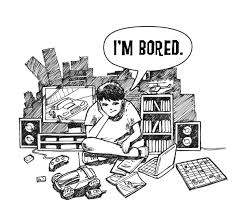
Bored? Try Mindfulness.

bored pic


I (Cathy)  sometimes wonder if children  just need go outside and be part of nature.  Life isn’t just about about  being entertained.  In our society of things, gadgets and high tech, this is sometimes overlooked.   An experience can be  about being contemplation or just learning to listen or observe.  My high school visual arts teacher, Robert Bateman was gifted at encouraging us (his students) to practice this.  He would tell us to just go sit in a field an look at one thing and listen. Pay attention.  I think now this practice would be called “mindfulness”.  As teachers, as parents, do we do  encourage this?  Just a thought.

Blending old and new world literacies: Storytelling and Technology

I (Cathy) was recently asked to give a storytelling workshop for a third year Early Childhood Education Class. The professor felt the experience might broaden her students’ concept of literacy.   As a practitioner of multiliteracies (New London Group, 1996) I felt compelled to blend “old world literacy” which in this case would be storytelling (it is the oldest form of entertainment for our species), and new world literacy, which in this case was an online interactive learning system called Today’s Class.  (I have mentioned Today’s Class in an earlier post.  Today you get to hear how I put it into practice).

Initially, the students (a broad range of ethnicities, ages, and English language proficiencies) shared they had never previously experienced storytelling.  They had been read to and assumed this was the same thing.  Most admitted they had never heard of Todays’ Class either, but were game to give it try.  I warmed them up by delivering an old folktale (old world style, just me, them and their imaginations) which blew them away.  “I could see the story!”, and “I was captivated” were some of the responses.  The class was then arranged into small groups of three, each group having a lap top with access to the internet.  Each group was “invited” into the Today’s Class site and asked to give their group a “nick name”.  On the large screen at the front of the room, I posted questions about the storytelling experience for them to consider.  After some deliberation, the groups posted their responses, using only their nick names for identification.  I was intrigued by their reactions as the team responses popped up on the screen.  They were highly engaged.   I could have heard a pin drop they were so intent on reading the other groups’ answers.  When I used to do this kind of activity, the groups used chart paper and markers to record their answers and these were posted around the room.  I usually read out the answers because the printing was often not legible across the room.  Also, I often filtered what I read aloud, instantly deciding what the key points were and only sharing those.   However, with the big screen, it became each students’ responsibility to do the reading and the  filtering. The accountability and engagement levels were higher.

As we moved through the workshop, experiencing different forms of storytelling, the groups returned to conferencing at their computers, analyzing the responses and discussing the salient points.  Both my students and myself were delighted with the results.  Storytelling and technology were a perfect fit.  The students left with a much deeper understanding of an ancient literacy form, many vowing to use it in their child care centers, but also left with a much broader view of the usefulness of modern literacies.   Old and new world do blend.   I couldn’t help but wonder how Aesop might have felt about Today’s Meet.    I think he would have liked it.

New London Group. (1996) A pedagogy of multiliteracies: Designing social futures.  Harvard   Educational Review,1, 60-89.

https://todaysmeet.com/


Writer’s Block

Many of us who write frequently have at one time or another had to cope with the dreaded writer’s block. Through a simple web search one can uncover various strategies recommended to avoid or cope with writer’s block, such as, engaging in a free write, brainstorming ideas, talking out the ideas, concept mapping or the bride/reward yourself technique. A friend of mine finds it helpful to cover her laptop screen with a towel and then proceeds to free write any ideas that come to mind. The inability to see her computer screen prevents her from trying to edit her work as she is trying to get the ideas down. Her mantra is “editing is different than writing, the processes are separate.” Any of us who have experienced writer’s block might find it interesting to hear what some established writers have to say about how they deal with writer’s block: http://www.clickhole.com/article/6-worlds-greatest-writers-explain-how-they-deal-wr-2748?utm_campaign=default&utm_medium=ShareTools&utm_source=facebook For example, Neil Gaiman notes, “the secret to writing is just to write. Write every day. Never stop writing. Write on every surface you see; write on people on the street. When the cops come to arrest you, write on the cops. Write on the police car. Write on the judge. I’m in jail forever now, and the prison cell walls are completely covered with my writing, and I keep writing on the writing I wrote. That’s my method.”