Category Archives: literacy

Powtooning about Powtoon

I (Cathy) made a Powtoon about making a Powtoon.  Just follow the link below:

http://www.powtoon.com/show/dK9qzPurSC7/intro-to-powtoon/#/

If you are not familiar with Powtoon, it is an animated on-line presentation software tool that creates explainers, videos and presentations.  If you can create a power point, you can create a  Powtoon.  Only a Powtoon is much more interesting and fun!  It is an effective  tool for flipped classrooms and they make great multimodal assignments for students.  You can find many how-to videos on youtube.  My favourite was  on script writing (for powtoons):

https://www.youtube.com/watch?v=lyB1Y9xkSec

The Powtoon web site also hosts a set of tutorials to help you get started:

http://www.powtoon.com/tutorials/#prettyPhoto

The Powtoon I created was through a free account.  In that account I have access to  five minutes of Powtooning, 10 tunes and 11 animation styles.  Cant wait to make another.

Hope you give it a try!


Books, books, books

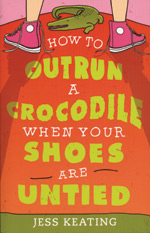
If you are like me (Clare) you are always on the lookout for a good book. If you are a Comic Book Warclassroom teacher or literacy teacher educator you are probably always Image Red Maple_How-To-Outrun-A-Crocodilesearching for good children’s literature and young adolescent literature. A student in my grad course on literacy told me about the Ontario Library Association : founded in 1900, the Ontario Library Association is the oldest continually operating library association in Canada. With more than 5,000 members, the OLA is the largest library association in the country.

She shared the a link of the Red Maple Fiction Nominees:

https://www.accessola.org/web/OLAWEB/Forest_of_Reading/Awards_Nominees/Red_Maple_Fiction_Nominees.aspx

This site has short blurbs about the nominated books. Image Red Maple_Dead-Mans-SwitchImage Red Maple Award_The-Boundless

I like Goodreads which now that they has a section on children/adolescent literature. If you are a classroom teacher or teacher educator you can set up a secure community for the students in your class. They can post reviews and comments and share titles of books they liked or did not like. Thw community is “closed” (only open to those registered in it). This is a great way to create a reading community. Here is the link for Goodreads young adolescent literature: http://www.goodreads.com/genres/young-adult

Literacy Pilot Program at First Nations’ Schools

Former Prime Minister Paul Martin recommends a four-year literacy pilot program implemented at two First Nations’ elementary schools should be put into place across Canada. Martin suggested the reading and writing program, implemented at Walpole Island and Kettle and Stony Point First nations in Ontario, improved students literacy performance. The program, designed by Julia O’Sullivan dean of the Ontario Institute for Studies in Education at the University of Toronto, required schools to carry out a mandatory reading and writing period for every student during the first 90 minutes of each day. Kettle and Stony Point First Nation chief Thomas Bressette drew attention to the underfunding of First Nations schools. Bressette noted “there needs to be a period of catch-up time because our people have been looked down on and set back because of underfunding, not because we’re ignorant and we’re dumb and uneducated and incapable of learning, but because of the circumstances.”

Link to the news article: http://www.ctvnews.ca/politics/literacy-pilot-project-leads-to-improvements-at-first-nations-schools-1.2251422

Cartooning the Digtial World

Danish writer Mikael Wulff and cartoon artist Anders Morgenthaler are the creative duo known as Wumo (formerly known as Wulffmorgenthaler).  Their rise to success started in 2001 when they entered and won a cartoon competition. When they won, they received a one-month run of their comic strip in Politiken, a national Danish newspaper.  Their popularity soared with the new exposure, and they soon found more and more publishers, including several blogs and newspapers throughout Scandinavia and Germany.

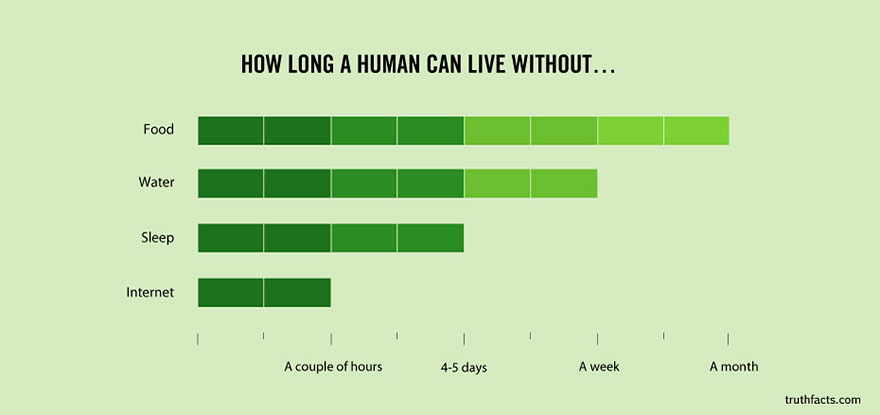
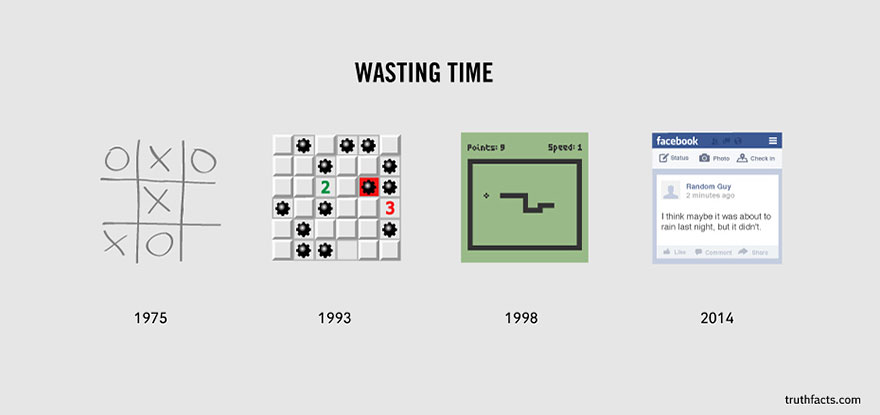
Among their works is a brilliant series of graphs and diagrams that illustrate some of the basic painful truths of everyday life in the Western world.  For your entertainment I (Cathy) have selected a few of my favourites that pertain specifically to digital technology and shared them below.  (Too enlarge a graphic, simply click on it).

Enjoy!

digitl medialed loled need interneted on line datinged facebooked wasting time

FDK update: Language and the Arts

Today is a holiday in Ontario and in several Canadian provinces: Family Day. A day to spend much needed time with family. Family Day comes at a good time since temperatures are beyond unbearable to many (me! ~ Yiola!) and the winter blahs bring a natural insistence to just take an extended break.

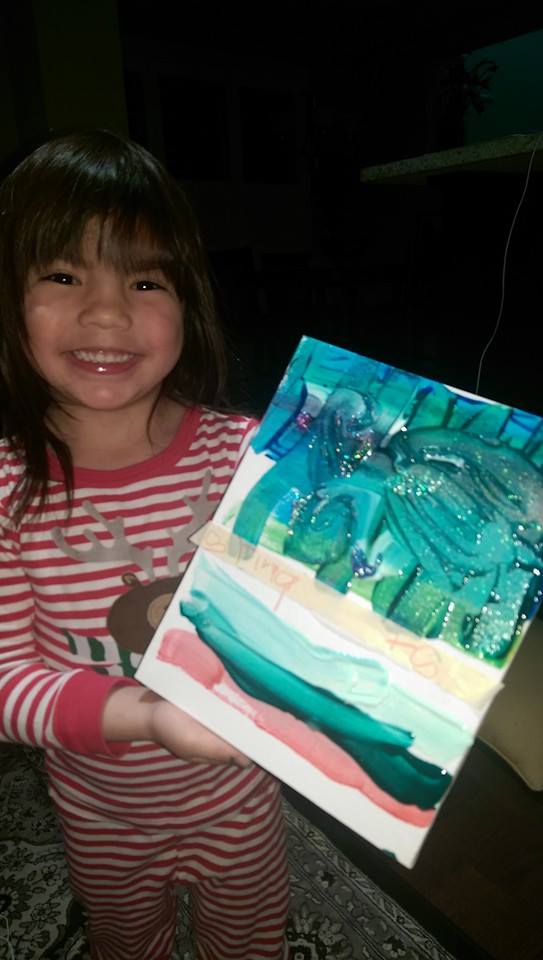
In honour of Family Day I would like to share a story about my family and how my Sylvia Clare (my four year old) is getting along in FDK.  About one week ago, while at home Sylvia Clare decided to paint. This was not unusual as she often paints at home. What was new was her language and ideas about art and herself.  She ushered me to the playroom, took the lead and began to explain that we were going to explore lines.  Lines I thought? So Sylvia Clare understands an element of art?  I sat in silence with what I imagine was a curious look on my face as she continued with confidence: “I’m an artist”.  Those words screamed at me with sheer joy and power. I had never called Sylvia Clare an artist… it was not something I thought of doing, although of course in my heart and mind I believed my child was an artist and a scholar and an athlete and a…..   ”

“Now mommy, you need to wear a smock so your clothes stay clean and roll up your sleeves. Please get the paints”.I followed her instructions.  Next thing I saw was Sylvia Clare carefully dividing the canvas. She began at the bottom and drew careful lines across the canvas using primary colours. Then on the upper part of the canvas she created thick textured, almost bubble like “scribble” where she mixed the colours. The entire time she was talking about her art: “Here mommy I am painting straight lines with primary colours, you see? And up here (top of the canvas) I am trying to see what scribble is like and I added some sparkle”.  She spent a lot of time working on her art and I sat and watched in amazement. Here are some pictures of Sylvia Clare from that day:

sylsmock

sylpaint

paint


Days passed and I wondered how Sylvia Clare was able to develop such clear language about the arts and conceptually understand the elements and most importantly to see herself as an artist. And then, the FDK newsletter came home.  The teachers shared the following in the newsletter:

The students have also been learning about a modern artist names Piet Mondrian from the Netherlands, who used primary coloured shapes and black lines to create famous pieces. They have used his method to create their own line designs. We have also experimented with bubble wrap. Some of the children are referring to themselves as “artists” now…

How one perceives oneself is often how one becomes. Sylvia Clare sees herself as an artist. She can talk about the arts and she confidently engages in art work.  So, on Family Day today I am certain we will be back in the playroom painting and playing and reading and doing… and I am sure that I will be the one who will learn the most.

Happy Family Day!

Read Any Good Books?

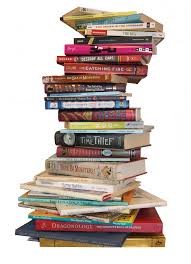
I (Clare) a number of years ago started keeping an annotated list of books I have read. I Stack of Books shared the list with my book club and then friends asked for it and on and on. I have continued to update my list. Here are the books I have read the last little while. Click here for the entire list. Books I have read You will notice that I really like murder mysteries but read almost all genres.
Feel free to share the title of a good book with me. Thanks. Happy Reading

February 2015

  • The Pearl that Broke Its Shell: A Novel by Nadia Hashimi – a truly terrific read that moves between present day Kabul and the main character’s great grandmother. Treatment of women is so upsetting. Lots of real thugs in Kabul. Feel like there is no hope for Afghanistan.
  • 5 murder mysteries by Ann Cleeves – Set in Northumberland England featuring Inspector Ramsay. The main character, Ramsay, is not well developed but the stories are all very good. The Baby Snatcher; Killjoy, A Day in the Death of Dorothea Cassidy, A Lesson in Dying, and Murder in My Backyard. Super easy reads – short and engaging.
  • Wolf Hall by Hilary Mantel. How did this win the Booker prize? The writing was truly terribly – starting paragraphs with He. Cannot figure out who is talking. Shifts between first and third person. So sloppy I was shocked. Do NOT recommend it.
  • The King’s Curse by Phillipa Gregory – this is the book that started my interest in the Tudors. Interesting perspective on Henry VIII. Historical fiction. Learned some. Not too deep but interesting.
  • Growing Up Amish: A Memoir by Ira Wagler – Interesting read. Definitely am not becoming Amish – learned about different branches of the Amish, some of their practices. Book should have continued for the rest of the author’s life. Felt incomplete.
  • Without You There is No Us: My Time with the Sons of North Korea’s Elite – By Suki Kim – I totally loved this book. The author was masquerading as a missionary with a group of missionaries who were masquerading as teachers. It tells about her time teaching in North Korea. Totally fascinating. It really shows how the government totally controls all info and the minds of the population. And people are so poor. Written recently. Author is a journalist originally from South Korea.
  • Adult Onset by Ann Marie Macdonald – I think this author only has one good book in her and she has written it. I read ½ the book and said that’s enough. Silly, silly, silly characters.
  • books by Thrity Umrigar: The Space Between Us; The Story Hour;
  • The Space Between Us – set in contemporary Bombay, story of 2 women – 1 rich and 1 poor (her servant) – really shows how the caste system is still in place – so many twists and turns in the book – really interesting
  • The Story Hour – set in New England – story of a poor Indian woman (new immigrant) who tries to commit suicide and her friendship with her psychiatrist – black woman – parts of it were very good – a bit frustrating and implausible. I got very cross with the psychiatrist because she knows better.
  • The Unknown Bridesmaid by Margaret Forster – seems like I am only person who does not know about Foster. This is her 26th Good psychological thriller. A psychiatrist is haunted by what she did as a child. Really good read. Lots of twists and turns. Characters well developed.
  • Not My Father’s Son by Alan Cumming – Yes that Alan Cumming – actor from The Good Wife, Cabaret … Book is totally awesome. His childhood was sooo grim. Tells story of his abusive father and how he survived. This is a must read. Well written, a bit of mystery, engaging.
  • The Monogram Murders: The New Hercule Poirot Mystery by Sophie Hannah – I love Poirot and I was reluctant to read this book. I felt that no one but Agatha Christie could write a Poirot murder mystery. I was wrong. Book was terrific. Great story. Perfectly captured Poirot. Cannot wait for the next book by Hannah.
  • The Short and Tragic Life of Robert Peace: A Brilliant Young Man Who Left Newark for the Ivy League by Jeff Hobbs. This is the most, most, most gripping book. Robert Peace, dirt poor in Newark – totally brilliant, gets a scholarship to Yale, gets high marks and ends up back on the streets of the projects in Newark. And he dies tragically. The author was Peace’s room mate at Yale. As a white woman, I know I do not get it (about race) but this book gave me an insight into poverty. Peace “got out” in one way but psychologically could not. One of the best books ever – but sad!! And you will be perplexed by the bad choices Peace keeps making.
  • Hardball: A V.I. Warshawki Novel by Sara Peretsky – To think this series is going strong Not worth the effort to even describe how bad this book is – writing poor, character ridiculous, plot painful – read ½ and thought Huh! Who would read this shlop?
  • The Silkworm by Robert Galbraith (A.K.A. J. K Rowling) – totally loved it. Just as good as her first as Galbraith – loved the characters, loved the story …. Hope the third one is coming soon.
  • Reykjavik Nights by Arnaldur Indridason – so bad not worth the time to describe how bad it is.
  • The Marco Effect” A Department Q Novel – Jussi Adler-Olsen – I love, love, love this series. Truly fab murder mysteries. Set in Copenhagen. Totally love the characters and the stories are great. Read them in order of publication.
  • The Aftermath by Rhidian Brook – Not my usual read. Set in postwar East Germany. I could only get through ½ of it. Characters were not plausible. Story and history interesting but the characters were just not real.
  • David and Goliath: Underdogs, Misfits, and the Art of Battling Giants by Malcolm Gladwell – Typical Gladwell. If you like Gladwell you will love this one. I did.
  • The Long Way Home: A Chief Inspector Gamache Novel by Louise Penny. I truly love these murder mysteries. Have to ration them out.
  • A Traitor to Memory by Elizabeth George- For those who like Inspector Lynley murder mysteries.
  • The Emperor’s Children by Claire Messud – not nearly as good as her early writings. Not worth it.
  • 3 books by Sarah Addison Allen – The Sugar Queen, Lost Lake, Garden Spells – normally I do not like novels with fantasy elements but these 3 are soooo good. Allen is a great writer and the fantasy elements work. Stories are all good.
  • The Goldfinch by Donna Taft – how did this win the Pulitzer Prize? Totally dreadful book. Wordy, plot does not make sense, implausible … Absolutely painful. Read ¾ of it and then my friend told me that the last ¼ is even more ridiculous so I stopped. (He was so frustrated with the book, he threw it across the room. And he is not prone to violence – a total sweetie.)


July 26, 2014

  • In Pursuit of the Proper Sinner – Vintage Elizabeth George. Very long but very good if you like Inspector Lynley murder mysteries. Deception on His Mind also by George. Very good.
  • Kwei Quartey murder mysteries – Set in Ghana. So interesting because I learned so much about Ghana – oil reserves, religion, corruption … Three books with the same detective, Darko Dawson, (who I love): Wife of the Gods, Murder at Cape Three Points, and Children of the Street. Read them in order of publication. Death at the Voyager Hotel is a one-off without Inspector Darko. Quartey is a doctor in the US who comes Ghana so he knows the country.
  • The Fashion in the Shrouds by Margery Allingham – J.K. Rowling said Allingham is her favourite murder mystery writer but I found it dated and tedious. (Detective Campion)
  • All the Light We Cannot See by Anthony Doerr – this is not my usual thing but I loved it. A blind French girl and a German soldier during WWII. VERY interesting and well written.
  • A Week in December by Sebastian Faulks. About corruption and the collapse of the banking system in 2008. Very interesting following about 12 characters. I could not follow all of the stuff on hedge funds but the ending is a true humdinger. Definitely worth the read.
  • The Invention of Wings by Sue Monk Kidd – contrived and painful murder mystery. Characters were silly and implausible. Not worth it.
  • Buried Angles by Hannah Kent another murder mystery set in the Scandinavian countries. Not worth the read. Painful. No where near the caliber of Jussi Adler-Olsen.
  • How the Light Gets In by Louise Penny – Usual excellent stuff following the murders in Three Pines. I am reading the Inspector Gamache in order and loving every word of every book.
  • Under the Wide and Starry Sky by Nancy Horan. I was looking forward to this because I LOVED Loving Frank (Lloyd Wright) by Horan. This one was so painful and embarrassing I could not get through it.
  • The Lemon Grove by Ali Hosseini set in Iraq during US invasion. Really glad I read it because I learned so much. Writing is not top drawer but very informative.
  • Honey Dew by Louise Doughty was a total disappointment. I loved her other books which were taunt and well written. This one was garbage.
  • Hour of the Red God by Richard Crompton is set in Kenya prior to the 2007 elections. Nowhere near the caliber of Quartey novels but I learned a lot about Kenya
  • Buried Rites by Hannah Kent – an absolute MUST read. Tells the story of the last women executed for murder in Iceland in the early 19th HUH you are saying. Trust me it is gripping and you will learn so much about Iceland. I could not put it down
  • Jhumpa Lahiri – Three novels which were all excellent. The Namesake; Interpreter of Maladies; and the Lowland. ALL were superb. The last one did not win the Booker (but should have). All dealing with identity Indo/American. Beautifully written even if the style is unconventional at times. Informative – gets you thinking about issues of identity.
  • The Wife, the Maid, and the Mistress by Ariel Lawhon – Hyped like crazy on Amazon but it was terrible, trite, not interesting
  • Summer House with Swimming Pool by Herman Koch. Translated from Dutch. I loved his previous novel, The Dinner which was a real psychological thriller. Summer House is not in that league. Almost all of the characters are despicable and so many loose ends it feels sloppy and I felt used as a reader.
  • Meet me in Malmo by Torquil MacLeod. Sort of a good/interesting murder mystery. Good story. The ending is such a shocker it is worth the read. Not particularly well written- another set in the Scandinavian countries – but fairly interesting.

Mapping the Word

I watched an interesting Ted talk in which cognitive scientist and MIT researcher Deb Roy explains how he wired his house with video cameras to capture the rich details of his son’s language development. A complex motion analysis was applied to the 90,000 hours of video to map out how his son’s social interactions within different domains of the home informed his language development. Roy describes how the analysis revealed the scaffolding of language learning:

“Every time my son would learn a word, we would trace back and look at all of the language he heard that contained that word…And what we found was this curious phenomena, that caregiver speech would systematically dip to a minimum, making language as simple as possible, and then slowly ascend back up in complexity. And the amazing thing was that bounce, that dip, lined up almost precisely with when each word was born — word after word, systematically. So it appears that all three primary caregivers — myself, my wife and our nanny — were systematically and, I would think, subconsciously restructuring our language to meet him at the birth of a word and bring him gently into more complex language. And the implications of this — there are many, but one I just want to point out, is that there must be amazing feedback loops. Of course, my son is learning from his linguistic environment, but the environment is learning from him. That environment, people, are in these tight feedback loops and creating a kind of scaffolding.”

Link to the Ted Talk:

www.ted.com/talks/deb_roy_the_birth_of_a_word

Deb Roy

Buried in Acronyms

Hi, I (Cathy) am the new T&LC in CTL, working in FD at SC.  Today I will be exploring ULD in the TLA.  Yesterday I had a meeting with the BBAs from PSOB.   I am now a member of OPSEU and CAAT.  I look forward to working with FAST, FAAD, FAHCS, FHASS, and FCAPS.

Lost?  Welcome to my world.  Last month I started  a new position in HE.  I love the people, the work and the institution.  What I am struggling with are the acronyms.  OMG.  If you think texting is bad, try starting a new position in a new institution.  Everyone talks in code.  During my first week as a new hire, I was given a cheat sheet of common internal and external acronyms to learn.  I had my husband drill me on these so I could learn them right away and feel comfortable in meetings.  Ah, no.  I leave every meeting with a list I have composed that were not on my original list.  Everyday I experience new discourses, practices and social norms.  Enculturation is tiring.  I feel as though I am living my research on new literacy practices.  Yesterday an employee asked me what faculty I was in and I answered ” TLC” instead of  “CTL” and he never even blinked.  Was he just being polite or do we have a faculty called TLC?  I wonder.

If you would like to know what my new position is and where I work now, just check the cheat sheet below.   I’ll let you know in a month how I’m doing with my acronyms.

T&LC – Teaching and Learning Consultant                                                                                                       CTL- Centre for Teaching and Learning                                                                                                           FD- Faculty Development                                                                                                                                      SC- Sheridan College                                                                                                                                              ULD-Universal Learning Design                                                                                                                            TLA – Teaching and Learning Academy                                                                                                .  BBA-Bachelor of Business Administration                                                                                                      PSOB- Pilon School of Business                                                                                                                       OPSEU- Ontario Public Service Employees Union                                                                                       CAAT-Colleges of Applied Arts and Technology                                                                                             FAST – Faculty of Applied Science and Technology                                                                                   FAAD- Faculty of Animation, Arts and Design                                                                                           FAHCS- Faculty of Health and Community Services                                                                                 FHASS – Faculty of Humanities and Sciences                                                                                               FCAPS- Faculty of Continuing and Part Time Studies

Questioning the Benefits of Toddlers’ Digital Technology Use

Researchers at Boston University School of Medicine suggest toddlers’ overuse of mobile digital technologies could hinder their social-emotional development. While the researchers recognize “that educational apps on smartphones and tablets may facilitate some academic skills for children” they voice concern that the extended use of such technologies by toddlers could displace valuable play-based interactions. The researchers point out that “toddlers younger than two years are known to learn best via hands-on exploration of their physical world.” Their commentary published in the journal of Pediatrics reviews  existing literature, examines future research directions, and suggests preliminary guidelines for families. What are your thoughts on this topic?

Link to CBC article: http://www.cbc.ca/m/news/topstories/toddlers-overusing-mobile-tech-may-stunt-development-1.2940848

Sue Dymoke: Making Poetry Happen

I (Clare) am happy to share news of a newly published text by Sue Dymoke: Making Poetry Sue DymokeHappen. (Sue is pictured with her new text.) I was lucky to review this text and here is my endorsement. This is an outstanding collection that gives voice to teachers and students as they meet poetry. It is essential reading for those who want to make poetry happen. An invaluable resource for new and experienced teachers, reading this text will change how you approach poetry. Rarely have I read a book that is so transformative. will become a classic.

Here is a link to an interview with Sue Dymoke.http://www.nottinghampost.com/Making-poetry-open-book/story-25887273-detail/story.html

  Making Poetry HappenFor those of you who are literacy/English teacher educators or classroom teachers I highly recommend this text. I learned a huge amount and thoroughly enjoyed every chapter. The stories written by teachers and academics are inspiriting and informative. I used some chapters with my student teachers who felt transformed. Many said they had never experienced poetry this way. Here is a link to Bloomsbury Publishers: http://www.bloomsbury.com/uk/making-poetry-happen-9781472510266/