Category Archives: literacy

Literacy development and genres: The graphic novel

When I (yiola) first began teaching  (in 2008) I asked student teachers if they knew about graphic novels.  The response was that few students were familiar with the genre or how and why it may benefit learning in the classroom. With each passing year more and more student teachers indicate they are familiar with graphic novels and more and more student teachers recognize the genre inside classrooms.

Some use the term graphic novels interchangeably with comics with others differentiate the two as distinct styles. In either case there are strong arguments for why the graphic novel is a powerful genre for literacy development.

6 Reasons You Need To Start Reading Comic Books

http://neillcameron.blogspot.co.uk/2014/09/comics-and-literacy-part-1-why-reading.html

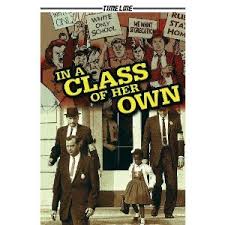
I introduce student teachers to David Booth’s book “In Graphic Detail” and I share the graphic novel “In a Class of her Own” to demonstrate how critical literacy and language acquisition can be developed in meaningful and interesting ways.

Unknown


http://www.theguardian.com/childrens-books-site/2013/mar/19/review-in-a-class-of-her-own-kathleen-gould-lundy

The sharing of the graphic novel as a useful genre in the classroom is a highlight in my course. Many student teachers become inspired to use graphic novels once they are introduced to why they are effective and how to use them in a classroom setting.

Please share any great graphic novel titles that you know to be outstanding.


Reading for Relevance AND Fluency

In the past, I (Clive) have posted about the need to teach for relevance. When recently re-visiting two of Richard Allington’s wonderful books on reading instruction – What Really Matters for Struggling Readers (2006) and What Really Matters in Fluency (2009) – I was impressed with his discussion of the link between relevance and fluency in reading. In his view, there are at least 4 instructional causes of reading difficulties:

  • Texts are too difficult
  • Texts are not interesting enough
  • Insufficient time is given for actual reading (as distinct from studying reading strategies)
  • Reading is interrupted for instructional reasons

Because of these factors, students don’t do enough reading to become fluent. Teaching reading strategies is important, but a balance is needed. Allington says:

[To increase their] store of at-a-glance words, readers need to consistently and repeatedly read a word correctly. [This requires] a lot of accurate reading…struggling readers [should] read at least as much as the achieving readers at their grade level. (2009, p. 38).

He cites what he sees as “one of the greatest failures of the [U.S.] federally funded Title I remedial reading and special education programs: Neither program reliably increased the volume of reading that children engaged in” (2006, p. 43). In fact, the amount of reading was often reduced.

But struggling students won’t read very much – either at school or at home – if texts are uninteresting to them. This is where relevance comes in. According to Allington, if we want students to read a lot they must see the point of reading. But if we force them to read books they aren’t interested in and bombard them with reading strategies, along with “comprehension” tasks that just require them to recall and retell, they may never realize that reading has a point. He comments:

I fear that we will continue to develop students who don’t even know that thoughtful literacy is the reason for reading. (2006, p. 116)

So relevance is valuable in two ways: it helps students learn about “life” and the real world, and it helps them learn how to read.


Responding Critically to Azalea’s ‘Bounce’

In class this week my (Cathy’s) teacher education students were exploring indirect  instruction through learning centers.  One of the centers featured Iggy Azalea’s music video, Bounce, and the instructions to discuss the work through a critical literacy lens.   (E.g. What message do you think the artist wants us to get from this video? Based on the artist’s thoughts and actions (expressed in the song), how would you say she is portraying herself to the world?)

Most of the students had heard of the video but never actually viewed it until arriving at the literacy center.  (Perhaps you haven’t either).  Without revealing the content, I will reiterate the general tone of the reactions.   Most students were annoyed by the video content.  One student said she was disgusted (and this is not sexual content).  One group, however,  tried to take a broader view.  They said they could not judge the work until they understood Azalea’s intent.  So they took it upon themselves to look up an interview in which Azalea discusses her purpose for portraying her song the way she did.  After viewing the interview, they were angry.  Azalea explained that she portrayed herself thusly so she would be seen as “flashy”.  No message, just glamour.  After this insight, some wonderful discussion ensued about cultural ethics and hegemony.

One student spoke to me at the conclusion of class and confessed that she was surprised by her own reaction.  In her words, “I have changed.    Studying literacy education has given me a different perspective.  I see the world differently, especially things like music videos.”

Below is the link so you can view this content for yourself and decide.  The second link is the video in which Azalea discusses her purpose for making the video.

Happy critical viewing!

Language and power: A well “articulated” analysis

It is  a rewarding feeling when a student teacher from years past emails a link to an article, a video, or an image that is reflective of the messages we discussed in our teacher education class. The message it sends me is this, “I remember you. I remember your teachings. I learned and am still thinking about what it means to be a teacher and what it means to teach literacy”.  Today I (Yiola) received a short email from a student of four years ago. She sent the following link:

The link takes us to a spoken word presentation entitled “3 Ways to Speak English” shared on TED during a theme based session called “Examining Prejudice”.  Her talk as part of the series is described as:

Educator Jamila Lyiscott delivered an incredible poem called “Broken English,” in which she showed that she is a “Trilingual orator” able to speak fluently at home, with Caribbean parents, at school in “proper English,” and with her friends in a language that is as formal and rules-based as the other two. The poem raised a big laugh when she pointed out, “You may think it is ignorant to speak Broken English, but even articulate Americans sound foolish to the British.”

My favourite part is when she says:

So I may not always come before you with excellency of speech

But do not judge me by my language and assume

That I’m too ignorant to teach

‘Cause I speak three tongues

One for each:

Home, school and friends

I’m a tri-lingual orator

What stands out for me about the poem and what I will share with my students in class this week:

1) The power of language and how we associate language with power

2) Language and how it informs our identities — how many languages do you speak?

3) Linguistic profiling: the racial identification and discrimination of an individual or group of people based on their speech  and how that plays out in society and in the classroom

4) History — and how it influences our use of language

I was moved by her words as Lsyiscott describes:

These words are spoken

By someone who is simply fed up with the Eurocentric ideals of this season

And the reason I speak a composite version of your language

Is because mines was raped away along with my history

I speak broken English so the profusing gashes can remind us

That our current state is not a mystery

I’m so tired of the negative images that are driving my people mad

So unless you’ve seen it rob a bank stop calling my hair bad

I’m so sick of this nonsensical racial disparity

5) Awareness, ourselves and teaching — what do we as educators do with this knowledge?

Here is a link to a prezi that Lysicott has used at presentations:

http://prezi.com/_htjpqeom2js/how-broken-english-made-me-whole/

6) How to take our linguistic diversity and turn it into power:

This is a linguistic celebration

That’s why I put “tri-lingual” on my last job application

I can help to diversify your consumer market is all I wanted them to know

And when they call me for the interview I’ll be more than happy to show that

I can say:

“What’s good”

“Whatagwan”

And of course …“Hello”

Because I’m “articulate”

I look forward to my class on Friday and to sharing thoughts, feelings and ideas about what all of this means to children, their families and the learning environment in our elementary school classrooms.


First Class: Tracking wellness

I (Clare) am following this amazing new blog Eureka Research: Exploring Wellness through digital techniques: http://eurekaresearch.wordpress.com/2014/10/22/first-class-tracking-wellness/
This recent post is about the guidance counsellor who is working with secondary school students to track their wellness and well-being using a number of on-line tools. Wow! This is an amazing use of technology and from the photos it seems the students are very much engaged. I look forward to reading updates on the work and study of the on-line tools.

cathkaiser's avatareureka research

I am in the middle of running my five classes on using a website to track moods, goals, tips, etc.  The website is called Facingus.org and what I like about it is that it is hands on and interactive. Students explored for parts of the site:  Journal, Wellness Tracker, Wellness Plan and Wellness Book (Tips).  This took almost the full hour to explore.  Students wrote for 5 minutes in the online journal – some where very engaged and some struggled quite a bit. I did catch a couple of students reading a book on their laps!  I did also have a couple of students asking if they could have more time to write 🙂

For the Wellness Tracker, I had them focus on three aspects – Well-being (track daily), Symptoms (track daily and weekly) and Lifestyle (track daily).  What I liked about this section, is that there were a lot…

View original post 182 more words

All About Me Books: Power of Writing Your Story

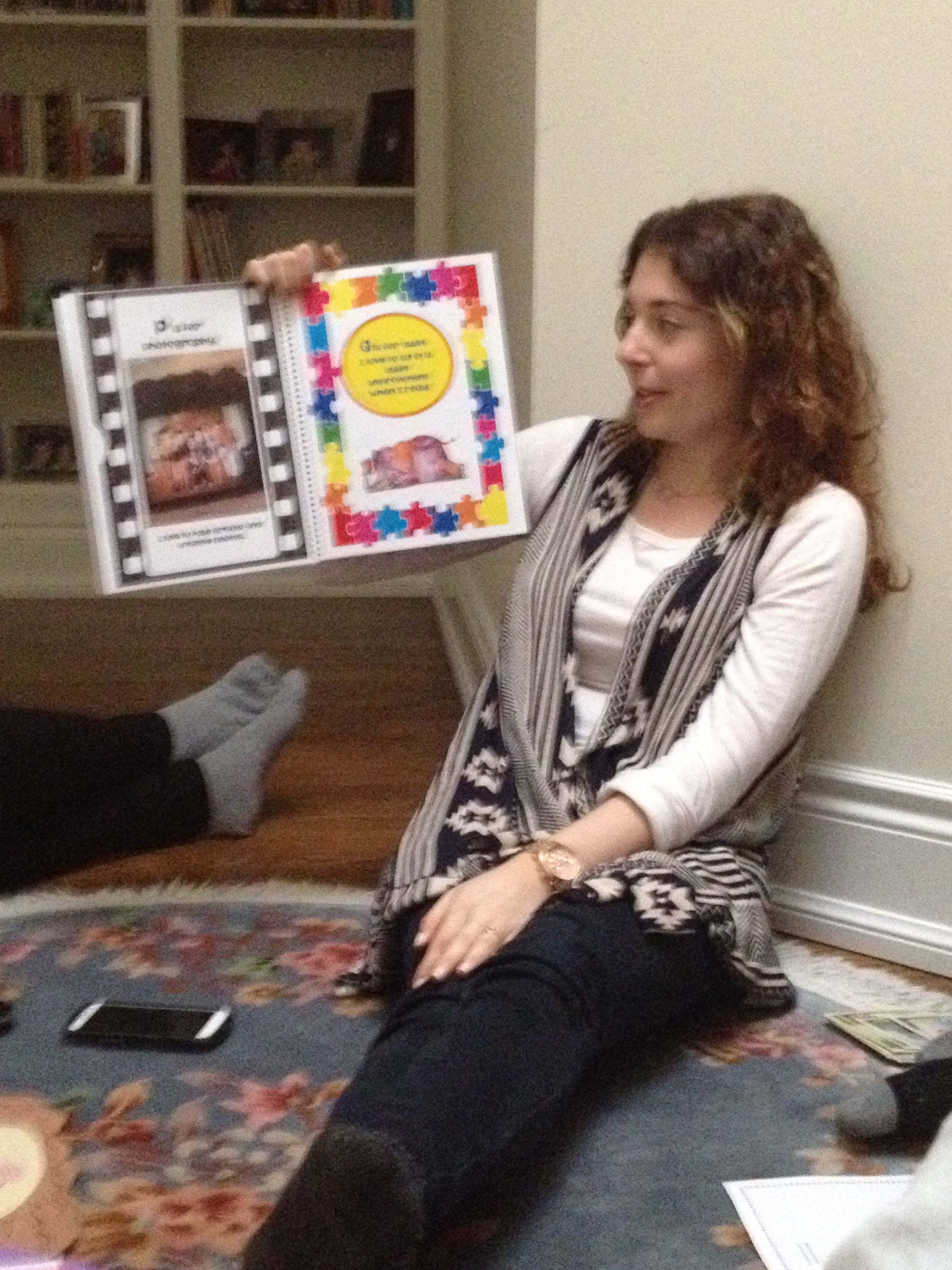
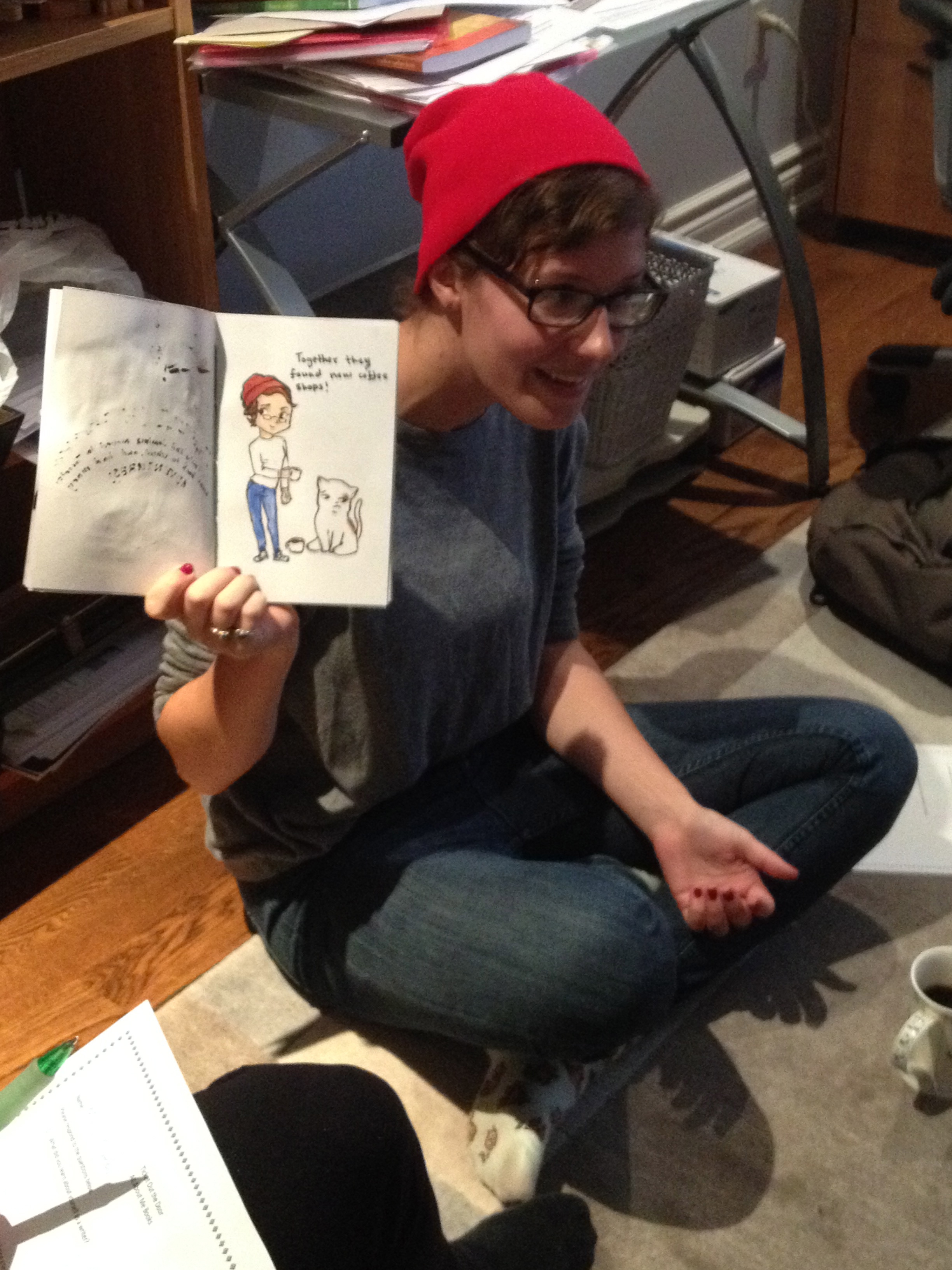
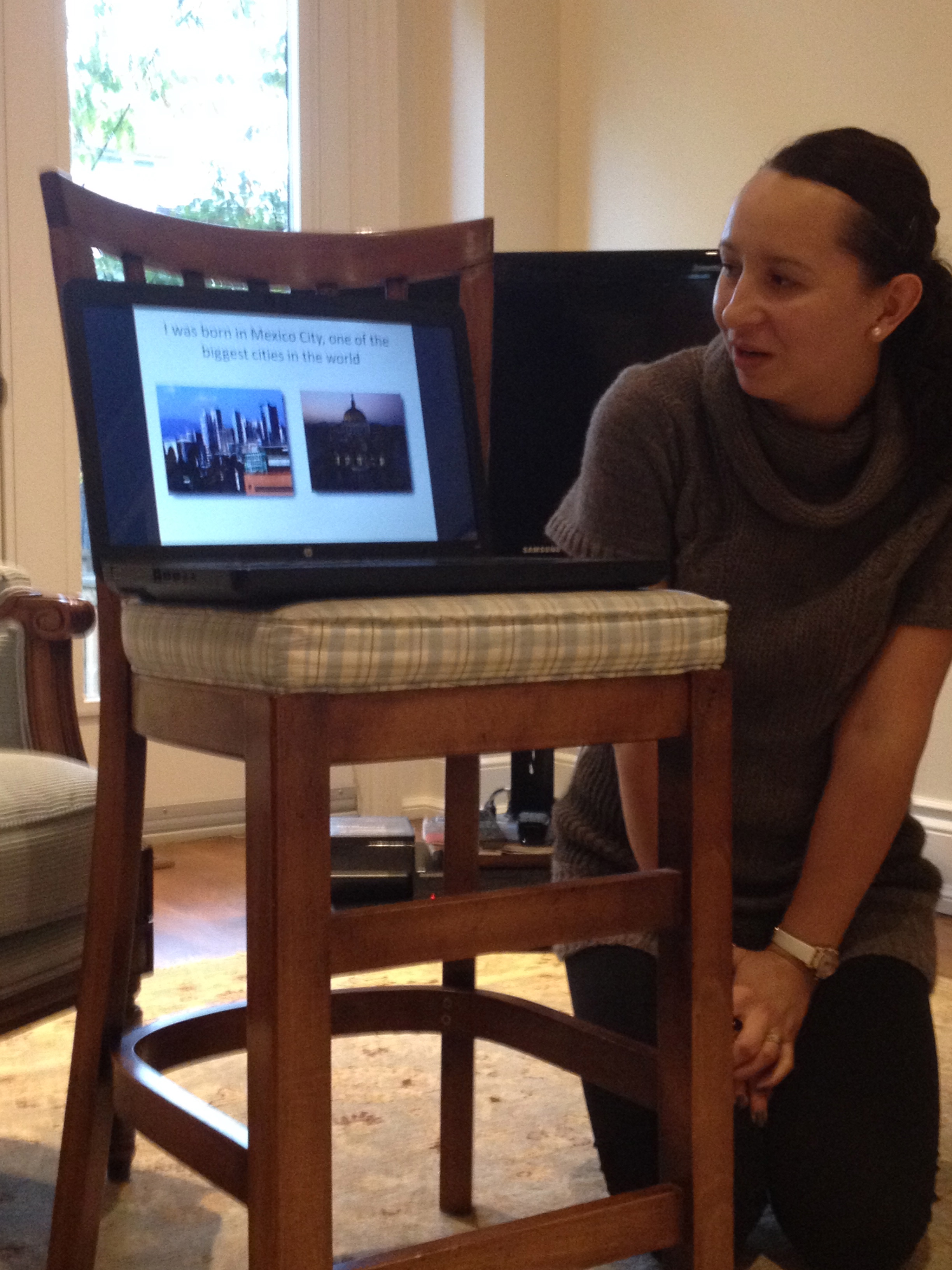
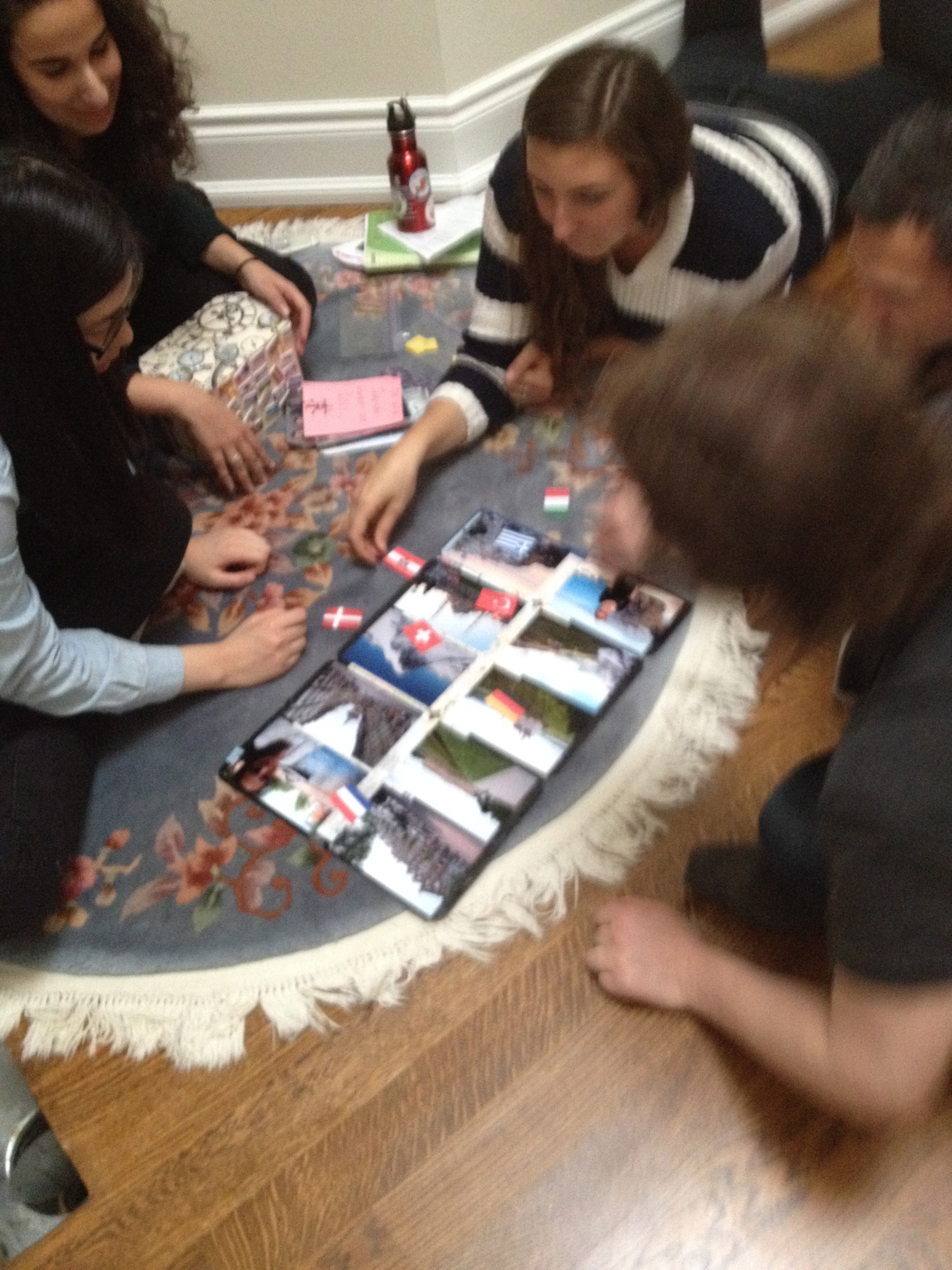
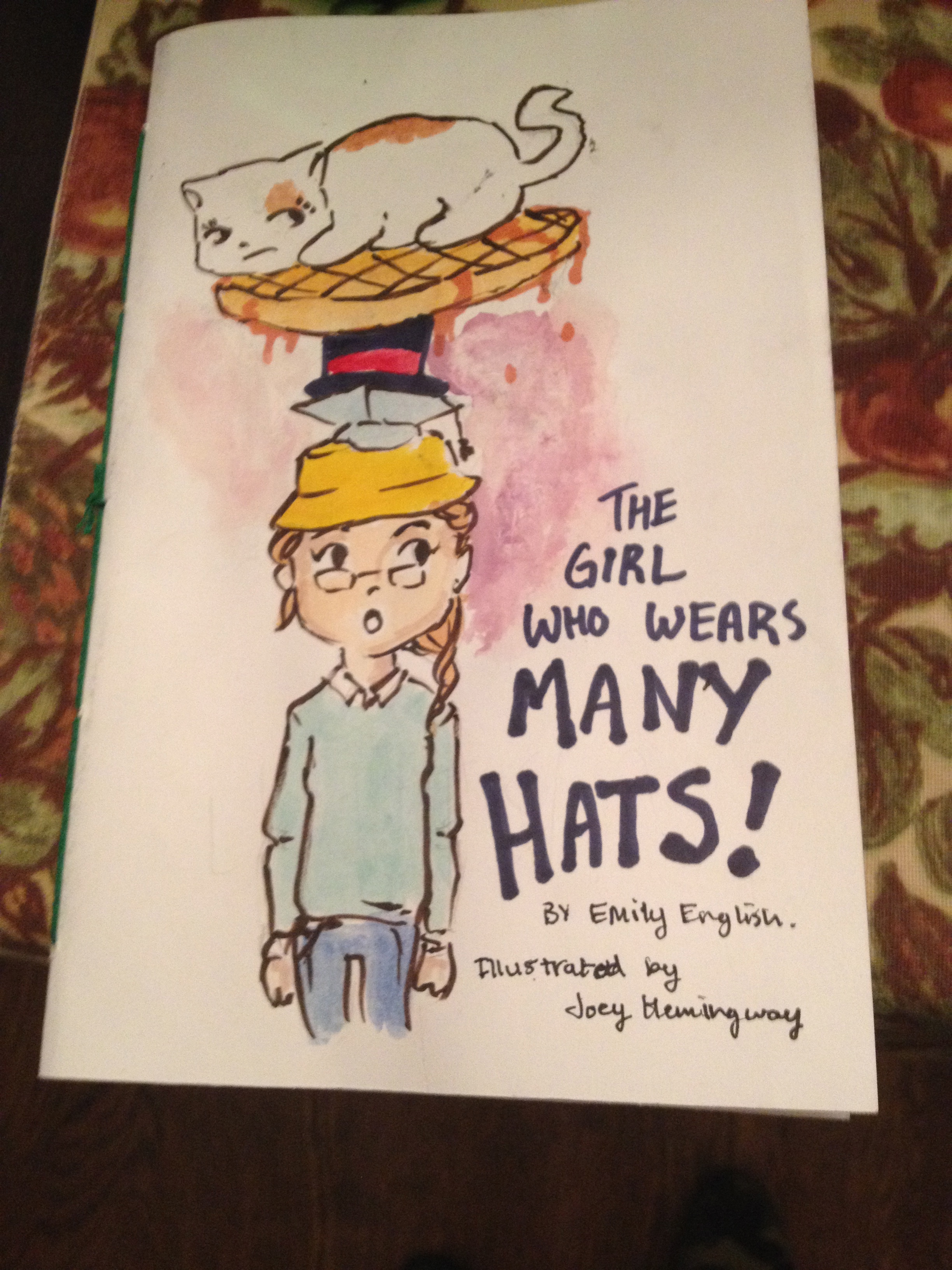
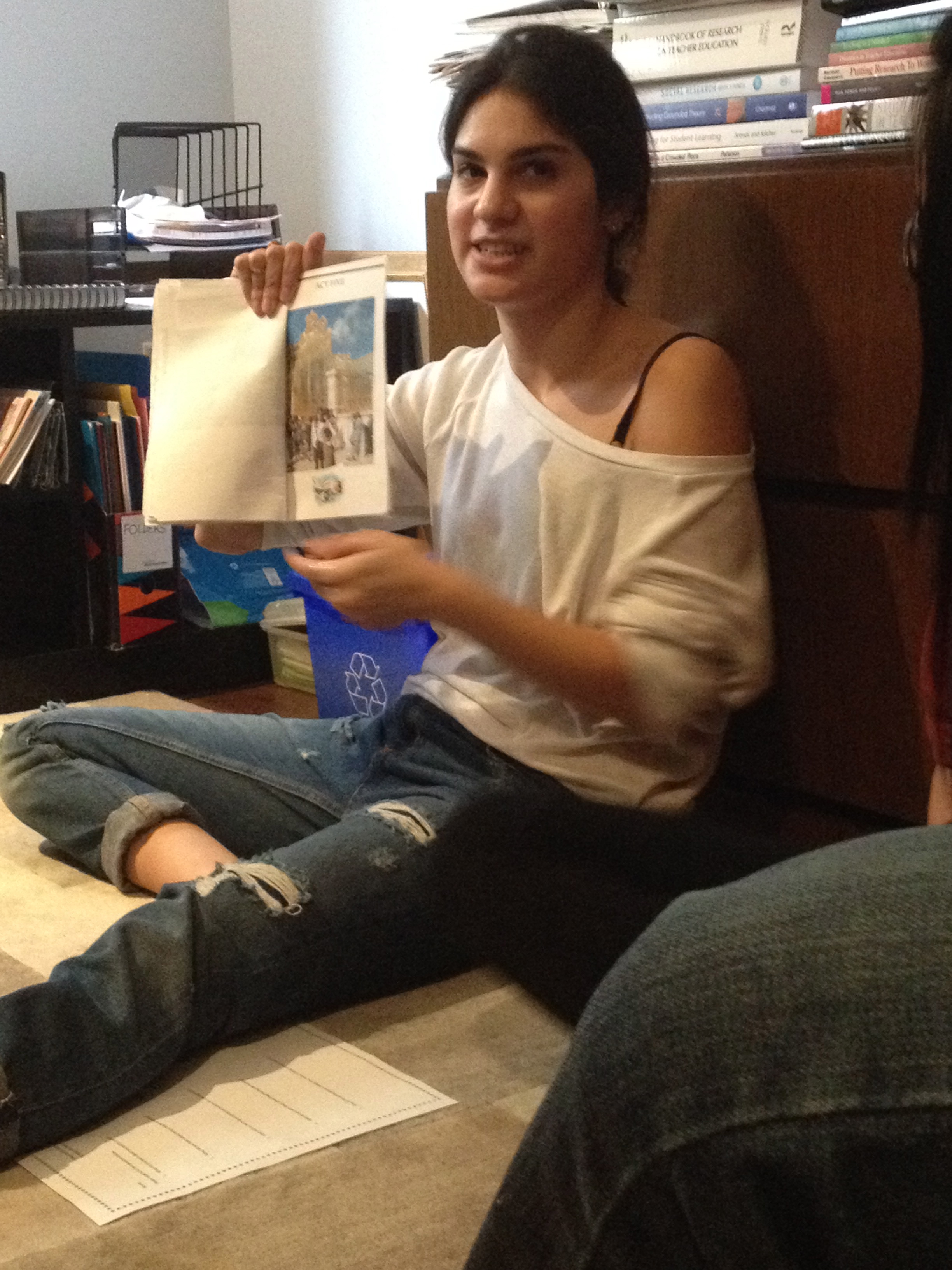
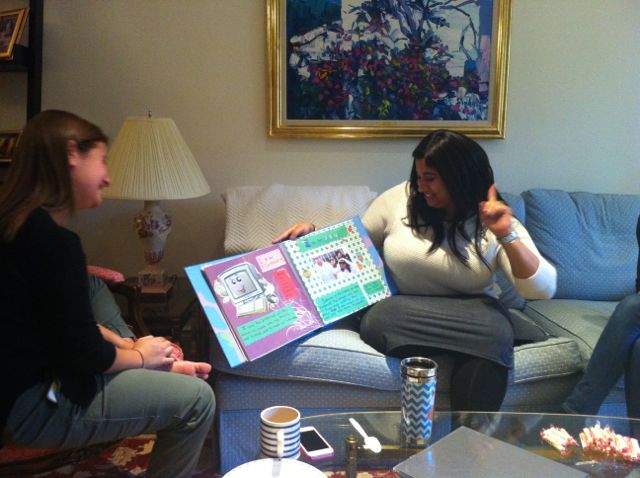
IMG_3099In yesterday’s blog post, Lydia talked about the All About Me book celebration we had with the student teachers in our literacy methods courses. I (Clare) want to add my comments/reflections on the activity. The “assignment” is unusual in that it is ungraded (pass/fail), there is lots of choice, and the finished product is shared with all of the other IMG_3100students. It is not just me, the professor, who reads the assignment – all of the students have an opportunity to learn from their fellow students’ work. The sharing is a wonderful way for them to learn about their fellow students and to learn about many ways to tell a story. Initially, the students are bit resistant to the assignment commenting (complaining!) about it not being graded so why should they do it or that they are not creative so they cannot do it or they cannot see how doing a book about their life will help them learn to be a literacy teacher. The process of writing their books and sharing them transforms IMG_3145their views – they come to understand the power of story, the demands of the writing process, and the importance of audience. Many commented this was the best class they have had in their university studies. One student noted: “I recognize the courage and vulnerability it takes to showcase our own work and know that without a Professor who harnesses this safe environment we wouldn’t have become such a comfortable cohort in our short weeks at OISE.”IMG_3121

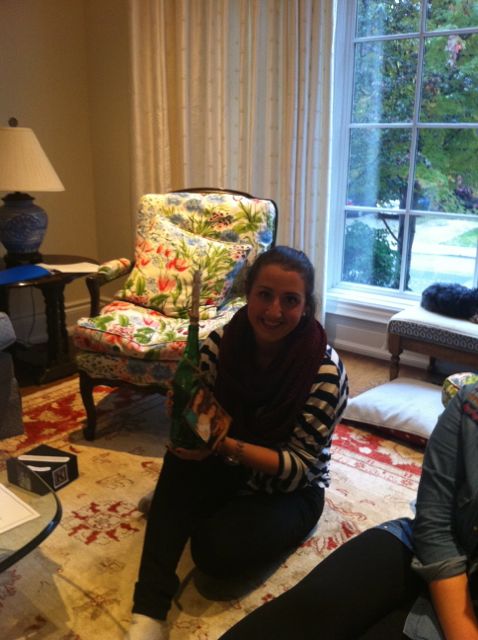
All wanted to know when we were going to do “something” like this again. You will notice in these photos that the students are truly happy and engaged. Like Lydia, I was impressed with their books – their creativity was astounding, the care they took with writing their books was impressive, and their ingenuity humbled me. I learned so much from them and feel so lucky to be teaching such fine individuals.

For the literacy teachers and literacy teacher educators who follow this blog we thought we would share the assignment description with you.

IMG_3152All About Me Books

The creation of this book about you fulfills a number of purposes:

* it celebrates who you areIMG_3140

* it provides your colleagues with an opportunity to get to know you

* it celebrates the diversity of individuals in our class

* it allows your creativity to emerge and through exploration may prove new potential to you

* it provides a good resource for you to use with your students as an artifact, a way of IMG_3138introducing you to your students, a good lesson to use with them and ….

* it allows you to come to understand first-hand the complexity of the IMG_3128composing and publishing processes and it allows you to consider how various literacy formats/genres can be used with students

* it introduces you to children’s books in another way

* it is fun

IMG_3131Criteria

  1. Meaning

The All About Me text must communicate in some way who you are – it could be descriptive, autobiographic, a metaphor, …. but it must say, “This is me!” It is important to identify your intended audience; therefore, the book must match your intended audience. If, for example, you are writing it for young children, the pictures are very important and the text must be simple and IMG_3119accessible to them. If on the other hand, you are writing it for an audience of adolescents, the tone, structure and theme would be very different. Use a structure/format appropriate for the age group you choose as models.


Structure

IMG_3114The All About Me book must be:

* illustrated in some way (use your imagination and ingenuity here).

Any format is fine – text based, artifacts, digital …..IMG_3113

* durable for use in the classroom

* well planned

* well written (adhering to the convention of grammar and spelling)

IMG_3142Possible formats and genres for your book…IMG_3135


Accompanying Story on Tape Shape Books
Fairy tale, mystery, make believe Poetry Book
Banners Pop-up Books
Shape Book Wheel Book (using paper fasteners)
Accordion Book Picture Books
ABC book Books with Bookmarks
Books with Pictures and Clipart Book in a box
Books with Photographs Puppet Books
Characters from a Movie or Novel Chart Books
Dioramas Flip Books
Graphic novel/story; Comic format Television Box
Newspaper Momento book
Series of memos Menu
Series of photographs with captions Counting book
I Book Poster
Prezi Powerpoint
Video Other ….. (e.g. rap, song)


All About Me Texts

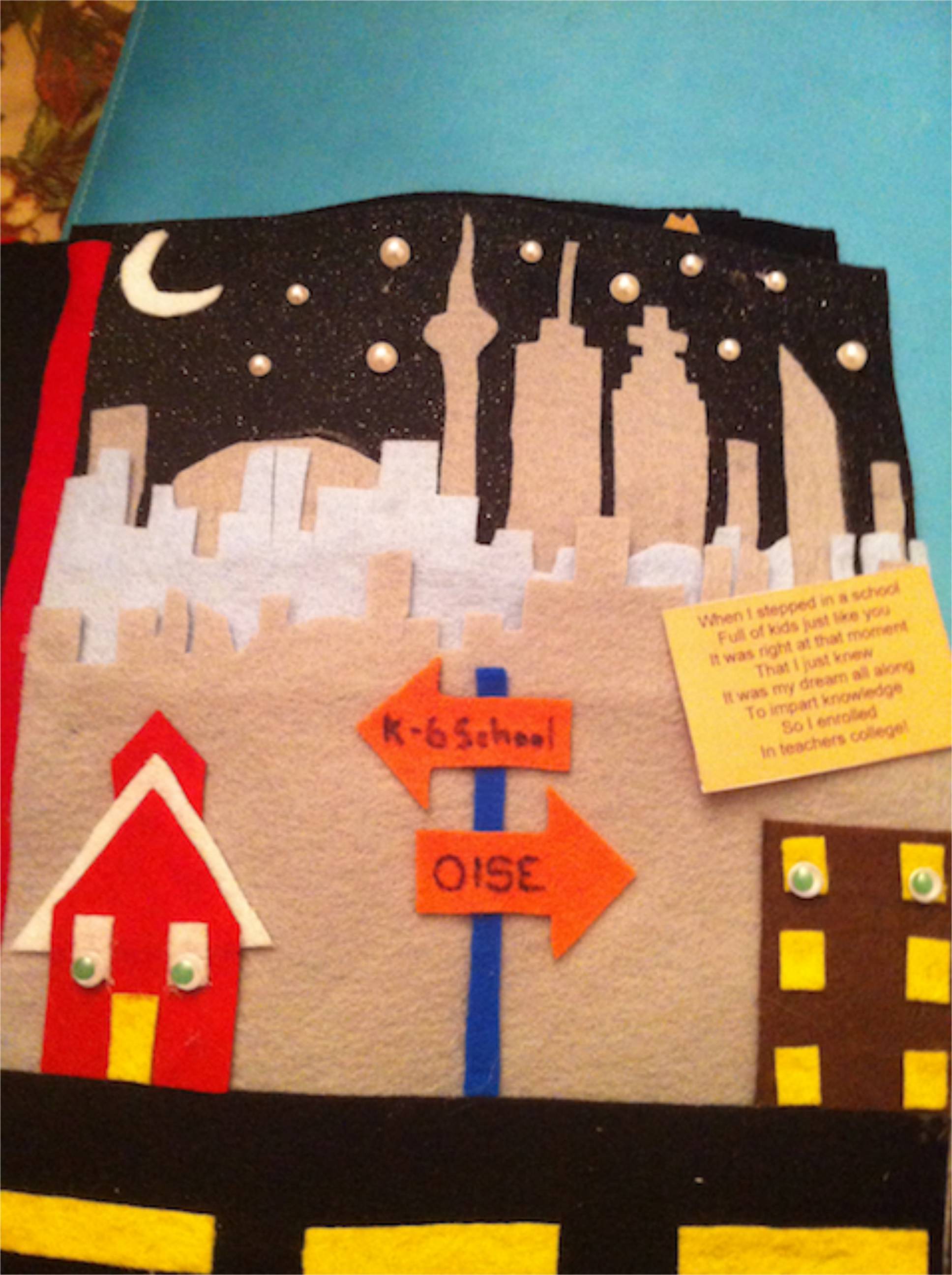
We had an amazing literacy class yesterday. We (Clare and Lydia) along with the student teachers in our P/J and J/I literacy courses shared our All About Me texts. As a class we meet weekly in a designated classroom on campus, but this week class was extra special, as Clare graciously invited us into her home to share our texts in a more personal space. The student teachers engaged a rich array of storytelling formats including – playbills, a message in a bottle, interactive ABC books, puzzles, dual language texts, a personal timeline plotted out with illustrated cityscapes, e-books, comic strips, Pokémon cards, nesting boxes housing artifacts documenting developmental milestone – to share aspects of themselves to an attentive audience of their peers. The depth of thought and creativity communicated through their texts was truly impressive and inspiring. I’m sure the children/youth they’ll be teaching in their upcoming placements will enjoy these texts as much as we all did. It was a truly enjoyable day. Thank you to all the student teachers in our literacy community!!


IMG_1357IMG_1344IMG_1349IMG_1343IMG_1348IMG_3148

Teachers Speak Up on Work-Life Balance

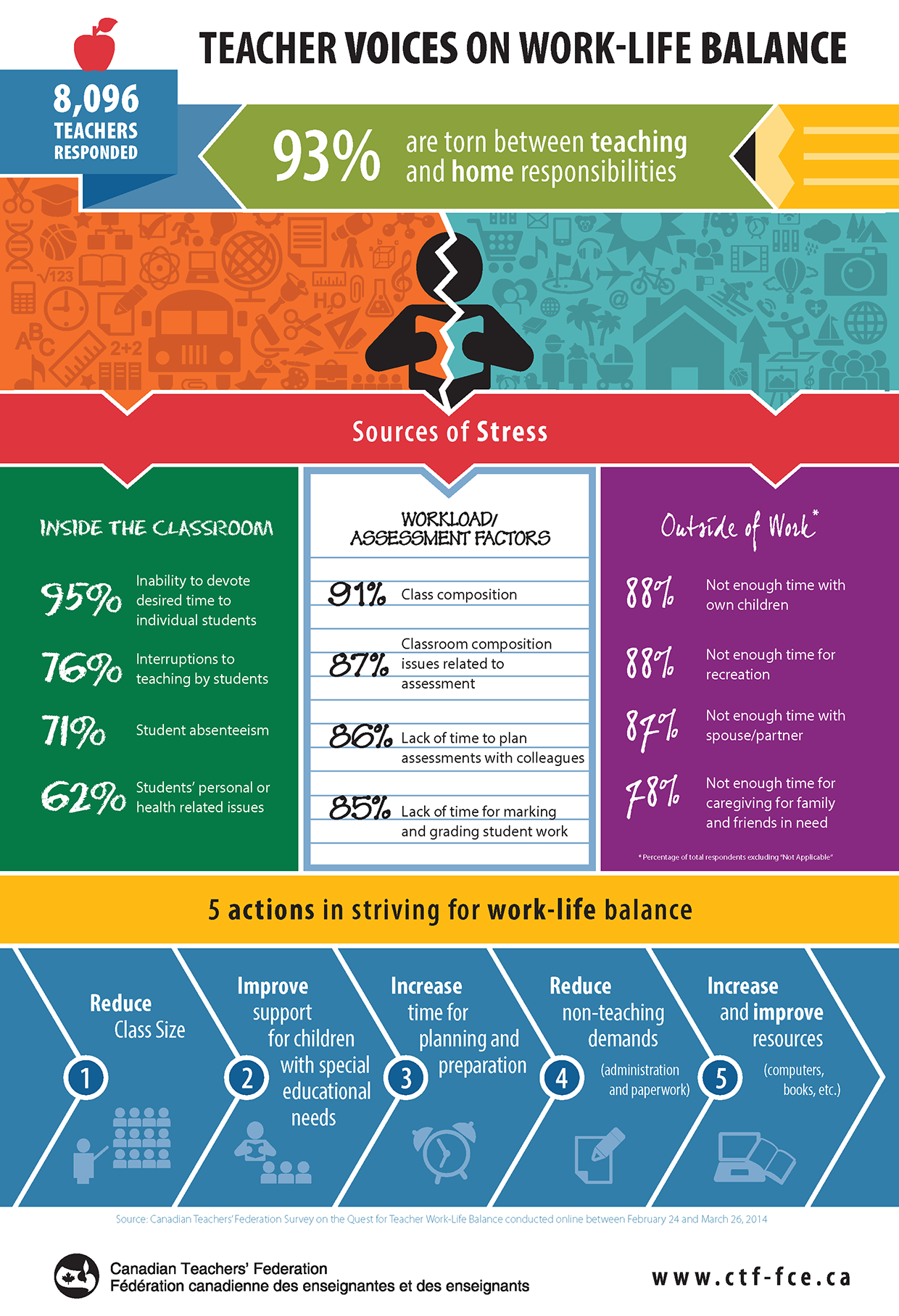
Earlier this year the Canadian Teachers’ Federation conducted a survey to gain insight into the obstacles teachers face trying to achieve a work-life balance. The survey found sources of stress for teachers both inside and outside the classroom. In total, 8,096 teachers responded.

Inside the classroom, 95% of teachers felt that they had the “inability to devote desired time to individual students.” While outside of the classroom, 88% expressed they did “not have enough time with own children.” Other school related stresses included: interruptions to teaching by students; student absenteeism; and students’ home life and health related issues.

The five actions recommended to relieve some of these stressors are familiar suggestions. Since I have been in the field of teaching I have heard demands for all of the recommendations given. They include: reduced class sizes; improve support for children with special needs; give more time for planning and preparation; reduce demand of non-teaching related activities; and improve resources. Most of these suggestions require money, and a lot of it. Are these recommendations realistic? How else can we think about promoting better work-life balance for our teachers?

Read more about this issue here:

http://educhatter.wordpress.com/2014/05/06/teacher-stress-if-class-composition-is-the-problem-is-more-money-the-answer/#comments

teacherstressctf14Take a look at this graphic which complies information gathered from the survey:

10 things your child’s teacher wants to say to you

I (Clare) came across this “open letter” to parents by by Lyndsi Frandsen which I found very interesting. As many schools gear up for Curriculum Night where teachers meet the parents of their students for the first time, I thought this article very relevant. As teachers we so often are misunderstood.Below is the full letter and here is a link to the website>

http://www.ksl.com/?nid=1009&sid=31768239#h1KcVQ2c2uGwgOcx.01

SALT LAKE CITY — Teachers can be a misunderstood breed. A lot of times we find ourselves taking the blame for anything and everything. Your child failed a test? Blame the teacher. Your child got pushed down on the playground? Blame the teacher. You’re having a bad hair day? Blame the teacher.

But have you ever thought about what your child’s teacher would say if the teacher could speak openly and honestly, without any backlash? I interviewed dozens of my fellow teachers and colleagues. Using their comments, I compiled what I hope will be a helpful list of suggestions to improve the parent-teacher dynamic.

Now, before you call an emergency neighborhood meeting and start writing “1,000 things parents wish they could say to their child’s idiotic teacher,” take a step back. Give these teachers the benefit of the doubt, and know the educators who weighed in on this are wonderfully talented, kind, educated, adoring teachers who love what they do.

(On a side note: As I was reaching out to teachers, I felt like I should title this “The help: teacher edition.” It took a lot of coaxing and reassurance in order to get them to talk.)

“Thank you for sharing your child with me each day. … Thank you for trusting me with your most prized possessions. Thank you for helping me create the “magic” that is learning, educating and inspiring.”

1. I can’t do it alone

I am here to tell you that whatever is accomplished during the long school day can be completely undone in just a few hours at home. I am only human. I can’t snap my fingers and get your child to the target reading level. Will I try my hardest? Yes. Will I ever stop trying? No. But if you aren’t actively engaging with your child and reinforcing learning at home, you are robbing your child of opportunities otherwise. I am giving your child the best hours of my day. Please be willing to give your child minutes of your day to spend on homework, reading, etc.

2. I never stop thinking about your child

Even when I am finally home and able to focus on my own little ones, I am still thinking about yours. I am constantly thinking about how to help them overcome educational barriers. I am continuously brainstorming how I can cater to their various learning styles. But it doesn’t end there. I lose sleep thinking about the much-too-heavy-burdens of life their tiny shoulders carry around. I worry about their future and the scary world they will grow up in. I love them fiercely and they are always on my mind.

3. Yes, I am saying your child is lying

I am an adult. I am not a mean, petty, immature teenager who makes up rumors to make your child look bad. If I tell you your child called a classmate a name — then your child did. If I tell you your child refused to complete work — then your child did. Please believe the 30-year-old adult and not your 8-year-old child.

4. We are all cheering for the same team

I know this may come as a surprise to you, but I am not the enemy. Like you, I love your child. Like you, most days I invest more time and money in the children, than I do in myself. Like you, I want what’s best for them. So, when you feel tempted to tell me all the reasons why I treat your child unfairly, or am out to get your child, please remember that. When I hold your child accountable, I’m not treating your child unfairly. When I challenge your child academically, I am not out to get your child. The end.

5. We really don’t think every child needs medication

One teacher (and mother) I talked to learned this lesson firsthand. After her own child was diagnosed with a processing disorder, she realized he just might need medication to help him focus. It was a hard fact to swallow: that the medication she had been so against was the missing piece of the puzzle. Her words: “You would not consider keeping a child from their asthma medication because it would change who they are, so why would you consider keeping a child from medicine that would help them to be their best self?

Medication is not a death sentence. It does not mean that they are dumb or out of control. It does not mean they are ‘one of those kids.’ ” Teachers observe every type of child on a daily basis. Being receptive to their observations and opinions just may pay off for your child. Parents need to advocate for their children. Sometimes, they don’t know how or where to begin. And that’s where we come in.

6. The way you speak about education directly influences your child’s opinion

If you place great value on learning, your children will. If you speak kindly about their teacher, they will. If you tell them they have test anxiety, they will. If you treat school as a chore, they will. If you have high expectations for them, they will.

7. Your child doesn’t have any friends because he is unkind

I understand this isn’t a fact 100 percent of the time. But generally speaking, if your child is kind, compassionate and friendly, then other children will want to be your child’s friend. Funny how that works, isn’t it? It is your responsibility to teach your child how to be a good friend. If your children are hearing you gossip, belittle and exclude others, chances are they will be the same kind of friend you are.

8. It’s OK to let your child struggle

This is how we learn and grow. I understand your overwhelming desire to intervene at the drop of a hat. I understand it is hard to watch your child go through hard things and sometimes fail. I don’t like to watch your child struggle either. But if we do everything for them, they will never be able to do anything for themselves.

9. Your appreciation goes a long way

We don’t want you to feel bad for us. We chose this profession, and if we could go back and do it again … we would be doctors. Just kidding. We would do it all over again. Teachers just want to feel valued and appreciated. Our payoff (clearly) doesn’t come in the form of a check. It comes with watching your child grow and develop a love of learning. Parents who express their gratitude underestimate how far that really goes. So, write a thank-you note every now and again, tell us what a good job we are doing, and spoil the living daylights out of us during teacher appreciation week. (Kidding … sort of.)

10. Thank you

A well-known teacher that has a wonderful reputation with students, parents and colleagues said it perfectly:

“Thank you for sharing your child with me each day. Thank you for taking an interest in what he/she is doing. Thank you for caring about your child enough to let them fail from time to time, but being there to pick them up, brush them off, and help them grow from the experience. Thank you for investing time in your child. It is the most valuable gift you can give them. Thank you for taking time away from your phone or your computer to really be there for them. Thank you for teaching your child responsibility. Thank you for helping them realize that the choices they make are their choices and the consequences, good or bad, are not because of someone else. Thank you for letting me be a part of the ‘village’ that gets to help raise your child. Thank you for the opportunity I get to make a difference in their life. Thank you for trusting me with your most prized possessions. Thank you for helping me create the “magic” that is learning, educating and inspiring.”

Lyndsi Frandsen is the creator of the Facebook page For All Momkind and author of the For All Momkind blog. She has many titles, including wife, kindergarten teacher, sister and her favorite title, Mom.