Category Archives: Reflections

Appreciating multiple perspectives: One Example

There are multiple sites of learning, multiple forms of education, and multiple kinds of learners. From time to time, I (Yiola) have shared posts on Muay Thai as an alternative site of education with a focus on the teacher/student relationship. Muay Thai is a beautiful martial art that originates from Thailand. Most would likely watch Muay Thai and cringe, call it brutal and see it as violent.  It would seem to be a sport that gains  popularity through the thrill of watching and cheering and betting and celebrating in celebrity style the fighters. In the video I share here, World Champion Simon Marcus shares his perspective on the sport.

The way he describes his experience is remarkably peaceful and remarkably personal.  He talks about himself as student of the art and how his teachings bring out his best personal self, where he finds his “most peaceful” moment. He talks about his gratitude for his teacher and the respect for his learnings.

One may perceive the fight as brutally violent while another perceives the fight as moment of peace and clarity ~ a fine example of multiple perspectives. “A Brutal Ballet” indeed.

Education is about knowing yourself, knowing your ability and opening yourself to exciting possibilities for development, growth and achievement. Teaching is about being open to multiple perspectives and appreciating the multiple ways our students find knowledge, achievement and peace… and finding ways to embrace and invite multiple perspectives into our learning environments.


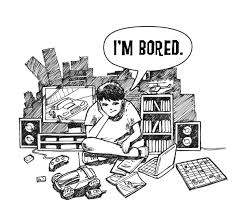
Bored? Try Mindfulness.

bored pic


I (Cathy)  sometimes wonder if children  just need go outside and be part of nature.  Life isn’t just about about  being entertained.  In our society of things, gadgets and high tech, this is sometimes overlooked.   An experience can be  about being contemplation or just learning to listen or observe.  My high school visual arts teacher, Robert Bateman was gifted at encouraging us (his students) to practice this.  He would tell us to just go sit in a field an look at one thing and listen. Pay attention.  I think now this practice would be called “mindfulness”.  As teachers, as parents, do we do  encourage this?  Just a thought.

Language and Literacy and Connecting Community

I  (Yiola) am sitting in a Tim Horton’s, sipping on a double double with milk, and very (yes I just used the word very when it was completely unnecessary!) suddenly feel inspired. I was in the midst of writing about this terrible “work to rule” strike happening in our public schools when a topic far more inspiring came to mind… the power of language and its connection to community.

Moments ago, as I had my head buried in the lap top focused on my blog, out of the corner of my eye I saw a group of older men chatting in their native language… a language that happens to be my own native language, Greek.  I felt a sweet spring of inspiration and connection to these men who gather around the table, sipping their coffees and socializing. It brought back the stories my parents shared of my grandfather walking 2 kilometres each day to the local “cafenio” where he would meet his friends and chat the afternoon away.  I visualized the cobble stone road that led from my Papous’ (grandfathers) house in his village (Yermasoyia); the narrow, hilly road that was lined with small villas and heritage homes. The more I heard the Greek phrases channel through their discourse the more at home I felt in this generic Tim Horton’s shop. I tried not to stare at them as they spoke. What occurred to me, and what may seem obvious and yet not entirely understood until felt, was the intensity of connection and understanding I experienced simply based on my understanding of language. I felt empowered because I knew their language. I felt connected. It felt familiar and safe.

Shortly after another group of men entered the Tim Horton’s and they too began socializing over coffee. This time I did not recognize the language spoken and yet I deeply appreciated the value of their connection. How wonderful to have people in your life that you are able to connect to through shared language. Shared language = understanding.

I look behind me. A couple sits in the booth in silence, each reading a section of the newspaper. Again, a strong sense of literacy at play; a strong sense of cultural connection.

Language and literacy is everywhere. Our language identifies us and connects us to the world.  How magnificently simple and yet so directly relevant to literacy and language development. Immersion in language, opportunities for sharing, talking, communicating, relevant reasons for reading and writing… a simple class field trip to Timmy’s may be in order…

Another school year coming to an end in teacher education

Many universities have their last week of classes this week. The message I (Yiola) end my courses with and what I hope resonates with my student teachers is the message that, at the end of the day,  teaching is ultimately a relational act.  Teaching is about building relationships and fostering a sense of care — having students build a love, respect and belief in themselves and a concern for and desire to learn and achieve. As teachers, we play a significant role in that belief.

In my courses we explore instructional methods: lesson planning, learning environment, creative teaching, and so many curriculum areas. We frame these practices in critical pedagogy and a pedagogy of care. I do my best, in the weekly / bi-weekly class structure of the university, to model what I outline above.

inspiring

I came across this ad on social media and it caught my attention. It made me think of all those  I work with, teach, and care about.

To you I encourage: question thoughtfully, think critically, read intently, and teach confidently.

Wishing everyone a happy end of the school year.

‘Shadiowing’ through Critical Reflection

I (Cathy) am currently working my way through a book on critical reflection.  ‘Working’ is the operative word, as this book, What Our Stories Teach Us, is set up as a guide to take us ( the teacher, professor, etc.) through an active critical analysis of our lives as educators using storying and  critical incidence.  The author, Linda Shadiow, loves to share stories herself.  Below is one of her favourites.  Apparently she has told it often and she uses it in her  book to illustrate how our stories can impact our lives.

A graduate student is attending a lecture being given by one of her intellectual heroes, the Brazilian educator and theorist Paulo Freire. She takes notes furiously, trying to capture as many of his words as possible. Seeing that she is keenly interested in what Freire had to say, his translator asks if she would like to meet him. Of course! She is introduced and he begins by inquiring about her work. Then he graciously agrees to respond to a set of questions she and her colleagues hoped they would get the chance to ask him. She is impressed beyond belief, but time prevents her from asking one last, difficult question. They meet accidentally once more at the event and he wonders if she asked all her questions? No, there is one more. “Given your work, we want to know ‘where is the hope’?” Without hesitating he moves toward her, takes her face in his hands, looks into her eyes, and replies, “You tell them, ‘you are the hope, because theory needs to be reinvented, not replicated … it is a guide. We make history as we move through it and that is the hope.”

(Taken from  http://www.facultyfocus.com/articles/teaching-professor-blog/reflections-on-teaching-learning-from-our-stories/ )

The graduate student is, of course, Shadiow.  She explains in her book that her experience with Freire never left her.  It energized and motivated her.  She had to “give back “.  She invites us as both reader and participant to rediscover our incidences of profound learning and let them move us.

shadoiw_

Children’s Role in Human History: Implications for Schooling

On February 26, I (Clive) read Ivan Semeniuk’s interview in the Toronto Globe & Mail with anthropologist Niobe Thompson, producer of the CBC TV series The Great Human Odyssey. According to Thompson, human life has been quite tenuous over the millennia and only the ingenious have survived. “Our closest call came about 150,000 years ago when…there were fewer than 1,000 breeding adults left” due to “punishing volatility” in Africa’s climate (sounds like Canada today!).

Thompson goes on to talk about key pockets of humans that have survived through incredible ingenuity, involving their “inventing technology to solve the challenges of their world.” This has required creating a whole culture in which everyone participates, including the children. “Whenever I am living with traditional cultures I have the experience of being overwhelmed with the skills my hosts have for living in their environment.” Thompson goes on to talk about the key role of children’s learning in this:

A person cannot become a hunter or a free-diving gatherer or a reindeer nomad as an adult. This is an immense package of skills that one must begin mastering as a child.

This set me thinking. To what extent are children in schools today learning “inert ideas” and “remote matters” (John Dewey) rather than things fundamental to surviving and thriving in the real world? Dewey would agree that one cannot master (and reconstruct) the requisite “immense package of skills” as an adult. The process must occur in earnest from the first day of school (and prior to that in the home). Unfortunately, however, as Nel Noddings says in Education and Democracy in the 21st Century (2013), schooling today is going in the opposite direction.

I do not foresee dramatic changes in the basic structure of curriculum…. Indeed, if we continue in the direction we are now headed, the curriculum will become even more isolated from real life…. It is this tendency that we should resist. (p. 11)

Children do learn a lot of useful things in school: we and our societies are much better off than we would be without schooling. But at present we seem to be headed in the wrong direction. So resist we must. Even in the right direction, we have a very long way to go. Perhaps human survival is not a stake, but human well-being around the planet certainly is.

Facebook as a Tool for Pedagogical Reflection

I came across an interesting post from a museum educator who uses Facebook as a tool to reflect upon memorable moments of teaching and learning that arise during school tours through the gallery spaces. The only limits David Bowles imposes on the documenting of these moments of reflection is to “try to stick to the facts, and not interpret the child’s ideas…describe the context succinctly, and stick to a few sentences at most.” Check the some of the funny, quirky and insightful moments of pedagogical interaction highlighted in his post: http://educatorinnovator.org/status-update-facebook-as-a-reflection-tool/  The post offered me the opportunity to fondly recall and relive some of my past experiences with museum education.

museumed

10 Steps for Avoiding Teacher Burnout

As many of us start a new semester I (Clare) found this article on ways to avoid teacher burnout very interesting and relevant. Although written for teachers, I found a lot of the advice relevant for me as a teacher educator. I particularly liked point # 2  – remember to keep up your fitness level! The article by Ben Johnson is from the excellent website edutopia . Here is the link for the article: http://www.edutopia.org/blog/ten-tips-to-avoid-teacher-burnout-ben-johnson

“Why did I want to be a teacher?” We all face burnout, sometimes on a daily basis, and in my case, especially after fourth period. Most of the time, we can pick ourselves up, brush ourselves off, and go back to the drawing board to try another strategy to find success with student learning. I have to admit that it is getting more and more difficult to make that transition back to a willingness to try again. I can’t help to think students are more difficult than they used to be a few years ago, and pressures from accountability are becoming more oppressive. And of course, the pay for teachers is inadequate. With all of this we may ask, is it worth it?

Rather than provide a list of things to avoid, I would like to take a more proactive stance by sharing things that will help diminish burnout feelings and help you answer, yep, it is worth it.

Step #1) Have Fun Daily with Your Students

Share jokes, brief stories, puzzles, brain teasers, etc. This keeps it interesting for you and for your students. It only takes a minute and they are easy to align to the topic of the day.

Step #2) Take Care of Your Health

The physical status of your body affects your emotional responses, so never feel guilty about taking care of yourself. Skipping lunch or breakfast are bad ideas. Make sure you get enough sleep each day. Take a rejuvenating micro-nap when you get home. Get some better shoes to put a spring in your step. I used to think that I was an active teacher and did not need exercise, but I realized that I need cardio-vascular and upper body exercise, too. Thirty minutes on a treadmill, two days a week will do wonders. Simple pushups strengthen your abdomen, back, and arms. You will be surprised at how much it helps you not be worn out at the end of the day.

Step #3) Learn Something New and Share It with Your Students

Read an interesting book — education or non-education related. I have been reading, The Smartest Kids in the World and How They Got that Way from Amanda Ripley. It is interesting and education related, so I don’t feel guilty about taking time away from lesson planning and grading. Read a classic that you have always wanted to read but never got around to reading. Watch a TED Talk or go to Iuniversity and find something interesting about brain research (that’s what I like to explore anyway).

Step #4) Help Another Teacher

Share your motivating experiences locally or online. Edutopia is always here for that. If you take the time to respond to a blog, you may be surprised at the response. Start your own uplifting blog to help beginning teachers or nearly burned out ones. Be active in your professional organization by volunteering to teach, facilitate, or prepare workshops. Mentor another teacher, either formally or informally. We can all use as much help as we can get.

Step #5) Make Someone’s Day

Call a parent and tell them how good their student is. Find a student that is struggling and sincerely complement him or her on something they are doing well. Show gratitude for an administrator, or fellow teacher by sending them an appreciative note, giving them a hug, or presenting to them a small gift.

Step #6) Lighten Up

Smile (it’s after Christmas and it’s ok). Try looking in the mirror, putting on a smile and then try not smiling for real. It is nearly impossible. So try smiling when you do not feel like smiling. When you greet your students at the door, smile at them and a miracle happens: They will smile back.

Step #7) Be a Scientist

Experiment with new strategies and become an expert in them. Ask your students to help. Do a control group and an experimental group. Document your results and share them at a faculty meeting or a conference. Celebrate success.

Step #8) Look for the Positive

Be a voice for positive thinking, even in the staff lounge. It won’t change the situations, but you will feel better and others might be uplifted too. While teaching is hard, it is not all bad. Half empty glasses are not nearly as exciting as half full ones.

Step #9) Redecorate

Switch out the bulletin boards, move the desks, and adjust the lighting. Add your favorite smells or be adventurous with new ones. I found interesting ones: rhubarb, teak wood, and Hawaiian breeze (usually spray, or solid.) Check with your schools policy about bringing plug-in oil or scented wax warmers.

Step #10) Trust Students More

Let the students know that you will be trusting them more and give them opportunities to earn your trust. Try some project-based learning. Develop strong rubrics, share them with students, and then let them learn as you facilitate and coach.

Turning Things Around

It seems it is easier to fall into the trap of pessimism and negativity because of all the (okay, I will say it) “garbage” teachers have to endure, but that does not have to be our choice. We can choose our attitude, and choosing to do proactive things like those I listed above will go a long way in helping us keep our sanity and avoiding burnout. What helps you keep plugging away? Please share in the comments section below.
 

Finding Beauty and Humour in Winter

Like much of North American we are experiencing brutally cold weather. I (Clare) walk and Winter Wonderlandtake the bus to work so I have struggled with the windchills that have hovered near -25C all week. Looking on the bright side here is a gorgeous photo of a winter scene and a cute cartoon. For those of you living in warm climates – send us some sunshine!

Winter Cartoon