Category Archives: Reflections

2014 in review

Hello Readers of Our Blog,

I (Clare) got a summary from WordPress about our activities this year. Wow! For a little educational blog we are proud of our efforts. Thank you readers for taking the time to read our posts, post comments, and share our work with your network.

The WordPress.com stats helper monkeys prepared a 2014 annual report for this blog.

Here’s an excerpt:

The concert hall at the Sydney Opera House holds 2,700 people. This blog was viewed about 16,000 times in 2014. If it were a concert at Sydney Opera House, it would take about 6 sold-out performances for that many people to see it.

Click here to see the complete report.

Helping Students Develop Their Way of Life

If we teach literacy/English and other subjects well – in a way that interests and engages students and deals with “big ideas” – we will inevitably get into life issues and “values.” This in turn will help students build their way of life. They will not have to wait until they graduate to start figuring out how to be in the world.

Teaching about values or life issues is sometimes questioned on the ground that it involves indoctrination. However, schools already push values in strong ways, e.g., punctuality, hard work, academic learning. What is needed is to expand values teaching (usually in the context of teaching subjects) and find non-indoctrinative ways to do it. Constructivism provides a solution here, because both teachers and students say what they think and everyone learns from each other. In the end, students decide what way of life to adopt, but with the benefit of input from others.

As you may know, I (Clive) am a great admirer of the work of Nel Noddings. I recently found a statement of hers in The Challenge to Care in Schools (2nd edn., 2005) that bears very directly on these matters:

I have heard teachers say, We’re not trained for [discussing values with students]. That’s a job for psychologists (or counselors, or parents, or pastors). Pressed, many will say that they do not have a right to impose their values on students, but these same teachers impose all sorts of rules – sensible and mindless equally – without questioning the values thus imposed. Surely intelligent adults should talk to the children in their care about…qualities that most of us admire. This talk need not be indoctrination any more than mathematics teaching need be lecture and rote learning. (p. 39)

Speaking of values, what could be more immoral than subjecting young people to 12 years of narrowly academic schooling with little attention to life matters? The time has come to make education much more useful to students than it has been for the past two-and-a-half millennia. This requires helping them explore values and develop their way of life.


J.K. Rowling Harvard Address: You need both failure and imagination!

J.K. Rowling J.K. Rowling’s address to Harvard grads in 2008 will be published as an illustrated book “Very Good Lives: The Fringe Benefits of Failure and the Importance of Imagination.”

Harvard president Drew Gilpin Faust said in a statement “I have heard and read many commencement speeches, none more moving and memorable than J.K. Rowling’s. Years after her visit to Harvard, people still talk about it — and still find inspiration in her singular evocation of the idea that living a meaningful life so often means daring to risk failure. What a powerful example she embodies, and what a remarkable gift her speech was, and is, for all of us privileged to hear it then — and to read it now.”

Rowlings’ two main messages are: there are benefits of failure and imagination is crucially important. Thanks to the wonders of digital technology you can hear her speech by clicking on the link below. If you have some time listen to her speech because I (Clare) found it inspiring and funny.

https://www.bostonglobe.com/lifestyle/names/2014/12/02/rowling-harvard-commencement-speech-illustrated-book/mIvzElYtypZUUoYnmLSDfM/story.html

8 Uplifting Quotes For Discouraged Students

At this time of the school year, most educators are busy grading papers or marking assignments. I (Clare) came across this wonderful blog post on http://www.edudemic.com/discouraged-students/. I found these quotes comforting and inspirational. You might find want to share them with some of your students who are struggling.

8 Uplifting Quotes For Discouraged Students By nicolettemorrison on November 27, 2014@hellonicolettem

There are many reasons a student can lose focus in school.Albert Einstein

It can be bad grades that will discourage them to be inactive and to rebel. It can be the environment that can be stifling and suffocating for the students. It can be the fact that many of them don’t find it easy to see the meaning in their struggles in school.

Some students excel under pressure, and there are those who crumble beneath it. It’s easy to praise the students who continuously work hard, but let’s try not to berate those who find it difficult to focus.

When students get tired of school, they find all means to take the shortcut. This is why numerous students end up copying their homework and plagiarizing their essays. This is why websites such as Bestessays.com thrive. They offer services that will ease the difficulties of student, making it tempting for them to sign up and buy customized papers. Technology has definitely made cheating a lot easier.

It’s not just in the output that students slack off in school. It’s in their mentality that clearly shows their disinterest to learn and attend classes. When they start to not care about their grades, it must be a cause of concern for teachers.

Instead of lecturing these lost souls, it’s up to educators and mentors to find ways on how to lure them back into learning. It can be through constant motivation and pep talk. Sometimes, it can be a great story that will push them to work harder.

For now, maybe these inspirational quotes on learning and hard work can do the trick.

 “If you really look closely, most overnight successes took a long time.” – Steve Jobs

With the likes of Mark Zuckerberg being the poster boy of drop-out billionaires, it’s easy to see why many students seem to think that they no longer need school to succeed in life. But closer inspection shows that their path to success is muddier than one would expect. And besides, we can’t all be Mark Zuckerberg. We can’t all be Steve Jobs. But students can try to pave their own way to success and school can help with that.

“Every child is gifted. They just unwrap their packages at different times.” – Anonymous

Students can’t help but compare themselves with the topnotchers in class. While some obviously spend a lot of time studying, some students barely study and still manage to get good grades. Then there are students, who no matter how hard they try still scramble to get decent grades. They need to understand that students have different modes and strengths in learning, and sometimes formal education doesn’t work for many students. But every student has a talent and a skill that need time to develop.

“I have not failed. I’ve just found 10,000 ways that won’t work.” – Thomas A. Edison

It’s easy to get disheartened with a failed Math exam, but it’s just one exam out of many. A low grade for an English essay may be discouraging, but there’s always a next time. What students need to keep in mind is that getting bad grades and making mistakes can only lead to further learning. There’s always room for growth and time to correct their mistakes. One failure doesn’t mean it’s endgame already.

“You can do anything, but not everything.” – Anonymous

With so many options for young minds to explore and wander, students are often pressured to be great in everything. But that’s not something mere mortals can do. There’s nothing wrong with being a Math wizard and finding difficulty penning a coherent essay. What students can do is to focus on what they’re good at and once they’ve mastered this skill, they can go ahead and try other things. They’ll feel burned out if they take too much activities on their plate all at the same time.

“You measure the size of the accomplishment by the obstacles you had to overcome to reach your goals.” – Booker T. Washington

There’s a reason why a B+ in a subject you find difficult seems a lot sweeter than the easy A+ in your PE class. When you work hard for something, an excellent result may not be quick to attain but even a satisfactory result is enough to send students in pure bliss.

“You miss 100% of the shots you don’t take.” – Wayne Gretzky

Students are often disheartened by bad results, but giving up without even finishing their tasks means they won’t even get any result, besides a failing mark. It’s always better to give learning a shot before deeming it as something they’ll be bad at. They may fail the first time, but they’ll eventually get better at it.

“Don’t worry about failures, worry about the chances you miss when you don’t even try.” – Jack Canfield

To reiterate the earlier point, students miss out more when don’t even give it a try. Many students have this mindset that they’ll fail anyway, so why exert an effort in studying? But the fact that they don’t even open their books and rarely listen to discussions means that they didn’t even bother giving it a shot. Efforts may not always reap the best rewards, but it’s better than none.

“Tough times never last. But tough people do.” – Dr. Robert Schuller

School is just a part of life. It’s just a phase as crucial as it may be, and there’s more learning that will happen once you graduate from your alma matter. Don’t think that it’s the end of the line, because you’re just starting. School may toughen you up, but you need that to survive.

So students, keep your chin up because school isn’t the be-all and end-all of your life. The difficulties will pass and you only need to hold on.

PD James, queen of crime fiction, dies aged 94

P.D. James is one of my (Clare’s) favourite writers – I love her detective novels and have spent many hours curled up reading her books. She passed PD Jamesaway on Thursday. Her life story is almost one of fiction – from working in the Home Office to being a leading author of detective novels. In the Guardian newspaper there was a wonderful tribute which is copied and pasted below.
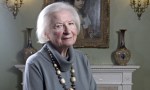
http://www.theguardian.com/books/2014/nov/27/pd-james-detective-fiction-dies-aged-94-detective-adam-dalgliesh

Creator of much-loved detective Adam Dalgliesh was one of the most successful British authors of d The writer PD James, who charted the transformations of British life through bestselling crime fiction starring the detective Adam Dalgliesh, has died aged 94. Her publisher Faber and Faber confirmed that she had died peacefully at home in Oxford on Thursday morning.

Her debut novel, Cover Her Face, was snapped up by the first publisher to set eyes on the manuscript, launching a career that advanced in parallel with that of her fictional police officer, Chief Inspector Dalgliesh. As he found himself promoted to superintendent and then to commander, so James accumulated a host of awards including the Crime Writers’ Association’s Diamond Dagger and the Mystery Writers of America Grandmaster award. Many of the Dalgliesh novels were subsequently filmed for television, with Roy Marsden taking the role of the investigator.

James also won a good number of public honours, eventually finding herself elevated to the House of Lords in 1991, where she sat with the Conservatives.

Born in 1920, James left school at 16 to follow her father into a career in the Inland Revenue. She married Connor White at 21 and moved to London, giving birth to two daughters as German bombers pounded the British capital. Her husband returned from the war with mental health problems, leaving James to provide for her young family by working in hospital administration. With her daughters at boarding school and her husband in hospital, evenings become devoted to writing.

It had always been her “intention” to become a writer, and she began writing about a detective partly as an apprenticeship for writing “serious” novels, as she explained to the Paris Review in 1994. James had always loved crime novels, was unwilling to explore the “traumatic experiences” of her own life in fiction and was well aware it would be easier to find a publisher for a detective story. But the genre also appealed to her taste for order.

“I like structured fiction, with a beginning, a middle, and an end,” she said. “I like a novel to have narrative drive, pace, resolution, which a detective novel has.”

Published in 1962, Cover Her Face opens “exactly three months before the killing”, with a country-house dinner party which becomes, “in retrospect, a ritual gathering under one roof of victim and suspects, a staged preliminary to murder”. The new parlourmaid announces her engagement to the manor house’s eldest son at the village fete and is strangled the following night, a mystery resolved by the refined poet-detective Dalgliesh. “I gave him the qualities I admire,” James explained in 2001, “because I hoped he might be an enduring character and that being so, I must actually like him.”

The author’s hunch proved accurate, Dalgliesh trading his Bristol Cooper for a Jaguar as he took on cases in hospitals, nursing homes and laboratories over the course of 14 novels.

The erudition of James’s detective and the focus of her murder mysteries on the middle classes brought accusations of elitism, coming to the boil in 1995 after a radio interview in which the author suggested “you don’t get moral choice” in what she called “the pits of the inner-city area, where crime is the norm and murder is commonplace”. But the writer made no apologies, arguing “the contrast between respectability and planned brutality is of the essence” in a detective story.

“If you have appalling and violent events happening in a civilised place, it’s a great deal more horrific,” she explained.

With second-wave feminism at high tide, James flirted with a tough, working-class female lead. When Cordelia Gray made her debut in 1972’s An Unsuitable Job for a Woman, she became one of modern crime fiction’s first female private detectives, paving the way for Liza Cody’s Anna Lee and Sara Paretsky’s VI Warshawski. James managed only one more full-length outing for Gray, abandoning the detective after her television incarnation had an affair and became pregnant. “I realised my character had gone,” James said.

International success came with 1980’s Innocent Blood, in which a young woman discovers the murderous secret at the heart of her adoption. James sold paperback rights for £380,000 and film rights for £145,000 – more than she had earned in 10 years working at the Home Office – and promptly retired. “At the beginning of the week I was relatively poor and at the end of the week I wasn’t,” she remembered.

Writing outside the crime genre, her 1992 novel The Children of Men – set in a dystopian future – was adapted to critical acclaim for the cinema in 2006. She also scored a late hit in 2011 with Death Comes to Pemberley, a murder-mystery sequel to Jane Austen’s Pride and Prejudice.

James’s apprenticeship in crime fiction became a lifelong commitment, as she came to believe “it is perfectly possible to remain within the constraints and conventions of the genre and be a serious writer, saying something true about men and women and their relationships and the society in which they live”. To suggest that the formal constraints of crime fiction prevent its practitioners from producing good novels “is as foolish as to say that no sonnet can be great poetry since a sonnet is restricted to 14 lines”, she argued.

Speaking in 2001 at the launch of Death in Holy Orders, her 11th Dalgliesh novel, James explained that her success was founded on the belief that plot could never make up for poor writing and that authors should always focus on the reader.

“At the end of a book, I want to feel, well that’s as good as I can do – not as good, perhaps, as other people can do – but it’s as good as I can do. There are thousands of people who do like, for their recreational reading, a classical detective story, and I think they are entitled to have one which is also a good novel and well written. Those are the people I write for. They don’t want me to adapt to what I think is the popular market. They want a good novel, honestly written and I think they are jolly well entitled to it.”


Guest Blog: Gisela Wajskop’s Reflection on Her Time in Canada

Gisela WajskopIt’s snowing! But I (Gisela) have nothing to complain about! From January 2014 until today I have enjoyed many winter days in Toronto. I’ve been a Visiting Scholar from Brazil sponsored by Clare Kosnik for almost a year at OISE/University of Toronto. It has been an amazing experience! More than the cold weather I’ve discovered a great country: from red maple leaves to squirrels on streets, from Lake Ontario to Lake Louise, from Quebec City to Montreal, from AGO to Canadian Museum of Human Rights in Winnipeg, from rainbow positive to multicultural spaces. The environment and people have touched my heart and brain!

I have interviewed teachers and educators and I have observed many babies and kids at schools and Day Care Centres. I have met many smart people — undergraduate students, faculty, and newcomers to Canada (who have diverse cultures, values and languages).

This sabbatical opportunity contributed to my analysis of teacher education in Brazil. The insights I have gained came about through discussion of my data at Clare’s and Clive’s BTE team meetings and by comparing my findings to some of the points made in lectures that I attended at OISE and at conferences both in Canada and the U.S. One of the exciting developments was that my proposal on my research was accepted by AERA. I will present my work in Chicago next year.

This wealth of experiences and my academic partnership improved my own vision of education. Being a teacher is complicated because of the many dilemmas and issues yet being a teacher should connect to one’s own life. Teaching occurs in a dynamic, diverse, and interactional-based setting!

My experience in Toronto gave me spectacular new knowledge about being a teacher in a democratic and multicultural city! I have learned from OISE and the Toronto District School Board that a good and positive vision of education is supported by research. This vision is “tested” daily by students, parents, and principals. The most important piece of the education puzzle is teachers. I have been impressed with the ways that teachers think critically about education and have developed many good strategies for teaching which in turn supports student learning!

I learned also that accountability counts! More than policy initiatives, accountability should include the community’s attitude towards the kids and youths in schools! Even though Canadians complain about their schools, I have seen some great initiatives: Triangle Program that supports LGBQT high school’s students; a Parkdale school that supports ESL students who often struggle financially and has a number of refugee children from around the world; and schools with an Afrocentric-positive space to support student well- being. I have learned about connecting undergraduates students with teacher education research which will help these future teachers build a whole identity and professional practice.

Thanks everyone who supported me in the time I spent in Canada! I hope that OISE will help my country improve our national system of education. Doors are open between our countries! See you soon!

Happy…October 31st!

I (Cathy) was delighted by the dancing Jack-o-lanterns that greeted me this morning from my Google home page.  It captured the celebration of fall and harvest and only hinted at the October 31st celebration that haunts many Ontario schools now as they struggle with Halloween.    Last year many schools in the Niagara School Board (in southern Ontario) banned the celebration of Halloween.  This year, in an  Port Colborne elementary school, a memo was attached to the monthly calendar requesting  students wear orange and black clothing in favour of “a more inclusive Spirit Day.”

When North Ward School in Paris, Ontario banned any celebration of Halloween in the school this year, the parents were outraged and demanded to know why. The answers they were given varied,”it interferes with children’s learning”, “teachers don’t want to put make-up on 30 children.”   When the parents asked if they could set some rules in place like, “no make-up” and “only celebrate in the afternoon” the parents were directed to Wayne Baker, the superintendent of education at Grand Erie District School Board.  On Monday, 2 parents had a two hour meeting with Baker. In the end, the parents  were simply told that the situation was a human rights issue.  It was unfortunate that the parents  were not told this from the beginning.  It was also unfortunate that the parents were not included in  the decision making process.   That’s what parent councils are for-  to be inclusive of and serve the community.

I asked a young mother yesterday (from the Halton School Board in Ontario) if her children were dressing up at school.  She smiled and answered, “Yes, but we have rules now.  No fake blood, no make up, no masks and no fake weapons.”

These rules made sense to me.  I understand that parents may want their children to celebrate the same special occasions that they did as a child.  But our society is changing and sensitivity and understanding will be needed on both sides of the Halloween fence as we adapt, especially in our schools.

On a personal note, my house is decorated, cupcakes are made for the local children (who know me) and the big basket of (my favourite) potato chips is at  the front door waiting for the  little trick-or-treaters who still celebrate- after school that is.

Happy Halloween if you celebrate. If you don’t, have a wonderful fall day!

Don’t Walk, Run to Buy Berliner and Glass’s New Book: 50 Myths and Lies that Threaten America’s Public Schools

This August, David Berliner and Gene Glass published the book 50 Myths and Lies that Threaten America’s Public Schools: The Real Crisis in Education (Teachers College Press, NY). I (Clive) just read a review of it by Paul Hood in Education Review, a publication of the National Education Policy Center.

It is one of those books you wish you had written but is so important you’re glad (and relieved) someone else wrote it, now. It will be a huge shot in the arm for attempts to defend public education against the trend toward standardization, top-down control, and even dismantling. While the book is about U.S. schooling, it struck me in reading the review that the same arguments apply to public schooling in other countries. We have often exaggerated the difference between the achievements/challenges of schooling in the U.S. and elsewhere.

According to the review, James Popham’s back-cover blurb about the book is as follows:

“What do you get when two world-class scholars and a team of talented analysts take a hard look at 50 widely held yet unsound beliefs about U.S. public schools? Well, in this instance you get a flat-out masterpiece that, by persuasively blending argument and evidence, blasts those beliefs into oblivion. Required reading? You bet!”

As Popham notes, the authors enlisted the help of a whole team of academics to write on the various myths, thus adding greatly to the depth and accuracy of the analysis. Taking such a step speaks to the judgment, humility, and public concern of these outstanding individuals. I for one wish to thank them for what they have done – and am running to buy the book!

Slam poetry, literacy and classroom culture: What one young teacher shares

Several posts ago I shared an example of slam poetry. Slam poetry, for me, is alluring. It captures my attention. I have always found that with poetry, all kinds, there is passion, feeling, and emotion.  It speaks to me. Slam poetry is raw and real and leaves little to the imagination. It shares the here and now of one’s experience and tells the story of one’s truth.

Here is a short clip of a young teacher who shares with us what he tells his students:  tell your truth.

http://www.upworthy.com/25-year-old-teacher-had-only-4-minutes-for-his-1st-ever-ted-talk-he-nailed-it?c=ufb1

His 4 core principles (literacy related):

Read critically

Write consciously

Speak clearly

Tell you truth

This teacher speaks of classroom culture, modelling ways of thinking and being, and his experience as something worthy of words and sharing.

On the eve of a new school year, I want to wish all teachers, students, and teacher educators a year filled with passion for learning and inspiration. Teaching is not easy but when the fire for learning ignites in our students we know, as educators, that there is little more gratifying or rewarding.


The Baby Liked the Questions: The Joys of Research on Teaching

As Clare mentioned back in May, I (Clive) had to serve as “baby whisperer” for an hour or so while she interviewed one of our New Jersey teachers, and I acquitted myself quite well. This past Thursday a similar situation arose, only this time I was on my own.
One of our tenth year Ontario teachers, Serena, had a baby girl in March and has been on mat leave since then. She kindly agreed to let me come to her home for her annual interview, and when I arrived I was pleased to see that “Sara” was to be part of the event. She is an exceptionally happy baby, but like all 5-month-olds likes to go on to new things fairly often.
Sara appreciated having a visitor in the room and bounced around on Serena’s knee for about 15 minutes, keeping an eye on the interview. Next came 10 minutes suspended in a jumper surrounded by toys, followed by a feeding time. As new distractions failed to impress, it become obvious she had to transfer to my knee. I was very comfortable with this arrangement, but after about 20 minutes the novelty of watching the interview from that perspective also wore off.
Back on the sofa next to her mother, Sara then discovered Serena’s copy of the interview questions and took great delight in them. Gleefully tearing them up and chewing on them occupied her for a full quarter hour! We were able to finish a wonderful interview and everyone was happy.