Category Archives: Reflections

10,000 Hits and Counting

Today marks a milestone for our blog. We had our 10,000th hit! Wow! I (Clare) started Pooja Dharamshithis blLydia and Cliveog in January as a way to share our research and it has grown beyond my wildest dreams. For a little education blog we now have 126 followers and visitors from around the world. My research team – Cathy, Yiola, Lydia, Pooja, and Clive – have faithfully written such interesting posts that I have learned much from them and about them. Thanks team. Thank you to our guest bloggers – Monica, Shelley, and Gisela – for enriching our site. And a huge thank you to Arif who has helped with the technical parts of the website and for his guidance in creating a dynamic Cathy Miyatablog.
Yiola CleovoulouI would never have thought that blogging could be such a rewarding form of writing. I have learned much about this genre of writing and enjoyed searching for topics that I hoped would be of interest to others Thank you to all of our regular blog readers and followers whose regular visits motivated us to keep on going. We regularly get feedback from readers on our site. Thanks readers for your compliments and feedback. We read every comment and appreciate the time you take to write to us.

So a shout out to social media for making this blog an international adventure focused on literacy and literacy teacher education.IMG_7907[3]

Trivago Guy: Hot or Not?

It is interesting observing what captures the public’s interest. I (Clare) was inundated with Trivago Guycommercials for Trivago during the World Cup and the Winter Olympics. The commercial features a middle-aged man advertising the amazing features of Trivago (a travel website). I commented to Clive that I thought he was cool and much to my surprise he replied he thought he looked a little seedy. In the Globe and Mail today Sarah Hampson has a whole article on Tim Williams the Trivago Guy.Social media is buzzing about him with some saying he looks like he sleeps in his car (not good for a travel website) while others wonder about his small waist and beltless jeans. She notes that: “good or bad, Trivago Guy has people talking which is a measure of successful advertising campaigns.” Social media has catapulted Trivago Guy into fame.

Los Del RioIn the Toronto Star today there was an article about another unlikely media “darling” the Spanish duo Los Del Rio who sang the embarrassingly corny song, Hey Macarena. “They hit the jackpot in colossal fashion with one of the most infamous songs of all time” that became a staple for “every single wedding, sporting event, bar mitzvah, and other large social gathering on the planet.” Why did this happen? (and without social media).

What is the appeal of Trivago Guy or two “decidedly unfashionable middle-aged gents” crooning?  I am not sure but it sure is fun watching for the next hot “thing.” I think teachers could have a great time discussing with students who and what captures the public  interest. It would be interesting to hear teenagers’ views on Trivago Guy!


Happy Teaching, Happy Learning: 13 Secrets to Finland’s Success

I (Clare) read a fabulous article, Happy Teaching, Happy Learning: 13 Secrets to Finland’s Success in Education Week. http://www.edweek.org/tm/articles/2014/06/24/ctq_faridi_finland.html?tkn=XTXDqgQYqARkH8OSadND1VkL5PvV%2BGHkxJFc&intc=eschildren reading

A teacher, Sophia Faridi, visited schools in Finland where she was so impressed:

Perhaps what struck me most about schools in Finland was the relevant, genuine learning taking place right before my eyes. For example, I had the chance to sit down with a group of high school seniors working on a project examining U.N. extradition trials. Without any teacher present, students were engaged simply because the subject was important to them.

She identified 13 features of this remarkable school system.

1. A heavy emphasis on play.

2. No high-stakes standardized testing.

3. Trust.

4. Schools don’t compete with one another.

5. Out-of-this-world teacher prep programs.

6. Personal time is highly valued.

7. Less is more.

8. Emphasis on quality of life.

9. Semi-tracked learning.

10. National standards are valued.

11. Grades are not given until 4th grade.

12. Ethics is taught in the primary grades.

13. Collaboration and collaborative environments are strongly emphasized.

This article would be a great resource for discussing the big and small picture of education. It shows that in a system where teachers are valued, respected, and trusted, high quality education results.

Back to Values Education

WClive Becke recently had postings from Shelley on fostering student “well-being” through “mindfulness” and Yiola on “mental health” education. Both these topics are increasingly prominent today. In Ontario character education has been stressed for several years, and currently mental health education is an MOE emphasis.

I (Clive) did my PhD in moral philosophy and researched, wrote, and Lydia and Shelleytaught in values or “way of life” education for a couple of decades. I even developed grades 1-12 learning materials in the area. But finding that teachers had very little time for separate values instruction, I broadened my work to teaching and teacher education in general – and haven’t regretted the shift.


However, it’s becoming increasingly apparent to me that teaching well requires a sound set of values and approach to life, society, and the world. Educational issues are ultimately life issues, and we can’t resolve one without the other.

Fortunately, the scope for addressing life issues in subject teaching is enormous. In literacy/literature, for example, a large proportion of the discussion and project work could be on values related matters. What is needed is for teachers and teacher educators to take up this area in a systematic way in the context of promoting subject learning, which is our main occupational mandate.

This in turn requires a much deeper understanding of the nature and importance of values, and the need to have an articulated approach to life. We’ve been used to leaving values up to philosophy and religion, or to saying (especially since the 60s) that it’s just a personal thing. But the task is extensive, fundamental, and something we must all engage in – together. Each person will have their own way of life but there are important general elements, and teachers and students should work together on both.

New Moms: We Are Here for You

Leah McLarenLeah McLaren, a columnist for the Globe and Mail (our national newspaper), wrote an open letter to the wife of Peter McKay (Canadian Justice Ministry). McKay has been embroiled in a scandal regarding leaked emails he sent to his staff for Mother’s and Father’s day:

“The Mother’s Day email hailed women for the home and childcare duties they perform before arriving at the office, while the Father’s Day message made no mention of diapers or school lunches, and instead praised them for “shaping the minds and futures of the next generation of leaders.” http://www.ctvnews.ca/politics/mackay-enough-has-been-said-about-sexism-controversy-1.1889490

In McLaren’s article she talks about the challenges of being a new mother (McKay’s wife, Busy MomNazanin Afshin-Jam MacKay) recently had a baby. On our research teams we (Clare and Clive) have a number of new Moms who are juggling work, study, childcare, and …. Although they do not complain I (Clare) can see the exhaustion written all over their faces. I witness how their confidence ebbs as they so often feel like they are not doing enough, they are not carrying their weight on the team, they are not spending sufficient time on their research, and on and on. McLaren advises Nazanin Afshin-Jam MacKay:

No matter how overwhelming it feels now, while your son is small and dependent, remember that one day it will change. The former you – the activist and author and tireless campaigner who never had spit up in her hair or a soother in her handbag – is still there, lurking at the back of your neglected shoe closet. She might have receded for the moment, but she will emerge again. And in the meantime, here’s a tip: Don’t be afraid to ask your husband to do more. I know he’s busy.

Check out the full article are: http://www.theglobeandmail.com/life/article19344705.ece

Given the way careers unfold many female doctoral students and new faculty are new Moms. Take heart – you are doing plenty and do not forget that that you are smart women who deserve to be in academia. Brush that guilt off your shoulders. The exhaustion will pass and you will be stronger and wiser. Remember, we are here for you and will continue to be here for you because you are our valued colleague and friend. Print off McLaren’s article and when you need a boost, read it (mind you it might be at 2:00 a.m.).

Exploring a Vision of Teaching with Japanese Student Teachers

bn_comeon_onFor many years, I (Clive) have had a connection with Kobe Shinwa Women’s University in Kobe, Japan. https://www.kobe-shinwa.ac.jp

The University has just established an International Education Research Center with a global perspective and I was asked to be a visiting scholar there. On Thursday I returned from a brief visit, having given lectures and engaged in discussions about our SSHRC longitudinal study of teachers and its implications for teacher education.Kobe Shinwa

On Tuesday I conducted two classes with second year students. We discussed the growing sense of expertise among the teachers in our study, their decision-making about which topics to emphasize and how to teach them, their increasing emphasis on integration and individualization, and their search for a degree of work-life balance so they could “survive and thrive” as teachers and be a role model for their students.

Clive BeckDespite the constraints of the national examination system, the student teachers were very interested in these ideas and seemed keen to explore them during their pre-service program and subsequently. They felt there was some room for flexibility within the system and they should begin during their preparation program to figure out how to take advantage of this flexibility as much as possible.
Kobe Shinwa Women’s University has an outstanding reputation for teacher education at the elementary level and a high proportion of their graduates get jobs immediately. This encourages the teacher candidates to think deeply about pedagogy because they have a good chance of having a classroom of their own in the near future.

Guest Blog: Living the Inter-generational Novice/Expert Flip Flop

Monica McGlynn-StewartMy (Monica) husband and I live with our two teenaged children. Anyone who is or has lived with teenagers knows that it can be challenging at times. I imagine that this dynamic has been difficult for many generations, yet I think this generation is living through a unique twist on an old problem. Teenagers have always been experts in their own world as compared to their parents. They know what is cool to say, wear and do, and their parents definitely do not. Traditionally, they knew a great deal less about the world their parents inhabited. However, now teenagers are also experts in aspects of their parents’ worlds. For example, just last week our 16-year-old daughter helped her dad with his business website, and our 13-year-old son taught me how to use Google docs for my research. In some ways, they are quite proud to be able to teach their parents something (to be the experts), and proud that we are doing our best to keep up with technical innovations in communication (eager novices), but they are also irritated when we ask them for technical help. Partly I think they are just annoyed that we are taking them away from whatever they were doing, but I also think they are a little uncomfortable dealing with their parents as novices. On the other hand, they are not too happy when we are experts either. They get annoyed when we are better able to navigate material that they have so expertly found on the internet. Our “expert” old-school skills of skimming for relevant information, synthesizing and evaluating material leave them exasperated. How dare we understand more about their world than they do! When I asked my kids how they would rate themselves and us on a scale of 1-10 regarding proficiency with ICT, they rated themselves a 10 and us a 4!

Recently (May 8, 2014), CBC’s The Nature of Things ran a fascinating documentary called Surviving 🙂 The Teenage Brain. They present a great deal of interesting research on teenagers and conclude that, “Today marks the first time in history when children are an authority on something really important – the digital revolution. With social media, human social evolution is unfolding before our eyes and under the leadership of teenagers.” Check it out: http://www.cbc.ca/natureofthings/episodes/surviving-the-teenage-brain


Reflecting on my time at the International Symposium for Digital Technology and Literacy/English Teacher Education

I (Lydia) feel fortunate to have had the opportunity to participate in the symposium last week as many of the issues raised resonated with my current research examining student teachers’ experiences with contemporary literacy teaching and learning. The issues highlighted during the individual presentations and accompanying discussions offered rich insights into the status of teacher educational internationally.

IMG_2590

I’d like to share a few of the questions raised during the symposium that remained with me and will continue to inform my research in literacy teacher education: What should a curriculum of contemporary teacher education include? In what ways can a curriculum of teacher education provide the space and quality time necessary for student teachers to truly engage as learners? How does power continue to operate in the curriculum? How do digital tools and social media spaces construct reading and writing? What do these digital spaces permit and what do they restrict? How is knowledge constructed, represented, and distributed within digital spaces? What are the pedagogical consequences as students engage with different modes within digital spaces? These are just a few of the questions I continue to consider upon my return from the symposium. Having the opportunity to consider the complexities and issues relevant to teacher education with international scholars was truly inspiring. I look forward to continuing our rich conversations.

IMG_2560

International Symposium on Literacy/English Teacher Education: A Focus on Digital Technology

With the symposium a few days behind us, I (Pooja) have had some time to reflect on what was discussed in London, England. Clare wrote a reflection post on day one of the symposium (https://literacyteaching.net/2014/06/06/symposium-day-1-reflections/), so I want to reflect a bit on day two. Day two started off with mini-presentations which asked presenters to focus on a central question: What is happening with digital technology in your context?

IMG_2564

Shawn Bullock, assistant professor at Simon Fraser University, raised some interesting issues related to digital technology and education:

  • Technological Determinism: A theory which asserts we need to stay current with technology to stay relevant in society; technology determines cultural values and society’s structures
  • Digital Publics: The theory that the nature of public space has changed significantly over the past years. The nature of public space has gone from persistent to replicable to searchable in the past few decades:

o   Persistent- recording (video, audio) events changed the nature of public space;

o   Replicable- recordings became replicable;

o   Searchable- today we can search for any recording

(danah boyd)

Understanding how the nature of public space has drastically changed over the years, Shawn posed an important question to the group: What is the role of education in theorizing privacy in the digital age?

IMG_2582

As the symposium was coming to a close, we were guided to reflect on the past two days. Many people realized that the rapid increase of standardization and data driven initiatives was happening across all contexts. However, many individuals commented that the conversations over the past two days were “energizing.” Being in conversation about big issues across international contexts made many teacher educators realize they were not alone. In fact, many commented they wanted to keep up the momentum by further collaborating and “making some noise” in teacher education.


IMG_2617


Once again, we’d like to thank TUG Agency for so graciously hosting us. TUG provided a vibrant and exciting atmosphere for our symposium to take place. Check out their website at: http://www.tugagency.com

Thank you!!!

Symposium: Day One Reflections

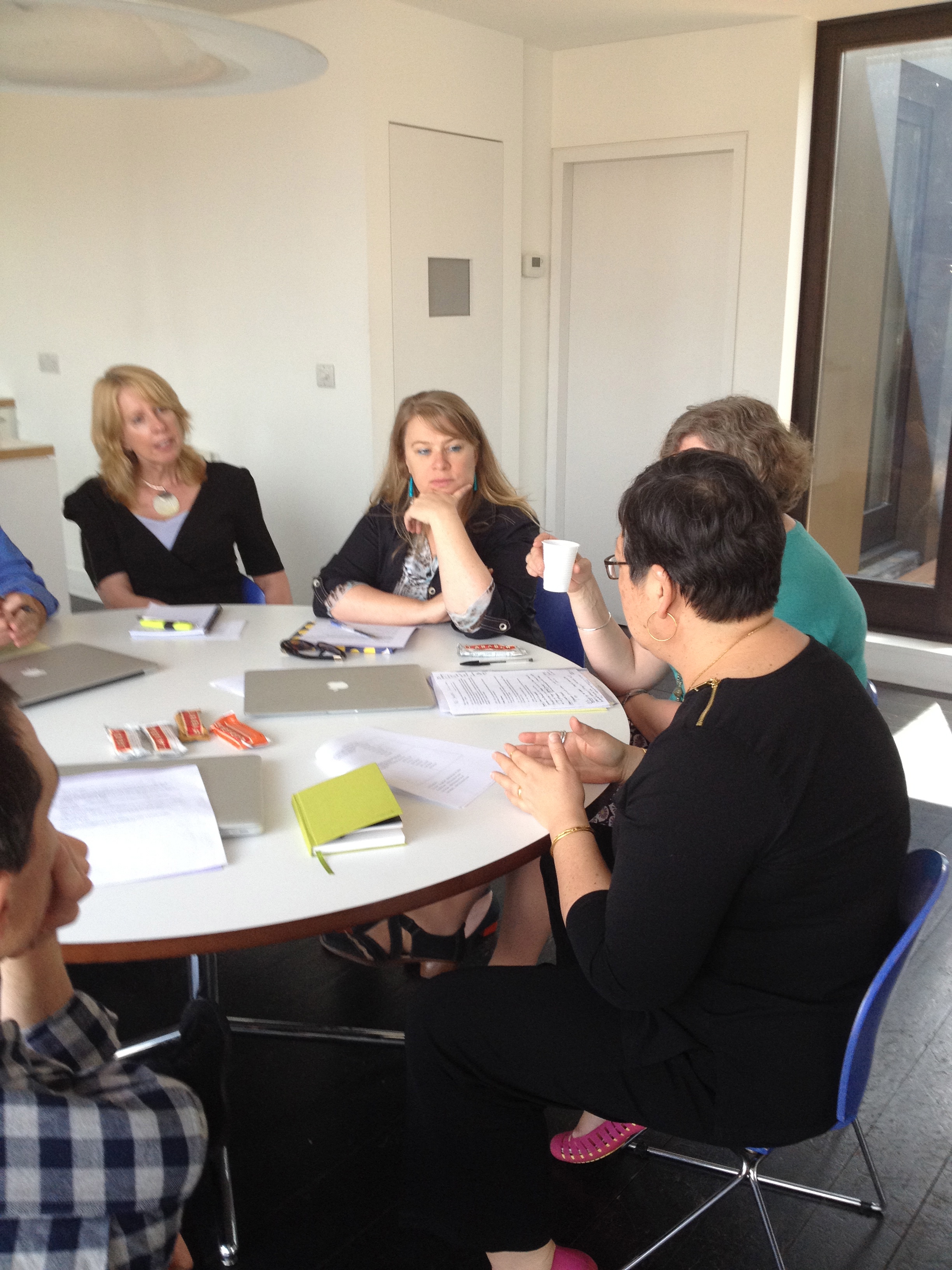
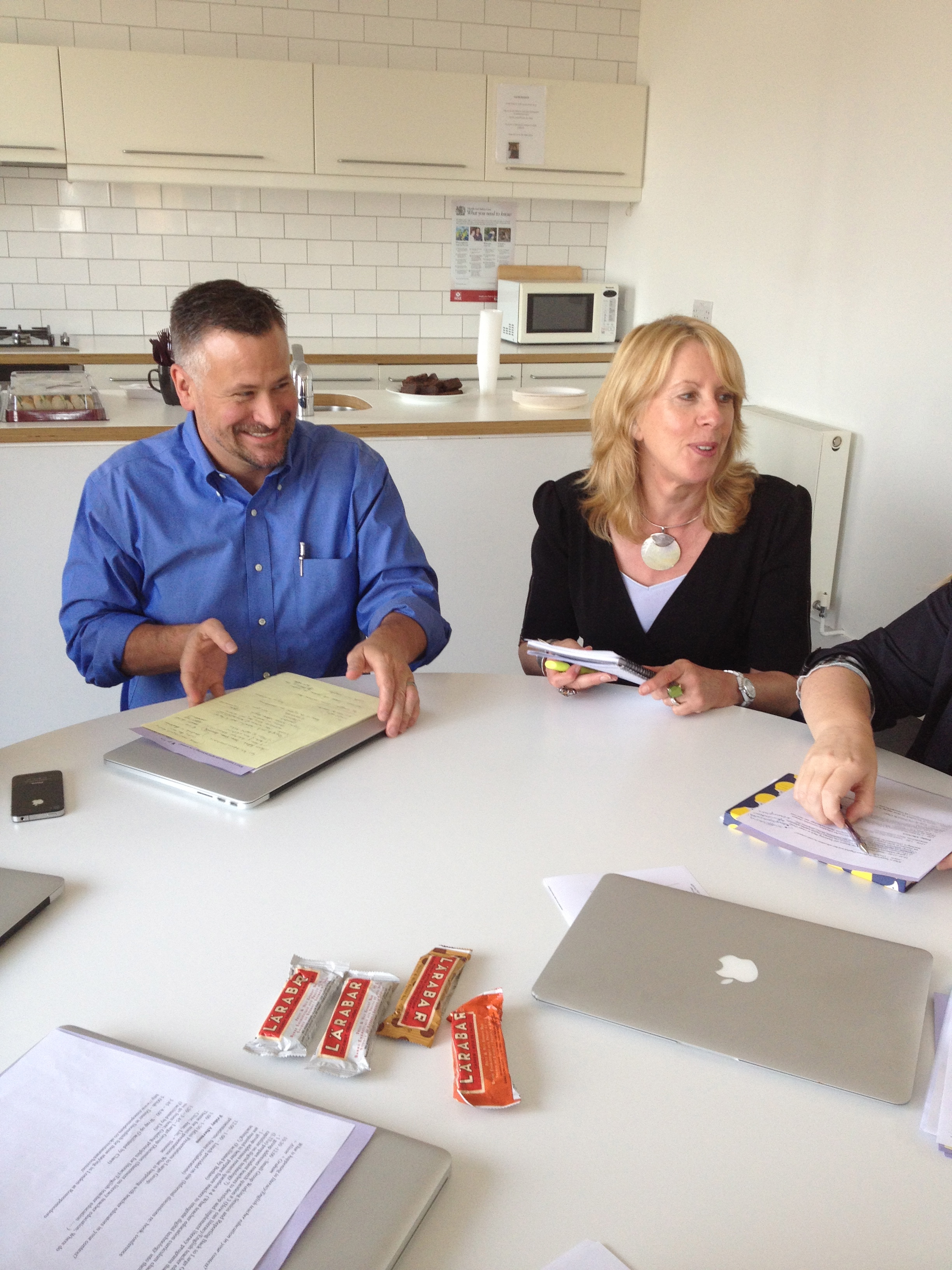
Lin GoodwinThe first day of our Symposium was a smashing success! The large group discussion of “where we are” revealed the extreme pressure on teachers and teacher educators. We heard about the fast and furious rate of reform in some countries – non-stop initiatives coming from the government. These are so prolific that there are often contradictory messages (e.g., be inquiry-based but focus on skills development). The mini presentations addressed a range of issues: what happens when standards are implemented; student teacher expectations for courses versus the teacher Lydia and Cliveeducators’ goals; problems of teacher retention; the vast number of pathways into teaching creates confusion; and teacher educators having different emphases in their courses even when there is a common syllabus. A problem that arose is lack of control over the implementation of standardization. It can take a very different form from the envisaged use of the standards. The place of digital technology in literacy/English education still eludes and needs much more discussion of what to do and how to do it so that technology is used to support learning.
Cathy MiyataThe discussion was rich and far-ranging. A number of participants commented that we rarely have an opportunity to discuss “big issues” in education and teacher education.
Today promises to be another day full of lively discussion.