Category Archives: schooling

FDK update: Language and the Arts

Today is a holiday in Ontario and in several Canadian provinces: Family Day. A day to spend much needed time with family. Family Day comes at a good time since temperatures are beyond unbearable to many (me! ~ Yiola!) and the winter blahs bring a natural insistence to just take an extended break.

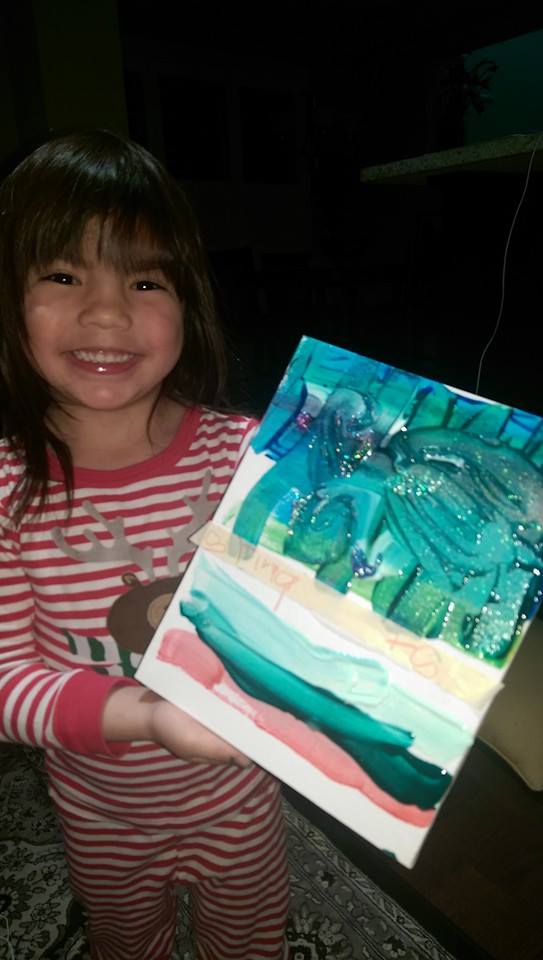
In honour of Family Day I would like to share a story about my family and how my Sylvia Clare (my four year old) is getting along in FDK.  About one week ago, while at home Sylvia Clare decided to paint. This was not unusual as she often paints at home. What was new was her language and ideas about art and herself.  She ushered me to the playroom, took the lead and began to explain that we were going to explore lines.  Lines I thought? So Sylvia Clare understands an element of art?  I sat in silence with what I imagine was a curious look on my face as she continued with confidence: “I’m an artist”.  Those words screamed at me with sheer joy and power. I had never called Sylvia Clare an artist… it was not something I thought of doing, although of course in my heart and mind I believed my child was an artist and a scholar and an athlete and a…..   ”

“Now mommy, you need to wear a smock so your clothes stay clean and roll up your sleeves. Please get the paints”.I followed her instructions.  Next thing I saw was Sylvia Clare carefully dividing the canvas. She began at the bottom and drew careful lines across the canvas using primary colours. Then on the upper part of the canvas she created thick textured, almost bubble like “scribble” where she mixed the colours. The entire time she was talking about her art: “Here mommy I am painting straight lines with primary colours, you see? And up here (top of the canvas) I am trying to see what scribble is like and I added some sparkle”.  She spent a lot of time working on her art and I sat and watched in amazement. Here are some pictures of Sylvia Clare from that day:

sylsmock

sylpaint

paint


Days passed and I wondered how Sylvia Clare was able to develop such clear language about the arts and conceptually understand the elements and most importantly to see herself as an artist. And then, the FDK newsletter came home.  The teachers shared the following in the newsletter:

The students have also been learning about a modern artist names Piet Mondrian from the Netherlands, who used primary coloured shapes and black lines to create famous pieces. They have used his method to create their own line designs. We have also experimented with bubble wrap. Some of the children are referring to themselves as “artists” now…

How one perceives oneself is often how one becomes. Sylvia Clare sees herself as an artist. She can talk about the arts and she confidently engages in art work.  So, on Family Day today I am certain we will be back in the playroom painting and playing and reading and doing… and I am sure that I will be the one who will learn the most.

Happy Family Day!

Visiting the Rishi Valley School…Part 2

IMG_8033

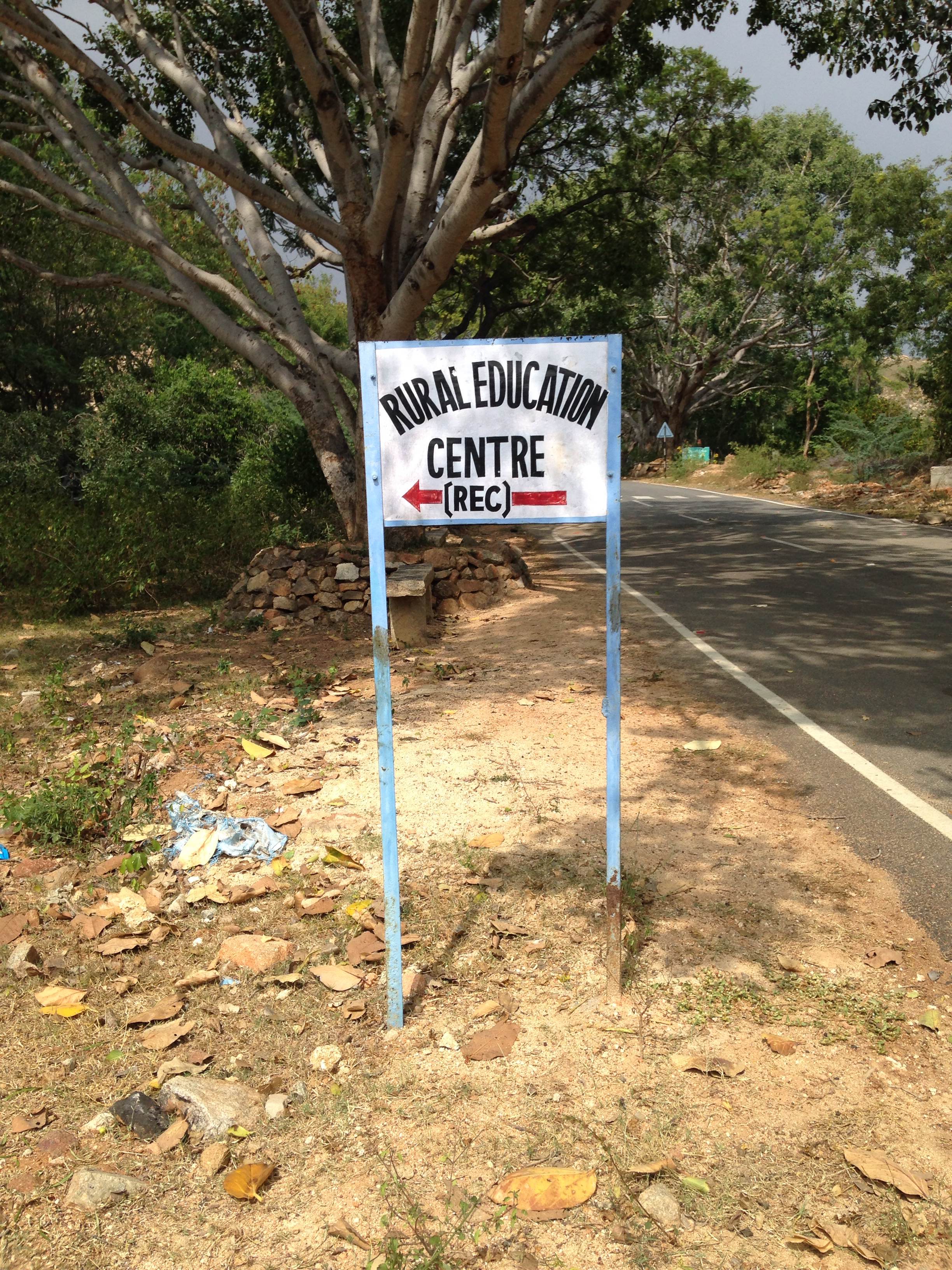
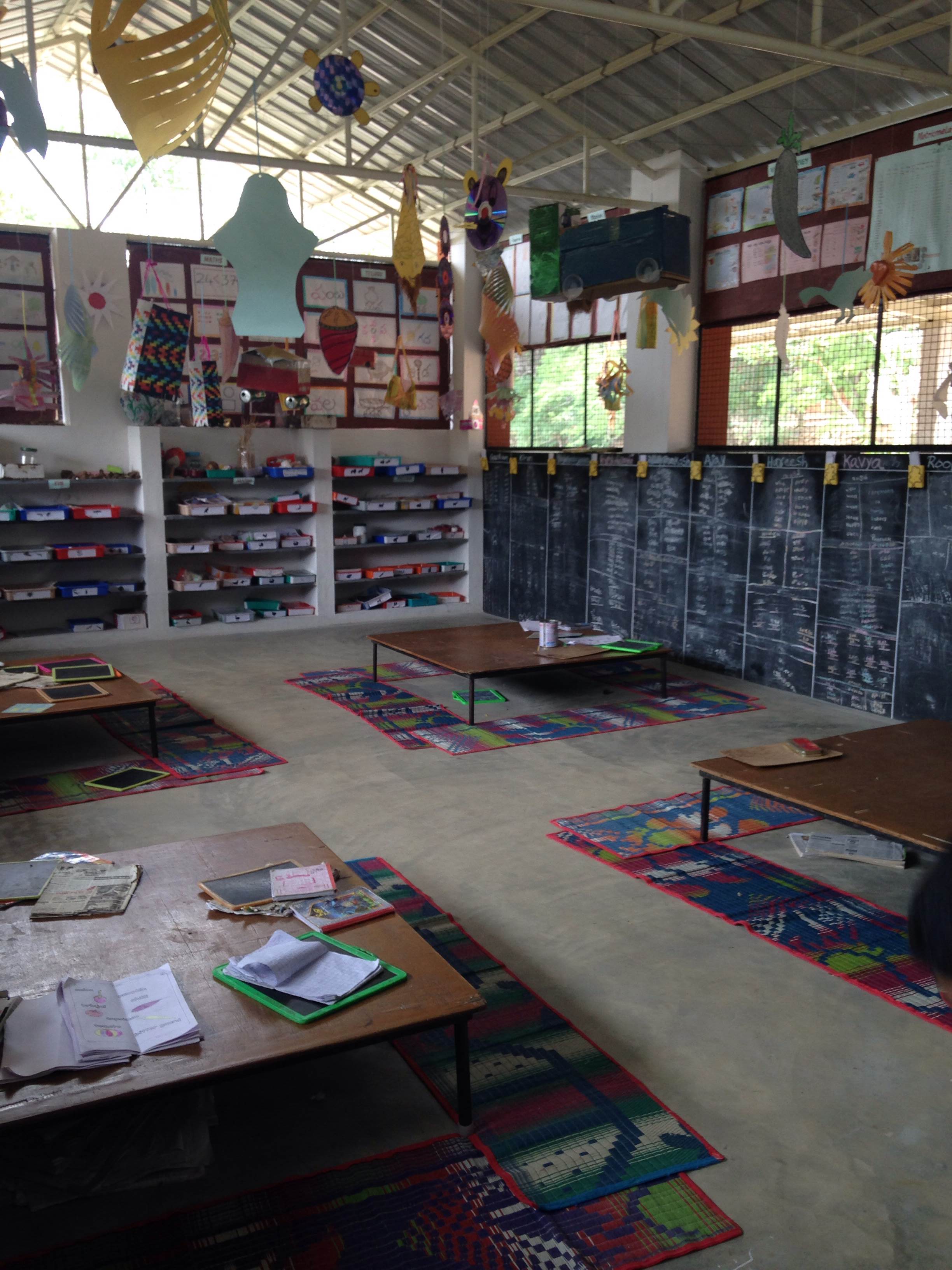
While at the Rishi Valley School I had the opportunity of visiting the Rishi Valley Institute for Education Resources (RIVER), a teacher training and development wing of Rishi Valley Rural Education Centre. The school serves children from the surrounding rural communities, several of which are impoverished. At first glance the RIVER school appears to be like many rural schools in India; one large classroom, one teacher, twenty-five students spanning across 5 grades. However, after spending an afternoon in the classroom it became clear that this classroom was not like the others. First, there are no desks or chairs; rather, there are four large tables with students purposefully seated at them. Second, Kala, the classroom teacher, does not do any stand-up teaching. Instead, she moves from table to table working with small groups of kids or one-on-one with a child with laminated graded cards. Kala is using the multi-grade, multi-level methodology which the Rishi Valley School has spent years developing, and she has spent years perfecting. At the RIVER school a “community-based curriculum is taught…where the academic curriculum is graded for individual levels of learning, grounded in up-to-date information, and framed in the local idiom, and…where the curriculum is integrated with activities.” (http://www.rishivalley.org/rural_education/RIVER.htm)

IMG_8031

The classroom

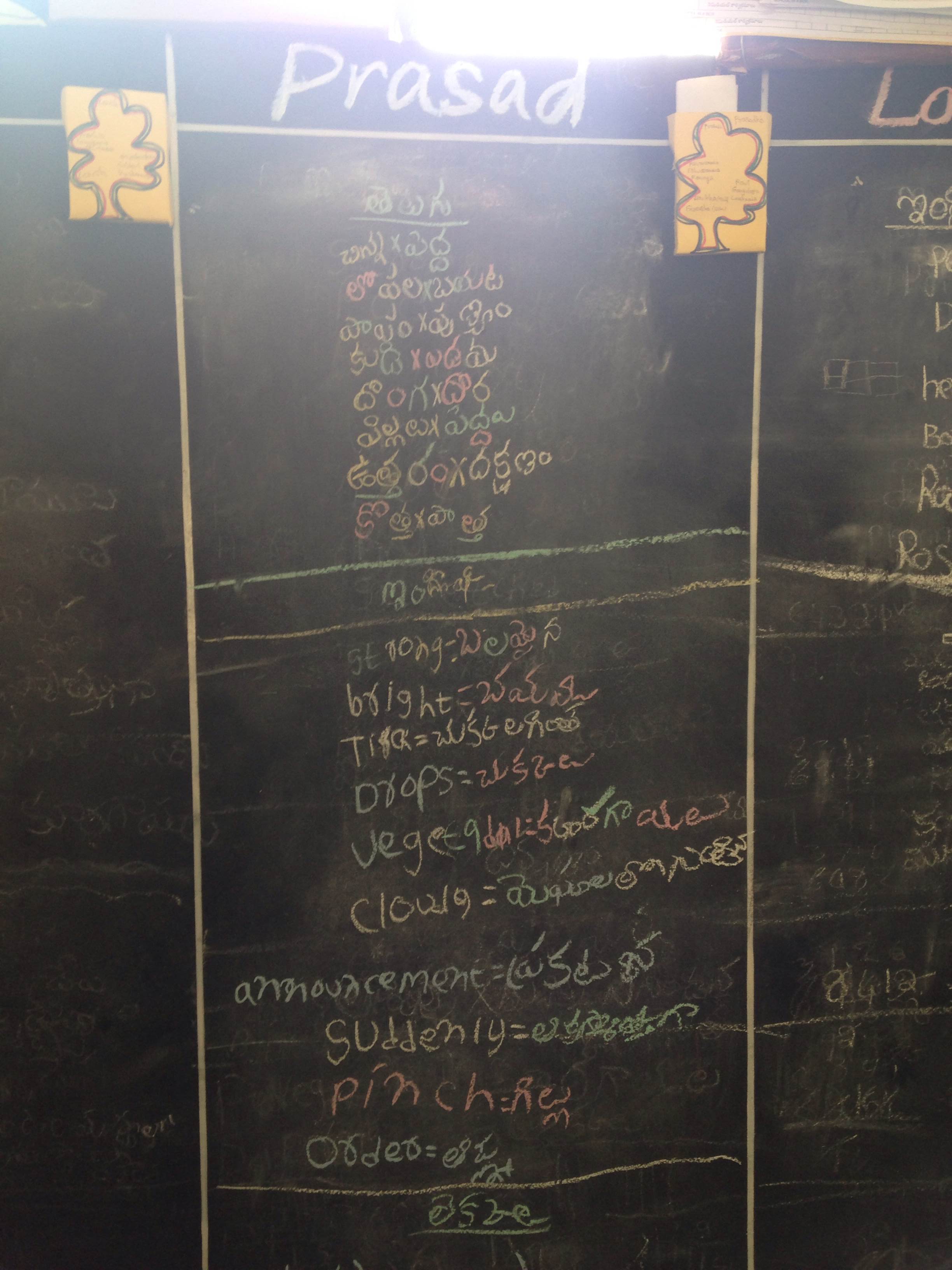
I was most interested in the pride the students took in their graded cards they had completed, as well as their designated space on the wall to record their progress (pictures below). They were all very aware of what level they were at for each of their subject. The graded cards are part of an educational kit the RIVER school has created.

This is how the educational kit works:

The education kit, a series of carefully graded cards, replaces textbooks in the area of language, mathematics and environmental science. Each card in the graded series is marked with a logo (rabbit, elephant, dog) and mapped on to a subject-specific “Learning Ladder”, a progress guide which traces out the learning trajectory for students.

Spaces on the Ladder are sub-divided into a set of milestones. These milestones consist of  cards that explain a concept;  the applications of the concept;  evaluation of students’ understanding and, finally, provide means of testing, remediation or  enrichment. A student identifies her own place on the ladder, and creates, within the broad confines of the milestones,  her own path from grade one to grade five. 

Blank spaces on the ladder allow teachers to introduce independent content into the learning process. Indeed the Ladder can be designed in flexible ways to allow for multiple trajectories between which teachers and students are able to choose so long as the sequencing required by the academic disciplines is maintained.(Source: http://www.rishivalley.org/rural_education/RIVER.htm)

 Although I only spent an afternoon in the classroom, it left a lasting impression on me. The MGML approach seemed to really have been working, and effectively addressing the prevalent issue of mutli-grade classroom across rural India. The MGML approach is being used in rural school across Andhra Pradesh, and has been adopted by many school in the state of Tamil Naidu. The creators are advocating for the approach in several other states in India. Take a look at some photos below!

IMG_8024

Kala (the teacher) working with the students. 

Screen Shot 2015-01-12 at 8.30.28 PM

Students working on Math problems at their own individual levels. 


IMG_8025
The Milestones Chart

IMG_8020

Student progress for the week. 

10 Steps for Avoiding Teacher Burnout

As many of us start a new semester I (Clare) found this article on ways to avoid teacher burnout very interesting and relevant. Although written for teachers, I found a lot of the advice relevant for me as a teacher educator. I particularly liked point # 2  – remember to keep up your fitness level! The article by Ben Johnson is from the excellent website edutopia . Here is the link for the article: http://www.edutopia.org/blog/ten-tips-to-avoid-teacher-burnout-ben-johnson

“Why did I want to be a teacher?” We all face burnout, sometimes on a daily basis, and in my case, especially after fourth period. Most of the time, we can pick ourselves up, brush ourselves off, and go back to the drawing board to try another strategy to find success with student learning. I have to admit that it is getting more and more difficult to make that transition back to a willingness to try again. I can’t help to think students are more difficult than they used to be a few years ago, and pressures from accountability are becoming more oppressive. And of course, the pay for teachers is inadequate. With all of this we may ask, is it worth it?

Rather than provide a list of things to avoid, I would like to take a more proactive stance by sharing things that will help diminish burnout feelings and help you answer, yep, it is worth it.

Step #1) Have Fun Daily with Your Students

Share jokes, brief stories, puzzles, brain teasers, etc. This keeps it interesting for you and for your students. It only takes a minute and they are easy to align to the topic of the day.

Step #2) Take Care of Your Health

The physical status of your body affects your emotional responses, so never feel guilty about taking care of yourself. Skipping lunch or breakfast are bad ideas. Make sure you get enough sleep each day. Take a rejuvenating micro-nap when you get home. Get some better shoes to put a spring in your step. I used to think that I was an active teacher and did not need exercise, but I realized that I need cardio-vascular and upper body exercise, too. Thirty minutes on a treadmill, two days a week will do wonders. Simple pushups strengthen your abdomen, back, and arms. You will be surprised at how much it helps you not be worn out at the end of the day.

Step #3) Learn Something New and Share It with Your Students

Read an interesting book — education or non-education related. I have been reading, The Smartest Kids in the World and How They Got that Way from Amanda Ripley. It is interesting and education related, so I don’t feel guilty about taking time away from lesson planning and grading. Read a classic that you have always wanted to read but never got around to reading. Watch a TED Talk or go to Iuniversity and find something interesting about brain research (that’s what I like to explore anyway).

Step #4) Help Another Teacher

Share your motivating experiences locally or online. Edutopia is always here for that. If you take the time to respond to a blog, you may be surprised at the response. Start your own uplifting blog to help beginning teachers or nearly burned out ones. Be active in your professional organization by volunteering to teach, facilitate, or prepare workshops. Mentor another teacher, either formally or informally. We can all use as much help as we can get.

Step #5) Make Someone’s Day

Call a parent and tell them how good their student is. Find a student that is struggling and sincerely complement him or her on something they are doing well. Show gratitude for an administrator, or fellow teacher by sending them an appreciative note, giving them a hug, or presenting to them a small gift.

Step #6) Lighten Up

Smile (it’s after Christmas and it’s ok). Try looking in the mirror, putting on a smile and then try not smiling for real. It is nearly impossible. So try smiling when you do not feel like smiling. When you greet your students at the door, smile at them and a miracle happens: They will smile back.

Step #7) Be a Scientist

Experiment with new strategies and become an expert in them. Ask your students to help. Do a control group and an experimental group. Document your results and share them at a faculty meeting or a conference. Celebrate success.

Step #8) Look for the Positive

Be a voice for positive thinking, even in the staff lounge. It won’t change the situations, but you will feel better and others might be uplifted too. While teaching is hard, it is not all bad. Half empty glasses are not nearly as exciting as half full ones.

Step #9) Redecorate

Switch out the bulletin boards, move the desks, and adjust the lighting. Add your favorite smells or be adventurous with new ones. I found interesting ones: rhubarb, teak wood, and Hawaiian breeze (usually spray, or solid.) Check with your schools policy about bringing plug-in oil or scented wax warmers.

Step #10) Trust Students More

Let the students know that you will be trusting them more and give them opportunities to earn your trust. Try some project-based learning. Develop strong rubrics, share them with students, and then let them learn as you facilitate and coach.

Turning Things Around

It seems it is easier to fall into the trap of pessimism and negativity because of all the (okay, I will say it) “garbage” teachers have to endure, but that does not have to be our choice. We can choose our attitude, and choosing to do proactive things like those I listed above will go a long way in helping us keep our sanity and avoiding burnout. What helps you keep plugging away? Please share in the comments section below.


Visiting the Rishi Valley School… Part 1

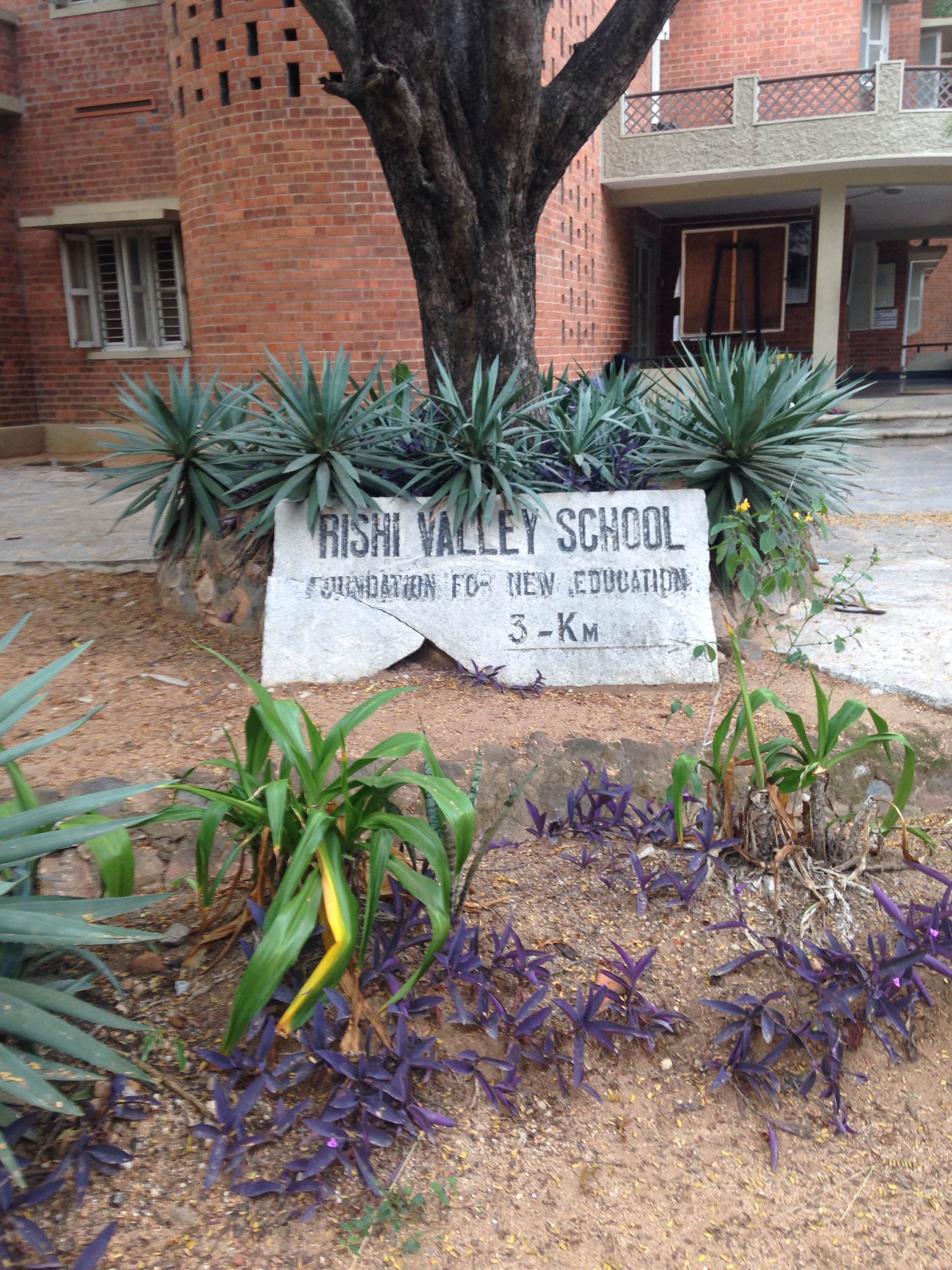
I (Pooja) have just returned from an extraordinary two days at the Rishi Valley School in India.There is simply too much for one blog post, so I will share my experiences over a few blog posts. In this blog, I will focus on the principles which guide the school along with a photos of the campus.

The alternative school is guided by principles of holistic education which aim for the growth of student’s intellectual, emotional, physical, artistic, creative, and spiritual potential. The educational philosophies of the Rishi Valley School include:

  • To educate students so that they are able to explore both the world and their inner being
  • To inculcate a love for nature and respect for all forms of life
  • To create an atmosphere of affection, order and freedom without either fear or license
  • Not to condition the students in any particular belief, either religious, political or social, so that their minds may remain free to ask fundamental questions, enquire and learn. (http://www.rishivalley.org/school/aims.htm)

The philosopher Jiddu Krishnamurti established the Rishi Valley School in 1962. There are now Krishnamuti schools across India and the world, but this was the first educational site. The school is located “in a sheltered valley in the interior of rural Andhra Pradesh…about 140 km north-east of Bangalore.” (http://www.rishivalley.org/school/aims.htm) When we first arrived we met with the school principal. He listened to us attentively, and when he spoke it was softly and always with purpose. He said something in that meeting that has stuck with me. He said that although the teachers differed in teaching approach, the important quality was that they approached their teaching from a place of care and love. By walking around the campus, speaking with teachers and students, and observing classes I witnessed this in so many ways. For example, each morning the students gather in an open-air auditorium for an assembly. My experiences with assemblies have usually included announcements, performances, or guest speakers. At the Rishi Valley school, the assembly is dedicated to singing. The students and faculty gather in a circle and sing for half an hour. At the end of the school day, after dinner, we gathered in the auditorium again to watch an absorbing documentary on particle physics called Particle Fever.

The following are a few photos of the campus and school activities. I believe they speak volumes about the principles from which the Rishi Valley School runs.

IMG_8011

The Rishi Valley School is a boarding school serving student from grade 4-12. There are approximately 325 students and 60 faculty members who live on campus.

IMG_8017

The morning all-school assembly. Students and faculty are seated on the ground.

IMG_8056

One of the many outdoor classrooms. My friend, a spoken-word artist, had the opportunity to facilitate a class here (More about that in the next blog!).

IMG_8009

The student art gallery. It was common to see students around the campus working on their art; fine art, poetry, and music permeated the student culture.

IMG_8013

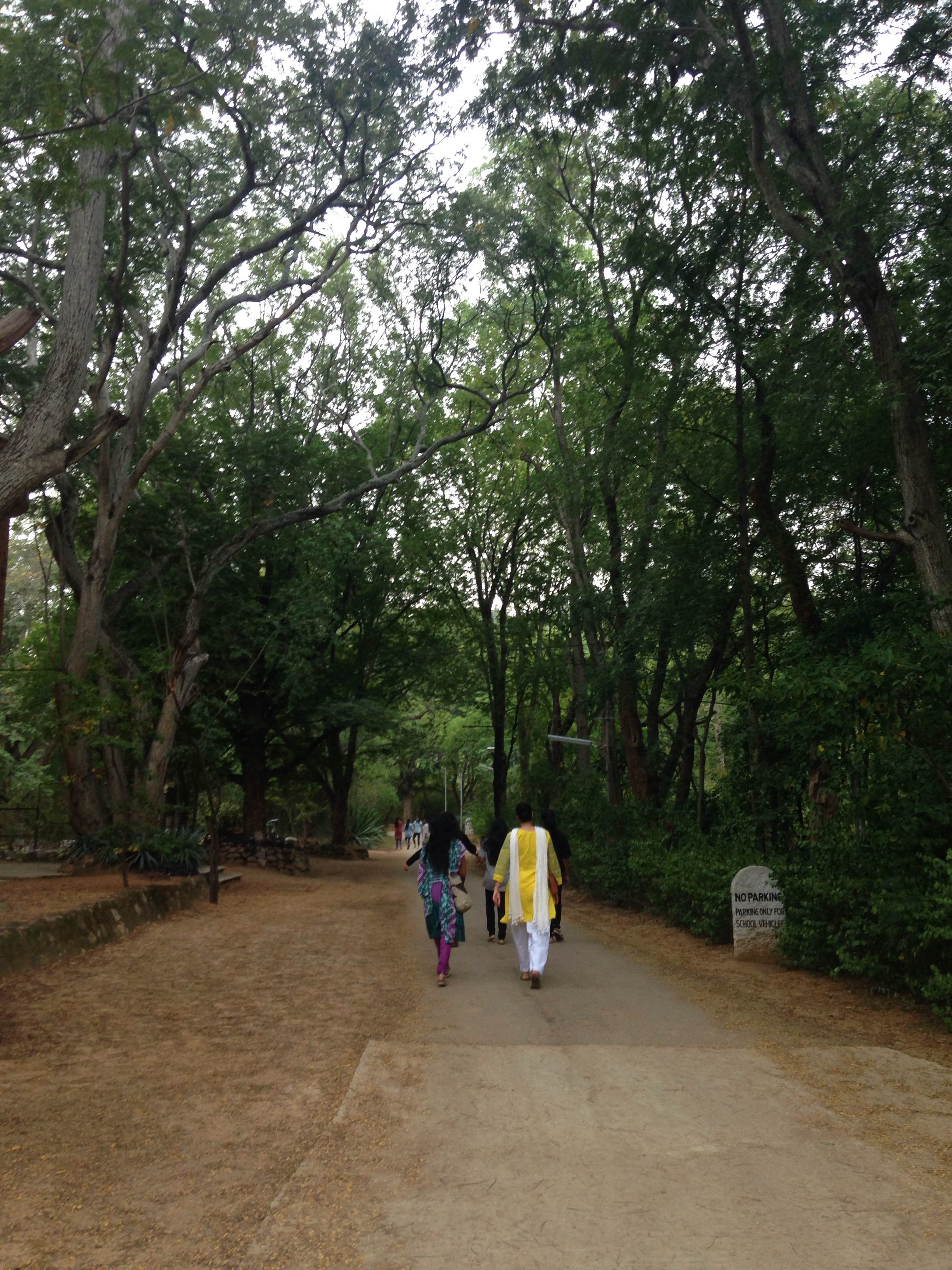
Walking to class is a meditative experience. The campus is spacious, situated on approximately 360 acres of land. There have been over 200 species of birds identified, with the Indian Government officially declaring the school a bird sanctuary.

To read more about the Rishi Valley School: http://www.rishivalley.org/default.html

Cozy reading: A literacy initiative in the early years

Literacy teaching is rich and varied. Teachers make many decisions at to how to teach literacy: what texts to use, what language to emphasize, what materials to include, what experiences to foster, and how to deliver instruction so students become confident and competent users of language.

Sylvia Clare’s school has a “cozy reading” program in place where parent volunteers come to the class for about 1 hour. During their 1 hour visit they take small groups of about 4-5 students into a cozy space located outside of the classroom. With comfy chairs snuggled in a nook of the school the parent reads a picture book or 2 to the students.

This is a simple program that does so much:

  • Exposes students to parents’ reading and demonstrating a love for reading.
  • Provides additional read aloud experiences for students. Every child receives small group read aloud time with an adult, while the classroom teachers remain in the classroom working with small groups on a number of projects.
  • Brings the parent community into the school in a way that is focused on learning.
  • Has children connect with parents of students in the class.
  • A nice way to foster relationships between parents and teachers that is also helpful to teachers’ work

I (yiola) really enjoy the cozy reading program. Being back in the early years classroom reminds me of how complex the environment is: 25 young children excited, active, and curious. The balance between learning and management is simply amazing… even walking the children out the room to the cozy reading nook makes me smile… because I say to the children “Okay let’s walk down the hall nicely so we are safe” and as soon as we exit the classroom door the children skip and run down the hallway!


Sylvia Clare in the Cozy Reading nook.


8 Uplifting Quotes For Discouraged Students

At this time of the school year, most educators are busy grading papers or marking assignments. I (Clare) came across this wonderful blog post on http://www.edudemic.com/discouraged-students/. I found these quotes comforting and inspirational. You might find want to share them with some of your students who are struggling.

8 Uplifting Quotes For Discouraged Students By nicolettemorrison on November 27, 2014@hellonicolettem

There are many reasons a student can lose focus in school.Albert Einstein

It can be bad grades that will discourage them to be inactive and to rebel. It can be the environment that can be stifling and suffocating for the students. It can be the fact that many of them don’t find it easy to see the meaning in their struggles in school.

Some students excel under pressure, and there are those who crumble beneath it. It’s easy to praise the students who continuously work hard, but let’s try not to berate those who find it difficult to focus.

When students get tired of school, they find all means to take the shortcut. This is why numerous students end up copying their homework and plagiarizing their essays. This is why websites such as Bestessays.com thrive. They offer services that will ease the difficulties of student, making it tempting for them to sign up and buy customized papers. Technology has definitely made cheating a lot easier.

It’s not just in the output that students slack off in school. It’s in their mentality that clearly shows their disinterest to learn and attend classes. When they start to not care about their grades, it must be a cause of concern for teachers.

Instead of lecturing these lost souls, it’s up to educators and mentors to find ways on how to lure them back into learning. It can be through constant motivation and pep talk. Sometimes, it can be a great story that will push them to work harder.

For now, maybe these inspirational quotes on learning and hard work can do the trick.

 “If you really look closely, most overnight successes took a long time.” – Steve Jobs

With the likes of Mark Zuckerberg being the poster boy of drop-out billionaires, it’s easy to see why many students seem to think that they no longer need school to succeed in life. But closer inspection shows that their path to success is muddier than one would expect. And besides, we can’t all be Mark Zuckerberg. We can’t all be Steve Jobs. But students can try to pave their own way to success and school can help with that.

“Every child is gifted. They just unwrap their packages at different times.” – Anonymous

Students can’t help but compare themselves with the topnotchers in class. While some obviously spend a lot of time studying, some students barely study and still manage to get good grades. Then there are students, who no matter how hard they try still scramble to get decent grades. They need to understand that students have different modes and strengths in learning, and sometimes formal education doesn’t work for many students. But every student has a talent and a skill that need time to develop.

“I have not failed. I’ve just found 10,000 ways that won’t work.” – Thomas A. Edison

It’s easy to get disheartened with a failed Math exam, but it’s just one exam out of many. A low grade for an English essay may be discouraging, but there’s always a next time. What students need to keep in mind is that getting bad grades and making mistakes can only lead to further learning. There’s always room for growth and time to correct their mistakes. One failure doesn’t mean it’s endgame already.

“You can do anything, but not everything.” – Anonymous

With so many options for young minds to explore and wander, students are often pressured to be great in everything. But that’s not something mere mortals can do. There’s nothing wrong with being a Math wizard and finding difficulty penning a coherent essay. What students can do is to focus on what they’re good at and once they’ve mastered this skill, they can go ahead and try other things. They’ll feel burned out if they take too much activities on their plate all at the same time.

“You measure the size of the accomplishment by the obstacles you had to overcome to reach your goals.” – Booker T. Washington

There’s a reason why a B+ in a subject you find difficult seems a lot sweeter than the easy A+ in your PE class. When you work hard for something, an excellent result may not be quick to attain but even a satisfactory result is enough to send students in pure bliss.

“You miss 100% of the shots you don’t take.” – Wayne Gretzky

Students are often disheartened by bad results, but giving up without even finishing their tasks means they won’t even get any result, besides a failing mark. It’s always better to give learning a shot before deeming it as something they’ll be bad at. They may fail the first time, but they’ll eventually get better at it.

“Don’t worry about failures, worry about the chances you miss when you don’t even try.” – Jack Canfield

To reiterate the earlier point, students miss out more when don’t even give it a try. Many students have this mindset that they’ll fail anyway, so why exert an effort in studying? But the fact that they don’t even open their books and rarely listen to discussions means that they didn’t even bother giving it a shot. Efforts may not always reap the best rewards, but it’s better than none.

“Tough times never last. But tough people do.” – Dr. Robert Schuller

School is just a part of life. It’s just a phase as crucial as it may be, and there’s more learning that will happen once you graduate from your alma matter. Don’t think that it’s the end of the line, because you’re just starting. School may toughen you up, but you need that to survive.

So students, keep your chin up because school isn’t the be-all and end-all of your life. The difficulties will pass and you only need to hold on.

FDK Update: Assessment and Communication

Full Day Kindergarten (FDK) Blog #4  tells the literacy teaching story from the perspective of a first time Full Day Kindergarten parent (Yiola).   In this post I share elements of the assessment process and how my child’s development has been communicated.

Here in Ontario it is “Parent-Teacher Interview” time. First term report cards have been written and parents and teachers, and sometimes students, are meeting to discuss student progress.  There are a number of ways the interviews are conducted: student-led conferences are now quite popular processes and the more traditional teacher-led conference sans student are still in effect.

When I received the school newsletter and read that report cards and interviews were about to take place I was surprised and a little anxious; I felt it was too early to have the teachers share my child’s development… I knew my Sylvia Clare was learning a lot but to put in writing her ‘levels’  or acquired learning after 8 short weeks of school seemed far too soon.  Well, I was right. The report cards and formal interviews were meant for students in grades 1 and up, not for kindergarten. Phew! That made more sense to me. As a parent of a child in kindergarten it makes good sense that children in the early years are not formally assessed … well, too early.  From a parent’s perspective, I wonder  if I would feel the same way if my children were in first or second or third grade?

What the FDK program has established is an “observation” time where each parent/guardian is invited to visit the classroom in action, to observe the daily life of the classroom and their child in the classroom. During the observation time the teacher offers some time to discuss questions or concerns with the parents/guardians. I was thrilled with the sounds of process as I was feeling so very curious about the sounds and vibes of the classroom and how Sylvia Clare got on inside that environment. A first hand eye-witness makes such good sense.

A short note arrived home a week before the observation. We were assigned a half hour observation time the following Monday morning.  This worked well for me, but I did wonder, how do full-time working parents without flexible schedules manage the observation?

Monday morning arrived and off I went to visit the classroom. Alive with children’s voices, questions, and energy I walked into a vibrant room filled with learning. I was welcomed by the Teacher and Early Childhood Educator. Sylvia Clare’s face lit up when she spotted me as she hustled over with excitement. I quickly slid into the flow of the room and began to learn what it was my child did in the FDK room. Sylvia Clare was working with another student building the 100s chart on the huge carpet area. She had the 70s cards and while the Senior Kindergarten student was building from the 40s, she watched and waited patiently for the 70s to turn up so she could add to the massive chart… a wonderful, collaborative learning experience.  When done, she showed me around the room:  building centres, reading nooks, sand table, art table, writing table, snack table and well organized low rise shelves embodied the room. The room was as I remembered it back in August (neutral colours, natural light, natural materials) but now evidence of student learning lined the walls; drawings, colourings, writings were on display and I could see Sylvia Clare’s work.

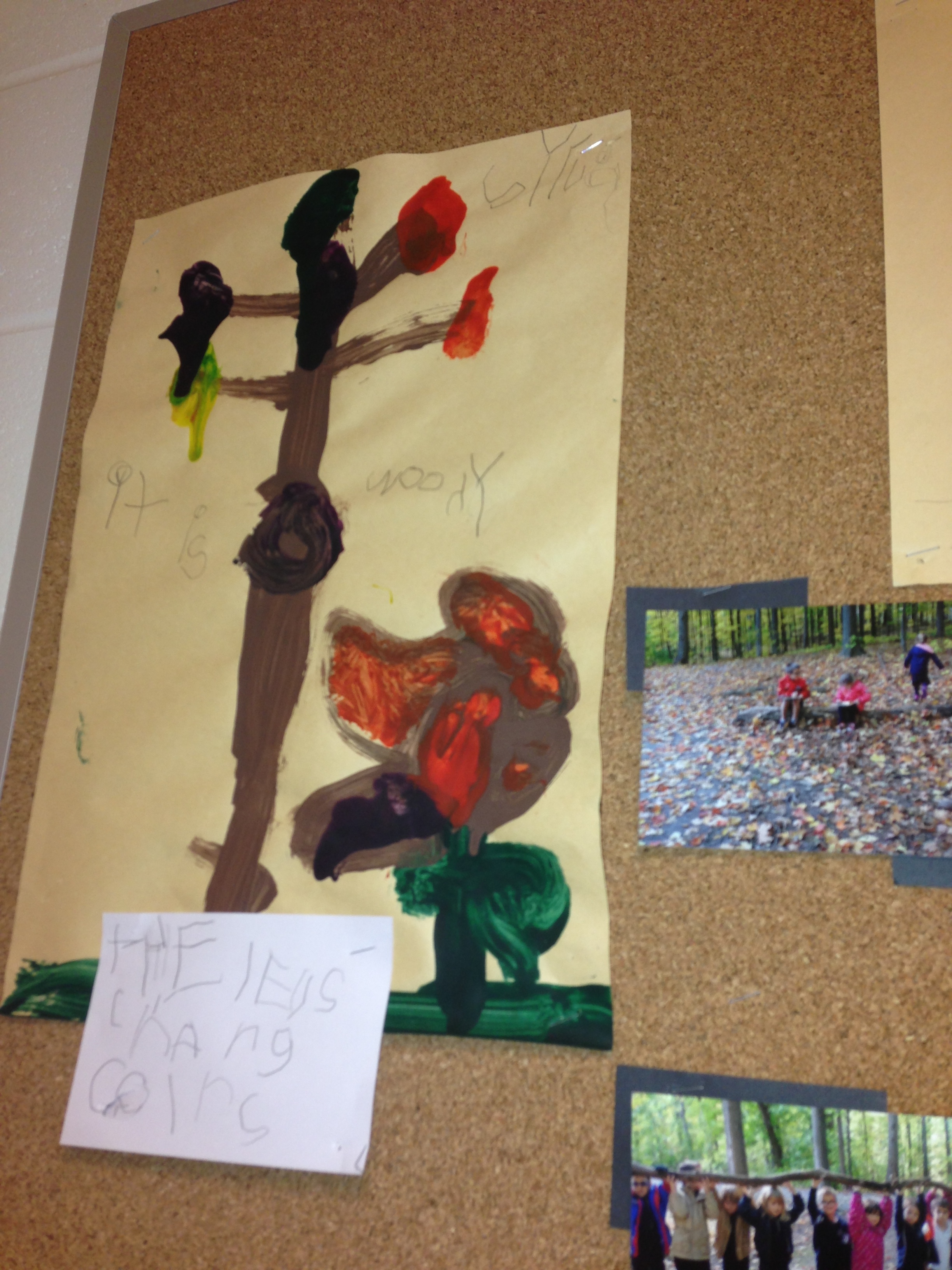
Sylvia Clare's portrait of "Woody", the tree the class adopted from the neighbourhood forest.
Sylvia Clare’s portrait of “Woody”, the tree the class adopted from the neighbourhood forest.

Children working in pairs, in small groups, independently on a variety of tasks throughout the room. The room was bustling yet highly organized. The room was loud but not noisy. I was thrilled to see so many “languages” brought to life (Reggio Emilia’s notion of the 100 languages in the classroom) ~ art opportunities everywhere; all purposeful and engaging. Everyone, including my Sylvia Clare had a place in the space and was engaged in the life of the room. The teachers encouraged Sylvia Clare to show me her portfolio (a binder with evidence of her work). Then Sylvia Clare led me to her interests where we explored and worked together.  Once well settled into the observation, the teacher sat down next to me and asked, “Do you have any questions or concerns?”  This was such an open and  welcoming way to start our discussion. My questions:

Is Sylvia Clare happy at school?

Does she have friends and is she social? Who does she play with the most?

Where does she spend most of her time in the room?

I see she is learning a lot from all that she shares at home. What do you think?

The teacher provided specific description of Sylvia Clare’s work in the classroom: what she talks about, who she plays with, what she enjoys doing, and how she interacts in the classroom. It was clear to me the teachers have a good sense of who Sylvia Clare is, what she likes, areas she has shown significant growth already and areas for improvement. Then I asked:

What can we work on at home to support her learning? 

Continued literacy development, focusing on sound/letter recognition.  I realize now, as a parent of a child who is developing their reading skills just how complex the process is for children. It takes time. Some children acquire skills faster than others; some struggle  but all children need time, exposure, practice to basic skill development. In theory, I knew this. To witness it through the lens of a parent however is somewhat different.  Experiencing literacy development in one young child in live time, watching her gain letter recognition, one letter at a time, one sound at a time, is quite fascinating.  Sylvia Clare is getting there. Beyond the daily read alouds and story telling I need to work through phonic games and drills with Sylvia Clare.

After our brief conversation I felt comfortable and confident that my child has adjusted to full day schooling and getting along well.  Sylvia Clare then ushered me over to the snack table and we chatted while  some of her friends came over to meet me. Shortly after, I said my goodbyes and was on my way.

It was remarkable observing my child in this setting; a setting outside our home, a setting in which I am but an observer and Sylvia Clare is the participant. The observation experience provided very clear, detailed description of my child’s work at school, far more than I would have gathered from a formal report card.


Teachers Matter: The Letter Defending Educators @Time Wouldn’t Print #TIMEapologize #TIMEfail

Although this article is long I (Clare) found it incredibly interesting yet sad. When is the public going to “wake up” and realize the value teachers?

Dr. Julian Vasquez Heilig's avatarCloaking Inequity

To: Nancy Gibbs, Time Editor

From: Thomas L. Good,

Professor Emeritus

College of Education

University of Arizona

1936 E Fifth Street

Tucson, AZ  85719

520-884-4298

TEACHERS MATTER

The November 3 issue of Time magazine includes a sensational cover, an editorial statement and a feature story that systematically question the value of American teachers who often work in less favorable conditions than their international peers. The fifty million readers/viewers of Time will see the cover and millions of others will also view it at various airport newsstands. However, considerably fewer will read the editor’s comments and yet substantially fewer will read the article. So the take- away message for the vast majority of citizens from this issue of Time magazine is that poor teachers are rampant in America and that they are harmful to our children, economy, and future.

Consider the front page cover that brazenly and in bold print decries…

View original post 2,115 more words

Happy…October 31st!

I (Cathy) was delighted by the dancing Jack-o-lanterns that greeted me this morning from my Google home page.  It captured the celebration of fall and harvest and only hinted at the October 31st celebration that haunts many Ontario schools now as they struggle with Halloween.    Last year many schools in the Niagara School Board (in southern Ontario) banned the celebration of Halloween.  This year, in an  Port Colborne elementary school, a memo was attached to the monthly calendar requesting  students wear orange and black clothing in favour of “a more inclusive Spirit Day.”

When North Ward School in Paris, Ontario banned any celebration of Halloween in the school this year, the parents were outraged and demanded to know why. The answers they were given varied,”it interferes with children’s learning”, “teachers don’t want to put make-up on 30 children.”   When the parents asked if they could set some rules in place like, “no make-up” and “only celebrate in the afternoon” the parents were directed to Wayne Baker, the superintendent of education at Grand Erie District School Board.  On Monday, 2 parents had a two hour meeting with Baker. In the end, the parents  were simply told that the situation was a human rights issue.  It was unfortunate that the parents  were not told this from the beginning.  It was also unfortunate that the parents were not included in  the decision making process.   That’s what parent councils are for-  to be inclusive of and serve the community.

I asked a young mother yesterday (from the Halton School Board in Ontario) if her children were dressing up at school.  She smiled and answered, “Yes, but we have rules now.  No fake blood, no make up, no masks and no fake weapons.”

These rules made sense to me.  I understand that parents may want their children to celebrate the same special occasions that they did as a child.  But our society is changing and sensitivity and understanding will be needed on both sides of the Halloween fence as we adapt, especially in our schools.

On a personal note, my house is decorated, cupcakes are made for the local children (who know me) and the big basket of (my favourite) potato chips is at  the front door waiting for the  little trick-or-treaters who still celebrate- after school that is.

Happy Halloween if you celebrate. If you don’t, have a wonderful fall day!

The Short and Tragic Life of Robert Peace: A Brilliant Young Man Who Left Newark for the Ivy League

I (Clare) read a view in the New York Time of The Short and Tragic Life of Robert Peace: A Jeff HobbsBrilliant Young Man Who Left Newark for the Ivy League. I was fascinated by the review because it described how Robert “escaped” his impoverished neighbourhood through a scholarship to Yale. (He was brilliant). He graduated from Yale but did not “make it.” This book is essential reading for ALL teachers and teacher educators because it shows how complex and challenging it is to overcome your childhood and cultural norms. Yes there were people who helped Robert but …
The book is written by Jeff Hobbs )pictured on the right) http://authors.simonandschuster.ca/Jeff-Hobbs/36063537 who was Robert’s college room mate. It is beautifully written but incredibly painful. Over and over I kept hoping that Robert would make better choices, use his gifts …. And Jeff Hobbs helped me appreciate how difficult life can be. Here is a video link of Jeff talking about the book.

 http://books.simonandschuster.com/The-Short-and-Tragic-Life-of-Robert-Peace/Jeff-Hobbs/9781476731902

Here is a synopsis of the book taken from:  http://www.amazon.ca/Short-Tragic-Life-Robert-Peace-ebook/dp/B00GEEB7LC/ref=sr_1_1?s=digital-text&ie=UTF8&qid=1414522728&sr=1-1

 A heartfelt, and riveting biography of the short life of a talented young African-American man who escapes the slums of Newark for Yale University only to succumb to the dangers of the streets—and of one’s own nature—when he returns home.

When author Jeff Hobbs arrived at Yale University, he became fast friends with the man who would be his college roommate for four years, Robert Peace. Robert’s life was rough from the beginning in the crime-ridden streets of Newark in the 1980s, with his father in jail and his mother earning less than $15,000 a year. But Robert was a brilliant student, and it was supposed to get easier when he was accepted to Yale, where he studied molecular biochemistry and biophysics. But it didn’t get easier. Robert carried with him the difficult dual nature of his existence, “fronting” in Yale, and at home.

Through an honest rendering of Robert’s relationships—with his struggling mother, with his incarcerated father, with his teachers and friends and fellow drug dealers—The Short and Tragic Life of Robert Peace encompasses the most enduring conflicts in America: race, class, drugs, community, imprisonment, education, family, friendship, and love. It’s about the collision of two fiercely insular worlds—the ivy-covered campus of Yale University and Newark, New Jersey, and the difficulty of going from one to the other and then back again. It’s about poverty, the challenges of single motherhood, and the struggle to find male role models in a community where a man is more likely to go to prison than to college. It’s about reaching one’s greatest potential and taking responsibility for your family no matter the cost. It’s about trying to live a decent life in America. But most all the story is about the tragic life of one singular brilliant young man. His end, a violent one, is heartbreaking and powerful and unforgettable.