Category Archives: Teacher education

Standards and Standardization in Teaching and Teacher Education

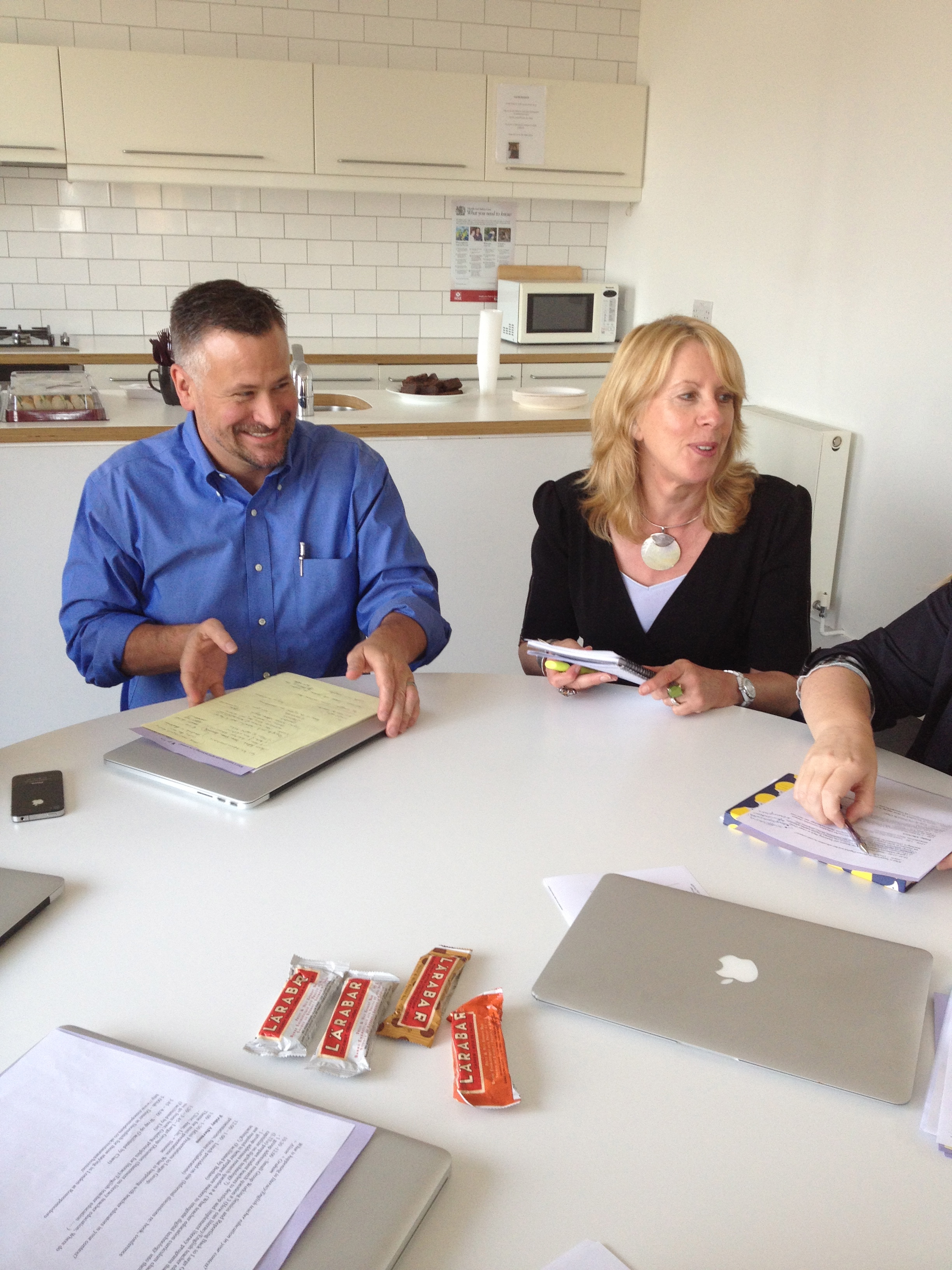
Clive BeckAs the participants in the symposium talked about the state of teacher education in our 4 countries, I (Clive) was dismayed at the rapid movement toward requiring everyone (teachers and teacher educators) to teach the same things in the same way.
The cartoon about requiring all animals – elephants, monkeys, birds, fish, etc. – to climb the same tree kept coming to mind. This is madness. In the real world, not only are people different but we need them to be different because of the diverse tasks that have to be performed.
But it’IMG_2598s problematic to publicly describe standardization as madness, since conservatives have presented their position in terms of raising or maintaining standards, and we may be seen as being soft on standards.
Two strategies have occurred to me: One is to fly under the radar, teaching in a rich and individualized way while also implementing “standards.” We have to learn to DO BOTH, as much as possible.
The other strategy is to develop and publicize the argument – noted above – that diversity is needed in all walks of life, and a society that doesn’t “let a hundred flowers bloom” will not prosper. I don’t think we have been vocal and persistent enough in pressing this Clive and Nickpoint.

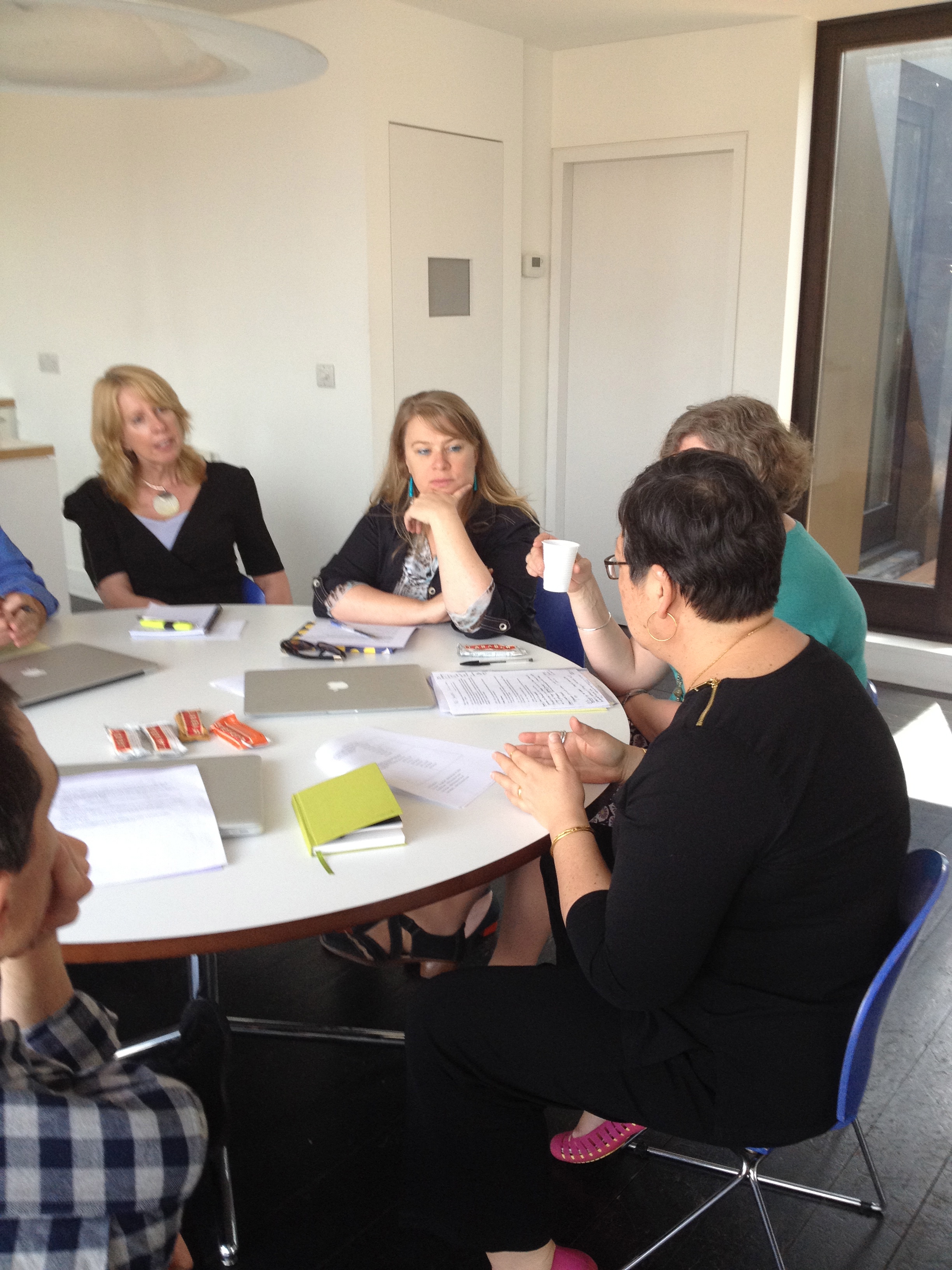
Tug Agency http://www.tugagency.com was a fabulous place to hold the Symposium. The Tug Team are an example of very talented people who have gone far beyond the “standards” of education. They are very able and very creative — what can we learn from them about how to make education relevant and engaging?
 

Reflecting on my time at the International Symposium for Digital Technology and Literacy/English Teacher Education

I (Lydia) feel fortunate to have had the opportunity to participate in the symposium last week as many of the issues raised resonated with my current research examining student teachers’ experiences with contemporary literacy teaching and learning. The issues highlighted during the individual presentations and accompanying discussions offered rich insights into the status of teacher educational internationally.

IMG_2590

I’d like to share a few of the questions raised during the symposium that remained with me and will continue to inform my research in literacy teacher education: What should a curriculum of contemporary teacher education include? In what ways can a curriculum of teacher education provide the space and quality time necessary for student teachers to truly engage as learners? How does power continue to operate in the curriculum? How do digital tools and social media spaces construct reading and writing? What do these digital spaces permit and what do they restrict? How is knowledge constructed, represented, and distributed within digital spaces? What are the pedagogical consequences as students engage with different modes within digital spaces? These are just a few of the questions I continue to consider upon my return from the symposium. Having the opportunity to consider the complexities and issues relevant to teacher education with international scholars was truly inspiring. I look forward to continuing our rich conversations.

IMG_2560

International Symposium on Literacy/English Teacher Education: A Focus on Digital Technology

With the symposium a few days behind us, I (Pooja) have had some time to reflect on what was discussed in London, England. Clare wrote a reflection post on day one of the symposium (https://literacyteaching.net/2014/06/06/symposium-day-1-reflections/), so I want to reflect a bit on day two. Day two started off with mini-presentations which asked presenters to focus on a central question: What is happening with digital technology in your context?

IMG_2564

Shawn Bullock, assistant professor at Simon Fraser University, raised some interesting issues related to digital technology and education:

  • Technological Determinism: A theory which asserts we need to stay current with technology to stay relevant in society; technology determines cultural values and society’s structures
  • Digital Publics: The theory that the nature of public space has changed significantly over the past years. The nature of public space has gone from persistent to replicable to searchable in the past few decades:

o   Persistent- recording (video, audio) events changed the nature of public space;

o   Replicable- recordings became replicable;

o   Searchable- today we can search for any recording

(danah boyd)

Understanding how the nature of public space has drastically changed over the years, Shawn posed an important question to the group: What is the role of education in theorizing privacy in the digital age?

IMG_2582

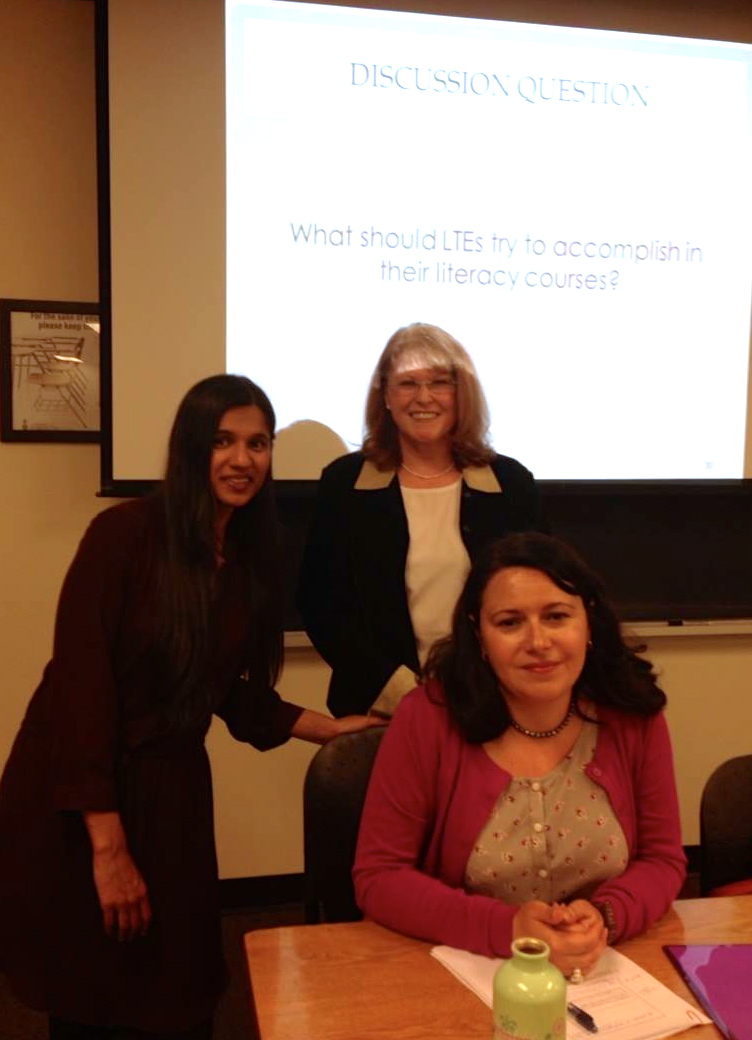
As the symposium was coming to a close, we were guided to reflect on the past two days. Many people realized that the rapid increase of standardization and data driven initiatives was happening across all contexts. However, many individuals commented that the conversations over the past two days were “energizing.” Being in conversation about big issues across international contexts made many teacher educators realize they were not alone. In fact, many commented they wanted to keep up the momentum by further collaborating and “making some noise” in teacher education.


IMG_2617


Once again, we’d like to thank TUG Agency for so graciously hosting us. TUG provided a vibrant and exciting atmosphere for our symposium to take place. Check out their website at: http://www.tugagency.com

Thank you!!!

Clare Kosnik awarded 2014 JJ Berry Smith Doctoral Supervision Award


clare u of tYesterday, we (Clare’s grad students) had the honour of seeing Clare awarded the 2014 JJ Berry Smith Doctoral Supervision Award. Professor Brian Corman, Dean of Graduate Studies (Uof T), acted as MC for the proceedings. Dean Corman reported there were many distinguished applications and the selection committee was under great pressure. However, the decision to award Clare was unanimous. 19 letters from present and former grad students were included in the application. Dean Corman shared some of the comments written in the letters: “epitome of a pedagogy of caring”, “challenged me to think deeply”, “met with me weekly, which after talking to other grad students, I realized other supervisors did not do”.  Clearly, her students  felt privileged to have worked and be working with her.

While accepting the award, Clare suggested doctoral supervision was a terrific topic for a research study. She shared that as she read the letters she was astounded by the differences in what the doctoral students said mattered to them. We hope someone takes Clare up on this suggestion.  They should begin the study with Clare.  Using her work ethic as a model, many other grad students might have the opportunity to work with a supervisor as dedicated, caring and wise as Clare.
Congratulations, Clare! Well deserved.

photo 1clareclare 2clare and us

The Canadian Society for the Study of Education

conference

This week The Canadian Society for  the Study of Education (CSSE) is being held in St. Catharines, Ontario at Brock University.

The team, Clare, Clive, Lydia, Cathy, Pooja, and me (Yiola) will be sharing a number of presentations over the course of the week. Some of these presentations include the following titles:

Teachers’ Professional Identity Development Over Their First 8 Years, With Implications for Preservice and Inservice Teacher Education

Teachers’ Ongoing Learning over Their First 8 Years, with Implications for In-Service Professional Education

Exploring literacy teacher educators’ negotiations of a critical stance in pre-service teacher education

Teachers’ critical literacy practices in the early years classroom

Instructional Practices of Critical Literacy within an Inquiry-Based Learning Environment

Presenting at conferences is a great way to share research with the community.  For more information about the CSSE conference click here:  

Conference


Wonder is Wonderful

I (Cathy) download audio books from audible.com onto my Ipod nano and listen while I walk, garden or cook. I just finished the book Wonder by R. J. Palacio. It is a very touching juvenile fiction novel about a ten year old boy with severe syndromes that dramatically alter his facial features. The story takes us on his journey surviving his first year in a public school as a grade five student. I cried a lot. This wasn’t so bad when I was in the kitchen cooking or even in my own back yard planting and digging. But walking?   Hmmm. People notice. Oh well. When people asked me if I was all right, I just said, “It’s the power of great literature,” smiled and thanked them for their concern. This is a must read my friends, but keep the Kleenex handy and warn the family in case they ‘wonder’ about you!

wonder

Study of Literacy Teacher Educators: Remarkable Individuals

New York City BuildingsWe (Clive and Clare) are in NYC interviewing literacy/English teacher educators who are part of our large-scale study which includes participants from four countries: Canada, US, UK, and Australia. To date, we have conducted two interviews and are now starting the third round of interviews. The first interview focused on their backgrounds and interests; the second on their pedagogy; and the third on their use of digital technology and future plans. (For the interview questions click on the tab About Our Research then on the drop down menu, click on the tab for Instruments.) To say this research has been fascinating is an understatement! I feel I have gotten to know 28 outstanding teacher educators both personally and professionally. I have learned so much through this research:

  • their approach to literacy teacher education is thoughtful and complex (e.g., consistently they believe you need to start with the student teacher’s own views of literacy and to help them “unlearn” in order to develop a more expansive view of literacy);
  • most did not plan to do a PhD or become a teacher educator (e.g., their journey to becoming a professor/lecturer were serendipitous with a key figure/mentor influencing them);
  • they have very heavy workloads in part because they are so committed to their student teachers (e.g., they develop tutoring programs in schools in order to provide student teachers with authentic experiences)
  • the political context is impacting on them in untold ways (e.g., the pressure from external credentialing agencies to conform to a narrow view of literacy – phonics – is complicating their work. They cannot always teach what they feel student teachers need to know).
  • they must hold multiple identities – as teacher educators, as teachers, and as researchers

I feel truly lucky to have had the opportunity to interview these 28 remarkable teacher educators. We as an education community can learn much from them. We have published two papers from the study so far. Click on the Link Publications then click on the Link Clare’s Publications for copies of our papers. Literacy Teacher Educators book cover

You might also be interested in our edited book on literacy teacher educators. https://www.sensepublishers.com/catalogs/bookseries/other-books/literacy-teacher-educators/

Engaging with Suffixes

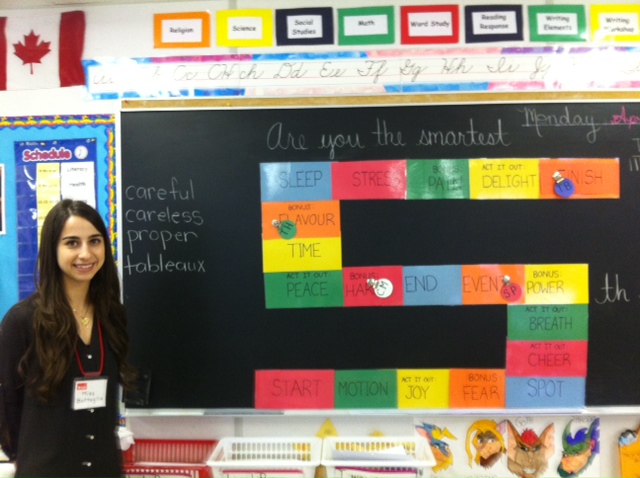
“How to engage students in the understanding and use of suffixes?” was the pressing question on my (Cathy’s) student teacher’s mind. Erica told me she mulled this over for several days, trying to get the pieces to fit together just right.    Her final creation – a suffix game. The wonderfully large, colourful game board alone was enough to grab her grade five students’ attention. Played in teams, each group had to role a gigantic die to move their magnetic counter on the board.   Some spaces on the game board depicted words (e.g. effort, bonus, time) which each team had to add either the suffix ‘less’ or ‘full’ to, and then write each word correctly in a sentence. Small white boards were provided to each team for this task.   Other spaces on the board instructed the teams to create a tableaux depicting the new meaning of the word once the correct suffix was added. A few  spaces on the board provided bonus points.

I have always had a concern about student teachers being focused on ‘fun’ over learning and wondered about the level  of learning these students would experience with this game. This concern, however, was mollified when I witnessed the mistakes the teams were making which forced them to rethink their answers.  The animated group discussions regarding which was correct were very interesting to observe.  When the nutrition bell rang and the grammar lesson came to an end, there were groans and moans of protest. Imagine, grade fives liking grammar. Erica wisely told them they could play again soon.

Erica's Game


Sharing Our Research

Today the research group will be presenting work from the project Literacy Teacher Educators: Their Backgrounds, Visions and Practices, at the Ministry of Education/Faculties of Education Forum – Research Practice: Nurturing relationships for teaching, learning and well-being. It will be an interesting and exciting day.

Literacy Teacher Educators: Preparing Teachers for a Changing World (Book Cover)
Literacy Teacher Educators: Preparing Teachers for a Changing World

Conversational Competence

“Is there any 21st-century skill more important than being able to sustain confident, coherent conversation?”conversation

 As I watched my class struggle, I came to realize that conversational competence might be the single-most overlooked skill we fail to teach students. Kids spend hours each day engaging with ideas and one another through screens—but rarely do they have an opportunity to truly hone their interpersonal communication skills. Admittedly, teenage awkwardness and nerves play a role in difficult conversations. But students’ reliance on screens for communication is detracting—and distracting—from their engagement in real-time talk. (Paul Barnwell, 2014)

The author of this article, teacher Paul Barnwell, worries that without solid conversational skills our students won’t be able to manage important life conversations (e.g., job interviews, discssions with employers about salary negotiations, conversations with their partners, etc.) in their future which rely on them thinking on their feet (without access to Google!).

 MIT professor, Sherry Turkle, spends her time researching people’s relationship with technology. She wrote in the New York Times about the impact of tech-overload: “Face-to-face conversation unfolds slowly. It teaches patience. When we communicate on our digital devices, we learn different habits … we start to expect faster answers. To get these, we ask one another simpler questions. We dumb down our communications, even on the most important matters.”

I couldn’t agree more with Barnwell and Turkle. Teaching our students how communicate to solve problems, deal with emotions, and build meaningful relationships through conversations  is an essential skill which may need to be explicitly taught.

Read the entire article from The Atlantic below:

http://www.theatlantic.com/education/archive/2014/04/my-students-dont-know-how-to-have-a-conversation/360993/