Category Archives: Teacher education

‘Pokémon Go’ a Go in Education

I (Cathy) was initially confused when I recently started hearing the name “Pokémon” come up time and again.  I mean, isn’t that a bit outdated I thought?  The Pokémon game was first made popular in the 1990s as a video game, and my children loved it.  I soon discovered, however, the new Pokémon game, Pokémon Go, is an app that allows players to see and “catch” Pokémon characters in the real world through their phone screen and it has quickly developed into a cultural phenomenon. Personally, I haven’t tried it (yet) and find it rather amusing to watch grown people chase imaginary characters through the park or around buildings. But there have been educational insights into this new app that have intrigued me greatly.  For example Australian autism expert Craig Smith has devised a way of incorporating the hit game into his lessons to encourage autistic students’ social skills. According to The Independent:

Pupils at a school in Australia are being actively encouraged to use Pokémon Go in the classroom, after research showed the game could help rather than hinder their studies. Craig Smith, an academic specialising in Autism research, found that by allowing his pupils to use the augmented reality game in and out of the classroom, their social skills had improved and the children appeared more engaged with their learning.

Dr. Smith, who is also the Deputy Principle at the Aspect Hunter School for Children with Autism in Newcastle, New South Wales, said the game was unique in that it encouraged children with and without learning difficulties to play outside and engage with other students.

Smith said, “We wholly embrace whatever it is that kids are interested in and use that as a window into their world and bridge into further educational opportunities for them. For many of the children I teach it’s hard to engage in social activities – even going down to the shops can be socially overwhelming. But what we’re seeing with the Pokémon craze is the same students are making conversation and engaging in social activities through the game.”

 pokemon

With this in mind I am willing to give Go a go. Should be fun and give some else a chance to be amused at my chasing imaginary characters. I would also like to incorporate it into the orientation program of my literacy class!
http://www.independent.co.uk/news/education/education-news/pok-mon-go-classroom-help-autistic-children-australia-craig-smith-a7144946.html

To Wikipedia , or not to Wikipedia…

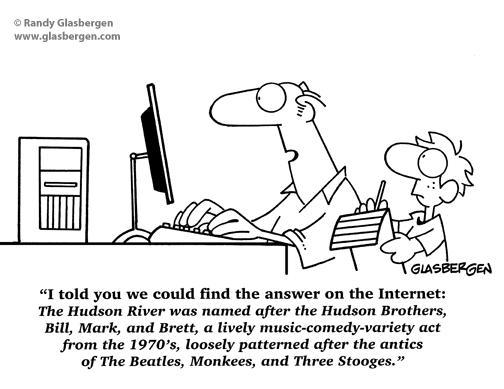
Convincing students, even in higher education, of the validity of Wikipedia can be challenging, so I (Cathy) use a little humour to introduce the debate. I like this cartoon because it is an adult telling the child the information must be correct.  But then, my grandparents believed everything they read in the newspaper. Everything.  It was in print and therefore had to be true. They never considered the possibility that newspapers were political institutions with bias opinions.  Never.  Now our students have to consider the possibility the information on the internet may be a practical joke .  I have personally spoken to people who find it amusing to change information on Wikipedia so that it is incorrect. Yet, I still use Wikipedia to access quick information.  However, I do so with caution.  The information age is interesting, but it can have its challenges.   Discernment and constant checking is key.

hudson


Challenging the Use of Test Scores to Assess Teachers and Teacher Educators

Clare and I (Clive) have often argued against the use of “value-added measures” (VAMs) to assess teachers and teacher educators, measures that rely exclusively on standardized test scores. Others (e.g., David Berliner, Diane Ravitch) have taken a similar stand.

In the May 2016 issue of the Educational Researcher, opposition to VAMs receives dramatic support from Steven Klees of the University of Maryland. In a letter to ER, Klees welcomes a recent AERA Statement about how difficult it is to assess teachers using VAMs. However, he goes on to say that it’s not only difficult, it’s impossible! He notes that “dozens, perhaps hundreds, of variables” influence test scores, and hence misattributing cause is not only a “significant risk,” it is “rampant and inherent” in the use of VAMs. He concludes:

“The bottom line is that regardless of technical sophistication, the use of VAM is never ‘accurate, reliable, and valid’ and will never yield ‘rigorously supported inferences’” (p. 267).

In my view, even if we give some weight to test scores, it is imperative to supplement them with other considerations: e.g., the judgment of teachers and their colleagues about good teaching, opinions of students about their teachers’ effectiveness, theories about effective pedagogy. Effective teaching is so complex there can be no quick fix in assessing it.

It will be interesting to see how the education research and policy communities respond to Klees’s extraordinary claim, given that VAMs are the latest great hope for the reform of teaching and teacher education.


Discovering New Pre-service Texts

I (Cathy) find myself skeptical of books or articles that use the term ‘activities’ in reference to assigning work to students in the classroom. I was once told the term activities infers no purpose or goal and can be viewed as ‘busy work’. Instead, I was instructed to use the term ‘task’ which infers a specific result must be achieved to accomplish the work.  I was therefore skeptical of a book I recently encountered titled, Pump It Up: Literacy Activities for the Classroom.  However, the caption on the book jacket read “specifically aims to help pre-service teachers learn to implement hands-on lessons for their content area.” So  I decided to take a closer look.  I quickly recognized the editors Joanne Kilgour Dowdy (Kent State University, Ohio USA) and Yang Gao (Kent State University, Ohio) required the contributing authors to include learning objectives for each learning ‘activity’ included in the volume.  I also realized the editors use the term activity to refer to a series of tasks that comprise a lesson.  For example, the activity depicted by contributing author Jessica Wilson explains, “This activity is devised to demonstrate how literacy and creativity can be achieved through all disciplines including science” and describes a free write lesson designed to encourage students to interpret key vocabulary words and develop appropriate syntax and discourse of key terms.

I was delighted to discover the activities or lessons in the book explore an array of disciplines and topics (e.g., health and physical education; drama and other arts; social justice; multiculturalism through children’s literature; literacy/language arts; and mathematics) and the disciplines appear to cross (e.g., using dram to explore science and journaling to explore mathematics). Further, I was intrigued by the sections earmarked Becoming an Artist and Embodying Social Justice.

Well, having now moved past my fear of the term ‘activities’, I have ordered a copy. I proved to myself I not only should not  judge a book by its cover, I also should not judge a book  by its title! As I will be teaching pre-service drama next semester and plan to include as many cross disciplinary ‘activities’ as I can , I am hoping this will be a nice addition to the book collection I will provide for my teacher candidates.  Can’t wait for it to arrive!

2832_222_167

Click here for a sneak preview of the book:

https://www.sensepublishers.com/catalogs/bookseries/other-books/pump-it-up/


Teachers’ and Teacher Educators’ Roles beyond the curriculum

For decades academia, teacher education, and teachers have been talking about critical pedagogy. Like everything in education debates continue as to how much, when, it what ways it can and should be taught. My current post is not about whether we as teacher educators and teachers should or should not be critically conscious or the extent to which we should. This post is a consideration for how to teach for equity. I found this video about teaching inclusively our university’s website:

http://www.oise.utoronto.ca/oise/About_OISE/PrideVideo_Story.html

The video is a safe start. It is basic awareness and consciousness for more equitable practice. We, in North America, have been overwhelmed with what I feel are devastating events surrounding people: People of Colour, LGBTQ People, Police Officers, People of Muslim Faith and many other marginalized groups. Social media is exploding with perspectives and emotion surrounding the varying issues and people everywhere are left to understand what it what based on their own experiences and contexts. What responsibility do schools have in teaching for a more equitable society?

Critical pedagogy in education is not new. It is a pedagogy that has been studied and discussed and to some extent taught in schools and yet it continues to be a pedagogy that sits on the periphery of practice. It is pedagogy that is left to some to tackle in teacher education ~ usually those who themselves have a personal connection to inequity (as our research on literacy teacher educators has shown). Sometimes critical pedagogy is infused in some courses but mostly it is taught in an isolated course. We know that many teacher education programs continue to be dominated by White, middle class, women. Knowing this, I wonder how much impact one or two courses has on the consciousness and practices of a teacher who has not had many opportunity to even think, let alone experience, inequity.

What can be done? What should be done?  I think about my courses and the teacher candidates and feel that deep critical understandings within context, content and pedagogy is essential. In light of the movements and violence and confusion that is happening across the globe I see no option. If teaching is a relational act, then we must deepen our understandings of the varying relations that exist in communities and prepare teachers to not only teach for equity but have confidence in dealing with media literacy.


computer notes

                                                                                  Versus

longhnd notes

I (Cathy) read recently that Massachusetts is one of several states that wants to keep penmanship lessons in the curriculum. I have heard pros and cons regarding this argument in Canada, but a recent blog post by Dr. Ainissa Ramirez on Edugains gave me pause to reconsider the practice of longhand writing in class.   Dr. Ramirez boldly suggests students not use computers and return to using longhand for note taking.  Please don’t misunderstand, Dr. Ramirez is not opposed to technology. She, in fact, is quite a proponent having been an engineering professor at Yale University for ten years.  She also received her Ph.D. from Stanford University in materials science and engineering and holds several patents, one of which was awarded MIT’s Top 100 Young Innovators award.

Dr. Ramirez states:

When students take notes with their laptops, they tend to mindlessly transcribe the data word for word, like speech-to-text software. But taking notes verbatim is not the point. What is lacking in their note-taking-by-laptop is the synthesis, the re-framing, and the understanding of the information. Students that transcribe with laptops have shallow connections to what’s being presented to them. However, those who are taking notes by hand are processing the information and representing it in a way that makes sense to them. They are learning.

Now, I’ll be the first to say that longhand writing is so 19th century. But we need to answer a question: do we want students to have a deep or shallow connection to the information we’re giving them? While we live in a world of short sound bytes where news is thrown at us unprocessed, this should not be the mode for schools. In the 21st century, the ability to connect knowledge in new ways is more important than the knowledge itself. So students with deeper connections to information can link it in new ways — they can create.

On further investigation I discovered that Ramirez’s  position is supported by a study  published in Psychological Science by Pam Mueller of Princeton University and Daniel Oppenheimer of the University of California, Los Angeles. Their study sought to test how note-taking by hand versus by computer affected learning. Mueller states:

When people type their notes, they have this tendency to try to take verbatim notes and write down as much of the lecture as they can. The students who were taking longhand notes in our studies were forced to be more selective — because you can’t write as fast as you can type. And that extra processing of the material that they were doing benefited them.

This position is well worth sharing with students; however, I think it will be very challenging to convince students of the information age to forgo their computers and take up longhand writing. I’m willing to at least put forth the argument and it will also be a nice point of discussion for student teachers!

http://www.edutopia.org/blog/writing-by-hand-benefits-brain-ainissa-ramirez


Does a Longer Teacher Education Program Make a Difference

I (Said) recently read an article in the Toronto Star about Ontario’s new two-year teacher education program that left me a little disappointed https://www.thestar.com/yourtoronto/education/2016/06/08/double-trouble-for-teachers-college-expansion.html. The recent move by Ontario’s Ministry of Education intends to “help address an oversupply of graduates, enabling Ontario’s qualified teachers to find jobs in their chosen field” (Ontario Ministry of Education, 2013). However, the lack of pedagogical renewal, combined with condensed courses, increasing class sizes, and fundings cuts are characteristic of reform that does not signal improvement.

The extra year of training, while providing more classroom experience, will not necessarily produce better teachers. Some may argue that more time can be spent on areas such as mathematics and special education, but this approach assumes that candidates enter the programs with deficiencies that need to be remedied before they become practicing teachers. A more sensible approach would seek to redesign the admission process, thereby selecting the best-suited candidates for the profession. By identifying qualities relevant to good teaching and utilizing an approach that can highlight them in applications, we can improve the quality of our candidates, even if the process becomes tougher (Kosnik, Brown, & Beck, 2005).

The decision to increase the length of the program, followed directly by finding strategies to help students graduate as fast as possible is an indicator of a system that wants to continue to rapidly produce teachers rather than emphasize the quality of the education that it is providing. Topics such as the micro-politics of teaching continue to be ignored despite the well-known fact that there exists a large disparity between what candidates learn in teacher education and the realities of the classrooms they end up teaching. As a result, beginning teachers will continue to suffer in a profession that “eats its young” and has a hard time retaining young, innovative teachers who are struggling to find employment.

In their chapter on reform efforts in teacher education, Kosnik, Beck & Goodwin (2016) present a constructivist vision of teaching and teacher education that ultimately promotes human well-being and rejects “reforms that stifle dialogue and impose a crassly political or narrowly economic agenda” (p. 294). Unfortunately, teacher education reform in Ontario has leaned towards the latter, but gradual progress will hopefully convince policymakers and the general public that short-sighted solutions will not unlock the potential that the teaching profession has to change the world.

References:

Kosnik, C., Beck, C., & Goodwin, L. (2016). Reform efforts in teacher education. In J. Loughran & M.L. Hamilton (Eds.). Handbook on Teacher Education (pp. 267-308). Dordretcht:            Springer Academic Publishers.

Kosnik, C., Brown, R., & Beck, C. (2005). The preservice admissions process: What qualities do  future teachers need and how can they be identified in applicants? The New
Educator, 1
(2), 101-123.
Ontario Ministry of Education (2013). Modernizing Teacher Education
in Ontario.
Retrieved from  http://news.ontario.ca/edu/en/2013/06/modernizing-teacher-education- in-ontario.html

Try a Graphic Novel this summer…

As summer vacation time draws nearer and schools in Ontario prepare for the summer break, teachers often think of ways to encourage children to read over the summer.  Inspiring students who ‘hate to read’ can be quite a challenge.  The authors of the blog teachingauthors.com  highly recommend graphic novels. (Graphic novels are not to be confused with Manga novels which are a genre unto themselves).  Graphic novels are similar to comic books in that they rely heavily on illustrations to convey meaning and the text is short.

Author Mary Ann Rodman suggests the following novels for students:

Young Adult

Drowned City: Hurricane Katrina and New Orleans—Don Brown

Honor Girl: A Graphic Memoir–Maggie Thrash.

Nimona-Noelle Stevenson

In Real Life–Cory Doctorow

Middle school

Anything by Raina Teigemeier (e.g., Drama)

The Dumbest Idea Ever!–Jimmy Gownley

Roller Girl–Victoria Jamieson

Sunny Side Up–Jennifer L. Holm and Matthew Holm

Into the Volcano–Don Wood.

Flora & Ulysses–Kate DiCamillo, K.G.Campbell

The Hidden: A Child’s Story of the Holocaust–Loic Dauvillier.

The Lost Boy–Greg Ruth

If you haven’t read a graphic novel, I (Cathy) suggest you try one.  The experience may surprise you.  The content can be quite sophisticated and intense.  When I taught a teacher education focused children’s literature course, I used the book Persepolis to introduce my teacher candidates to graphic novels.  Persepolis is an autobiographical graphic novel by Marjane Satrapi depicting her childhood up to her early adult years in Iran during and after the Islamic revolution. (The title is a reference to the ancient capital of the Persian EmpirePersepolis). The book depicts religious, political, and economic struggle.  Simplistic, but powerful.

Try one this summer!

http://www.teachingauthors.com/

250px-Persepolis-books1and2-covers

Authors and Amazing Tales: In Awe of Lawrence Hill

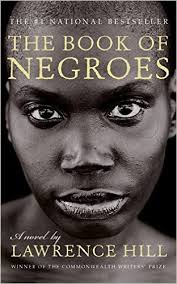
During the school year my night table fills with novels; one beautiful literary piece after the other, the books pile up. The vision is to retreat to my room early enough to read these marvellous texts at an enjoyable pace in order to get to the next… yet my  time during the academic term does not allow me the pleasure.  With the coming of summer and the end of an academic term I find some space where I can begin to read the books I attempted to read throughout the year.  This year, I begin with Lawrence Hill.  Most are familiar with Lawrence Hill, a Canadian writer whose most popular texts include: Blood: The Stuff of Life  and The Book of Negroes.

Unknown-2 Unknown

Blood: The stuff of life was turned into a lecture series. You can listen to excerpts of the Massey Lecture series here:

http://www.cbc.ca/radio/ideas/the-2013-cbc-massey-lectures-blood-the-stuff-of-life-1.2913671

Two incredible literary works that move me to think about humanity… and inhumanity. The Book of Negroes was turned into a  television mini series. Based on historical fiction The Book of Negroes is the story of young African girl, her voice, her journey in the 1700s from Mali, Africa to South Carolina, New York, Cape Breton, and London. How impactful a process to explore the novel — to try to make sense of history and our present — to think about narratives and then consider the media and digital implications for developing such an intense story into a visual series.  I think of how high school teachers could use this novel to explore so many issues and then to look at the decisions one makes when transforming such a sensitive story into film.

As I read Hill’s novels I cannot help but consider how  the narratives in these literary texts can be used to improve my own practice in teacher education. I ask myself: Can they inspire the reader to more deeply understand the intensity of the relational acts involved in teaching in classrooms?  Why do certain groups of children have a greater likelihood of failing at school? How do our systems shut people out without some of us ever realizing it? What kinds (if any) of understandings should teachers have about the histories of our communities before ever stepping into classrooms? How in teacher education can we support a deep understanding of children’s learning?

There is just so much to know while in pre-service and so much to teach in teacher education. What is most important? Why? When I think about the construction of teacher education programs I am now thinking less in terms of required courses and more in terms of broad understandings and the connections across disciplines and understandings. For example, as we teach about child and adolescent development (psychology) we must thing about language and literacy development (content) inclusive of social context (equity and foundations).  After all, when we enter classrooms we know that our work as teachers is dynamic, complex, forever evolving and completely relational.