Today I supervised a group of my student teachers presenting lessons to small groups of children in preparation for teaching a whole class. These student teachers had never worked in inner city schools before. As a result, a lengthy discussion ensued about the nature of the children at the school and what they needed. I was both impressed and touched by the depth of caring and desire to improve their skills to reach the children in their classes. I left the school feeling very reassured and hopeful about the future of education. 
Category Archives: Uncategorized
Teacher collegiality: A priority in education
Teachers and Teacher Educators alike, I (Yiola) hope you have had a good start to the academic school year. By this time a productive learning environment is in the works, students are settling into routines and relationships and all wheels are in motion. Teaching and learning in classrooms is a complex enterprise. I believe we spend huge amounts of time thinking about and preparing our students for the classroom yet little time is spent on developing safe, supportive, resourceful environments for ourselves as educators.
Enter the social world of teaching for teachers. From novice classroom teachers to veteran teacher educators, research literature clearly shows that the conception that educators perform better when working together professionally is supported by organizational theory models… Such conceptions view authentic teamwork as an essential characteristic of the successful organization as its members interact regularly to share their ideas and expertise and develop common understanding of organizational goals and the means to their attainment (Shah, 2014).
See full article here:
Integrated classrooms, full day kindergarten teams, division teams, departments, staff and faculty and informal professional learning communities (PLC), require teamwork, moral support, and encouragement between educators. What better way to engage in teacher preparation and teaching than feeling supported, appreciated and valued. What are the key characteristics of collegial work environments?
The research literature indicates considerable consistency in the key characteristics of teacher PLCs. Participants working together regularly over an extended timeline, shared values and vision, practical activities focused on student learning, taking an inquiry stance, being reflective and collaborating and sharing experiences, are characteristics which are consistently highlighted (Susan Owen, 2014).
See full article here:
A supportive work environment, collegial atmosphere, shared vision, shared workload, appreciation and affirmation of colleague contributions, and genuine interest and commitment to the school/program make a significant difference to educators’ work. While the structure and environments are often built from the top down (i.e. principals or program leaders), much can be done within organizations to foster strong PLCs. These are messages I share with my student teachers as we consider how teachers work with early childhood educators in the kindergarten classrooms, and how the special education teacher communicates with the regular classroom teacher, and how teachers communicate with parents. Exploring how to work collaboratively and how to deal with conflict are important considerations for good teacher practice.
Teaching, service work, and research are approached with interest, enthusiasm, and care because of the collegial work environments that have been established within the PLCs. Below is a picture of wonderful colleagues and my cheering team. I am extremely grateful for the wonderful professional learning communities I am part of at OISE.

Left to right: Prof. Gisela Wajskop, me, Prof. Clare Kosnik
Front and centre: Sylvia Clare and Gallaway
Assessing a Course
I once asked a high school class to anonymously assess the course I was teaching. I asked them to write down how I could, in their opinion, improve my instruction. The first response read, Lose the scarf. The second read, Lose 10 pounds. The rest of the evaluations were not much better. At the time, I decided these students were perhaps just too immature to assess a course effectively.
As a university instructor, I assumed my students would be mature enough to assess a course effectively. Last week marked mid-term at my university. In the interest of gauging how my students were feeling about the course, I encouraged my students to assess the course using a response format. I chose to use a Start Stop Continue. I explained to them that this was an anonymous response format in which they write down what they would prefer I Start doing in the course (that I am not doing), Stop doing something that they do not like, and Continue doing something they enjoy or are learning from. Most students admitted they had never been invited to use a response tool to evaluate a course. The following is a small sampling from the three classes I invited to respond:
Start serving snacks Start treating us like adults Continue treating us like adults. I love that you ask us what we need. Stop using instruments to get our attention Continue using all the instruments to get our attention. I love it. Stop giving us silly activities to do that I learn nothing from. Continue giving us so many creative tasks to do in class. I hate lectures. Continue being passionate about learning and teaching.
I was fascinated. The responses represented such a range it was hard to determine what I should address. In the end, I decided to hold an open-circle discussion with each class to discuss the responses and what these could mean to us as teachers. The response to the responses was remarkable. My students could see how helpful or unhelpful the comments could be. Some found the responses amusing, while others were annoyed by them. I shared one insight I received from the comments: that the student who identified the tasks I set up for them as “silly activities” probably didn’t understand the theories and purpose behind the tasks. And that, I acknowledged, was my fault. As a result, a very intense discussion ensued in which we dissected many of the tasks and activities we engaged in.
In the end, we all learned from this experience. And it was not the assessment tool that provided the learning- it was the assessment of the assessment that mattered.
An Infographic of Finland’s Education System
Much has been said about the education system in Finland. For the past decade or so Finland’s PISA scores have been at the top in both literacy and mathematics. Many studies have been conducted on their exemplary system. Some of the characteristics which set the education system apart:
- Student- Teacher Ratio is better than in North America
- Standardized testing and homework is kept to a minimum
- Teaching is a highly respected profession
Below is a beautiful infographic outlining Finland’s stance on teaching and learning (Lepi, 2014). Lepi concludes the infographic with, what she believes, is most critical to Finland’s success: “Finland knows good teachers are essential.”
http://www.edudemic.com/homework-finland-infographic/

Teacher Education, Schooling and the Teaching of Holidays
Today is Canadian Thanksgiving. For many Thanksgiving is a holiday of rest. A long weekend for a quick getaway or time to gather with friends and family to feast on turkey and pause for a moment to reflect on one’s blessings. For many, it is a happy holiday, not associated with historical ties or religion. For others, Thanksgiving holds alternative feelings and reminders. As a teacher educator I do not mention the holidays in my class nor do we discuss possibilities for addressing the holidays in the classroom. Now I am thinking maybe I should… not for the purpose of generating teaching ideas and strategies but for the broader more philosophical discussion of what should be considered when raising the topic of holidays in the classroom?
I remember Thanksgiving celebrations at school; we decorated autumn wreaths, coloured turkey pictures and shared what we were thankful for with one another. But, is that what Thanksgiving is about? To some, it may be just that. But is it something else? What are the perspectives? The history? And how do we share that information in ways that are inclusive and safe? In fact, how do we share any holiday content with children in our classrooms? I am interested in unraveling the embedded practices that are based more on tradition (doing what we’ve always done) and thinking more about the students in our classrooms and how the stories and histories and significances of the holidays may or may not touch their lives.
Quick searches online led me to inconsistent explanations of the origins of Thanksgiving in Canada. So I am left to share a simple wikipedia here:
http://en.wikipedia.org/wiki/Thanksgiving
There are significant differences between Canadian and USA Thanksgiving, far beyond the different date.
And then of course there is the perspective taking on the holidays. Thanksgiving is one where Aboriginal perspectives, for example, weigh heavily in my thoughts and move me to contemplate how best to approach the discussion of the holiday in schools.
There are several online resources available and people to talk to about the varying perspectives. Information can be found. Yet I am still left with the questions, how do we approach this in the classroom? Do we continue to colour in turkeys and refer to a ‘harvest’ that many 4 – 10 year olds cannot quite imagine and have children share what they are thankful for? Do we tell stories and share multiple perspectives on the past and present? Do we do nothing at all?
I’m interested to hear from teacher educators and teachers about what you are doing or have see done in teacher education and in schools. An interesting discussion with many angles and points of view.
Sending warm wishes to those who have celebrated and enjoyed the holiday this weekend.

The Homework Debate
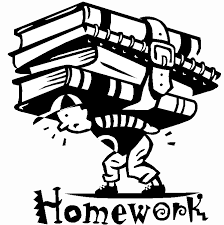
As a middle-school teacher, the issue of assigning homework was something I always grappled with. I often wondered: When assigning homework, were my students really making the connections they were meant to be? Was the homework only helping the stronger students? Was the homework meaningful to the student’s learning? Was it at the appropriate level for them to complete independently? Was it fair to assign homework when I knew many of my students had other familial responsibilities? Would my class not be considered rigorous if I didn’t assign homework?
Alberta high school math teacher, David Martin, has grappling with some of the same issues. He feels homework seems to “buoy the strong and discourage the weak.” So, he has recently stopped assigning homework altogether.
An excerpt from the article presents common arguments for each side of the debate:
The news reinvigorated a debate about the value of homework — a conversation that has bubbled up and receded over the past five to seven years, gaining converts along the way. Even still, the issue remains divisive, with some parents campaigning hard for a homework-free experience that would give them their life back — and others worried about their children falling behind or failing to learn the discipline and time management required in high school and beyond. As one Collège de Saint-Ambroise parent said, “I’ll see how the year goes, but I’m very afraid. Homework is a way for us parents to evaluate whether things are going well, and to guide us in helping and supporting them.”
What are your thoughts on assigning homework?
Link to the full article:
Literacy learning through music: A method of inspiration
All weekend I (Yiola) have experienced spontaneous musical encounters. Take for example sitting next to a 16 person chorus who spontaneously serenades my friends and me while dining at a local tex/mex restaurant. Or listening to my children sing Old Macdonald Had a Farm in the back seat of the car. These moments of ‘musical interlude’ have left me feeling inspired and intrigued about the power of music on the psyche, the emotions, and on teaching literacy.
A quick search online led me to several interesting and research-based articles on literacy learning through music. I will share these links with my student teachers. In my course we explore music education: music as a subject, music curriculum, music pedagogy, music integration. The links below add an exceptional layer of consideration for teaching music and literacy.
Click to access placing_music_en.pdf
Click to access impact_of_music_on_literacy.pdf
http://oneotareadingjournal.com/2012/learning-literacy-through-music/
Not only do research findings support literacy development through music, we also know that music, like an incredible book, touches the soul and ignites emotion. Brain development AND inspiration. A likely combination for student achievement.
I conclude this post with a brief video of another spontaneous musical encounter; this one between a 19 year old student and Billy Joel. I share this link not only for the music but for the power of relationship between student (confident, risk-taker) and expert (open, trusting, willing to explore possibilities). The music AND the experience gave me goosebumps. “That’s Michael Pollock. Remember that name”, says the teacher…
Using Video Games for Assessments
There has been a movement towards using gaming for educational purposes. Incorporating gaming into lessons for the purposes of engagement has been the most popular use thus far. However, now a case is being made for using games for assessments. Kamenetz (2014) writes an interesting blog explaining the benefits of this non-traditional type of assessment.

An excerpt from the article:
Imagine you’re playing a computer game that asks you to design a poster for the school fair. You’re fiddling with fonts, changing background colors and deciding what activity to feature: Will a basketball toss appeal to more people than a pie bake-off?
Then, animal characters — maybe a panda or an ostrich — offer feedback on your design. You can choose whether to hear a compliment or a complaint: “The words are overlapping too much,” or, “I like that you put in the dates.”
You can use their critiques as guides to help you revise your poster. Finally, you get to see how many tickets your poster sold.
This little Web-based game isn’t just a game. It’s a test, too.
The article also touches on Schwartz’s theory of assessment which focuses on choice. Schwartz argues that “the ultimate goal of education is to create independent thinkers who make good decisions. And so we need assessments that test how students think, not what they happen to know at a given moment.” I wonder how this form of assessment may change a student’s relationship with test-taking. I’m curious to follow this trend and find out.
Read entire blog here:
http://blogs.kqed.org/mindshift/2014/08/could-video-games-measure-skills-that-tests-cant-capture/
‘H’ints and ‘H’appiness: Literacy learning in FDK
With the first month of school soon behind us I (Yiola) want to share some examples of my 4 year old daughter’s (Sylvia Clare) literacy learning in Full Day Kindergarten (FDK).
Example 1: Phonemic awareness. Sylvia Clare must be learning about the letter H. On more than one occasion she has demonstrated her understanding of phonemes and phoneme isolation. I said, “Sylvia Clare you must be hungry”. Sylvia Clare paused and responded, “Mommy, is hungry like Henry? huh huh huh.” I paused in surprise of her observation and connection and simply said, “Yes”. Later in the evening I said, “Hendrix and Orion are going to visit soon” and Sylvia Clare responded, “Hendrix is like hungry and Henry, right mommy?”
Example 2: Letter recognition. One night earlier this week while tucking Sylvia Clare in bed I noticed she was curled in the most unusual position. I observed but said nothing. Just as I was about to pull the bed sheets up Sylvia Clare said, “Mommy, what letter do I look like?” I respond, “hmmmm, interesting. I’m thinking you look like an I?” Sylvia Clare laughs, “Noooooo. What letter do I look like mommy?”
She is also taking objects and forming letters. For example, while playing outside, she took two twigs and placed them together to form the letter “V” and asked, “Does this look like a letter mommy? What letter is this?”
Example 3: Vocabulary development and comprehension. More and more Sylvia Clare comes home with stories. Vivid stories. Curious stories. Each day her stories grow in detail and description. The other day she explained she went on a trip to the forest in search of an oak tree. She shared, “On the way to the forest, I held a boy’s hand [she paused and blushed]. His name is *Sam (changed) and he is in SK (senior kindergarten) so he is bigger. I fell down on my way to the forest but I did not get hurt and the teacher gave me a bandaid. The forest close to the park mommy, you know the one we always go to. We went into the forest just a little, not deep in the forest, only at the entrance. There we found a humungous oak tree. It had 4 trunks and they went out like this (uses her arms and points in four different directions). So it really looked like four trees stuck together. We looked at the bark”. I asked if it was an angel oak tree. She was not sure but she continued to share news about her experience.
Example 4: Confidence. Sylvia Clare drew a map of the world at home, wrapped it up and took it to school. I thought nothing of this as I dropped her off in the morning. Then I realized I left her lunch bag at home! I scrambled home and rushed back to the school to bring her lunch. By the time I returned to the school the children were engaged in outdoor play/education/inquiry. I saw Sylvia Clare standing with one of her teachers, her map open and making reference to it. The teacher saw me and smiled, “Sylvia Clare is reading her map and we are now trying to find the treasure”. How wonderful to see play and literacy in harmony. A reader is a person who reads. Sylvia Clare was demonstrating she is a reader. Then, at the end of the day when I went to pick her up she had another paper in hand. I asked, “What did you work on today?” and Sylvia Clare explained that she lost her map so she made another one – she developed a graphic organizer, a way to read, understand and appreciate the world. My thoughts: thank you teachers, for providing the time and space for Sylvia Clare to engage in what interests her and thank you for appreciating those interests.
On her own, without probe, Sylvia Clare is offering hints of literacy teaching and learning. With sly enthusiasm she is sharing her learning with me, in subtle, whimsical ways. She is sharing her achievements and understandings and I can tell she is proud that she is learning new things. What excites me is that her learning is evident; in her sharing, practice and happiness. It is not coming home by way of worksheets or alphabet books. I look forward to seeing and sharing what the upcoming months hold.
Making the Most of Parent-Teacher Conferences

Now that the school year has started, parent-teacher conferences are not too far away. Often parents only get 5-10 minutes with their child’s teacher(s). Nadworny from NPR suggests that in that limited time parents should focus on three major areas: the child; the classroom; and the future. Below are excerpts from the NPR article.
- The Child
- “Most experts suggest telling the teacher about your child: Describe what they’re like at home, what interests and excites them, and explain any issues at home that may be affecting your child at school.”
- The Classroom
- “Ask about what’s happening in the classroom — both academically and socially.”
- “Don’t be afraid to ask the teacher to clarify what assessment or grades actually mean.”
- “Before the meeting is over, you should be sure you’re clear on the teacher’s expectations for your child.”
- The Future
- “To get the most out of the conversation, she says, both the teacher and the parent should know what comes next. Brainstorm with the teacher to come up with ways to solve challenges your child faces. Ask for concrete examples of things you can do at home to help.”
Read the entire article here:

