The Smartest Kids in the World And How They Got That Way: An Exploration of the Schools in PISAs top Achieving Countries

1307-toch-white_bk_article  My (Yiola) summer has been filled with reading, writing, and a lot of play with my two young children.  From Curious George to Jane Yolan, we covered a lot of ground… and then there was some time for me. One of the texts I read this summer was an interesting report by journalist Amanda Ripley. In her book, The smartest kids in the world and how they got that way Ripley tracks three American high school students who went on exchange to three of the top performing PISA countries: Finland, Korea, and Poland.  What I like about the text is that the three countries Ripley selects could not be more different in culture, and systems.

While there is much controversy about the PISA test and its effects, the details outlined in the book are interesting and insightful. I found the following key points interesting:

The countries that score high on PISA value academic and take academic learning seriously:

“The question then was not what other countries were doing, but why. Why did these countries have this consensus around rigor? In the education superpowers, every child knew the importance of an education. These countries had experienced national failure in recent memory; they knew what an existential crisis felt like. In many U.S. schools, however, the priorities were muddled beyond recognition. Sports were central to American students’ lives and school cultures in a way in which they were not in most education superpowers. Exchange students agreed almost universally on this point. Nine out of ten international students I surveyed said that U.S. kids placed a higher priority on sports, and six out of ten American exchange students agreed with them. Even in middle school, other researchers had found, American students spent double the amount of time playing sports as Koreans.”

Countries whose students who did well on the PISA value early childhood education:

“In most countries, attending some kind of early childhood program (i.e., preschool or prekindergarten) led to real and lasting benefits. On average, kids who did so for more than a year scored much higher in math by age fifteen (more than a year ahead of other students).”

Parental involvement IS important:

“Parents who read to their children weekly or daily when they were young raised children who scored twenty-five points higher on PISA by the time they were fifteen years old. That was almost a full year of learning. More affluent parents were more likely to read to their children almost everywhere, but even among families within the same socioeconomic group, parents who read to their children tended to raise kids who scored fourteen points higher on PISA. By contrast, parents who regularly played with alphabet toys with their young children saw no such benefit.”

What I appreciated the most when reading the book was the message that teachers in the high scoring countries are deeply valued members of society. From university admissions through to classroom practice, teachers are carefully selected, very well educated, and they maintain high standards in their practice.

I like the contrasts it provides between nations that have high test scores. As I read I kept comparing Canada, and more specifically the Ontario context to the countries (mainly Finland) and was feeling rather optimistic about the direction we are going.

Technology vs Attention

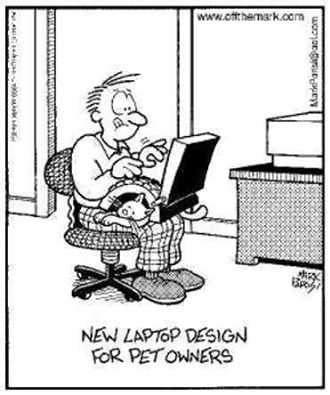
lap top for pet owners_n

A friend of mine (Cathy) is a writer and she frequently complains about her darling cat sitting on her key board, especially when she has a deadline to meet.  The cartoon above reminded me of her, yet I doubt her cat would accept the new lap top model depicted.  I not not so sure it’s about closeness as it is about the attention.  Looking.  Listening.  Touching.  Speaking. I once tried to read  book while bottle feeding my son and he fussed and cried until I put it away.    At six months he knew where my attention was, and it wasn’t on him.  Holding him wasn’t enough.  Feeding him wasn’t enough.  That was our time and the book was cheating him.  I was amazed he could register that at such a young age.  It was a good lesson.   After that, I saved my reading for when he was napping.   I’m sure my friend’s cat would know too.   Although I was amused by the cartoon, I also saw it as a warning.  Our devices are seductive;  our lives are busy and demanding; but I’m not so sure we really get ahead by multitasking when it comes to attending to the ones we love.

Creating Interactive Content

I recently learned about a useful digital technology app I am sure I will be using this upcoming school year. Riddle is an app which let’s you easily and quickly create:

  • opinion polls
  • lists
  • quizzes
  • personality tests
  • commenticles (commenting on articles)

Riddle allows you to customize your content by adding images,YouTube videos, animated gifs, articles from the web, personal photos, etc. Once your interactive social content (opinion poll, list, quiz, test, commenticle) is created, there are several ways to share it. You can embed the content into your own blog or website. Or you could e-mail the link out to your class. You can also share your created content through Facebook or Twitter.

I spent 30 minutes playing around on this site and came up with so many great ideas on how to use it in my classroom. Using the opinion polls, I will create an ice-breaker activity and e-mail it out to my class and show the results on the first day of class. Also, if I want my class to discuss an article, I will use the commenticle feature. Below is a commenticle I made on Riddle:

Screen Shot 2015-08-18 at 11.39.34 AM

To learn more about RIddle and make your own interactive content this school year, check out the link:

http://www.riddle.com/

Why I Can No Longer Teach in Public Education

Stephanie Keiles wrote this powerful letter on why she can no longer teach in public education. It is a true indictment of public education in the U. S. We cannot and should not be losing teachers like Stephanie. I (Clare) would recommend that you have a hankie or two available as you read it! Share it with public officials.

http://www.huffingtonpost.com/stephanie-keiles/why-i-can-no-longer-teach-in-public-education_b_7974784.html

ImagesTeacher'sDesk

Posted: 08/12/2015 8:35 am EDT Updated: 08/12/2015 8:59 am EDT

I am sitting here in my lovely little backyard on a beautiful Michigan summer day, drinking a Fat Tire Amber Ale, and crying. I am in tears because today I made one of the hardest decisions of my life: I resigned from my job as a public school teacher. A job I didn’t want to leave — but I had to.

A little background. I didn’t figure out that I wanted to be a math teacher until I was 28. As a kid I was always told I was “too smart” to be a teacher, so I went to business school instead. I lasted one year in the financial world before I knew it was not for me. I read a quote from Millicent Fenwick, the (moderate) Republican Congresswoman from my home state of New Jersey, where she said that the secret to happiness was doing something you enjoyed so much that what was in your pay envelope was incidental.

I quit my job as an analyst at a large accounting firm determined to find my passion. I floundered for a while, and then eventually got married and decided I would be a stay-at-home mom, but only until my kids were in school. Then I would need to find that passion.

I was pregnant with my oldest child, sitting on a sofa in Stockholm, Sweden, when I had my epiphany: I would be a math teacher — a middle school math teacher! I thought about it and it fit my criteria perfectly. No, I wasn’t thinking about the pension, or the “part-time” schedule, or any of the other gold-plated benefits that ignorant people think we go into the profession for. Two criteria: I would enjoy it, and I would be good at it.

Nine years and four kids later, I enrolled in Eastern Michigan University’s Post-Baccalaureate teacher certification program, and first stepped into my own classroom at the age of 40. I was teaching high school, because that’s where I had my first offer, and I was given five classes of kids who were below grade-level in math. And I still loved it.

I knew I had found my calling.

After three years, I switched districts to be closer to home and to teach middle school, where I belonged. I felt like I had died and gone to heaven! I was hired to teach in my district’s Talented and Gifted program, so I had two classes of 8th graders who were taking Honors Geometry, and three classes of general 8th grade math.

This coming year, I was scheduled to have five sections of Honors Geometry — all my students would be two, and sometimes three, years advanced in math. I was also scheduled to have my beloved first hour planning period, and I was excited to work with a new group of kids on Student Council. It was looking to be a great year — and I’m still walking away.

My friends, in real life and on Facebook, know what a huge supporter of public schools I am. I am a product of public schools, and my children are the products of public schools. Public education is the backbone of democracy, and we all know there is a corporatization and privatization movement trying to undermine it.

I became an activist after Gov. Rick Snyder and his Republican goons took over Michigan and declared war on teachers. I am part of a group called Save Michigan’s Public Schools. Two years ago, we put on a rally for public education at the Capitol steps that drew over 1,000 people from all over the state with just three weeks’ notice and during summer break.

I have testified in front of the Michigan House Education Committee against lifting the cap on charter schools, and also against Common Core. I attended both NPE conferences to meet with other activists and bring back ideas to my compadres in Michigan. I have been fighting for public education for five years now, and will continue to do so.

But I just can’t work in public education anymore.

Coming from the Republicans at the state level and the Democrats at the national level, I have been forced to comply with mandates that are not in the best interest of kids. I am tired of having to perform what I consider to be educational malpractice, in the name of “accountability.”

The amount of time lost to standardized tests that are of no use to me as a classroom teacher is mind-boggling. And when you add in mandatory quarterly district-wide tests, which are used to collect data that nothing is ever done with, it’s beyond ridiculous.

Sometimes I feel like I live in a Kafka novel.

Number one on my district’s list of how to close the achievement gap and increase learning? Making sure that all teachers have their learning goals posted every day in the form of an “I Can” statement. I don’t know how we ever got to be successful adults when we had no “I Can” statements on the wall. (sarcasm)

In addition, due to a chronic, purposeful underfunding of public schools here in Michigan, my take-home pay has been frozen or decreased for the past five years, and I don’t see the situation getting any better in the near future. No, I did not go into teaching for the money, but I also did not go into teaching to barely scrape by, either.

As a 10th-year teacher in my district, I would be making 16 percent less than a 10th-year was when I was hired in 2006. Plus, I now have to pay for medical benefits, and 3 percent of my pay is taken out to fund current retiree health care, which has been found unconstitutional for all state employees except teachers. And I’m being asked to contribute more to my pension.

Financial decisions were made based on anticipated future income that never materialized, for me and for thousands and thousands of other public school teachers. The thought of any teacher having to take a second job to support him/herself at any point in his/her career is disgusting to me, yet that’s what I was contemplating doing. At 53, with a master’s degree and twelve years of experience.

If I were poorly compensated but didn’t have to comply with asinine mandates and a lack of respect, that would be one thing.

And if I were continuing my way up the pay scale but had to deal with asinine mandates, that would be one thing. But having to comply with asinine mandates and watching my income, in the form of real dollars, decline every year? When I have the choice to teach where I will be better compensated and all educational decisions will be made by experienced educators? And I will be treated with respect? Bring it on.

So as of today I have officially resigned from my district, effective August 31, which is when I will start my new job as a middle school math teacher at an independent school. I am looking forward to being treated like a professional, instead of a child, and I’m pretty sure I will never hear the words, “We can’t afford to give you a raise”, or worse (as in the past two years), “You’re going to have to take a pay cut.” I am looking forward to not having to spend hundreds and hundreds of dollars on classroom supplies. And the free lunch, catered by a local upscale market, will be pretty sweet, too.

I will miss my colleagues more than you could ever know, especially my math girls and my Green Hall buddies. It really breaks my heart to leave such a wonderful group of people. In fact, it’s pretty devastating. But I have to do what’s best for me in the long run, and the thought of making more money and teaching classes of 15 instead of 34, and especially not having to deal with all the BS, was too much to refuse.

I will always be there to fight for public education. I just can’t teach in it.

Unlearning in Teacher Education

 Unlearned-640x199

As a literacy teacher educator, do you feel you spend a lot of time encouraging your student teachers to forget what they have previously learned?  Lortie (1975) refers to the perceptions of teaching our student teachers developed (as elementary and secondary school students) as an  “apprenticeship-of-observation”. Lortie suggests “education students have spent years assessing teachers and many enter training with strong perceptions based on firm identifications” and maintains that these strong perceptions affect student teachers’ “pedagogical decision-making”.  This makes unlearning as important as learning.  How do you get your student teachers to unlearn?

Lortie, D. C. (1975). Schoolteacher. Chicago, IL: Chicago University Press.


So You Want to be a Writer!

Most of the readers of this blog are writers. I (Clare) no matter how much I write, I still smith0809-01finding writing hard. It takes LOTS of work. Although we tend to write for academic audiences an article by Russell Smith in the Globe and Mail resonated with me. Titled – So You Want to Be a Writer has some useful advice.

Here is the link to the entire article: http://www.theglobeandmail.com/arts/books-and-media/six-tips-to-help-you-successfully-write-and-publish-your-first-book/article25879126/

I listed his six pieces of advice and # 6 is probably the most important! For all doctoral students “bum in chair” is very important.

  1. Stop thinking about the business side of it
  2. Don’t worry about someone stealing your idea
  3. Don’t get too much feedback

Your aunt and your high-school English teacher are going to have very different ideas about what makes a great novel. Listen to both of them and you will be no further ahead.

  1. Don’t self-publish

Again, genre writers – in sci-fi, mystery and romance – have had much greater luck with self-publishing because they are already participants in large online communities and so already have audiences. The vanity presses that promise you they will market and promote your literary book are sharks; nobody reads their press releases. Don’t give them your money. Don’t think you can build an audience just by acquiring Facebook friends.

  1. When submitting your manuscript to agents or publishers, remember that nothing counts except what is actually written in your bundle of pages – not endorsements from bloggers, not courses you have taken, not possible cover designs. The professionals will skim through all those and start reading the first page of the manuscript. By page five they will know if you are an actual writer or not.
  2. Bum in chair This is still the most accurate and useful description of how to write a book. You must occupy that chair until it is written. Even in the world of phone-novels and tweet-novels and ghost-written memoirs, somebody has to worry for many, many hours about the difference between that and which and the appropriate use of metaphor. Somebody has to sit in the chair.

The Stanford Prison Experiment

This past weekend I had the opportunity to attend a screening of the film The Stanford Prison Experiment at the APA (American Psychological Association) conference. The screening of the film was followed by a Q&A session with the led researcher and distinguished psychologist Dr. Philip Zimbardo. The film was adapted from Zimbardo’s book The Lucifer Effect: Understanding How Good People Turn Evil. I first learned about the Stanford prison experiment during my undergraduate studies in psychology. The ethical implications of this landmark study are still discussed in undergraduate and graduate psychology classes. It was interesting to now revisit the study as a researcher who has designed and carried out various research studies.

The Stanford prison experiment, a study conducted in 1971, examined the psychological effects of prison life. The male college students who volunteered to be part of the study were randomly assigned to be either prison guards or prisoners. The study was originally planned to run for a two-week period, but it was ended after six days because of what the situation was doing to the participants. Within the first couple of days the guards exhibited sadistic tendencies and the prisons showed signs of extreme stress. Watching the film was distressing (as it should be), as the study itself was controversial and the results quite shocking. It was interesting however, to hear Dr. Zimbardo discuss how the Stanford prison study inspired his notable research on shyness and his recent work the Heroic Imagination Project.

The official Stanford Prison Experiment website: http://www.prisonexp.org/

Ta-Nehisi Coates on Writing

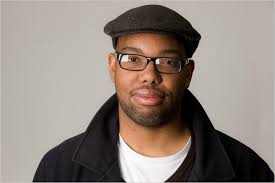
Celebrated writer and editor of blog The Atlantic, Ta-Nehisi Coates, provides advice to writers. Coates writes about social, cultural, and political issues for The Atlantic, The New York Times, and has published several books. In this short yet powerful video, Coates describes writing as an “act of courage.” He explains: “I always consider the entire process about failure, and I think that’s the reason why more people don’t write.” Coates reminds new writers that ultimately writing is about perseverance.

Source: www.theatlantic.com
Source: http://www.theatlantic.com

Watch the video here:

http://www.theatlantic.com/video/archive/2013/09/advice-on-writing-from-i-the-atlantic-i-s-ta-nehisi-coates/280025/

A Memo To States: This Is How You Create A Teacher Shortage

Image Teacher Shortage

When I (Clare) was at AERA in the spring many of my American colleagues were despairing about the dramatic drop in applications to teacher education programs. The article below by Rebecca Klein helps demystify why teaching has becoming a less attractive career choice.

A handy recipe for a teacher shortage like the one in Kansas.

Rebecca KleinEducation Editor, The Huffington Post

http://www.huffingtonpost.com/entry/kansas-teacher-shortage-recipe_55c28ce6e4b0f1cbf1e3a2d7?cps=gravity_5059_5212323749430778575&kvcommref=mostpopular

It’s back-to-school time in Kansas, and kids are starting to trickle back into school hallways. But when these students arrive at their classrooms, they may not find a teacher standing at the front.

Kansas is suffering from a well-documented teacher shortage. Last year, more than 2,320 educators in the state retired, compared to 1,260 in the 2011-2012 school year, according to data from the Kansas State Department of Educaton. At the same time, 654 teachers decided to leave the state last year, compared to just 399 in 2011-2012. Over 270 open teaching and non-teaching school staff positions were listed on the Kansas Education Employment Board’s website as of Thursday afternoon.

Kansas has previously seen teacher shortages in areas like special education, as well as math and science. But this year, even typically popular jobs, such as teaching social studies classes or elementary school students, are proving hard to fill, KEEB coordinator Julie Wilson told The Huffington Post.

Those familiar with the situation say it is not surprising. A number of factors have recently converged to create a teacher shortage in the Sunflower State. Some of these factors are the result of actions taken by the state government and legislature. Over the past few years, Kansas has cut back on the job protections that give teachers due process rights, created a new school funding system that a district court panel ruled unconstitutional and cut taxes so severely that some districts lacked the revenue to stay open last school year.

“I find it increasingly difficult to convince young people that education is a profession worth considering, and I have some veterans who think about leaving,” Tim Hallacy, superintendent of Silver Lake Schools, told HuffPost last month. “In the next three years I think we’ll have maybe the worst teacher shortage in the country — I think most of that is self-inflicted.”

For other states looking to wind up in the same situation, here’s a surefire recipe for a teacher shortage:

The How To Create A Teacher Shortage Recipe 

Ingredients:

1 cup of rhetoric against teachers

2 pounds of bills and programs that attempt to de-professionalize teaching (specifically, a proposed bill that would make it easier to jail teachers for teaching materials deemed offensive and a new program that lifts teacher licensure requirements in certain districts)

3 tablespoons of a lack of due process rights for teachers

½ cup of finely diced repeated budget cuts amid a state revenue crisis

1 stalk of a new school funding system that is currently being challenged in state court

2 grinds of growing child poverty throughout the state

3 tablespoons of low teacher pay

1/3 cup of large numbers of teacher retirements