High Levels of Stress, Low Levels of Autonomy

The Washington Post recently reported on a survey conducted by the American Federation of Teachers (AFT) of approximately 30,000 teachers. Survey results reported teachers felt high levels of stress and low levels of autonomy. The rise of government initiatives such as the Common Core Standards were identified as a source of stress for teachers. The article reported: “Teachers said they feel particularly anxious about having to carry out a steady stream of new initiatives — such as implementing curricula and testing related to the Common Core State Standards — without being given adequate training, according to the survey. “

help

The AFT website reports some key findings from the survey:

  • Only 1 in 5 educators feel respected by government officials or the media.
  • Only 14% strongly agree with the statement that they trust their administrator or supervisor.
  • More than 75 % say they do not have enough staff to get the work done.
  • 78% percent say they are often physically and emotionally exhausted at the end of the day.
  • 87% percent say the demands of their job are at least sometimes interfering with their family life.
  • Among the greatest workplace stressors were the adoption of new initiatives without proper training or professional development, mandated curriculum and standardized tests.

Randi Weingarten, president of the AFT, noted stress could be a result of teachers wearing multiple hats in the classroom:

“We ask teachers to be a combination of Albert Einstein, Mother Theresa, Martin Luther King Jr….We ask them to be Mom and Dad and impart tough love but also be a shoulder to lean on. And when they don’t do these things, we blame them for not being saviors of the world. What is the effect? The effect has been teachers are in­cred­ibly stressed out.”

Read more about this issue at: http://www.aft.org/news/survey-shows-need-national-focus-workplace-stress#sthash.mryeqegY.dpuf


Why teaching Shakespeare is Important

Who out there remembers reading Shakespeare in school? I (Yiola) remember starting Shakespeare in 9th Grade, Advanced English. I will be honest and share that I did not find reading Shakespeare plays enjoyable… the plays were hard to read… I could not understand the text let alone the sub-text… and quite frankly, reciting lines I could hardly read was humiliating and boring. Then… in 11th grade I had a teacher who took us to Stratford to watch the plays… but before she did that she talked to us about Shakespeare and his plays. She gave insights to the story and allowed us to explore the narratives in a variety of ways. Once I understood the story I could play with the script, recite sections and imagine the story unfolding on stage. Once I had access to Shakespeare I grew to love his work and more importantly I gain a deeper level of access to language.

There are many reasons to teach Shakespeare. One reason is for access. To have access to language is to have power. Knowledge is power – Language is power. Shakespeare’s work, apart from brilliant, has provided the English language incredible context for thinking, speaking, acting, and being. To know this and to have access to this language is powerful. This does not suggest that one must embrace Shakespeare, but to know it is to own a significant piece of the English language.

I have observed 2nd graders explore Shakespeare comedies. The Laboratory School in Toronto has developed an incredibly colourful and creative approach to teaching Shakespeare that includes graphic organizers, visual arts, storytelling, drama, reading, writing, and a number or language based activities that empower students. Students explore, read, listen, act, and play with Shakespeare’s work and they develop a sense of ownership. All students deserve that sense of ownership…its about owning language”.

shakespeare

Then and now

I (Clare) found this post so interesting and relevant. In my university dissemination of research is strongly encouraged so I have tried to make better use of social media — this blog! With 26,000+ hits and counting our website has certainly helped us disseminate our research in ways we could not do with traditional print (e.g., peer reviewed journals).

Tseen Khoo's avatarThe Research Whisperer

Photo by Jeff Sheldon | unsplash.com Photo by Jeff Sheldon | unsplash.com

In the last five years or so, I’ve completely changed my attitude to communicating research.

Guess how much I used to do before?

None.

I published in journals and scholarly books. I presented at academic conferences and ran a research network. I dutifully applied for research funding. I thought of myself as a good, productive academic.

And that was it. I wasn’t really on Twitter and I blogged about our network activities – but only really for our members. I didn’t do community forums or write for other non-academic publication outlets.

Don’t believe me? Read on!

View original post 744 more words

61 Years Later…

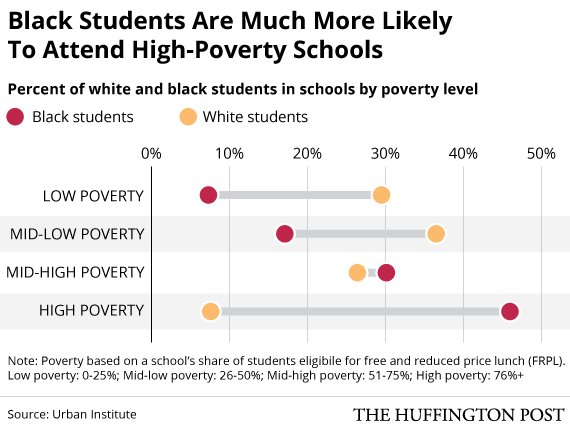
Sunday marked the 61st anniversary of the landmark case in the U.S.:  Brown vs. Board of Education. The supreme court case declared segregated schooling unconstitutional. However, 61 years later many schools remain separate and unequal. Often students in low socio-economic neighbourhoods, which tend to have a more diverse population, remain at a disadvantage compared to their counterparts in more affluent neighbourhoods . Rebecca Klein, author at the Huffington Post, put together six powerful graphs which illustrate how far we still have to go for a truly equitable educational system. Below are a couple graphs from Klein’s article:

funding


lessqualteachers

To read the entire article click here:

http://www.huffingtonpost.com/2015/05/17/brown-v-board-61-anniversary_n_7293344.html

Happy Victoria Day

For our Canadian readers, Happy Victoria Day! For our international readers, Happy Victoria Day! and let me (Yiola) tell you about our federal holiday.

Since 1845 (which is before confederation!)Canada has recognized Victoria Day. Queen Victoria’s (of England) birthday is celebrated here in Canada; in fact we are the only country to celebrate her birthday as an official federal holiday. Following her death in 1901, the holiday was made to be known as Victoria Day, a day to remember the late Queen who was deemed the “Mother of Confederation”.

We now informally call Victoria Day “May 2-4” and this holiday marks the beginning of our summer. Locally, people begin their gardening, cottagers open their cottages, and fireworks abound. It is a happy time and great way to welcome the coming of a new season.

This year, Monday May 18th marks the holiday which left me confused because May 24th is a Sunday… and so I wondered why May 2-4 was not celebrated next Monday? The link below explains why:

http://www.thestar.com/news/gta/2015/05/15/why-victoria-day-isnt-on-the-24th-this-year.html

I hope where ever you are, the sun is shining and there are fireworks in your soul. Enjoy today!

More on Incremental Change in Education

In January, I (Clive) wrote about Mary Kennedy and her stress on incremental change in education – as opposed to “bold” innovation. Since then, I’ve come across an excellent book that takes a similar stance: Enlightenment 2.0 (HarperCollins, 2014) by Joseph Heath, a philosophy professor at the University of Toronto. Though decidedly progressive himself, Heath writes in support of Edmund Burke’s advocacy of cumulative improvement, the rationale for which he paraphrases as follows:

“If everyone insists on reinventing everything, we’ll never get anywhere, simply because no one is smart enough to understand all the variables and grasp all of the reasons that things are done exactly the way they are.” (p. 88)

Hence the title of his book: this is a second take on an “enlightenment” approach to social reform, one that builds on past practice in just the manner Kennedy recommends. But Heath raises a crucial question:

“[O]nce we acknowledge this, is the only alternative to fall back into an uncritical acceptance of tradition? Or is it possible to use this insight as the basis for a more successful form of progressive politics?” (p. 83)

I’ll continue to read the book and let you know about Heath’s alternative (that’s a promise!). Meanwhile, one solution that occurs to me in the education field is to give teachers more voice, so they can share their practices and fine-tune them. More opportunities for teacher dialogue are needed: in school settings, during PD events, in university classes, etc. In this way, teachers can help each other tinker with how they do things, rather than having some “expert” come in and tell them they’ve got it all wrong. There’s a place for outside input, but it should be used critically – and incrementally.

Teaching, teacher education, incremental change, Joseph Heath, Enlightenment 2.0.

Don’t Compare Your Life to Someone’s High-Light Reel by Henrik Edberg

My brother sent me (Clare) the following blog my Henrik Edberg on the positivity site. http://www.positivityblog.com/index.php/2015/05/13/dont-compare-to-high-light-reel/

I just loved it because is so sensible. Enjoy!

“When you are content to be simply yourself and don’t compare or compete, everybody will respect you.”
Lao Tzu

Today I’d like to focus on a negative habit that creates insecurity within, erodes self-esteem and can make you feel quite unhappy with your own life .

It’s something that has sprung up as we have moved a part of our lives on to the internet and social media.

And that habit is to compare yourself and your life to other people’s high-light reels.

What do I mean by that?

That it’s so easy to start comparing your life to the lives of friends, old classmates or celebrities of all sizes as you each day see how perfect their homes, kids, love lives are and how filled their lives are with wonderful moments.

But is that their whole lives that is shared on Facebook and Instagram?

Usually not.

It’s just the high-light reel of that person’s life.

The positive moments. And it’s natural thing really, to want to share such moments or days with your friends or followers.

Now, for some people this may develop into something destructive. Into a way of creating a more perfect image of one’s life to get that hit of instant gratification as people add positivity via comments, likes and upvotes.

But everyone has problems at times. They fail. Get sick. Have flaws, bad days or negative habits. No matter who you are or what you look like or do.

I have those issues too. Just like anyone else. I still stumble and fall on some days. Doubt myself or am pessimistic from time to time. That’s human.

So don’t strive for being perfect or measuring yourself against someone else’s high-light reel.

Here are three healthier steps you can take instead:

  • Step 1: Compare in smarter way.There will always be people who have more or nicer things than you. Or are better than you at something. No matter what you do.
So if you want to compare then do it in a way that won’t make you feel envious and inferior. Do it by comparing yourself to yourself. See how far you have come. Look back at the obstacles you have overcome, what you have learned and how you have grown.
  • Step 2: Spend your energy and time on what matters the most.Step by step spend the hours in your day and week on building habits that will make you a better person and a happier one too.
For example, aim at being optimistic 70% of the time if you have been it maybe 50% in the past month. Or go out running for just 5 minutes for starters tonight instead of checking those social media accounts one more time.
  • Step 3: Let go of what drags you down.If necessary unsubscribe or remove social media accounts from your flow if you feel they are dragging you down and lowering your self-esteem. Even if those things might also be entertaining right now.

Life isn’t just a high-light reel no matter who shares it.

So look beyond that, remember that everyone is human and stop comparing yourself to that limited view of someone.

In the long run you’ll be happy that you did.

Trends in YAL

I try to stay connected with current trends in Young Adult (YA) Literature so I can have thoughtful conversations about these texts with the student teachers in our literacy courses. An article by Publishers Weekly highlighted some of complex topics currently being explored in YAL. Some of the themes YA publishers are prompting include texts “that look thoughtfully at mental illness and suicide” as well as “books that tell sophisticated stories about gender identity across the LGBTQIA spectrum”. To find out about specific YA titles exploring these topics see the following link: http://www.publishersweekly.com/pw/by-topic/new-titles/childrens-announcements/article/66587-what-to-expect-when-you-re-expecting-ya.html

Language and Literacy and Connecting Community

I  (Yiola) am sitting in a Tim Horton’s, sipping on a double double with milk, and very (yes I just used the word very when it was completely unnecessary!) suddenly feel inspired. I was in the midst of writing about this terrible “work to rule” strike happening in our public schools when a topic far more inspiring came to mind… the power of language and its connection to community.

Moments ago, as I had my head buried in the lap top focused on my blog, out of the corner of my eye I saw a group of older men chatting in their native language… a language that happens to be my own native language, Greek.  I felt a sweet spring of inspiration and connection to these men who gather around the table, sipping their coffees and socializing. It brought back the stories my parents shared of my grandfather walking 2 kilometres each day to the local “cafenio” where he would meet his friends and chat the afternoon away.  I visualized the cobble stone road that led from my Papous’ (grandfathers) house in his village (Yermasoyia); the narrow, hilly road that was lined with small villas and heritage homes. The more I heard the Greek phrases channel through their discourse the more at home I felt in this generic Tim Horton’s shop. I tried not to stare at them as they spoke. What occurred to me, and what may seem obvious and yet not entirely understood until felt, was the intensity of connection and understanding I experienced simply based on my understanding of language. I felt empowered because I knew their language. I felt connected. It felt familiar and safe.

Shortly after another group of men entered the Tim Horton’s and they too began socializing over coffee. This time I did not recognize the language spoken and yet I deeply appreciated the value of their connection. How wonderful to have people in your life that you are able to connect to through shared language. Shared language = understanding.

I look behind me. A couple sits in the booth in silence, each reading a section of the newspaper. Again, a strong sense of literacy at play; a strong sense of cultural connection.

Language and literacy is everywhere. Our language identifies us and connects us to the world.  How magnificently simple and yet so directly relevant to literacy and language development. Immersion in language, opportunities for sharing, talking, communicating, relevant reasons for reading and writing… a simple class field trip to Timmy’s may be in order…