Technology in Teacher Education: Using Program Resources to Build Capacity

Last week I (Yiola) ran a “mini” Technology Day Conference in our teacher education program. At first I felt it was a large feat given that, while I value and try to model good use of technology, I am a novice digital technology user.  I quickly realized that my own knowledge of digital technology use was of less importance. What was more important was my vision for sharing good information about technology use in the classroom. I sought colleagues within the program who know much more than I do and together we set to work.

The Vision

I named the conference Technology in and for Learning.  The vision was to provide practical sessions on how to use digital technology effectively in the elementary classroom. I wanted these practical sessions to be framed in a theoretical context so students would have deeper understandings for how and why good practice is what it is.  At our institute we work in a tripartite:  the teacher education program, the laboratory school, and our research/tenure faculty.  I set out to find colleagues in each branch of our institute to contribute in some way to the conference.

The People

I found my colleagues were excited to participate in the development and execution of the conference:

Teacher Education — The students were the participants, Members of the practicum team were presenters, and the staff helped organize the event

Tenure Faculty / Research Team — The Presenters

Laboratory School teachers — The Presenters

The Details

A member of the research team designed a professional and stylish website for the Conference where students gathered the information and were able to register. Upon check-in students received name-tags with their sessions and room numbers conveniently recorded.
The afternoon ran smoothly with a thoughtful introduction shared by a research team member on the frameworks for using technology in the classroom. She shared the SAMR http://www.educatorstechnology.com/2013/06/samr-model-explained-for-teachers.html and the TPaK http://en.wikipedia.org/wiki/Technological_Pedagogical_Content_Knowledge models. The introduction brought scholarship to the forefront. Then, the laboratory school teachers shared interesting, informative and practical sessions on a variety of topics related to using digital technology in the classroom. These sessions included the following:

Smart Pedagogy using “Smart technology”

Effective ways to use Interactive White Boards in the ClassroomMore and more classrooms are equipped today with “Smartboards”, making the thoughtfulness and effectiveness with with teachers use them, an increasingly important task.  In this workshop, you will learn the fundamentals of using interactive white boards (IWB’s) in your classroom, but also how to combine the use of this amazing technology with a student-led and inquiry based community and curriculum.

iPads in the Classroom

We will discuss various ways to use iPads in the classroom for a whole group and small groups. We will highlight apps – especially free ones – that are both fun and useful, focussing on supporting different learners. We will touch on both positive aspects and drawbacks of integrating iPads in the classroom.

Technology to Support the 4 C’s

Communication, Collaboration, Creativity, and Critical ThinkingThis session will explore several ​examples of technological tools which can be used in the classroom to foster communication, collaboration, creativity, and critical thinking. Some of the tools considered will include Edublogs, Zydeco, Earth Tours, Plickers, Minecraft, and Twitter.

Knowledge Forum

Knowledge building is the process by which new knowledge is created. In one sentence, it can be described as “giving students collective responsibility for idea improvement.” Knowledge building starts with the natural tendency to play with ideas, but extends to the unnatural tendency to deliberately improve them. Knowledge building is a collaborative process, and moves forward through a collective effort to advance frontiers of knowledge, as these are perceived by the community.Knowledge Forum is a multimedia environment that supports emergent idea development and sustained, collaborative dialogue, helping learning communities capture their thoughts and questions, connect and organize their ideas, and build knowledge together.

In this hands-on workshop you will learn the fundamentals of using Knowledge Forum to support the learning in your classrooms.

Teachers Using Technology in Literacy
Classrooms

This session will look at various ways of engaging students with technology in the literacy classroom. Examples of using technology to promote reading and writing skills, and motivation for literacy will be discussed and shared.
The conference concluded with a panel discussion and question/answer.
It appeared that the students enjoyed the sessions. The goal was to provide an opportunity to think more deeply about the value of and use of technology in learning.  We have sent out a feedback survey so we will know what students liked and what suggestions they will have for improvement.
I am glad that I took the risk and designed a mini conference for our students.  It was a good start. The use of digital technology in the classroom is not my area of expertise but it is certainly an area I want to have more fluency. Working with my colleagues who do have more experience in the area was not only provided benefits for our students, I too learned a great deal!

Happy Birthday Alan Cumming

Much to my delight I (Clare) discovered a column in the Globe and Mail (Canadian national Alan Cummingnewspaper) by Alan Cumming. Yes that Alan Cumming from The Good Wife, Masterpiece Theatre, Cabaret, and …. His first column was on turning 50. He says “I entered my 40s weeping … at 30, I had the regulation freak-out and changed my life completely….” He continues on:

But turning 50 has been a breeze. I have been longing to be 50 for ages, you see. I just like the sound of it. I like that people can’t believe it’s true. I like that I am dancing in a kickline in a Broadway musical every night with girls half my age and that my body is in better shape than it has been in any of my previous five decades, even though I party like a 20-year-old and can drink those kickline girls under the table. (Well, I am Scottish after all. It’s a national trait.)

I enjoy getting older. Is that so wrong? What I’m not so keen on is other people getting older. They get a bit boring, frankly. They talk about themselves as if they’ve had some sort of debilitating accident and can no longer function as they used to.

He talks about his birthday party bash. After reading the column I felt a real lightness and wanted to give life a hug. Here is the link for the entire article: http://www.theglobeandmail.com/life/relationships/hard-won-wisdom-why-i-keep-dancing-as-time-marches-on/article23049338/

And while I am on the topic of Alan Cumming I highly recommend his autobiography Not My Father’s Son: A Memoir. It was one of the best books I read last year. Cumming grew up in home rife with violence. He escaped but was haunted by his father his whole life. The book is funny, sad, insightful, and beautifully written. Here is the link to it: http://www.amazon.ca/Not-My-Fathers-Son-Memoir/dp/0062225065/ref=sr_1_sc_1?ie=UTF8&qid=1424522351&sr=8-1-spell&keywords=Alan+Cumming

So happy birthday Alan Cumming. I wish I had been at your party because it sounds like it was a blast and you inspire me.

Cartooning the Digtial World

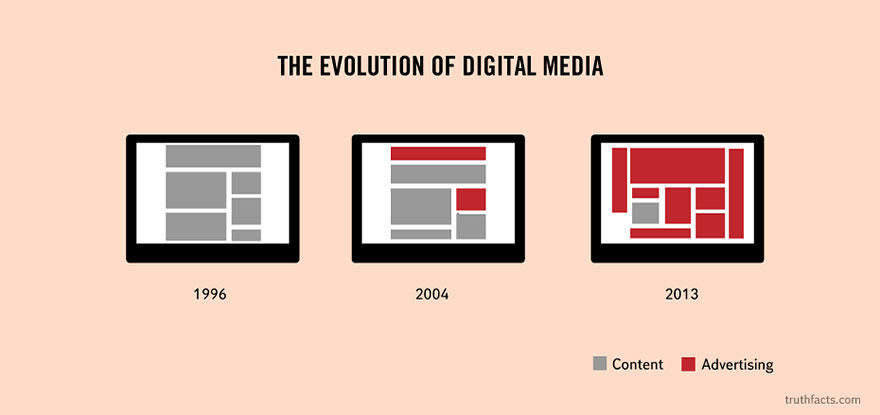
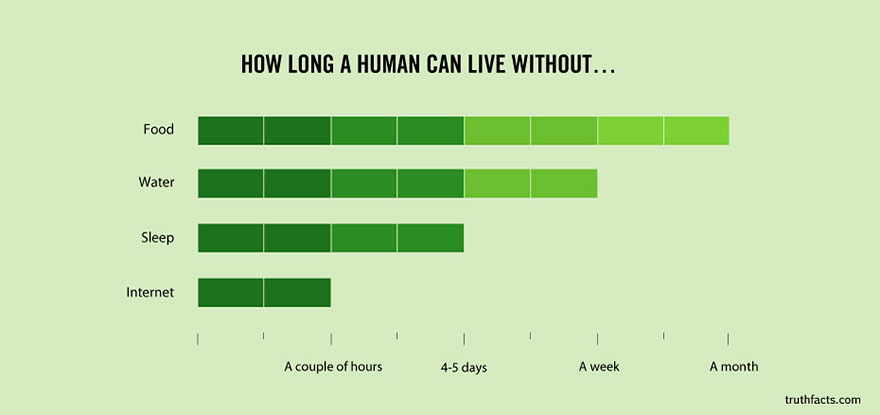
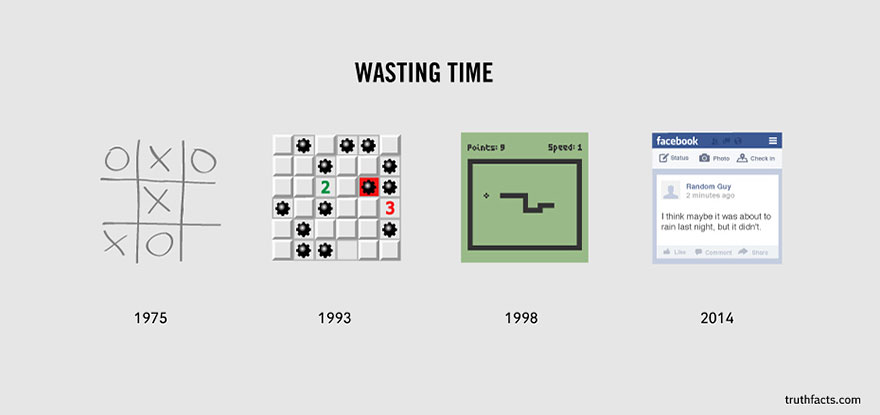
Danish writer Mikael Wulff and cartoon artist Anders Morgenthaler are the creative duo known as Wumo (formerly known as Wulffmorgenthaler).  Their rise to success started in 2001 when they entered and won a cartoon competition. When they won, they received a one-month run of their comic strip in Politiken, a national Danish newspaper.  Their popularity soared with the new exposure, and they soon found more and more publishers, including several blogs and newspapers throughout Scandinavia and Germany.

Among their works is a brilliant series of graphs and diagrams that illustrate some of the basic painful truths of everyday life in the Western world.  For your entertainment I (Cathy) have selected a few of my favourites that pertain specifically to digital technology and shared them below.  (Too enlarge a graphic, simply click on it).

Enjoy!

digitl medialed loled need interneted on line datinged facebooked wasting time

Bloom’s Taxonomy Meets the Digital World

One of the students in my (Clare’s) graduate course shared a version of Bloom’s Taxonomy which is linked to Web 2.0 tools. Although I have long had concerns about Bloom’s Taxonomy (using it like a checklist) I found this model interesting.


Bloom's Taxonomy

If you go to this site you can click on each tool:

http://digitallearningworld.com/tag/blooms-digital-taxonomy

I found this interesting and it got me thinking about how Web 2.0 tools range from glorified paper and pencil tasks to far more intellectually challenging work. Take a minute to click on the link above and then click on the programs. The pyramid was created by Samantha Penney: samantha.penney@gmail.com.

Debating the Common Core

The Washington Post calls attention to the ongoing debate over the Common Core Standards by featuring a letter writing exchange between two school Principals who express their differing views on the standards. The first letter is written by Carol Burris, Principal of South Side High School in New York, who was once a strong supporter of the Common Core but is now a critic of the standards. Burris noted, “I do not think it is a good idea to homogenize standards as untried as the Common Core, across our nation. What we teach our children is far too important to submit to a national experiment. Practicing educators, child development experts and parents should be deeply engaged in the process of standard setting in our states. Standards should be debated, reviewed and refined.” A response will be written by Jayne Ellspermann Principal of West Port High School in Ocala, Florida. See the link provided to read this informative exchange:

www.washingtonpost.com/blogs/answer-sheet/wp/2015/02/17/why-i-once-liked-common-core-but-changed-my-mind-one-principals-view


FDK update: Language and the Arts

Today is a holiday in Ontario and in several Canadian provinces: Family Day. A day to spend much needed time with family. Family Day comes at a good time since temperatures are beyond unbearable to many (me! ~ Yiola!) and the winter blahs bring a natural insistence to just take an extended break.

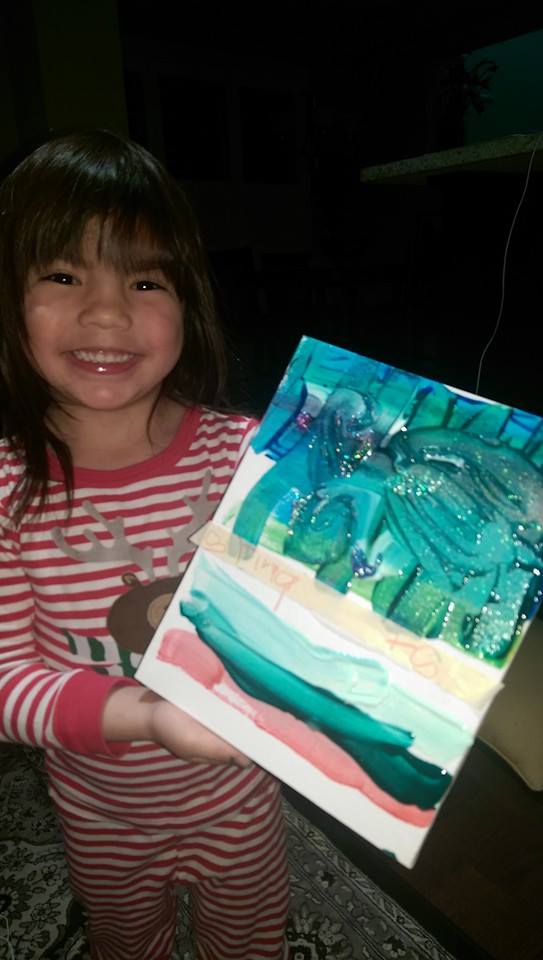
In honour of Family Day I would like to share a story about my family and how my Sylvia Clare (my four year old) is getting along in FDK.  About one week ago, while at home Sylvia Clare decided to paint. This was not unusual as she often paints at home. What was new was her language and ideas about art and herself.  She ushered me to the playroom, took the lead and began to explain that we were going to explore lines.  Lines I thought? So Sylvia Clare understands an element of art?  I sat in silence with what I imagine was a curious look on my face as she continued with confidence: “I’m an artist”.  Those words screamed at me with sheer joy and power. I had never called Sylvia Clare an artist… it was not something I thought of doing, although of course in my heart and mind I believed my child was an artist and a scholar and an athlete and a…..   ”

“Now mommy, you need to wear a smock so your clothes stay clean and roll up your sleeves. Please get the paints”.I followed her instructions.  Next thing I saw was Sylvia Clare carefully dividing the canvas. She began at the bottom and drew careful lines across the canvas using primary colours. Then on the upper part of the canvas she created thick textured, almost bubble like “scribble” where she mixed the colours. The entire time she was talking about her art: “Here mommy I am painting straight lines with primary colours, you see? And up here (top of the canvas) I am trying to see what scribble is like and I added some sparkle”.  She spent a lot of time working on her art and I sat and watched in amazement. Here are some pictures of Sylvia Clare from that day:

sylsmock

sylpaint

paint


Days passed and I wondered how Sylvia Clare was able to develop such clear language about the arts and conceptually understand the elements and most importantly to see herself as an artist. And then, the FDK newsletter came home.  The teachers shared the following in the newsletter:

The students have also been learning about a modern artist names Piet Mondrian from the Netherlands, who used primary coloured shapes and black lines to create famous pieces. They have used his method to create their own line designs. We have also experimented with bubble wrap. Some of the children are referring to themselves as “artists” now…

How one perceives oneself is often how one becomes. Sylvia Clare sees herself as an artist. She can talk about the arts and she confidently engages in art work.  So, on Family Day today I am certain we will be back in the playroom painting and playing and reading and doing… and I am sure that I will be the one who will learn the most.

Happy Family Day!

Neil Selwyn Raises Thoughtful Questions About Digital Technology in Education

I (Clare) have found Neil Selwyn’s writing about digital technology very helpful. In my Neil Selwyngraduate course we watched a talk by Selwyn (at Monash university). My students and I discussed his perspective on the place of digital technology and the consensus was – his perspective is valuable and educators need to consider the questions he raises. His stance is so sensible and balanced because he asks us to consider issues around digital technology that are often not part of the conversation. The video is about 1 hour and it is so worth the time. Here is the link:

https://www.youtube.com/watch?v=0q6bk3RVD9k

Below are some of the notes I made from the video. As you can see he is asking us to think carefully and deeply about technology (and he is a real techie!) I know you will never think of technology in the same way after watching his talk.

  •  We should not get carried away by digital technology because there are wider societal issues
  • Digital technology in higher education is very messy
  • Way we talk about digital technology is overly simplistic – the talk has been hijacked by other groups. Those in higher education need to be part of the conversation
  • place of digital technology is not inevitable – we have choices, need to activate our choices
  •  need to be critical and not just welcome digital technology as inevitable
  • what are the dominant arguments – need to understand the assumptions –

Assumptions

  1. Living in an information age
  2. Death of the institution is inevitable
  3. Crisis in Higher Education – HE fundamentally broken
  4. Period of Inevitable change for institutions

– RHETORIC IS CRISIS TONE – easy to get carried away by rhetoric

  • Need to be less extreme – neither hyper optimistic or hyper critical
  • Lots of change has been superficial – don’t believe the hype
  • digital technology talked about in radical ways
  • Selwyn wants us to think more carefully – why do we talk about digital technology in such extreme terms?
  • Term – disruption – heard again and again
  • What is actually being disrupted?
  • Blame is put on educators – deserve to be disrupted
  • Way digital technology is talked about – whole bunch of values attached to the talk and these things
  • Way we actually use digital technology is mundane and prosaic
  • So what has actually changed?
  • Complaints about universities – “googleized” environment –
  • Bleed of your professional life into your personal life – realities of technology –  intensification of work – not the smart office
  • Survey of professors – tend to use ppt and Moodles mainly
  • How does digital technology enhance teaching and learning?
  • So why do we buy into the myth that digital technology will change everything?
  • Commercialization of education – Silicon Valley mentality – think entrepreneurial – education is broken need Silicon Valley to fix it
  • Profound distrust of educators – need outsiders to fix education
  • Cannot see technologies as neutral — What values are missing?
  • Education is communal – Education is about human contact – something about being in the presence of the teacher and with fellow students
  • What is going on when doing virtual learning? What values are there or not there? Do online courses force artificial discussion?
  • Does ppt dumb down teaching?
  • Working conditions – over 1,000 unread mailboxes – cc: everyone – bringing work home e.g., check emails on Sunday – work seeps into our life
  • Digital bill of rights – set up on-line learning differently – issues of privacy, use of data …
  • Issue of trust – not talked about in elearning
  • Online learning should be about innovation, creativity …. Passion, curiosity – not heard about in elearning
  • Could we teach without ppt?– Ppt designed for business – bullet points – students want bullet points – how does that change learning?
  • Instead of dumping content into virtual learning get students to create own reading lists
  • Have digital technology match our own pedagogy
  • Would it be possible to switch off email for the weekend?
  • Placard — WE ARE STUDENTS: NOT CUSTOMERS
  • Think about digital technology as questions not answers – what are we gaining? What are we losing? What are the second order effects? What is the real problem we are trying to address through use of DT? What are the values underlying DT? Whose values are being promoted?


Learning to Keyboard

Well, it’s Friday the 13th -a day I dread.  Although I (Cathy)  have never been a particularly superstitious person, I do believe in the law of averages.  And I have been  in three car accidents on Friday the 13th- never my fault!  What has this got to do with keyboarding you might ask?  Well, neck pain or whiplash (a common  condition resulting from car accidents), is exacerbated by constantly using a laptop placed on the lap.  Letting the head drop down towards the chest to view the keyboard, and letting it stay there for extended periods of time, worsens the condition.   Sooo, to help myself heal from all the unlucky car accidents (and acquire a 21st  century literacy skill ) I recently decided to learn to keyboard.  I now have an external keyboard attached to my lap top and a large screen monitor on my desk.  To view the screen I have to  keep my head up, neck erect and hands somewhere down there on the keyboard.   The goal, of course, is to not look down.  Yikes!  For those of you who are proficient at keyboarding, this might seem trite.  But there was a time when you didn’t know how, so try to be empathetic.

About one week ago I finally managed to make the transition.  My index fingers now automatically search out the little marker on the ‘j’ and ‘f’ keys so I know I am on the home row.  (My own children found this fact hilarious as they had forgotten those keys were even marked.  My husband , however is very impressed.  He says its too hard to learn).  Most importantly, I can now type without looking at the keys!  But dear, oh dear, m y    t y   p  i  n  g  i s ss ooo   ssss lll oooo wwww.  (If you only knew how long it took me to type this blog post!)

Yet, I persist.  Daily, I engage in a variety of  speed tests and even play typing video games.  (Yes, I can save the city from the aliens if I  type the correct word fast enough).  It’s actually quite fun.  I am constantly searching the net for new typing courses. My two favourites so far are:

Learning to Type at  http://www.learntyping.org/beginnertypinglesson3.htm

and

Typing for QWERTY   at  http://www.powertyping.com/qwerty/lessonsq.html

It’s amazing that effective courses like this are available on-line for free.

Now, if I coukd only type  bti faster, but stll be acrate, i might be able to find more ocurses… Sigh.  I wish I could just stay home today – not because it’s Friday the 13th-  I just really want to practice my keyboarding!


Read Any Good Books?

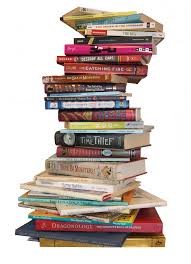
I (Clare) a number of years ago started keeping an annotated list of books I have read. I Stack of Books shared the list with my book club and then friends asked for it and on and on. I have continued to update my list. Here are the books I have read the last little while. Click here for the entire list. Books I have read You will notice that I really like murder mysteries but read almost all genres.
Feel free to share the title of a good book with me. Thanks. Happy Reading

February 2015

  • The Pearl that Broke Its Shell: A Novel by Nadia Hashimi – a truly terrific read that moves between present day Kabul and the main character’s great grandmother. Treatment of women is so upsetting. Lots of real thugs in Kabul. Feel like there is no hope for Afghanistan.
  • 5 murder mysteries by Ann Cleeves – Set in Northumberland England featuring Inspector Ramsay. The main character, Ramsay, is not well developed but the stories are all very good. The Baby Snatcher; Killjoy, A Day in the Death of Dorothea Cassidy, A Lesson in Dying, and Murder in My Backyard. Super easy reads – short and engaging.
  • Wolf Hall by Hilary Mantel. How did this win the Booker prize? The writing was truly terribly – starting paragraphs with He. Cannot figure out who is talking. Shifts between first and third person. So sloppy I was shocked. Do NOT recommend it.
  • The King’s Curse by Phillipa Gregory – this is the book that started my interest in the Tudors. Interesting perspective on Henry VIII. Historical fiction. Learned some. Not too deep but interesting.
  • Growing Up Amish: A Memoir by Ira Wagler – Interesting read. Definitely am not becoming Amish – learned about different branches of the Amish, some of their practices. Book should have continued for the rest of the author’s life. Felt incomplete.
  • Without You There is No Us: My Time with the Sons of North Korea’s Elite – By Suki Kim – I totally loved this book. The author was masquerading as a missionary with a group of missionaries who were masquerading as teachers. It tells about her time teaching in North Korea. Totally fascinating. It really shows how the government totally controls all info and the minds of the population. And people are so poor. Written recently. Author is a journalist originally from South Korea.
  • Adult Onset by Ann Marie Macdonald – I think this author only has one good book in her and she has written it. I read ½ the book and said that’s enough. Silly, silly, silly characters.
  • books by Thrity Umrigar: The Space Between Us; The Story Hour;
  • The Space Between Us – set in contemporary Bombay, story of 2 women – 1 rich and 1 poor (her servant) – really shows how the caste system is still in place – so many twists and turns in the book – really interesting
  • The Story Hour – set in New England – story of a poor Indian woman (new immigrant) who tries to commit suicide and her friendship with her psychiatrist – black woman – parts of it were very good – a bit frustrating and implausible. I got very cross with the psychiatrist because she knows better.
  • The Unknown Bridesmaid by Margaret Forster – seems like I am only person who does not know about Foster. This is her 26th Good psychological thriller. A psychiatrist is haunted by what she did as a child. Really good read. Lots of twists and turns. Characters well developed.
  • Not My Father’s Son by Alan Cumming – Yes that Alan Cumming – actor from The Good Wife, Cabaret … Book is totally awesome. His childhood was sooo grim. Tells story of his abusive father and how he survived. This is a must read. Well written, a bit of mystery, engaging.
  • The Monogram Murders: The New Hercule Poirot Mystery by Sophie Hannah – I love Poirot and I was reluctant to read this book. I felt that no one but Agatha Christie could write a Poirot murder mystery. I was wrong. Book was terrific. Great story. Perfectly captured Poirot. Cannot wait for the next book by Hannah.
  • The Short and Tragic Life of Robert Peace: A Brilliant Young Man Who Left Newark for the Ivy League by Jeff Hobbs. This is the most, most, most gripping book. Robert Peace, dirt poor in Newark – totally brilliant, gets a scholarship to Yale, gets high marks and ends up back on the streets of the projects in Newark. And he dies tragically. The author was Peace’s room mate at Yale. As a white woman, I know I do not get it (about race) but this book gave me an insight into poverty. Peace “got out” in one way but psychologically could not. One of the best books ever – but sad!! And you will be perplexed by the bad choices Peace keeps making.
  • Hardball: A V.I. Warshawki Novel by Sara Peretsky – To think this series is going strong Not worth the effort to even describe how bad this book is – writing poor, character ridiculous, plot painful – read ½ and thought Huh! Who would read this shlop?
  • The Silkworm by Robert Galbraith (A.K.A. J. K Rowling) – totally loved it. Just as good as her first as Galbraith – loved the characters, loved the story …. Hope the third one is coming soon.
  • Reykjavik Nights by Arnaldur Indridason – so bad not worth the time to describe how bad it is.
  • The Marco Effect” A Department Q Novel – Jussi Adler-Olsen – I love, love, love this series. Truly fab murder mysteries. Set in Copenhagen. Totally love the characters and the stories are great. Read them in order of publication.
  • The Aftermath by Rhidian Brook – Not my usual read. Set in postwar East Germany. I could only get through ½ of it. Characters were not plausible. Story and history interesting but the characters were just not real.
  • David and Goliath: Underdogs, Misfits, and the Art of Battling Giants by Malcolm Gladwell – Typical Gladwell. If you like Gladwell you will love this one. I did.
  • The Long Way Home: A Chief Inspector Gamache Novel by Louise Penny. I truly love these murder mysteries. Have to ration them out.
  • A Traitor to Memory by Elizabeth George- For those who like Inspector Lynley murder mysteries.
  • The Emperor’s Children by Claire Messud – not nearly as good as her early writings. Not worth it.
  • 3 books by Sarah Addison Allen – The Sugar Queen, Lost Lake, Garden Spells – normally I do not like novels with fantasy elements but these 3 are soooo good. Allen is a great writer and the fantasy elements work. Stories are all good.
  • The Goldfinch by Donna Taft – how did this win the Pulitzer Prize? Totally dreadful book. Wordy, plot does not make sense, implausible … Absolutely painful. Read ¾ of it and then my friend told me that the last ¼ is even more ridiculous so I stopped. (He was so frustrated with the book, he threw it across the room. And he is not prone to violence – a total sweetie.)


July 26, 2014

  • In Pursuit of the Proper Sinner – Vintage Elizabeth George. Very long but very good if you like Inspector Lynley murder mysteries. Deception on His Mind also by George. Very good.
  • Kwei Quartey murder mysteries – Set in Ghana. So interesting because I learned so much about Ghana – oil reserves, religion, corruption … Three books with the same detective, Darko Dawson, (who I love): Wife of the Gods, Murder at Cape Three Points, and Children of the Street. Read them in order of publication. Death at the Voyager Hotel is a one-off without Inspector Darko. Quartey is a doctor in the US who comes Ghana so he knows the country.
  • The Fashion in the Shrouds by Margery Allingham – J.K. Rowling said Allingham is her favourite murder mystery writer but I found it dated and tedious. (Detective Campion)
  • All the Light We Cannot See by Anthony Doerr – this is not my usual thing but I loved it. A blind French girl and a German soldier during WWII. VERY interesting and well written.
  • A Week in December by Sebastian Faulks. About corruption and the collapse of the banking system in 2008. Very interesting following about 12 characters. I could not follow all of the stuff on hedge funds but the ending is a true humdinger. Definitely worth the read.
  • The Invention of Wings by Sue Monk Kidd – contrived and painful murder mystery. Characters were silly and implausible. Not worth it.
  • Buried Angles by Hannah Kent another murder mystery set in the Scandinavian countries. Not worth the read. Painful. No where near the caliber of Jussi Adler-Olsen.
  • How the Light Gets In by Louise Penny – Usual excellent stuff following the murders in Three Pines. I am reading the Inspector Gamache in order and loving every word of every book.
  • Under the Wide and Starry Sky by Nancy Horan. I was looking forward to this because I LOVED Loving Frank (Lloyd Wright) by Horan. This one was so painful and embarrassing I could not get through it.
  • The Lemon Grove by Ali Hosseini set in Iraq during US invasion. Really glad I read it because I learned so much. Writing is not top drawer but very informative.
  • Honey Dew by Louise Doughty was a total disappointment. I loved her other books which were taunt and well written. This one was garbage.
  • Hour of the Red God by Richard Crompton is set in Kenya prior to the 2007 elections. Nowhere near the caliber of Quartey novels but I learned a lot about Kenya
  • Buried Rites by Hannah Kent – an absolute MUST read. Tells the story of the last women executed for murder in Iceland in the early 19th HUH you are saying. Trust me it is gripping and you will learn so much about Iceland. I could not put it down
  • Jhumpa Lahiri – Three novels which were all excellent. The Namesake; Interpreter of Maladies; and the Lowland. ALL were superb. The last one did not win the Booker (but should have). All dealing with identity Indo/American. Beautifully written even if the style is unconventional at times. Informative – gets you thinking about issues of identity.
  • The Wife, the Maid, and the Mistress by Ariel Lawhon – Hyped like crazy on Amazon but it was terrible, trite, not interesting
  • Summer House with Swimming Pool by Herman Koch. Translated from Dutch. I loved his previous novel, The Dinner which was a real psychological thriller. Summer House is not in that league. Almost all of the characters are despicable and so many loose ends it feels sloppy and I felt used as a reader.
  • Meet me in Malmo by Torquil MacLeod. Sort of a good/interesting murder mystery. Good story. The ending is such a shocker it is worth the read. Not particularly well written- another set in the Scandinavian countries – but fairly interesting.