Helping Students Develop Their Way of Life

If we teach literacy/English and other subjects well – in a way that interests and engages students and deals with “big ideas” – we will inevitably get into life issues and “values.” This in turn will help students build their way of life. They will not have to wait until they graduate to start figuring out how to be in the world.

Teaching about values or life issues is sometimes questioned on the ground that it involves indoctrination. However, schools already push values in strong ways, e.g., punctuality, hard work, academic learning. What is needed is to expand values teaching (usually in the context of teaching subjects) and find non-indoctrinative ways to do it. Constructivism provides a solution here, because both teachers and students say what they think and everyone learns from each other. In the end, students decide what way of life to adopt, but with the benefit of input from others.

As you may know, I (Clive) am a great admirer of the work of Nel Noddings. I recently found a statement of hers in The Challenge to Care in Schools (2nd edn., 2005) that bears very directly on these matters:

I have heard teachers say, We’re not trained for [discussing values with students]. That’s a job for psychologists (or counselors, or parents, or pastors). Pressed, many will say that they do not have a right to impose their values on students, but these same teachers impose all sorts of rules – sensible and mindless equally – without questioning the values thus imposed. Surely intelligent adults should talk to the children in their care about…qualities that most of us admire. This talk need not be indoctrination any more than mathematics teaching need be lecture and rote learning. (p. 39)

Speaking of values, what could be more immoral than subjecting young people to 12 years of narrowly academic schooling with little attention to life matters? The time has come to make education much more useful to students than it has been for the past two-and-a-half millennia. This requires helping them explore values and develop their way of life.


Teaching with a Sense of Humour

The What is Education?  blog for teachers states that having  a sense of humor is, 

 very useful in creating a classroom climate and the development of learning processes that are more healthy and enjoyable. In fact, Melissa Kelly said that a sense of humor is one of the keys to being a successful teacher. According to Melissa, teachers’ sense of humor can relieve tension in the air and can prevent the onset of disruptive student behavior in the classroom, and can be used as a way to attract the attention of students in the class. And most importantly, with its sense of humor, a teacher would show that he/she is a person who has a personality and mental health, to enjoy life, and be able to live a normal life without the stress of his/her career.

http://what-education.blogspot.ca/2013/06/the-importance-of-teachers-using-humor.html

I (Cathy) was delighted to see one of my student teachers, Carolyn,  using her sense of humor throughout her literacy lesson. Her grade one and two students found her quite amusing and would joke along with her.  Sometimes her humor was self-depricating, and sometimes it was as innocent as, “Who me?  I would never do that!”  It was never sarcastic and always made her students smile.  She even used it as a classroom management technique to keep the students focused and engaged.  When I asked her about  her technique, she said it made teaching and leaning more enjoyable.  Then she described an art lesson she had just taught using candle wax and water colours.  She drew a picture on the white paper using a white candle, so it was not visible.  While introducing the lesson she held up the paper and kept telling the students how proud she was of her picture.  When the students kept insisting there was nothing there, she applied the water colours and, of course, the picture magically appeared.  The humor came to play when she allowed each student to play the same joke on her as they created their pictures.  All of the magic pictures were displayed proudly in the hallway of the school.  Carolyn said the students still refer to it and giggle.

I think having a sense of humor is an asset.   We all definitely need to laugh more, especially in our schools.  Carolyn

Ontario Grade 8 Students are “Computer-Savvy”

An article in the Toronto Star reported that Ontario students rank among the most computer-savvy according to an international survey of approximately 60,000 Grade 8 students in 20 countries. The survey evaluated various aspects of computer use including how well students could collect, create and share information. The EQAO (Education Quality and Accountability Office) coordinated the Ontario portion of the survey and jointly issued the report with the Council of Ministers of Education Canada (CMEC). The report suggests that Ontario students scored an average of 547 points out of a possible 600.

Link to the article:

http://www.thestar.com/news/gta/2014/11/20/ontario_students_among_the_most_computersavvy_in_international_study.html?utm_medium=twitter&utm_source=twitterfeed&app=noRedirect


Re-visiting My Early Childhood Literacy Practices

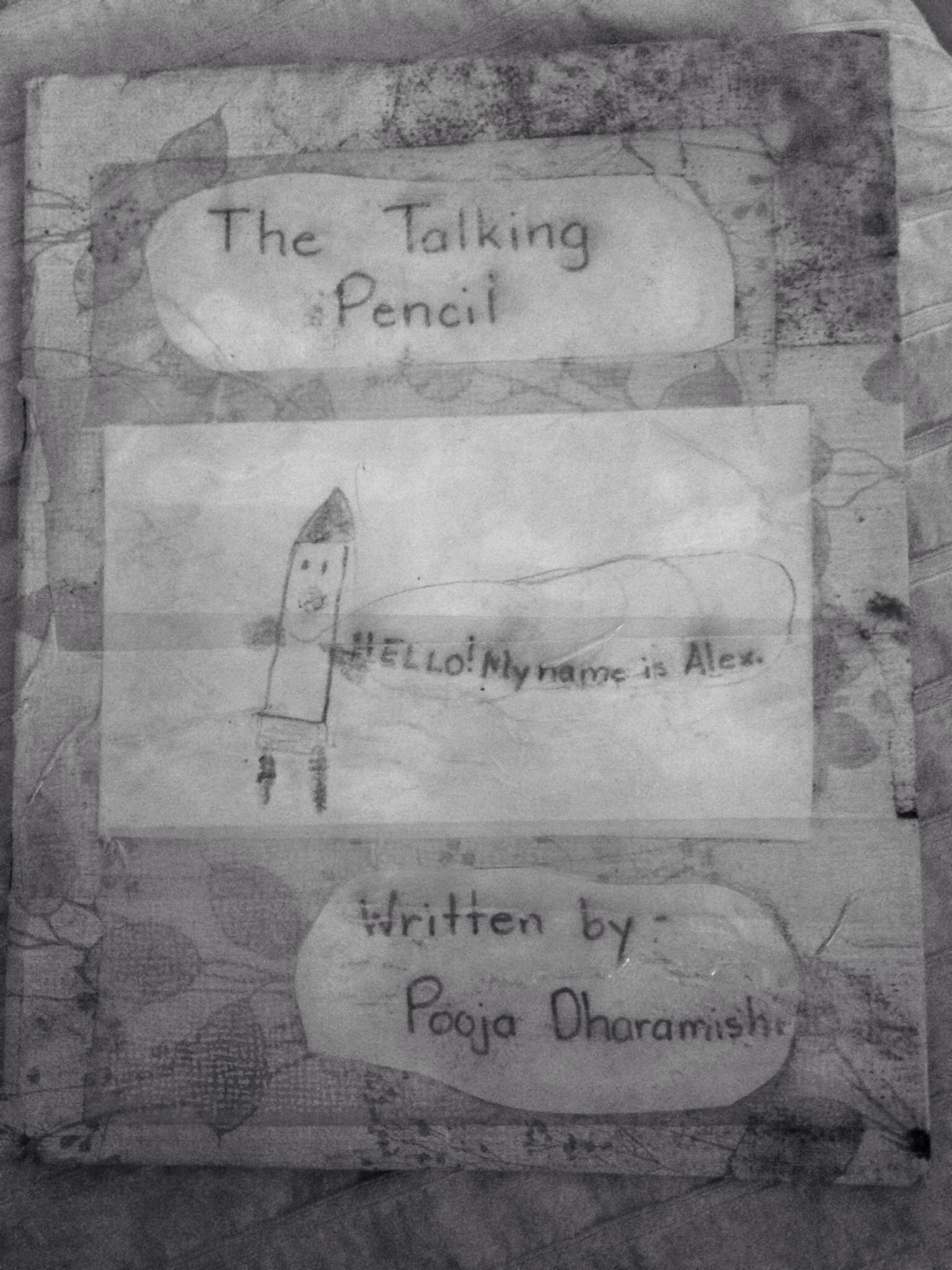
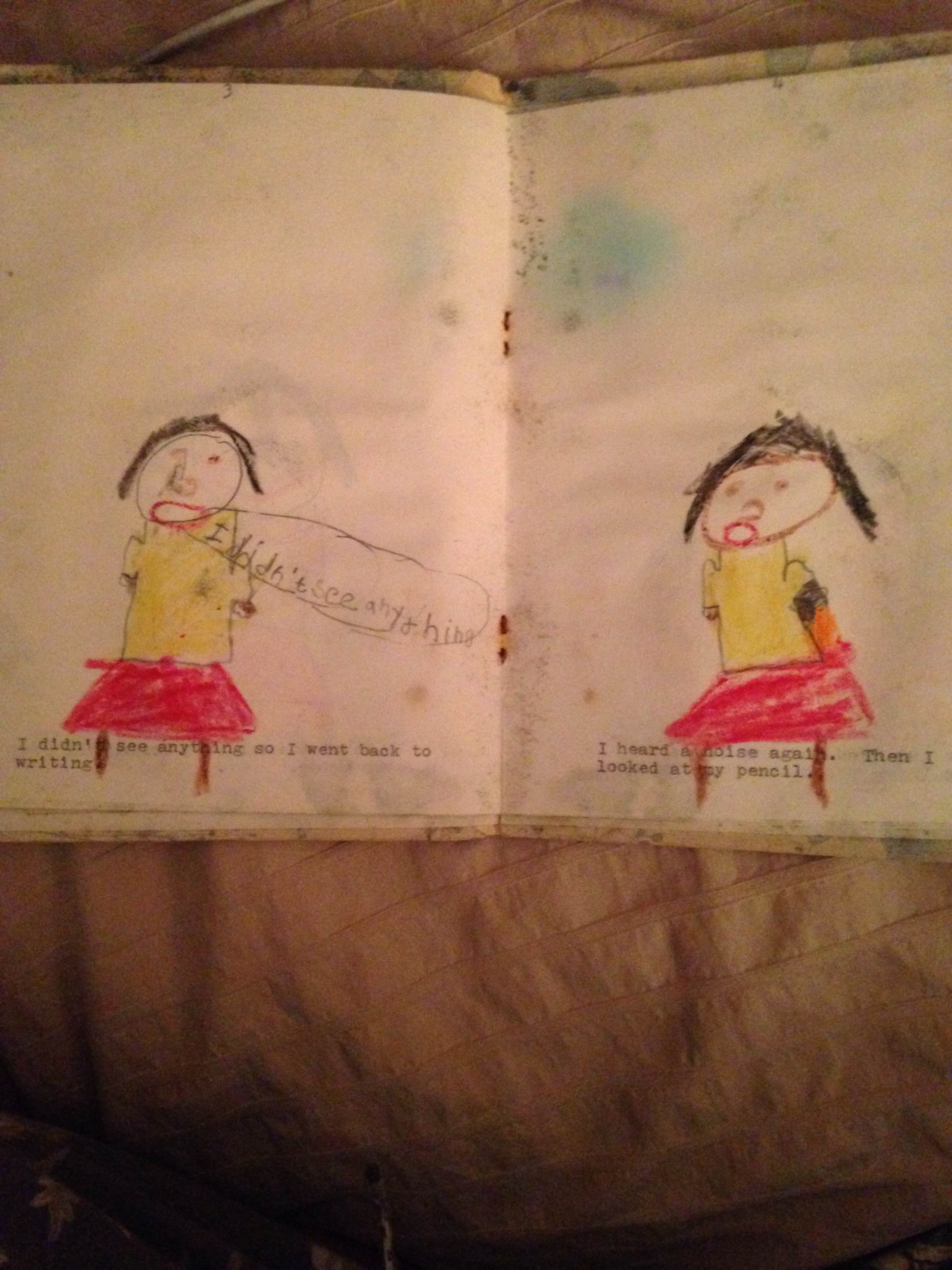
My (Pooja) parents’ basement recently flooded. So, they had to quickly clear out whatever was in there. They came across a huge container labeled “Pooja’s school stuff” and dropped it off to me the following day. I was overcome with emotion as I rifled through its contents. My parents had held on to every single one of my report cards from from JK-Grade 12;  they even had my university acceptance letter. They had neatly filed all of the documents in plastic folders to avoid damage (like a flooding basement!). In the container, I also found many artifacts from elementary school: reading logs, projects, letters to fictional characters and pen pals, and books I wrote and illustrated. I don’t remember even writing/completing most of what was in the container but it was like taking a glimpse back into some of my early childhood literacy practices. As an adult, I got to see myself as a kid.

Here are some photos from a book I published in Grade 2, The Talking Pencil. I love how our books became part of the school library, so other children were able to sign them out to take home and read. What a great idea!

IMG_7799 IMG_7800 IMG_7801 IMG_7802 IMG_7803

Cozy reading: A literacy initiative in the early years

Literacy teaching is rich and varied. Teachers make many decisions at to how to teach literacy: what texts to use, what language to emphasize, what materials to include, what experiences to foster, and how to deliver instruction so students become confident and competent users of language.

Sylvia Clare’s school has a “cozy reading” program in place where parent volunteers come to the class for about 1 hour. During their 1 hour visit they take small groups of about 4-5 students into a cozy space located outside of the classroom. With comfy chairs snuggled in a nook of the school the parent reads a picture book or 2 to the students.

This is a simple program that does so much:

  • Exposes students to parents’ reading and demonstrating a love for reading.
  • Provides additional read aloud experiences for students. Every child receives small group read aloud time with an adult, while the classroom teachers remain in the classroom working with small groups on a number of projects.
  • Brings the parent community into the school in a way that is focused on learning.
  • Has children connect with parents of students in the class.
  • A nice way to foster relationships between parents and teachers that is also helpful to teachers’ work

I (yiola) really enjoy the cozy reading program. Being back in the early years classroom reminds me of how complex the environment is: 25 young children excited, active, and curious. The balance between learning and management is simply amazing… even walking the children out the room to the cozy reading nook makes me smile… because I say to the children “Okay let’s walk down the hall nicely so we are safe” and as soon as we exit the classroom door the children skip and run down the hallway!


Sylvia Clare in the Cozy Reading nook.


Guest Blog: Susan Elliott-Johns

I (Clare) am very pleased to share information about Susan Elliott-Johns’ recently published book.  I have read the entire book and found it fascinating. There is so little written from the perspective of Deans of Education this text will fill a void in the literature. Congratulations Susan. (Susan is an Associate Professor at Nipissing University Canada.)

In a recently published book, Leadership for Change in Teacher Education: Voices of DIVS-Elliott_PB_firstproof.inddCanadian Deans of Education I (Susan) have compiled a rich sampling of diverse perspectives on this topic in a unique collection of reflections contributed by deans of education across Canada. The focus of my inquiry, “What would we hear from deans of education invited to share their perspectives on leadership for change in contemporary teacher education?” invited deans of education to reflect on the research, policies and practices currently informing their leadership. In the current era of teacher education reform, I thought it would be informative and illuminating to explore insights deans of education might share to assist others in understanding their role as leaders of teacher education and change today. In other words, what does it mean to be a dean of education in the 21st century?

The results, fourteen engaging and provocative essays, offer emic perspectives and increased understandings of the complex nature of deans’ work. Their reflections explore significant concerns in relation to lived experience and the multi-faceted processes of leading change for teacher education in contemporary contexts – the transitions, change, and uncertainties inherent in these contexts. What really struck me about the reflections in these short essays is how clearly they underscore the critical role of deans in provoking, supporting and championing new ideas and approaches to pedagogy for teacher education. Their voices clarify many of the complexities involved in leading the change, but they also resonate with optimism and determination. That said, the limited scope of related research available also suggests urgent attention needs to be paid, in both research and practice, to better understandings of this increasingly complex role, and support for more coherent approaches to the preparation of deans and their sustainable leadership. More than anything else, I hope this project will inspire others to truly listen to the voices of these Canadian deans of education.

Further information, including the Table of Contents and a sample of the first three chapters, is available at:

https://www.sensepublishers.com/catalogs/bookseries/other-books/leadership-for-change-in-teacher-education/

J.K. Rowling Harvard Address: You need both failure and imagination!

J.K. Rowling J.K. Rowling’s address to Harvard grads in 2008 will be published as an illustrated book “Very Good Lives: The Fringe Benefits of Failure and the Importance of Imagination.”

Harvard president Drew Gilpin Faust said in a statement “I have heard and read many commencement speeches, none more moving and memorable than J.K. Rowling’s. Years after her visit to Harvard, people still talk about it — and still find inspiration in her singular evocation of the idea that living a meaningful life so often means daring to risk failure. What a powerful example she embodies, and what a remarkable gift her speech was, and is, for all of us privileged to hear it then — and to read it now.”

Rowlings’ two main messages are: there are benefits of failure and imagination is crucially important. Thanks to the wonders of digital technology you can hear her speech by clicking on the link below. If you have some time listen to her speech because I (Clare) found it inspiring and funny.

https://www.bostonglobe.com/lifestyle/names/2014/12/02/rowling-harvard-commencement-speech-illustrated-book/mIvzElYtypZUUoYnmLSDfM/story.html

8 Uplifting Quotes For Discouraged Students

At this time of the school year, most educators are busy grading papers or marking assignments. I (Clare) came across this wonderful blog post on http://www.edudemic.com/discouraged-students/. I found these quotes comforting and inspirational. You might find want to share them with some of your students who are struggling.

8 Uplifting Quotes For Discouraged Students By nicolettemorrison on November 27, 2014@hellonicolettem

There are many reasons a student can lose focus in school.Albert Einstein

It can be bad grades that will discourage them to be inactive and to rebel. It can be the environment that can be stifling and suffocating for the students. It can be the fact that many of them don’t find it easy to see the meaning in their struggles in school.

Some students excel under pressure, and there are those who crumble beneath it. It’s easy to praise the students who continuously work hard, but let’s try not to berate those who find it difficult to focus.

When students get tired of school, they find all means to take the shortcut. This is why numerous students end up copying their homework and plagiarizing their essays. This is why websites such as Bestessays.com thrive. They offer services that will ease the difficulties of student, making it tempting for them to sign up and buy customized papers. Technology has definitely made cheating a lot easier.

It’s not just in the output that students slack off in school. It’s in their mentality that clearly shows their disinterest to learn and attend classes. When they start to not care about their grades, it must be a cause of concern for teachers.

Instead of lecturing these lost souls, it’s up to educators and mentors to find ways on how to lure them back into learning. It can be through constant motivation and pep talk. Sometimes, it can be a great story that will push them to work harder.

For now, maybe these inspirational quotes on learning and hard work can do the trick.

 “If you really look closely, most overnight successes took a long time.” – Steve Jobs

With the likes of Mark Zuckerberg being the poster boy of drop-out billionaires, it’s easy to see why many students seem to think that they no longer need school to succeed in life. But closer inspection shows that their path to success is muddier than one would expect. And besides, we can’t all be Mark Zuckerberg. We can’t all be Steve Jobs. But students can try to pave their own way to success and school can help with that.

“Every child is gifted. They just unwrap their packages at different times.” – Anonymous

Students can’t help but compare themselves with the topnotchers in class. While some obviously spend a lot of time studying, some students barely study and still manage to get good grades. Then there are students, who no matter how hard they try still scramble to get decent grades. They need to understand that students have different modes and strengths in learning, and sometimes formal education doesn’t work for many students. But every student has a talent and a skill that need time to develop.

“I have not failed. I’ve just found 10,000 ways that won’t work.” – Thomas A. Edison

It’s easy to get disheartened with a failed Math exam, but it’s just one exam out of many. A low grade for an English essay may be discouraging, but there’s always a next time. What students need to keep in mind is that getting bad grades and making mistakes can only lead to further learning. There’s always room for growth and time to correct their mistakes. One failure doesn’t mean it’s endgame already.

“You can do anything, but not everything.” – Anonymous

With so many options for young minds to explore and wander, students are often pressured to be great in everything. But that’s not something mere mortals can do. There’s nothing wrong with being a Math wizard and finding difficulty penning a coherent essay. What students can do is to focus on what they’re good at and once they’ve mastered this skill, they can go ahead and try other things. They’ll feel burned out if they take too much activities on their plate all at the same time.

“You measure the size of the accomplishment by the obstacles you had to overcome to reach your goals.” – Booker T. Washington

There’s a reason why a B+ in a subject you find difficult seems a lot sweeter than the easy A+ in your PE class. When you work hard for something, an excellent result may not be quick to attain but even a satisfactory result is enough to send students in pure bliss.

“You miss 100% of the shots you don’t take.” – Wayne Gretzky

Students are often disheartened by bad results, but giving up without even finishing their tasks means they won’t even get any result, besides a failing mark. It’s always better to give learning a shot before deeming it as something they’ll be bad at. They may fail the first time, but they’ll eventually get better at it.

“Don’t worry about failures, worry about the chances you miss when you don’t even try.” – Jack Canfield

To reiterate the earlier point, students miss out more when don’t even give it a try. Many students have this mindset that they’ll fail anyway, so why exert an effort in studying? But the fact that they don’t even open their books and rarely listen to discussions means that they didn’t even bother giving it a shot. Efforts may not always reap the best rewards, but it’s better than none.

“Tough times never last. But tough people do.” – Dr. Robert Schuller

School is just a part of life. It’s just a phase as crucial as it may be, and there’s more learning that will happen once you graduate from your alma matter. Don’t think that it’s the end of the line, because you’re just starting. School may toughen you up, but you need that to survive.

So students, keep your chin up because school isn’t the be-all and end-all of your life. The difficulties will pass and you only need to hold on.