Public Education vs Charter Schools: The Battle in NYC

I (Clare) was watching Chris Hayes’ show (MSNBC – All in with Chris Hayes) the other New York City Buildingsnight. He had a really interesting segment on charter schools in NYC. His two guests (Brian Jones, NYC teacher, and James Merriman, NYC Charter School Center) had a “lively” discussion on the battle in NYC between the city and the charter school supporters. The teacher, Brian Jones, who argued passionately and articulately for public schools was outstanding. He laid out the reasons why we need to fully support public schools and the dangers of charter schools. Chris Hayes started the segment with a slick ad that is being used to support charter schools; this was cringe-worthy but it showed how all of us who support public education, need to stand up and make our voices heard. There are powerful (business) interests supporting charter schools which in itself raises a red flag for me.

Here is a link to the segment from Chris Hayes’ show: http://www.msnbc.com/all-in/watch/battle-wages-on-over-nyc-charter-schools-190737987700

Brian JonesIf you want to know more about Brian Jones check out:

·      The video The Inconvenient Truth Behind Waiting for Superman which he co-narrated http://vimeo.com/41994760

·      You Tube clip on the dangers of testing. https://www.youtube.com/watch?v=A73_keoCWo8

·      Or this Tumblr feed: http://brianpjones.tumblr.com/BrianJones
What’s in a word?

Sheryl Sandberg, the Chief Operating Officer of Facebook, has teamed up with the Girls Scouts USA to start a campaign that calls for a ban on the use of the word bossy in everyday language. Sandberg suggests that referring to girls as “bossy” can limit their full leadership potential.  The website of Sandberg’s non-profit organization LeanIn.Org states,

“When a little boy asserts himself, he’s called a “leader.” Yet when a little girl does the same, she risks being branded bossy. Words like bossy send a message: don’t raise your hand or speak up. By middle school, girls are less interested in leading than boys—a trend that continues into adulthood. Together we can encourage girls to lead. Pledge to Ban Bossy”. 

Sandberg’s “Ban Bossy” initiative has recruited an ensemble of spokeswomen, including Condoleezza Rice, Diane von Furstenberg, Jennifer Garner, Jane Lynch, and perhaps most notably megastar Beyoncé.

The Ban Bossy project highlights how a word can come to signify particular social and cultural dynamics.  While I do understand the goals driving this initiative it makes me uneasy when a group advocates for the banning of words no matter how well intentioned their motivations might be. Words carry with them a history, at times a history of injustice and painful disparities, but an awareness of history is critical if we hope to effect systemic change.  Perhaps, an alternative to “banning” is reclaiming words in an attempt to shift the negative connotations associated with a particular word. 

http://www.slate.com/blogs/xx_factor/2014/03/10/ban_bossy_sheryl_sandberg_and_the_girl_scouts_team_up_with_beyonc_but_miss.html

The Danger of a Single Story

When engaging with students about Media Literacy, I (Pooja) often like to begin with novelist Chimamanda Ngozi Adiche’s powerful TED talk entitled The Danger of a Single Story. Through the use of her own narrative, Adiche speaks about the prevalence of a “single story” or the dominant culture portrayed throughout most school curriculums. Adiche shares the following memory of being taught a single story:

At about the age of seven … I wrote exactly the kinds of stories I was reading: All my characters were white and blue-eyed, they played in the snow, they ate apples, and they talked a lot about the weather: how lovely it was that the sun had come out. This despite the fact that I lived in Nigeria; we didn’t have snow, we ate mangoes, and we never talked about the weather, because there was no need to.

Adiche speaks about the impacts the single story has on an individual, on a community, and on society at large. While a young school girl in Nigeria, Adiche recalls only reading authors from the West. Having never encountered the works of an African author or seeing people like her appear in books, she believed she could not (or should not) be a writer.  She asserts that when we receive only one perspective on anything it creates stereotypes, “and the problem with stereotypes is not that they are untrue, but that they are incomplete. They make one story become the only story.”adiche

This TED talk sparks lively discussion in the classroom. Students often think back to their early schooling and many recall “single stories” they experienced. As a class, we capture all of these experiences on a large poster. As new text is introduced in the course we often refer back to this “single story” poster and discuss who’s stories are being represented in what we read/hear/see.

Re-Conceptualizing Multiculturalism in Terms of Diversity and Individual Identity

In a blog in January, I (Clive) argued against teaching multiculturalism in a way that leads to Ishrad Manjistereotyping, thus undermining students’ individual identity and well-being. In interviews this weekend after giving the 2014 Bluma Lecture, author and NYU professor Irshad Manji spoke eloquently of the dangers of a misguided approach to “multiculturalism,” expressing preference for terms such as “diversity,” “global citizenship,” and “individual identity.” In the Toronto Star she said:

Multiculturalism is about preserving a group mindset, which amounts to labelling. Diversity, on the other hand, is about…different points of view…. If you listen seriously to a new generation of Torontonians, multiculturalism’s time is done. Enough of hyphenated identities. The next stage in our city’s evolution is this: global citizenship. http://www.thestar.com/news/gta/2014/03/07/qa_irshad_manji_on_multiculturalism.html

Manji would like to see more emphasis on individual identity. In the Globe and Mail she commented:

[Mr. Trudeau] basically said national unity must be founded in one’s own confidence in one’s individual identity and from that we can begin to engage with others…. We don’t have that kind of multiculturalism today, in my view. What we have is more a fear of engaging based very much on feeling intimidated that I’m going to say something wrong or that somebody is going to be offended.

She is especially concerned about the impact of prevailing approaches to multiculturalism on vulnerable community members, notably women and children. In the Star she stated that “the vast majority of the world’s known cultures are patriarchal,” and in the Globe she said:

By giving rights to cultures, not just to individuals, what we wind up doing…is giving more power to those who are already powerful within certain communities. We give them more power to dictate what customs are to be respected and which customs are untouchable. The next time you’re told you must respect such and such a custom, ask yourself, “What does my respect for this custom do for the most vulnerable in that community?” And the most vulnerable tend to be women and children.

Whether or not the term “multiculturalism” has outlived its usefulness is something we should ponder; and if we’re too afraid to say it has, we prove Manji’s point. But whatever words we use, we can support Manji’s approach in teaching and teacher education by stressing the diversity and power differences within cultural communities, the commonalities across communities, and the importance of individual identity and well-being.

A Foot in Many Camps: Literacy Teacher Educators Acquiring Knowledge Across Many Realms and Juggling Multiple Identities

research teamFor those of you have been following this blog, you know we are conducting a study of literacy/English teacher educators in four countries (Canada, U.S., Australia, and UK). Our first paper from the study has recently been published in Journal of Education for Teaching 39(5), 534-540. The paper A Foot in Many Camps: Literacy Teacher Educators Acquiring Knowledge Across Many Realms and Juggling Multiple Identities is available through this link:  Foot In Many Camps

In the paper we describe how the teacher educators had a range of classroom teaching experience which they drew on in many ways. Most went far beyond simply telling stories about their previous work. All were heavily influenced by their own childhood experiences, which continue to affect their current work. Many felt that they needed to hold dual identities, teacher and academic, because they were still heavily involved in schools through their research and in-service activities. Several felt that there was a hierarchy in their department with those most removed from schooling at the highest tier. Most saw themselves in the field of literacy not teacher education and gravitate towards literacy-focused conferences and journals rather than those in teacher education. I (Clare) hope you find the paper interesting. We certainly have found this entire study fascinating.

Including All Students in the Conversation

I (Clive) am a great believer in whole-class and small-group discussion. However, three and four years ago I was terrorized by a series of individual students who dominated discussion in class, speaking at least 50% of the time – they would have talked 90% if I’d let them. I’m sure they did the same in their small group, if I wasn’t in the group.
This forced me to develop a set of techniques for giving everyone a turn. They’re simple but effective. Most students appreciate them, and they’ve enabled me to relax and not always be cutting people off (though I still have to be firm). I wish someone had introduced me to them long ago.

     The techniques assume the class is no larger than 35 (I have any bigger class divided up) and is seated in a large circle (I arrange the seating before the students come in). They also assume that students get a lot of “air time” in class, otherwise it’s impossible for everyone to have a turn.

Here are the techniques:

  • Going around the room, with each student (or every 2nd or 3rd student) saying what they think about the topic in hand (don’t worry if you don’t get all the way round).
  •      Discussion in 2s and 3s around the room, followed by reporting from each group.
  • Numbering off to form small groups, followed by discussion and reporting back.
  • Individual prepared presentations (ungraded, maximum 4 minutes) – 2 to 4 per class – with 3 people to the left or right of the presenter responding.
  •       Whole-class discussion after a “mini-lesson” from me, with a speakers list formed as people put up their hands.

I find students are very glad to be called on in these ways: no one has ever declined. And the approach greatly strengthens community as we hear from and get to know everyone, including many who’ve been largely “voiceless” throughout their school and university career. It fosters oral literacy and results in truly inclusive education.

If anyone has other strategies, please let me know!

Grade Two Flash Mob

I (Cathy) love Flash Mobs.  Someday, I hope to be lucky enough to be in the right place at the right time to witness one. Members of a symphony orchestra  in Sabadell, Spain clearly excel at creating them.  There are many clips to be found on Youtube by this group, but my favorite is the one set up for a grade two classroom.  In the link below, the classroom flash mob is embedded with several others.  Just keep watching.  I love the look on the children’s faces; their reactions as they get lost in the music; and, their ability to conduct!  Ah, the joy of it.  I wonder how many of these children will dabble in music after this experience. 

http://www.youtube.com/watch?v=y0-2d__wi7k

Congratulations Tiffany Harris

Tiffany Harris and Clare Kosnik

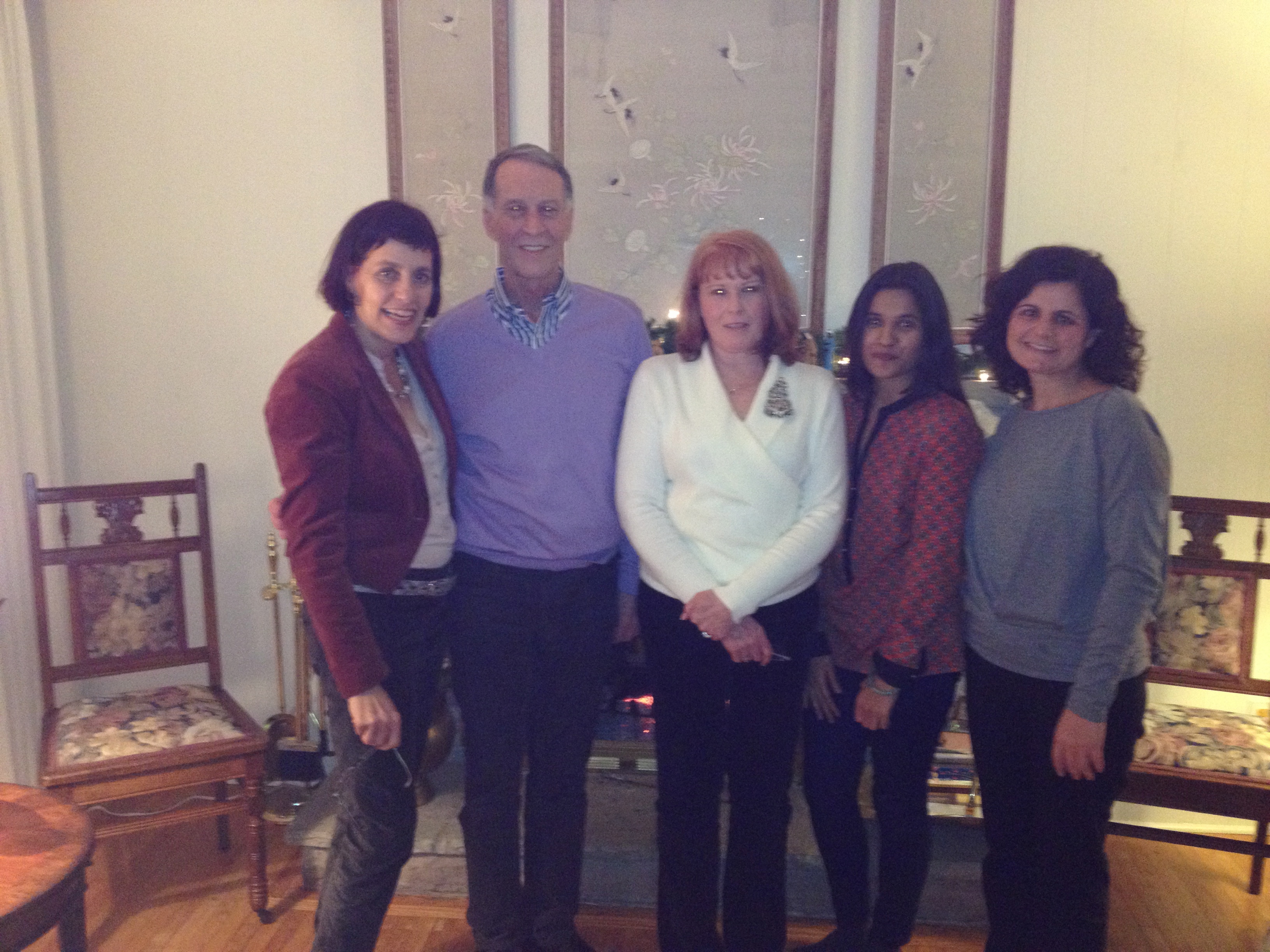
Congratulations to Tiffany Harris (member of our research team) who successfully defended her PhD thesis yesterday. The thesis, Multiliteracies Theory into Practice: An Inquiry into Junior-level Literacy Classrooms, was a study of classroom teachers (grades 4 – 6) which examined their understanding and use of a multiliteracies approach in their teaching. The thesis is outstanding because Tiffany closely studied her participants’ views of literacy, their practices, and the challenges they face. The analysis is outstanding because Tiffany is both a very accomplished classroom teachers and an excellent researcher. She brought to bear on her work her understanding of the work of teachers and her extensive knowledge of multiliteracies theory. As a result, her work will definitely contribute to our understanding of how literacy is evolving and how teachers are adjusting their teaching. It is rare to have a study that moves so effectively between theory and practice. Her thesis will soon be available through the Proquest Dissertation Database. Congratulations Dr. Harris. Attached is a picture of Tiffany and me (Clare) after her thesis defense.

A Daily Reminder

I (Pooja) work at a higher ed. institute with a population that is very diverse. I have many mature students, with a history of interrupted education, who are looking to make a fresh start with school after work many years in unfulfilling jobs. Even though school has failed them in the past, they come in hoping to form a new relationship with school. This cartoon and this quote are taped up above the photocopier in our office. It is a daily reminder of my work and the students I serve.

comic

Everybody is a Genius. But If You Judge a Fish by Its Ability to Climb a Tree, It Will Live Its Whole Life Believing that It is Stupid. –Einstein

Yiola Cleovoulou wins OISE Teaching Award

Congratulations to Yiola Cleovoulou a member of our research Yiola Cleovoulouteams who has just received the OISE teaching award for Excellence in Initial Teacher Education. She was nominated by her students which in itself is  an honour. This is a very competitive award so to win it is a real  accomplishment. I have team taught with Yiola and know that she is a truly outstanding literacy teacher educator. For more info on Yiola click on the link About Our Research then click on Meet the Research Team. Clare