Tag Archives: communication

Embracing the Backchannel

The backchannel is the conversation that goes on alongside the primary activity, presentation, or discussion in your classroom. Victor Yngve first used the phrase back channel” in 1970, in a  linguistic context, referring to how people communicate back and forth alongside a conversation.  I (Cathy) have recently started using TodaysMeet as a backchannel chat platform to help me redirect the constant distractions or backchannel discussions in the classroom, especially, the digital ones. Have you ever been frustrated by the frequent use of digital devices (i.e. digital phones, computers, tablets) in your classroom that are not related to your lesson?  This tool may help.  I use TodaysMeet to help me harness the backchannel and redirect it onto a platform that can enable new activities and discussions.  My students are invited, through a link, into a “room” much like a chat room. I then project this “room” onto my screen for all to see.  As I progress through my lesson, questions and comments about the lesson are posted by the students through their own computers or other devices.

Below are a list of benefits from using backchannel tools in your classroom.

  1. Shy/introverted students are given a place to ask questions and contribute to conversations.
  2. Students who process information by asking a lot of questions can ask an unlimited amount of questions without dominating the classroom conversation. Everyone can see their questions and you can choose when to address their questions.
  3. Gauge students’ interest in and or prior knowledge of a topic.
  4. Extend your classroom conversations beyond the time in your school’s schedule. If you have started a backchannel during a classroom conversation and it’s going well you don’t have to worry about running out of time because you can have students continue the dialogue later in the day.
  5. Gauge the effectiveness of an activity in real time, by having students share questions and comments during an activity
  6. Conduct formative assessment by asking students about their understanding of a topic and gauging the responses

From :  http://www.freetech4teachers.com/2013/06/5-benefits-of-using-backchannels in.html#.VRAQv-E01q8

Other backchannel platforms include: Socrative, Padlet, and BluePulse. And, yes, tweeting on the same hash tag, during an event, is also a form of backchannelling. To obtain a comprehensive guide on harnessing the backchannel, follow the URL below: http://www.freetech4teachers.com/2013/09/backchannels.html#.VRAXx-E01q8

todaysmeet

The Danger of Silence

I came across this short yet powerful TED talk. Educator Clint Smith delivers a power piece of spoken word on what he believes  to be  the dangers of silence. Smith, like many educators, values students’ voices and opinions. He believes we must encourage our students to speak out against injustices because silence leads to discrimination, violence, and war. Through the use of poetry, Smith helps students shares their stories- share their “truths.” Smith begins his spoken work piece with a powerful Martin Luther King Jr. quote: “In the end, we will remember not the words of our enemies, but the silence of our friends.”

Smith also shares 4 core principles that he runs his classes by:

1. Read critically

2. Write consciously 

3. Speak clearly

4. Tell your truth

Watch Smith’s 4-minute video here to hear more about the dangers of silence:

Screen Shot 2014-11-24 at 10.42.22 PM

How do you Know What To Blog About?

I (Clare) recently did a presentation to a group of teachers on a self-study I conducted with Connecting PeopleLydia Menna and Shawn Bullock on our efforts to integrate digital technology into my literacy methods courses. (Here is the powerpoint from that presentation. BERA + ECER-DT 2013in Dropbox) I talked about my initiatives which led to me showing how my efforts in my literacy teaching led to a greater use of digital technology in other parts of my life (e.g., using NVivo for data analysis). The success of my initiatives with my teaching gave me the confidence to take the plunge to do a website. My technical skills had improved and my identity shifted so that I now see myself as “digitally competent.” During the presentation I showed our website and one of the participants raised an interesting question: How do you get ideas for your blog? He recounted how he wanted to do a blog but did not know what to write about. I told him to just start! I believe that writing a blog is a different genre – it requires different writing skills than other forms of writing. Since we started this blog, I feel that my blog-writing skills have improved. I now focus on one topic in a blog; I am more comfortable sharing my insights; I will raise questions; I make links to other resources; and I no longer feel the blog needs to be perfect  (so what if there is a typo. We will survive.)  Blogging seems to have captured my interest and is a good match for me ( I have lots to say about education) and it is fun.  I keep a Word document with blog ideas which is always plentiful and when I come across something “interesting” one of my first thoughts is – Would that make an interesting blog? This thought is followed by – Would others be interested in this topic/issue? Doing our blog as a “team” has truly been the way to go. I have learned so much from the posts by my team (Cathy, Lydia, Pooja, Clive and our guest bloggers) about them personally and professionally. And their blogs give me ideas about what to write about.

I really see our blog as connecting with the broader education community which is social media at its best. Blogging is good for me because it gets me thinking critically and hopefully, our posts are of use to our readers.

Reflecting on my time at the International Symposium for Digital Technology and Literacy/English Teacher Education

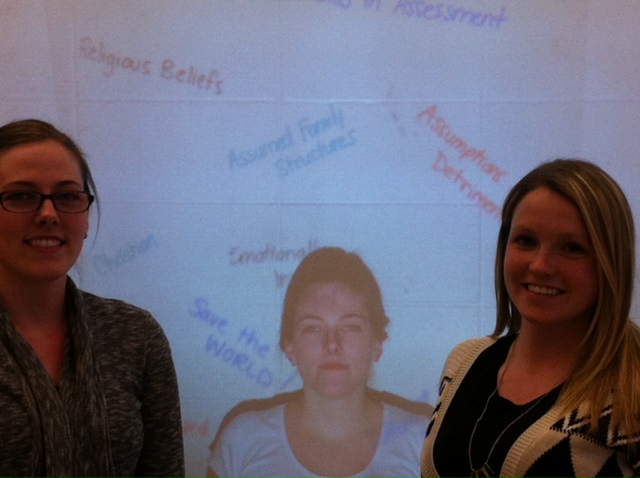
I (Lydia) feel fortunate to have had the opportunity to participate in the symposium last week as many of the issues raised resonated with my current research examining student teachers’ experiences with contemporary literacy teaching and learning. The issues highlighted during the individual presentations and accompanying discussions offered rich insights into the status of teacher educational internationally.

IMG_2590

I’d like to share a few of the questions raised during the symposium that remained with me and will continue to inform my research in literacy teacher education: What should a curriculum of contemporary teacher education include? In what ways can a curriculum of teacher education provide the space and quality time necessary for student teachers to truly engage as learners? How does power continue to operate in the curriculum? How do digital tools and social media spaces construct reading and writing? What do these digital spaces permit and what do they restrict? How is knowledge constructed, represented, and distributed within digital spaces? What are the pedagogical consequences as students engage with different modes within digital spaces? These are just a few of the questions I continue to consider upon my return from the symposium. Having the opportunity to consider the complexities and issues relevant to teacher education with international scholars was truly inspiring. I look forward to continuing our rich conversations.

IMG_2560

Symposium: Day One Reflections

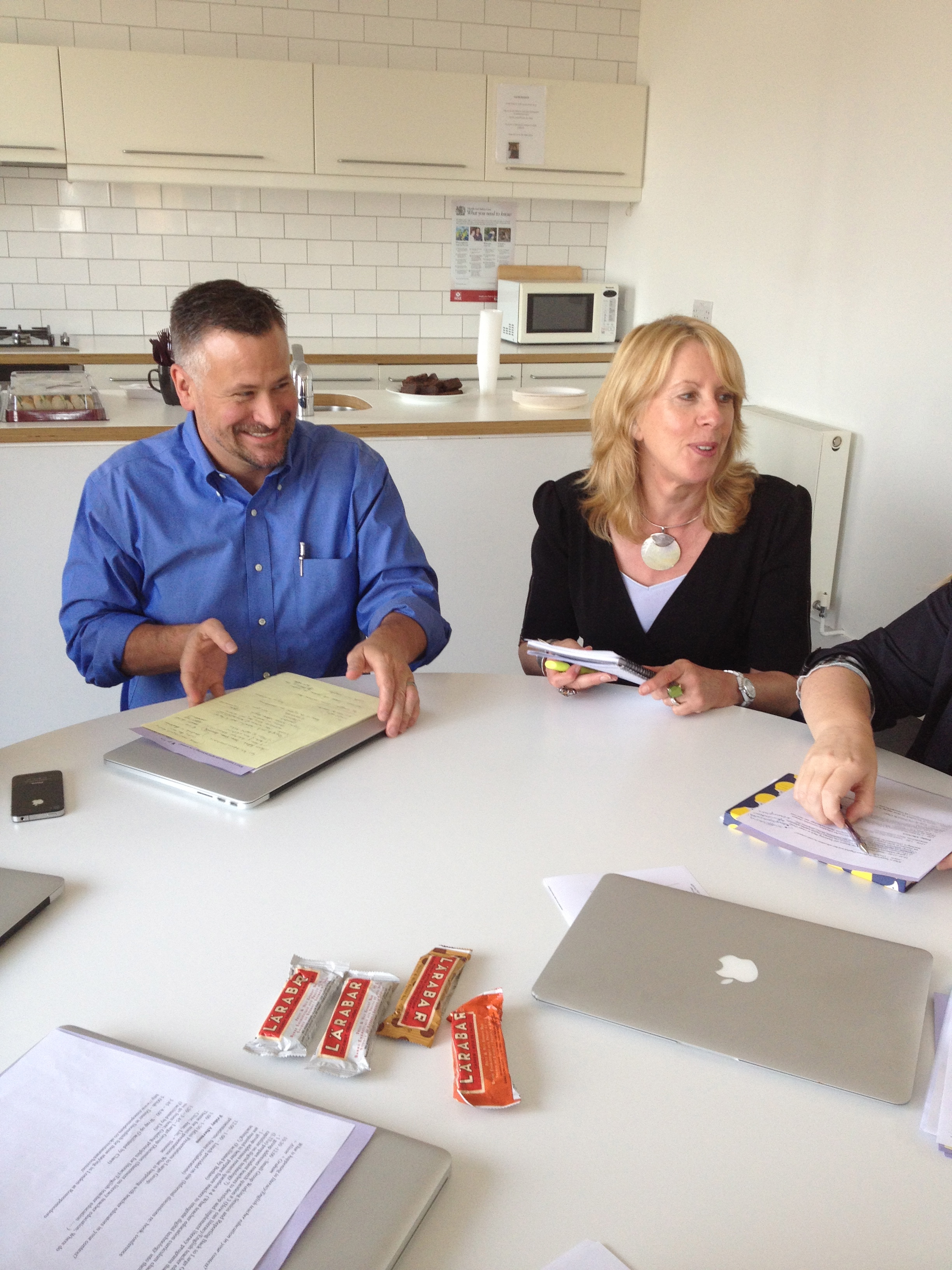
Lin GoodwinThe first day of our Symposium was a smashing success! The large group discussion of “where we are” revealed the extreme pressure on teachers and teacher educators. We heard about the fast and furious rate of reform in some countries – non-stop initiatives coming from the government. These are so prolific that there are often contradictory messages (e.g., be inquiry-based but focus on skills development). The mini presentations addressed a range of issues: what happens when standards are implemented; student teacher expectations for courses versus the teacher Lydia and Cliveeducators’ goals; problems of teacher retention; the vast number of pathways into teaching creates confusion; and teacher educators having different emphases in their courses even when there is a common syllabus. A problem that arose is lack of control over the implementation of standardization. It can take a very different form from the envisaged use of the standards. The place of digital technology in literacy/English education still eludes and needs much more discussion of what to do and how to do it so that technology is used to support learning.
Cathy MiyataThe discussion was rich and far-ranging. A number of participants commented that we rarely have an opportunity to discuss “big issues” in education and teacher education.
Today promises to be another day full of lively discussion.


Social Media 101

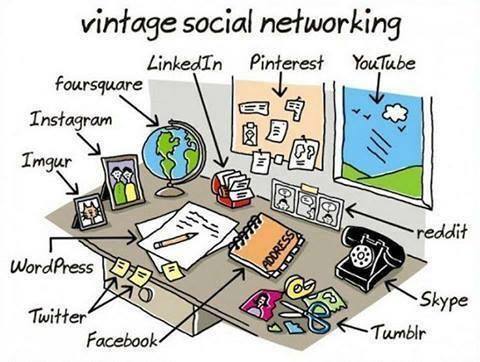
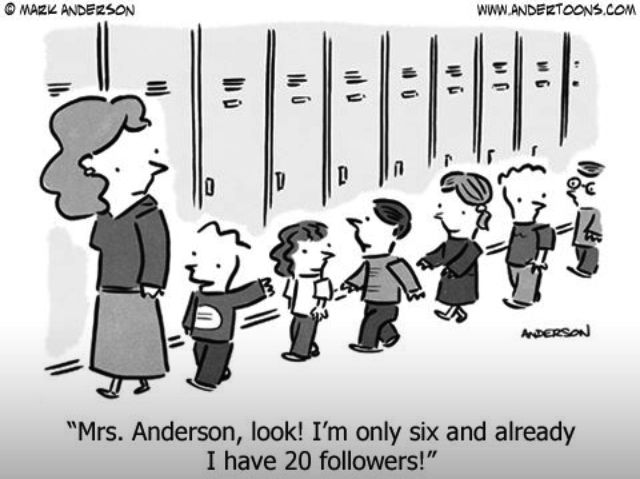
I (Yiola) came across this while on social media and found it playful… and true!

10259931_10152488203689175_8001628699976626381_n copy


A great explanation of social media and their functions.   I often think about the degree of necessity of each of these forms of communication — what they offer and their implications for communication and social interactions.  I am contemplating the pros and cons and beginning to explore literature that shares findings of the implications of our newer forms of communication.

Consequences for our Fast Communication Mistakes

The recent phenomena of quick texting is providing us with accelerated communication opportunities, but is it always working to the best of our advantage? I (Cathy) brought this up at a dinner party the other day and was amazed at how many had experienced major communication faux pas. One colleague confessed to texting his boss instead of his intended friend- about the boss. Luckily, there were no consequences as he still has his job.

Another colleague- a writer- sent a text off to her publisher inquiring about her overdue contract. She received a text back that was intended for another editor in the publishing house stating they should hold off sending the contract so they could “offer her less”. She consequently forwarded the text to her agent and luckily she was not “offered less”.

And then there was my own experience. I texted my son suggesting I pick up a few work shirts for him while at Costco. Shortly afterward I received a text from him- intended for his sister- complaining about my taste in clothes. I texted him back that I would not pick up the shirts after all. He thought this mistake was hilarious and immediately sent a text to his sister telling her what he had done. Many LOL texts followed to which I was included. This incident became a family joke and I have consequently learned to refrain from buying clothes for my son. Luckily, I just buy something for myself instead!

Multimodal Literacy

My (Cathy) pre-service students were assigned a multimodal aspect to a major assignment this year.  If you are not familiar with the Theory of Multimodality, it is Gunther Kress’ alternative to Linguistic Theory (which only privileges reading and writing as the main modes of communication in a school curriculum).  The Multimodal Theory contests that in our new age of multiple literacies, students need to be communicating, responding and expressing through many different modes of communication (e.g. speaking, music, moving, gesturing, image, and digital technology).

When I first introduced the multimodal assignment to my students, there was some trepidation and even some anger.  It was suggested I did not have the right to be marking them on their artistry or on creativity.  Hence, I had to teach the concepts behind Multimodality Theory so they could better understand what we need to be offering students of the 21st century.  They needed to see that it would allow them the freedom to express in modes of their own choosing; that it was not graded as art but as a production of design; and, that the work could be symbolic or interpretive depending on the meaning they were portraying.  The multimodal projects would also be shared in class so all could learn from them.  This project was not just them regurgitating information for me, it was them designing and producing personally meaningful projects that express what they learned and what they deemed significant.

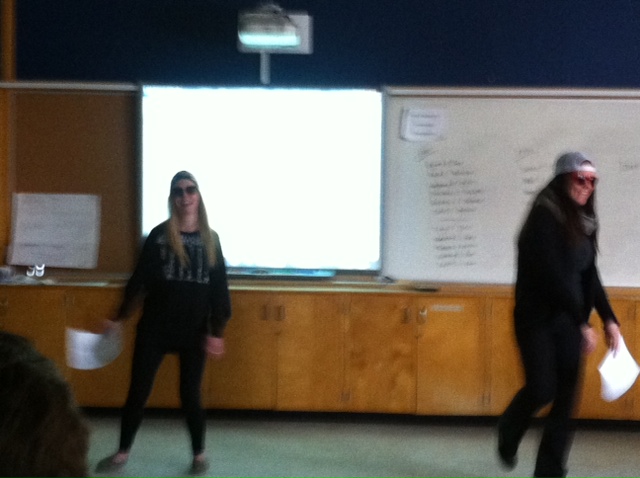
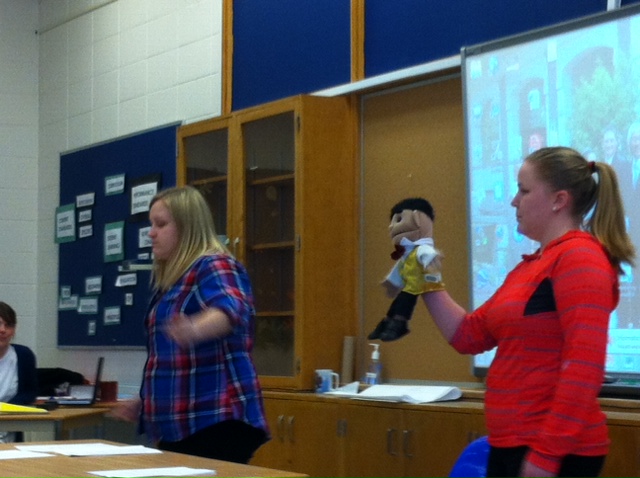
This week we finished viewing the projects.  They were amazing, and the student response to these projects was encouraging.  My students (concurrent students just finishing a five year educational degree) had never been given this kind of an assignment before.  They loved the element of choice; working together; taking a risk; pushing their boundaries; feeling creative; and, doing something they were interested in.  The modes they selected  to express themselves though were sometimes more traditional (dancing, rapping, singing,  writing and reciting  poetry, creating 3D sculptures, puppetry, multi-sensory art installation pieces); sometimes digital (iMovies, pod-casts, prezis, Pow Toons, popplets, infographics);  and, were often a combination of both.

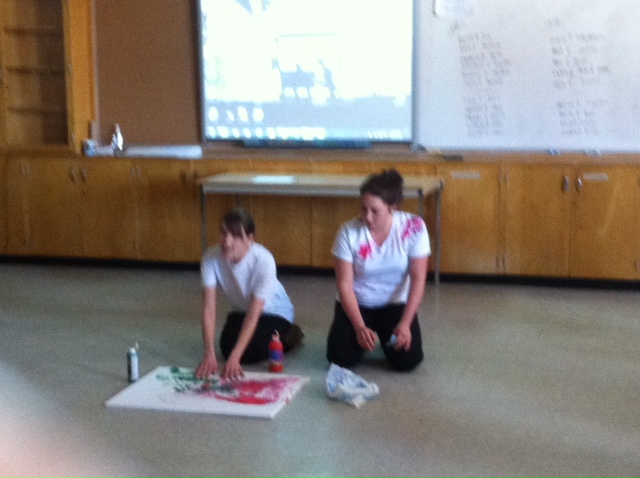
Collectively, we were all blown away by the results.  We were moved.  We were inspired.  My students all said they would definitely use multimodality now as teachers.  Below are a few images of my students presenting their projects:

role play poemfish bowlRAPguitarpuppet photo (13)

Now, I have to assess these designs… but that, dear reader, is for another blog.