
Tag Archives: research methodologies

Longitudinal Study of Teachers

IMG_1349

Clare, I (Clive) and our wonderful research team are gearing up for our annual visits and interviews with the 40 teachers in our SSHRC study. This is the 12th year of study and we have got to know the teachers well; we are really looking forward to seeing them again. (Actually, we recently received SSHRC funding to follow them for another 5 years, which is exciting.)

At the same time, Clare, Elizabeth Rosales (one of our team members) and I are working on an article on longitudinal study of teachers for the Oxford Research Encyclopedia of Education. This is a challenge, because people differ on what longitudinal research means. For example, some say it must involve studying the same “cohort” year after year (as in our project), while others include “cross-sectional” study of different teachers at different career stages.

In the article, we have decided to take a broad view of longitudinal study, including any research that has a time perspective. For one thing, studying the same teachers year after year is not always feasible: funding is often just for a restricted period, and teachers may move to other parts of the country (we have been lucky in that nearly all our participants have stayed put, either in the Greater Toronto Area or the New York/New Jersey area).

Where feasible a cohort study does have clear advantages. As we are finding, you can get to know the teachers and their context very well, and so understand the details of how they change and grow and why the changes occur. However, large-scale cross-sectional studies of teachers at different career stages – such as Huberman’s research in the 1980s and the 2001-2005 VITAE study in the UK – can also provide enormous insights.
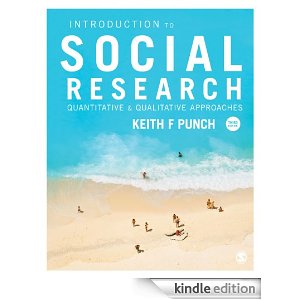
 

Introduction to Social Research: Quantitative and Qualitative Approaches by Keith Punch

If you looking for an outstanding book on conducting research you might want to consider Keith Punch’s new book, Introduction to Social Research: Quantitative and Qualitative Approaches. Keith has lonKeith Punchg been a leader in research methodology – his in-depth knowledge, his accessible writing style, his concise descriptions, and his realistic approach make his work outstanding. I (Clare) have found his work very helpful. You might find his chapter on grounded theory very useful. Below is a review of the book and here is the link:

http://www.amazon.ca/Introduction-Social-Research-Quantitative-Qualitative-ebook/dp/B00JIVFZGG/ref=sr_1_1?ie=UTF8&qid=1411018834&sr=8-1&keywords=keith+punch

This is a beautifully understated and highly accessible book. It focuses on the issues and practicalities of doing social scientific research, introducing a wide range of methods and approaches to get students thinking and a project underway. This new edition has been thoroughly updated, and there are welcome new chapters on theory, literature searching, research ethics and the internet. The book is authoritative and will be well used by students and teachers of social science research methods. — Amanda Coffey, Professor 20131007 Comprehensive, thoroughgoing and well organised, Punch’s book has a deservedly high reputation among social science researchers. This third edition, with new material on literature searching, ethics, theory and the Internet makes it a must-have for students and professional researchers alike. — Gary Thomas, Professor of Inclusion and Diversity 20131007 In this work, Keith Punch covers all the essentials of social science research with clarity and an obvious command of the subject matter. His coverage of quantitative and qualitative methods from design through to collection and analysis offers breadth and depth perfect for any undergraduate attempting to navigate the research world. I look forward to putting a copy of this latest edition on my shelf and recommending it students. — Dr Zina O’Leary, Unit of Study Coordinator, 20131007 This 3rd edition provides an accessible yet comprehensive and detailed framework for understanding social research. The clear layout with chapter objectives and summary questions offers a robust and practical learning structure for students which guides them through both theoretical and methodological approaches to contemporary research. No research methods course should be without it!! — Dr. Emma Bond, Deputy Director 20131007 All in all, this book is incredibly well structured and free from jargon and over complication. It is a joy to read, and it guides the reader step-by-step towards understanding what social research is all about. — Dr Sophie Lecheler LSE Book Reviews Website