Monthly Archives: February 2014

Family Day

In Ontario we have a public holiday called “Family Day”, a day in the depths of February where most adults have the day off from work and children stay home from school for the purpose of spending time together. It is a day meant for us to relax and enjoy the wonderful people in our lives.
In honour of Family Day, I (Yiola) would like to share an interesting and inclusive way of thinking about family from the perspective of a child.  This idea comes from the descriptive findings from my research project on critical literacy practices of elementary school teachers.  In the Grade two classroom students designed their autobiographies and published books called “Selfologies”.  The published books include a variety of literacy process and forms of writing including: interviewing family members, writing narratives, developing timelines, creating family trees to mention just a few.
Instead of a traditional family tree that is a chart representing the family structure, often with the child at the bottom of the tree and the space for the father on one side and the mother on the other, the teacher used something different.  The teacher recognized the traditional family tree chart normalized the nuclear family and left no space for all the wonderful family structures that exist. The teacher introduced a “family circle”.  This graphic organizer places the child at the centre of the page and bigger circles that include family members surround the child (see image below).  This way of organizing the concept of family changes the perspective and value we place on “what is a family” and “who is in a family”.  The family circle empowers the child to decide on their own who is in their closest inner circle. That may be siblings, two mothers, a grandparent, a family friend. By using a new and improved structure we are teaching students how to read the world differently. Family today is a broader and more inclusive term.

The first image is of the children designing their family circles.
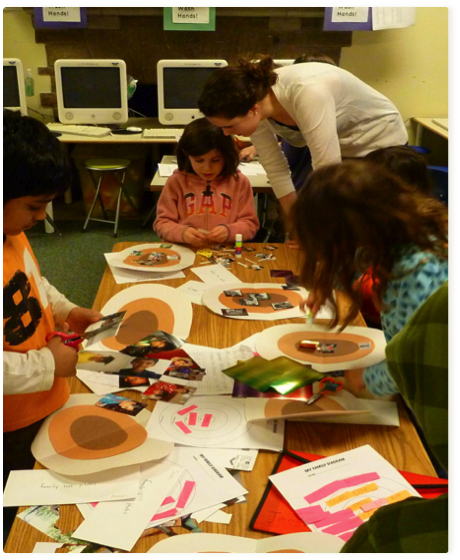
Image Family YC

Family Circle


Can you understand what I am saying?

In the New York Times on the weekend, Nicholas Kristof wrote a stinging criticism of academics. http://www.nytimes.com/2014/02/16/opinion/sunday/kristof-professors-we-need-you.html?ref=nicholasdkristof
He notes that when someone utters the phrase “That’s academic” it is a very loaded comment. That retort implies scholars are irrelevant. He quotes Anne-Marie Slaughter who observed that “disciplines have become more and more specialized and more and more quantitative, making them less and less accessible to the general public.” He feels that the PhD programs “have fostered a culture that glorifies arcane unintelligibility while disdaining impact and audience.” Although I (Clare) found his comments a bit harsh there is something sobering about his analysis. Often I find myself reading a journal article on teacher education (my specialty) that I simply cannot understand. The jargon overwhelms the central points and the writing so turgid it is inaccessible. As academics our many masters (tenure review committees, funding agencies, journal reviewers) expect our work to sound “academic” so we are almost forced to employ an unnatural writing style. There is no easy solution. We may not be able to do anything in the short term but in the long-term I hope that our research can be used to inform general discourse about teacher education and public policy. Writing for different audiences is difficult but hey, we academics are quite smart. Let’s take up the challenge to make our work more accessible to many readers.

The Past – A Movie That Leaves You Wondering — What would I do?

Movie Poster The Past

We (Clare and Clive) went to see the movie, The Past which has been called a “domestic drama with all the tension of a thriller.” It is the latest movie by Asghar Farhadi the Iranian director.The movie is fantastic because it is well directed, you can relate to the characters, it captures the complexity of life, shows how decisions we make are often based on incomplete information, and the story is captivating. The quality of the acting is good you cannot believe the actors are actually acting. Below is a summary of the story:
·     
Coming back France to complete the divorce procedure, Ahmad an Iranian man, arrives in Paris after four years to meet his ex-wife and her daughters from her previous marriage. He notices his ex is in a relationship with an Arab named Samir who also has a son and a wife in a coma. The relationship of the older daughter and her mother is deteriorating because the daughter thinks her mother is the cause of Samir’s wife comatose state. The affairs get more complicated when the older daughter discloses something heinous she has done. From IMDB http://www.imdb.com/media/rm456776960/tt2404461?ref_=tt_ov_i#
·     
For a full review of the movie go to the Globe and Mail link:http://www.theglobeandmail.com/arts/film/film-reviews/the-past-domestic-drama-with-all-the-tension-of-a-thriller/article16435003/

·      Here is the linkfor a conversation with Asghar Farhadi who said, “All the films I’ve made … I have faith in.”

http://www.theglobeandmail.com/arts/film/a-conversation-with-asghar-farhadi-all-the-films-ive-made-i-have-faith-in/article16467505/
By the way, Farhadi directed The Separation which won an academy award for best foreign film a few years ago.
If you are looking for a non-Hollywood movie which captures day-to-day life and leaves you wondering what you would do when faced with certain dilemmas, I would highly recommend The Past.

Multimodal Valentines

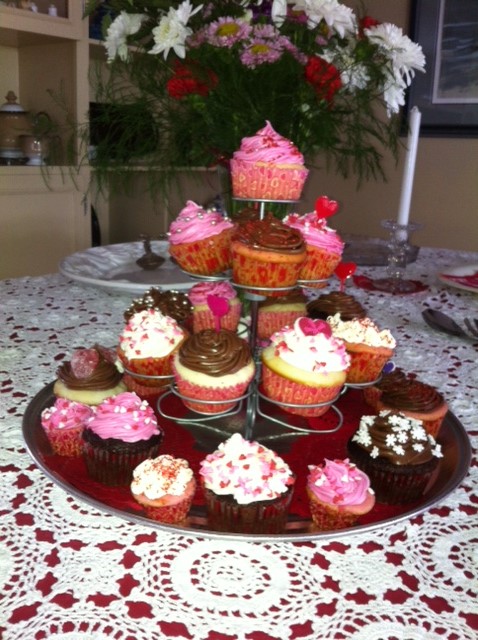
I (Cathy) love special occasions.  Just give me a theme and I suddenly have an opportunity to be creative.  Lately, my outlet is a three dimensional mode of expression- cupcakes!  I can experiment with my designs using colour, texture, size, shape, and taste.  For my Valentine’s cupcakes, aside from the cake and icing choices, there were a multitude of affordances (decorative toppings) to choose from. For this dozen, I decided on a range of tastes and textures:  cinnamon heart candies, red and white jube jubes, tiny snowflake hearts, red sugar sprinkles, silver balls and message hearts.  Remember those tart tasting message hearts?  They say things like “hug me”, “I love you”, “kiss me”, and now there is one that says “text me”- so new literacies!  This is truly a multimodal sensory experience for me (the designer) and everyone that gets one (the receiver of my communication). I see this as a perfect example of my Western culture influences channeling through me to create a social semiotic representation of my caring.  But I won’t tell that to my husband.  All he will see a pretty cupcake that is “Mmmmm, delicious!”  And that’s fine too.  I am not sure if this is what Gunther Kress had in mind when he created the Centre for Multimodal Research, but it works for me.   Happy Valentine’s Day all!photo

Teachers’ Broad Conception of Their Role after Several Years

I (Clive) have been working with Clare and Elizabeth on a paper on teacher identity, based on our longitudinal study of teachers. One thing we’ve noticed over the years is how broadly our teachers view their role.
Elizabeth has just developed a table showing what the teachers give priority to in their teaching. In spring 2012 (year 8 for cohort 1 and year 5 for cohort 2) we asked 39 of the teachers:
·     
What do you think are the most important aspects of your role?
·     
What are your main goals for your students?
The top 8 priorities in each case were as follows:

Most Important Aspects of My Role

Provide engaging lessons

18

Build a community, and a caring and safe environment

16

Develop a relationship with students

15

Be a role model

6

Involve parents


4

Teacher reflection and ongoing learning


4

Advocate for student needs

3

Foster strong literacy abilities in students

2

Most Important Goals for My Students

Social development


18

Love of learning


11

Development of self


11

Sense of community


10

Problem solving and critical thinking


6

Progress in learning


6

Literacy


6

Curiosity


4

Having such a broad role may appear burdensome for teachers. However, based on the teachers’ comments and our reading of authors such as Mary Kennedy and Nel Noddings, we argue that approaching teaching broadly is in fact more feasible and satisfying. Students are more engaged, understand more deeply, and develop across many aspects of their lives. And teachers are also enriched and find the daily interaction with students more enjoyable.

“Everything Changes When You Read”

The Guardian published an edited version of a lecture Neil Gaiman delivered as part of the Reading Agency’s annual lecture series. In the lecture Gaiman makes an impassioned argument for the importance of libraries and the benefits of reading fiction.  He compellingly notes, “prose fiction is something you build up from 26 letters and a handful of punctuation marks, and you, and you alone, using your imagination, create a world and people it and look out through other eyes. You get to feel things, visit places and worlds you would never otherwise know. You learn that everyone else out there is a me, as well. You’re being someone else, and when you return to your own world, you’re going to be slightly changed”.

http://www.theguardian.com/books/2013/oct/15/neil-gaiman-future-libraries-reading-daydreaming?CMP=twt_gu

photo12

Book Clubs + Canada Reads

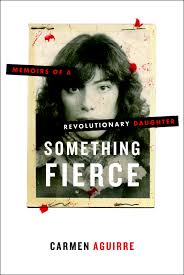
As a Ph.D. student and an educator, I (Pooja) find myself mostly reading academic journal articles or student writing these days. While I enjoy reading both types of text, I miss reading for pure pleasure; in particular, I miss reading novels. Novels are a commitment of both time and energy, but when you read a truly great novel it is totally worth it.somethingfierce

I recently formed a book club with some colleagues/fellow educators. Although I have a lot of my plate already (don’t we all?!), I thought this would be a great opportunity to connect with colleagues on a more personal and informal level, (not to mention being pulled into the world of a fascinating  novel). We selected Something Fierce: Memoirs of a Revolutionary Daughter by Carmen Aguirre. This book, written by a Canadian author, was the official selection of the 2012 Canada Reads initiative. I’m currently reading the final pages of this gripping memoir, and I highly recommend it to anyone looking for a great read while supporting a Canadian author. I made time for reading this book during every opportunity I could: riding the subway, sitting in the doctor’s office, waiting for my oatmeal to cook in the morning. I was surprised to find how many of those small moments I had each day, which would usually be taken up by scrolling through my smartphone. Our book club meets for the first time tomorrow evening at a colleague’s home.  I’m looking forward to discussing the book in a relaxing atmosphere.

Learn more about the Canada Reads project:

http://www.cbc.ca/books/canadareads/

A Short Summary of the book:This dramatic, darkly funny narrative, which covers the decade from 1979 to 1989, takes the reader inside war-ridden Peru, dictatorship-run Bolivia, post-Malvinas Argentina and Pinochet’s Chile. Writing with passion and deep personal insight, Carmen Aguirre captures her constant struggle to reconcile her commitment to the resistance movement with the desires of her youth and her budding sexuality. Something Fierce is a gripping story of love, war and resistance and a rare first-hand account of revolutionary life.

Source: (http://www.amazon.ca/Something-Fierce-Memoirs-Revolutionary-Daughter/dp/1771000368)

Defining Literacy

Literacy in the 21st century. What does it mean? Or perhaps the better question to ask is, what does it mean TO YOU?Children reading

  • If you are a writer, editor, public relations manager perhaps literacy means the the ability to read and write.
  • If you are a financial advisor perhaps literacy means the ability to understand “how money works in the world” (financial literacy).
  • If you are a journalist, analyst, or film maker perhaps literacy means the ability to “analyze, evaluate and create messages in a wide variety of media modes…” (media literacy).
  • If you are weather analyst, forest ranger, or environmentalist perhaps literacy means the ability to “understand ecological principals and the ways society  affects, or responds to environmental conditions” (environmental literacy).
  • In keeping with the Winter Olympics, if you are an athlete, perhaps literacy means the ability to “move with competence and confidence in a wide variety of physical activities in multiple environments” (physical literacy).
  • If you are an elementary school educator, literacy means all of the above. If you are a elementary school student, literacy means all of the above.
  • If you are a literacy teacher educator, literacy means… By Yiola
    * definitions taken from online google searches, mainly wikipedia.

Beatles, Popular Culture, Relevance, Perspective …

the Beatles

I (Clare) was reading in the newspaper that Sunday marks the 50th anniversary of the Beatles’ performance on “Ed Sullivan.” http://www.thestar.com/entertainment/2014/02/08/beatlemania_a_moment_in_time_never_to_be_repeated.html

 I probably should not admit it but I clearly remember the event. My entire family was gathered around the TV. “Nielsen says 45 percent of all TV sets in use at the time were tuned into the broadcast, with fans and the uninitiated alike gathered shoulder to shoulder in their living rooms.” The article on the Beatles commented that they “landed on a trigger point when they hit America. It was a pop culture sonic boom spurred by talent, timing and luck that’s still rattling the windows.”
So I had a few thoughts when I read the article about the Beatles:
·      For me there are a few key events in my youth that gripped the national (and often) world stage. Events where I remember so clearly where I was sitting when I heard the news, how I felt … . For example, I remember so vividly when the school principal announced on the PA (something rarely used) that JFK had been assassinated and I can recall as if it was yesterday sitting with my family watching the live footage of the first walk on the moon … I wonder what will be key events for our youth today?
·      In our highly diverse world, events in one culture/country can be viewed very differently in another (on a small scale, my grandmother was appalled by the Beatles and their long hair). As a classroom teacher I used to bring current events into the classroom because I felt it was important for the curriculum to go beyond the classroom walls. As a teacher educator who teaches literacy courses I spend a lot of time on non-fiction, in particular perspective in newspaper and news reporting. How can we prepare student teachers to bring current events (and global events) into the classroom for discussion and interrogation when there are such different views? (The current Olympics would be a good springboard for discussion). I know as an experienced teacher the skill and diplomacy needed to handle discussions that can be controversial. Current events need to be in the curriculum if we want to be relevant but it is not a simple task.
And for those of a certain age, listen to your favourite Beatles song today and sing along as if you are a teenager.  Clare