Monthly Archives: November 2014

Happy Birthday Margaret Atwood

In honour of author Margaret Atwood’s 75th birthday on November 18th CBC Books is celebrating her life and work with a week of special features including archival interviews, infographics, and a selection of passages from her acclaimed books  in the searchable Essential Atwood Reading List. Follow link below:

http://www.cbc.ca/books/mobile/touch/atwood75/index.html

For 75 surprising facts about Margaret Atwood see link below:

http://www.cbc.ca/books/2014/11/75-surprising-facts-about-margaret-atwood.html

Atwood

Using Instagram in the Classroom

They say a picture is worth a 1000 words. That is probably one of the reasons why Instagram has become my social media app of choice. I love the simplicity of it. There are no words, simply photos. You get to see what your friends, acquaintances, and public figures (you choose to follow) are up to. My use of facebook has slowly dwindled while my use of Instagram has quickly ramped up. This seems to be the general trend across the world. As educators in this digital age, we think about how to integrate social media effectively into the classroom. Facebook, wikis, blogs and twitter have made their way into many classrooms; however, Instagram is rarely used. I found this very cool infographic for educators and the use of Instagram in the classroom.

All of the below suggestions can be used in K-12 classrooms. Some can be used in higher ed. Contexts.

***Note: Before using Instagram in the classroom:

  • I think educators should have separate Instagram accounts if they are also using it for personal purposes.
  • Also, as a class you should establish a hashtag. So, if your students want to hashtag a relevant picture it gets included in the class hashtag.

10-ways-to-use-instagram

http://www.weareteachers.com/blogs/post/2014/08/07/10-ways-to-use-instagram-in-the-classroom

“Goodnight Moon” revisited

Many are familiar with the picture book Goodnight Moon by Margaret Wise.

Unknown

In case you are not familiar or need a refresher, here is a link to the story:

http://www.youtube.com/watch?v=9yu_g5x3ZoQ

It is a lovely bedtime story, rhythmical and calming.  Originally published in the late 1940s, and still selling strong today, millions of children have enjoyed the simple tale. It is a classic.

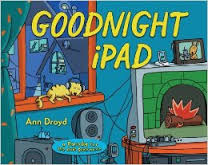
And then came a parody, Goodnight iPad.  Amusingly written by “Ann Droyd” the book is awesome.

Unknown-1

When I (Yiola) first read the book I laughed and laughed and laughed. It is witty and clever while successfully maintaining the rhythm of the original.  It is a powerful message for 21st century learners: know when to unplug!  

Here is a link to the book.

Or for a flashier, more techy version, check out this link:

From the 1940s to today… the images and ideas that need a ‘good night’ have changed  drastically but a child’s wonder and desire to stay up has stayed the same.

I like how the traditional genre of the picture book captures the power of technology in our society so beautifully. A classic communication tool.

I plan to use this text as a closure piece on Technology Day next term.

“Goodnight gadgets everywhere”

Guest Blog: Monica McGlynn Stewart — Tools or Toys?

I (Monica) and my colleague Tiffany MacKay are just starting a new research project exploring oral and visual literacy learning with iPads for 3-5 year olds. Our research will be situated in both childcare centres and public school kindergartens in Ontario. Here is a bit more about our project:
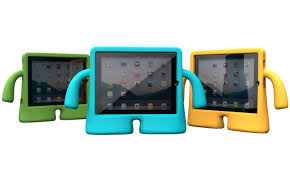
IPadYoung children, aged 3-5 years, are exposed to many forms of digital technology (DT) both inside and outside of their formal learning settings, yet there is little research to guide pedagogical practices for early years literacy teaching. Many registered early childhood educators (RECEs) working in childcare centres are reluctant to introduce DT into their programs, while many RECEs and teachers in Full-Day Kindergarten are using DT in a variety of ways.

Purpose

This research study will introduce educators and students in childcare centres and public kindergarten classrooms to one of two i-Pad applications, 30 Hands or Explain Everything. Both of these applications allow children to easily photograph their work with an i-Pad (e.g., painting, block structure, sand table creation, etc.) and then record their voice explaining what they have created, how they created it, and what they plan to do next, etc. This digital visual and audio file can then be shared with classmates, teachers, or parents via email. Teachers can archive this documentation for assessment and planning purposes.

Objectives

Our objectives include: a) to understand educators’ comfort level and experience using DT for literacy learning with young children; b) to understand children’s use of DT as a means of communicating their work and ideas; c) to explore the value of DT for supporting young children’s literacy development.

Hypothesis

Our hypothesis is that educators will become more comfortable having their students use DT applications that allow for active, creative, and open-ended literacy learning. Furthermore, children will be more motivated to articulate and share their thinking with the i-Pad applications and will become more competent with both their digital technology and oral language skills.

Methods

We will be interviewing the educators before and after the implementation of the software to determine their comfort level and experience with using DT for literacy learning and teaching, their current practices, and in the post-implementation interview, any changes that they observed in their students’ interest and ability with respect to literacy learning. In addition, we will be observing the students in their classes as they use the applications to record and share their work.


Engaging Students in Math

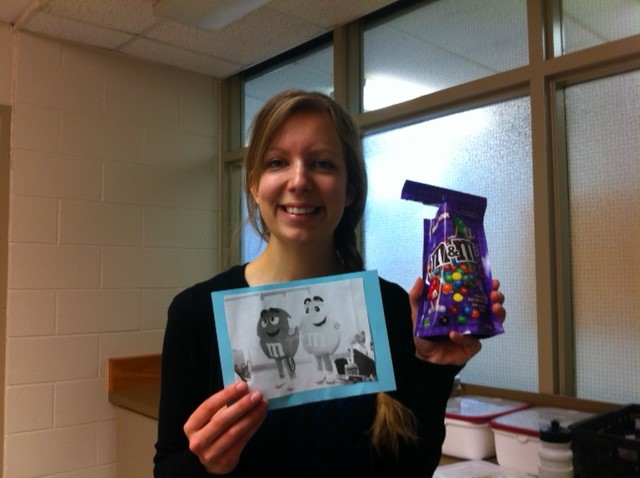
The day after Halloween, one of my (Cathy’s) student teachers, Megan, presented a wonderful lesson to a group of grade four students on probability.  She opened the lesson with a picture of herself dressed as an M&M.  (This was not really her of course, but the students didn’t know that).  She told the story of how she disguised herself as an M&M and went out trick or treating.  One nice lady gave her a whole bag of M&Ms because of her great costume.  Megan wondered aloud on the probability of pulling out red M&Ms as opposed to green M&Ms or yellow ones.  This student teacher had these children with the picture, but the M&Ms clenched it.  All of the students wanted to predict.   The students moved from large group work to small groups to independent work with ease.  Interestingly, Megan did not allow the children to eat the M&Ms.  They were data.  The children accepted this fact and made no protest.  The math remained the focus throughout the lesson.  The lesson was an absolute delight to watch.   Trouble is, I may never eat M&Ms the same way again.  I will always be calculating the probabilities of pulling that red one.

photo

Teachers Matter: The Letter Defending Educators @Time Wouldn’t Print #TIMEapologize #TIMEfail

Although this article is long I (Clare) found it incredibly interesting yet sad. When is the public going to “wake up” and realize the value teachers?

Dr. Julian Vasquez Heilig's avatarCloaking Inequity

To: Nancy Gibbs, Time Editor

From: Thomas L. Good,

Professor Emeritus

College of Education

University of Arizona

1936 E Fifth Street

Tucson, AZ  85719

520-884-4298

TEACHERS MATTER

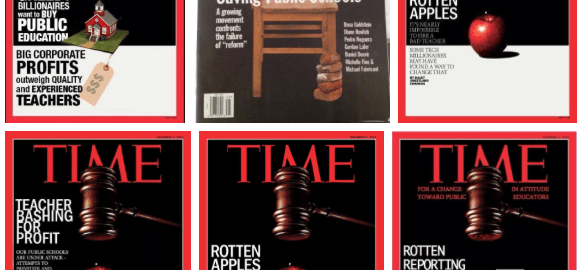
The November 3 issue of Time magazine includes a sensational cover, an editorial statement and a feature story that systematically question the value of American teachers who often work in less favorable conditions than their international peers. The fifty million readers/viewers of Time will see the cover and millions of others will also view it at various airport newsstands. However, considerably fewer will read the editor’s comments and yet substantially fewer will read the article. So the take- away message for the vast majority of citizens from this issue of Time magazine is that poor teachers are rampant in America and that they are harmful to our children, economy, and future.

Consider the front page cover that brazenly and in bold print decries…

View original post 2,115 more words

Celebrating the 25th Anniversary of True Story of the Three Little Pigs

As the 25th anniversary of the picture book The True Story of the Three Little Pigs approaches author Jon Scieszka and illustrator Lane Smith recount the origins of their collaboration and the challenges of securing a publisher for the sophisticated parody. As Smith recalls, “some editors liked it but were a little confused and not sure if there was a market for it. Back at that time, children’s books were either serious, earnest books, or really funny books. But the sense of parody and irony that is rampant now didn’t really exist then…Viking put the book out very tentatively. They weren’t convinced of anything and did a small run that immediately sold out. It was all word-of-mouth from teachers, librarians and booksellers. They didn’t run ads or do a publicity push. Finally by the fourth or fifth printing the runs were more like 50,000.”

Follow the link below to read the full interview with Jon Scieszka and Lane Smith:

http://www.publishersweekly.com/pw/by-topic/childrens/childrens-book-news/article/64695-the-true-25th-anniversary-story-of-the-three-little-pigs.html?utm_source=Publishers+Weekly&utm_campaign=94f331fbd0-UA-15906914-1&utm_medium=email&utm_term=0_0bb2959cbb-94f331fbd0-305134397

ThreePigs

The Pomodoro Technique

logo

I have discovered a simple yet effective technique to increase my productivity when writing. I started using the site http://www.mytomatoes.com a few weeks ago, and have been more writing done since. This is how it works:

Each “tomato” is 25 minutes long. When you click on “Start Tomato,” you start working/writing. And that’s all you do for 25 minutes. No washroom breaks. No facebook breaks. No e-mail. When the 25 minutes is up a bell rings, and you earn a 5 minute break. The site prompts you to document what you did for the 25 minutes, so you can track how you are spending your time. When the 5 minute break is up, another bell will ring and you are back to work!

I have found this technique so effective, and fun. I like “collecting tomatoes,” and I find 25 minutes is a good length of time to stay “in the zone.”  I would highly recommend it to any writers out there! Below is a link to a short video explaining the pomodoro technique in more detail.

http://pomodorotechnique.com/

Happy Writing!!!

Literacy development and genres: The graphic novel

When I (yiola) first began teaching  (in 2008) I asked student teachers if they knew about graphic novels.  The response was that few students were familiar with the genre or how and why it may benefit learning in the classroom. With each passing year more and more student teachers indicate they are familiar with graphic novels and more and more student teachers recognize the genre inside classrooms.

Some use the term graphic novels interchangeably with comics with others differentiate the two as distinct styles. In either case there are strong arguments for why the graphic novel is a powerful genre for literacy development.

6 Reasons You Need To Start Reading Comic Books

http://neillcameron.blogspot.co.uk/2014/09/comics-and-literacy-part-1-why-reading.html

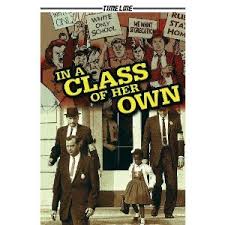
I introduce student teachers to David Booth’s book “In Graphic Detail” and I share the graphic novel “In a Class of her Own” to demonstrate how critical literacy and language acquisition can be developed in meaningful and interesting ways.

Unknown


http://www.theguardian.com/childrens-books-site/2013/mar/19/review-in-a-class-of-her-own-kathleen-gould-lundy

The sharing of the graphic novel as a useful genre in the classroom is a highlight in my course. Many student teachers become inspired to use graphic novels once they are introduced to why they are effective and how to use them in a classroom setting.

Please share any great graphic novel titles that you know to be outstanding.