Yearly Archives: 2014

Kids React to…

The “Kids React” series featured on YouTube reminds us how rapidly the landscape of communication technologies has shifted in the last decade. As the kids are introduced to unfamiliar devices (e.g. Walkman; rotary phone) they respond with funny and interesting comments while they compare these “old” tools to the “new” technological tools they use daily (e.g. iPhone).

kidsreact

Kids react to rotary phones

http://www.youtube.com/watch?v=XkuirEweZvM

The Tiffinwallahs’ delivery system as a form of literacies

Recently, a friend started a lunch delivery service. She makes healthy, delicious, and affordable lunches every day. The lunches are delivered in an aluminum container, also known as a tiffin. She got this idea after watching a documentary about Mumbai’s Tiffinwallahs aka Dabbawallahs (those who deliver tiffins). Each day in Mumbai, “approximately 4,000 dabbawallahs deliver 160,000 home-cooked lunches from the kitchens of suburban wives and mothers direct to Mumbai’s workers.”Harvard’s Business School has studied this intricate delivery service, calling it “the world’s most ingenious meal distribution system.” What makes this service so fascinating to me is the coding system the tiffinwallahs have created. Although many do not have traditional literacy skills of reading and writing, they have re-defined literacy by creating a of successful and efficient communication through elaborate colour coding. Forbes magazine has awarded the “dabbawallahs a 6 Sigma performance rating (a term used in quality assurance if the percentage of correctness is 99.9999999 or more).” The business is also growing at a steady pace of 5-10% year.

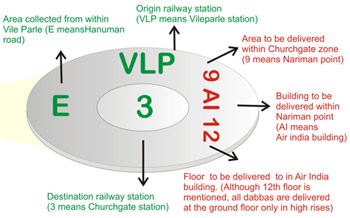
The colour/numerical code created for the lids of tiffins:

code

Watch the Tiffinwallahs in action:

Read more about the Tiffinwallahs in Mumbai here:

http://signalvnoise.com/posts/2882-the-incredible-delivery-system-of-indias-dabbawallahs

The Canadian Society for the Study of Education

conference

This week The Canadian Society for  the Study of Education (CSSE) is being held in St. Catharines, Ontario at Brock University.

The team, Clare, Clive, Lydia, Cathy, Pooja, and me (Yiola) will be sharing a number of presentations over the course of the week. Some of these presentations include the following titles:

Teachers’ Professional Identity Development Over Their First 8 Years, With Implications for Preservice and Inservice Teacher Education

Teachers’ Ongoing Learning over Their First 8 Years, with Implications for In-Service Professional Education

Exploring literacy teacher educators’ negotiations of a critical stance in pre-service teacher education

Teachers’ critical literacy practices in the early years classroom

Instructional Practices of Critical Literacy within an Inquiry-Based Learning Environment

Presenting at conferences is a great way to share research with the community.  For more information about the CSSE conference click here:  

Conference


OECD and Pisa tests are damaging education worldwide – academics

Finally some “push-back” to PISA’s growing dominance of education. I (Clare) found this article in the Guardian newspaper very interesting. For full article see: http://www.theguardian.com/education/2014/may/06/oecd-pisa-tests-damaging-education-academics
In this letter to Dr Andreas Schleicher, director of the OECD’s Programme for International Student Assessment, academics from around the world express deep concern about the impact of Pisa tests and call for a halt to the next round of testing.
Excerpts from the letter are below:
We are frankly concerned about the negative consequences of the Pisa rankings. These are some of our concerns:
• While standardised testing has been used in many nations for decades (despite serious reservations about its validity and reliability), Pisa has contributed to an escalation in such testing and a dramatically increased reliance on quantitative measures. For example, in the US, Pisa has been invoked as a major justification for the recent “Race to the Top” programme, which has increased the use of standardised testing for student-, teacher-, and administrator evaluations, which rank and label students, as well as teachers and administrators according to the results of tests widely known to be imperfect (see, for example, Finland’s unexplained decline from the top of the Pisa table).
• In education policy, Pisa, with its three-year assessment cycle, has caused a shift of attention to short-term fixes designed to help a country quickly climb the rankings, despite research showing that enduring changes in education practice take decades, not a few years, to come to fruition. For example, we know that the status of teachers and the prestige of teaching as a profession have a strong influence on the quality of instruction, but that status varies strongly across cultures and is not easily influenced by short-term policy.
• By emphasising a narrow range of measurable aspects of education, Pisa takes attention away from the less measurable or immeasurable educational objectives like physical, moral, civic and artistic development, thereby dangerously narrowing our collective imagination regarding what education is and ought to be about.
• As an organisation of economic development, OECD is naturally biased in favour of the economic role of public [state] schools. But preparing young men and women for gainful employment is not the only, and not even the main goal of public education, which has to prepare students for participation in democratic self-government, moral action and a life of personal development, growth and wellbeing.
• Unlike United Nations (UN) organisations such as UNESCO or UNICEF that have clear and legitimate mandates to improve education and the lives of children around the world, OECD has no such mandate. Nor are there, at present, mechanisms of effective democratic participation in its education decision-making process.
• To carry out Pisa and a host of follow-up services, OECD has embraced “public-private partnerships” and entered into alliances with multi-national for-profit companies, which stand to gain financially from any deficits—real or perceived—unearthed by Pisa. Some of these companies provide educational services to American schools and school districts on a massive, for-profit basis, while also pursuing plans to develop for-profit elementary education in Africa, where OECD is now planning to introduce the Pisa programme.
• Finally, and most importantly: the new Pisa regime, with its continuous cycle of global testing, harms our children and impoverishes our classrooms, as it inevitably involves more and longer batteries of multiple-choice testing, more scripted “vendor”-made lessons, and less autonomy for teachers. In this way Pisa has further increased the already high stress level in schools, which endangers the wellbeing of students and teachers.

Wonder is Wonderful

I (Cathy) download audio books from audible.com onto my Ipod nano and listen while I walk, garden or cook. I just finished the book Wonder by R. J. Palacio. It is a very touching juvenile fiction novel about a ten year old boy with severe syndromes that dramatically alter his facial features. The story takes us on his journey surviving his first year in a public school as a grade five student. I cried a lot. This wasn’t so bad when I was in the kitchen cooking or even in my own back yard planting and digging. But walking?   Hmmm. People notice. Oh well. When people asked me if I was all right, I just said, “It’s the power of great literature,” smiled and thanked them for their concern. This is a must read my friends, but keep the Kleenex handy and warn the family in case they ‘wonder’ about you!

wonder

What has happened to education in the U.S.?

We are just back from New York and New Jersey where we interviewed a number of teachers who are part of our longitudinal study. Since we have been following these teachers for 7 years, I (Clare) feel I know them well. These are very able educators who are now working in very difficult conditions because of external constraints. I heard stories of them having to submit DETAILED lesson plans regularly (for the following two weeks), being observed/assessed five times per year, having to change their programs in order to comply with the Common Core, assessing the children an excessive amount, having to forgo pedagogies/books/activities they know are what the children need, and tying their teacher evaluations to student performance on standardized tests. All of these supposed measures to improve education in fact are undermining education. These teachers are spending so much time testing and writing lesson plans, they do not have time to actually work with the children. And they know what needs to be done and how to do it! All reported HIGH levels of stress. They are being deprofessionalized as these overbearing compliance methods are imposed on them. The phrase, lack of respect, was uttered over and over again by them. When asked the question — If you had to do it over again, would you become a teacher? – the responses were disheartening. Most said no and many said they are actively thinking about other careers. What has happened to education in the U.S.?

Can a hashtag make a difference?

Recently, a Globe and Mail article questioned the impact of the Twitter campaign #BringBackOurGirls, designed to draw attention to the abduction of hundreds of Nigerian schoolgirls by an extremist group. The article noted that such online campaigns often ignite fierce, yet fleeting concern for a cause, which ultimately fails to provoke any “particular” action. Indeed, the article echoes the sentiments of others who have critiqued the merits of “digital advocacy.” For instance Malcolm Gladwell argued that online forms of activism such as “Facebook activism succeeds not by motivating people to make a real sacrifice but by motivating them to do the things that people do when they are not motivated enough to make a real sacrifice…which he suggested “makes it easier for activists to express themselves, and harder for that expression to have any impact.” Having participated in a variety of rallies over the years, I (Lydia) understand the momentum that can be mobilized and connections cemented when people collectively gather within physical spaces to champion social causes, matters of concern, and contentious political issues. I do, however, wonder if social media platforms provide an opportunity for us to broaden our conceptions of the creation of publics, public engagement, and relational encounters within social contexts. At the very least, such social media campaigns have demonstrated that they have the potential to draw attention to social issues, communicate information, and establish connections between affinity networks on a massive scale.

Link to the Globe & Mail article: m.theglobeandmail.com/news/world/abduction-of-nigerian-girls-draws-world-outrage-but-can-a-hashtag-offer-any-help/article18596825?service=mobile&cmpid=rss1&click=dlvr.it

IMG_0925

Spending Too Much Time On Your Phone?


photoLike most, I (Pooja) find myself engaged with my smart phone too much. I often make attempts to limit my usage. I tell myself things like “I won’t check Facebook until it’s time for bed”, but these promises I make myself are hardly ever kept. Perhaps a doggy cone is not such a bad idea!

Social Media 101

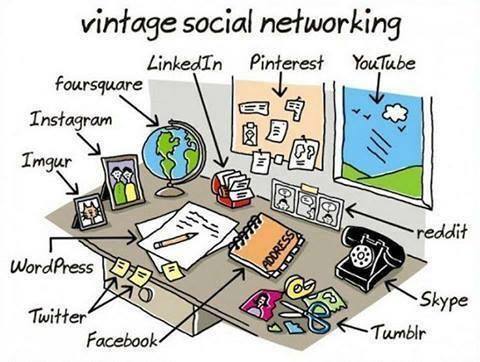
I (Yiola) came across this while on social media and found it playful… and true!

10259931_10152488203689175_8001628699976626381_n copy


A great explanation of social media and their functions.   I often think about the degree of necessity of each of these forms of communication — what they offer and their implications for communication and social interactions.  I am contemplating the pros and cons and beginning to explore literature that shares findings of the implications of our newer forms of communication.

Multifaceted Role of the Professor: Conducting Research Includes ….

As mentioned in a previous blog post, Clive and I (Clare) are interviewing teachers who are part of our longitudinal study of teachers. Many of our teachers have had life-changing events – including becoming a parent. The teacher we were interviewing in northeast US this past week is a new Mom and is home on maternity leave. We did a division of labour: while I was interviewing the teacher, Clive babysat the new baby who is four months old.  The question is: who had more fun? Me doing the interview with an amazing teacher or Clive babysitting an adorable youngster? It was a toss up because we both had a great time. So for budding researchers …. Do not be surprised that your role includes some unexpected duties (which no one told you about in grad school) – such as babysitting.
On a more serious note, a number of teachers in our study over the last 7-10 years have become parents (including adopting a child). It is interesting to see how they change once they become moms or dads:

  • Juggling being a new parent and a teacher has led to changes in practices and views. All have found the dual role draining.
  • New parents definitely have to shorten their work days! Working morning, noon, and night and all weekend which many had done as new teachers was no longer feasible.
  • They developed a number of strategies to streamline planning and marking.
  • When we asked how their views and/or values changed now that they are a parent many have commented they have become more compassionate. They appreciate how much parents have to trust teachers to care for their child (as they would) and how vulnerable children are. Their views towards parents in many cases have becoming more understanding while with the students they say are more flexible.
  • Interestingly, a number have commented that now as a parent, they are not as focused on covering the curriculum (standards or expectations); rather, they have become more focused on the individual child to ensure he/she is happy and thriving.
  • Some have said they have become less critical of themselves. They can only do so much and do not feel so guilty putting boundaries around their personal life.

There is so much more to being a teacher than covering the curriculum. There is so much more to being a researcher than just working with the data. You have to be flexible and be willing to assume some untraditional duties – just ask Clive.