Yearly Archives: 2014

Narratives of Teacher Educators

Book cover

I (Pooja) recently finished reading Negotiating critical literacies with teachers: Theoretical foundations and pedagogical resources for pre-service and in-service contexts (Vasquez, V.M., Tate, S.L, & Harste, J.C., 2013). This book provides a theoretical framework, insightful examples, and pedagogical resources for ways to incorporate critical literacy practices into pre-service and in-service teacher education. The final chapter of this text entitled “Teaching and living critical literacies” especially interested me. This concluding chapter focused on the narratives of the authors who are all teacher educators. They shared early childhood memories, classroom teaching experiences, and turning points (e.g. being the first in the family to attend college; protesting the Viet Nam War). Much of what the book’s authors shared in their written narratives reflected closely what many of our critical literacy participants in our SSHRC study have expressed. Many can identify turning points and life events in their early childhood, which contributed significantly to their philosophy and stance towards teaching and learning. Maya from our study identified being placed in a low-track after immigrating to the U.S. as a defining moment. This has influenced her practice because she now focuses on having her student teachers understand multiple perspectives and interrogate their assumptions of students, curriculum, and schooling. Providing a specific example of this pedagogical stance, Maya told us about how she conducts an entire lecture in Spanish, locating student teachers as second language learners.

This final chapter reinforced how meaningful it is to create space for the voices of literacy teacher educators.  The narratives of our participants are rich with experiences that influence their practices in the classroom. Stacie L. Tate, book author and teacher educator, articulates this well: “When people ask how I decided to become a teacher and researcher, I always reply, “I was groomed for this.” (p. 99).
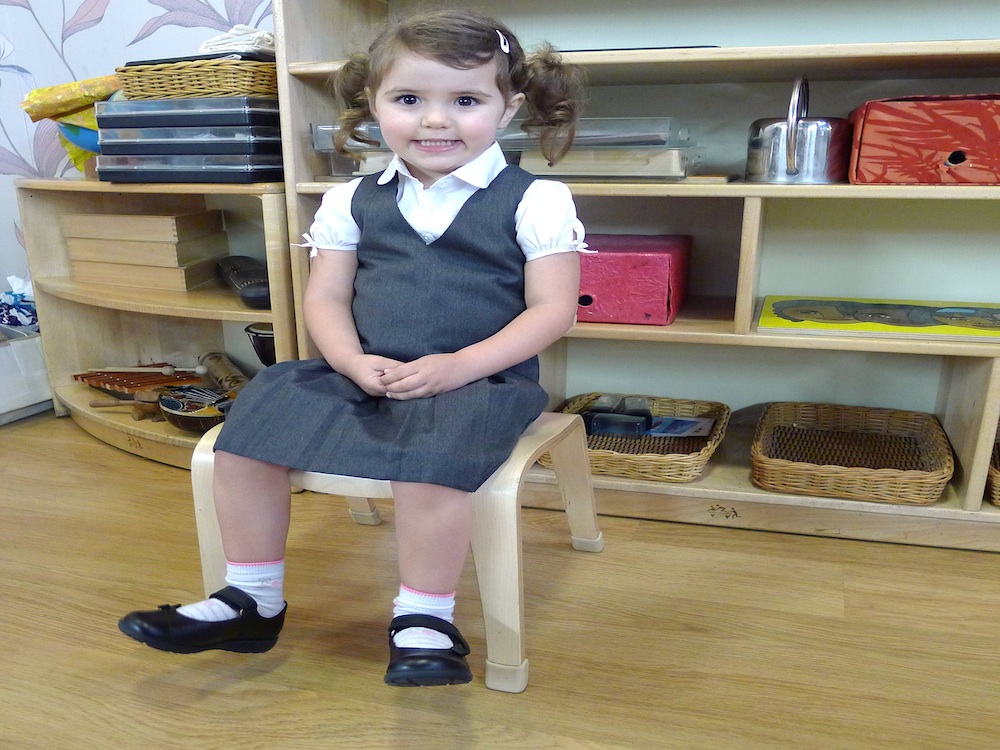

Family Literacy Day

Today is Family Literacy Day in Canada. http://abclifeliteracy.ca/fld/family-literacy-day
It is a day that recognizes the importance of families building literacy skills together.  Looking back, what did family literacy look like in your household? In what capacity did Young girl in schoolliteracy development occur? In my home I (Yiola) taught my parents the language of English and my parents taught me the value of English.
I find Family Literacy Day to be a very well intentioned initiative.  The ideas presented in the link on family literacy are interesting.  As a Teacher Educator who teaches from a critical perspective I cannot help but ask, how can the concept of family literacy be made accessible for all families? How do we make the concept more inclusive?  When thinking about ‘Daily Literacy Activities’ I wonder, what can we add to the list found on the website?
See: http://abclifeliteracy.ca/files/Daily_literacy_activities.pdf
I plan to share this list with my student teachers and ask them for additional activities to include that may draw in a variety of families.  I’m thinking of multilingual processes, digital opportunities, oral traditions.
Happy Family Literacy Day!
Yiola

Just Call Me Paul: The Ethnicity Saga Continues

On Monday I (Clive) shared my previous blog on multicultural education and stereotyping with my social foundations class. This proved to be a great literacy activity on blogging as a writing form that both teachers and students need to master, one that helps us clarify our ideas and make our communication more precise. It also renewed our conversation about how to approach ethnicity in the classroom. We went round the whole class, each person commenting in turn on the blog. No one chose to pass and everyone was interested in what others had to say. A couple were struck by my profile of “Mike”: they had no idea that people of Irish and Scots background might look down on each other. On the whole people liked the blog, but they continued to refine points and add personal stories.
We heard a new story of complex ethnicity from a class member of Indian ancestry who grew up in Madagascar, lived in a French-speaking environment for several years and became fluent in French, spent time in India where she was told she spoke Hindi with an accent, and then moved to Canada where she hopes to teach French as a second language. What is her ethnicity?
Then on Tuesday the wonderful personal essay “Just Call Me Paul” appeared in one of our local newspapers. http://www.theglobeandmail.com/life/facts-and-arguments/changing-my-name-doesnt-mean-im-betraying-my-identity/article16406166/

G. Paul Sileika’s grandparents migrated to Canada from Lithuania over 50 years ago. In the 1970s when multiculturalism was on the rise his parents decided to give him a name that “reflected their ancestral origins.” They named him Gintaras and called him Gint for short. With rich humor, no self-pity, and trenchant common-sense he talks about the impact of this decision on his life. The whole article is well worth reading.


What struck me especially was how he felt his identity was lost. “Before I can even begin to build rapport with someone or connect on a common interest, my name catches his or her attention. Before I can share my personal story one is already written for me.” Because the name was unfamiliar and difficult to pronounce correctly (the “G” is hard), many called him “you” or simply nothing. Long after finishing university he finally decided to switch to using his middle name – Paul – and hasn’t looked back. He says he believes in multiculturalism and is proud of his heritage, but wants to go by Paul in informal contexts and G. Paul in formal ones; if anyone asks what the G. stands for, he’s “happy to tell them.”


Of course, although you can change your name you can’t change your accent or physical appearance. But Paul’s story illustrates well how we should often move beyond such markers, rather than dwelling on them unduly – as so often happens in multiculturalism classes. While prejudice and discrimination must be studied in depth and actively opposed, there’s so much more to a person than the ethnicity of their parents and grandparents. We must also explore and celebrate their constantly emerging individual identity, of which their complex ethnic identity is just one part. Otherwise, like Paul, much of their identity may be lost.


Writing a Review Takes TIME

I (Cathy) discovered, having just submitted my first academic book review, that the process takes TIME.   The T in my acronym represents allowing for lots of time to move through the process. The I represents investigating the journal for which I am submitting.  The M is for mining the book under review. The E is for editing- of course- what would writing be without editing?  I developed my TIME acronym through both the experience of writing the review and doing some homework on review writing.  One of the suggestions I came across, which was a valuable piece of advice, was to allow one month to write the review:  two weeks to read the book; one week to write the review; and one week to edit the work.  This turned out to be true.  There was no hurrying the process.  I also spent time reading many other reviews from the same journal for which I was submitting.  This was the investigation part.  I compared five reviews for style, content and length.  One was much more academic in style than the others.  All were not hesitant to praise the work.  This was reassuring, as I liked the book a lot.  The mining part was the surprise.  As I read the book, I listed the things I liked about it and possible flaws, only to discover that when I got to the end, it was not enough information.  I had to read it again and work harder at comparing the chapters for content consistency, look for related themes and any patterns the editors may have requested.  I also spent a lot more time scrutinizing the forward and conclusion and discovered some great quotes I had missed the first time.  This was similar to reading a book in order to teach it.  Impressions are not enough.  I needed more meat.   And finally came the editing.  After several iterations, I thought it was ready for someone else to see.  I gave it to five people to read. Every one of them found corrections and made suggestions. Some I used, while others were stylistic suggestions that I let pass.  All were insightful.  The best part though, was the response.  When one of my friendly editors replied, “You really made me want to read this book!”  then I knew the review hit its mark.  Like I said, I liked the book.  Oh, and by the way, the book is called Literacy teacher educators: Preparing teachers for a changing world.  I recommend it!     BTW  The journal I submitted to is called Research in Teacher Education.  Excellent resource!  Check it out…  http://www.uel.ac.uk/rite

Mapping my morning commute

On twitter this week I (Lyida) read about a storytelling project that invited teachers to use digital tools to capture and represent dimensions of “their world”. The representations  (e.g. pictures, video, audio) were publicly shared on a blog. It would be interesting to use aspects of this idea in a teacher  education literacy course but I wanted to experiment with it first.

   Fruitstand  Subway1

Subway2  Bike  Museum

library

Analysis of PISA’s Growing Domination of Education

 In this blog we have had a number of posts discussing PISA. TC Record has a superb commentary by Heinz-Dieter Meyer on PISA. Here are a number of quotes from his article, OECD’s PISA: A Tale of Flaws and Hubris.

  •  A majority of large, complex, ethnically or culturally heterogeneous education systems are held up to a deceptive comparison with a group of small city- and nation stations that are culturally homogeneous, and often politically authoritarian. Large and unwieldy systems like the United States (scoring 481), UK (494), France (495), Italy (485), Spain (484), are compared to spic-and-span city states like Singapore (scoring 573), whose government enjoys such arbitrary powers as the imposition of jail sentences on people who spit or chew gum in public.
  • Thus we know that 88% of South Korean elementary school students and 61% of students in high schools receive private tutoring in cram schools. Private tutoring in South Korea represents 2.3% of GDP, equal to half the public education expenditures. In fact, while PISA holds Korea, Japan and Shanghai up to the rest of the world, many Koreans, Chinese, or Japanese take a much dimmer view of their schools, with their need for heavy out-of-school tutoring and the associated problems of depression, suicide, and a pervasive stifling of students’ academic self-motivation (Heyneman, 2013).
  • On my visits to schools in China I have seen a mentality of collective docility much closer to my experience in Germany than in the US. With obedient students, teachers don’t need to spend time on discipline or “classroom management.” And while much of what we observe in the Eastern educational tradition is admittedly intriguing and enviable—deep respect for learning, reverence for the role of the teacher, and filial piety—these features often come on the back of less enviable characteristics like unquestioned obedience to authority, limits on free speech, and acceptance of paternalistic government we would be unwilling and unable to emulat
  • “PISA has become accepted as a reliable instrument for benchmarking student performance worldwide” is the conclusion of a recent OECD study on PISA’s global effect (Breakspear, 2010, p. 4). This goes beyond the well-publicized cases of “PISA shock” that led countries like Germany and Japan to better align their curricula with PISA requirements. The OECD study found that almost all 60+ governments used PISA to change their assessment and curriculum in order to “include PISA-like competencies.” As the US representative on the PISA-Board put it: “PISA has been assessed, along with other frameworks, in the formation of the new Common Core Standards” (p. 24), which now includes a strong emphasis on “reading competence” in decoding technical manuals and newspaper articles at the expense of understanding and interpreting works of literary merit.
  • There is little question that through PISA the OECD is reshaping the curriculum of public schools and the norms by which we judge them. The question is: should they?
  • ·      To date, the education research community has taken PISA and OECD’s legitimacy largely at face value, duly dissecting the data it provided and debating policy options. It may be time to question OECD’s involvement in public education more fundamentally.

 Check out the full article at: http://www.tcrecord.org/content.asp?contentid=17371

Clare

Tim Fletcher Comment

Hi Everyone,
Tim Fletcher posted the following comment. Thought that I would put it in a blog post in case you missed it.
Clare

Thanks very much for all the kind words. I was lucky enough to learn about researching teachers/teacher education from two of the best (Clare & Clive)! BTE was also such a powerful experience for me — here is a link to an article I wrote with my UK colleague Ash Casey (founder of another teaching blog: http://www.peprn.com ) about how strongly BTE influenced my thoughts about learning to teach teachers: http://journals.humankinetics.com/jtpe-back-issues/jtpe-volume-31-issue-4-october/trading-places-from-physical-education-teachers-to-teacher-educators.
Loving the blog by the way!
Tim

Congratulations Tim Fletcher

Tim Fletcher and Shawn BullockCongratulations to Dr. Tim Fletcher for being awarded the 2014 AIESEP (International Association for Physical Education in Higher Education) Young Scholar Award. Tim is the first Canadian to receive this award. Tim is doing cutting-edge research on health and physical education (including self-studies of his own practices as a teacher educator). Tim is an Assistant Professor at Brock University. Check out his faculty page for a partial list of his publications. http://www.brocku.ca/applied-health-sciences/faculty-directory/kinesiology/tim-fletcher
Tim has been part of both of our research projects (Clive’s longitudinal study of teachers and Clare’s study of literacy/English teacher educators). He is an outstanding young scholar who is so worthy of this award.
This attached picture is of Tim and Shawn Bullock, another outstanding young Canadian scholar with whom Tim has collaborated. Check out Shawn’s website for a list of some of his publications. Shawn’s work is making a real difference in how we understand teacher education. http://shawnbullock.ca/wp/
Send us pictures from the award ceremony at the AIESEP World Congress being held in Auckland next month.
Clare

Critical Literacy vs Language Acquisition

Critical literacy and Language acquisition.  I (Yiola) have pondered these two concepts — what they mean, what they entail, and why they are important.  In much of the literature I have read, there appears to be distinct 2 camps:  those who study language acquisition that is, how we learn to read and write: how we develop phonemic awareness, and learn to decode, and develop syntax and those who study critical literacy: a newer approach to learning how to analyze and understand texts in a socially conscious way.  I have asked myself, are they in two distinct domains of Language discourse? They appear to be. Do you agree?  Yet, when I think about teaching literacy to children in the context of schooling and what readers and communicators need to know, then critical literacy is a form of language acquisition. Children must know how to read and analyze texts, and they must know how to read and analyze the world. Children acquire language through critical literacy. Critical literacy is then a significant part of language acquisition. In teacher education literacy courses, is the concept of critical literacy taught with the same importance and priority as the more traditional methods and means for language acquisition? Ultimately I’m wondering, what are the essential components of literacy curriculum for 21st century teacher education programs?

If You Build It: Documentary on Making Teaching Relevant

If you live anywhere in the Toronto region you might be interested in this documentary, IF YOU BUILD IT. The film  is a captivating look at a radically innovative approach to education. The film follows designer-activists Emily Pilloton and Matthew Miller to rural Bertie County, the poorest in North Carolina, where they work with local high school students to help transform both their community and their lives. Living on credit and grant money, and fighting a change-resistant school board, Pilloton and Miller lead their students through a year-long, full-scale design and build project that does much more than just teach basic construction skills—it shows ten teenagers the power of design-thinking to reinvent their town and their own sense of what’s possible. IF YOU BUILD IT offers a compelling and hopeful vision for a new kind of classroom in which students learn the tools to design their futures. Here is the link to a clip from the movie: http://www.hotdocs.ca/docsoup/doc_soup_toronto/
The documentary is being shown in a number of cities in Canada. To find out where click on this link: http://www.hotdocs.ca/docsoup/doc_soup_toronto/ and it is probably being shown in cities world-wide. Even if you cannot attend the documentary, watching a clip of the movie is fascinating.
Hot Docs is pleased to announce that February’s Doc Soup will present the Canadian premiere of IF YOU BUILD IT (D: Patrick Creadon, USA, 85 min.) An official selection of the 2013 Full Frame Documentary Festival, IF YOU BUILD IT will screen on Wednesday, February 5, at 6:30 p.m. and 9:15 p.m., and on Thursday, February 6, at 6:45 p.m. at the Bloor Hot Docs Cinema (506 Bloor St. West).
Filmmaker Patrick Creadon will be in attendance to introduce the film and answer questions following the screenings. For more information please visit:
http://www.hotdocs.ca/docsoup/doc_soup_toronto/
We look forward to seeing you at the Bloor Hot Docs Cinema on Wednesday, February 5, and Thursday, February 6 for IF YOU BUILD IT!

 If you have any questions regarding your tickets or any questions or comments about Doc Soup, please email our box office bloorboxoffice@hotdoc s.ca, or call 416.637.5150.