Monthly Archives: December 2015

Financial Literacy Advocate?

I (Cathy ) have met many literacy specialists, but never a  financial literacy advocate- until I met Shannon Lee Simmons. Her delightful sense of humor, bubbly personality, and brilliant financial mind make an intriguing combination.  Shannon is a Certified Financial Planner (CFP), Chartered Investment Manager (CIM), media personality, personal finance expert, and financial literacy advocate. She was named one of Canada’s Top 30 Under 30. Her passion: helping everyday people survive the new economic climate through personal finance, ethical investing and small business advice.

I explored her New School of FinanceTM   which is a collection of very practical and realistic on-line courses regarding every day finances. And the advice is excellent!  She truly makes finances understandable and interesting.  The list of her courses illustrates her quirky sense of humor and reveals her target audience- the millennials:

Can You Afford to Buy a Home?                                                                                                                            Sole Prop School                                                                                                                                              Budgeting with Your Boo                                                                                                                                        Don’t Get Effed at Tax Time                                                                                                                                    Baby Proofing Your Finances                                                                                                                                Track that Shiz                                                                                                                                                    GST/HST- The Good,  The Bad + The Ugly

I am fascinated by Shannon’s savy use of technology (she is wild about social media, especially Twitter) and how well she understands her market.  I suspect this very up-and-coming entrepreneur will do very well for herself and could probably give lessons to financial literacy teachers on how to engage an audience.  Check out her web site and view some of her videos.  You will know exactly what I mean.

http://www.newschooloffinance.com

shan

Shannon Lee Simmons:  Financial literacy advocate


Voices of seriously ill children

One of my doctoral students (Katie Doering) works at Ronald McDonald House for serious ill children. She is an AMAZING classroom teacher. Her students were interviewed and these are views. Here is a link to the entire article. http://www.ctvnews.ca/canada/if-i-were-pm-students-with-serious-illnesses-list-their-priorities-1.2640578


A group of students facing serious illnesses had some advice for prime minister-designate Justin Trudeau on what he should make his top priorities once he takes office, including free medicine, longer maternity leave, and a wild animal for everyone who desires a pet.

The students, who were in Grades 4 through 8, take classes at Ronald McDonald House Charities Toronto School. They offered these responses and more, in a class exercise where they were asked to write a speech on what they would do if they were the prime minister of Canada.

The private school, located in downtown Toronto, is part of the Ronald McDonald House charity, which offers housing and services for families with ill children. The school is free for students to attend, as it is funded through donations, but it is not open to the public.

When these families require long-term medical care in downtown Toronto, the charity can offer them housing and schooling. In order to be eligible to receive these services, families must live a minimum of 55 kilometres away from the House, and must be referred by a hospital social worker.

The on-site school is unique in that it offers classes based on the Ontario curriculum for their children to attend, so that they don’t miss out on their learning while seeking treatment.

The school’s principal, Katie Doering, said the speech-writing exercise was part of a unit on government and democracy that happened to coincide with the federal election.

At the end of the unit, the students relied on everything they’d learned, and combined it with their own beliefs in a speech on what they’d do if they were the leader of Canada.

Some of the proposed changes were exactly what you might expect from children.

“I would make a machine that could make pets talk,” said Shivam.

But others showed that they were deeply in tune with the daily struggle of Canadians across the country.

“I would provide free medicine because it’s not your fault you got sick and need medicine,” said Aliviah Goode.

“Also, anyone under 85 should get free health care,” she added.

Aliviah’s sister Adaya recently had open-heart surgery.

“She’s doing good, she got discharged,” said Aliviah.

Aliviah also said that children should have access to “free school supplies.”

Nine-year-old Rayne Shim devoted part of her speech to asking for people to get their birthdays off from work, with pay.

But she too tackled the issue of universal pharmacare.

“I would give free medicine to everyone,” she said.

“Like, you don’t have to pay a lot of money for medicine because medicine can be really expensive,” she added.

Rayne’s sister is the middle of a battle with cancer.

Rayne said that the rich should also have to pay higher taxes, and advocated for a national daycare strategy.

“Maybe the daycare should be paid by the government because some parents can’t afford hundreds of dollars so kids can go to daycare,” she said.

Doering said the students’ speeches were telling of everything they learned about the responsibilities of government, but also of their own personal circumstances.

“It was a mixture of things we had talked about in class, but then they brought in their own ideas about things that were really relevant to them right now,” she said, noting that many talked about improving the healthcare system.

“And then of course we saw a lot of their personalities come out too,” she said, adding that there were specific requests for annual teddy bear picnics, as well as a statutory holiday once a month.

Here’s a further look at some of the students’ speeches:

“If I were prime minister, I would provide every family with a free healthcare plan because people can’t help it when they get sick,” 11-year-old cardiac patient Adaya wrote.

“I would also plan an annual teddy bear picnic, just for children! Children can bring their favourite teddy bear or stuffed animal and come to a beautiful meadow of flowers and have a lovely picnic. All food and blankets will be supplied!”

Her sister, Aliviah, said if she was prime minister, she would provide everyone with free medicine. Once that was done, she’d proceed to overhaul the education system and outlaw littering.

“I also have some personal ideas,” she wrote. “I think there should be a zoo in every city. My favourite rule would be that you can have a wild animal as a pet.”

Twelve-year-old Chayse, who is recovering from brain surgery, said if she were the country’s leader, she would build more affordable housing.

“Why you ask? Because I think people should have a nice place to stay and not have to stay outside on park benches or underground subway heaters,” she wrote.

Her younger sister, Jordan, said she would put more money into nursing homes and lower tuition for private schools. And, in an apparent nod to her sister, she said she’d create more schools for neurosurgery.

Up next on her ambitious agenda? More holidays.

“There would be a statutory holiday every month because sometimes you just need a break,” she wrote.

Doering said at the end of the unit, the students had the opportunity to read their speeches to their classmates and their families.

“They had a phenomenal time doing it,” she said. “It was very powerful to hear the messages that they had.”

With a report from CTV Toronto’s Natalie Johnson

Chimamanda Ngozi’s Book Being Distributed to ALL 16- Year-Old Students in Sweden

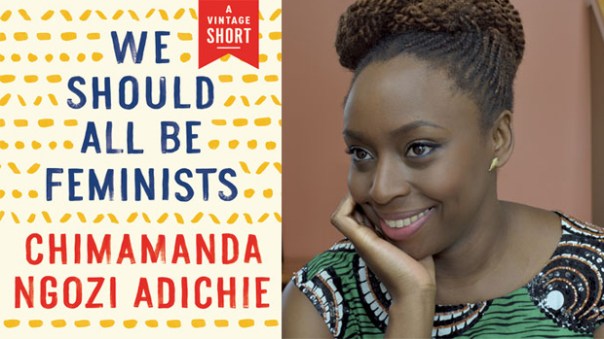
I have written about the powerful words of Ms. Adiche before. Her words stop us in our tracks and make us re-consider notions of identity, language, and gender. She has a new book out entitled We Should All Be Feminists. It is based on a speech she delivered at a TEDx conference a few years ago. I have already ordered it!

The most amazing thing about her new book is how it is being distributed. The Swedish Women’s Lobby has decided to distribute Adiche’s book to every 16-year-old student in Sweden. In a CBC article, publisher Johanna Haegerström believes her book will be an entry point into a larger discussion about gender roles in society. He said:

“Our hope is that the Chimamanda Ngozi Adichie text will open up a conversation about gender and gender roles, starting from young people’s own experiences”

adichie-composite

http://www.cbc.ca/books/2015/12/we-should-all-be-feminists-by-chimamanda-ngozi-adichie-is-being-given-to-every-16-year-old-in-sweden.html

Teacher Researcher Group Celebration

I (Clare) was approached by Rosemary Evans, the principal of University of Toronto School IMG_0885IMG_0873(UTS), to assist with forming a teacher research group. Rosemary had received funding for the Eureka Fellowship program from Newton Foundation to start a teacher researcher group. Clare happily accepted Rosemary’s invitation then invited  current and former doctoral student (Pooja, Elizabeth, and Shelley) to co-facilitate because they had much to offer and the team approach would model collaboration. .Over the next two years we met on a monthly basis for approximately two hours. IMG_0879

The teacher researchers presented their findings last week and it was one of the most IMG_0867special moments of my professional life. The teachers did an amazing job presenting their research. Their research was high quality and it informed their practiceWe plan to turn their reports into an ebook. Here is a list of the projects that the teachers completed: IMG_0874


  • An Examination of Admission Profiles and Early Student Success at UTS by Garth Chalmers –
  • Exploring the Use of the Fort McMoney Documentary-Game in Grade 9 Geography Classrooms by Mike Farley
  • Using Digital Tools in the Guidance Classroom by Catherine Wachter
  • Maximum City by Josh Fullan
  •  Integrative Thinking in a Classroom Setting by Christopher Federico
  • Self-study of My Work as a Vice Principal by Heather Henricks
  • Reflections on Being a Member of the Eureka Fellowship Program – Amy Parradine
  • Reflections on the Eureka Fellowship Program for Teacher Researchers Clare Kosnik, Pooja Dharamshi, and Shelley Murphy
  • Final Thoughts – Susan French

IMG_0888IMG_0890

Division K Newsletter

Hi Folks,

The new AERA Division K newsletter is chock-a-block full of great information.

It includes information on:

  • invited sessions
  • Division K award nomintations
  • Program co-chairs update
  • Division K highlighted sessions
  • Travel award deadlines
  • Graduate student seminar deadline
  • New faculty seminar deadline

Here is the entire newsletter: DivisionKFall 2015 Newslettter1

I (Clare) know that many of you will be going to AERA in Washington.


When is it a good time to start reading?

The literature on language development varies. What we know: the major components of Language include: (phonology, semantics, syntax, pragmatics, lexicon, and metalinguistics); language development is based on biological (maturation) and behaviouristic (environmental) and interactive and contextual factors; there are several components of the reading process (decoding, understanding, and fluency) and each component has multiple elements.

So, is there a “critical period for language acquisition”?  The critical period hypothesis suggests that if certain conditions related to language development are missing (internal and/external conditions), then a child will never acquire language. I don’t buy that. While I  agree language acquisition in the early years is central to development,  children can acquire language skills later in life.

There appears to be some universal patterns in language acquisition yet there are also important individual differences that depend on a number of variables. For example, studies have shown great variation in the growth of children’s vocabulary across typically developing youngsters.

So, from reading readiness to emergent reading, when is it (if ever) a good time to focus on ‘reading’ in the early years?  There are some schools of thought (i.e. Waldorf) who do not begin formal language teaching until 2nd or 3rd grade. So why are some of us excited when a child in kindergarten “can read”? What is the hurry?

Setting up a literacy based environment that is balanced is key. However, there is an underlying tone of high expectation that we, as educators and teachers,  need to be mindful of. The article I share below takes an interesting perspective on reading development and the implications of starting the expectations too soon.

https://www.washingtonpost.com/news/answer-sheet/wp/2015/01/13/report-requiring-kindergartners-to-read-as-common-core-does-may-harm-some/

As a mother of 2 children in the early years I see first hand their curiosity and interest in texts. They love stories, they love books. They love to be read to… but, they are not yet ready to read. Should they be at age 4 and 5? Why press the issue? Why not develop vocabulary? Play with language? Explore sounds and letters? Why press the formal reading of books? My daughter, now 5, is just beginning to make sense of sentence structure through a computer program called “Raz Kids”. This online program has hundreds of level books children can listen first, then read, then answer comprehension questions. For this little learner, it is amazing to see her answer the comprehension questions 100% of the time yet not yet recognize basic sight words (my, this, the) but use the illustrations and understanding of pattern to guide her through. I wonder… why start now? why set these expectations now?  So, I tread very slowly, because she is motivated to earn her “Raz stars” to build her rocket ship… but I place no pressure on to know those site words. I see she “gets” it… but doesn’t quite yet “have it”.  I also often feel a sense of worry about literacy and numeracy and whether or not my children will “get it” sooner rather than later.

Thankfully, her teachers have no worry at all and feel no pressure to push reading. Thankfully, her teachers have a good sense of child development.