All posts by ckosnik

Lin Goodwin Video Now Available: Experts Speaking about Teacher Education

Last year I (Clare) received a grant for the project: Rethinking Literacy Teacher Education Lin Goodwinfor the Digital Era: Teacher Educators, Literacy Educators, and Digital Technology Experts Working Together. One of the main activities of the project was to bring together 16 experts from three fields and 4 countries (Canada, US, UK, and Australia) to address the following questions.
• How is our understanding of literacy evolving in light of the new ways we communicate?
• How can literacy/English teacher educators (LTEs) prepare student teachers to develop and implement literacy programs that capitalize on digital technology (DT)?
• What teacher education curriculum changes are required to better prepare future teachers to integrate technology in their own teaching?
• What professional learning support do LTEs need to develop courses that will integrate and make greater use of DT?

We held a Symposium in London England in June. Click on the link https://literacyteaching.net/connection-grant/ for more info on the Symposium and for some photos.

At the Symposium we interviewed the participants which we video taped. These videos are now available. They are incredibly interesting, informative, and short. Teacher educators can use these in their courses/presentations. Click on https://literacyteaching.net/connection-grant/powerpoint-presentations-and-videos/

(or the box to the right of this post).

I want to bring your attention to the second video which is of Lin Goodwin from Teachers College, Columbia University. She addresses:

First video: A key insight she has had about education

Second video: Recommendation to improve teacher education

Lin’s powerpoint presentations are also included. Lin is the Vice President of Division K Teaching and Teacher Education for AERA. She is an outstanding researcher who has recently conducted systematic research on teacher educators. Attached is a recent article she co-authored: What Should Teacher Educators Know and Be Able to Do? Perspectives From Practicing Teacher Educators Goodwin_-_WhatShouldTeacherEducatorsKnowandBeAbletoDoPerspec[retrieved_2015-03-28]

Enjoy!
Three Minute Thesis Competition

Today I (Clare) will be a judge for the 3M 3 Minute Thesis Competition. This competition is found in many universities.

The Three Minute Thesis (3MT®) competition is a University-wide competition for doctoral students, in which participants have three minutes or less to present their doctoral research to a panel of non-specialist judges. The challenge is to present complex research information in an engaging, accessible, and compelling way. ​​

This competition is a unique opportunity for graduate students to showcase their innovative and significant research to a wider audience, across disciplines within the University, and to the broader public. It is open to the public and adver​tised within the community.​ 

Graduate students must summarize their thesis (topic, methodology, findings) in 3 minutes. They must present their research in accessible language so that others not familiar with the field can understand it. They can only have 1 ppt slide (which is static), no props, no notes ….

I watched the winner from last year, Daiva Nielsen, and it was amazing. Her research in nutritional sciences examined a large number of participants who were given diet guidelines based on their DNA. There was a control group who just got regular diet info. The group with the specific diet guidelines made much bigger gains (or losses). I highly recommend you watch the video because it is fascinating research made accessible – both content and presentation are so interesting. For those of us who do doctoral supervision this process might beneficial. My thesis supervisor used to tell me that I should be able to summarize my research in 1 sentence, 1 paragraph, and 1 page. I tell my doc students you should be able to explain your research to my mother – no technical language and no jargon. Enjoy the video – here is the link. https://www.youtube.com/watch?v=gvHqTgjCSu4&index=12&list=PLV7zOJyRGNPP2zAt6XFcQCV7hPNpElPFd


Who Poses the Questions in Teaching?

In Ontario at present, “inquiry learning” or “problem-based learning” (including “play-based learning”) is widely advocated. However, while many proponents of the approach maintain that all the questions guiding inquiry should come from the students, I (Clive) beg to differ. Although generally in agreement with the approach, I think a balance is needed: teachers should pose questions too.

For example, the students in the course Reflective Professional Development I am teaching this term seem to love the questions we are pursuing; e.g., how much do teachers learn informally, how can informal learning be enhanced, how can formal PD be more effective? I don’t have to push the students at all – in small groups, whole-class discussion, and individual writing they go to work on the questions in quite a refreshing way. However, many of the questions we discuss came from me: they are inherent in the structure of the course and the readings I recommend.

So there has to be a balance. The classroom should be a setting for co-learning or “co-constructivist” learning. Teachers should suggest many of the questions, but also do the following:

  • Let a question go if there is no “uptake” from the students
  • Respect the additional questions and sub-questions students raise
  • Allow the students a lot of air-time so they can identify questions and express their views about them
  • Encourage the students to pursue their own questions in their assignments

Over time, with this approach, we will get a better sense of which questions are interesting and fruitful, and which ones we should pose next time we teach the course, while again looking for new questions from the students.

Videos Now Available: Experts Speaking about Teacher Education

Last year I (Clare) received a grant for the project: Rethinking Literacy Teacher Education for the Digital Era: Teacher Educators, Literacy Educators, and Digital Technology Experts Working Together. One of the main activities of the project was to bring together 16 experts from three fields and 4 countries (Canada, US, UK, and Australia) to address the following questions.
• How is our understanding of literacy evolving in light of the new ways we communicate?
• How can literacy/English teacher educators (LTEs) prepare student teachers to develop and implement literacy programs that capitalize on digital technology (DT)?
• What teacher education curriculum changes are required to better prepare future teachers to integrate technology in their own teaching?
• What professional learning support do LTEs need to develop courses that will integrate and make greater use of DT?

We held a Symposium in London England in June. Click on the link https://literacyteaching.net/connection-grant/ for more info on the Symposium and for some photos.

At the Symposium we interviewed the participants which we video taped. These videos are now available. They are incredibly interesting, informative, and short. Teacher educators can use these in their courses/presentations. Click on  https://literacyteaching.net/IMG_2599 (the box to the right of this post). I want to bring your attention to the first video which is of Bethan Marshall from King’s College London. She addresses:

First video: A key insight she has had about education

Second video: Recommendation to improve teacher education

Enjoy!

Features of a “Good” Blog

I (Clare) was doing some reading about blogs. I believe that blogging is a different genre of writing. A blog of 200 words with a graphic and a hyperlink requires a different skill set than writing a 2,000 word essay. As blogs become more commonplace there is a growing number of resources on writing effective blogs. For example on the site How To Make My Blog http://howtomakemyblog.com/10-elements-of-style-of-blog-post-writing/ 10 characteristics of effective blogs are identified:

* work from a suitable design;
* use paragraphs;
* revise and rewrite;
* omit needless words;
* use definite specific concrete language;
* be clear;
* use orthodox spelling;
* avoid fancy words;
* and do not take shortcuts at the cost of clarity.

This list reveals that blogging requires particular literacy skills. For me, one of the key features of blogging is that it encourages writers to think carefully about their audience. What do they want to express and why is it important to them? This level of introspection requires reflection and careful writing. Since readers may be from anywhere in the world our writing extends far beyond the classroom teacher or fellow students. This makes blogging far more authentic and powerful than the traditional essay read only by the teacher.

The Next Generation of Academics: An Uncertain Future

The Teaching Assistants in Toronto’s two largest universities are on strike. The issue is not simply one of money. I (Clare) read with interest an article about the strike in the Globe and Mail today. http://www.theglobeandmail.com/news/toronto/for-10000-of-canadas-young-academics-on-the-picket-lines-theres-a-lot-more-at-stake-than-42-an-hour/article23346532/

One of their major concerns is future employment. The article by Simona Chiose provides some startling statistics re: supply and demand. In 2012 there were 6,393 PhD graduates yet between 2008-2011 there were only 3,030 new full-time faculty positions. Graduates are being hired to limited term or part-time positions, not full-time tenure stream positions. And those of us in universities know that more and more courses are being taught by part-time faculty and that trying to survive on a salary of course stipends (which tend to be abysmally low) is nearly impossible. The Teaching Assistants with whom I have worked over the years have been hard-working, smart, keen, and committed yet their future is dim. The life of a grad student is hard. Let’s try to make their future more secure.

Children’s Role in Human History: Implications for Schooling

On February 26, I (Clive) read Ivan Semeniuk’s interview in the Toronto Globe & Mail with anthropologist Niobe Thompson, producer of the CBC TV series The Great Human Odyssey. According to Thompson, human life has been quite tenuous over the millennia and only the ingenious have survived. “Our closest call came about 150,000 years ago when…there were fewer than 1,000 breeding adults left” due to “punishing volatility” in Africa’s climate (sounds like Canada today!).

Thompson goes on to talk about key pockets of humans that have survived through incredible ingenuity, involving their “inventing technology to solve the challenges of their world.” This has required creating a whole culture in which everyone participates, including the children. “Whenever I am living with traditional cultures I have the experience of being overwhelmed with the skills my hosts have for living in their environment.” Thompson goes on to talk about the key role of children’s learning in this:

A person cannot become a hunter or a free-diving gatherer or a reindeer nomad as an adult. This is an immense package of skills that one must begin mastering as a child.

This set me thinking. To what extent are children in schools today learning “inert ideas” and “remote matters” (John Dewey) rather than things fundamental to surviving and thriving in the real world? Dewey would agree that one cannot master (and reconstruct) the requisite “immense package of skills” as an adult. The process must occur in earnest from the first day of school (and prior to that in the home). Unfortunately, however, as Nel Noddings says in Education and Democracy in the 21st Century (2013), schooling today is going in the opposite direction.

I do not foresee dramatic changes in the basic structure of curriculum…. Indeed, if we continue in the direction we are now headed, the curriculum will become even more isolated from real life…. It is this tendency that we should resist. (p. 11)

Children do learn a lot of useful things in school: we and our societies are much better off than we would be without schooling. But at present we seem to be headed in the wrong direction. So resist we must. Even in the right direction, we have a very long way to go. Perhaps human survival is not a stake, but human well-being around the planet certainly is.

The Edu-babble of Report Cards: Lost in Translation

Like many teachers, I (Clare) found writing report cards a very onerous task. I wanted to be Letter Ffair, encouraging, and accurate. The latest challenge for teachers (beyond time) is the pressure to be use “asset language.” HUH! There was a great article in the Toronto Star today about the “edu-babble” of report cards. http://www.thestar.com/news/gta/2015/02/26/consistently-writing-report-cards-with-random-logic.html

Catherine Porter describes the lost in translation situation:
If your kid was terribly scattered in class, would you want to know?
Or would you rather think he was “using planning skills with limited effectiveness.”
That’s how Ontario’s Ministry of Education suggests teachers write their report cards for kids getting D’s. They aren’t struggling, floundering, falling behind. They are “demonstrating limited understanding of content.”
I call this edu-speak. The ministry calls it a “positive tone.”

Porter has previously written about the impenetrable language of report cards. Her previous column on the indecipherable language of report cards led to an outpouring of highly emotional emails from teachers who are “required” to use the language of the Ontario Ministry of Education. She describes one scenario:

One Toronto public primary school teacher described his first “straightforward” report card comments returning to his desk from the principal’s office. “I was told to be more empathetic to how parents feel about their own children, to re-phrase my wordings to be increasingly diplomatic,” he wrote in an email.
So instead of telling parents their kid was disorganized and his desk was messy, the teacher now writes: “Johnny consistently places his materials inside his desk in a random order. He is highly encouraged to adopt a more streamlined organizational style, so that during in-class work periods he is able to locate his documents with greater ease.”

Gold StarPorter includes some examples from the comment bank teachers are required to use. I am an educator and I had NO idea what these mean. No wonder parents are confused and teachers are frustrated! A gold star to any reader who can figure out what these comments mean.

Five examples from Ontario report cards

  • “We will give further opportunities for Ruth to engage with a variety of children and to be honest about her activities.”
  • “With efforts from home and school, Shane will be encouraged to pay attention to his attendance and punctuality.”
  • “Conrad follows instructions with frequent assistance and supervision.”
  • “Farah is able to communicate ideas and informally orally in French using a variety of grade appropriate language strategies suited to the purpose and audience.”
  • “Jacqueline is encouraged to continue to demonstrate understanding and patience towards her classmates and to nurture a cooperative working environment with her team by demonstrating openness towards every student that may be part of her team.”

Books, books, books

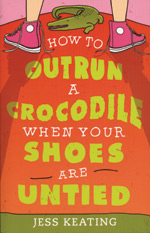
If you are like me (Clare) you are always on the lookout for a good book. If you are a Comic Book Warclassroom teacher or literacy teacher educator you are probably always Image Red Maple_How-To-Outrun-A-Crocodilesearching for good children’s literature and young adolescent literature. A student in my grad course on literacy told me about the Ontario Library Association : founded in 1900, the Ontario Library Association is the oldest continually operating library association in Canada. With more than 5,000 members, the OLA is the largest library association in the country.

She shared the a link of the Red Maple Fiction Nominees:

https://www.accessola.org/web/OLAWEB/Forest_of_Reading/Awards_Nominees/Red_Maple_Fiction_Nominees.aspx

This site has short blurbs about the nominated books. Image Red Maple_Dead-Mans-SwitchImage Red Maple Award_The-Boundless

I like Goodreads which now that they has a section on children/adolescent literature. If you are a classroom teacher or teacher educator you can set up a secure community for the students in your class. They can post reviews and comments and share titles of books they liked or did not like. Thw community is “closed” (only open to those registered in it). This is a great way to create a reading community. Here is the link for Goodreads young adolescent literature: http://www.goodreads.com/genres/young-adult

Happy Birthday Alan Cumming

Much to my delight I (Clare) discovered a column in the Globe and Mail (Canadian national Alan Cummingnewspaper) by Alan Cumming. Yes that Alan Cumming from The Good Wife, Masterpiece Theatre, Cabaret, and …. His first column was on turning 50. He says “I entered my 40s weeping … at 30, I had the regulation freak-out and changed my life completely….” He continues on:

But turning 50 has been a breeze. I have been longing to be 50 for ages, you see. I just like the sound of it. I like that people can’t believe it’s true. I like that I am dancing in a kickline in a Broadway musical every night with girls half my age and that my body is in better shape than it has been in any of my previous five decades, even though I party like a 20-year-old and can drink those kickline girls under the table. (Well, I am Scottish after all. It’s a national trait.)

I enjoy getting older. Is that so wrong? What I’m not so keen on is other people getting older. They get a bit boring, frankly. They talk about themselves as if they’ve had some sort of debilitating accident and can no longer function as they used to.

He talks about his birthday party bash. After reading the column I felt a real lightness and wanted to give life a hug. Here is the link for the entire article: http://www.theglobeandmail.com/life/relationships/hard-won-wisdom-why-i-keep-dancing-as-time-marches-on/article23049338/

And while I am on the topic of Alan Cumming I highly recommend his autobiography Not My Father’s Son: A Memoir. It was one of the best books I read last year. Cumming grew up in home rife with violence. He escaped but was haunted by his father his whole life. The book is funny, sad, insightful, and beautifully written. Here is the link to it: http://www.amazon.ca/Not-My-Fathers-Son-Memoir/dp/0062225065/ref=sr_1_sc_1?ie=UTF8&qid=1424522351&sr=8-1-spell&keywords=Alan+Cumming

So happy birthday Alan Cumming. I wish I had been at your party because it sounds like it was a blast and you inspire me.