All posts by ckosnik

Bloom’s Taxonomy Meets the Digital World

One of the students in my (Clare’s) graduate course shared a version of Bloom’s Taxonomy which is linked to Web 2.0 tools. Although I have long had concerns about Bloom’s Taxonomy (using it like a checklist) I found this model interesting.


Bloom's Taxonomy

If you go to this site you can click on each tool:

http://digitallearningworld.com/tag/blooms-digital-taxonomy

I found this interesting and it got me thinking about how Web 2.0 tools range from glorified paper and pencil tasks to far more intellectually challenging work. Take a minute to click on the link above and then click on the programs. The pyramid was created by Samantha Penney: samantha.penney@gmail.com.

Neil Selwyn Raises Thoughtful Questions About Digital Technology in Education

I (Clare) have found Neil Selwyn’s writing about digital technology very helpful. In my Neil Selwyngraduate course we watched a talk by Selwyn (at Monash university). My students and I discussed his perspective on the place of digital technology and the consensus was – his perspective is valuable and educators need to consider the questions he raises. His stance is so sensible and balanced because he asks us to consider issues around digital technology that are often not part of the conversation. The video is about 1 hour and it is so worth the time. Here is the link:

https://www.youtube.com/watch?v=0q6bk3RVD9k

Below are some of the notes I made from the video. As you can see he is asking us to think carefully and deeply about technology (and he is a real techie!) I know you will never think of technology in the same way after watching his talk.

  •  We should not get carried away by digital technology because there are wider societal issues
  • Digital technology in higher education is very messy
  • Way we talk about digital technology is overly simplistic – the talk has been hijacked by other groups. Those in higher education need to be part of the conversation
  • place of digital technology is not inevitable – we have choices, need to activate our choices
  •  need to be critical and not just welcome digital technology as inevitable
  • what are the dominant arguments – need to understand the assumptions –

Assumptions

  1. Living in an information age
  2. Death of the institution is inevitable
  3. Crisis in Higher Education – HE fundamentally broken
  4. Period of Inevitable change for institutions

– RHETORIC IS CRISIS TONE – easy to get carried away by rhetoric

  • Need to be less extreme – neither hyper optimistic or hyper critical
  • Lots of change has been superficial – don’t believe the hype
  • digital technology talked about in radical ways
  • Selwyn wants us to think more carefully – why do we talk about digital technology in such extreme terms?
  • Term – disruption – heard again and again
  • What is actually being disrupted?
  • Blame is put on educators – deserve to be disrupted
  • Way digital technology is talked about – whole bunch of values attached to the talk and these things
  • Way we actually use digital technology is mundane and prosaic
  • So what has actually changed?
  • Complaints about universities – “googleized” environment –
  • Bleed of your professional life into your personal life – realities of technology –  intensification of work – not the smart office
  • Survey of professors – tend to use ppt and Moodles mainly
  • How does digital technology enhance teaching and learning?
  • So why do we buy into the myth that digital technology will change everything?
  • Commercialization of education – Silicon Valley mentality – think entrepreneurial – education is broken need Silicon Valley to fix it
  • Profound distrust of educators – need outsiders to fix education
  • Cannot see technologies as neutral — What values are missing?
  • Education is communal – Education is about human contact – something about being in the presence of the teacher and with fellow students
  • What is going on when doing virtual learning? What values are there or not there? Do online courses force artificial discussion?
  • Does ppt dumb down teaching?
  • Working conditions – over 1,000 unread mailboxes – cc: everyone – bringing work home e.g., check emails on Sunday – work seeps into our life
  • Digital bill of rights – set up on-line learning differently – issues of privacy, use of data …
  • Issue of trust – not talked about in elearning
  • Online learning should be about innovation, creativity …. Passion, curiosity – not heard about in elearning
  • Could we teach without ppt?– Ppt designed for business – bullet points – students want bullet points – how does that change learning?
  • Instead of dumping content into virtual learning get students to create own reading lists
  • Have digital technology match our own pedagogy
  • Would it be possible to switch off email for the weekend?
  • Placard — WE ARE STUDENTS: NOT CUSTOMERS
  • Think about digital technology as questions not answers – what are we gaining? What are we losing? What are the second order effects? What is the real problem we are trying to address through use of DT? What are the values underlying DT? Whose values are being promoted?


Read Any Good Books?

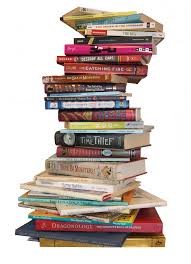
I (Clare) a number of years ago started keeping an annotated list of books I have read. I Stack of Books shared the list with my book club and then friends asked for it and on and on. I have continued to update my list. Here are the books I have read the last little while. Click here for the entire list. Books I have read You will notice that I really like murder mysteries but read almost all genres.
Feel free to share the title of a good book with me. Thanks. Happy Reading

February 2015

  • The Pearl that Broke Its Shell: A Novel by Nadia Hashimi – a truly terrific read that moves between present day Kabul and the main character’s great grandmother. Treatment of women is so upsetting. Lots of real thugs in Kabul. Feel like there is no hope for Afghanistan.
  • 5 murder mysteries by Ann Cleeves – Set in Northumberland England featuring Inspector Ramsay. The main character, Ramsay, is not well developed but the stories are all very good. The Baby Snatcher; Killjoy, A Day in the Death of Dorothea Cassidy, A Lesson in Dying, and Murder in My Backyard. Super easy reads – short and engaging.
  • Wolf Hall by Hilary Mantel. How did this win the Booker prize? The writing was truly terribly – starting paragraphs with He. Cannot figure out who is talking. Shifts between first and third person. So sloppy I was shocked. Do NOT recommend it.
  • The King’s Curse by Phillipa Gregory – this is the book that started my interest in the Tudors. Interesting perspective on Henry VIII. Historical fiction. Learned some. Not too deep but interesting.
  • Growing Up Amish: A Memoir by Ira Wagler – Interesting read. Definitely am not becoming Amish – learned about different branches of the Amish, some of their practices. Book should have continued for the rest of the author’s life. Felt incomplete.
  • Without You There is No Us: My Time with the Sons of North Korea’s Elite – By Suki Kim – I totally loved this book. The author was masquerading as a missionary with a group of missionaries who were masquerading as teachers. It tells about her time teaching in North Korea. Totally fascinating. It really shows how the government totally controls all info and the minds of the population. And people are so poor. Written recently. Author is a journalist originally from South Korea.
  • Adult Onset by Ann Marie Macdonald – I think this author only has one good book in her and she has written it. I read ½ the book and said that’s enough. Silly, silly, silly characters.
  • books by Thrity Umrigar: The Space Between Us; The Story Hour;
  • The Space Between Us – set in contemporary Bombay, story of 2 women – 1 rich and 1 poor (her servant) – really shows how the caste system is still in place – so many twists and turns in the book – really interesting
  • The Story Hour – set in New England – story of a poor Indian woman (new immigrant) who tries to commit suicide and her friendship with her psychiatrist – black woman – parts of it were very good – a bit frustrating and implausible. I got very cross with the psychiatrist because she knows better.
  • The Unknown Bridesmaid by Margaret Forster – seems like I am only person who does not know about Foster. This is her 26th Good psychological thriller. A psychiatrist is haunted by what she did as a child. Really good read. Lots of twists and turns. Characters well developed.
  • Not My Father’s Son by Alan Cumming – Yes that Alan Cumming – actor from The Good Wife, Cabaret … Book is totally awesome. His childhood was sooo grim. Tells story of his abusive father and how he survived. This is a must read. Well written, a bit of mystery, engaging.
  • The Monogram Murders: The New Hercule Poirot Mystery by Sophie Hannah – I love Poirot and I was reluctant to read this book. I felt that no one but Agatha Christie could write a Poirot murder mystery. I was wrong. Book was terrific. Great story. Perfectly captured Poirot. Cannot wait for the next book by Hannah.
  • The Short and Tragic Life of Robert Peace: A Brilliant Young Man Who Left Newark for the Ivy League by Jeff Hobbs. This is the most, most, most gripping book. Robert Peace, dirt poor in Newark – totally brilliant, gets a scholarship to Yale, gets high marks and ends up back on the streets of the projects in Newark. And he dies tragically. The author was Peace’s room mate at Yale. As a white woman, I know I do not get it (about race) but this book gave me an insight into poverty. Peace “got out” in one way but psychologically could not. One of the best books ever – but sad!! And you will be perplexed by the bad choices Peace keeps making.
  • Hardball: A V.I. Warshawki Novel by Sara Peretsky – To think this series is going strong Not worth the effort to even describe how bad this book is – writing poor, character ridiculous, plot painful – read ½ and thought Huh! Who would read this shlop?
  • The Silkworm by Robert Galbraith (A.K.A. J. K Rowling) – totally loved it. Just as good as her first as Galbraith – loved the characters, loved the story …. Hope the third one is coming soon.
  • Reykjavik Nights by Arnaldur Indridason – so bad not worth the time to describe how bad it is.
  • The Marco Effect” A Department Q Novel – Jussi Adler-Olsen – I love, love, love this series. Truly fab murder mysteries. Set in Copenhagen. Totally love the characters and the stories are great. Read them in order of publication.
  • The Aftermath by Rhidian Brook – Not my usual read. Set in postwar East Germany. I could only get through ½ of it. Characters were not plausible. Story and history interesting but the characters were just not real.
  • David and Goliath: Underdogs, Misfits, and the Art of Battling Giants by Malcolm Gladwell – Typical Gladwell. If you like Gladwell you will love this one. I did.
  • The Long Way Home: A Chief Inspector Gamache Novel by Louise Penny. I truly love these murder mysteries. Have to ration them out.
  • A Traitor to Memory by Elizabeth George- For those who like Inspector Lynley murder mysteries.
  • The Emperor’s Children by Claire Messud – not nearly as good as her early writings. Not worth it.
  • 3 books by Sarah Addison Allen – The Sugar Queen, Lost Lake, Garden Spells – normally I do not like novels with fantasy elements but these 3 are soooo good. Allen is a great writer and the fantasy elements work. Stories are all good.
  • The Goldfinch by Donna Taft – how did this win the Pulitzer Prize? Totally dreadful book. Wordy, plot does not make sense, implausible … Absolutely painful. Read ¾ of it and then my friend told me that the last ¼ is even more ridiculous so I stopped. (He was so frustrated with the book, he threw it across the room. And he is not prone to violence – a total sweetie.)


July 26, 2014

  • In Pursuit of the Proper Sinner – Vintage Elizabeth George. Very long but very good if you like Inspector Lynley murder mysteries. Deception on His Mind also by George. Very good.
  • Kwei Quartey murder mysteries – Set in Ghana. So interesting because I learned so much about Ghana – oil reserves, religion, corruption … Three books with the same detective, Darko Dawson, (who I love): Wife of the Gods, Murder at Cape Three Points, and Children of the Street. Read them in order of publication. Death at the Voyager Hotel is a one-off without Inspector Darko. Quartey is a doctor in the US who comes Ghana so he knows the country.
  • The Fashion in the Shrouds by Margery Allingham – J.K. Rowling said Allingham is her favourite murder mystery writer but I found it dated and tedious. (Detective Campion)
  • All the Light We Cannot See by Anthony Doerr – this is not my usual thing but I loved it. A blind French girl and a German soldier during WWII. VERY interesting and well written.
  • A Week in December by Sebastian Faulks. About corruption and the collapse of the banking system in 2008. Very interesting following about 12 characters. I could not follow all of the stuff on hedge funds but the ending is a true humdinger. Definitely worth the read.
  • The Invention of Wings by Sue Monk Kidd – contrived and painful murder mystery. Characters were silly and implausible. Not worth it.
  • Buried Angles by Hannah Kent another murder mystery set in the Scandinavian countries. Not worth the read. Painful. No where near the caliber of Jussi Adler-Olsen.
  • How the Light Gets In by Louise Penny – Usual excellent stuff following the murders in Three Pines. I am reading the Inspector Gamache in order and loving every word of every book.
  • Under the Wide and Starry Sky by Nancy Horan. I was looking forward to this because I LOVED Loving Frank (Lloyd Wright) by Horan. This one was so painful and embarrassing I could not get through it.
  • The Lemon Grove by Ali Hosseini set in Iraq during US invasion. Really glad I read it because I learned so much. Writing is not top drawer but very informative.
  • Honey Dew by Louise Doughty was a total disappointment. I loved her other books which were taunt and well written. This one was garbage.
  • Hour of the Red God by Richard Crompton is set in Kenya prior to the 2007 elections. Nowhere near the caliber of Quartey novels but I learned a lot about Kenya
  • Buried Rites by Hannah Kent – an absolute MUST read. Tells the story of the last women executed for murder in Iceland in the early 19th HUH you are saying. Trust me it is gripping and you will learn so much about Iceland. I could not put it down
  • Jhumpa Lahiri – Three novels which were all excellent. The Namesake; Interpreter of Maladies; and the Lowland. ALL were superb. The last one did not win the Booker (but should have). All dealing with identity Indo/American. Beautifully written even if the style is unconventional at times. Informative – gets you thinking about issues of identity.
  • The Wife, the Maid, and the Mistress by Ariel Lawhon – Hyped like crazy on Amazon but it was terrible, trite, not interesting
  • Summer House with Swimming Pool by Herman Koch. Translated from Dutch. I loved his previous novel, The Dinner which was a real psychological thriller. Summer House is not in that league. Almost all of the characters are despicable and so many loose ends it feels sloppy and I felt used as a reader.
  • Meet me in Malmo by Torquil MacLeod. Sort of a good/interesting murder mystery. Good story. The ending is such a shocker it is worth the read. Not particularly well written- another set in the Scandinavian countries – but fairly interesting.

Education in Two Worlds: David Berliner Tells Arne Duncan How to Do Teacher Education Right (by David Berliner)

I (Clare) found an amazing site National Education Policy Center. They collect blogs on a range of topics: http://nepc.colorado.edu/blog

Here is a fabulous posting about teacher education by David Berliner and Gene Glass. I think you will find their analysis and insights interesting. http://nepc.colorado.edu/blog/david-berliner-tells-arne-duncan

Improving Teacher Education

Secretary of Education Arne Duncan and the Obama administration want to improve teacher education. Me too. I always have. So I went to the president of the university I was then working at and showed him university data that I had collected. I informed him that a) we were running the cheapest program on campus, even cheaper to run than the English Literature and the History programs; and b) that some of our most expensive programs to run, computer science and various engineering programs, produced well-trained graduates that left the state. But teachers stayed in the state. I told my president he was wasting the states resources and investing unwisely.

I told him that with the same amount of money as we spend on the students that leave the state I could design one year clinical programs so every teacher does clinical rotations in the classrooms of schools with different kinds of students, rotations modeled on medical education.

I said more money was needed to pay the teachers recognized as expert, say Board certified teachers, so I could place teachers in training to observe the regions’ best teachers. I said that more money would also allow me to design video labs for viewing great teaching and for doing micro-teaching so that future teachers could experience, in safe environments, how to teach. In such micro-teaching classroom they would receive feedback on how they taught from the students they just taught and from supervisory teachers who work in the laboratory. I modeled my proposal for a lab on the then newly outfitted kinesiology laboratory of which the university was quite proud.

I said that more money would allow me to buy a five bedroom house in the lowest income community and have teachers who volunteered to spend two weeks there under the tutelage of the communities leaders — their priests and ministers, their concerned parents, the social workers there. The teachers would be the guests of the community and we would pay the community leaders to feed the teachers, to take them on tours around the neighborhoods so they can learn about the strengths of these communities, not their deficits.

I said more money would allow me to provide a one-year support system for all new teachers placed in our region. The support would be provided by clinical professors of practice that visited each new teacher from our university about every ten days. Their job would be to help the new teachers emotionally (teaching requires a great deal of emotional labor), to help them schedule time (teaching requires enormous time commitments) and to provide instructional support. I estimated that would cut the rate of teachers leaving the profession by half. A savings of significant amounts of state and local monies.

The president listened to my proposal and when I was through, he politely threw me out of his office! Charles Baron policy director for Democrats for Education Reform, quoted in the New York Times said it well: “I think you need to wake up the university presidents to the fact that schools of education can’t be A.T.M.s for the rest of the college or university.” Although so much is wrong with the policy recommendations of Democrats for Education Reform, in this case they sure have it right!


Sue Dymoke: Making Poetry Happen

I (Clare) am happy to share news of a newly published text by Sue Dymoke: Making Poetry Sue DymokeHappen. (Sue is pictured with her new text.) I was lucky to review this text and here is my endorsement. This is an outstanding collection that gives voice to teachers and students as they meet poetry. It is essential reading for those who want to make poetry happen. An invaluable resource for new and experienced teachers, reading this text will change how you approach poetry. Rarely have I read a book that is so transformative. will become a classic.

Here is a link to an interview with Sue Dymoke.http://www.nottinghampost.com/Making-poetry-open-book/story-25887273-detail/story.html

  Making Poetry HappenFor those of you who are literacy/English teacher educators or classroom teachers I highly recommend this text. I learned a huge amount and thoroughly enjoyed every chapter. The stories written by teachers and academics are inspiriting and informative. I used some chapters with my student teachers who felt transformed. Many said they had never experienced poetry this way. Here is a link to Bloomsbury Publishers: http://www.bloomsbury.com/uk/making-poetry-happen-9781472510266/

Guest Blog: Monica McGlynn-Stewart

Hungry Caterpillar

Dual Language Texts

In my (Monica) preservice ECE class this week I had the most amazing experience. The Monica McGlynn-Stewartclass had been given the task of finding a dual language picture book for young children that was inviting and enticing and would support the language and literacy learning of children whose home language was not English. My students were encouraged to choose books that represented their own home languages. We have a wonderfully diverse class and they took up the challenge with enthusiasm. If they couldn’t find a dual language picture book in their home language, they translated a text and added it alongside the English text. For those (like me!) who only speak English, they were encouraged to choose a text that represented the language of children in their placement. They needed to develop six pedagogical strategies that they would employ when using the book with young children. I gave them a fabulous article by Gillanders and Castro (2011) the journal Young Children entitled “Storybook Reading for Young Dual Language Learners” as inspiration.

http://www.naeyc.org/files/yc/file/201101/GillandersR_Online0111.pdf

On Tuesday, they came with their picture books and their strategies, eager to begin. In small groups they took turns sharing their books, props they had made, teaching each other words in other languages, and practicing their strategies such as doing a “picture walk” through the text and pre-teaching key words or phrases that the children could chime in with during the reading. I had never seen the class so alive and so engaged. There were a dozen languages in the air. My students who were English Language Learners themselves, who were generally quiet and shy, were confidently sharing their expertise in their home languages. What I learned was the use of dual language texts can benefit not only young learners, but can also be an opportunity for dual language preservice students to value their home languages as a rich resource that they bring to their teaching.


Teacher educators living in difficult times

Many of our regular readers of this blog are teacher educators. I (Clare) want to bring to your attention a disturbing development in teacher education in the U.S. Lin Goodwin, Vice-President, Division K of AERA sent the following email. These proposed initiatives could have dire consequences for university-based teacher education. This direction of “inspecting” and assessing teacher ed programs is very similar to what is happening in England. The effects on programs, faculty, and student teachers are profound. I do not think this spread of punitive measures is confined to just a few countries. Below is a summary of the proposed initiatives and a link to the full report. Imagine if the $ spent on assessing teacher ed programs was spent on PD for cooperating/associate teachers and teacher educators or used to create induction programs for new teacher educators or allotted to schools so that cooperating/associate teachers and their student teachers have time to meet during the day. Teacher ed would be greatly enhanced. We teacher educators are living in very difficult times! Teacher educators please speak up.

Dear Division K Colleagues,

I am sure many, if not most, of you have reviewed the Teacher Preparation Regulations proposed by the federal government. They promise to have a detrimental impact on all of us–faculty and students alike– given our work and programs in preservice teacher education. So, I encourage you to submit a comment, submit several comments, comment often and loudly by February 2nd. Please note the advice below–individual, authentic comments are best, versus collective or structured responses.

lin

– –

BOULDER, CO (January 12, 2015) – Recently proposed federal regulations that would impose new mandates on teacher education programs are likely to harm, rather than help, efforts to improve educational outcomes, according to a new review published today.

The draft regulations were reviewed for the Think Twice think tank review project by Kevin K. Kumashiro, dean of the School of Education at the University of San Francisco. The review is published by the National Education Policy Center, housed at the University of Colorado Boulder School of Education.

Kumashiro examined the proposed new Teacher Preparation Regulations, issued under Title II of the Higher Education Act, that the U.S. Department of Education released in the Federal Register on December 3, 2014. The education department has set a deadline of Feb. 2, 2015, for public comments on the regulations.

The draft proposal, Kumashiro explains in his review, enumerates a series of regulations that would be mandated by the federal government but would be enforced by the individual states. The regulations would require states to assess all teacher preparation programs annually and to rate them as “exceptional,” “effective,” “at-risk,” or “low-performing,” based in large part on a test-based accountability approach that would attribute gains in student test scores to teachers and then attribute those teachers’ “scores” to the teacher education programs they attended.

The regulations also would require states to provide technical assistance to programs rated “low-performing,” and those programs would risk losing state approval, state funding, and federal financial aid for their students.

In his review, Kumashiro points to a series of “vital policy concerns” raised by the proposed regulations. They include:

  •  They underestimate the cost and burden of implementing them, which Kumashiro says would be not only “quite high,” but also “unnecessary.”


  • With no foundation in evidence, they blame individual teachers – rather than root systemic causes – for the gap separating educational outcomes of affluent and white students from those of economically disadvantaged students and those belonging to racial minority groups.


  • They rely on an “improperly narrow” definition of what it means for teachers to be ready to teach.


  • They bank on test-based accountability and value-added measurement of teachers in analyzing data about teacher performance – even though those measures and tools have been “scientifically discredited.”


  • They are premised on inaccurate explanations for the causes of student achievement and underachievement, and as a consequence will discourage teachers from working in high-needs schools.


  • They will likely limit access to the teaching profession, especially for prospective teachers of color and from lower-income backgrounds, by choking off federal financial aid.

Finally, Kumashiro warns, the proposed regulations are rooted in “an unwarranted, narrow, and harmful view of the very purposes of education.”

Find Kevin K. Kumashiro’s review on the NEPC website at: http://nepc.colorado.edu/thinktank/review-proposed-teacher-preparation.

The Think Twice think tank review project (http://thinktankreview.org) of the National Education Policy Center (NEPC) provides the public, policymakers, and the press with timely, academically sound reviews of selected publications. NEPC is housed at the University of Colorado Boulder School of Education. The Think Twice think tank review project is made possible in part by support provided by the Great Lakes Center for Education Research and Practice.

Sent by Chester Tadeja, Division K Web Developer on behalf of A. Lin Goodwin, Division K Vice President

Txtng is killing language. JK!!!

I (Clare) am sure you have heard the moanings and groanings that texting is ruining English? Well think again. I watched this amazing Ted Talk by Iphone John McWhorter who argues that texting is another form of communication. Here are some excerpts from his talk.

We always hear that texting is a scourge. The idea is that texting spells the decline and fall of any kind of serious literacy, or at least writing ability, among young people in the United States and now the whole world today. The fact of the matter is that it just isn’t true, and it’s easy to think that it is true, but in order to see it in another way, in order to see that actually texting is a miraculous thing, not just energetic, but a miraculous thing, a kind of emergent complexity that we’re seeing happening right now, we have to pull the camera back for a bit and look at what language really is, in which case, one thing that we see is that texting is not writing at all. What do I mean by that?

What texting is, despite the fact that it involves the brute mechanics of something that we call writing, is fingered speech. That’s what texting is.

But the fact of the matter is that what is going on is a kind of emergent complexity. That’s what we’re seeing in this fingered speech. And in order to understand it, what we want to see is the way, in this new kind of language, there is new structure coming up.

So we have a whole battery of new constructions that are developing, and yet it’s easy to think, well, something is still wrong. There’s a lack of structure of some sort. It’s not as sophisticated as the language of The Wall Street Journal.
And so, the way I’m thinking of texting these days is that what we’re seeing is a whole new way of writing that young people are developing, which they’re using alongside their ordinary writing skills, and that means that they’re able to do two things … If somebody from 1973 looked at what was on a dormitory message board in 1993, the slang would have changed a little bit since the era of “Love Story,” but they would understand what was on that message board. Take that person from 1993 — not that long ago, this is “Bill and Ted’s Excellent Adventure” — those people. Take those people and they read a very typical text written by a 20-year-old today. Often they would have no idea what half of it meant because a whole new language has developed among our young people doing something as mundane as what it looks like to us when they’re batting around on their little devices.
…  if I could go into the future, if I could go into 2033, the first thing I would ask is whether David Simon had done a sequel to “The Wire.” I would want to know. And — I really would ask that — and then I’d want to know actually what was going on on “Downton Abbey.” That’d be the second thing. And then the third thing would be, please show me a sheaf of texts written by 16-year-old girls, because I would want to know where this language had developed since our times, and ideally I would then send them back to you and me now so we could examine this linguistic miracle happening right under our noses. Thank you very much.

If you want to hear the whole talk, click on: http://www.ted.com/talks/john_mcwhorter_txtng_is_killing_language_jk
It is only 13 minutes long and worth every second.