We are just back from New York and New Jersey where we interviewed a number of teachers who are part of our longitudinal study. Since we have been following these teachers for 7 years, I (Clare) feel I know them well. These are very able educators who are now working in very difficult conditions because of external constraints. I heard stories of them having to submit DETAILED lesson plans regularly (for the following two weeks), being observed/assessed five times per year, having to change their programs in order to comply with the Common Core, assessing the children an excessive amount, having to forgo pedagogies/books/activities they know are what the children need, and tying their teacher evaluations to student performance on standardized tests. All of these supposed measures to improve education in fact are undermining education. These teachers are spending so much time testing and writing lesson plans, they do not have time to actually work with the children. And they know what needs to be done and how to do it! All reported HIGH levels of stress. They are being deprofessionalized as these overbearing compliance methods are imposed on them. The phrase, lack of respect, was uttered over and over again by them. When asked the question — If you had to do it over again, would you become a teacher? – the responses were disheartening. Most said no and many said they are actively thinking about other careers. What has happened to education in the U.S.?
All posts by ckosnik
Multifaceted Role of the Professor: Conducting Research Includes ….
As mentioned in a previous blog post, Clive and I (Clare) are interviewing teachers who are part of our longitudinal study of teachers. Many of our teachers have had life-changing events – including becoming a parent. The teacher we were interviewing in northeast US this past week is a new Mom and is home on maternity leave. We did a division of labour: while I was interviewing the teacher, Clive babysat the new baby who is four months old. The question is: who had more fun? Me doing the interview with an amazing teacher or Clive babysitting an adorable youngster? It was a toss up because we both had a great time. So for budding researchers …. Do not be surprised that your role includes some unexpected duties (which no one told you about in grad school) – such as babysitting.
On a more serious note, a number of teachers in our study over the last 7-10 years have become parents (including adopting a child). It is interesting to see how they change once they become moms or dads:
- Juggling being a new parent and a teacher has led to changes in practices and views. All have found the dual role draining.
- New parents definitely have to shorten their work days! Working morning, noon, and night and all weekend which many had done as new teachers was no longer feasible.
- They developed a number of strategies to streamline planning and marking.
- When we asked how their views and/or values changed now that they are a parent many have commented they have become more compassionate. They appreciate how much parents have to trust teachers to care for their child (as they would) and how vulnerable children are. Their views towards parents in many cases have becoming more understanding while with the students they say are more flexible.
- Interestingly, a number have commented that now as a parent, they are not as focused on covering the curriculum (standards or expectations); rather, they have become more focused on the individual child to ensure he/she is happy and thriving.
- Some have said they have become less critical of themselves. They can only do so much and do not feel so guilty putting boundaries around their personal life.
There is so much more to being a teacher than covering the curriculum. There is so much more to being a researcher than just working with the data. You have to be flexible and be willing to assume some untraditional duties – just ask Clive.
Study of Literacy Teacher Educators: Remarkable Individuals
 We (Clive and Clare) are in NYC interviewing literacy/English teacher educators who are part of our large-scale study which includes participants from four countries: Canada, US, UK, and Australia. To date, we have conducted two interviews and are now starting the third round of interviews. The first interview focused on their backgrounds and interests; the second on their pedagogy; and the third on their use of digital technology and future plans. (For the interview questions click on the tab About Our Research then on the drop down menu, click on the tab for Instruments.) To say this research has been fascinating is an understatement! I feel I have gotten to know 28 outstanding teacher educators both personally and professionally. I have learned so much through this research:
- their approach to literacy teacher education is thoughtful and complex (e.g., consistently they believe you need to start with the student teacher’s own views of literacy and to help them “unlearn” in order to develop a more expansive view of literacy);
- most did not plan to do a PhD or become a teacher educator (e.g., their journey to becoming a professor/lecturer were serendipitous with a key figure/mentor influencing them);
- they have very heavy workloads in part because they are so committed to their student teachers (e.g., they develop tutoring programs in schools in order to provide student teachers with authentic experiences)
- the political context is impacting on them in untold ways (e.g., the pressure from external credentialing agencies to conform to a narrow view of literacy – phonics – is complicating their work. They cannot always teach what they feel student teachers need to know).
- they must hold multiple identities – as teacher educators, as teachers, and as researchers
I feel truly lucky to have had the opportunity to interview these 28 remarkable teacher educators. We as an education community can learn much from them. We have published two papers from the study so far. Click on the Link Publications then click on the Link Clare’s Publications for copies of our papers. 
You might also be interested in our edited book on literacy teacher educators. https://www.sensepublishers.com/catalogs/bookseries/other-books/literacy-teacher-educators/
Longitudinal Study of Teachers: A Highly Rewarding Experience
 Clive and I (Clare) are in NYC and NJ to interview teachers we have been following for 7 years. Conducting this longitudinal research has been an amazing experience because we have seen how these teachers change over the years. The first year of the study was stressful for both the participants and me. As brand new teachers, they were sharing with a virtual stranger (me, the researcher) their experiences as new teachers which included both highs and lows. As a researcher I was keenly aware of the challenges new teachers face so I did not want them to feel uncomfortable and I was unsure that the interview questions were appropriate for first year teachers. Over the years, I have gotten to know these remarkable women who often are teaching in very difficult settings. Interestingly, I have seen how their lives changed: getting married, having a baby, losing a spouse …. All life-changing experiences which have impacted their teaching. I am truly grateful that many years ago these young teachers opened their doors to me and have continued to be part of this study. Our interview questions for this year of the study are available. Click on the Link About Our Research then click on the drop down menu tab Instruments.
Some of the findings from this longitudinal research can be found in our new book, Growing as a Teacher https://www.sensepublishers.com/catalogs/bookseries/professional-learning-1/growing-as-a-teacher/
Celebrating Women
 Today in many countries Mothers are celebrated. In my (Clare) family, we celebrate all women on Mother’s Day because we believe most women tend to care and nurture others. I am very fortunate to have had many wonderful women be part of my life. (Attached is a photo of my Mom and me.) My female friends and colleagues have supported and inspired me in so many ways (including Pooja, Cathy, and Yiola who are active bloggers on this site). So to all women, Happy Mother’s Day. You have made a difference in the lives of many.
The Tyranny of Testing, Part I
I (Clare) found this article extremely interesting. The systematic analysis of the testing culture is well done.

 credit: learningtrust.org
At the end of May, 2013, I began what would turn into a four part series on the problem of mandatory, high stakes testing in education. Much has changed since that series. I’ll provide links for the original series at the end of this article, but the series that begins with this article is substantially updated. As is always the case, I don’t know where the series–and the interests of readers–will take me. I simply hope I can provide some useful and thought-provoking ideas.
The school year is drawing to a close. It’s always a bittersweet time. It is good to bring the year to a close, to finish all that we’ve worked on for a year and to take some small satisfaction in all we’ve learned. But it’s a sad time as well, for all too soon, each of my classes, made up of all of…
View original post 3,227 more words
Wonderful Experience in Bogota
 Clive and I (Clare) worked with the Directors of various programs
 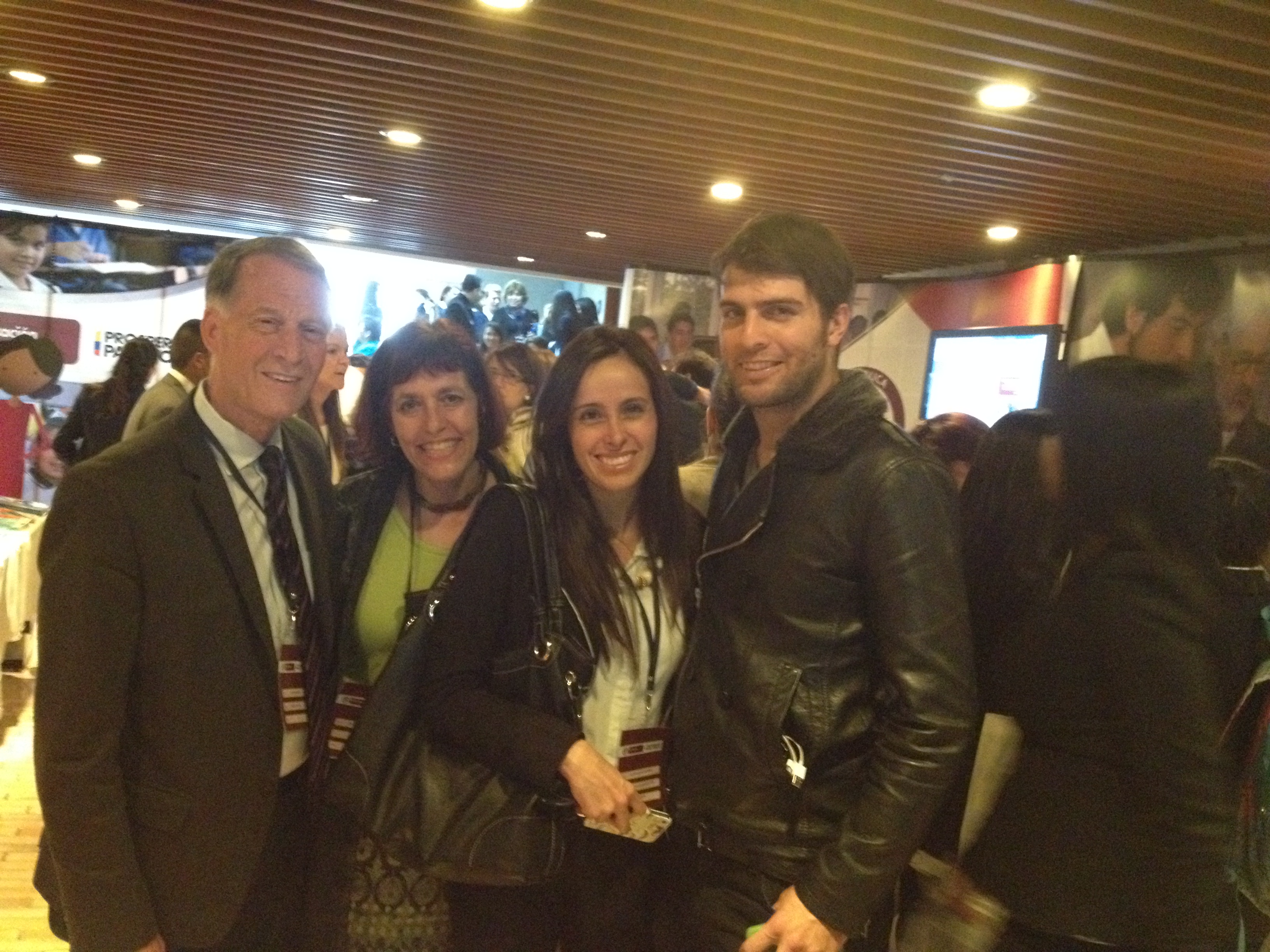 at the Ministry of Education in Bogota. We did presentations at the Learning for All conference . What a wonderful experience. (More on our time in Bogota at a later date.)
Here are our powerpoint presentations:
 Clive: Priorities in teacher education: the 7 Key Elements of Preservice
 Preparation
Bogota Clive#2
Clare: Teacher Educators: Four Spheres of Knowledge Required To teach the 7 Priorities
Bogota Clare 2014


Guest Blog: Monica McGlynn-Stewart
How Does Learning Happen?
 On April 25th, Ontario’s Ministry of Education released a new Early Learning Framework called How Does Learning Happen? Ontario’s Pedagogy for the Early Years. http://www.oise.utoronto.ca/atkinson/UserFiles/File/Policy_Monitor/ON_25_04_14_-_HowLearningHappens.pdf
It is a learning resource for early years settings such as childcare, child and family support programs, and before-and-after school programs. In some ways, it is a departure from the previous early years curriculum framework, Early Learning for Every Child Today (2007). http://www.children.gov.on.ca/htdocs/English/topics/earlychildhood/early_learning_for_every_child_today.aspx
In addition to a statement of principles and guidelines for practice, the older document includes a section referred to as the continuum of development which has separate sections for infants, toddlers, pre-school/kindergarten and school-aged children. Each age group is further divided into five domains, social, emotional, communication, language and literacy, cognitive and physical. Each domain includes a list of specific skills, what educators might see that would indicate that skill, and suggestions for how educators might support those skills. In other words, it is quite detailed about how children develop and how educators can support them. The new document, How Learning Happens does not have this developmental section. It appears to be inspired by New Zealand’s national early childhood curriculum Te Whariki. Like Te Whariki, How Learning Happens focuses on children’s relationships, well-being and inquiry learning, and educator’s collaboration and critical reflection.
As a professor of early childhood education, I think a combination of the emphasis on reflection, relationships, and inquiry learning from Te Whariki and the continuum of development from Early Learning for Every Child today would be helpful, the latter particularly so for new early childhood educators. Over the last 25 years I have seen similar swings in the school curriculum in Ontario. When I first started teaching elementary grades in the late 1980’s, there was an incredibly open-ended primary curriculum which allowed excellent teachers to run fabulous programs, but left less informed and skilled teachers with little to go on (and some less than effective programs). We then had a conservative government in the mid to late 1990’s who introduced a much more prescriptive and reductionist curriculum, making it more difficult to be creative and to integrate the curriculum, but it could be argued that it supported new teachers. Now, with the school curriculum revisions in the last few years, and the new full-day kindergarten play-based curriculum document, we are moving back towards less prescriptive outcomes, subject integration and inquiry learning. I think new educators/teachers need support and explicit guidance, and more experienced, knowledgeable educators/teachers need more freedom to be creative and spontaneous. The question is, how you capture this in a one-size-fits all curriculum document?
Cartagena Colombia: Presentations by Clive and Clare

 Clive and I (Clare) presented at the Unicolombo Universitaria Colombo Internacional in Cartagena (Part of a Ministry of Education initiative). The overall theme of our presentations was the need to offer quality education for all.
Clive’s presentation focused on supporting teacher learning in their on-going learningwhile mine focused on the importance of engaging students by offering a rich literacy program.
About 300 teacher educators and teachers attended our presentations. What a lovely audience! In the Q & A part of the presentation, we had a great interchange about the pressure on the educators to improve scores on PISA.
C lick below to see our ppt presentations.
Clive: Priorities in Teacher Education: The 7 Key Elements of Preservice Preparation
Bogota Clive#2
Clare: Literacy Teaching:Engaging All Students
Cartagena 2014 CK
Enjoy the photos of this enchanting city which is designated a World Heritage Site.
Raising the risk threshold
I (Clare) found this amazing website, The Research Whisperer, and their blog today is so relevant and wise.
Clare

 Sumo! (Photo by Tim Ellis: https://www.flickr.com/photos/tim_ellis)
When you get rejected from a journal or conference, or your grant doesn’t get up, do you retreat to your cave?
Do you have a bit of a tantrum and declare ‘What’s the POINT?’ to innocent passers-by?
I’ve done my fair share of this, and it’s all perfectly normal and healthy for a time. But you have to eventually leave the cave and stop yelling at passersby.
I was talking to a colleague about academic resilience recently – the ability to ‘bounce back’ after papers are heavily criticised or rejected, grants not awarded, or promotions not given.
I’ve seen people respond so differently to these events, though they all start with the same fallen expression.
Some take the entire process as an indictment on their work and position within the field, swear off wasting their time with it all, and disengage.
Others revisit the critique and feedback…
View original post 744 more words
 Literacy Teaching and Teacher Education