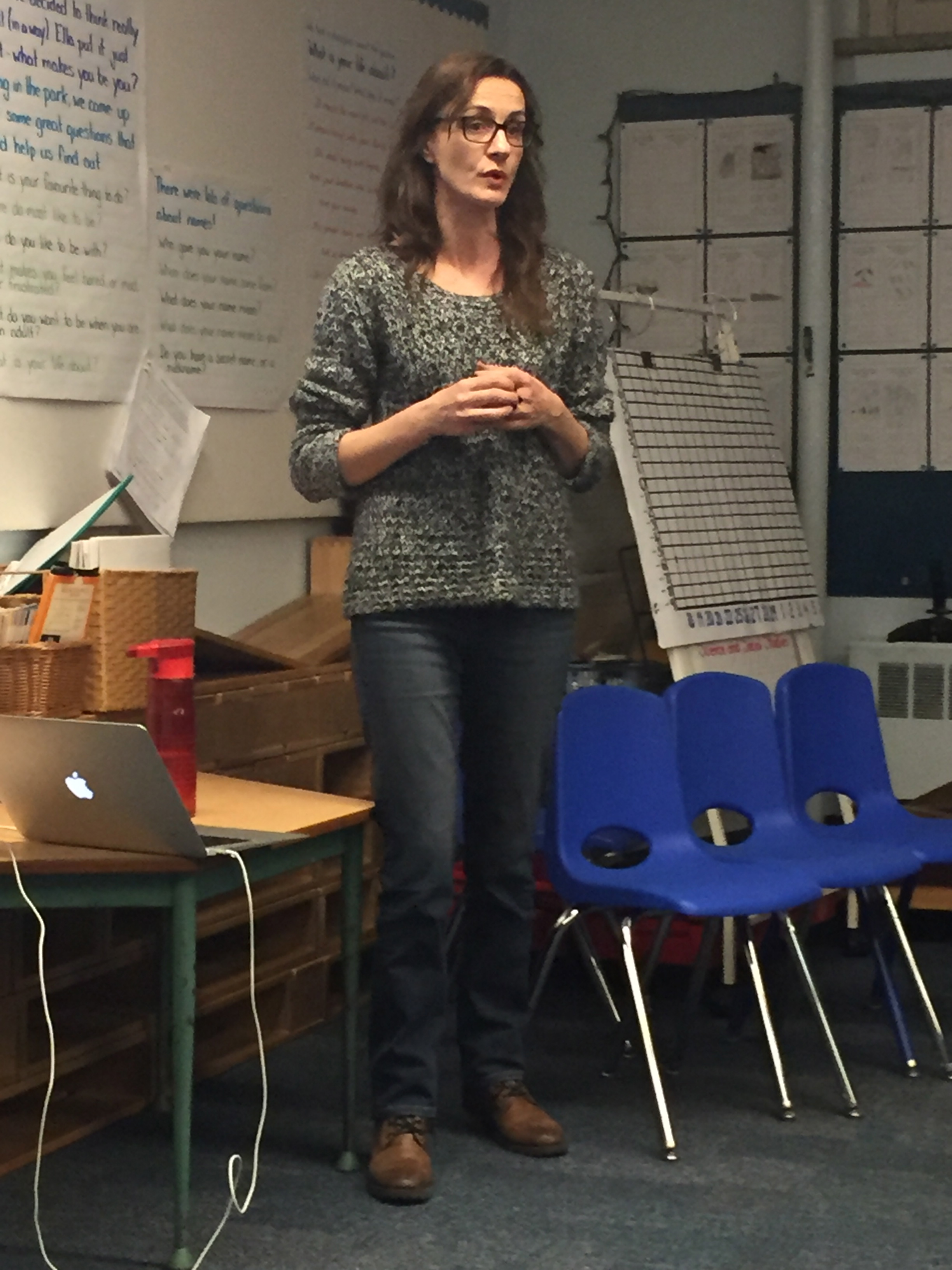
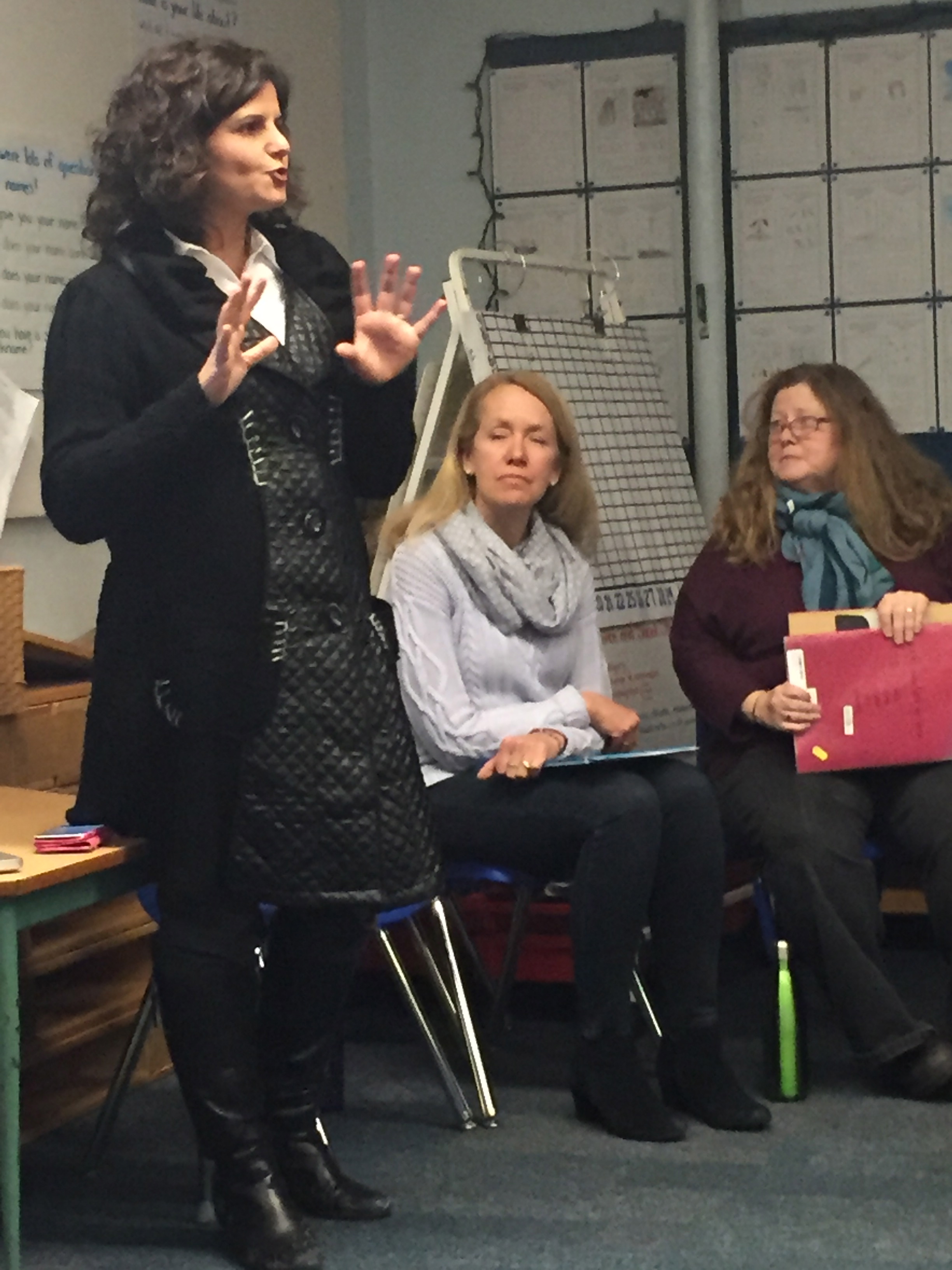
All posts by ckosnik

Professional Learning in Top Performing Systems, part 2

I (Clare) thought you might find this blog interesting about high performing schools. Not sure I agree with all of it but food for thought

internationalednews's avatarInternational Education News

PDinfographicv2The National Center on Education and the Economy’s (NCEE) Center on International Education Benchmarking has released two reports on professional learning environments in top performing systems: Beyond PD: Teacher Professional Learning in High-Performing Systems and Developing Shanghai’s TeachersTo explore and share the findings of these reports, the NCEE held a conference last week featuring presentations and panel conversations with the leading voices in education from around the world. This conference was also streamed live and can be viewed online. Moderated by Marc Tucker, president and CEO of NCEE, speakers included Ben Jensen (author of Beyond PD) and Minxuan Zhang (author of Developing Shanghai’s Teachers).

Ben Jensen began his presentation with the questions, “What is at the core of high performing professional learning systems? What is the strategy to ensure effectiveness?”

Jensen argued that we need to move past the idea that there is a single answer…

View original post 303 more words

You think you know what teachers do. Right? Wrong.

I (Clare) was sent this article from a friend and it truly captures the complexity of teaching and the misconceptions about teaching. All parent, politicians, and journalists should have to read it. A shout out to all teachers! Here is the link to the article from the Washington Post: https://www.washingtonpost.com/news/answer-sheet/wp/2014/02/22/you-think-you-know-what-teachers-do-right-wrong/

By Valerie Strauss February 22, 2014

School_Globe

You went to school so you think you know what teachers do, right? You are wrong. Here’s a piece explaining all of this from Sarah Blaine, a mom, former teacher and full-time practicing attorney in New Jersey who writes at her parentingthecore blog, where this first appeared.

By Sarah Blaine

We all know what teachers do, right? After all, we were all students. Each one of us, each product of public education, we each sat through class after class for thirteen years. We encountered dozens of teachers. We had our kindergarten teachers and our first grade teachers and our fifth grade teachers and our gym teachers and our art teachers and our music teachers. We had our science teachers and our social studies teachers and our English teachers and our math teachers. If we were lucky, we might even have had our Latin teachers or our Spanish teachers or our physics teachers or our psychology teachers. Heck, I even had a seventh grade “Communications Skills” teacher. We had our guidance counselors and our principals and some of us had our special education teachers and our study hall monitors.

So we know teachers. We get teachers. We know what happens in classrooms, and we know what teachers do. We know which teachers are effective, we know which teachers left lasting impressions, we know which teachers changed our lives, and we know which teachers sucked.

We know. We know which teachers changed lives for the better. We know which teachers changed lives for the worse.

Teaching as a profession has no mystery. It has no mystique. It has no respect.

We were students, and therefore we know teachers. We denigrate teachers. We criticize teachers. We can do better than teachers. After all: We do. They teach.

We are wrong.

We need to honor teachers. We need to respect teachers. We need to listen to teachers. We need to stop reducing teachers to arbitrary measurements of student growth on so-called objective exams.

Most of all, we need to stop thinking that we know anything about teaching merely by virtue of having once been students.

We don’t know.

I spent a little over a year earning a master of arts in teaching degree. Then I spent two years teaching English Language Arts in a rural public high school. And I learned that my 13 years as a public school student, my 4 years as a college student at a highly selective college, and even a great deal of my year as a master’s degree student in the education school of a flagship public university hadn’t taught me how to manage a classroom, how to reach students, how to inspire a love of learning, how to teach. Eighteen years as a student (and a year of preschool before that), and I didn’t know anything about teaching. Only years of practicing my skills and honing my skills would have rendered me a true professional. An expert. Someone who knows about the business of inspiring children. Of reaching students. Of making a difference. Of teaching.

I didn’t stay. I copped out. I left. I went home to suburban New Jersey, and a year later I enrolled in law school.

I passed the bar. I began to practice law at a prestigious large law firm. Three years as a law student had no more prepared me for the practice of law than 18 years of experience as a student had previously prepared me to teach. But even in my first year as a practicing attorney, I earned five times what a first-year teacher made in the district where I’d taught.

I worked hard in my first year of practicing law. But I didn’t work five times harder than I’d worked in my first year of teaching. In fact, I didn’t work any harder. Maybe I worked a little less.

But I continued to practice. I continued to learn. Nine years after my law school graduation, I think I have some idea of how to litigate a case. But I am not a perfect lawyer. There is still more I could learn, more I could do, better legal instincts I could develop over time. I could hone my strategic sense. I could do better, be better. Learn more law. Learn more procedure. But law is a practice, law is a profession. Lawyers are expected to evolve over the course of their careers. Lawyers are given more responsibility as they earn it.

New teachers take on full responsibility the day they set foot in their first classrooms.

The people I encounter out in the world now respect me as a lawyer, as a professional, in part because the vast majority of them have absolutely no idea what I really do.

All of you former students who are not teachers and not lawyers, you have no more idea of what it is to teach than you do of what it is to practice law.

All of you former students: you did not design curricula, plan lessons, attend faculty meetings, assess papers, design rubrics, create exams, prepare report cards, and monitor attendance. You did not tutor students, review rough drafts, and create study questions. You did not assign homework. You did not write daily lesson objectives on the white board. You did not write poems of the week on the white board. You did not write homework on the white board. You did not learn to write legibly on the white board while simultaneously making sure that none of your students threw a chair out a window.

You did not design lessons that succeeded. You did not design lessons that failed.

You did not learn to keep your students quiet during lock down drills.

You did not learn that your 15-year-old students were pregnant from their answers to vocabulary quizzes. You did not learn how to teach functionally illiterate high school students to appreciate Shakespeare. You did not design lessons to teach students close reading skills by starting with the lyrics to pop songs. You did not miserably fail your honors level students at least in part because you had no books to give them. You did not struggle to teach your students how to develop a thesis for their essays, and bask in the joy of having taught a successful lesson, of having gotten through to them, even for five minutes. You did not struggle with trying to make SAT-level vocabulary relevant to students who did not have a single college in their county. You did not laugh — because you so desperately wanted to cry — when you read some of the absurdities on their final exams. You did not struggle to reach students who proudly announced that they only came to school so that their mom’s food stamps didn’t get reduced.

You did not spend all of New Years’ Day crying five years after you’d left the classroom because you reviewed The New York Times’ graphic of soldiers killed in Iraq and Afghanistan and learned that one of your very favorite students had been killed in Iraq two years before. And you didn’t know. Because you copped out and left. So you cried, helplessly, and the next day you returned to the practice of law.

You did not. And you don’t know. You observed. Maybe you learned. But you didn’t teach.

The problem with teaching as a profession is that every single adult citizen of this country thinks that they know what teachers do. And they don’t. So they prescribe solutions, and they develop public policy, and they editorialize, and they politicize. And they don’t listen to those who do know. Those who could teach. The teachers.


Parents versus Friends

In the Toronto Globe & Mail on January 15th I (Clive) read an interesting excerpt from a book by Leonard Sax called The Collapse of Parenting. According to Sax, young people are IMG_3128increasingly looking to friends for support rather than their parents; and the problem with that is whereas parents tend to stick by their children through thick and thin, many young people just drop their friends after a dispute or perceived minor infraction. As a result, children are becoming more vulnerable and anxious (a phenomenon others have noticed).

I think teachers should discuss this set of issues with their students as part of ongoing way of life education (and also introduce them to children’s books or young adult novels that deal with friendship, family life, etc.). Why do young people turn to friends rather than parents? Are they taking this too far? Do they realize the dangers (whatever they are)? Are friends less supportive than family? Support from friends often comes at a price (loyalty, obedience, etc.), but does family support also have a price? Should we go to friends for some things and parents for others? These are tricky questions, but I think exploring issues in a safe environment is always better than leaving young people to grapple with them on their own. And we will learn a lot through the discussions too!


Parent Research Night

This week I (Clare) attended the Parent Research Night at the Dr. Eric Jackman Institute of Child Studies (where I am the Director). It was a truly amazing evening because the two presentations demonstrated research that was for teachers and parents, done by teachers, and inspired by teachers. It was such a beautiful form of dissemination of research. The findings are not confined to a peer-reviewed article but were shared with the public.

IMG_1147Dr. Patricia Ganea talked about the importance of shared reading with children. And she shared data on how children respond to images in children’s books – realistic (photos) vs fantastical (comic-like). Interestingly they relate much more to the latter.

Then Dr. Yiola Cleovoulou and 3 teachers (Zoe Honahue, Cindy Halewood, and Chriss Bogert – who is now the VP) from the Lab School IMG_1153presented on their work with the children that was framed by critical literacy with an inquiry focus. They shared student work, read transcripts of actual conversations, and described activism work.

JICS has a tripartite mission: Lab school, teacher education program, and a research centre. Parent Research night truly brought all three together. http://www.oise.utoronto.ca/ics/index.html

The Teacher Curse No One Wants to Talk About

I (Clare) read this really interesting article on Edutopia

I believe it has relevance for both teachers and teacher educators. Having to unpack and remember how we learned a topic/skill is hard. How do you break down the steps to learning so that our students can acquire the knowledge and skills.  This article has some highly useful examples and suggestions.  As a teacher educator I often make assumptions about my student teachers. They all have university degrees so they should be able to master the content easily. Wrong assumption! It takes time and good teaching. Here is the link to the full article. The Teacher Curse No One Wants to Talk About 


Knowledge is a curse.
 Knowing things isn’t bad itself, but it causes unhealthy assumptions — such as forgetting how hard it was to learn those things in the first place. It’s called the Curse of Knowledge.

In this post, we’ll identify how the Curse of Knowledge affects educators. Then we’ll outline seven ways to alleviate the curse. The ultimate goal is to improve instruction.

The Curse of Knowledge

The Curse of Knowledge has been variously described in articles by Chip and Dan Heath, Carmen Nobel, and Steven Pinker, and also in books such as The Sense of Style and Made to Stick. It has been applied to a variety of domains: child development, economics, and technology are just a few.

All of the resources describe the same phenomena — that a strong base of content knowledge makes us blind to the lengthy process of acquiring it. This curse has implications for all teachers:

  • We do not remember what it is like to not know what we are trying to teach.
  • We cannot relive the difficult and lengthy process that learning our content originally took.

As a result, we end up assuming that our lesson’s content is easy, clear, and straightforward. We assume that connections are apparent and will be made effortlessly. Assumptions are the root cause of poor instruction. And acknowledgment is the first step to recovery.

Lifting the Curse

Here are seven ways to make learning easier for your students.

1. Emotion

Barbara Fredrickson, a champion in the field of positive psychology, has studied the effects of mild positive emotions on desired cognitive traits like attentiveness and ability to creatively solve problems. In what she coined the broaden-and-build theory, Fredrickson found that pleasant and mild emotional arousal before experiencing content leads to greater retention. A quick joke or humorous movie can serve as the positive emotional stimulant. So learning is easier and the Curse of Knowledge is potentially circumnavigated when injecting a bit of emotion into your lesson.

2. Multi-Sensory Lessons

Though Howard Gardner’s influential work states that we each have a preferred learning modality, new research highlights the fact that effective lessons need not be unisensory (only kinesthetic, only auditory, etc.) but multi-sensory. Multi-sensory experiences activate and ignite more of the brain, leading to greater retention. So use a multisensory approach in your lessons to make learning easier.

3. Spacing

Blocked practice is ancient and is no longer considered best practice. An example of blocked practice is cramming. Though it feels like learning, blocked practice results in learning that is shallow, and the connections quickly fade. The preferred alternative is the opposite of blocked practice: spaced practice.

Exposing yourself to content and requiring your brain to recall previously learned concepts at spaced intervals (hours, days, weeks, or months) makes the content sticky and results in deeper retention with solid neural connections. As spaced practice is the way that you learned the content you teach, it makes sense to employ the same technique with your students. So thinking of your content as a cycle that is frequently revisited makes learning easier for your students while helping alleviate the curse.

For more information on spacing content, check out Make It Stick or 3 Things Experts Say Make A Perfect Study Session.

4. Narratives

Everyone loves a great story because our ancestral past was full of them. Stories were the dominant medium to transmit information. They rely on our innate narcissistic self to be effective learning tools — we enjoy stories because we immediately inject ourselves into the story, considering our own actions and behavior when placed in the situations being described. This is how we mentally make connections, and if students are listening to a story interlaced with content, they’re more likely to connect with the ideas. So connecting with content through a story is at the heart of learning and can help alleviate the stress associated with the Curse of Knowledge.

5. Analogies and Examples

An analogy is a comparison of different things that are governed by the same underlying principles. If understanding a process is what we’re after, looking at the result of the process proves informative. An analogy compares two unlike things by investigating a similar process that produces both. Said differently, an analogy highlights a connection, and forming connections is at the core of learning.

Whereas an analogy compares similar processes that result in different products, an example highlights different processes that result in similar products. Copious use of examples forces the brain to scan its knowledge inventory, making desirable connections as it scans. So learning is easier when analogies and examples are used to facilitate mental connections.

6. Novelty

New challenges ignite the risk-reward dopamine system in our brains. Novel activities are interesting because dopamine makes us feel accomplished after succeeding. Something that is novel is interesting, and something interesting is learned more easily because it is attended to. So emphasis on the new and exciting aspects of your content could trip the risk-reward system and facilitate learning.

7. Teach Facts

Conceptual knowledge in the form of facts is the scaffolding for the synthesis of new ideas. In other words, you cannot make new ideas with out having old ideas. Disseminating facts as the only means to educate your students is wrong and not encouraged. However, awareness that background knowledge is important to the creation of new ideas is vital for improving instruction. Prior knowledge acts as anchors for new incoming stimuli. When reflecting on the ability of analogies and examples to facilitate connections, it is important to remember that the connections need to be made to already existing knowledge. So providing your students with background knowledge is a prerequisite in forming connections and can make their learning easier.

Making It Easier

The Curse of Knowledge places all of our students at a disadvantage. As educators, it’s not enough to simply recognize that we are unable to remember the struggle of learning. We need to act. By incorporating facts, highlighting novelty, liberally utilizing examples and analogies, cycling our content, telling content-related stories, making our lesson multi-sensory, and harnessing the power of emotion, we can make learning easier for our students.


By incorporating facts, novelty, examples, analogies, and emotion; and cycling content, telling content-related stories, and making lessons multisensory, we can make learning easier for our students.

Source: The Teacher Curse No One Wants to Talk About

Is School Making Our Children Ill?

In the New York Times on January 3, I (Clive) came across a fascinating column by Vicki Abeles (Sunday Review section) about the negative impact current school “reforms” are having on children. According to her, they are undermining the health of students, both rich and poor and from kindergarten to high school.

Abeles has written a book (which I plan to get asap) aptly titled “Beyond Measure: Rescuing an Overscheduled, Overtested, Underestimated Generation,” and has produced documentaries “Race to Nowhere” (as distinct from Race to the Top) and “Beyond Measure.” But in the column her focus is on research conducted by Stuart Slavin at Irvington High School in Fremont, California, “a once-working-class city that is increasingly in Silicon Valley’s orbit.” In cooperation with the school, he anonymously surveyed two-thirds of Irvington’s 2,100 students and found that “54 percent of students showed moderate to severe symptoms of depression [and] 80 percent suffered moderate to severe symptoms of anxiety.” The school is trying to address the problem, for example by re-examining homework demands and counseling students on achieving a manageable course load.

Based on her own inquiries and reflections, Abeles attributes much of this anxiety and depression to the enormous pressure young people are under today to climb the ladder of schooling, with a view to getting into a good college and/or job. “Even those not bound for college are ground down by the constant measurement in schools under pressure to push through mountains of rote, impersonal material as early as preschool.” Apart from opposing this general approach to schooling, Abeles sees practical lessons that can be learned from Irvington’s approach. Toward the end of the article she suggests:

“Working together, parents, educators and students can make small but important changes: instituting everyday homework limits and weekend and holiday homework bans, adding advisory periods for student support, and providing students opportunities to show their growth in creative ways beyond conventional tests.”


5 More Years for Our Longitudinal Study of Teachers

In mid-December, I (Clive) received a nice holiday gift: word came that we had ethical approval from the University of Toronto to continue our longitudinal study of teachers for another 5 years (news of the extended funding by SSHRC came earlier). This is not a “high risk” study, but it is always a relief when the approval comes. We can now look forward to following the first cohort of 20 participants into their 16th year of teaching and the second cohort, also of 20, into their 13th year. This is a welcome development, as a longitudinal study obviously becomes more significant as the years pass.

Clive BeckThis study, co-directed by Clare Kosnik (who also directs her SSHRC study of 28 teacher educators) – and involving a wonderful team of researchers – began in 2004 with 22 new teachers; the second cohort of 23 was added in 2007. Over the years, 3 participants have left the study but are still teaching, while another 2 have left teaching and hence the study; so the total is now 40. This is an unusually high retention rate both for teaching and for a longitudinal study.

It is likely the high retention is due in part to the teachers’ participation in the study itself, which they often tell us is very beneficial to them; sometimes they say it is the most useful PD they experience all year! This is a limitation of the study, since it means they are a relatively motivated group (although it is not something we could have avoided). However, it is interesting that teachers would find it so helpful to have someone listen to their experiences and views about teaching for an hour of so once a year. Perhaps it is a form of “PD” that should be used more often, as an alternative to top-down lectures by “experts” on how to teach!


Supporting Students With Autism Spectrum Disorder

In my (Clare) course on Current Issues in Teacher Education one of the Image_Karastudents, Kara Dymond, did her final project on autism. She is a member of the Autism Team Program to Assist Social Thinking in the Toronto Catholic District School Board. I learned so much about autism in particular how to help children that I asked Kara if I could post some of suggestions on our blog. I know that teachers would find them useful and teacher educators may want to share them with their student teachers. Thank you Kara for letting me share your work with the wider education community.

An Autism Spectrum Disorder (Autism/ASD) is a complex neurological condition which has implications for many aspects of functioning, including learning. The education system needs to be increasingly prepared to meet the diverse needs of these students, as Autism is the fastest-growing developmental disability in the United States (Safran & Safran, 2001; Sansosti, 2010). Last year, the US Centers for Disease Control and Prevention reported that, as of 2010, rates of ASD were 1 in 68 children. Only ten years before, the prevalence was reported as 1 in 150 children. In this paper, rates from the US are reported, as Canada does not have a comparable federal ASD surveillance system at this time, though one is in development (Health Canada, 2012).

HOW TEACHERS CAN SUPPORT LEARNING IN THE CLASSROOM (for high functioning autistic students)

Establish a Rapport

When a teacher has a positive relationship with a child with HFA, it decreases the child’s anxiety and rigidity. It also increases their receptivity to feedback and their willingness to try what is being asked. This is the most important strategy to employ when working with a student with HFA. Some methods to improve your relationship include:

  • Ask them questions about and listen to them talk about their interests
  • Include their interests in word problems, tasks, and books available in the room
  • Have them present as an expert to the class on their interests
  • Reinforce the positive behaviours you see with praise and rewards when possible
  • Use humour with them (but avoid or explain sarcasm, which may be confusing)

Understand Their Need for Safety

  • Make things predictable by having a posted schedule and routines that are consistent
  • When changes happen, explain why they are happening and what is expected, as early in advance as possible
  • Follow up challenging activities with something calming for that student
  • Make your expectations for work and behaviour clear
  • Speak in a calm tone of voice and be consistent with what you say
  • Use clear language or explain language that is complicated or idiomatic

Manage the Environment

  • Help the child to know what they can do if they need a break (e.g. a safe spot to go to for a certain length of time, break options such as getting a drink, pacing in the back of the class, etc.) and what your expectations are regarding when and for how long they can take a break
  • Offer them a quiet place to work, such as a desk carrel, if needed
  • Start the day with a task they like to decrease any anxiety upon arrival, if possible
  • Seat them in an area facing a section of the class with fewer visuals to decrease distraction
  • Seat them with supportive classmates
  • Pay attention to sensory stimuli that distract or agitate them and do what you can to minimize these. Create a plan with the student on what to do if there is a factor (e.g. heat) that you cannot control (e.g. they have permission to go to the bathroom and splash cool water on their face at any point, and they can sit near a window)

See from Their Perspective

  • Monitor their understanding of different situations and relationships
  • When you notice a behaviour or thinking pattern that is different from same-age peers, consider its long-term impact and what skills need to be taught instead
  • Have private check-ins with the child to discuss misunderstandings and help them to see the perspective of others and how their choices can affect how others feel
  • Explain things logically
  • Include them in problem-solving and making a plan for how to cope when they are stressed
  • Recognize that when they are stressed, you will have to reduce your expectations

Be Specific

  • Explain logically and clearly what is expected or not expected
  • Give genuine, specific praise that lets them know what you liked about what they did (they may not know what you are referring to if you simply tell them “good job”. Instead say, “I like how you raised your hand – good job!”)
  • Give specific constructive feedback (e.g. “Please stop tapping your pencil. It is distracting.”) so they know what to do and why
  • If you want to see a skill again, remind them to do it again, before the lesson or activity when they are expected to exhibit the skill

Explicitly Teach Their Areas of Need

  • Point out the hidden curriculum when you notice they do not know it.
  • Consider teaching them about the hidden curriculum of tests. This includes what concepts are most important; how to tell what questions require a more in-depth answer (e.g. how much space is there to write in and how many points is the answer worth); how to determine what a question is really asking (e.g. short-answer questions beginning with “What is …” often mean “Tell me everything you know about…”)
  • Draw their attention to intentions and feelings of others – both students and characters in books. (e.g. “How does that character feel when…” and “how do you know?”)

Structure Opportunities for Interaction

  • Help send them out to recess with a plan of what to do and who to play with
  • Engage peers to invite them to talk or play a game they like at certain recesses
  • Teach recess games at gym time so they know the rules and can practice
  • For longer recesses, consider having them be office monitors or library assistants with other peers
  • Highlight their strengths in front of peers and in group projects

Re-Conceptualize Challenging Behaviours

  • Try to understand why a child might be feeling overwhelmed
  • Remember that behaviours signal a lack of skills and can improve with teaching
  • Prevention is key. Recognize you may have to change your approach or things in the environment to set the child up for success next time
  • Anxiety is like a teeter-totter. Your reaction can either bring them gently down or send them flying into a meltdown or complete withdrawal
  • Know your student. Learn their body language so you know when they are in the early stages of frustration and you can prompt them to take a break or reduce task demands
  • Always de-brief after a challenging moment, once the child is calm (this may be the next day). Find out what was upsetting them – they may share important insights that can help you create a plan for next time
  • Stop talking. Children with HFA cannot process language when they are upset

Teach Them Organizational Skills

  • Provide time each day or week to clean their desk and describe your expectations
  • If packing up is problematic, have them pack up what is needed from the morning before lunch and what is needed from the afternoon at the end of the day
  • Instead of the agenda, create a daily homework checklist where subjects are prewritten and materials needed for home can be circled. The only writing needed will be page numbers and questions required
  • Instead of numerous duotangs and notebooks, provide students with a binder for all subjects, divided by subject, and with pockets for loose sheets to be filed later. This may improve students’ ability to locate what is needed and to be ready for each lesson
  • Take and print small photos of subject materials (e.g. textbooks, notebooks) and put them up on the board as a visual reference for what is needed for that subject

Increase Their Productivity & Output

  • Whenever possible, reduce the writing requirement as writing can be laborious for students with HFA. Use visual organizers, fill-in-the-blanks, true or false, or circle the correct answer
  • Task instructions should be given one by one, with exemplars if possible
  • For large tasks, give students with HFA broken-down components of a task to do one at a time. Sometimes too much work on one page can seem overwhelming
  • Change how work or tests look on the page by increasing the font, reducing the number of questions, and having more space on the page
  • Giving some options can help with open-ended tasks (but not too many options!)
  • Give time countdowns so students know when they are expected to transition to another task. This can be difficult for students with HFA
  • Give processing time. Ask a question once and wait. You may have to ask again in a different way. Too much talking might mean they have to re-start their thinking process all over again. (Too many prompts can also be frustrating for a child who is trying to process the first instruction you gave)
  • Consider alternative ways of expressing knowledge. Most students with HFA are visual thinkers, so can express their knowledge better in comic strips than orally or in writing
  • Consider allowing them to type
  • Consider a break schedule to increase motivation and productivity
  • Harness their interests, especially if they are going to elect to do them anyway. If it is a half-hour work period and you know they tend to only be productive for ten minutes and then get distracted by doodling or reading their favourite book, give them a special interest break when they are at their productivity limit. Pair it with praise and tell them they have earned five minutes of their interest for working so hard. Breaks help to free up working memory and re-focus the child, and giving them a special interest break (rather than taking it away) builds your relationship. After their time is up, ask them to get back to work
  • Consider providing breaks during tests. More time does not help without giving breaks to free up working memory
  • Implement a reward system if they are still struggling to meet your expectations. They may need motivation to attempt something that is very difficult for them (your school board’s Autism Support Team can help you to design a successful model)

Respect, Support, & Develop Their Independence

  • Give students help when they need it, but also give them time and space to try work on their own. Give an instruction and then circulate around the room, returning later to see what they can do independently
  • Gradually increase in your expectations for their independence
  • Reward trying to do something that is hard for them
  • Encourage them to take on positions of responsibility in the classroom and around the school (but do not surprise them with this – ask in advance what they would like to do from a list of options)

Happy New Year

I (Clare) always enjoy David Eddie’s column in the Globe and Mail. Today (New Year’s Day) he has a great article. I was so impressed with his final new year’s resolution – be grateful. Earlier on he talks about being nice. So for 2016 being nice and grateful will be my resolutions. Below are a few excepts from the article and here is the link to the entire article. http://www.theglobeandmail.com/life/relationships/seven-new-years-resolution-suggestions/article27967792/

To all of the readers of our blog best wishes for a happy and healthy year!

7. BE GRATEFUL

My main one. I started off this piece talking about self-loathing, but it doesn’t mean I don’t count my blessings. Be grateful for all the people and things in your life, however imperfect – because they could be taken away, and then you’d miss them. Every morning, after looking in the mirror and doing my daily de-affirmations (“You suck, you’re fat,” etc) I always follow up by counting my blessings: “God (who as I say I believe in) thank you for this, thank you for that, thank you for him and her and them – and P.S., nice day today! Those clouds are brushed in with a maestro’s touch!”

I’ve done that every day, year in, year out, but I’m updating it for 2016. We’ve always had refugees among us, but they’re more “top of mind,” lately, I think – and now, before I complain about something, I think: “How would my complaint seem to a refugee?” If I could imagine a refugee rolling his/her eyes at my “problem,” I inhale, exhale and let it go.

So, to sum up: Be nice, do you, quash self-doubt, go strong to the hoop, count your blessings, own up to your mistakes and when you’re tempted to complain about something, imagine a refugee rolling his eyes at you. Do all these things, and I have a feeling it’ll be a great year for you, friends. Rock it hard!