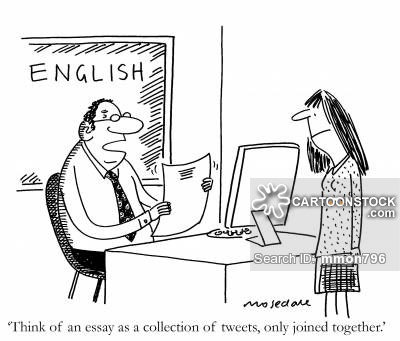
Is social media altering the way you frame traditional literacies?

Is social media altering the way you frame traditional literacies?
I (Cathy) recently asked literacy teacher educators (LTEs) to complete this statement, “Being a literacy teacher educator in the 21st century is like…” As a researcher and teacher educator, I was profoundly struck by the power behind their words and the images they selected to represent them. Before peeking at the three responses provided below, consider how you might complete the statement.
Being a literacy teacher educator in the 21st century is like…
…“Green Eggs And Ham…it’s not what you expect, it’s a reciprocal journey, and you can’t just try it one way. Nothing tastes better than when you’ve seen them try it, like it, and beg for more!”

“a futuristic video game – visually exciting, fast paced, limitless possibilities, not knowing what may be next, all the time wondering if you are going to be able to keep up!!”
. 
…“keeping candles lit on a breezy night. Challenging but possible… delicate but powerful… romantic but necessary… not so much ‘constant work’ as it is diligent work… It requires focus and awareness of the ‘current’”.

The literary representations of these three LTEs displayed a profound sense of excitement, overshadowed by trepidation as they enter an unknown territory, with unproven results. The uncertainty and vulnerability of their roles were clear. What do your words and image say about your views of teaching literacy in these fast changing and tumultuous times?
“While the West Des Moines Community School District Superintendent was beginning her speech to the staff of WDMCS at the district-wide welcome back meeting, the teachers of the district created a flash mob to the enjoyment of their unsuspecting colleagues. With only one more day of preparation left, the teachers shared their talents by performing a parody of the song, “One more day” from Les Miserables.”
Enjoy! And have a terrific year!
I (Cathy) looked up the definition of technology the other day because I had lost track of the meaning outside of my association of technology with computers. According to Dictionary.com, technology is “the application of scientific knowledge for practical purposes, especially in industry. This refresher helped me to better grasp the technological clothing my husband has been wearing as of late.
For Father’s Day my husband was given an UnderArmour shirt (from our son-in-law) and challenged to wear it for a day. My husband has been a stanch believer in wearing cotton for many, many years, yet our son-in-law insisted that the new technology in fabric was far advanced in comfort and temperature control. I was intrigued. Fabric technology? I had to look it up and found this on the net…
“As a fullback at the University of Maryland, Kevin Plank got tired of having to change out of the sweat-soaked T-shirts worn under his jersey; however, he noticed that his compression shorts worn during practice stayed dry. This inspired him to make a T-shirt using moisture-wicking synthetic fabric. After graduating from the University of Maryland, Kevin Plank developed his first prototype of the shirt, which he gave to his Maryland teammates and friends who had gone on to play in the NFL. Plank soon perfected the design creating a new T-shirt built from microfibers that wicked moisture and kept athletes cool, dry, and light”
My husband agreed to try the shirt and fell in love with the texture, weight and maintained coolness of this new technologically advanced fabric against his skin. He has several shirts now and is looking at other forms of apparel. My husband may not be up to date in computer technology, but he is sure ‘in’ when it comes to fabric technology.
My new awareness of technological fabric has given me pause to reconsider what technological advances are in store for us in education that are not computer based. What will change? Desks? Art materials? Windows? Will the entire classroom environment transform? Will we dress differently as a result of technology? The possibilities are endless… and exciting.
https://en.wikipedia.org/wiki/Under_Armour#Early_history
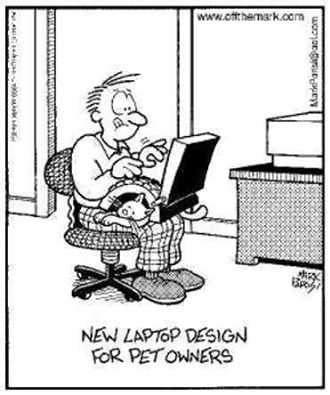
A friend of mine (Cathy) is a writer and she frequently complains about her darling cat sitting on her key board, especially when she has a deadline to meet. The cartoon above reminded me of her, yet I doubt her cat would accept the new lap top model depicted. I not not so sure it’s about closeness as it is about the attention. Looking. Listening. Touching. Speaking. I once tried to read book while bottle feeding my son and he fussed and cried until I put it away. At six months he knew where my attention was, and it wasn’t on him. Holding him wasn’t enough. Feeding him wasn’t enough. That was our time and the book was cheating him. I was amazed he could register that at such a young age. It was a good lesson. After that, I saved my reading for when he was napping. I’m sure my friend’s cat would know too. Although I was amused by the cartoon, I also saw it as a warning. Our devices are seductive; our lives are busy and demanding; but I’m not so sure we really get ahead by multitasking when it comes to attending to the ones we love.

As a literacy teacher educator, do you feel you spend a lot of time encouraging your student teachers to forget what they have previously learned? Lortie (1975) refers to the perceptions of teaching our student teachers developed (as elementary and secondary school students) as an “apprenticeship-of-observation”. Lortie suggests “education students have spent years assessing teachers and many enter training with strong perceptions based on firm identifications” and maintains that these strong perceptions affect student teachers’ “pedagogical decision-making”. This makes unlearning as important as learning. How do you get your student teachers to unlearn?
Lortie, D. C. (1975). Schoolteacher. Chicago, IL: Chicago University Press.
As mentioned before, I (Cathy) am a committed supporter of implementing a pedagogoy of mulitliteracies (New London Group, 1996) in the classroom. There are many components to multiliteracies, but for this post I will highlight my use of only one component- situated practice. The situated practice component suggests that pedagogy must consider “the affective and sociocultural needs and identities of all learners” (NLG, 1996, p. 85). By the inclusion of students’ “lifeworlds” or home-life and culture, a classroom environment is created where students feel secure and will take risks (NLG, 1996, p. 65).
In a recent storytelling workshop I delivered to ECE students (in a higher education setting), I was intrigued at how the significant situated practice became. Prior to the class, I asked the professor what cultures were represented, so I could reflect at least some of these cultures through my story selection. The list was long, so I had to be selective. I decided to tell a story from Jamaica, the US and one from India. These represented not only a range of the participants’ cultures, but also a broad range of storytelling styles, which I thought might be useful for the students to see. During the workshop I explained to the students that eventually being inclusive of all of the cultures and backgrounds represented in their classrooms through the stories we tell (and books we read) was essential. It was our responsibility to get to know our students and know what was important to them. They agreed that this was important. But I had a lot to learn about how important, even when working with adults.
I knew how much the participants enjoyed and learned from the experience, as they were highly engaged during the workshop, but i was also treated to written feedback as the professor asked the students to post their critiques online. The following comments caught my interest:
“The workshop really resonated with me… I learned about stance, gestures and facial expressions”
“I was amazed to see how storytelling could grab our attention”
“I am excited to step out of my comfort zone a little bit and try out these strategies with children”
My favourite was:
“I really enjoyed the ending of the workshop using the Urdu [story] “Ek thi Raja, ek thi Rani, doono margy khatm kahanni'” as Urdu is my mother tongue and I was able to understand this very famous [story].”
I did indeed end the workshop with a very short story in Urdu. In case you do not understand Urdu, in this story there is a king and a queen, they die, so the story is over. That’s it. It is a traditional ending to a storytelling set. I usually ask a participant to translate the story for the rest of the group. Even though my Urdu is not the best, I can always tell who understood the story, because they are the only ones laughing. Children are usually delighted that I took the time and effort to be able to tell , regardless of how short, a story from their culture. But this small gesture never became more evident to me than at the conclusion of this workshop. I was approached by a woman wearing a khimar (a long, cape-like veil that hangs down to just above the waist, but leaves the face clear). The woman introduced herself and told me that she was most impressed that I told a story in Urdu. She said she felt it made her Urdu speaking colleagues very happy. She then asked me to do something I was not expecting. “Would you”, she asked timidly, “consider sometimes ending your storytelling in Arabic?” I smiled and immediately answered “of course, if you will teach me!” She was delighted and proceed to teach me the following traditional ending:
Touta touta. Kelset el haa do tah.
This is now part of my repertoire. I was never more convinced of how significant it is to honor the cultures of our students. Young or older, it is their identity and they need us, their teachers, to validate this. I will endeavor to enlarge my commitment to situated practice by sometimes speaking in Arabic for my students and hope my students, whether ECE students, student teachers, or teacher educators will consider doing the same.
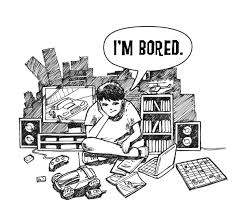
I (Cathy) sometimes wonder if children just need go outside and be part of nature. Life isn’t just about about being entertained. In our society of things, gadgets and high tech, this is sometimes overlooked. An experience can be about being contemplation or just learning to listen or observe. My high school visual arts teacher, Robert Bateman was gifted at encouraging us (his students) to practice this. He would tell us to just go sit in a field an look at one thing and listen. Pay attention. I think now this practice would be called “mindfulness”. As teachers, as parents, do we do encourage this? Just a thought.
I (Cathy) was recently asked to give a storytelling workshop for a third year Early Childhood Education Class. The professor felt the experience might broaden her students’ concept of literacy. As a practitioner of multiliteracies (New London Group, 1996) I felt compelled to blend “old world literacy” which in this case would be storytelling (it is the oldest form of entertainment for our species), and new world literacy, which in this case was an online interactive learning system called Today’s Class. (I have mentioned Today’s Class in an earlier post. Today you get to hear how I put it into practice).
Initially, the students (a broad range of ethnicities, ages, and English language proficiencies) shared they had never previously experienced storytelling. They had been read to and assumed this was the same thing. Most admitted they had never heard of Todays’ Class either, but were game to give it try. I warmed them up by delivering an old folktale (old world style, just me, them and their imaginations) which blew them away. “I could see the story!”, and “I was captivated” were some of the responses. The class was then arranged into small groups of three, each group having a lap top with access to the internet. Each group was “invited” into the Today’s Class site and asked to give their group a “nick name”. On the large screen at the front of the room, I posted questions about the storytelling experience for them to consider. After some deliberation, the groups posted their responses, using only their nick names for identification. I was intrigued by their reactions as the team responses popped up on the screen. They were highly engaged. I could have heard a pin drop they were so intent on reading the other groups’ answers. When I used to do this kind of activity, the groups used chart paper and markers to record their answers and these were posted around the room. I usually read out the answers because the printing was often not legible across the room. Also, I often filtered what I read aloud, instantly deciding what the key points were and only sharing those. However, with the big screen, it became each students’ responsibility to do the reading and the filtering. The accountability and engagement levels were higher.
As we moved through the workshop, experiencing different forms of storytelling, the groups returned to conferencing at their computers, analyzing the responses and discussing the salient points. Both my students and myself were delighted with the results. Storytelling and technology were a perfect fit. The students left with a much deeper understanding of an ancient literacy form, many vowing to use it in their child care centers, but also left with a much broader view of the usefulness of modern literacies. Old and new world do blend. I couldn’t help but wonder how Aesop might have felt about Today’s Meet. I think he would have liked it.
New London Group. (1996) A pedagogy of multiliteracies: Designing social futures. Harvard Educational Review,1, 60-89.

 Literacy Teaching and Teacher Education