All posts by poojadharamshi

“Potentially life altering decisions”: Report Urges Ontario High Schools to End ‘Streaming’

fork

‘Streaming’ (or ‘tracking as referred to in the U.S.) is a process of separating students based on academic ability into groups (high, medium, or low) for all or a few subjects. Much has been said about the advantages and the drawbacks of this practice. Recently, the hot button topic made it to the front pages again. The CBC described a recent report from People for Education suggesting that “asking Grade 8 students to choose between academic and applied courses in high school sets some students up for failure.” The report’s findings also make clear the socio-political nature of ‘streaming’: “students taking applied courses in Grade 9 were much less likely to go to university and that students from low-income groups were more likely to enrol in applied courses.”

To read the CBC article and the published People for Education report, click here:

http://www.cbc.ca/news/canada/toronto/end-streaming-in-ontario-high-schools-report-urges-1.3030195

Must Read Author: Richard Wagamese

medicine walkI just finished reading a second book written by Canadian/Ojibway author Richard Wagamese. A friend in my book club suggested we read Wagamese’s book Medicine Walk. We were so captivated by the book we decided to read another, Indian Horse,  which was an official selection for CBC’s Canada Reads program in 2013. Wagamese describes a Canada I am not familiar with. He describes  the great Canadian outdoors so vividly that you feel like you’re  in rural Alberta. Wagamese writes so passionately about Canada’s  national sport, hockey, that you can smell the ice. He also writes about the painful history of Residential Schools.

My book club(myself included) believe Wagamese’s books would be a great addition indian horseto high school curriculums across the provinces. Wagamese sheds light on Canadian history in a very authentic way.

Interestingly, today the Huffington Post published a feature article on a recommendation made by a commissioner on the Truth an Reconciliation Commission that an education of Residential Schools be mandatory in high schools  across Canada. I strongly believe Wagamese’s books could be good start.

Read the article from the Huffington Post:

http://www.huffingtonpost.ca/2015/04/05/commissioner-wants-all-st_n_7007772.html?utm_hp_ref=canada

Critically Reading Selfies

selfie

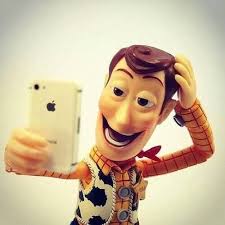
The term ” Selfie” was officially added to the Oxford Dictionary in 2013. People all around the world have been turning their phone camera around to capture themselves in a moment. Many people believe that our selfies reveal a lot about us. It is for this reason Professor Marino from University of Southern California has created an assignment for his students to critically read their selfies. His assignment is titled Know Thy Selfie 🙂 Marino believes that selfies help us analyze our identities because “each selfie bears information that can be used  to read our identity  characteristics: our race-ethnicity, gender, sexuality, and socio-economic status.”

The Assignment:

Write a thesis-driven essay in answering the prompt:

How do your selfies produce or obscure a sense of your identity?

1. Take or choose 5 selfies of yourself. You may be alone or with another person, but try to make sure you are a central and large part of the photo. All of the selfies should be different.

2. Examine your selfies for your performance of
Race-ethnicity
Socio-economic staus
Sexuality
Gender

3. Consider these identity characteristics independently and as they intersect.

Some questions for reflection as you prepare your response.

What in your selfies is accurate?
What is obscured or ambiguous?
Does the image portray one identity trait more than others?
Where do the images place you in the spectrum of possibilities for each characteristic trait — for example, more or less feminine or masculine?
How might different audiences perceive the images differently?
How is the viewer addressed in the image?
How do your selfies play off other well-known images? How do they play off each other?
What is the apparent context of this image? How does that affect how it might be read?

Read more about ‘Know Thy Selfie’ assignment here:

View at Medium.com

Phenomenon Teaching: Finland’s New Approach

finland

Much has been written about Finland’s exemplary education system (See:https://literacyteaching.net/2014/10/14/an-infographic-of-finlands-education-system/) They are often at the top of PISA rankings in both literacy and numeracy skills. Further, they boast small teacher to student ratios which allow for more individualized instruction. The teaching profession is also highly regarded; teachers are highly esteemed professionals like their peers doctors and lawyers. Now, Finland is reforming the way their classrooms run and everyone is talking about it. Teaching by topic (or phenomenon teaching) will replace teaching by subject throughout the country’s classrooms. This approach intends to highlight the interdisciplinary nature of the “real world” and encourage collaboration among students. The Independent, a UK based blog, provides some examples of how this would be done.

Example #1:

“a teenager studying a vocational course might take “cafeteria services” lessons, which would include elements of maths, languages (to help serve foreign customers), writing skills and communication skills.”

 Example #2:

“…pupils would be taught cross-subject topics such as the European Union – which would merge elements of economics, history (of the countries involved), languages and geography.

I like this approach because it allows students to experience subjects in a contextualized way. Phenomenon teaching makes school relevant again. I suspect much of the world, myself included, will be closely observing how this unique approach to teaching fares in Finland.

To read more from the Independent:

http://www.independent.co.uk/news/world/europe/finland-schools-subjects-are-out-and-topics-are-in-as-country-reforms-its-education-system-10123911.html

Henry Giroux Named 1st Paulo Freire Chair at McMaster University

mcmaster

Henry Giroux was recently named the first Paulo Freire Chair in Critical Pedagogy at McMaster University. The McMaster Institute for Innovation and Excellence in Teaching and Learning established the chair position to honour scholars who have made a significant advancements in studies of education.

The McMaster website describes Giroux’s work:

Giroux has been a celebrated scholar, author and cultural critic for more than three decades. He currently holds the McMaster University Chair for Scholarship in the Public Interest, and is a professor in the Department of English and Cultural Studies.

His life’s work has been central to the development of critical pedagogy as a field — exploring intersections between the role of education in schools and universities, the role of educators and academics as public intellectuals, as well as topics related to public pedagogy and the educational force of the wider culture.

(http://dailynews.mcmaster.ca/article/henry-giroux-named-paulo-freire-chair-in-critical-pedagogy/#sthash.Qen0HP02.dpuf)

Giroux speaks about his recent appointment. He answers questions such as:

  • What does critical pedagogy have to say about education?
  • Why is critical pedagogy significant to the important work of teaching and learning centres?

Watch the video here:

https://www.youtube.com/watch?v=MUAGZEMl9rg

Lessons from Educational Research in 2014

AERA 2015 is just around the corner! Each year the American Educational Research Association publishes a list of its 10 most-read articles. NPR’s educational blog reviewed these articles and summarized what the 5 major lessons from educational research were in 2014. Below are the 5 major lessons plus excerpts from NPR’s findings.
aera2014

1. What’s The Best Way To Teach Math To Struggling First-Graders? The Old-Fashioned Way

In “Which Instructional Practices Most Help First-Grade Students With and Without Mathematics Difficulties?” the researchers found that plain, old-fashioned practice and drills — directed by the teacher — were far more effective than “creative” methods such as music, math toys and student-directed learning

2. The Effectiveness Of Alignment

When a teacher’s curriculum is perfectly aligned with a set of standards, meaning they’re teaching exactly what they’re told to, will students’ test scores rise? That’s the question a group of researchers set out to answer in “Instructional Alignment as a Measure of Teaching Quality.”… The results did not show a meaningful relationship between the two. Meaning, perfectly aligned curriculum is no more likely to be associated with gains in tests scores than perfectly unaligned curriculum.

3./4.On The Higher-Ed Front

Two of the most-read education research articles of 2014 were focused on different aspects of community college… It’s no surprise that the researchers found that those with associate degrees and long-term certificates were more likely to be employed and had higher earnings compared with a group that attended community college but didn’t obtain a credential. We know that the more education you obtain, the better off you’ll be… Community college students hoping to increase their earnings further likely require a bachelor’s degree. But the path from community college to a four-year school is filled with “choke points.”

5. What SEL-Based Curriculum May And May Not Be Able To Do

 When teachers spend time focusing and emphasizing social-emotional learning, or SEL, some may worry it may be at the expense of time spent on other subjects and that students’ performance in those subjects may suffer. The findings from “Efficacy of the Responsive Classroom Approach: Results from a 3-Year, Longitudinal Randomized Controlled Trial,” which looked at 276 classrooms in 24 schools, suggest otherwise… a subset of students with teachers using the curriculum exactly the way researchers designed it saw substantial gains in math and reading. This could be evidence that a curriculum approach based on SEL can have high returns, but only when teachers are trained extensively. Or, it could just be that teachers who are well-trained and follow directions are better teachers.

To read NPR’s entire summary, click here:

http://www.npr.org/blogs/ed/2015/02/26/387471969/5-lessons-education-research-taught-us-in-2014

Faking It

On her CBC radio show The Current, Anna Maria Tremonte discusses  the growing phenomena of faking our way to cultural literacy. A 2013 study based in the U.K. reported that “more than 60 per cent of people living in the U.K. pretend to have read classic books they’ve never actually read.” Faking cultural literacy has become easier  than ever because of the rise of social media. Picking up information on a book or movie has become very easy with apps like twitter or facebook.  Alexandra Samuel, vice-president of social media at a marketing firm, attributes faking cultural literacy to our need as humans need to fit in. He says, “We have, as a species, the need to create social bonds with people who we want to be like. People try and identify with a group they see as positive and then reinforce the qualities of their own that connect them with that group.” Belshaw, educational researcher, believes that faking it has become part of being culturally literate or “a way of understanding the world,” but he warns, “we need to make sure that we are not naive about the structured interests behind the technology we use.”

fingerscrossed

To listen to the entire show, click below:

http://www.cbc.ca/player/News/Canada/Audio/ID/2461862894/

The Sitting Disease

As a doctoral student I find myself sitting for hours in front of the computer without stretching or sometimes even moving. I suppose I have always known that sitting for hours on end couldn’t be good for our health, but the scientific community is now claiming our sitting habits are leading to “the sitting disease.” Below is an info-graphic with some alarming facts and statistics on our sedentary lives.

We’ve become so sedentary that 30 minutes a day at the gym may not counteract the detrimental effects of 8, 9 or 10 hours of sitting.” ~ Genevieve Healy, PhD

JustStandInfoGraphicV3

As I sit here writing this blog post, I realize I haven’t had a stretch or a walk in a while. So, I’m going to take a short break, bundle up (it’s freezing here in Toronto!) and take a walk around the block. Learn more about how sitting is harming our health at: http://www.juststand.org

Using Improvisation Techniques in the Classroom

Image source: Mindshift.org

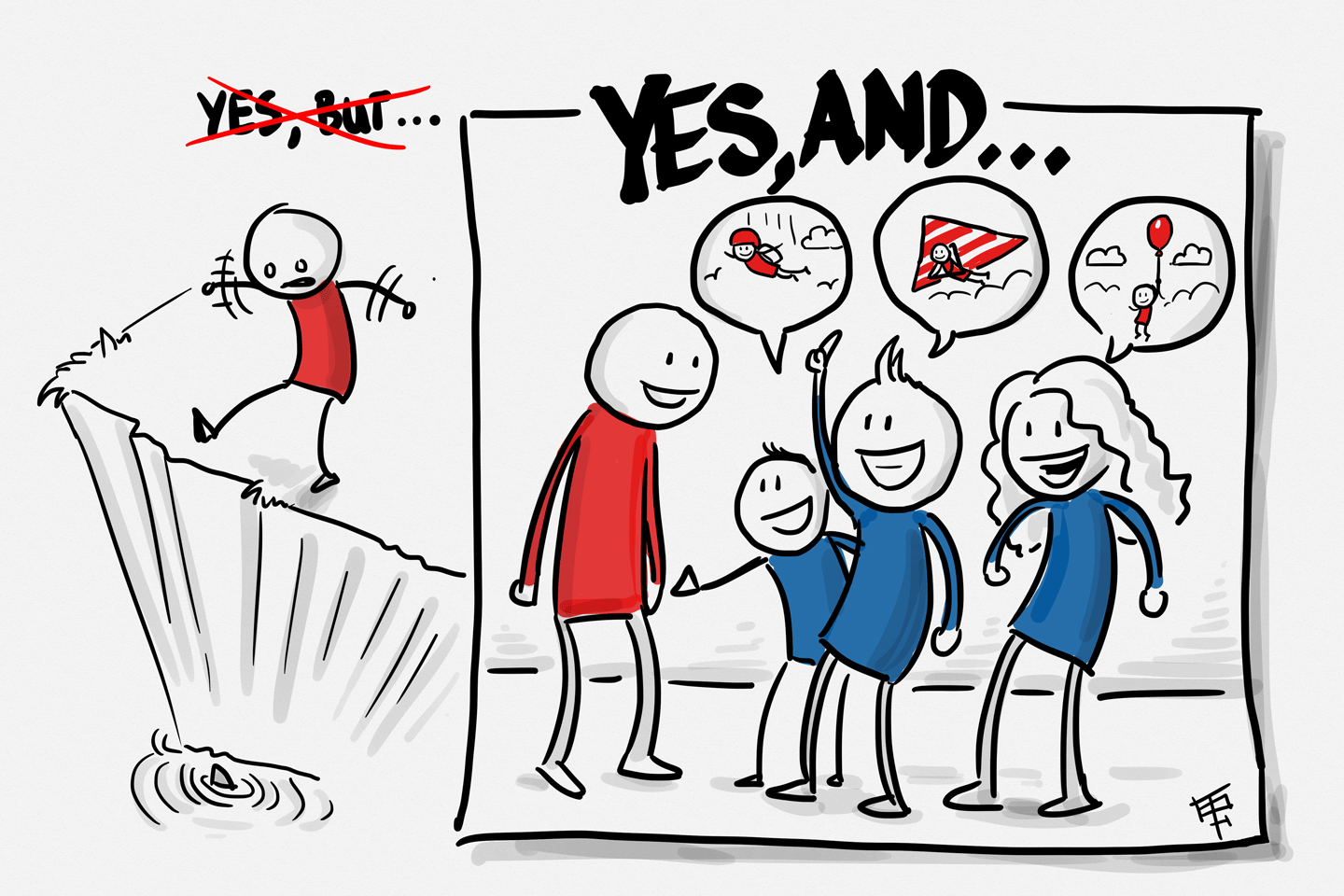
I’ve been to a few improv shows in my life, and whenever I walk away I am always in total awe of the performers. Their ability to think on their feet AND be funny while doing it is so impressive. That’s why when I came across the idea of using improv techniques in the classroom I was intrigued. Linda Flanagan from the blog Mindshift describes how the four pillars of improv(creativity, critical thinking, collaboration, and communication) are developed by following one simple rule: “Yes, and…” This means that any idea or suggestion is welcomed without judgment. This unconditional support helps improv students overcome fears and act without inhibition. It is no wonder why many educators are using tenets of improv in their classrooms.

Flanagan says:

Improv enthusiasts rave about its educational value. Not only does it hone communication and public speaking skills, it also stimulates fast thinking and engagement with ideas. On a deeper level, improv chips away at mental barriers that block creative thinking — that internal editor who crosses out every word before it appears on a page …

 The article suggests both beginner and experienced improv activities for teachers of all levels to try. Read the link below to find out more:

http://blogs.kqed.org/mindshift/2015/01/how-improv-can-open-up-the-mind-to-learning-in-the-classroom-and-beyond/