Category Archives: academics

Preparing for AERA

I (yiola) along with the research team and many other colleagues are preparing for the American Educational Research Association (AERA) conference that will be held in Washington DC this year. The conference begins on Thursday April 7th until Tuesday April 12th.

An enormous conference that attracts thousands of educational researchers from around the world and across disciplines and methodologies in the area of education. Each year the conference has a theme. This year the theme is Public scholarship to educate diverse democracies.  Here is a link to the site and more information about the conference:

http://www.aera.net/EventsMeetings/AnnualMeeting/2016AnnualMeetingTheme/tabid/15861/Default.aspx

The team and our close colleagues will be presenting at AERA.  We will be sure to post pictures and updates from the various sessions we attend. We hope to see you there. If you are not attending this year be sure to check out out blog for highlights next week.


Finns aren’t what they used to be


I (Clare) came across this interesting article on Finland by Sean Couglan from the BBC. . But unlike most other articles it is a “counter point” to the Finnish miracle. Thought you might find it interesting. http://www.bbc.com/news/business-32302374·

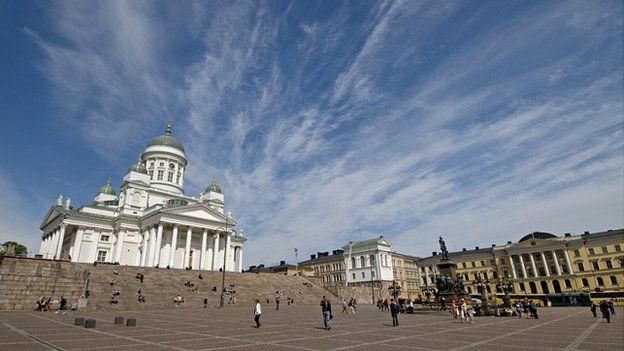
No international education conference is complete without a reference to Finland._82320693_helsinkibbc
Ever since it appeared at the top of international league tables more than a decade ago, it has been endlessly hailed as how to run an education system.

Finland, which faces a general election this week, has been the poster child for education reform and overseas delegations have made pilgrimages to learn from its example.

In particular it has been used to argue that you can have high results without an overbearing system of testing and inspection.

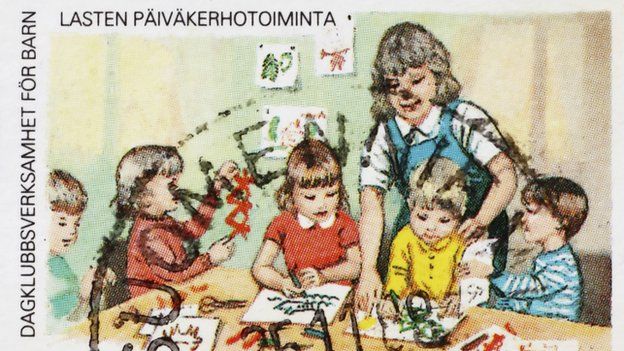
It was the country where pupils did not have to start school until they were seven, enjoyed the longest holidays and then basked in the glow of global approval when they topped the tables in the international Pisa tests. _82320689_finnishstamp

But is the gloss coming off the image of Finland as an education superpower?

More like an Asian tiger

A study from Gabriel Heller Sahlgren, director of research at the Centre for Market Reform of Education, argues that Finland’s education standards are in decline.

He says it is a misunderstanding of Finland’s success to attribute it to a liberal culture without league tables or a formal curriculum and giving much autonomy to teachers.

Finland faces a general election this week

In a report published by the right-wing think tank the Centre for Policy Studies, Mr Sahlgren argues that Finland’s star performance in the 2000 Pisa tests was built on the legacy of an older, very traditional education system, which had been part of the country’s process of nation building.

But this wasn’t the image of Finland wanted by education experts, he says. Instead, when Finland was the top performer in Europe, it was used as a “counter-argument” to the success of east Asian school systems in Singapore, Shanghai and Hong Kong.

While they were seen as successful because of hard work and grindingly long hours, Finland was seen as the way to achieve success with a much more creative and less centralised approach.

Mr Sahlgren, based at the London School of Economics, says there was “never any real evidence” for such an impression.

“It was simplistic, looking at how Finland’s system looked today, without looking at its history.”

Finland’s school system became part of its building of a national identity

Rather than being the opposite of east Asian countries, he says in many ways Finland was like those emerging economies.

Compared with its Nordic neighbours, Finland was a “late developer”, much poorer and with lower levels of education in the early part of the 20th Century.

Finland’s approach of investing heavily in education and seeing rapid improvements was in many ways more like the pattern of Tiger economies in east Asia than the more sluggish progress in western Europe.

‘Fairy stories’

Mr Sahlgren’s research argues there is a reluctance to accept that Finland’s education system, under which many of its successful teachers had trained, had been very structured and centralised.

IFinland has been the European country that matched East Asian countries in education tests

He quotes a research group from the UK visiting schools in Finland in 1996, a few years before the Pisa tests brought the world’s attention to the country’s schools.

“We have moved from school to school and seen almost identical lessons, you could have swapped the teachers over and the children would never have noticed the difference,” said the researchers from the University of East Anglia, observing Finnish classrooms.

Another study challenges what it calls the “misconceptions and misrepresentations” about Finland’s success in the Pisa tests.

Tim Oates, director of assessment research for the Cambridge Assessment exam group, has published a study called “Finnish fairy stories”, in which he debunks what he claims are myths about the Finnish system.

‘Education tourism’

He says the waves of “education tourism” that followed the success in Pisa tests failed to look at how the system had improved.

Image captionHow much of Finland’s success was the legacy of an earlier, more traditional school system?

“They got off the plane and asked the Finns about the system in 2000 – not what it was like during the 1970s and 1980s, when standards were rising.”

He also warns of a tendency for people to use Finland’s school system as a way of confirming what they want to find.

The claim that Finland does not have an Ofsted-style inspection and national testing is an incomplete picture, says Mr Oates. He says there has been a strong system of accountability and inspection and gathering of data.

The difference from a system such as England, says Mr Oates, is how the information is used – for example in Finland exam results are not published in school league tables as they are in England.

Pisa tests 2012 top 10
Reading Maths
1. Shanghai 1. Shanghai
2. Hong Kong 2. Singapore
3. Singapore 3. Hong Kong
4. Japan 4. Taiwan
5. South Korea 5. South Korea
6. Finland 6. Macao
7. Ireland 7. Japan
8. Taiwan 8. Liechtenstein
9. Canada 9. Switzerland
10. Poland 10. Netherlands

It is also misleading to think there are not high-stakes exams or academic selection, he says, with entrance to some secondary schools being determined by test scores.

And Mr Oates argues it is “hopeless myopia” to see Finland’s system as a model of high levels of autonomy.

Finland is facing another set of controversial changes, away from traditional subject teaching. And Mr Sahlgren warns of a school system in decline. It is no longer in the top 10 for maths in Pisa tests, having been in second place in 2003 and 2006.

Andreas Schleicher, the OECD’s director of education and the creator of the Pisa tests, rejects this analysis.

“In the 1960s, Finland was an average performer at best and that was when it had a very traditional education system,” says Mr Schleicher.

“Finland changed its system only in the late 1970s and 1980s and that’s when we saw the results rise. The most recent decline is quite modest,” he said.

Mr Oates says the problem has been that people have used Finland as a way of discussing their own national education debates, without really thinking about what made Finland different.

“People have been seriously misled by stories told by people who have looked at Finland through their own, restricted lens,” he says.
 

Thesis Defense = Celebration of Learning

I (Clare) am a very active doctoral supervisor and have two students near completion of stress-lego-faces-popular-science_2400x1800their Ph.D. At the University of Toronto like many other universities the final stage in the doctoral program is the thesis defense. It is a complicated process requiring 2 external examiners, a student presentation, discussion, and voting. The entire exam is so so so stressful for the students. No matter how much I reassure them that they will be fine because their work is high quality they are still nervous, stressed, tense, anxious …. From my perspective it should not be so stressful nor so high stakes. These students have worked for years under careful supervision and presented at their doctoral committee meetings.

Some universities have a much more informal (and civilized) approach to the final exam. I try to see it as a celebration of the student’s work rather than a grueling experience. I think it is time for many universities to rethink the final stage of the process to make it less stressful for the student (and supervisor) and more joyous.

The Wrong Way to Teach Math (and Other Subjects)

In the New York Times Sunday Review on Feb 28, Andrew Hacker published an article (p. 2) checkmark imagescalled “The Wrong Way to Teach Math,” based on his forthcoming book The Math Myth and Other STEM Delusions. It begins with this remarkable statement:

“Most Americans have taken high school mathematics, including geometry and algebra, yet a national survey found that 82 percent of adults could not compute the cost of a carpet when told its dimensions and square-yard price.”

Hacker, who teaches political science and mathematics at Queens College in New York, argues that while “calculus and higher math have a place…it’s not in most people’s everyday lives.” Students need to learn “numeracy” or “quantitative literacy”: “figuring out the real world – deciphering corporate profits or what a health plan will cost.”

I (Clive) find Hacker’s ideas and examples very helpful and plan to buy his book. But it occurs to me that similar things could be said about other subjects such as literacy (reading, writing, literature), history, science, etc. While “academic” aspects of these subjects have to be taught to prepare students for later education and (possibly) work settings, teachers need to do both (as I have posted before). It isn’t appropriate just to focus on Shakespeare and classical novels, for example, and not prepare students to find enjoyment and make wise choices in their everyday fiction and non-fiction reading.

Addressing both – the academic and the everyday – is not easy, given the extensive subject content teachers are expected to cover; but in teaching and teacher education this should be our goal, and over the years we should move as far as humanly possible in this direction.


Parsing the Practice of Teaching


I (Clare) and Clive both read the most amazing article on teacher education by Mary puzzle_pieces300x199Kennedy. For those who have followed this blog you will know that we are big fans of her work. You will also know that we believe in thinking about teacher education holistically. Trying to break it down in discreet bits misses the core issue- What are the goals of education? I would highly recommend this article to all teacher educators. Below is the Abstract and here is the link to the article. Well worth the read.Mary Kennedy_2016

Abstract:

Teacher education programs typically teach novices about one part of teaching at a time. We might offer courses on different topics—cultural foundations, learning theory, or classroom management—or we may parse teaching practice itself into a set

of discrete techniques, such as core teaching practices, that can be taught individually. Missing from our courses is attention to the ultimate purpose of these discrete parts—how specific concepts can help teachers achieve their goals, or how specific procedures can help them achieve their goals. Because we are now shifting from a focus on bodies of knowledge to a focus on depictions of practice, this article examines our efforts to parse teaching practice into lists of discrete procedures. It argues that we need to pay less attention to the visible behaviors of teaching and more attention to the purposes that are served by those behaviors. As a way to begin a conversation about parsing teachers’ purposes, I offer a proposal for conceptualizing teaching as a practice that entails five persistent problems, each of which presents a difficult challenge to teachers, and all of which compete for teachers’ attention. Viewed in this way, the role of teacher education is not to offer solutions to these problems, but instead to help novices learn to analyze these problems and to evaluate alternative courses of action for how well they address these problems.

Building Bridges: Rethinking Literacy Teacher Education in a Digital Era

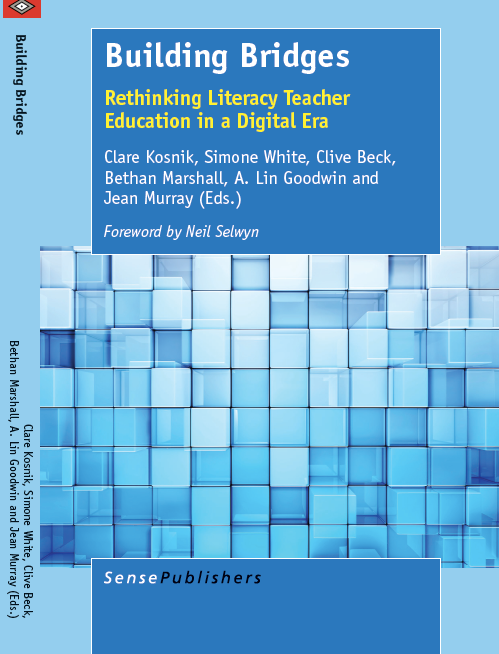
I (Clare) love sharing good news. Our book Building Bridges: Rethinking Literacy Teacher BookCoverCroppedEducation in a Digital Era has just been published. Being modest (tee hee) I think it is blockbuster!!!! Attached is a flier for the book and when you look at the Table of Contents you will see what I mean — incredible contributors. Here a flier for the book Building Bridges_Flyer
If you are comfortable share this info on your FB page/Twitter/Website. The tiny url is http://tinyurl.com/hwtvoua
I am so proud of this book and learned so much editing it!

Mary Kennedy on Engaging Student Teachers More Deeply

As I (Clive) have said before, I’m a great fan of Mary Kennedy of Michigan State University. In earlier postings I commented on her complex vision of teaching and her incremental yet radical approach to school reform. Having read a new article of hers in the latest issue of the Journal of Teacher Education (Jan/Feb 2016), I wish to recommend it.

Ever courageous, Kennedy in this piece takes on the currently popular movement for the teaching of “core practices” in teacher education. While an improvement on earlier practice-focused teacher education approaches – in that the practices in question are medium-grained rather than too specific or too general – she believes this approach is (a) too didactic and (b) neglects the purposes of teaching. She proposes instead helping student teachers see that a variety of complex strategies are needed to achieve the purposes of schooling, and constant adjustments on their part are required along the way.

Kennedy is careful to note this is “not an either/or decision. I am not proposing that we abandon specific practices in favor of problem solving strategies. Instead I argue here for (a) less attention to bodies of knowledge, (b) less attention to specific teaching behaviors, and (c) far more attention to the persistent challenges” of achieving the purposes teaching. Her position is that in pre-service (and in-service) education we should “not recite knowledge or dictate practices to teachers, but instead engage teachers in more analysis and exploration of alternatives.” This seems to me to embody the constructivist approach to teaching that – as Kennedy has said elsewhere – most teacher educators advocate.

For those who may see this as an overly idealistic approach that will undermine pupil performance on standardized tests, Kennedy cites the findings of a review that “programs using these alternative pedagogies were generally more effective at raising student achievement than were the didactic programs that focused on either bodies of knowledge or specific teaching practices.”


Parent Research Night

This week I (Clare) attended the Parent Research Night at the Dr. Eric Jackman Institute of Child Studies (where I am the Director). It was a truly amazing evening because the two presentations demonstrated research that was for teachers and parents, done by teachers, and inspired by teachers. It was such a beautiful form of dissemination of research. The findings are not confined to a peer-reviewed article but were shared with the public.

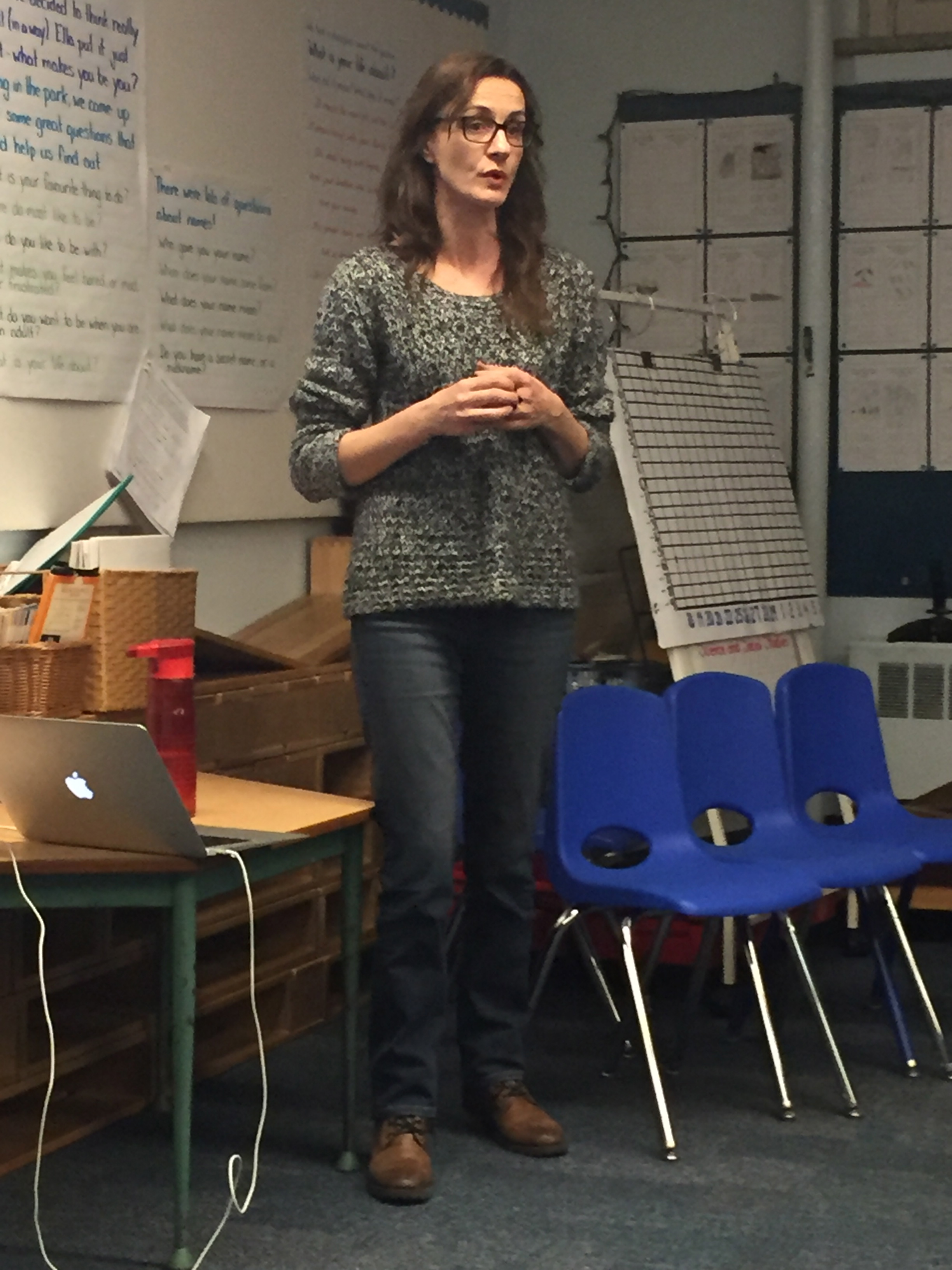
IMG_1147Dr. Patricia Ganea talked about the importance of shared reading with children. And she shared data on how children respond to images in children’s books – realistic (photos) vs fantastical (comic-like). Interestingly they relate much more to the latter.

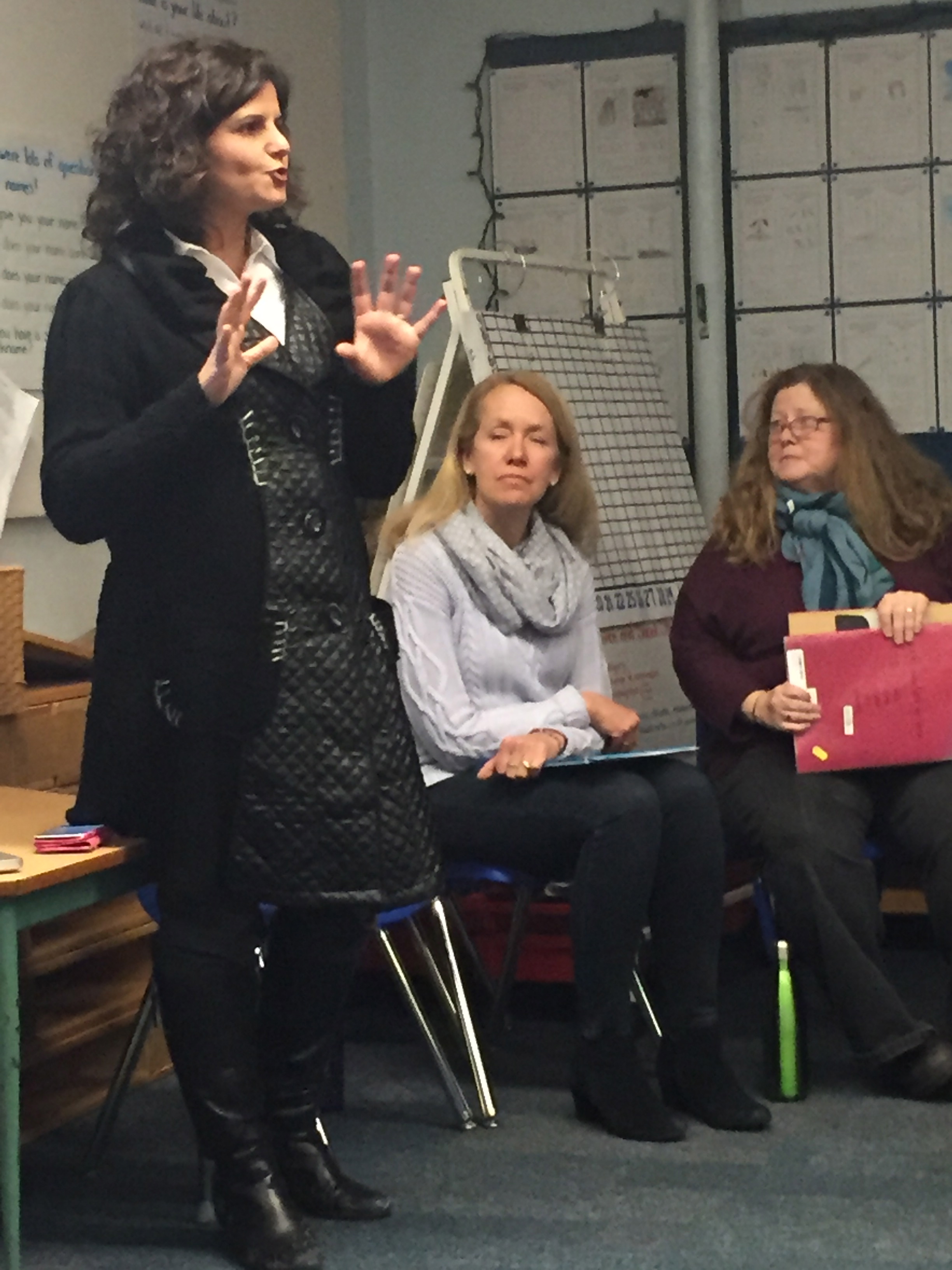
Then Dr. Yiola Cleovoulou and 3 teachers (Zoe Honahue, Cindy Halewood, and Chriss Bogert – who is now the VP) from the Lab School IMG_1153presented on their work with the children that was framed by critical literacy with an inquiry focus. They shared student work, read transcripts of actual conversations, and described activism work.

JICS has a tripartite mission: Lab school, teacher education program, and a research centre. Parent Research night truly brought all three together. http://www.oise.utoronto.ca/ics/index.html

The Future of Education?

I (Cathy) recently read a blog posted on the The Huffington Post.  If you are not familiar with the Huffington Post, it is an American online news aggregator and blog, that has been public for 10 years.   In 2012, The Huffington Post became the first commercially run United States digital media enterprise to win a Pulitzer Prize.

I qualify the source only because I am always suspect of individuals or groups that make claims or forecasts about education, yet  know little about the systems. As I consider The Huffington Post a relatively reliable and informative source, I gave the claims made by , a guest blogger who was the Former President for the  Society for Quality Education a second look.

In this blog, Dare proposes that all education systems are cartels  (an association of manufacturers or suppliers with the purpose of maintaining prices at a high level and restricting competition) and these cartels will be disrupted by the world of technology.  Dare suggests:

A software company might put together a complete online curriculum, with built-in testing and reporting, that allows students to progress at their own speed using tablet computers. Already much of this software exists, although it is not yet well organized. Another (or the same) software company might make it possible for parents to access individuals, or groups of individuals, who are willing to coach a group of other people’s children, possibly in their own homes or in a community centre, for a reasonable fee. Part of the software company’s services could be to vet the coaches and ensure they pass health and safety checks.

Dare uses Uber and Airbnb as examples of disrupters to systems and claims educational systems are next.  He goes on to say:

In fact, disruption is already taking place in the post-secondary sector — see UoPeople, the world’s first non-profit, near tuition-free, accredited online university. Currently, students can earn an undergraduate degree in business administration and computer science for $4,000 US, and more programs are being added.

I am fascinated by this blog for a number of reasons.  First, Dare assumes that a young adults  seeking to educate themselves  are comparable to young child who are learning to read and learning to socialize. I have taught children to read (and socialize) and I simply do not  think a  computer can do it.  There is a lot more to education than just text book learning!  Secondly,  Dare implies in the blog that teachers are oblivious to the affordances of technology and reject it for fear it will disrupt the “cartel” in which they participate.   Every teacher I know (from K to HE) incorporates (in degrees) technology into the teaching and learning in their classroom.  They are also aware that students can go online and teach themselves many things. They even encourage it.  The Khan Academy was designed for such learning and is largely responsible for the premise of flipped classrooms which are very popular right now  in Canadian colleges.  I do not think technology will disrupt the educational system.  I think it will just continue to enhance both teaching and learning. Technology and education will evolve together.

Lastly, Dare is completely oblivious to the most significant aspect of education – the relationship.  Countless studies have suggested a caring, attentive teacher can do more for a student than any other factor. Personally, I just can’t see technology completely replacing a good teacher, especially in the education of the young. People simply need people.

Thoughts?

http://www.huffingtonpost.ca/malkin-dare/ontario-education-future_b_8916284.html

Current Issues in Teacher Education: A Video Series by Said Sidani

In my graduate course, Current Issues in Teacher Education, I (Clare) gave the students lots of choice for their final assignment. Said Sidani took an incredibly interesting approach – he created a series of videos. I was so impressed I asked him if I could post them on this blog. Some are specific to Ontario but the first one, perceptions of teacher education, was applicability beyond our context.

             For my culminating project, I wanted to examine asaid-image
few topics that stood out to me throughout our course. As a recent graduate from a teacher education program and a beginning teacher, I wanted to focus on themes that resonated with me and that I wanted to learn more about. Instead of writing an academic paper, I decided to use a video series to present my findings.

This video series is divided into 4 parts that focus on: 1) Perceptions of Teacher Education, 2) Occasional Teaching, 3) Hiring Regulations, & 4) Teacher Induction. Each video consists of a narrated Prezi that presents relevant literature related to the topic. I draw on course readings, research in the field, and personal experience.

My intended audience is teacher candidates, teacher educators, professors, students, and anyone interested in the teaching profession. Since there is a large number of stakeholders in education, I believe that almost any viewer will be able to take something away from watching. My goal is not to deter anyone from joining the teaching profession, but rather to inform them of some of the issues that exist and the work that needs to be done.

The position I present is that teacher education is in need of reform. Instead of deregulating teaching, we must focus our efforts on improving people’s perceptions of teacher education programs. Also, occasional teaching and hiring regulations in Ontario are part of a broken system. They discourage new people from entering the profession which in turn impacts the quality of education that students receive. Finally, teacher induction programs that promote mentorship are essential to a beginning teacher’s journey. However, when they are delivered through the use of a transmission model instead of a transformative model, they are not nearly as effective.

The videos are available on YouTube and can be accessed via these links. For the best viewing experience, the video quality should be set to 480p (this is usually automatic). Thanks for watching.

1) Perceptions of Teacher Education:
https://www.youtube.com/watch?v=wWMtBGAoeZQ

2) Occasional Teaching:
https://www.youtube.com/watch?v=45caUBGrqRw

3) Hiring Regulations:
https://www.youtube.com/watch?v=unzh1QiWnVg

4) Teacher Induction:
https://www.youtube.com/watch?v=tNxXqZSHGm8

This link will play all four videos in sequential order:
https://www.youtube.com/watch?v=S8SgF7ohrls&list=PLdOXV0MCo16GcNDd9DSy4DIuw_GgMAYWi