Category Archives: academics

Handbook of Canadian Research on Initial Teacher Education

I (Clare) am very pleased to announce the new handbook that focuses on Canada. Here is a link to the entire handbook: http://www.csse-scee.ca/associations/about/cate-acfe/

Our research team did the chapter on the education of teacher educators which I have attached. CanadianHandbook-Our chapterPUBLISHED

Congratulations to Thomas Falkenberg who edited the volume.


Black Professor Speaks Out About Being Racially Profiled Near Campus

I (Clare) was reading this article by Kira Brekke on the Huffington Post which I found informative. If you click on the link you will get the entire article and an interview with Steve Locke and at the end of the article is a list of 16 Books On Race That Every White Person Should Read Right Now. I have read some on the list and already downloaded a few others that I feel I must read.

http://www.huffingtonpost.com/entry/steve-locke-racially-profiled_56688025e4b009377b236c54

“A lot of my life has been organized around avoiding interactions with the police.”

Steve Locke, an assistant professor at the Massachusetts College of Art and Design, was left shaken after he was racially profiled by the police last week during his lunch break.

Locke, who wrote about his experience on his blog, recounted to HuffPost Live’s Alyona Minkovski on Wednesday that on his way to get a burrito near campus, he noticed a police car following him.

“The policeman got out of the car, said, ‘Hey, my man,'” Locke said. “He had his hand on his weapon, so I automatically knew that something had happened and he wasn’t coming to talk to me as a citizen. He was coming to talk to me as a suspect.”

Wearing his faculty ID around his neck, Locke immediately took his hands out of his pockets while the officer questioned him. The professor made it clear he was on his lunch break, but the officer — along with others who had showed up to the scene — detained Locke, telling him he matched the description of a suspected robber in the area.

“It was at this moment that I knew that I was probably going to die,” Locke wrote on his blog. “I am not being dramatic when I say this. I was not going to get into a police car.  I was not going to present myself to some victim.  I was not going let someone tell the cops that I was not guilty when I already told them that I had nothing to do with any robbery.”

Locke calmly stood still on the street corner alongside the police before being let go, sent away with apologies from the police for “screwing up your lunch break,” he wrote. But the experience recalled a lifetime of awareness about police profiling and violence.

“I am 52 years old. I grew up in Detroit, Michigan,” he explained to HuffPost Live. “A lot of my life has been organized around avoiding interactions with the police, but whenever I encounter the police, I understand that I’m encountering them differently than other citizens.”


Reflections on My Teacher Education Program

I (Clare) am currently teaching a graduate course Current Issues in Teacher Education. The first assignment asks students to:

Write a reflection paper on your experiences in a professional program (teacher education, Teaching English as a Second Language ….). Provide a very brief description of the program. Some questions to consider are: What were the strengths/weaknesses of the program? How well did the program prepare you to assume the duties of a teacher? What were the limitations of the program? Have your views of the program changed since graduation? How could the program have been improved? Did the program prepare you to assume the duties of a teacher (or other position)? Do NOT respond to all of these questions. Select one or two and respond to them. In the fourth class of the course, you will work in small groups and share your paper with your fellow students.

Since all of the students in the course are teachers they have a good perspective on their program. Their assignments were so stellar I felt these would be of great value to share with other teacher educators. Over the next few weeks I will be sharing these papers. I learned much and I suspect you will too. I have changed the name of the university so that no school of education is identified.

Making Connections

When deciding where to apply for my teacher education program I only knew two things; I wanted to fix what I thought was wrong with schools and I wanted a concurrent program. I had awful and awesome experiences in both elementary and secondary school and could not fully explain why, but I wanted to. I also knew that my timid nature would benefit from the extra practicum hours and practice present in a concurrent program. This narrowed my view to XXX University, YYY University, and ZZZ University. Amazingly, I had my pick so I turned to my teacher friends to help me make my decision. It honestly came down to a conversation I had with a friend in which she said, “If you want to learn the theories that drive education go to YYY and if you want to learn how to be a teacher, go to ZZZ.” On this conversation alone I decided on YYY because my interest was in educational reform and my mind was far from thinking about the necessity of knowing how to be a teacher.

The program was a one year teacher’s ed program taken part time concurrently with my undergrad program for 3 years. My first year of undergrad and one other year of my choice was to be entirely devoted to undergraduate studies. There were two mandatory courses for all teacher candidates in the first year of the program, Inquiries into Schooling and Inquiries into Learning. There was also a panel specific course. Being in the secondary panel I was required to take The Adolescent and The Teacher, a psychology course about child development from birth to adolescence. Each year of the teaching program there was a year long practicum. The first year is a community education placement that focuses on an education initiative in a community. As an example, in my first year, I collected children from three different elementary schools in the queen west area of Toronto, took them to a bookstore and ran an afterschool literacy program that included reading buddy time between the younger and older students. This year is ended by a one week observation block in a school. The following two years are in school placements that are one day a week for the university’s academic calendar and followed by one month practical block after exams are finished. With the practicums there is a non-credit, once a month class that is aimed at unpacking the experiences in the practicums and gives strategies to help student teachers be successful. They were either held on campus, at the practicum schools, or at a school nearby (I had one of each of these arrangements).

The strengths of the program rest on the amount of time you spend in schools. I found I was very comfortable with school routines and the students by the time I was asked to take over the class in May. It would have been helpful to start the year off with an observation block so student teachers get to know the students and routines very quickly rather than the month or longer that it takes only going once a week. Once you get to know those routines and the students though, the practicum becomes part of your regular week and that is very helpful. It is still one of the better practicum programs in my opinion. There was one professor I had as well who was truly inspiring and a real mentor to me. She truly embodied a constructivist approach as well as knowing her students as a pedagogical tool. She saw how even in my first year of teacher’s college I was highly critical of our education system and showed me how to connect my personal experiences to theories of reform that already existed in education. Her strengths in this area, however, exposed that this was a weakness in the program overall.

Though I had one amazing professor who profoundly affected me as a learner and educator, I cannot say the same for any of my other professors. This leads me into one of the three biggest weaknesses of YYY’s Education program. Through my time in the concurrent system I was the student of 12 different teacher educators. Many of these professors fell into two types. There were many professors who were so well versed in the research and theories of education that they could not make the material accessible to us. Either from a lack of practical or phronetic experience in the classroom, or from the material being too advanced too early, the professors did not have an impact on us. The difficult theoretical readings paired with what seemed to be easy and meaningless reflective papers meant that the courses did not seem appropriate or purposeful. The other problematic teaching style was that of the teacher model. This is where the professor assumes the role of elementary or secondary teacher and treats the student teachers as children and rarely as professionals. The purpose is explicit – to model classroom strategies- but the tone is condescending. These courses also had challenging theoretical readings but they were rarely discussed in class and so the learning from them was left to the individual learning and their ability to access that learning on their own.

Struggling with these professors and the material further highlights another weakness in the program: a lack of a unifying goal. I went into teachers college already knowing that there was a distinct difficulty in education of a defined goal of public education. Before entering university I understood that there was problem with our education system that promoted or at least maintained class distinctions. I could see that the end goal of school varied depending on which economic class the child belonged to (not in theory of course, but in practice). As a new student teacher it only took one or two get-to-know you activities in my classes to understand that we all had different ideas on what the end goal of school should be. Is it to maintain social order, prepare students for jobs, create independent and creative thinkers? It was plain to see that we all had different ideas about what we were really learning to do. What wasn’t plain to see was what the university thought the end goal of public education should be. There was no conversations around it, there were no chances for us to explore our own ideas and have them challenged. There were just professors, with their own ideas, teaching conflicting ideas to young student teachers that didn’t have enough concrete experience with which to ground the multiple theories in. The result was disjointed classes that all used the same philosophers and experts in education to argue different pedagogical approaches to subjects and students. The two different types of professors further show that they didn’t even agree on the end goal of our university experience; one type embodying the academic theory based pedagogical approach, and the other, a concrete and practitioner based approach. Though I think a combination of some sort could be the most beneficial for student teachers, it needs to be far more intentional and clear so that student teachers have a better sense of what they are supposed to be learning. The distinction between the two types of professors was so obvious and opposing that on several occasions I heard other classes and unnamed professors spoken ill of. Only upon later reflection have I realized how this problem I witnessed in my elementary and secondary education was also present in my teacher’s education program.

The final weakness of the YYY program that I will explore, and have already hinted at, is the idea that we had very little control over our own learning. The very thing that drove me to become an educator, what I am the most passionate to learn about, has rarely been addressed. The mandatory courses we were forced to take were problematic in that they were too general, the material was complex, and we didn’t have enough experience to understand the theories. The elective courses were much more specific but often did not take into account the realities of public education (Ie. a technology in education class that will be out of date by the time the school I’m teaching in sees half the technology we were using). Furthermore, there wasn’t an elective course that had anything to do with what I wanted to learn about. There was only one opportunity, my first year of the teacher’s program and my second year in my undergrad where I got to explore a topic that was a key factor in my decision to become a teacher. In that year, our observation and community placement year, we were assigned a community mapping project in which we also had to research and devise a thesis on how education in that community was affected by a particular factor outside the actual school. I mapped my rural hometown and wrote about how the class divide in the community leads to a class divide in the school that is not addressed and causes many of the problems I witnessed when growing up there. I was passionate about the topic, the professor helped my find academic papers that addressed the issues I was writing on, and we talked about our projects in class as we developed them. I learned more in that project than I did in the entirety of my other classes put together because I was in control, I knew the purpose, I was connected to the content with experience and interest, and I was supported in that. In most of my other courses I felt like my voice and opinions were dismissed or there was no space for my thinking. The reflections we did were not enough for me as I am sure they were not enough for many of my peers. I had already done so much reflecting which is what led me to choose teaching as my profession, I wanted more meaningful learning experiences that addressed my individuality as a student teacher.

Though my experience was largely negative, the one professor I had, and the one project that was meaningful had a huge impact on my career as a teacher. It validated my personal perspective on education and when I presented my project (early because I was so interested I finished it months in advance) my professor told me that I should do my masters one day and further explore that topic. I had never considered myself a candidate for anything beyond university (being the first in my family to attend a university) but I ended up pursuing that path based on her acknowledgement of my academic skill and the hope that I could further study the topics that I was interested in.

Ultimately, I feel teacher’s education programs have the reputation that they deserve but that it embodies something that is a much larger problem. In my personal opinion, education is so desperately in need of radical reform to deal with the systematic and institutional problems that studying and reforming on aspects of it, and that includes teacher education programs will only go so far. Until we really take a look at the system as a whole and create a cohesive goal only minor gains will be made.

Reflections on a Concurrent Teacher Education Program

I (Clare) am currently teaching a graduate course Current Issues in Teacher Education. The first assignment asks students to:

Write a reflection paper on your experiences in a professional program (teacher education, Teaching English as a Second Language ….). Provide a very brief description of the program. Some questions to consider are: What were the strengths/weaknesses of the program? How well did the program prepare you to assume the duties of a teacher? What were the limitations of the program? Have your views of the program changed since graduation? How could the program have been improved? Did the program prepare you to assume the duties of a teacher (or other position)? Do NOT respond to all of these questions. Select one or two and respond to them. In the fourth class of the course, you will work in small groups and share your paper with your fellow students.

Since all of the students in the course are teachers they have a good perspective on their program. Their assignments were so stellar I felt these would be of great value to share with other teacher educators. Over the next few weeks I will be sharing these papers. I learned much and I suspect you will too. I have changed the name of the university so that no school of education is identified.


Concurrent Education: Eat Sleep Teach Repeat


conversation
Repeat, repeat, repeat!

“Teaching is not a lost art but the regard for it is a lost tradition.

Hence tomorrow’s problem will not be to get teachers,

but to recognize the good ones and not discourage them

before they have done their stint.”

—Jacques Barzun


In the epigraph above, Jacques Barzun refers to the lack of well-trained teachers and society’s failure to support the good ones. A simple observation of our educational system today highlights the shortcomings of teacher education programs and people’s lost faith in the teaching profession. This paper presents my teacher education program, its strengths and weaknesses, and whether it prepared me to become a teacher. Do not be surprised, but I am discouraged.

As a child, I wanted to be either an entomologist or a teacher. As a teenager, I developed a fear of insects and a love for history. When I was 18 years old, I had officially been admitted to the Concurrent Teacher Education Program (CTEP) at the XXX. The CTEP program allows students to pursue two degrees (HBA/HBSc and BEd) simultaneously over the course of 5 years. Students are required to take education courses that provide them with a foundation for teaching before taking any BEd courses. They include topics such as conflict resolution, equity and diversity, and child and adolescent development.

The program prides itself in providing various opportunities for experiential learning, which include a 100-150 hour anchor subject internship, classroom visits and observations. The internship, considered part of the undergraduate degree and completed before any practicums, is intended to help teacher candidates develop teaching experience in their main area of study. Students participate in organizing extra-curricular activities, providing support, and working with a variety of teachers to deepen their knowledge of the teaching profession. Finally, candidates maintain an e-portfolio to help them track their learning as they progress through the program by encouraging reflection and promoting professional development.

Whenever I mention my program of study, I am told, “You do not have to worry about getting into teacher’s college in 4 years. It’s getting competitive and many people apply because they have nothing else to do.” This highlights one of the strengths of the program. There was a huge sense of relief and security in knowing that excelling in my courses and maintaining my professionalism meant that my dream of becoming a teacher was within reach and in my control. Candidates often saw themselves as part of the ‘lucky few’, but it definitely came at a cost. For example, the intermediate-senior program was only open to students majoring in chemistry, mathematics, or French (based on the needs of schools in Ontario). As a result, I ended up majoring in French Teaching and Learning when I may have enjoyed fields such as management.

Concurrent education was a commitment, which can be seen as both a strength and a weakness. The stipulation for entry also dictated what I studied for five years, which sometimes made my courses feel like a means to an end. It also meant sacrificing many of my undergraduate electives for education courses. The biggest assumption people made was, “It’s okay. You want to be a teacher. What’s the big deal?” The problem was that 18-year-old concurrent students were perceived as 100% set on becoming teachers, thereby ignoring the fact that, like most other first years, we were curious, had various interests, but were somewhat limiting ourselves because of the light at the end of the tunnel.

On the other hand, the socialization into the profession began almost immediately after the first few weeks of our classes. The many hours I poured into classroom observations, reflection papers, and inquiry before even stepping foot into YYY University was a test of my commitment. Exposure to various aspects of the teaching profession over a longer period of time allowed me to make more informed judgments. Some of my colleagues fell in love while others wanted to break up. There was no better way to realize my like or dislike for teaching without immersing myself in it. CTEP was all about immersion.

In addition to the analysis of commitment above, examining course structure and the social impact of the program shed light on its effectiveness. I am thankful that my courses allowed me to experience different grade levels before deciding on the Secondary School stream. By the end of my 3rd year, I had spent time with every age group and knew that Secondary was the right fit for me before beginning any official teacher training courses. These courses have contributed immensely to my teaching philosophy and my development as a practitioner. However, when comparing my undergraduate education to the BEd courses, I realized that the material had become repetitive. With the exception of my Curriculum Instruction courses, many of us saw little value in the teacher training courses because we had covered the same topics over the past 3 years. CTEP saw us as the most knowledgeable and immersed practitioners, when in reality, we were experiencing fatigue, feeling disengaged, and ruing the missed opportunities. Furthermore, the lengthy anchor subject practicum took place in my 4th year, thus leaving a significant gap between its completion and my graduation date. Thankfully, this has since been remedied and students now complete both practicums in their 5th year.

Finally, it is important to consider the impact CTEP has had on my interpersonal relations. I have developed many friendships with my colleagues over the period of 5 years. We became a close-knit community that struggled and celebrated together while sharing countless experiences and horror stories, all of which made CTEP very enjoyable. However, I did feel isolated from my university community because we were required to attend courses at the downtown campus for an entire semester in 4th year. After months away from my home campus, it was back to ‘normal’. The main difference was that I now felt like a teacher, having completed 80% of my teacher training, but was once again a student taking an undergraduate course. Not surprisingly, this has now been remedied since it hindered professional development and students now attend XXX University full time in their 5th year. I was a guinea pig, and after all of it, I am discouraged.

The program prepared me to be a teacher the same way military education prepares a soldier for the battlefield. It is a simulated experience, rich in theory and strategies, but devoid of the reality. Before we can consider admitting that teacher education programs are preparing us to assume the duties of a teacher, we are in need of great reform and rebuilding, from the ground up. On the topic of commitment, I am pleased that CTEP admission has stopped. Instead, XXX University has introduced a minor in education, which enables students interested in the field of education to complete foundational courses that help them develop their leadership skills while completing placements and participating in reflective inquiry. It is a step in the right direction.

In terms of coursework, teacher education needs a wake up call. I do not recall discussing topics such as classroom management, navigating the first year of teaching, realities of the teaching market (beyond “no jobs unless you’re in French”), the politicization of education, the history of education in Ontario, and the lack of support for new teachers. The topic of assessment in teaching should receive its own course; however, it was limited to a few hours in our Curriculum Instruction courses and many of us entered the classroom in September feeling overwhelmed, disjointed, and unprepared. We have all heard the saying, “Teacher’s college is a joke. If you can use a projector, you’ll pass.” My most inspiring teachers have told me that when I become a teacher, I will have to teach myself everything. While I am committed to learning as a lifelong process, I am disappointed that in theory, I have received specialized training deemed sufficient to assume the duties of a teacher; yet, I still feel incapable.

I am angered when people say, “If it’s your first year teaching, good luck. It’s going to be hell.” I am willing to challenge myself as I aspire to become a more experienced practitioner; however, I am more reluctant than ever to sign my French permanent teaching contract. Where are the mentorship programs for recent graduates? What happened to pride in our profession? For example, occasional teachers who have not completed an long term occasional contract longer than 97 days are not eligible for the New Teacher Induction Program. I vividly remember my principal telling me, “I cannot assign you a mentor because you have been here for a week, but report cards are coming up; you should reach out to a colleague.” The individualistic nature of the teachers at the school meant that no one was willing to help me. If I cannot help myself, how am I supposed to help the students? Teacher education programs and professional associations should play a more effective role in the induction of teachers into the profession.

Last but certainly not least, I never fully understood why my program only admitted students majoring in French, mathematics, and chemistry. Ironically, when I applied to the school district with teachables in French and history, I was hired as a social sciences occasional teacher and not for my French proficiency. My point is that teacher education programs have become more concerned with ‘filling holes’ in the Ontario system as opposed to developing teachers that can take their practice anywhere in the world.

In reforming teacher education programs, we need to examine why people want to be teachers and what they need in order to succeed in the classroom. It is as simple as asking for input from teacher candidates instead of delivering a predetermined curriculum that satisfies objectives in a document. Teachers are often told to include their students as partners in learning, but I do not recall being asked for any input until I had completed my program. What if teacher education programs were improved through collaboration with school boards and other stakeholders to gain a deeper, richer understanding of what students need in the classroom? An example is teaching 21st century skills, which require a thorough examination of the curriculum, teacher quality, and assessment. Initially, CTEP sparked a fire inside me, but my teacher education program and the school board have slowly extinguished it. Although I am grateful for everything I have learned, I am discouraged.

Division K New Faculty Preconference

Attention Division K New Faculty!

This Division K New Faculty Seminar is an exciting opportunity to meet, share, and network with other new faculty and the facilitators. The seminar is designed to:

  • Provide support for new teaching and teacher education faculty members,
  • Ask long-term Division K members about their experiences-particularly how they made the transition from graduate student to faculty member
  • Examine various methodological approaches to research,
  • Create professional networks that will last a lifetime, and
  • Make important connections that create a community of new scholars.


The preconference organizers are established scholars who will discuss ways to thrive in your career. Our division is committed to supporting new faculty! Last year we had a many more people who were interested than we could accept. We only have 30 spaces and those who register early will be given priority. The pre conference starts on Thursday, April 7 at 4:00. We meet again on Friday, April 8 from 9:00 – 12:00.

The deadline for Applications for the Division K New Faculty Preconference is Friday, December 18, 2015!

To apply for the pre-conference submit a two-page letter of application that includes a description of: (a) applicant’s background; (b) the applicant’s current position and years of service; (c) research interested and methodological approaches to research; and (d) one or two problems of issues in transitioning from being a graduate student to the role of faculty member. Please send it as a Word document (not PDF) and name it with your last name and NFPC – e.g., KosnikNFPC. Apply early, last year we filled all of the slots well before the deadline. If you applied last year but did not get a spot please state that in the opening paragraph of your letter.

Send your application and questions to Clare Kosnik at ckosnik@oise.utoronto.ca

The Pre-conference Facilitators are:

Renée T. Clift, University of Arizona
Tom Dana, University of Florida
Clare Kosnik, University of Toronto/Ontario Institute for Studies in Education
Rich Milner, University of Pittsburgh,
Roland Sintos Coloma, Miami University, Oxford, Ohio


Reflections on My Teacher Education Program

I (Clare) am currently teaching a graduate course Current Issues in Teacher Education. The first assignment asks students to:

Write a reflection paper on your experiences in a professional program (teacher education, Teaching English as a Second Language ….). Provide a very brief description of the program. Some questions to consider are: What were the strengths/weaknesses of the program? How well did the program prepare you to assume the duties of a teacher? What were the limitations of the program? Have your views of the program changed since graduation? How could the program have been improved? Did the program prepare you to assume the duties of a teacher (or other position)? Do NOT respond to all of these questions. Select one or two and respond to them. In the fourth class of the course, you will work in small groups and share your paper with your fellow students.

Since all of the students in the course are teachers they have a good perspective on their program. Their assignments were so stellar I felt these would be of great value to share with other teacher educators. Over the next few weeks I will be sharing these papers. I learned much and I suspect you will too. I have changed the name of the university so that no school of education is identified.

I obtained my Bachelor of Education at XXX in 2012, a program I applied to because of its reputation in teacher education. My cohort was a new cohort, to the best of my knowledge, whereby sixty students met daily at a site in North YYY, rather than driving downtown to campus every day. The professors mostly came to this site, although we did go downtown once per week for other courses.

How well did the program prepare me to assume the duties of a teacher?

The XXX program consisted of several subject-specific courses and three practicums of one-month length. I will first discuss the effectiveness of the courses as preparation for teaching, then analyze each practice teaching experience.

Courses:

Although I only graduated from XXX four years ago, I do not hold a great memory of much course material, rather I hold a memory of how engaging the individual professors were. Similar to the article WHY TEACHER EDUCATION IS IMPORTANT, my assessment of the extent to which the courses prepared me for teaching is highly dependent on the individual course and the professor teaching it. Professors that relayed advice and shared knowledge in a manner that was relatable and relevant for my certification were most effective in helping me acquire the skills I needed. As I reflect, I realize that my memories and perceptions lie more with the professors than the course material itself. Professors such as AAA, BBB and CCC left me feeling content with the program, as I had a lot of priceless learnings from our time together.

The professors who were most effective in preparing me were the ones that presented scenarios that could be used in everyday classrooms. For example, BBB impressed me each week with different ways to engage students in mathematics, as did AAA for history. I have since used many of both their ideas quite successfully in my own classroom. In fact, I still refer back to my notes from my time with them, in search of useful ideas and ways in which I can improve my lessons. I hold them both in high regard because their ability to give me practical, subject-specific tools to use in the classroom helped not only to prepare me to teach, but continues to impact my teaching today.

Another individual professor that helped prepare me to teach was CCC. I highly enjoyed the Teacher Education Seminar course, because she was engaging, realistic, and down-to-earth. She told stories of her experiences as a principal, and how she dealt with challenging situations. I am confident I can speak on the behalf of our entire cohort, who immediately felt like we could relate to her and learn from her. She taught us very important practical lessons for the classroom; her anecdotal discussions served as eye-openers to some strategies on dealing with behavioural students. My colleagues’ appreciation for her was universal; she had a lot to share, and we knew that our time with her was valuable.

On the other hand, I recall professors that taught courses that I dreaded attending. One in particular I remember vividly. The main reason I feel that she was ineffective was that I could not use her strategies or relate to them. She seemed to have such a vast experience in the kindergarten/primary grades, so much so that all her ideas and resources were geared towards teachers who were attaining their primary/junior (K-6) certification. Because my group was junior/intermediate grade 4-10), we would listen and walk away knowing we could never use her strategies, as they were not appropriate for older grades. So, that particular course did nothing to prepare me for my upcoming career. As a result, when I began teaching grade 7 subject JJJ, I had no idea where to start. How do I engage my readers? How do I teach them how to write? All this knowledge I then learned from the famous Internet and from my peers. I walked away from that language course with minimal knowledge and confidence on how to teach language to intermediate students.

Practicums

I consider myself very lucky as I had wonderful supervisory teachers for two of my practicums. I will discuss the three experiences separately.

Practicum 1

In my very first practicum, I was paired with a grade 7 teacher in a Catholic school. I instantly noticed that although she was stern with the students, and demanded respect and good behaviour from them, she was also very well-liked. I realized that although these intermediate students need strict boundaries and structure, they also need to feel that they can relate to their teacher; it is such a fine balance. This particular practicum taught me about the teacher-student relationship, as well it prepared me to deal with the wide range of student abilities in one the classroom, as it was my first time working with students with learning disabilities and IEPs. My experience at this school taught me about the socioeconomics in the classroom, and that each and every student has a story, many heartbreaking. These learning experiences were priceless and definitely shaped my empathy for students and my knowledge that each student’s individual needs must be identified and met, which absolutely helped prepare me for the duties of a teacher.

Practicum 2

My second practicum was with an equally talented teacher with a lot to offer. She was highly respected in the school, and in fact, by the last week of my practicum, had been promoted to vice principal. She took teaching very seriously and strived to optimize her students’ learning. Although she did not have the bond with the students that my first supervisor did, she gave me endless, practical classroom advice that I apply to this day. For instance, I am a quick-thinker; I do not need time to process things, however that does not mean that students think the same way. It was her that brought to my attention that when I ask a question from the class, I need to wait to give all students the time to process the question. By opening up the doors for everyone to think, and I then optimize participation and opportunities for all students. This was a huge learning experience for me, because it made me realize that I was not being equitable by rushing and calling on the first student. She taught me other invaluable lessons such that boys tend to be more dominant than girls, and teachers tend to choose boys more often to respond to questions, so one must be conscious to balance the opportunities. Amongst other reasons, I believe that I am a more effective teacher because of my experience with her.

Overall, my experiences are consistent with The Limits of Socialization findings that my teaching was definitely influenced by my practice teaching supervisors, and I do hold them in special regard.

Practicum 3

My third practicum was one of my choice. I chose to return to the school of my first practicum as I was given the advice that to optimize job opportunities, it is best to get better acquainted by one principal, who could then influence the hiring process. My third practicum was in May, which was just prior to the dreaded EQAO testing (standardized math/literacy test). So for that month, I rotated between a grade 5/6 classroom and a grade 2/3 classroom. While the homeroom teachers taught the 5s and 2s respectively, I spent time with the 6s and 3s, helping them prepare for EQAOs. Yes, the preparation for EQAO defeats the purpose of the testing, but I had a job to fulfill.

My experience in the 2/3 classroom was quite eye-opening. Unlike my other practicums, where I witnessed the strengths of my supervisors and internalized their approaches, in this situation, I saw the weaknesses of the classroom teacher, but equally learned from this experience what I do NOT wish to emulate. This teacher spoke of students as ‘dumb’ and ‘clueless’; she labelled some as ‘lost causes’, and instead of offering them support and trying to learn how best to teach them according to their needs, she degraded them. I walked away each day thinking that she did not deserve her job, and that there were so many patient teachers looking for a job, that it is unfair that she should keep hers.

Similar to the other practicums, this experience also helped prepare me to be a teacher. I recall learning an invaluable lesson on test anxiety. While the grade 3 students were writing a test, I noticed one boy kept looking around the room; he seemed concerned with the speed that others were going and looked overwhelmed. So I went over to him, and I covered up every question on his paper except the one he was working on. I told him to read it carefully, and take his time. Each time he completed one question, I uncovered another, until we were done. Unlike all his other assessments, he performed phenomenally on this one. I did not give him any advantage; I did not read the questions or give him clues when he was right or wrong. I simply asked if he was ready to move on each time. When I told the classroom teacher about his success, she said he was “low” and that I would have to write on his paper that he achieved that mark with teacher support. My only support was recognizing his anxiety and helping him work through it. This was so upsetting to me that she could not see that he had a simple need that could be easily met. Suffice it to say that this experience in her classroom was invaluable to me, as I will never forget how she treated those wonderful young children and I vowed never to do the same.

How the program could be improved

There are only minor suggestions I would have to make the program more effective.

With respect to the course component of teacher education, I recommend that the university continue to have the student teachers evaluate their professors, so that the professors can reflect on this feedback and do their best to improve their practice. I do recognize though, that one cannot please everyone, but still feel it is a beneficial exercise.

As for the practicums, I suggest that the practicums should be longer in duration and/or more frequent, and that supervisory teachers be given some sort of duty release, so they could spend more time mentoring the student teachers. One of the challenges of my practicums involved the limited time the supervising teachers had to spend with me when the students were not present. This is also mentioned in The Limits of Socialization article: supervisory teachers are not given any reduction in workload or compensation for their role. I am a person who is full of questions, and there was so much I wanted to know, yet so little time! We were so busy during the day with teaching and lesson planning that there was no time for discussion. So, although my practice teaching experiences were invaluable, had the supervisory teachers been given some relief from duties, I would have benefitted from more one-on-one ‘pick your brain’ time together. I also think that the supervisory teachers should be carefully chosen to be exceptional teachers, to ensure an optimal experience.

Conclusion

Overall, the extent to which my program prepared me to assume the duties of a teacher rested greatly on the specific expertise and teaching styles of the individual professors and supervisory teachers, independent of the course material.

I must include that I was not the typical teacher education student, as this is not my first career. My experience and corporate training in preparation for teaching/training roles outside of education helped make the transition to teaching seamless, and definitely played a role in preparing me. However, I recognize that most young students do not have those experiences to call upon, and must rely solely on teacher education to prepare them.   So my evaluation of my teacher education program would probably vary drastically from that of a twenty year old.

I feel it is important to mention that the same aspects that I liked about my program would often be the subject of the complaints of others in my program, which leads me to conclude that teachers’ appreciation of any program stems from their own perceived needs as learners, and whether or not the program meets those individual needs. However, I must add that until reading about the Curry School of Education, I did not think a universally effective system could exist. Now, I find myself thinking that that article was either the best sales pitch I have ever read for a teaching university, or the Curry School truly has managed to achieve all that a program should embody!



Secret Teacher

The Guardian has an ongoing column titled Secret Teacher. It is a series of blogs by anonymous teacher-insiders revealing what really goes on in schools. This week the anonymous contributor wrote a short yet powerful piece on returning to the classroom after years in administration and remembering how tough  teaching is. An excerpt from the essay on the contributor’s move from admin back into the classroom:

I was certain that my move would buy me more time; no more endless piles of admin, no more mind-numbing meetings until 7pm, no more grim governors’ reports to write, no more dour disciplinary panels to attend. But I had forgotten that the windows in the ivory tower are obscured by pot plants so tall that you can’t see the stressed faces of the teachers as they race past. If you do chance to look up from your paperwork, your rose-tinted glasses made their lives look quite romantic. Oh, how the students adored them! How much fun they had together in their teams! I remembered those days …

I had forgotten that my multitudinous leadership tasks were generously accommodated by my timetable. Yes, I had a lot to do, but I was given a lot of time to do it. How did I forget that it’s impossible to plan adequate lessons in five non-contact periods a week? How did I forget that as I reluctantly sat in meetings, angry that I had failed to see any daylight for the majority of winter, my main-scale colleagues were marking and planning in their classrooms or at their dining tables? How did I think that I had it harder than them?

To read this essay or others from the Secret Teacher series, click here: http://www.theguardian.com/teacher-network/2015/oct/17/secret-teacher-school-leaders-quickly-forget-how-tough-teaching-is

To Device Or Not To Device: Place of Laptops in the Classroom

One of my (Clare) colleagues circulated this letter about use of laptops in the classroom. For me it is a real conundrum. I know that some students toodle around Facebook  during class but others responsibly use their laptop. I thought others might find this article interesting.

Pulling the plug on classroom laptop usage

By: Eric Andrew-Gee, The Globe And Mail | August 22, 2015

When university courses resume this September, Canadian students may find themselves learning the meaning of two new letters: HB.

The standard pencil, for many years alien to digitized lecture halls, is coming back into fashion on campus as a growing number of professors across North America ban laptops from their classrooms.

Many of these instructors are responding to a body of research showing that computer screens are distracting for people trying to learn, and that handwritten notes lead to better conceptual understanding than typed ones.

Computer-free lectures seem to mark a departure from the optimism around technology that has prevailed on many campuses in recent years, and academics who have banned laptops say they are part of a growing wave.

“It’s become pretty common now,” said Arash Abizadeh, a professor of political theory at McGill University who banished laptops from his classes in 2010.

It was about five years ago that Paul Thagard, a professor of philosophy at the University of Waterloo, started noticing a “wall” of screens in his lectures. When he installed a graduate student at the back of the classroom to spy on his plugged-in students, he learned that 85 per cent of them were using their computers for something unrelated to class.

“Since I teach cognitive science, I know how limited attention is,” he said. “Pedagogically, I thought this was a disaster.”

A 2003 study by researchers at Cornell University came to the same conclusion as Prof. Thagard’s sleuth: Students who use laptops during class also engage in “high-tech ‘doodling’ ” – sending e-mails, exchanging instant messages, surfing the Web.

The study found that these students scored significantly worse on a pop quiz about a given lesson’s content than students whose laptops were closed – a finding consistent with troves of research showing that “multitasking” is virtually impossible for most people.

Online distractions have become only more seductive in the past decade, with the advent of Facebook, Twitter and other social networks.

“Both the form and the content of a Facebook update are almost irresistibly distracting, especially compared with the hard slog of coursework,” Clay Shirky, a professor of new media at New York University, wrote in a 2014 essay for the website Medium, explaining why he, of all people, was banning laptops from his lectures.

It may be intuitive that the Internet can impede focus, but researchers have also recently come to a more surprising conclusion about the impact of laptops in classrooms.

In The Pen Is Mightier Than The Keyboard, their cleverly titled 2014 paper on the subject, Pam Mueller of Princeton University and Daniel Oppenheimer of the University of California, Los Angeles, wrote that even when students use computers only for note-taking, they retain less information than students who take notes by hand.

That is because scratching out words on a piece of paper forces students to synthesize as they write, distilling the gist of a lesson, rather than copying a professor’s words down verbatim. The joint study found that note typers were less able to answer conceptual questions about a given lecture than students who took notes longhand.

“In high school, I took typing – and so I know, as someone who can touch type, that I can type things without having any idea what I’m typing,” Prof. Abizadeh said.

Most professors who ban laptops insist that they are not grouchy Luddites and tout their use of technology in other spheres.

Pierre Martin, a political science professor at the University of Montreal with a device-free classroom, said he was the first in his department to create a website for his courses. “I’m actually a rather compulsive user of technology,” he said. “It’s because I am that I know it’s bad for the students.”

But sheer frustration with the sight of glazed student eyes is another motivating factor for professors who start anti-computer crusades. A widely watched YouTube video from 2010 shows a University of Oklahoma physics professor dunking a laptop in liquid nitrogen before smashing it to pieces. Perhaps turned off by such bellicose tactics, some students have objected to anti-laptop policies, saying that even if the devices are harmful, banning them is a paternalistic abuse of power.

Teachers such as Prof. Martin counter that doodling online distracts not just the person on Facebook, but everyone around them.

Laptops in class are like secondhand smoke, he argues.

Indeed, many now grudgingly – even gratefully – accept the bans.

“As many complaints as I get, I get compliments,” Prof. Thagard said.

Meaghan Eyolfson, a University of Ottawa law student, said her 20-person criminal law seminar is mostly laptop-free. Two students per class are allowed to type up notes and send them around to others.

She recognizes the policy’s advantages, even if it means more work. “Obviously, I pay 10 times more attention in the class,” she said. “It’s just a pain in the ass.”


This article was written by Eric Andrew-Gee from The Globe And Mail and was legally licensed through the NewsCred publisher network.


Findings from a Study on Knowledge Building

Richard Messina who is the Principal of the Jackman Institute of Child Studies is the co-author of the article: Fostering sustained idea improvement with principle-based knowledge building analytic tools by Huang-Yao Hong, Marlene Scardamalia, Richard Messina, Chew Lee Teo

I (Clare) thought this might be of interest to you because of the extensive use of knowledge building tools. Here is the abstract:

The purpose of this study is to explore the use of principle-based analytic tools to improve community knowledge building in a class of Grade 5/6 students. A flexible design framework was used to engage students in use of three analytic tools a Vocabulary Analyzer, a Social Network Tool, and a Semantic Overlap Tool. These tools are built into Knowledge Forum technology so principle-based assessment is integral to knowledge work. The primary source of data was discourse generated by students in Knowledge Forum over a school semester (approximately four months). Findings based on a mixed methods analysis reveal principle-based knowledge building analytic tools to be effective in increasing the frequency with which key terms are used by individuals, in their own productive vocabulary as well as in the shared community space, thus creating a more discursively connected community. Results additionally show a shift from problem generation and breadth of inquiry to increased self-assessment, reflection, and depth of inquiry; also, students report significant ways in which knowledge building analytic tools can increase knowledge building capacity.

Here is a link to the article: Huang-Yao article[1]

Growing through Research

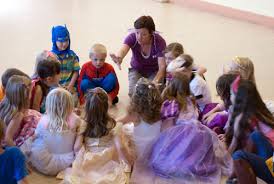
drama children

Embedded within my passion for literacy is my love for developmental drama.  I do love theatre as well (I as a professional actress for a couple of years), but developmental drama is fundamentally different than theatre.  Theatre is about performance.  Developmental drama is about developing human potential, and that is my heart song.

I was recently asked to present a Literacy Workshop for the Royal Conservstory’s new Smart Start Programme .  This Early Childhood Education (ECE) programme uses a multiple arts approach to develop four specific cognitive skills: attention, memory, perception, cognitive flexibility.  It was my role to model and lead a group of ECE leaders through creative drama experiences so they could experience first-hand how developmental drama can and does develop cognitive skills. We explored many drama strategies in the workshop: storytelling; role play; group drama; teacher-in-role; voice over narration; hot seat; tableaux, and; story drama.  My favourite of the eight listed is story drama which uses the events and characters in a story to stimulate the drama experiences, plus, I got to use my storytelling skills.   We became the characters; good and bad.  We learned about a culture from the other side of the world.  We asked questions.  We problem solved.  We also had fun.  The participants left with many practical ideas and felt they were inspired to explore this world with the children they are responsible for.  But, in all honesty, I think I was the one who left with the most insight.

I used to present this kind of workshop regularly, but have not done one in a few years. Due to my dissertation work in multiliteracies (Cope & Kalantzis, 2000), I discovered I was seeing the experiences through new eyes.  I was identifying modes instead of arts disciplines and using critical discernment instead of point of view.  The experience was a literacy event that we constructed within a social paradigm and the participants contributed their own knowledge and expertise in an environment that supported situated practice.  It wasn’t just a new set of vocabulary; it was a much more informed and theoretical perspective of the work.  Vygotsky, Luke, Peabody, Vasquez, Kress, Cope and Kalantzis occupied every corner of the room.  I was well supported.  I recognized a noticeable difference between my role as  intuitive drama leader and informed theoretical guide.  It was progress and it felt good.

drama


Cope, B. & Kalantzis, M. (Eds.) (2000). Multiliteracies: Literacy Learning and the Design of             Social Futures. New York: Routlage