Category Archives: academics

Robertson Program for Inquiry-Based Teaching in Math and Science

This past week I (Clare) met with the Robertson Foundation Program for Inquiry-Based Teaching in Math and Science. The program is housed at the Jackman Institute of Child Studies (JICS) and in short I was blown away with the work they are doing. The team includes: Bev Caswell, Jisoo Seo, Zach Pedersen,  Larissa Lam, Dr. Joan Moss, and Zack Hawes

Here is a short video of Dr. Bev Caswell talking about the program. https://www.youtube.com/watch?t=16&v=ROGrNfqI8_8

The purpose of the Robertson Program is to create, demonstrate, and disseminate ImageFamily-Math-Night-collageinquiry-based teaching models for mathematics and science by focusing on both teacher and student inquiry. The crux of inquiry-based learning is critical thinking- an essential skill for teachers, who strive to deepen students’ conceptual understanding of mathematics and science in authentic ways and for students, who choose to pursue academic and professional careers in the STEM professions (i.e., Science, Technology, Engineering, and Mathematics).

One of their initiatives has been a collaboration with “Rainy River District School Board (RRDSB) schools and the First Nation communites they serve.  Family Math Nights were designed collaboratively with indigenous instructional leaders, First Nation educational counsellors, school board numeracy facilitators and the Robertson Program/Jackman ICS/OISE team. 

First Nation community members and RRDSB educators developed activities  – such as canoe symmetry, creating tangram clan animals, wigwam construction, exploring number patterns through Metis jigging – that raise awareness of concepts of geometry and measurement embedded in local cultural practices. As well, school board numeracy facitlitators and OISE team offered activities that reflect current research in spatial thinking – a strong predictor of overall math achievement.

This deeply collaborative and respectful approach to planning Family Math nights – designed under the leadership of First Nation communities in collaboration with the school board – highlights a model of success being used across the RRDSB.

Hosting a Family Math Night at your school is an opportunity to build and strengthen positive relationships among home, school and community. Not only that, children of all ages get a chance to see math as an inclusive, playful, engaging and accessible endeavour.”

For more info check out their website: http://www.oise.utoronto.ca/robertson/

Creating Cultures of Thinking: An Amazing PD Experience

I (Clare) blogged in a previous post that I am incoming Director of the Jackman Institute of Child Studies. http://www.oise.utoronto.ca/ics/ JICS includes a lab school, teacher education program, and research centre. It is truly an amazing place!

Last week I had an opportunity to attend the Lab School teachers’ faculty meeting. They 618L8vDZYNL._SX376_BO1,204,203,200_had a week of PD and central to their activities was reading and discussing the text Creating Cultures of Thinking: The 8 Forces We Must Master to Truly Transform Our Schools by Ron Ritchhart. http://www.amazon.ca/Creating-Cultures-Thinking-Transform-Schools/dp/1118974603/ref=sr_1_1?ie=UTF8&qid=1442084403&sr=8-1&keywords=Ron+Ritchhart

The teachers had read the book over the summer and were reporting on chapters, selecting key quotes, and discussing implications for their practice. This was truly PD at its best – the teachers were thoughtful, involved, and relating theory to their practice. Under the leadership of the principal Richard Messina so much learning occurred and the community was strengthened.

Below are a few quotes they selected from Ritchhart’s text which I found very inspiring:

“…when both teachers and students have the expectation, or mindset, that one gets smarter through one’s efforts, then challenge and mistakes can be embraced as learning opportunities.” p. 7

“…traditional academic skills…do not adequately define the kind of students we collectively hope to send into the world. Nor do they define the kind of employee [skills] businesses are looking for…professionalism, work ethic, collaboration, communication, ethics, social responsibility, critical thinking, and problem solving…” p. 17

“…in a learning-oriented classroom, teachers and students focus their attention on the learning as a priority, letting the work exist in context and serve the learning.” p. 45

“…lots of new teachers, and perhaps some experienced ones, struggle with learning to listen, yet listening is one of the powerful ways we show respect for and interest in our people’s thinking.” p. 82

“for classrooms to be cultures of thinking for students, schools must be cultures of thinking for the adults” p. 102

Being part of a school where teachers are decision-makers, expert educators, treated as intellectuals, and work collaboratively is a true honour. I suspect there are going to be many more blogs about what I am learning at JICS.

Grad school is like…

I (Clare) was at an orientation for new graduate students. And some of these metaphors about grad school were shared. Thought I would share them with you. It is worth reading the whole post because some are quite hilarious. Will only take a moment.

Rose Hendricks's avatarWhat's in a Brain

Now that I’ve survived my first full week of classes in grad school, I am clearly a grad school expert.

Kidding.

But I have been spending quite a lot of mental energy trying to figure it out – noticing how it’s similar to, and especially different from, undergrad; working to figure out what’s expected of me, by others and myself; and trying to articulate what exactly my goal(s) is/are.

This look is pretty consistently on my face. Image: http://janiebryant.com/blog/265/ This look is pretty consistently on my face.
Image: http://janiebryant.com/blog/265/

I’ve also been a bit preoccupied with metaphors, as I’m working on a metaphor-based research proposal for a fellowship application. I guess the two have become intertwined in my subconscious, because my first (coherent) thought upon waking up this morning was, “grad school isn’t a sprint; it’s a marathon!” Not long after I began giving myself credit for this clever analogy, I was racking my brain for more. As a firm…

View original post 226 more words

Intertwining Digital Technology Into Literacy Methods Courses

Pooja and I (Clare) did an analysis of 6 literacy teacher educators who truly intertwined digital technology into their literacy methods courses. (Book chapter will be published soon and we will post that info.) In the meantime I thought this chart might be useful for literacy teacher educators who are preparing for the upcoming school year.

Overall Goal: Teaching 2.0
Specific Goals Example
Make literacy classes participatory ·      Post comments on each other’s work (e.g., Wall Wisher, Text tagging, Voice Thread)

·      Post comments in asynchronous time

·      Provide student teachers with feedback on-line and encourage them to respond to the feedback

·      During class student teachers post questions or contribute comments to a shared space

·      Before class student teachers post comments about the readings

·      Create Wordles when analyzing a text

Create an infrastructure for accessing resources and for sharing resources ·      Develop a repository of resources on a university platform (e.g., Blackboard) or on their own website

·      Share books, videos, websites on a class Wiki

·      Use DT tools (e.g., Smartboard) to access info on the spot while teaching

·      Access materials/videos for use in teaching (e.g., Globe Theatre productions of Shakespearean plays)

Provide authentic learning experiences ·      Student teachers make an iMovie on a specific topic (e.g., on bullying)

·      Analyze videos student teachers created during their practice teaching

·      Skype with authors they are reading

·      Participate in teacher communities by contributing to blogs and Twitter feeds

·      Participate in teacher-focused events (e.g., contribute a piece to a BBC competition on current affairs/news)

·      Student teachers create podcasts on an aspect of literacy to share with broader community

·      Watch videos of authors they are reading (both scholarly articles and children’s literature)

·      Student teachers post photographs of themselves on the university platform as a way to introduce themselves to their classmates

Gain an understanding of the increasingly globalized nature of literacy

·      View videos from other countries (e.g., teachers in Japan) to see similarities and differences with their own context

·      Participate in world-wide teacher communities

·      Participate in crowd-sourcing

·      Share statistics on literacy beyond home country

·      Use visual representations (e.g., photographs) to move student teachers beyond their immediate world to unpack a range of issues (e.g., gender representation in children’s literature)

Reframe issues related to literacy and literacy teaching ·      Watch videos of teaching (exemplary or poor practice) and analyze them

·      Use videos from their practice teaching classes as “data” for their inquiry projects

·      Student teachers select a picture from a photo array and relate the action in the photograph to a theory they have been working on

Bridge practice teaching and the academic program ·      Reflect on practice teaching by sharing and analyzing photographs/videos they took

·      Use email and social media to remain connected during practice teaching and as a place for student teachers to ask questions or share concerns

·      Create a video case study of pupils which relates to a theory of literacy

We also created a graphic to capture the elements of their pedagogy:

Literacy Graphci

Their courses were fundamentally different because they had truly reconceptualized their teaching, not simply tinkering by adding glitzy DT; rather, they constructed highly participatory experiences that occurred before, during, and after the official 3-hour class. Learning occurred in multiple ways: readings, f2f discussions, online communities, viewing, analyzing, and providing feedback on texts which immersed student teachers into the issues of literacy. It went far beyond introducing “methods” to teach literacy; it was framed by learning to teach literacy as a global citizen. This ambitious goal was matched with unparalleled support by the professors. Their multimodal/technology-rich teaching practices modeled the possibilities available to teachers and students; however, they were constantly trying to balance preparing student teachers to address the traditional forms of literacy, which they will probably observe in schools, with more expansive understandings. They had not discarded typical elements of literacy methods courses such as teaching the writing process or components of a balanced literacy program.

So You Want to be a Writer!

Most of the readers of this blog are writers. I (Clare) no matter how much I write, I still smith0809-01finding writing hard. It takes LOTS of work. Although we tend to write for academic audiences an article by Russell Smith in the Globe and Mail resonated with me. Titled – So You Want to Be a Writer has some useful advice.

Here is the link to the entire article: http://www.theglobeandmail.com/arts/books-and-media/six-tips-to-help-you-successfully-write-and-publish-your-first-book/article25879126/

I listed his six pieces of advice and # 6 is probably the most important! For all doctoral students “bum in chair” is very important.

  1. Stop thinking about the business side of it
  2. Don’t worry about someone stealing your idea
  3. Don’t get too much feedback

Your aunt and your high-school English teacher are going to have very different ideas about what makes a great novel. Listen to both of them and you will be no further ahead.

  1. Don’t self-publish

Again, genre writers – in sci-fi, mystery and romance – have had much greater luck with self-publishing because they are already participants in large online communities and so already have audiences. The vanity presses that promise you they will market and promote your literary book are sharks; nobody reads their press releases. Don’t give them your money. Don’t think you can build an audience just by acquiring Facebook friends.

  1. When submitting your manuscript to agents or publishers, remember that nothing counts except what is actually written in your bundle of pages – not endorsements from bloggers, not courses you have taken, not possible cover designs. The professionals will skim through all those and start reading the first page of the manuscript. By page five they will know if you are an actual writer or not.
  2. Bum in chair This is still the most accurate and useful description of how to write a book. You must occupy that chair until it is written. Even in the world of phone-novels and tweet-novels and ghost-written memoirs, somebody has to worry for many, many hours about the difference between that and which and the appropriate use of metaphor. Somebody has to sit in the chair.

A Memo To States: This Is How You Create A Teacher Shortage

Image Teacher Shortage

When I (Clare) was at AERA in the spring many of my American colleagues were despairing about the dramatic drop in applications to teacher education programs. The article below by Rebecca Klein helps demystify why teaching has becoming a less attractive career choice.

A handy recipe for a teacher shortage like the one in Kansas.

Rebecca KleinEducation Editor, The Huffington Post

http://www.huffingtonpost.com/entry/kansas-teacher-shortage-recipe_55c28ce6e4b0f1cbf1e3a2d7?cps=gravity_5059_5212323749430778575&kvcommref=mostpopular

It’s back-to-school time in Kansas, and kids are starting to trickle back into school hallways. But when these students arrive at their classrooms, they may not find a teacher standing at the front.

Kansas is suffering from a well-documented teacher shortage. Last year, more than 2,320 educators in the state retired, compared to 1,260 in the 2011-2012 school year, according to data from the Kansas State Department of Educaton. At the same time, 654 teachers decided to leave the state last year, compared to just 399 in 2011-2012. Over 270 open teaching and non-teaching school staff positions were listed on the Kansas Education Employment Board’s website as of Thursday afternoon.

Kansas has previously seen teacher shortages in areas like special education, as well as math and science. But this year, even typically popular jobs, such as teaching social studies classes or elementary school students, are proving hard to fill, KEEB coordinator Julie Wilson told The Huffington Post.

Those familiar with the situation say it is not surprising. A number of factors have recently converged to create a teacher shortage in the Sunflower State. Some of these factors are the result of actions taken by the state government and legislature. Over the past few years, Kansas has cut back on the job protections that give teachers due process rights, created a new school funding system that a district court panel ruled unconstitutional and cut taxes so severely that some districts lacked the revenue to stay open last school year.

“I find it increasingly difficult to convince young people that education is a profession worth considering, and I have some veterans who think about leaving,” Tim Hallacy, superintendent of Silver Lake Schools, told HuffPost last month. “In the next three years I think we’ll have maybe the worst teacher shortage in the country — I think most of that is self-inflicted.”

For other states looking to wind up in the same situation, here’s a surefire recipe for a teacher shortage:

The How To Create A Teacher Shortage Recipe 

Ingredients:

1 cup of rhetoric against teachers

2 pounds of bills and programs that attempt to de-professionalize teaching (specifically, a proposed bill that would make it easier to jail teachers for teaching materials deemed offensive and a new program that lifts teacher licensure requirements in certain districts)

3 tablespoons of a lack of due process rights for teachers

½ cup of finely diced repeated budget cuts amid a state revenue crisis

1 stalk of a new school funding system that is currently being challenged in state court

2 grinds of growing child poverty throughout the state

3 tablespoons of low teacher pay

1/3 cup of large numbers of teacher retirements

Teacher Education Reform Trends

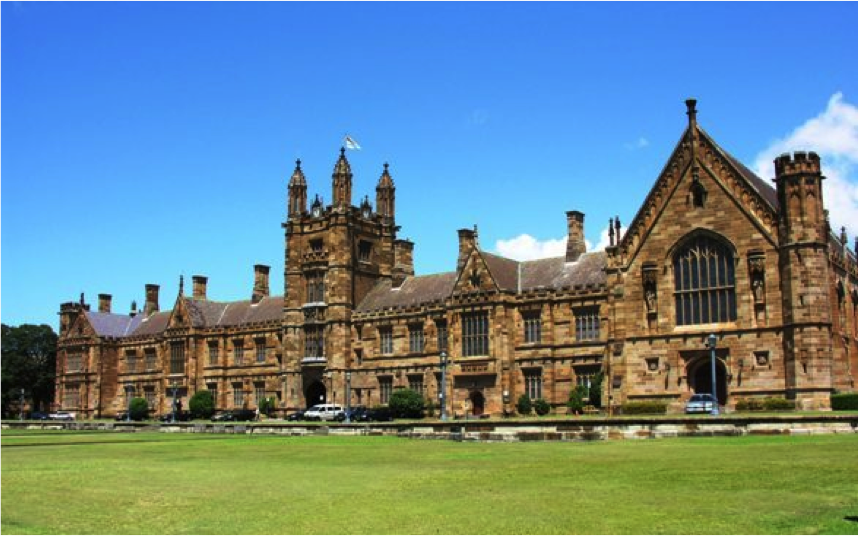
Image Univeristy of SydneyClive and I (Clare) are doing a presentation at the University of Sydney on reforms to teacher education. Along with Lin Goodwin we wrote a chapter for the upcoming Handbook on Teacher Education edited by Loughran & Hamilton (to be published by Springer). We surveyed the literature on teacher education from many countries and identified the following trends:

  • Explicit Standards
  • Minimum Requirements
  • Research Based
  • Assessment + Accountability
  • Alternative Routes
  • Subject Knowledge
  • Theory and Practice
  • Continuing PD

We did mini case studies of England, Canada, U.S., and Singapore – England where they seem to be dismantling university-based teacher education to Singapore where the government, universities, and schools work collaboratively. This research was so enlightening because we looked an many countries beyond the usual big “players” like Finland, the Netherlands …. . We included information on less reported countries like Trinidad and Tobago, Chile, Scotland, and Norway. Will keep you posted on the publication of the handbook.

Cyber -Seniors

“A humorous and heartwarming documentary feature, Cyber-Seniors chronicles the extraordinary journey of a group of senior citizens as they discover the world of the internet through the guidance of teenage mentors.”                                                                                                      Business Insider

Directed by Saffron Cassady, the idea for the Cyber-Seniors documentary began with a high school project that was launched by two sisters. The sisters had the support of their mom, Brenda Rusnak, who had worked her entire career with seniors. After a successful first year, Brenda helped continue the Cyber-Seniors program, expanding it to a second retirement home and helping to engage more youth mentors. Over the next ten months, Saffron and her film crew captured over 120 hours of footage and many memorable moments.  Of this film, the Washington Post reports:

Kerstin Wolgers made it through almost 82 years on this Earth without ever once checking an e-mail, watching a YouTube clip or sending a tweet. But last week, as part of a crash course that introduced her to the Internet for the first time, the former Swedish actress did all three — plus Googled, Instagrammed, Wikipedia-ed, shopped, video-gamed … even online-dated, eventually. “Lots going on here,” she says of Tinder. “It’s really exciting, if you asked me.”

Understanding how significant this program is to the lives of seniors was captured for me (Cathy) in a single moment when I watched one senior weep while he viewed his grandson play the piano via Skype. The differences technology makes in their lives, is remarkable.

Under the Getting Started heading of the web page for this documentary (link below) you can learn how to begin such a project in your community.  It also will let you know when the documentary is coming to a theatre near you.  Personally, I (Cathy) can’t wait to see it.

http://cyberseniorsdocumentary.com/

A delightful trailer for this film can be viewed at:

www.cyberseniorsdocumentary.com.


Australia Here We Come

Clive and I are off to Australia today. The impetus for the trip was an invitation to speak at the Australian Teacher Education Clive with Aussie flagAssociation Conference in Darwin. The trip then mushroomed to include visiting Clive’s family in Perth, Sydney, and Melbourne. He has lots of family!

Being in education I have long been an admirer of many Australian educators:

  • Mem Fox (children’s books)
  • First Steps (literacy program)
  • Keith Punch (research methodology)
  • John Loughran (pedagogy of teacher education)
  • Robyn Ewing (Master of Teaching program at the University of Sydney)
  • Neil Selwyn (digital technology)

And I love Tim Tams (best cookies) and the new Australian TV series A Place to Call Home (a potboiler of an evening drama).

Tim TamsSo while we are on the road we hope to do some blogs about our adventures.Image Place to Call Home