Category Archives: curriculum; teachers

Try a Graphic Novel this summer…

As summer vacation time draws nearer and schools in Ontario prepare for the summer break, teachers often think of ways to encourage children to read over the summer.  Inspiring students who ‘hate to read’ can be quite a challenge.  The authors of the blog teachingauthors.com  highly recommend graphic novels. (Graphic novels are not to be confused with Manga novels which are a genre unto themselves).  Graphic novels are similar to comic books in that they rely heavily on illustrations to convey meaning and the text is short.

Author Mary Ann Rodman suggests the following novels for students:

Young Adult

Drowned City: Hurricane Katrina and New Orleans—Don Brown

Honor Girl: A Graphic Memoir–Maggie Thrash.

Nimona-Noelle Stevenson

In Real Life–Cory Doctorow

Middle school

Anything by Raina Teigemeier (e.g., Drama)

The Dumbest Idea Ever!–Jimmy Gownley

Roller Girl–Victoria Jamieson

Sunny Side Up–Jennifer L. Holm and Matthew Holm

Into the Volcano–Don Wood.

Flora & Ulysses–Kate DiCamillo, K.G.Campbell

The Hidden: A Child’s Story of the Holocaust–Loic Dauvillier.

The Lost Boy–Greg Ruth

If you haven’t read a graphic novel, I (Cathy) suggest you try one.  The experience may surprise you.  The content can be quite sophisticated and intense.  When I taught a teacher education focused children’s literature course, I used the book Persepolis to introduce my teacher candidates to graphic novels.  Persepolis is an autobiographical graphic novel by Marjane Satrapi depicting her childhood up to her early adult years in Iran during and after the Islamic revolution. (The title is a reference to the ancient capital of the Persian EmpirePersepolis). The book depicts religious, political, and economic struggle.  Simplistic, but powerful.

Try one this summer!

http://www.teachingauthors.com/

250px-Persepolis-books1and2-covers

Teaching vs Assuming

'My reading comprehension is so-so, but I do make up for it with my highlighting skills.'


While teaching a third year university course in the Early Childhood Program I(Cathy) caught myself making assumptions about my students’ levels of comprehension.  While working with with one student who seemed to lack a focus in her paper, I asked her to take the article we were examining home with her and highlight the important issues she noted on each page.  When we next met, I asked to see the article;  every paragraph was highlighed; every word was now encased in bright neon yellow.  When I asked her if she thought perhaps a point made in one paragraph could be more important than another she insisted that it was all important because it had been published.  Images of classes I had taught to elementary school children on discernment of text and critical thinking, and critical pedagogy flashed through my mind.  Was she never taught this?  I had assumed my third year students would arrive in my class with this skill. I was wrong. So now what?

I smiled at her . “Let’s look at the first paragraph together,” I said. I knew I couldn’t catch her up with her many lost years, but we could make a start. Such is teaching.


Fishers of Paradise: Canadian Novelist to be honoured

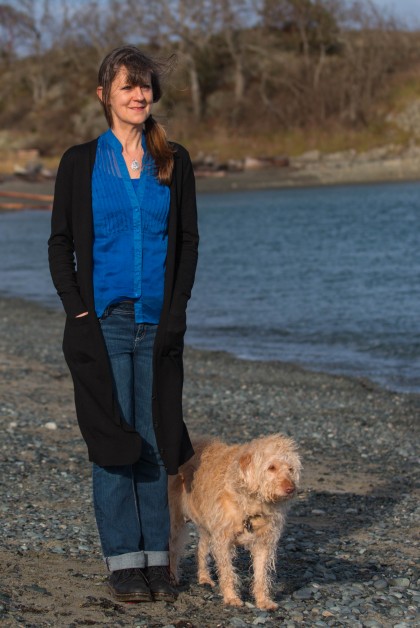
On June 9, Canadian author Rachael Preston will be unveiling a Project Bookmark Canada plaque for her novel The Fishers of Paradise, that depicts the struggling squatters that occupied Cootes Paradise in 1930. The plaque is to be installed along the Desjardins Waterfront Trail in Hamilton, under the second rail bridge. I’m proud to share Rachael was a member of my writing critique group, so I was lucky enough to see the book develop. It’s a fascinating novel and I highly recommend it. It sheds light on an aspect of Hamilton history that was truly buried until now.  Book clubs- take note!

Racheal and dog

Story Summary:

The boathouse community of Cootes Paradise is under siege. The squatters’ shacks that line the shores of Dundas Marsh stand in the way of an ambitious politician’s “City Beautiful” plans. When a handsome drifter settles there, Egypt Fisher and her mother both fall under his spell. No one expects Egypt’s gambling con-man father to return after a mysterious six-year absence. But he does and he’s furious. Unhinged by jealousy and a harrowing brush with the local mafia at a cockfight, he reveals a family secret that sets Egypt’s world off-kilter and poisons her relationship with her mother. When Egypt tries to turn the situation to her own advantage, her lies set in motion a series of events with devastating consequences.

Rachael Preston now  lives in Departure Bay, Nanaimo, on Vancouver Island, British Columbia. She moved to BC from Hamilton, Ontario, where we’d been for ten years. She has authored three novels, Tent of Blue, 2002, and The Wind Seller, 2006, both with Goose Lane Editions. In 2012, she self-published The Fishers of Paradise.After winning Arts Hamilton’sinaugural Kerry Schooley Award for the book most representative of Hamilton, Fishers, was picked up by Wolsak & Wynn and reissued in April 2016 under their new James Street North Books imprint.

Fishers

http://rachaelpreston.com/


FDK Update:Literacy happenings and the like

I (Yiola) having been sharing my experiences with the Full Day Kindergarten (FDK) program from a parent’s point of view and here is another update.  My wee ones, Sylvia Clare (Senior Kindergarten) and Gallaway (Junior Kindergarten) are trekking merrily along in their kindergarten programs.  They are happy — and this makes me very happy. Some updates and observations about FDK and literacy.

  1. Sylvia Clare got into French Immersion. In our province, not all school board’s hold the same policy on French Immersion. This makes understanding the program less clear.  Some school boards/districts give every child the opportunity to go into French Immersion while others (like the one we are in) have a first come/first serve system.  The online database opened at 12pm on a set date and by 12:01 Sylvia Clare was 63rd on the list. 42 students are admitted into the program… We were notified last Monday that Sylvia Clare has been admitted and on Tuesday I registered her into the program. What does this mean? Beginning in first grade 50% of her learning will happen in French. She will have 2 classrooms teachers plus a “prep” teacher.  Big questions arise: How will this impact her language development in the short term/long term?  How will this impact her social development? Will this slow down her reading development?  Will this alter her level of engagement? So many questions and uncertainties and I’m not entirely convinced yet much of the literature AND community feedback suggests to go for the French. As a teacher educator I can speak to the general trends of French Immersion programs: students in immersion programs: acquire more vocabulary over time; catch up and often exceed reading levels of monolingual students… and yet when I look at this wee individual child, in spite of what research and theory state, only time and experience will determine if its best for her. I will keep you posted.
  2. Technology in FDK. Amazing things are happening with the whiteboard in the FDK classroom. I have observed students working individually and in groups: standing directly in front of it, touching it and manipulating shapes, words, images on the screen to solve problems. I have seen students engaged in listening activities and responding with their whole bodies to instructions provided through programs on display on the white board. I have seen attendance being tracked on the white board: all students’s names are in one row and as students enter they go up to the white board and slide their name to the other side — small details to practical use of technology in FDK.  I have seen iPads used in the FDK classroom: for gathering research, reading, listening to stories, and playing “games”. And, I have experienced communication with the teacher via REMIND technology. Oh how I love receiving a text with a pic of my son in educational action accompanied by a short text from the teacher. It makes me smile each and every time. The way digital technology is used in the classroom is meaningful, productive, and purposeful. I have also observed that it has just become a way of being in the classroom. It just is.
  3. My last update on FDK is on the idea of inquiry. I will share my understanding of inquiry in FDK with a anecdote.  Yesterday, as we drove on the Gardiner passing the CN Tower, Sylvia Clare explained Mommy we did research at school.  Harrison asked the teachers if the CN tower was the tallest building in world  and the teachers said they did not know but that it was a good question to research. So we started to research.  We looked in books and on the computer and guess what? We found out its not.  You know where the tallest building is mommy? Its not in Canada. We also learned the CN tower is a tower but not a building… and on and on she spoke about her research on towers and buildings.

These are some of the key literacy based elements that have me excited about FDK. Am I concerned about how many sight words they know? Not really. I am more concerned with their active engagement in learning and wanting to learn and this is what I see happening in the early years.

OTF Supports Teacher’s Self-Directed Professional Development

pic

The Ontario Teacher’s Federation (OTF) recognizes that teachers need to direct their own learning and professional development. To support this need they now offer a professional development  problem-based learning model which encourages teacher teams the opportunity to create their own learning projects.  The model encourages teachers to: select a team to work with; develop a project; conduct the research; and evaluate the effectiveness.  If the proposal is accepted, the OTF also provides support for the project through a mentoring program. Each team is assigned an expert teacher who will act as their mentor, who assists the team as needed throughout the process.

Through this process teachers are given the opportunity to:

  • become involved in ongoing self-directed learning;
  • spend real time collaborating with colleagues of their choice;
  • work as a team on a project of they deem significant (within the specified areas of focus);
  • have release time to carry out the learning initiative;
  • develop and implement the project over a period of months;
  • deepen their practice and evaluate teaching enhancements generated through your research and discussions; and
  • share their knowledge and resources with colleagues.

This year they have suggested three areas of focus:

  • Using information and communication technologies (ICT) to enhance teaching and learning
  • Supporting capacity building in Kindergarten
  • Supporting teachers in implementing revised curriculum
    • Grades 1-8
      • History and Geography
      • Social Studies
    • Grades 9-12
      • Canadian and World Studies
      • Classical and International Languages
      • First Nation, Métis and Inuit Studies
      • Social Sciences and Humanities
    • Grades 1-12
      • French as a Second Language
      • Health and Physical Education

Deadline for 2016  proposal applications is May 31.

Some  2015 projects were:

Assessment Technology in Primary Physical Education

Cross-Curricular Integrating Technology/Media Studies

iPads for Inclusion

I remember, as a classroom teacher, wishing my school board would allow me the opportunity to identify my own areas of strength and weakness and seek out professional development accordingly.  It is appropriate that the OTF is acknowledging this form of PD and taking a step in the right direction.  It would be helpful if teacher education programs could also offer similar forms of support for their own staff and faculty.

http://www.otffeo.on.ca/en/learning/teacher-learning-co-op-tlc/


Social Justice Study at AREA

I was once again thrilled to attend the AERA conference this past week.  It is such a remarkable opportunity- so many knowledgeable and committed educators from around the world.  Quite inspiring.  At the conference this year, one consistent theme emerged in the sessions I attended: Know your students. One particular study in a session entitled Preparing Preservice Teachers to Teach for Social Justice, resonated with me quite profoundly.  The study was called Candidate Change in a Community -Engaged Teacher Education Program and was led by Patricia Clarke from Ball State University.  Patricia maintained, ” a good teacher must understand the context in which a child lives grows and learns.”

Her team conducted a study which examined: preservice teacher candidates’ attitudes towards diversity and community, and how they changed over the course of a semester-long community-engaged experience. As teacher candidates came to know the community in which they were working, their expressed attitudes and beliefs changed from explicit statements of bias and stereotype to ones that sought community involvement and social action. 

This teacher education program at Ball University emphasized community involvement by holding classes in local community centers (as opposed to the university).  Student teachers also attended the local church on Sundays to be part of the community gatherings.  The teacher educators arranged for “community ambassadors” to welcome the student teachers to their neighborhood and guide the student teachers throughout their weeks in the school.  The results were remarkable.  The student teachers moved from “being nervous” and “afraid” in the neighborhood to feeling like a community member.

Patricia closed her session with a sweet anecdote shared by one of her student teachers, which I will share with you here. The student teacher was working in a class of grade two students and asked the children to share the markers.  She handed the basket of markers to the child beside her who seemed a bit confused.  Remembering what she had experienced the previous Sunday when she  attended the community church with the children, she said, “pass the basket like you do at church.” The child nodded, and said “Hallelujah!”  all the of the children immediately responded with “Praise be the Lord!” and they promptly passed the basket of markers around the circle. The student teacher was somewhat surprised by the response, but because of her inclusion in the community completely understood why the children responded they way they did.  She smiled, nodded, and continued on with the lesson.

basket

The commitment of the teacher educators in this program was outstanding and quite inspirational.  I sincerely hope teacher education programs worldwide can learn from not only this study, but the model of teacher education Ball University has implemented.

Arriving in Washington DC

AERA_Logo

I (Cathy) am delighted to be arriving in Washington D.C. today to attend the American Educational Research Association Conference.  I will be presenting a paper entitled, Examining the Influences: Literacy Teacher Educators who us a Multiliteracies Approach. This study is a subset of a larger study on which I have been a researcher.  I examined 7 participants who demonstrated a proclivity toward multilitercies.  As I used a grounded theory approach (which does not begin the research with a hypothesis) I was  both intrigued and surprised by the findings.   Hope you can join me on Monday, April 11, 11:45am to 1:15pm, at the Marriott Marquis, Level Three, Mount Vernon Square.

Abstract:

According to Dewey (1974) “[e]ducation, experience, and life are inextricably intertwined”.  This study examined how early life experiences and other influences affected the practices of 7 literacy teacher educators (LTEs) who currently enact a multiliteracies approach.  Early childhood experiences, mentors along their journey, personal and professional turning points, and developing notions of literacy were explored.  Three findings (a) an innate love of language/literature, (b) inspiring mentorship, and (c) a unique set of dispositional qualities were significant contributing factors to these literacy teacher educators adopting a multiliteracies approach. The participants for this study were a subset from a large-scale study entitled, Literacy Teacher Educators: Their Backgrounds, Visions, and Practices which examines the lives of teacher educators from four countries:  Canada, the USA, England and Australia.   

Hope you can join me!

http://www.aera.net/EventsMeetings/tabid/10063/Default.aspx


The Wrong Way to Teach Math (and Other Subjects)

In the New York Times Sunday Review on Feb 28, Andrew Hacker published an article (p. 2) checkmark imagescalled “The Wrong Way to Teach Math,” based on his forthcoming book The Math Myth and Other STEM Delusions. It begins with this remarkable statement:

“Most Americans have taken high school mathematics, including geometry and algebra, yet a national survey found that 82 percent of adults could not compute the cost of a carpet when told its dimensions and square-yard price.”

Hacker, who teaches political science and mathematics at Queens College in New York, argues that while “calculus and higher math have a place…it’s not in most people’s everyday lives.” Students need to learn “numeracy” or “quantitative literacy”: “figuring out the real world – deciphering corporate profits or what a health plan will cost.”

I (Clive) find Hacker’s ideas and examples very helpful and plan to buy his book. But it occurs to me that similar things could be said about other subjects such as literacy (reading, writing, literature), history, science, etc. While “academic” aspects of these subjects have to be taught to prepare students for later education and (possibly) work settings, teachers need to do both (as I have posted before). It isn’t appropriate just to focus on Shakespeare and classical novels, for example, and not prepare students to find enjoyment and make wise choices in their everyday fiction and non-fiction reading.

Addressing both – the academic and the everyday – is not easy, given the extensive subject content teachers are expected to cover; but in teaching and teacher education this should be our goal, and over the years we should move as far as humanly possible in this direction.


Concept of Design will “weave their lives back together”

While investigating how educators interpret the “concept of design” when using a multiliteracies approach, I (Cathy) came across this intriguing application. I felt it was most appropriate in understanding how our definition of literacy or literacies is now so incredibly comprehensive. This ‘concept of design’ integrates the processes of narrative with issues of social justice, environmental change, and elements of traditional culture.abeer

Designer:  Jordanian-Canadian Abeer Seikaly received her Bachelor of Architecture and Fine Arts from the Rhode Island School of Design in 2002. Over the span of 10 years, she has built a foundation of interdisciplinary skills that span architecture, design, art, fashion, textile design, and curation. She won the 2013 Lexus Design Award for her work, “Weaving a Home.” Abeer’s work is rooted in the process of memory – journaling, documenting, archiving, and collecting – to create objects, spaces, and experiences that exist in the realm of her narratives.

Purpose: Abeer hopes her Weaving a Home design will allow refugees who have been displaced by global and civil war, and climate change to have the chance to “weave their lives back together”. Inspired by elements of nature such as snake skin and traditional cultural aspects such as weaving, nomadic life and tent dwellings, this weather proof, strong but lightweight and mobile fabric tent is designed to collect rain water for drinking and bathing. 

Product: The Weaving a Home tent has a flexible dual layer tent structure has the ability to close out the cold of winter and wet weather. Solar energy hits the tent fabric and is stored in a battery for use at night providing renewable electricity. The tent sides also open up to allow cool air in and hot air out in summer. Rainwater is collected in the top of the tent and filters down the sides so the tent does not become flooded. The tent also has the ability to become a showering facility with water being stored in pockets on the side and drawn upwards via a thermosiphoning system providing basic sanitation.

tenttent at night

http://www.abeerseikaly.com/weavinghome.php

What makes a teacher a good teacher?

A few posts ago Clare wrote about teacher characteristics. I  (yiola) am following up on her post with considerations for what makes a good teacher?

Take a look at this link:

http://www.npr.org/2016/03/09/469097318/a-great-teacher-illustrated?utm_source=facebook.com&utm_medium=social&utm_campaign=npr&utm_term=nprnews&utm_content=20160312

I think it is quite fantastic as it tells, in an nuanced way, the narrative of one good teacher.

Jimi has many qualities, characteristics and knowledge including:  content knowledge, pedagogical knowledge, an understanding of development, a clear philosophy/vision of teaching, a belief that all children can learn, patience and care.  What stood out most for me as I read this tale was the teacher’s capacity for care.  I believe care is central to good practice —  care for children’s well being;  care for children’s learning;  care for the future.

I often think about the possibilities of experience in school and the stories of positive and negative experience and time and time again the experiences that inspire and motivate children to learn are often centred around the teacher who cares.