Category Archives: education

Supporting the Pan Am Games

This summer Toronto is hosting the Pan Am Games. I took a break from my studies yesterday to support the incredible athletes competing in the rowing events. It was amazing to cheer on the Canadian women’s single sculls, the women’s lightweight double sculls, and the men’s quadruple sculls as they each won GOLD medals. Well Done!!

Rowing

Teasting your Knowledge of Semiotic Linguists

My (Cathy’s) research focus is on multiliteracies. Understanding the history and conceptual development of multiliteracies demanded I grasp a basic understanding of semiotics, or semiology.  Semiotics is a branch of linguistics that studies signs, symbols, and signification.  However, it is the study of how meaning is created, not what it is.

Sassureimages

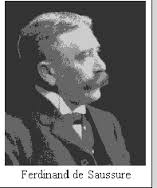
Ferdinand de Saussure is generally credited as the father of semiotics.  His book Course in General Linguistics, was published posthumously by his former students Bally and Sechehaye.  It was through this work that Saussure’s Semiology Theory was made public.  His theory was based on the study of signs; a sign being anything that represented something else.  Saussure proposed that communication is a system of signs that convey meaning, but limited his work to the use of words, spoken and written.  Sassure’s most recognized semiotic terms are signifier, signified, sign and symbolic.  (Glossary at bottom of page)

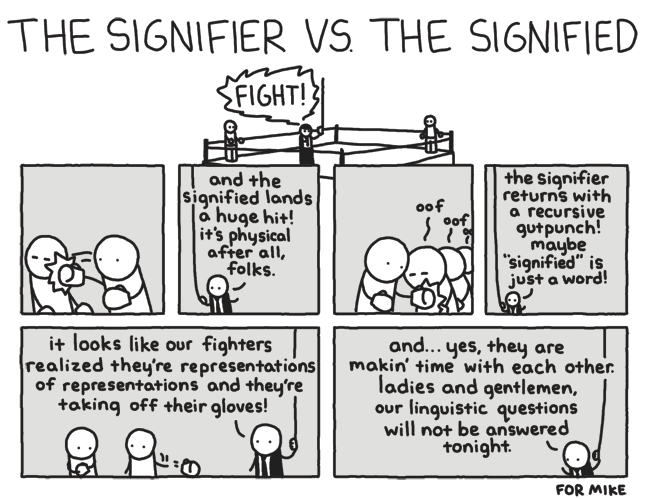
To test our knowledge of these terms, I share the following three graphics. Does their signifier representation signify anything symbolic to you?

Lighthearted Semiotics


 M semiotics-copy

signs


Signifier: any material thing that signifies, e.g., words on a page, a facial expression, an image.

Signified: the concept that a signifier refers to.

Together, the signifier and signified make up the:

Sign: the smallest unit of meaning. Anything that can be used to communicate.

Symbolic (arbitrary) signs: signs where the relation between signifier and signified is purely conventional and culturally specific, e.g., most words.


http://www.uvm.edu/~tstreete/semiotics_and_ads/terminology.html


Using emoji to teach?

I’ll admit it, I often include emojis when I text. I can’t help it they are just so cheerful and amusing. happyface  I had not thought, however, about using emojis to teach, until I saw Bill Nye, “the science guy,” use emojis to explain about climate change and super materials. To see his creative videos follow the link below:

http://mashable.com/2015/07/07/bill-nye-super-materials-with-emoji/?utm_cid=mash-com-Tw-main-link

Director of the Institute of Child Studies

On this site we have shared many of our stories. I (Clare) am happy to share some exciting news. I have been appointed to be the Director of Dr. Eric Jackman Institute of Child Studies at the University of Toronto.

ICSICS has a tripartite mission to bring together graduate teacher education in a 2-year Master of Arts Program, exemplary educational practices in the Laboratory School, and leading multidisciplinary research in child development at the Dr. R.G.N. Laidlaw Centre.

Faculty, lab school teacher-researchers, and staff are dedicated to setting the highest standards for children’s education and development. By connecting research, training, and practice, Jackman ICS leads the way as Canada’s foremost teaching and learning environment, with an international reputation for leadership.

Housed in an old mansion on the university grounds ICS is an outstanding educational institution. There are so many outstanding educators/researchers at ICS including Yiola who is a regular contributor to this blog. By coincidence the principal of the lab school, Richard Messina, is a former student teacher of mine. My appointment begins November 1, 2015.

Here is a link to the site:

http://www.oise.utoronto.ca/ics/

Cyber -Seniors

“A humorous and heartwarming documentary feature, Cyber-Seniors chronicles the extraordinary journey of a group of senior citizens as they discover the world of the internet through the guidance of teenage mentors.”                                                                                                      Business Insider

Directed by Saffron Cassady, the idea for the Cyber-Seniors documentary began with a high school project that was launched by two sisters. The sisters had the support of their mom, Brenda Rusnak, who had worked her entire career with seniors. After a successful first year, Brenda helped continue the Cyber-Seniors program, expanding it to a second retirement home and helping to engage more youth mentors. Over the next ten months, Saffron and her film crew captured over 120 hours of footage and many memorable moments.  Of this film, the Washington Post reports:

Kerstin Wolgers made it through almost 82 years on this Earth without ever once checking an e-mail, watching a YouTube clip or sending a tweet. But last week, as part of a crash course that introduced her to the Internet for the first time, the former Swedish actress did all three — plus Googled, Instagrammed, Wikipedia-ed, shopped, video-gamed … even online-dated, eventually. “Lots going on here,” she says of Tinder. “It’s really exciting, if you asked me.”

Understanding how significant this program is to the lives of seniors was captured for me (Cathy) in a single moment when I watched one senior weep while he viewed his grandson play the piano via Skype. The differences technology makes in their lives, is remarkable.

Under the Getting Started heading of the web page for this documentary (link below) you can learn how to begin such a project in your community.  It also will let you know when the documentary is coming to a theatre near you.  Personally, I (Cathy) can’t wait to see it.

http://cyberseniorsdocumentary.com/

A delightful trailer for this film can be viewed at:

www.cyberseniorsdocumentary.com.


A Message to Graduates:  Choose Love or Choose Fear

I (Cathy) was deeply moved by a key note address presented at Maharishi University in Iowa that was captured on Youtube (link below).  The convocation address was delivered by funny man Jim Carey who, quite unexpectedly, revealed a rarely witnessed serious and profound side of his personality. During the speech, Carey unveiled a compelling 20 foot-high painting that he claimed took him thousands of hours to complete.  He said he was “weeks and weeks alone on the scaffolding” painting the picture. The painting depicted the metaphoric players in our lives (and in our minds) that drag us down or keep us from reaching our dreams (e.g. misery, the party host, the clinger).  Carey told the graduates that “painting is one of the ways I free myself from concern.  A way to stop the world through total mental, physical, and spiritual involvement.”

Beyond the painting, Carey’s words were also stirring.  Carey stated:

“As far as I can tell it’s about letting the universe know what you want and working towards it while letting go of how it comes to pass. Your job is not to figure out how it’s gonna happen for you, but to open the door in your head and when the door opens in real life, just walk through it.  And don’t worry if you miss your cue, because there are always doors opening.  They keep opening. And when I say life doesn’t happen to you, it happens for you, I don’t really know if that’s true.  I’m just making a conscious choice to perceive challenges as something beneficial, so that I can deal with them in the most productive way.”

Cary concluded the speech by challenging the students to choose between fear or love to guide them in their life choices when they left the auditorium.

Thank you, Jim Carey.

http://omeleto.com/199433/

Women in Science Speak Out- Using Humor

As my (Cathy’s) daughter is a research scientist and director of a private laboratory, the recent sexist comments by Nobel Prize-winning British scientist, Sir Tim Hunt, was quite a topic of discussion in our home.  Hunt, a biochemist who was a joint recipient of the 2001 Nobel Prize made the offensive remarks while speaking at the World Conference of Science Journalists in South Korea.  Hunt stated that mixed gender laboratories are “trouble” and “”you fall in love with them, they fall in love with you and when you criticize them, they cry”.  According to the BBC, Hunt later apologized for his comments during a phone interview, but then went on to say:

“I did mean the part about having trouble with girls … I have fallen in love with people in the lab and people in the lab have fallen in love with me and it’s very disruptive to the science.”

Hunt’s “retraction” only led to a much stronger public response and initiated his resignation from his honorary post at University College London.  The social media frenzy that followed, particularly through twitter was intriguing.  Female scientists from around the world spearheaded an ironic Twitter campaign to mock Sir Tim Hunt’s sexist comments about the need for single-sex laboratories.  For example, Allison Sekuler, AVP & Dean Grad Studies and Prof of Psychology, Neuroscience & Behaviour @ McMaster University tweeted:

Can’t do any science today because – like all women – I’m too busy making #TimHunt fall in love with me and crying http://www.theguardian.com/science/2015/jun/10/tim-hunt-apologises-comments-trouble-female-scientists …

Archaeologists, biochemists and mathematicians starting posting “distracting ” photographs of themselves at work:

distracting-web-v2


And male scientists demonstrated solidarity by posting new signs in their labs:

CHJXU8HWsAABvdp


It was satisfying for me to see women in science not only display a strong voice, but be able to maintain a sense of humor.  This sense of humor will bode us well as we move forward in our crusade to combat sexism and other forms of oppression in the work place and in education.

http://www.cbc.ca/news/world/tim-hunt-nobel-prize-winning-scientist-resigns-honorary-u-k-post-after-sexist-remarks-1.3108936

http://www.independent.co.uk/news/uk/home-news/distractinglysexy-female-scientists-mock-sir-tim-hunts-sexist-remarks-on-twitter-10313435.html


High School Graduation

We become so entrenched in our own ways of knowing and doing that in order to realize something different we must experience it — with our senses and hearts.  I (Yiola) had the privilege of attending a high school graduation in the USA as a spectator, as a parent. This experience reminded me of the differences across Canadian and American education systems.

The American high school graduation was far different than my Canadian experiences of high school culture. Everything was bigger. East Madison High, with over 400 graduates, held its high school graduation ceremony at the Kohl Centre (oops, Center), which is a huge sports stadium, similar to our Air Canada Centre. There was a choir, and a band, and the speeches were shown on the big screens.  The concession stands were open, there was security at each isle and uncover police were walking among the crowds. I felt like I was at a rock concert.

Much like our ceremony, there were speeches, and songs, and students were called up to the stage and given their certificates. Unlike our ceremony there were speeches given by the school’s Security Guard and school council as opposed to a selected valedictorian.  Really, the cultural context (seems obvious) of the speeches was just different. There was much focus on the sports teams, the arts, and less on academics. There was much talk of community and resilience and less talk of literature, writing, or literacy… although, there was mention of spoken word and some rap embedded in the speeches.

As I sat in the arena at Madison, Wisconsin and looked at the beautifully diverse group of high school graduates I thought about the remarkable work of the students, the teachers, and the scholars of the education community and felt a deep sense of appreciation for their work; a constant movement against the grain of standardization and numeration. I saw individuality immersed in institution. I saw creativity wrapped in convention. I saw hope.

Congratulations to all high school graduates.

graduation sasa

What is your Munsch favorite?

Yesterday, Robert Munsch turned 70.  If you are not familiar with Robert’s work, he is one of the most famous children’s authors in North America.  Most of his books are delightfully lively and humorous.  Much like a comedian, he likes to take a simple, truthful situation in a child’s life and show the funny side to it. A delightful example of this is his book I Have to Go Pee, which depicts a child getting bundled into a snow suit and then announcing “I have to go pee!”.  His books usually unfold in a pattern that children love to anticipate and participation in.

Beyond his writing style, I love his telling style, as he is a storyteller in the true sense of the word.  He tells stories (like a performance)  and he is very good at it.  I (Cathy) have had the privilege of working with Bob (Robert is his “author” name) several times as I am also a storyteller.  He is a delight to work with. Bob’s background has always intrigued me.  He studied to become a Jesuit priest, but after working in orpahanages and daycare centers, he decided he would rather work with children. After graduating with his Masters in Education, he moved to Canada (he is American) and worked in the preschool at the university of Guelph.  That was where he started telling stories.  People encouraged him to submit the stories he told and he eventually got one published.  The rest, as they say, is history.

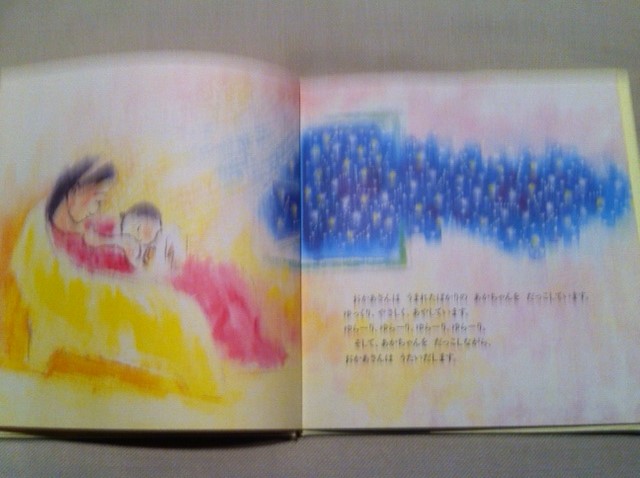
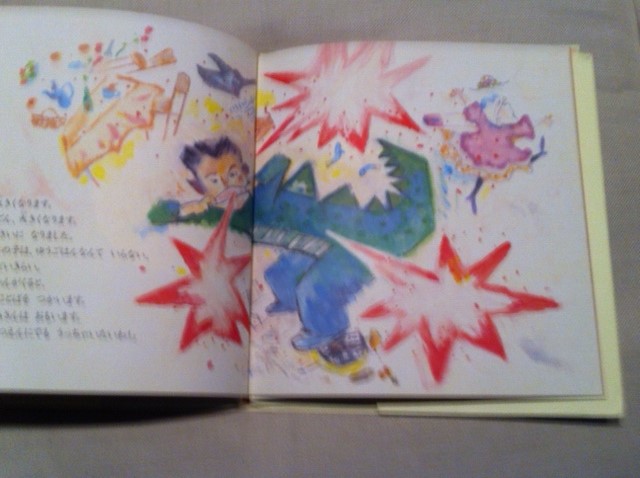
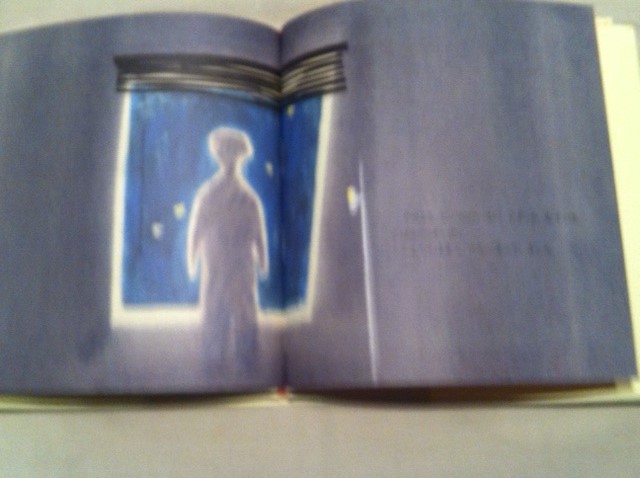
One of Munsch’s best-known books Love You Forever, was listed fourth on the 2001 Publishers Weekly All-Time Best selling Children’s Books selling 6,970,000 copies (not including the 1,049,000 hardcover copies).  In celebration of Bob’s birthday, the cbc  hosted a web page for Bob (link below) on which you can vote for your favorite Munsch book.  I suspect  Love You Forever  will win, as  I personally meet parent and educators worldwide that love that book.  I will also vote for Love You Forever but it is not the American version I love.  It is the Japanese version.  I once hosted an event in my home honoring a group of storytellers that came over from Japan.  Many Canadian storytellers and authors came to the event and, of course, Bob came too.  Graciously, these people gave away copies of their books as welcome gifts to Canada.  As there were about 15 Canadian tellers and authors, Bob just kind of blended in with the crowd, and I knew my foreign guests had no idea who he was or how well known he is.  That is-until they got home and Love You Forever was released in Japan, and became an enormous hit.  One of my guests sent me a copy of the Japanese version and a picture of her and two of her friends taken with Bob.  She was so excited and grateful to have met such an amazing/famous storyteller in person.  Bob, being Bob, would not have thought anything of it. He’s just that kind of person. Below are pictures of the book my guest sent me. I find the illustrations in this version tender and beautiful.  As Bob wrote this story in memory of one of his own children that passed away, I think the illustrations are most appropriate.   That’s my Munsch  favorite.  What’s yours? http://www.cbc.ca/books/munsch70/index.html !cid_E57F0443-35EB-47C7-8284-7385C00597B7!cid_B3FC11F1-450A-4314-8935-0DDC2310E39C!cid_8749C332-F0B7-4526-84F5-FB766894EA18!cid_B5F4DDF3-3F8F-48DE-81B7-B9F779472828

Hip-Hop Ed Fosters Connections

An article in the New York Times highlighted the work of high school English teacher Brian Mooney, who uses the lens of “hip-hop ed” to engage students in the study of complex literary themes. A blog Mr. Mooney created to share his curriculum and student work caught the attention of a broader audience — rapper Kendrick Lamar visited the high school. Students from Mr. Mooney’s English class and the after-school poetry club performed spoken word poems and raps for Kendrick Lamar.

Link to article: http://www.nytimes.com/2015/06/09/nyregion/kendrick-lamar-rapper-who-inspired-a-teacher-visits-a-high-school-that-embraces-his-work.html