Category Archives: Literacy teacher educators

Teasting your Knowledge of Semiotic Linguists

My (Cathy’s) research focus is on multiliteracies. Understanding the history and conceptual development of multiliteracies demanded I grasp a basic understanding of semiotics, or semiology.  Semiotics is a branch of linguistics that studies signs, symbols, and signification.  However, it is the study of how meaning is created, not what it is.

Sassureimages

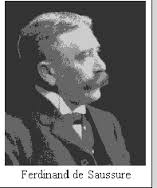
Ferdinand de Saussure is generally credited as the father of semiotics.  His book Course in General Linguistics, was published posthumously by his former students Bally and Sechehaye.  It was through this work that Saussure’s Semiology Theory was made public.  His theory was based on the study of signs; a sign being anything that represented something else.  Saussure proposed that communication is a system of signs that convey meaning, but limited his work to the use of words, spoken and written.  Sassure’s most recognized semiotic terms are signifier, signified, sign and symbolic.  (Glossary at bottom of page)

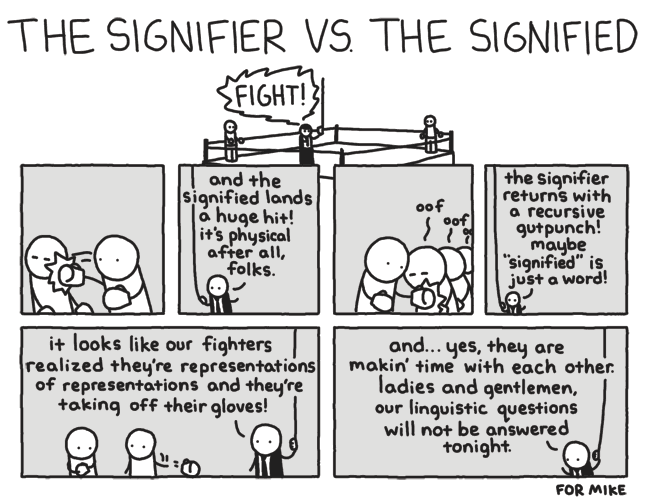
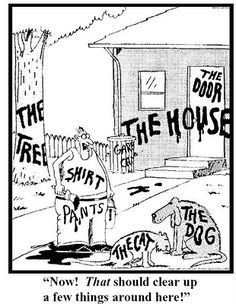
To test our knowledge of these terms, I share the following three graphics. Does their signifier representation signify anything symbolic to you?

Lighthearted Semiotics


 M semiotics-copy

signs


Signifier: any material thing that signifies, e.g., words on a page, a facial expression, an image.

Signified: the concept that a signifier refers to.

Together, the signifier and signified make up the:

Sign: the smallest unit of meaning. Anything that can be used to communicate.

Symbolic (arbitrary) signs: signs where the relation between signifier and signified is purely conventional and culturally specific, e.g., most words.


http://www.uvm.edu/~tstreete/semiotics_and_ads/terminology.html


Cyber -Seniors

“A humorous and heartwarming documentary feature, Cyber-Seniors chronicles the extraordinary journey of a group of senior citizens as they discover the world of the internet through the guidance of teenage mentors.”                                                                                                      Business Insider

Directed by Saffron Cassady, the idea for the Cyber-Seniors documentary began with a high school project that was launched by two sisters. The sisters had the support of their mom, Brenda Rusnak, who had worked her entire career with seniors. After a successful first year, Brenda helped continue the Cyber-Seniors program, expanding it to a second retirement home and helping to engage more youth mentors. Over the next ten months, Saffron and her film crew captured over 120 hours of footage and many memorable moments.  Of this film, the Washington Post reports:

Kerstin Wolgers made it through almost 82 years on this Earth without ever once checking an e-mail, watching a YouTube clip or sending a tweet. But last week, as part of a crash course that introduced her to the Internet for the first time, the former Swedish actress did all three — plus Googled, Instagrammed, Wikipedia-ed, shopped, video-gamed … even online-dated, eventually. “Lots going on here,” she says of Tinder. “It’s really exciting, if you asked me.”

Understanding how significant this program is to the lives of seniors was captured for me (Cathy) in a single moment when I watched one senior weep while he viewed his grandson play the piano via Skype. The differences technology makes in their lives, is remarkable.

Under the Getting Started heading of the web page for this documentary (link below) you can learn how to begin such a project in your community.  It also will let you know when the documentary is coming to a theatre near you.  Personally, I (Cathy) can’t wait to see it.

http://cyberseniorsdocumentary.com/

A delightful trailer for this film can be viewed at:

www.cyberseniorsdocumentary.com.


What is your Munsch favorite?

Yesterday, Robert Munsch turned 70.  If you are not familiar with Robert’s work, he is one of the most famous children’s authors in North America.  Most of his books are delightfully lively and humorous.  Much like a comedian, he likes to take a simple, truthful situation in a child’s life and show the funny side to it. A delightful example of this is his book I Have to Go Pee, which depicts a child getting bundled into a snow suit and then announcing “I have to go pee!”.  His books usually unfold in a pattern that children love to anticipate and participation in.

Beyond his writing style, I love his telling style, as he is a storyteller in the true sense of the word.  He tells stories (like a performance)  and he is very good at it.  I (Cathy) have had the privilege of working with Bob (Robert is his “author” name) several times as I am also a storyteller.  He is a delight to work with. Bob’s background has always intrigued me.  He studied to become a Jesuit priest, but after working in orpahanages and daycare centers, he decided he would rather work with children. After graduating with his Masters in Education, he moved to Canada (he is American) and worked in the preschool at the university of Guelph.  That was where he started telling stories.  People encouraged him to submit the stories he told and he eventually got one published.  The rest, as they say, is history.

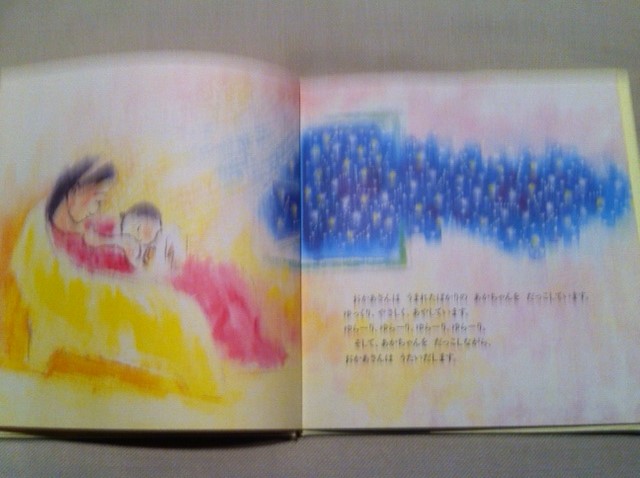
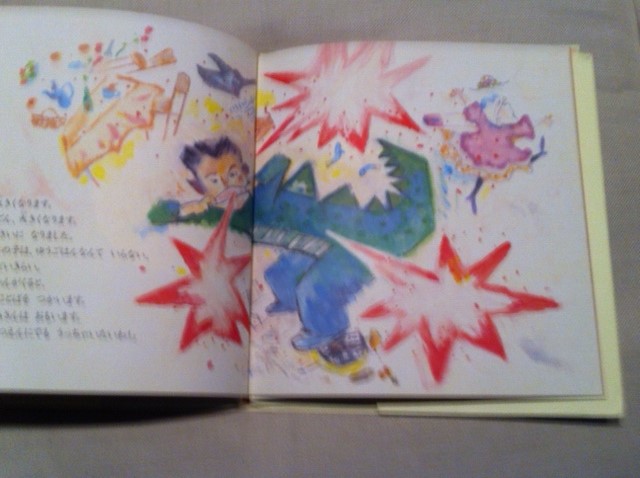
One of Munsch’s best-known books Love You Forever, was listed fourth on the 2001 Publishers Weekly All-Time Best selling Children’s Books selling 6,970,000 copies (not including the 1,049,000 hardcover copies).  In celebration of Bob’s birthday, the cbc  hosted a web page for Bob (link below) on which you can vote for your favorite Munsch book.  I suspect  Love You Forever  will win, as  I personally meet parent and educators worldwide that love that book.  I will also vote for Love You Forever but it is not the American version I love.  It is the Japanese version.  I once hosted an event in my home honoring a group of storytellers that came over from Japan.  Many Canadian storytellers and authors came to the event and, of course, Bob came too.  Graciously, these people gave away copies of their books as welcome gifts to Canada.  As there were about 15 Canadian tellers and authors, Bob just kind of blended in with the crowd, and I knew my foreign guests had no idea who he was or how well known he is.  That is-until they got home and Love You Forever was released in Japan, and became an enormous hit.  One of my guests sent me a copy of the Japanese version and a picture of her and two of her friends taken with Bob.  She was so excited and grateful to have met such an amazing/famous storyteller in person.  Bob, being Bob, would not have thought anything of it. He’s just that kind of person. Below are pictures of the book my guest sent me. I find the illustrations in this version tender and beautiful.  As Bob wrote this story in memory of one of his own children that passed away, I think the illustrations are most appropriate.   That’s my Munsch  favorite.  What’s yours? http://www.cbc.ca/books/munsch70/index.html !cid_E57F0443-35EB-47C7-8284-7385C00597B7!cid_B3FC11F1-450A-4314-8935-0DDC2310E39C!cid_8749C332-F0B7-4526-84F5-FB766894EA18!cid_B5F4DDF3-3F8F-48DE-81B7-B9F779472828

Intrigued by “The Farmerettes”

I (Cathy) attended a very interesting book launch recently at the Different Drummer Book Store in Burlington, Ontario.   Author, Gisela Tobien Sherman, (top left in photo) released her new book The Farmerettes.  The book was inspired by storyteller, poet, Sonja Dunn (bottom right of photo) who was a Farmerette.  At the book launch, the story of the inspiration for the book was shared.  Gisela, Sonja and a few other members of the  Canadian Society for Childrens’ Authors, Illustrators, and Performers (CANSCAIP) were having lunch together.  Sonja, now 84, (yeah, doesn’t look it!) shared one of her experiences as a Canadian Farmerette during the Second World War. Apparently during the war, with all the young men away fighting, there was not enough labor to work the farms, so teenage girls were rounded up and sent off to live on farms throughout the province.   Sonja, was one of these young women, boarded in a barn with five others.  They were taught and expected to carry out all  the heavy farm work on a daily basis.  Sonja talked about how the experience changed them.  Sonja’s story struck a chord with Gisela and she began to research this fascinating part of our history.

sonja dunn

At the book launch were three other Farmerettes (all in their 80’s), who looked quite pleased to have their stories told.  Plus, a fascinating collection of photographs,  depicting their lives during this era of Canadian history were displayed.  I was intrigued by the stories shared at the launch and deeply touched by the pride of the Farmerettes.  I bought several copies of the book to give away, and of course, one copy for myself.  Today, I will lay on my chaise lounge and treat myself to reading The Farmerettes, Second Story Press, by Gisela Tobien Sherman.  Can’t wait.

Lin Goodwin Video Now Available: Experts Speaking about Teacher Education

Last year I (Clare) received a grant for the project: Rethinking Literacy Teacher Education Lin Goodwinfor the Digital Era: Teacher Educators, Literacy Educators, and Digital Technology Experts Working Together. One of the main activities of the project was to bring together 16 experts from three fields and 4 countries (Canada, US, UK, and Australia) to address the following questions.
• How is our understanding of literacy evolving in light of the new ways we communicate?
• How can literacy/English teacher educators (LTEs) prepare student teachers to develop and implement literacy programs that capitalize on digital technology (DT)?
• What teacher education curriculum changes are required to better prepare future teachers to integrate technology in their own teaching?
• What professional learning support do LTEs need to develop courses that will integrate and make greater use of DT?

We held a Symposium in London England in June. Click on the link https://literacyteaching.net/connection-grant/ for more info on the Symposium and for some photos.

At the Symposium we interviewed the participants which we video taped. These videos are now available. They are incredibly interesting, informative, and short. Teacher educators can use these in their courses/presentations. Click on https://literacyteaching.net/connection-grant/powerpoint-presentations-and-videos/

(or the box to the right of this post).

I want to bring your attention to the second video which is of Lin Goodwin from Teachers College, Columbia University. She addresses:

First video: A key insight she has had about education

Second video: Recommendation to improve teacher education

Lin’s powerpoint presentations are also included. Lin is the Vice President of Division K Teaching and Teacher Education for AERA. She is an outstanding researcher who has recently conducted systematic research on teacher educators. Attached is a recent article she co-authored: What Should Teacher Educators Know and Be Able to Do? Perspectives From Practicing Teacher Educators Goodwin_-_WhatShouldTeacherEducatorsKnowandBeAbletoDoPerspec[retrieved_2015-03-28]

Enjoy!

Powtooning about Powtoon

I (Cathy) made a Powtoon about making a Powtoon.  Just follow the link below:

http://www.powtoon.com/show/dK9qzPurSC7/intro-to-powtoon/#/

If you are not familiar with Powtoon, it is an animated on-line presentation software tool that creates explainers, videos and presentations.  If you can create a power point, you can create a  Powtoon.  Only a Powtoon is much more interesting and fun!  It is an effective  tool for flipped classrooms and they make great multimodal assignments for students.  You can find many how-to videos on youtube.  My favourite was  on script writing (for powtoons):

https://www.youtube.com/watch?v=lyB1Y9xkSec

The Powtoon web site also hosts a set of tutorials to help you get started:

http://www.powtoon.com/tutorials/#prettyPhoto

The Powtoon I created was through a free account.  In that account I have access to  five minutes of Powtooning, 10 tunes and 11 animation styles.  Cant wait to make another.

Hope you give it a try!


Dewey meets Delpit: Bringing theory to life in teacher education

Last week I (Yiola) tried something in my teacher education course that was less safe. I brought together divergent theorists,  multiple contexts and eras and encouraged practicum connections in ways that are not typical.  I was unsure of the outcome: would the student teachers understand? connect? appreciate? Just as I encourage our students teachers to take risk, I took a risk in hope new understandings, connections and realizations about teaching and learning would occur.  At the end of class students applauded… when does that ever happen? The comments and reactions at the end of class indicate that students appreciated the class content and left class with much to think about.

I have recently re-read Dewey’s Education and Experience (1938) and was inspired to share the ideas with my class, namely what is miseducative practice? And how do traditional and progressive models of education play out in classrooms today? We discussed how both models are quite transparent in today’s classrooms. We also explored Dewey’s recommendation of a theory of education that is based on a philosophy of experience. Student teachers felt that the notion of experience is now more commonly understood and a desired practice in teaching. We discussed how finding a coherent theory of education based on a philosophy of experience would require transcending the notion of “either/or” traditional or progressive models and moving into integrative reasoning. So this is all quite typical… and then I introduced Delpit.

In Delpit’s work Other People’s Children  (1988) Delpit described herself as “a product of skills-oriented approach to writing and a teacher of process oriented approaches”.  Her amazing chapter, The Silenced Dialogue,  illustrates Dewey’s request to have educators think deeply about the either/or debate between models of education and the implications of our practice on student learning. Delpit explains the following about her chapter, “My charge here is not to determine the best instructional methodology… Rather, I suggest that the differing perspectives on the debate over “skills” versus “process” approaches can lead to an understanding of the alienation and miscommunication, and thereby to an understanding of the “silenced dialogue”… this is precisely what Dewey asked of us fifty years prior, that as educators we must go deeper than thinking across methods; we must use a philosophy of experience to deepen our understanding of the best ways to teach children. For Delpit, the experiences are those of Children of colour and children who experience poverty.

Exploring Dewey’s concepts through the lens of power and Delpit’s context of literacy was remarkable. The process of grounding Dewey’s theories in Delpit’s work provided grounding for both scholars in ways that I wasn’t yet unprepared. Students were excited to talk about a philosophy of experience by looking as social context as a foreground for understanding models of education; for understanding why certain methods may work well and not well and how to move our practice forward so all students are not only learning but are successfully learning in ways that are empowering them.

The final layer of discussion in class was to connect the ideas to their own placements. To tell stories of methodological challenge and to explore how to address those challenges thinking about what Dewey suggests and what Delpit illustrates. Again, students were speaking in detail on the gaps and the glories in their classrooms and schools.  The result of this class: discussion sophisticated and practices validated.

We finished the discussion by reading aloud the last paragraphs of Delpit’s chapter; as a reminder of the enormous but yet delightful task we have as teachers if we truly wish to create learning for all:

We must keep the perspective that people are experts in their own lives. There are certainly aspects of of the outs tide world of which they may not be aware, but they can be the only authentic chroniclers of their own experience. We must not be too quick to deny their interpretations or accuse them of “false consciousness”…And finally, we must be vulnerable enough to allow our world to turn upside down in order to allow the realities of others to edge themselves into our consciousness…  

By doing what Delpit suggests and with keeping Dewey’s foundational perspectives in mind we as teachers can begin to understand how models work in classrooms.
Sue Dymoke: Making Poetry Happen

I (Clare) am happy to share news of a newly published text by Sue Dymoke: Making Poetry Sue DymokeHappen. (Sue is pictured with her new text.) I was lucky to review this text and here is my endorsement. This is an outstanding collection that gives voice to teachers and students as they meet poetry. It is essential reading for those who want to make poetry happen. An invaluable resource for new and experienced teachers, reading this text will change how you approach poetry. Rarely have I read a book that is so transformative. will become a classic.

Here is a link to an interview with Sue Dymoke.http://www.nottinghampost.com/Making-poetry-open-book/story-25887273-detail/story.html

  Making Poetry HappenFor those of you who are literacy/English teacher educators or classroom teachers I highly recommend this text. I learned a huge amount and thoroughly enjoyed every chapter. The stories written by teachers and academics are inspiriting and informative. I used some chapters with my student teachers who felt transformed. Many said they had never experienced poetry this way. Here is a link to Bloomsbury Publishers: http://www.bloomsbury.com/uk/making-poetry-happen-9781472510266/

Creating an Audit Trail

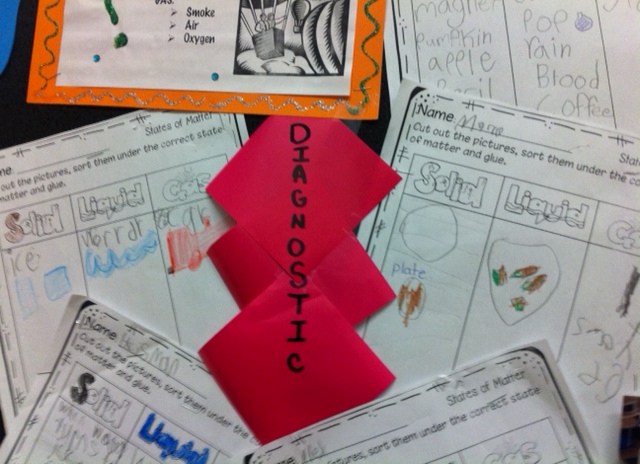
During one of my final practicum visits, I (Cathy) was excited to see one of my student teachers had created an audit trail.   When I mentioned this to her, she replied, “I thought  it was just a bulletin board.” But it was far more than ‘just a bulletin board’.   The student work Melissa had beautifully displayed represented an entire science unit of learning from pre-diagnosis to final summaries.

Audit trails were popularized by Dr. Vivian Vasquez, in her ground breaking critical literacy work with 3-5 year olds.  Vasquez says,                                                                                                             An audit trail or learning wall, as my three to five year old students called it, is a public display of artifacts gathered together by a teacher and their students that represents their thinking about different issues and topics.  This strategy is useful for creating spaces for students to re-visit, reread, analyze, and re-imagine various topics or issues. It is also a powerful tool for connecting past projects or areas of study to newer projects or areas of study. Further, it can be used as a tool for building curriculum as it visibly lays out the journey of the group’s thinking and learning over a period of time.

http://hwcdn.libsyn.com/p/c/f/3/cf355fe54466c4e0/Audit_Trail.pdf?c_id=4270455&expiration=1418946485&hwt=2cc91c9a05310c5ca082ae4a61c9c725

more walldiagnostic molecules

Exploring Literature Circles with Student Teachers

Yesterday with our pre-service PJ and JI literacy classes we explored the use of literature circles as part of a literacy program. The student teachers had read the novel Joey Pigza Swallowed the Key by Jack Gantos and in small groups took up the literature circle roles outlined by Harvey Daniels. After the student teachers had completed the literature circle activity the class came together again as a large group to consider and discuss the following questions: what did the student teachers think about the literature circle approach, would they use literature circles in their classroom teaching, what reactions did they have to the novel selected, and would they consider using this particular novel with their students. The student teachers engaged in an insightful and serious discussion of the questions posed. Reaction to the novel was mixed. Many of the student teachers appreciated the authors attempt to narrate the story from the perspective of a child labeled with an exceptionality (ADHD). However, student teachers also voiced their discomfort with various aspects of the novel such as the depiction of the young protagonist Joey’s interactions with various adults in the text, the issues of labeling and medicating children, the portrayal of abuse, alcoholism, and dysfunctional family dynamics in the novel.

Over the past few years Clare and I have intentionally selected this novel for use in the literacy course, in part, because the novel raises a number of serious issues teachers face in a classroom context. Each year student teachers communicate diverse reactions to the reading of this novel. For instance, we have had both student teachers who themselves have been diagnosed with an exceptionality, as well as, student teachers who as the parent of a child with an identified exceptionality tell us that aspects of novel truly resonated with their experience. In contrast, we have also had student teachers communicate their dislike and discomfort with aspects of the novel. At the end of class yesterday Clare and I reflected upon the rich class discussion, and once again asked ourselves if we should continue to use this novel with student teachers in the literacy courses. Our answer was yes. We do understand how and why the topics dealt with in the novel and the author’s portrayal of child-adult interactions are contentious and troubling. Yet, we also recognize the value of asking student teachers, who as educators will be work closely with children and families, to deeply consider the difficult and complex dimensions of a teacher’s role. As Lisa Delpit astutely reminds us “we do not really see through our eyes or hear through our ears, but through our beliefs.” As educators we must continue to challenge our beliefs about what it means to teach and to learn.