Category Archives: classroom teachers

Nell Duke: 10 Things Every Literacy Educator Should Know About Research

In my (Clare) graduate literacy course last night we talked about Nell Duke’s excellent Library book shelvesarticle: 10 Things Every Literacy Educator Should Know About Research. This is a highly informative article because Duke systematically addresses key questions about research – often questions that are not posed because the instant the word “research” is attached to a statement it seems to have more weight. She begins the article: Research-based,” “research-proven,” “scientifically based”—in the reading world these days, it seems that the term research is being used everywhere. it is also being misused and misunderstood.

My graduate students found the article very accessible and enlightening. Many said they will look at “research claims” more closely. It is well worth the read. Here is a link to article which was published in Reading Teacher. 10_things_to_know_about_research_duke_trtr1002

Duke addresses the following questions.

  1. what research can do.
  2. what research is.
  3. what research is not.
  4. the difference between research-based and research-tested.
  5. Many kinds of research have valuable contributions to make to our understanding of literacy learning, development, and education.
  6. different kinds of research are good for different questions.
  7. high-quality research has a logic of inquiry.
  8. conclusions drawn from research are only as sound as the research itself.
  9. where and how research is published or presented requires particular attention.
  10. educational research proceeds through the slow accumulationof knowledge.


Finns aren’t what they used to be


I (Clare) came across this interesting article on Finland by Sean Couglan from the BBC. . But unlike most other articles it is a “counter point” to the Finnish miracle. Thought you might find it interesting. http://www.bbc.com/news/business-32302374·

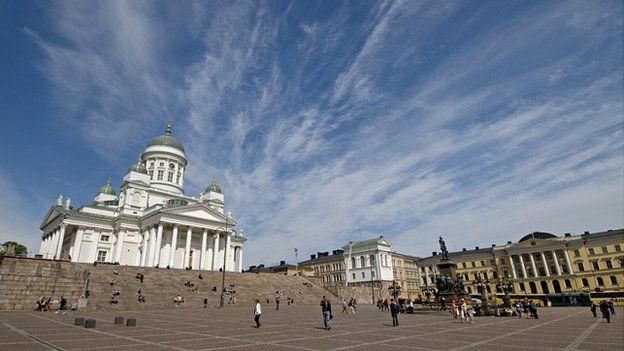
No international education conference is complete without a reference to Finland._82320693_helsinkibbc

Ever since it appeared at the top of international league tables more than a decade ago, it has been endlessly hailed as how to run an education system.

Finland, which faces a general election this week, has been the poster child for education reform and overseas delegations have made pilgrimages to learn from its example.

In particular it has been used to argue that you can have high results without an overbearing system of testing and inspection.

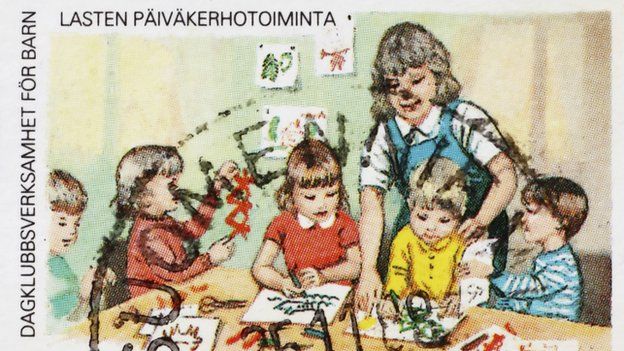
It was the country where pupils did not have to start school until they were seven, enjoyed the longest holidays and then basked in the glow of global approval when they topped the tables in the international Pisa tests. _82320689_finnishstamp

But is the gloss coming off the image of Finland as an education superpower?

More like an Asian tiger

A study from Gabriel Heller Sahlgren, director of research at the Centre for Market Reform of Education, argues that Finland’s education standards are in decline.

He says it is a misunderstanding of Finland’s success to attribute it to a liberal culture without league tables or a formal curriculum and giving much autonomy to teachers.

Finland faces a general election this week

In a report published by the right-wing think tank the Centre for Policy Studies, Mr Sahlgren argues that Finland’s star performance in the 2000 Pisa tests was built on the legacy of an older, very traditional education system, which had been part of the country’s process of nation building.

But this wasn’t the image of Finland wanted by education experts, he says. Instead, when Finland was the top performer in Europe, it was used as a “counter-argument” to the success of east Asian school systems in Singapore, Shanghai and Hong Kong.

While they were seen as successful because of hard work and grindingly long hours, Finland was seen as the way to achieve success with a much more creative and less centralised approach.

Mr Sahlgren, based at the London School of Economics, says there was “never any real evidence” for such an impression.

“It was simplistic, looking at how Finland’s system looked today, without looking at its history.”

Finland’s school system became part of its building of a national identity

Rather than being the opposite of east Asian countries, he says in many ways Finland was like those emerging economies.

Compared with its Nordic neighbours, Finland was a “late developer”, much poorer and with lower levels of education in the early part of the 20th Century.

Finland’s approach of investing heavily in education and seeing rapid improvements was in many ways more like the pattern of Tiger economies in east Asia than the more sluggish progress in western Europe.

‘Fairy stories’

Mr Sahlgren’s research argues there is a reluctance to accept that Finland’s education system, under which many of its successful teachers had trained, had been very structured and centralised.

IFinland has been the European country that matched East Asian countries in education tests

He quotes a research group from the UK visiting schools in Finland in 1996, a few years before the Pisa tests brought the world’s attention to the country’s schools.

“We have moved from school to school and seen almost identical lessons, you could have swapped the teachers over and the children would never have noticed the difference,” said the researchers from the University of East Anglia, observing Finnish classrooms.

Another study challenges what it calls the “misconceptions and misrepresentations” about Finland’s success in the Pisa tests.

Tim Oates, director of assessment research for the Cambridge Assessment exam group, has published a study called “Finnish fairy stories”, in which he debunks what he claims are myths about the Finnish system.

‘Education tourism’

He says the waves of “education tourism” that followed the success in Pisa tests failed to look at how the system had improved.

Image captionHow much of Finland’s success was the legacy of an earlier, more traditional school system?

“They got off the plane and asked the Finns about the system in 2000 – not what it was like during the 1970s and 1980s, when standards were rising.”

He also warns of a tendency for people to use Finland’s school system as a way of confirming what they want to find.

The claim that Finland does not have an Ofsted-style inspection and national testing is an incomplete picture, says Mr Oates. He says there has been a strong system of accountability and inspection and gathering of data.

The difference from a system such as England, says Mr Oates, is how the information is used – for example in Finland exam results are not published in school league tables as they are in England.

Pisa tests 2012 top 10
Reading Maths
1. Shanghai 1. Shanghai
2. Hong Kong 2. Singapore
3. Singapore 3. Hong Kong
4. Japan 4. Taiwan
5. South Korea 5. South Korea
6. Finland 6. Macao
7. Ireland 7. Japan
8. Taiwan 8. Liechtenstein
9. Canada 9. Switzerland
10. Poland 10. Netherlands

It is also misleading to think there are not high-stakes exams or academic selection, he says, with entrance to some secondary schools being determined by test scores.

And Mr Oates argues it is “hopeless myopia” to see Finland’s system as a model of high levels of autonomy.

Finland is facing another set of controversial changes, away from traditional subject teaching. And Mr Sahlgren warns of a school system in decline. It is no longer in the top 10 for maths in Pisa tests, having been in second place in 2003 and 2006.

Andreas Schleicher, the OECD’s director of education and the creator of the Pisa tests, rejects this analysis.

“In the 1960s, Finland was an average performer at best and that was when it had a very traditional education system,” says Mr Schleicher.

“Finland changed its system only in the late 1970s and 1980s and that’s when we saw the results rise. The most recent decline is quite modest,” he said.

Mr Oates says the problem has been that people have used Finland as a way of discussing their own national education debates, without really thinking about what made Finland different.

“People have been seriously misled by stories told by people who have looked at Finland through their own, restricted lens,” he says.


Keeping up with Technology in Education

I (Cathy) am not sure that keeping up with technology in education is possible.  This is where collaboration in the classroom becomes a necessity. The ‘technology-gifted’ students become our greatest resource, in effect- the teachers.   Unlike the cartoon below, I’m not referring to the  students who can afford the latest gadgets, I’m referring to the students who are ‘technologically intelligent’.  Several years ago, Howard Gardner suggested this was possibly  a new intelligence to add to his list, but unfortunately never followed up.  Personally, I have relied on such students in the past.  They are our mentors. They ‘see’ the digital world and the possibilities. It’s a gift.  Look for these students in your class.  They may be a fantastic untapped resource.


'Our school computers are one year old. How can we be competitive in the job market if we're being trained on obselete equipment?'
‘Our school computers are one year old. How can we be competitive in the job market if we’re being trained on obselete equipment?’

The Wrong Way to Teach Math (and Other Subjects)

In the New York Times Sunday Review on Feb 28, Andrew Hacker published an article (p. 2) checkmark imagescalled “The Wrong Way to Teach Math,” based on his forthcoming book The Math Myth and Other STEM Delusions. It begins with this remarkable statement:

“Most Americans have taken high school mathematics, including geometry and algebra, yet a national survey found that 82 percent of adults could not compute the cost of a carpet when told its dimensions and square-yard price.”

Hacker, who teaches political science and mathematics at Queens College in New York, argues that while “calculus and higher math have a place…it’s not in most people’s everyday lives.” Students need to learn “numeracy” or “quantitative literacy”: “figuring out the real world – deciphering corporate profits or what a health plan will cost.”

I (Clive) find Hacker’s ideas and examples very helpful and plan to buy his book. But it occurs to me that similar things could be said about other subjects such as literacy (reading, writing, literature), history, science, etc. While “academic” aspects of these subjects have to be taught to prepare students for later education and (possibly) work settings, teachers need to do both (as I have posted before). It isn’t appropriate just to focus on Shakespeare and classical novels, for example, and not prepare students to find enjoyment and make wise choices in their everyday fiction and non-fiction reading.

Addressing both – the academic and the everyday – is not easy, given the extensive subject content teachers are expected to cover; but in teaching and teacher education this should be our goal, and over the years we should move as far as humanly possible in this direction.


Concept of Design will “weave their lives back together”

While investigating how educators interpret the “concept of design” when using a multiliteracies approach, I (Cathy) came across this intriguing application. I felt it was most appropriate in understanding how our definition of literacy or literacies is now so incredibly comprehensive. This ‘concept of design’ integrates the processes of narrative with issues of social justice, environmental change, and elements of traditional culture.abeer

Designer:  Jordanian-Canadian Abeer Seikaly received her Bachelor of Architecture and Fine Arts from the Rhode Island School of Design in 2002. Over the span of 10 years, she has built a foundation of interdisciplinary skills that span architecture, design, art, fashion, textile design, and curation. She won the 2013 Lexus Design Award for her work, “Weaving a Home.” Abeer’s work is rooted in the process of memory – journaling, documenting, archiving, and collecting – to create objects, spaces, and experiences that exist in the realm of her narratives.

Purpose: Abeer hopes her Weaving a Home design will allow refugees who have been displaced by global and civil war, and climate change to have the chance to “weave their lives back together”. Inspired by elements of nature such as snake skin and traditional cultural aspects such as weaving, nomadic life and tent dwellings, this weather proof, strong but lightweight and mobile fabric tent is designed to collect rain water for drinking and bathing. 

Product: The Weaving a Home tent has a flexible dual layer tent structure has the ability to close out the cold of winter and wet weather. Solar energy hits the tent fabric and is stored in a battery for use at night providing renewable electricity. The tent sides also open up to allow cool air in and hot air out in summer. Rainwater is collected in the top of the tent and filters down the sides so the tent does not become flooded. The tent also has the ability to become a showering facility with water being stored in pockets on the side and drawn upwards via a thermosiphoning system providing basic sanitation.

tenttent at night

http://www.abeerseikaly.com/weavinghome.php

Defining happiness: A child’s take on life.

IMG_0968From the mouths of babes. Motivational speaker Jay Shetty has some wise words for you on how to make the world a better place. A teacher asked her students to write down what they want to be when they grow up. There were the usual responses – astronaut, singer …. And one boy wrote down happy. When the teacher talked to the child suggesting he misunderstood the assignment, he responded. “Miss, I think you misunderstand life.” WOW!!!!

According to Shetty, it starts by pressing pause on your own life and improving the way you IMG_2826communicate with others.  The video is short but it reminds us about what is important in life. Well worth the time. In the video below watch him explain why it’s time for you to take a moment to become more conscious and aware. https://www.facebook.com/HuffingtonPost/videos/10153725769876130/

What makes a teacher a good teacher?

A few posts ago Clare wrote about teacher characteristics. I  (yiola) am following up on her post with considerations for what makes a good teacher?

Take a look at this link:

http://www.npr.org/2016/03/09/469097318/a-great-teacher-illustrated?utm_source=facebook.com&utm_medium=social&utm_campaign=npr&utm_term=nprnews&utm_content=20160312

I think it is quite fantastic as it tells, in an nuanced way, the narrative of one good teacher.

Jimi has many qualities, characteristics and knowledge including:  content knowledge, pedagogical knowledge, an understanding of development, a clear philosophy/vision of teaching, a belief that all children can learn, patience and care.  What stood out most for me as I read this tale was the teacher’s capacity for care.  I believe care is central to good practice —  care for children’s well being;  care for children’s learning;  care for the future.

I often think about the possibilities of experience in school and the stories of positive and negative experience and time and time again the experiences that inspire and motivate children to learn are often centred around the teacher who cares.


5 Tips for Teaching the Tough Kids

I (Clare) found this post on Edutopia very interesting. I think that many of techniques would/could/should work with all students. As Josh Work notes every teacher remembers his/her first “touch kid” experience. Mine was with a young boy Tommy who seemed incorrigible. I wished that I had followed the advice provided below. Here is the link to the article.  Teaching the Tough Kids

Guest blogger Josh Work shares five techniques for dealing with middle school students who present ongoing discipline issues. His underlying theme is recognizing these kids as adolescents seeking ways to cope with stress or complicated lives. Source: 5 Tips for

Every teacher remembers his or her first “tough kid” experience. Maybe the student ignored your directions or laughed at your attempts to utilize the classroom discipline steps. We all have at least one story to share, and for some teachers, teaching a tough kid is a daily challenge. It seems that no matter what teaching techniques you try to pull out of your educator hat, nothing changes their behavior.

I’ve had the privilege of teaching some tough kids. I say “privilege” for a reason. Teaching these students pushed me to be a better educator and a more compassionate person. I’ve detailed below five methods that have reduced misbehavior in my classroom and, better still, helped transform these students into leaders among their peers.

1. Set the Tone

I firmly believe that a student’s misbehavior in the past does not necessarily equate to future indiscretions. At the beginning of the school year, I would walk down to the sixth grade teachers with my new class lists and ask questions. I would inquire about who works well together, who probably should not sit next to each other, and who caused them the most grief. Not surprisingly, teachers would share the names of the same students that were their “tough kids.” If I had the privilege of having any of these students in my class, I looked forward to it instead of dreading it.

Usually during the first week of school, I would try to have individual conferences with these tough kids. I’d take this as an opportunity to clear the air and wipe the slate clean. Often, these students can feel disrespected because their teachers already have preconceived ideas about how they are the troublemakers. Explain that you respect them and have high expectations for them this year. Lay the foundation for the student’s understanding that you believe in him or her, because you might be the only one who genuinely does.

2. Be a Mentor

Unfortunately, it has been my experience that some of the toughest kids to teach come from very difficult home situations. Inconsistent housing, absentee parent(s), lack of resources, and violence are only a few examples of what some of these students have to face every day. Kids that are neglected at home can act out in school to receive attention, good or bad. They want someone to notice them and take an interest in their lives.

Don’t forget how important you are in helping your students develop not just academically, but also socially. Make an effort to show you care about them, not just their grades. Be proactive instead of reactive. The key to being a good mentor is to be positive, available, and trustworthy. One year with a great mentor can have a lasting, positive impact on a tough kid’s life.

3. Make Connections

Part of being a great mentor is your ability to make connections with these tough kids. Since these students sometimes don’t have anyone encouraging them or taking an interest in their lives, have a real conversation about their future or dreams. If they have nothing to share, start talking about their interests — sports, music, movies, food, clothing, friends, siblings, etc. Find a way to connect so that they can relate to you. Start off small and show a genuine interest in what they have to say. Once you’ve made a positive connection and the student can trust you, you’d be surprised how fast they might open up to talking about their hopes, fears, home life, etc. This is when you need to exercise professional discretion and be prepared for what the student might bring up. Explain that you do not want to violate his or her trust but that, as an educator, you are required by law to report certain things.

4. Take it Personally (In a Good Way)

Teachers need to have thick skin. Students may say things in an attempt to bruise your ego or question your teaching abilities. Remember, we are working with young children and developing adults. I’m sure you said some hurtful things that you didn’t mean when you were growing up. Students can say things out of frustration or boredom, or that are triggered by problems spilling over from outside of your classroom. Try to deal with their misbehavior in the classroom — they might not take you seriously if you just send them to the office every time they act out. These are the moments when they need a positive mentor the most.

Once trust has been established, remind these students that you believe in them even if they make a mistake. I’ve vouched for kids during grade team meetings only to have them get into a fight at lunch the same day. They make mistakes, just like we all do. It’s how we respond to their slip-ups that will determine if they’ll continue to trust us. Explain that you’re disappointed in their actions and that you know they can do better. Don’t write them off. Tough kids are used to being dismissed as hopeless. Instead, show them that you care and are willing to work with them. Helping a tough kid overcome personal issues isn’t something that happens overnight, but it is a worthwhile investment in his or her future.

5. Expect Anything and Everything!

All of our students come from a variety of cultures, nationalities, and home environments, and these five techniques that have worked for me might barely scratch the surface of how you interact with the tough kids in your classroom. If you have another method that has helped you reach out and connect to a tough kid, please share it below in the comments section.

Source: 5 Tips for Teaching the Tough Kids

Motto for Education

I (Cathy)  came across this quote and felt it was most applicable to education.  As teachers and teacher educators we must be forward thinking and forward acting.  We must look to where or students and society is going to be and prepare them. Thank you # 99 for reminding us of our role in the progress of educational theory and praxis.


I skate quote


Can you spot a good teacher from their characteristics?


12644854_10156632304500121_7940976327917128279_nI (Clare) found this really interesting article in the Guardian newspaper about traits of effective teachers. Here is the link for the article: http://www.theguardian.com/teacher-network/2016/mar/02/can-you-spot-a-good-teacher-from-their-characteristics

I believe that the admission process is one of the most important steps in teacher education but the question that has vexed me for years is: What do you look for in an applicant? In previous posts we have talked about the admission process used in Finland which is very intense, focused, and pointed. They know what they are looking for! More to come in future blogs. And I highlighted in red a few key passages that resonated with me.

Professor Rob Klassen explores the latest research into what traits effective teachers have and how this could inform recruitment
What would you do in the following situation?
As students in your classroom begin a writing task, one of them, Kata, starts throwing paper around and distracting the others. You know from previous incidents that Kata often becomes frustrated when she does not understand how to complete activities; she often displays this by being disruptive.
Would you …
a) Ask her to leave the class?
b) Show her how to get started on the task?
c) Encourage her by telling her that she is capable of completing the task?
d) Ask a passing teacher to talk to her?

Your answer gives important clues about how you think and operate as a teacher (see below for answers). In future, similar questions could help researchers understand how prospective teachers might interact with students, and enable trainers to recruit people who are best suited to work in schools.

The debate over what makes a good teacher isn’t new – as far back as 500BC Confucius was portrayed as a model teacher. But despite this, there’s been little systematic research into how we can measure the personal characteristics that make a teacher effective – and how we can reliably select people for teacher training.
Part of the problem is that teaching is often portrayed as something that’s too magical and cryptic to decode. While there is something special about the idea of passing on knowledge, teaching is no more mystical than other professions. Research has shown that some teachers are routinely more successful than others – and science can predict who is likely to be the most effective.

A recent study by Dr Allison Atteberry from the University of Colorado followed more than 3,000 teachers over the first five years of their careers, measuring their effectiveness by looking at student outcomes. Atteberry found that even after statistically controlling for external factors such as school, family and student characteristics, teachers who were most effective tended to maintain this over time. Similarly, those in the bottom group for effectiveness stayed there, even when they moved schools.
Anecdotal experience backs this up: it’s not uncommon for someone to remember having a great – or not-so-great – teacher at school.

This indicates that multiple factors, which interact in complex ways, make some teachers consistently effective. Academic ability is one of them, hence the UK government’s introduction of tougher entry requirements for teacher training in 2013. But it’s not the only thing that matters; non-¬cognitive attributes – personal characteristics such as empathy and communication – are also essential.

A recent large-scale review of the factors associated with student achievement showed dramathat teacher-student relationships outweighed the contribution of teachers’ subject knowledge, teacher training, or home and school effects. In fact, John Hattie’s research in Australia shows that teacher characteristics, such as interpersonal skills, are more closely associated with student achievement than curriculum or teaching approach.

Our research in the UK and internationally – funded by the European Research Council – takes this further, examining how we can identify key teacher characteristics and assess them for entry into teacher training. There can be a lot of leeway in how personal characteristics are expressed, but we want all teachers to have qualities such as empathy, resilience and adaptability in the face of challenges. Our results show that these attributes are broadly the same across secondary and primary schools, although there are some variations between cultures. In Finland, for example, cooperative skills are particularly desirable because there’s a strong tradition of collaboration in schools, where teachers plan and work together.

Instead of using personality tests, we use scenario-based questions, known as situational judgment tests, to measure characteristics. These tests have more validity in predicting job performance than personality tests, which people can fake more easily. Studies in organisational psychology suggest that face-to-face interviews are also an unreliable way to gauge characteristics as interviewers are prone to hidden bias: even when we try to be open and fair, we’re inclined to select people who are a bit like us.

As teaching faces a manpower catastrophe, Holly Welham meets those failing to join the profession because of a ‘ludicrous’ math test

IMG_2508It is possible to improve some traits – such as communication or organisation – through professional development. But this may not be possible for all non¬-cognitive attributes – it’s harder to build skills such as empathy, for example. This is why it’s essential that we pay more attention to personal qualities when
recruiting prospective teachers.

That’s not to say that the goal of selecting prospective teachers is to pick candidates with only one type of personality or teaching style, but we do want to make sure the people educating our children, grandchildren, friends and family have some basic personal quality building blocks. This is already happening in fields as diverse as medicine and the military, for example.

We have already piloted situational judgment tests with universities in Cambridge, Newcastle and York, and are working with universities and education ministries in Australia, Finland, Hungary and Lithuania. After further validation of the tests, we are excited about introducing this new selection procedure nationally in some settings and an online version using video scenarios.

Back to the scenario at the beginning of this article. Although there’s no perfect response, if you chose “b” you might show adaptability in the classroom. Choose “c” and you probably have a growth mindset and believe that with effort children are capable of improving their attainment. Choosing “a” might show a lack of resilience when facing challenging situations, and “d” might show a lack of self-efficacy to engage all pupils in learning. Which quality do you have? Maybe you would be a great teacher.