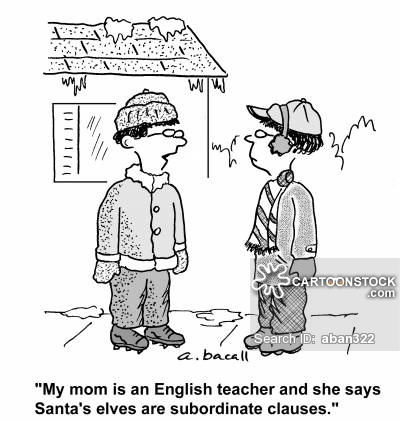
Wishing you and yours a very merry season filled with laughter! Cathy
Wishing you and yours a very merry season filled with laughter! Cathy
I (Clare) read this amazing article from Neil Gaiman. Here is the link to the article: www.theguardian.com/books/2013/oct/15/neil-gaiman-future-libraries-reading-daydreaming It is a must read for all those interested in literacy — including policy-makers!
 It’s important for people to tell you what side they are on and why, and whether they might be biased. A declaration of members’ interests, of a sort. So, I am going to be talking to you about reading. I’m going to tell you that libraries are important. I’m going to suggest that reading fiction, that reading for pleasure, is one of the most important things one can do. I’m going to make an impassioned plea for people to understand what libraries and librarians are, and to preserve both of these things.
And I am biased, obviously and enormously: I’m an author, often an author of fiction. I write for children and for adults. For about 30 years I have been earning my living though my words, mostly by making things up and writing them down. It is obviously in my interest for people to read, for them to read fiction, for libraries and librarians to exist and help foster a love of reading and places in which reading can occur.
So I’m biased as a writer. But I am much, much more biased as a reader. And I am even more biased as a British citizen.
And I’m here giving this talk tonight, under the auspices of the Reading Agency: a charity whose mission is to give everyone an equal chance in life by helping people become confident and enthusiastic readers. Which supports literacy programs, and libraries and individuals and nakedly and wantonly encourages the act of reading. Because, they tell us, everything changes when we read.
And it’s that change, and that act of reading that I’m here to talk about tonight. I want to talk about what reading does. What it’s good for.
I was once in New York, and I listened to a talk about the building of private prisons – a huge growth industry in America. The prison industry needs to plan its future growth – how many cells are they going to need? How many prisoners are there going to be, 15 years from now? And they found they could predict it very easily, using a pretty simple algorithm, based on asking what percentage of 10 and 11-year-olds couldn’t read. And certainly couldn’t read for pleasure.
It’s not one to one: you can’t say that a literate society has no criminality. But there are very real correlations.
And I think some of those correlations, the simplest, come from something very simple. Literate people read fiction.
Fiction has two uses. Firstly, it’s a gateway drug to reading. The drive to know what happens next, to want to turn the page, the need to keep going, even if it’s hard, because someone’s in trouble and you have to know how it’s all going to end … that’s a very real drive. And it forces you to learn new words, to think new thoughts, to keep going. To discover that reading per se is pleasurable. Once you learn that, you’re on the road to reading everything. And reading is key. There were noises made briefly, a few years ago, about the idea that we were living in a post-literate world, in which the ability to make sense out of written words was somehow redundant, but those days are gone: words are more important than they ever were: we navigate the world with words, and as the world slips onto the web, we need to follow, to communicate and to comprehend what we are reading. People who cannot understand each other cannot exchange ideas, cannot communicate, and translation programs only go so far.
 The simplest way to make sure that we raise literate children is to teach them to read, and to show them that reading is a pleasurable activity. And that means, at its simplest, finding books that they enjoy, giving them access to those books, and letting them read them.
I don’t think there is such a thing as a bad book for children. Every now and again it becomes fashionable among some adults to point at a subset of children’s books, a genre, perhaps, or an author, and to declare them bad books, books that children should be stopped from reading. I’ve seen it happen over and over; Enid Blyton was declared a bad author, so was RL Stine, so were dozens of others. Comics have been decried as fostering illiteracy.
No such thing as a bad writer…
It’s tosh. It’s snobbery and it’s foolishness. There are no bad authors for children, that children like and want to read and seek out, because every child is different. They can find the stories they need to, and they bring themselves to stories. A hackneyed, worn-out idea isn’t hackneyed and worn out to them. This is the first time the child has encountered it. Do not discourage children from reading because you feel they are reading the wrong thing. Fiction you do not like is a route to other books you may prefer. And not everyone has the same taste as you.
Well-meaning adults can easily destroy a child’s love of reading: stop them reading what they enjoy, or give them worthy-but-dull books that you like, the 21st-century equivalents of Victorian “improving” literature. You’ll wind up with a generation convinced that reading is uncool and worse, unpleasant.
We need our children to get onto the reading ladder: anything that they enjoy reading will move them up, rung by rung, into literacy. (Also, do not do what this author did when his 11-year-old daughter was into RL Stine, which is to go and get a copy of Stephen King’s Carrie, saying if you liked those you’ll love this! Holly read nothing but safe stories of settlers on prairies for the rest of her teenage years, and still glares at me when Stephen King’s name is mentioned.)
And the second thing fiction does is to build empathy. When you watch TV or see a film, you are looking at things happening to other people. Prose fiction is something you build up from 26 letters and a handful of punctuation marks, and you, and you alone, using your imagination, create a world and people it and look out through other eyes. You get to feel things, visit places and worlds you would never otherwise know. You learn that everyone else out there is a me, as well. You’re being someone else, and when you return to your own world, you’re going to be slightly changed.
Empathy is a tool for building people into groups, for allowing us to function as more than self-obsessed individuals.
You’re also finding out something as you read vitally important for making your way in the world. And it’s this:
The world doesn’t have to be like this. Things can be different.
I was in China in 2007, at the first party-approved science fiction and fantasy convention in Chinese history. And at one point I took a top official aside and asked him Why? SF had been disapproved of for a long time. What had changed?
It’s simple, he told me. The Chinese were brilliant at making things if other people brought them the plans. But they did not innovate and they did not invent. They did not imagine. So they sent a delegation to the US, to Apple, to Microsoft, to Google, and they asked the people there who were inventing the future about themselves. And they found that all of them had read science fiction when they were boys or girls.
Fiction can show you a different world. It can take you somewhere you’ve never been. Once you’ve visited other worlds, like those who ate fairy fruit, you can never be entirely content with the world that you grew up in. Discontent is a good thing: discontented people can modify and improve their worlds, leave them better, leave them different.
And while we’re on the subject, I’d like to say a few words about escapism. I hear the term bandied about as if it’s a bad thing. As if “escapist” fiction is a cheap opiate used by the muddled and the foolish and the deluded, and the only fiction that is worthy, for adults or for children, is mimetic fiction, mirroring the worst of the world the reader finds herself in.
If you were trapped in an impossible situation, in an unpleasant place, with people who meant you ill, and someone offered you a temporary escape, why wouldn’t you take it? And escapist fiction is just that: fiction that opens a door, shows the sunlight outside, gives you a place to go where you are in control, are with people you want to be with(and books are real places, make no mistake about that); and more importantly, during your escape, books can also give you knowledge about the world and your predicament, give you weapons, give you armour: real things you can take back into your prison. Skills and knowledge and tools you can use to escape for real.
As JRR Tolkien reminded us, the only people who inveigh against escape are jailers.
Tolkien’s illustration of Bilbo’s home, Bag End. Photograph: HarperCollins
Another way to destroy a child’s love of reading, of course, is to make sure there are no books of any kind around. And to give them nowhere to read those books. I was lucky. I had an excellent local library growing up. I had the kind of parents who could be persuaded to drop me off in the library on their way to work in summer holidays, and the kind of librarians who did not mind a small, unaccompanied boy heading back into the children’s library every morning and working his way through the card catalogue, looking for books with ghosts or magic or rockets in them, looking for vampires or detectives or witches or wonders. And when I had finished reading the children’s’ library I began on the adult books.
They were good librarians. They liked books and they liked the books being read. They taught me how to order books from other libraries on inter-library loans. They had no snobbery about anything I read. They just seemed to like that there was this wide-eyed little boy who loved to read, and would talk to me about the books I was reading, they would find me other books in a series, they would help. They treated me as another reader – nothing less or more – which meant they treated me with respect. I was not used to being treated with respect as an eight-year-old.
But libraries are about freedom. Freedom to read, freedom of ideas, freedom of communication. They are about education (which is not a process that finishes the day we leave school or university), about entertainment, about making safe spaces, and about access to information.
I worry that here in the 21st century people misunderstand what libraries are and the purpose of them. If you perceive a library as a shelf of books, it may seem antiquated or outdated in a world in which most, but not all, books in print exist digitally. But that is to miss the point fundamentally.
I think it has to do with nature of information. Information has value, and the right information has enormous value. For all of human history, we have lived in a time of information scarcity, and having the needed information was always important, and always worth something: when to plant crops, where to find things, maps and histories and stories – they were always good for a meal and company. Information was a valuable thing, and those who had it or could obtain it could charge for that service.
In the last few years, we’ve moved from an information-scarce economy to one driven by an information glut. According to Eric Schmidt of Google, every two days now the human race creates as much information as we did from the dawn of civilisation until 2003. That’s about five exobytes of data a day, for those of you keeping score. The challenge becomes, not finding that scarce plant growing in the desert, but finding a specific plant growing in a jungle. We are going to need help navigating that information to find the thing we actually need.
Libraries are places that people go to for information. Books are only the tip of the information iceberg: they are there, and libraries can provide you freely and legally with books. More children are borrowing books from libraries than ever before – books of all kinds: paper and digital and audio. But libraries are also, for example, places that people, who may not have computers, who may not have internet connections, can go online without paying anything: hugely important when the way you find out about jobs, apply for jobs or apply for benefits is increasingly migrating exclusively online. Librarians can help these people navigate that world.
I do not believe that all books will or should migrate onto screens: as Douglas Adams once pointed out to me, more than 20 years before the Kindle turned up, a physical book is like a shark. Sharks are old: there were sharks in the ocean before the dinosaurs. And the reason there are still sharks around is that sharks are better at being sharks than anything else is. Physical books are tough, hard to destroy, bath-resistant, solar-operated, feel good in your hand: they are good at being books, and there will always be a place for them. They belong in libraries, just as libraries have already become places you can go to get access to ebooks, and audiobooks and DVDs and web content.
A library is a place that is a repository of information and gives every citizen equal access to it. That includes health information. And mental health information. It’s a community space. It’s a place of safety, a haven from the world. It’s a place with librarians in it. What the libraries of the future will be like is something we should be imagining now.
Literacy is more important than ever it was, in this world of text and email, a world of written information. We need to read and write, we need global citizens who can read comfortably, comprehend what they are reading, understand nuance, and make themselves understood.
Libraries really are the gates to the future. So it is unfortunate that, round the world, we observe local authorities seizing the opportunity to close libraries as an easy way to save money, without realising that they are stealing from the future to pay for today. They are closing the gates that should be open.
According to a recent study by the Organisation for Economic Cooperation and Development, England is the “only country where the oldest age group has higher proficiency in both literacy and numeracy than the youngest group, after other factors, such as gender, socio-economic backgrounds and type of occupations are taken into account”.
Or to put it another way, our children and our grandchildren are less literate and less numerate than we are. They are less able to navigate the world, to understand it to solve problems. They can be more easily lied to and misled, will be less able to change the world in which they find themselves, be less employable. All of these things. And as a country, England will fall behind other developed nations because it will lack a skilled workforce.
Books are the way that we communicate with the dead. The way that we learn lessons from those who are no longer with us, that humanity has built on itself, progressed, made knowledge incremental rather than something that has to be relearned, over and over. There are tales that are older than most countries, tales that have long outlasted the cultures and the buildings in which they were first told.
I think we have responsibilities to the future. Responsibilities and obligations to children, to the adults those children will become, to the world they will find themselves inhabiting. All of us – as readers, as writers, as citizens – have obligations. I thought I’d try and spell out some of these obligations here.
I believe we have an obligation to read for pleasure, in private and in public places. If we read for pleasure, if others see us reading, then we learn, we exercise our imaginations. We show others that reading is a good thing.
We have an obligation to support libraries. To use libraries, to encourage others to use libraries, to protest the closure of libraries. If you do not value libraries then you do not value information or culture or wisdom. You are silencing the voices of the past and you are damaging the future.
We have an obligation to read aloud to our children. To read them things they enjoy. To read to them stories we are already tired of. To do the voices, to make it interesting, and not to stop reading to them just because they learn to read to themselves. Use reading-aloud time as bonding time, as time when no phones are being checked, when the distractions of the world are put aside.
We have an obligation to use the language. To push ourselves: to find out what words mean and how to deploy them, to communicate clearly, to say what we mean. We must not to attempt to freeze language, or to pretend it is a dead thing that must be revered, but we should use it as a living thing, that flows, that borrows words, that allows meanings and pronunciations to change with time.
We writers – and especially writers for children, but all writers – have an obligation to our readers: it’s the obligation to write true things, especially important when we are creating tales of people who do not exist in places that never were – to understand that truth is not in what happens but what it tells us about who we are. Fiction is the lie that tells the truth, after all. We have an obligation not to bore our readers, but to make them need to turn the pages. One of the best cures for a reluctant reader, after all, is a tale they cannot stop themselves from reading. And while we must tell our readers true things and give them weapons and give them armour and pass on whatever wisdom we have gleaned from our short stay on this green world, we have an obligation not to preach, not to lecture, not to force predigested morals and messages down our readers’ throats like adult birds feeding their babies pre-masticated maggots; and we have an obligation never, ever, under any circumstances, to write anything for children that we would not want to read ourselves.
We have an obligation to understand and to acknowledge that as writers for children we are doing important work, because if we mess it up and write dull books that turn children away from reading and from books, we ‘ve lessened our own future and diminished theirs.
We all – adults and children, writers and readers – have an obligation to daydream. We have an obligation to imagine. It is easy to pretend that nobody can change anything, that we are in a world in which society is huge and the individual is less than nothing: an atom in a wall, a grain of rice in a rice field. But the truth is, individuals change their world over and over, individuals make the future, and they do it by imagining that things can be different.
Look around you: I mean it. Pause, for a moment and look around the room that you are in. I’m going to point out something so obvious that it tends to be forgotten. It’s this: that everything you can see, including the walls, was, at some point, imagined. Someone decided it was easier to sit on a chair than on the ground and imagined the chair. Someone had to imagine a way that I could talk to you in London right now without us all getting rained on.This room and the things in it, and all the other things in this building, this city, exist because, over and over and over, people imagined things.
We have an obligation to make things beautiful. Not to leave the world uglier than we found it, not to empty the oceans, not to leave our problems for the next generation. We have an obligation to clean up after ourselves, and not leave our children with a world we’ve shortsightedly messed up, shortchanged, and crippled.
We have an obligation to tell our politicians what we want, to vote against politicians of whatever party who do not understand the value of reading in creating worthwhile citizens, who do not want to act to preserve and protect knowledge and encourage literacy. This is not a matter of party politics. This is a matter of common humanity.
Albert Einstein was asked once how we could make our children intelligent. His reply was both simple and wise. “If you want your children to be intelligent,” he said, “read them fairy tales. If you want them to be more intelligent, read them more fairy tales.” He understood the value of reading, and of imagining. I hope we can give our children a world in which they will read, and be read to, and imagine, and understand.
I (Cathy) read this lovely blog the other day and wanted to share it with you. It seemed appropriate for this time of year, when so many people seem rushed and pressured, preparing for the holiday season. I think it applies to teachers and teacher educators alike. But most of all, it’s about our students. Where some of us live, we can’t take our students outside due to the weather, but I think if you got creative, you could think of someway for them to “unwind”.
I played hooky a few weeks ago. I filled out my paperwork for half a personal day and took the afternoon off.
It’s not something that was easy for me to do. I’m usually overcome with guilt and angst whenever I take time off. I can count on one hand the times I’ve actually taken a personal day, and sick days are used only when I am so ill, I can’t muster the strength to crawl to the shower—one every few years. There’s too much work to be done to miss school—the students need me too much, right?
So, I don’t take time off.
Yet that day, I did. Where I live, the weather can be fickle and complicated. We never really know what’s going to happen on any given day. But this month, we were given a delightful weather gift. We had six uninterrupted weeks of perfect days—blue skies, exquisitely clear air, and leaves that turned color slowly. Every day dawned beautifully—and stayed that way.
But I knew our streak was almost over. Forecasts predicted plunging temperatures and heavy rain. That’s why, on a whim, I decided to take the afternoon off.
I went home and settled on our back patio. I sipped a cup of tea and read my way through a few back issues of my favorite magazines.
As the afternoon came to an end and it came time for me to go gather my children from their school, I thought about how peaceful and easy the afternoon had been. I felt full of energy. I’d put a stop to the hamster wheel and it felt terrific.
Since I felt so good after a simple and easy afternoon, I wondered how something like that would feel to our students. I worry about them. I fear they feel the effects of our “teacher anxiety.” Amid the push for high achievement, along with the immense pressure to have students reading and writing on grade level—now!—we forget that sometimes we all just need a break. It doesn’t have to be pedal-to-the-metal every moment of every day, right? Certainly not. In fact, I’d argue that kind of approach does more harm than good.
So, to all literacy teachers out there, grant yourself permission: Sometime soon, on a day that feels just right, let yourself put down the lesson plans for an afternoon. Ignore the to-do list and the upcoming assessments and the small-group conferences you have planned. Instead, gather your class and tell them to pick out a light book or magazine. Take them somewhere lovely and different, away from their routine. Join them in sinking into a comfortable spot to read—in a corner of the school library, beneath a favorite tree in the courtyard, or spread out on the bleachers near the football field. It doesn’t matter where—just so it’s away and interrupts the routine of intensity. Make sure it’s easy.
Jennifer Schwanke Contributor, Choice Literacy
https://www.choiceliteracy.com/articles-detail-view.php?id=2353
I (Cathy ) have met many literacy specialists, but never a financial literacy advocate- until I met Shannon Lee Simmons. Her delightful sense of humor, bubbly personality, and brilliant financial mind make an intriguing combination. Shannon is a Certified Financial Planner (CFP), Chartered Investment Manager (CIM), media personality, personal finance expert, and financial literacy advocate. She was named one of Canada’s Top 30 Under 30. Her passion: helping everyday people survive the new economic climate through personal finance, ethical investing and small business advice.
I explored her New School of FinanceTM which is a collection of very practical and realistic on-line courses regarding every day finances. And the advice is excellent! She truly makes finances understandable and interesting. The list of her courses illustrates her quirky sense of humor and reveals her target audience- the millennials:
Can You Afford to Buy a Home? Sole Prop School Budgeting with Your Boo Don’t Get Effed at Tax Time Baby Proofing Your Finances Track that Shiz GST/HST- The Good, The Bad + The Ugly
I am fascinated by Shannon’s savy use of technology (she is wild about social media, especially Twitter) and how well she understands her market. I suspect this very up-and-coming entrepreneur will do very well for herself and could probably give lessons to financial literacy teachers on how to engage an audience. Check out her web site and view some of her videos. You will know exactly what I mean.
http://www.newschooloffinance.com

Shannon Lee Simmons: Financial literacy advocate
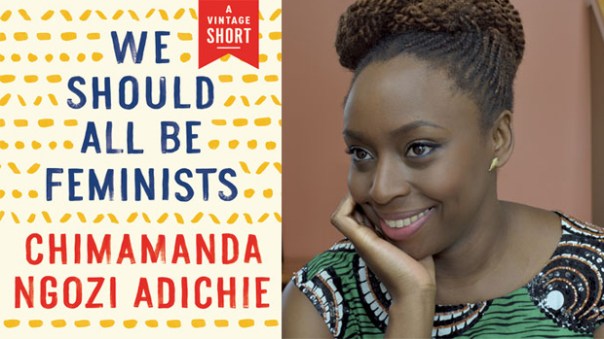
I have written about the powerful words of Ms. Adiche before. Her words stop us in our tracks and make us re-consider notions of identity, language, and gender. She has a new book out entitled We Should All Be Feminists. It is based on a speech she delivered at a TEDx conference a few years ago. I have already ordered it!
The most amazing thing about her new book is how it is being distributed. The Swedish Women’s Lobby has decided to distribute Adiche’s book to every 16-year-old student in Sweden. In a CBC article, publisher Johanna Haegerström believes her book will be an entry point into a larger discussion about gender roles in society. He said:
“Our hope is that the Chimamanda Ngozi Adichie text will open up a conversation about gender and gender roles, starting from young people’s own experiences”
I (Clare) was approached by Rosemary Evans, the principal of University of Toronto School 
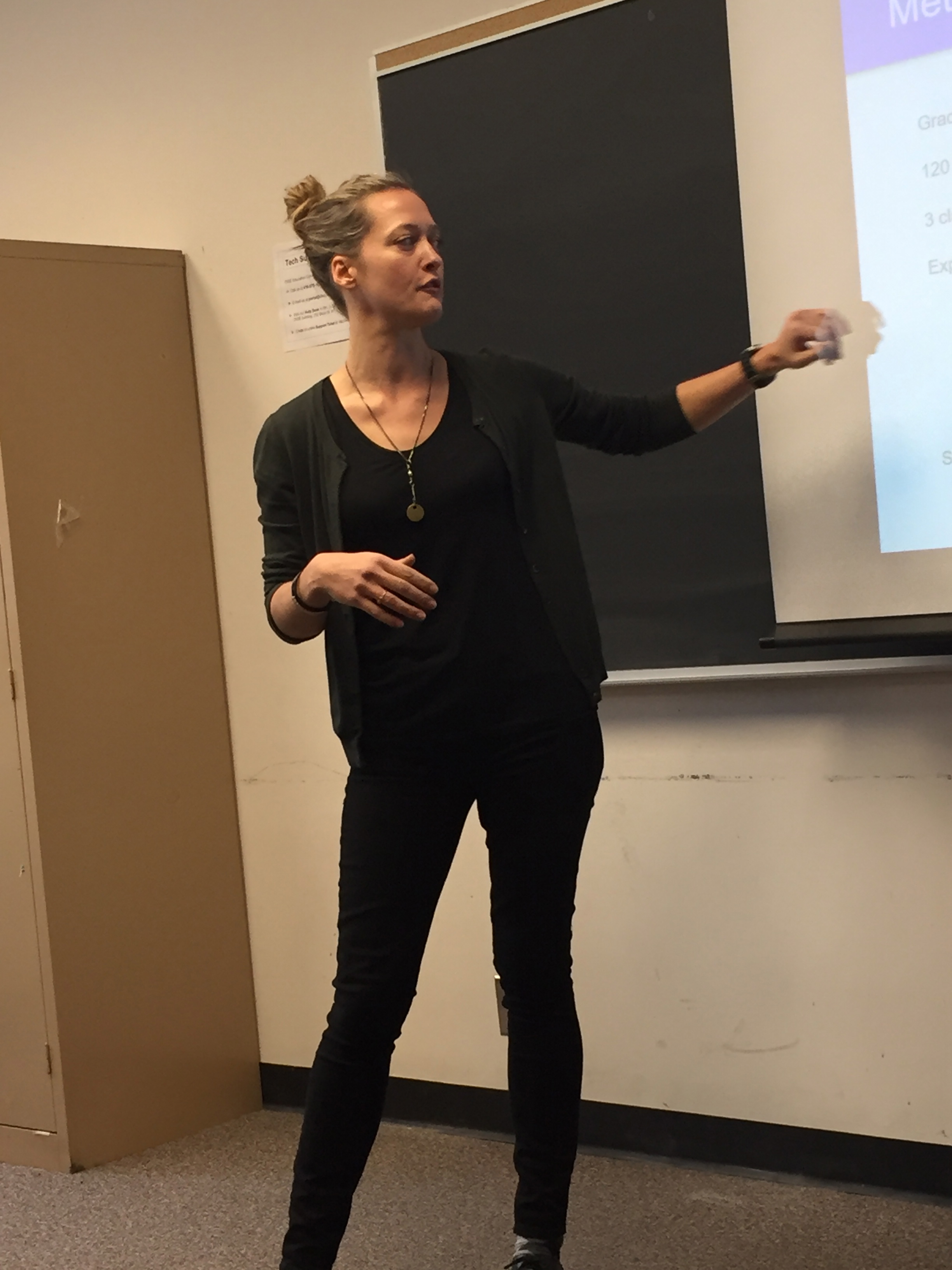 (UTS), to assist with forming a teacher research group. Rosemary had received funding for the Eureka Fellowship program from Newton Foundation to start a teacher researcher group. Clare happily accepted Rosemary’s invitation then invited current and former doctoral student (Pooja, Elizabeth, and Shelley) to co-facilitate because they had much to offer and the team approach would model collaboration. .Over the next two years we met on a monthly basis for approximately two hours.
The teacher researchers presented their findings last week and it was one of the most  special moments of my professional life. The teachers did an amazing job presenting their research. Their research was high quality and it informed their practiceWe plan to turn their reports into an ebook. Here is a list of the projects that the teachers completed:


The literature on language development varies. What we know: the major components of Language include: (phonology, semantics, syntax, pragmatics, lexicon, and metalinguistics); language development is based on biological (maturation) and behaviouristic (environmental) and interactive and contextual factors; there are several components of the reading process (decoding, understanding, and fluency) and each component has multiple elements.
So, is there a “critical period for language acquisition”? The critical period hypothesis suggests that if certain conditions related to language development are missing (internal and/external conditions), then a child will never acquire language. I don’t buy that. While I agree language acquisition in the early years is central to development, children can acquire language skills later in life.
There appears to be some universal patterns in language acquisition yet there are also important individual differences that depend on a number of variables. For example, studies have shown great variation in the growth of children’s vocabulary across typically developing youngsters.
So, from reading readiness to emergent reading, when is it (if ever) a good time to focus on ‘reading’ in the early years? There are some schools of thought (i.e. Waldorf) who do not begin formal language teaching until 2nd or 3rd grade. So why are some of us excited when a child in kindergarten “can read”? What is the hurry?
Setting up a literacy based environment that is balanced is key. However, there is an underlying tone of high expectation that we, as educators and teachers, need to be mindful of. The article I share below takes an interesting perspective on reading development and the implications of starting the expectations too soon.
As a mother of 2 children in the early years I see first hand their curiosity and interest in texts. They love stories, they love books. They love to be read to… but, they are not yet ready to read. Should they be at age 4 and 5? Why press the issue? Why not develop vocabulary? Play with language? Explore sounds and letters? Why press the formal reading of books? My daughter, now 5, is just beginning to make sense of sentence structure through a computer program called “Raz Kids”. This online program has hundreds of level books children can listen first, then read, then answer comprehension questions. For this little learner, it is amazing to see her answer the comprehension questions 100% of the time yet not yet recognize basic sight words (my, this, the) but use the illustrations and understanding of pattern to guide her through. I wonder… why start now? why set these expectations now? So, I tread very slowly, because she is motivated to earn her “Raz stars” to build her rocket ship… but I place no pressure on to know those site words. I see she “gets” it… but doesn’t quite yet “have it”. I also often feel a sense of worry about literacy and numeracy and whether or not my children will “get it” sooner rather than later.
Thankfully, her teachers have no worry at all and feel no pressure to push reading. Thankfully, her teachers have a good sense of child development.
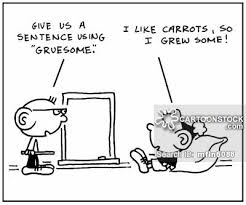
This charming cartoon reminded me (Cathy) of an incident I had as a young child. My family was staying at a cottage of friends’ located on the shores of James Bay. One evening we all sat by a large camp fire on the beach. As the children roasted marshmallows, the parents chatted. I happened to hear the grown ups mention “fairy.” Puzzled I listened more intently. “Oh, she’s grand to see, really. She turns around right over there, off the end of our dock.” My parents’ friend pointed out over the dark water. I looked at my dad. He was listening and nodding. No smile. “Really?” asked my mother. “I’m surprised she’d come so close to shore.” “Yeah, so were we,” said the friend. “We’ve seen her a few times now. All lit up, reflecting in the water. Quite a sight really. Maybe you’ll see her.”
I remember holding very still and being slightly afraid. I was sure they had told me fairies weren’t real… yet here they were discussing “her” like they would talk about dinner or the car.
I watched for “her” but never saw those wonderful lights. Perhaps just as well. It gave me a couple more years of believing in the impossible.
I am excited for a new book edited by scholars Vivian Vasquez, Mariana Souto-Manning, and Susi Long. The book focuses on social justice practices in the context of pre-school and elementary schools.

The book gives voice to educators, family members, and school administrators, offering several insights on social justice in early year classrooms, including:
* Highlights the actions of administrators as they take a stand to transcend standardized approaches to teaching and learning, creating more equitable educational environments.
* Portrays strategies and resources used to engage teachers in critical examination of self and the institutions in which they work.
* Describes principles and practices that guide administrators as they support the development of culturally relevant practices and policies.
* Offers powerful ways early childhood administrators can approach inequitable mandates. (http://www.amazon.com/Courageous-Leadership-Early-Childhood-Education/dp/0807757411)
The book will be released in the end of December/early January!
 Literacy Teaching and Teacher Education