Category Archives: literacy

International Symposium: Digital Technology and Literacy/English Teacher Education

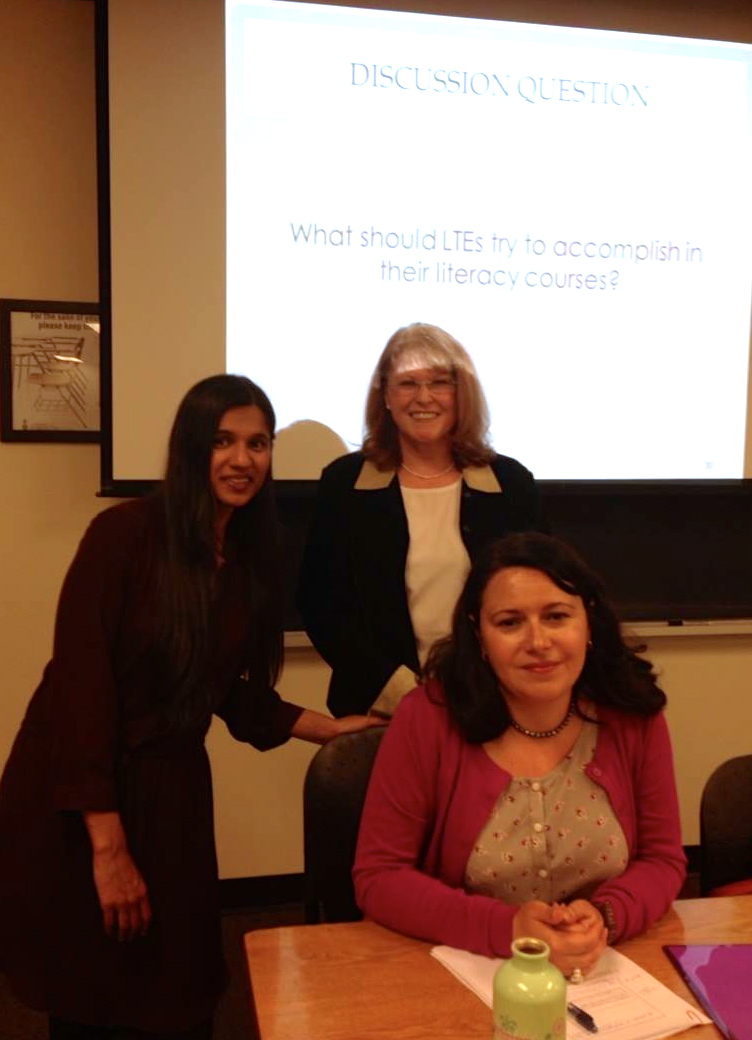
Making ConnectionsAs many of our blog followers know we are hosting the Symposium : Rethinking Literacy Teacher Education for the Digital Era: Teacher Educators, Literacy Educators, and Digital Technology Experts Working Together. One of the main activities of the project is bringing together 17 experts from three fields and 4 countries (Canada, US, UK, and Australia) to address the following questions.
• How can literacy/English teacher educators (LTEs) prepare student teachers to develop and implement literacy programs that capitalize on digital technology (DT)?
• What teacher education curriculum changes are required to better prepare future teachers to integrate technology in their own teaching?
• What professional learning support do LTEs need to develop courses that will integrate and make greater use of DT?
The Symposium will be held over two days: June 5 and 6 in London England. We will send updates daily.

As academics we tend to work in our “silo” which although allows us to specialize it has limitations. The symposium will provide an opportunity to work in an inter-disciplinary manner which may help us move forward the field of literacy teacher education. The participants are:

Canada
Clare Kosnik (P.I.)
Clive Beck – Co-applicant – OISE/University of Toronto
Pooja Dharamshi – OISE/University of Toronto
Cathy Miyata – OISE/University of Toronto
Lydia Menna – OISE/University of Toronto
Shawn Bullock – Simon Fraser University

England
Jean Murray – Co-applicant – University of East London
Bethan Marshall – Co-applicant – King’s College
John Yandell – Institute of Education, University of London
Sue Dymoke – University of Leicester
Sam Twiselton – Sheffield Hallam University
Alison Baker – University of East London

U.S.
Lin Goodwin – Co-applicant – Teachers College
Peter Williamson – University of San Francisco

Australia
Simone White – Co-applicant – Monash University
Graham Parr – Monash University
Neil Selwyn – Monash University
Scott Bulfin – Monash University

The Symposium is being held at Tug Agency:
Tug is a search marketing led agency, specialising in pay per click
advertising, biddable display, search engine optimisation, affiliates and 
social media marketing. We’re called Tug because we believe that pull
marketing is the most cost effective way to drive traffic to our clients’ websites,
and the best way to drive ROI positive online conversions.http://www.tugagency.com


Open Street Maps: Taking Action and Focusing on Multiple Perspectives

Nora Young, the host of CBC Radio’s Spark, was the keynote speaker of a conference I (Pooja) attended yesterday. She spoke about data science as a growing field of study, in fact, many universities have created departments of data science.  With the growth, Nora noted, comes a need for what she called critical data literacy. She illustrated the need for critical data literacy with an example of mapping technology. Google maps have quickly become the go-to application for finding directions and/or locating businesses on a map. However, being critically data literate,  guides us to  question like: who gets to decide what appears on a map? The answer is most often large multi-million dollar enterprises like Google.

To disrupt google’s monopoly of the growing online map industry, initiatives like Open Street Maps have been created. In January of 2014, The Guardian commented on the need for applications like Open Street Map. They likened it to  “a wiki-like map that anyone in the world can edit. If a store is missing from the map, it can be added in by a store owner or even a customer. In terms of display… each person or company who creates a map is free to render it how they like..” (Wroclawski, 2014) A site, which allows community members to add and edit a map of a community to which they belong, is powerful because it positions community members as experts.

I am looking forward to bringing this mapping technology into my classroom. I hope my students can create maps of their neighbourhoods.

A snapshot of a map made by community members:

openmap

Read more about Open Street Map:

http://www.theguardian.com/technology/2014/jan/14/why-the-world-needs openstreetmap

Full Day Kindergarten in Full Swing

Tis the season for parents  with children turning 4 years old to become acquainted with formal schooling and the Full Day Kindergarten (FDK) expectations. Ontario, Canada has implemented full day Kindergarten for all students across the province.  I (Yiola) am experiencing first-hand the excitement and apprehension of sending my child, a darling, vulnerable, sensitive, sweet girl (Sylvia Clare), to school for 6.5 hours a day, 5 days a week.

Jumping online, I have read reviews — some for and some against — FDK and many focusing on children’s language and literacy development.  See below for some examples:

Full-day kindergarten children score highest in vocabulary, self-regulation

http://www.theglobeandmail.com/news/national/education/full-day-kindergarten-offers-no-academic-advantage-study-says/article17715532/

As a parent, my worry is not so much if my Sylvia Clare’s academic achievement will be more or less. As a parent, my worries are related to her well-being. Will she be happy? Will she love herself even more? Will she make friends and learn how to work/play with others well? Will she come home each day and share stories of interesting things she did and learned.   I most certainly want to her read and write, but in good time. I feel there is no rush and I want a pressure-free learning environment for her.

In a recent article  http://www.mykawartha.com/news-story/4397024-why-full-day-kindergarten-has-better-prepared-our-kids-for-grade-1/,  educational consultant Joan Ruf comments:

“One of the wonderfully positive things about full-day kindergarten is the appreciation of the whole child,” she said, explaining the program is successfully marrying the concepts of academic and emotional growth. “So it’s not just about reading and math. It’s about how are they doing. What are they doing for themselves.”     This statement gives me some comfort.

Schools in Ontario are now inviting parents to attend FDK information sessions in order to prepare ‘us’ for the year ahead.  I will be writing about my experiences going through this process and journaling Sylvia Clare’s experiences as she begins FDK in September.

As a professor of education, through the researching and teaching and writing and sharing,   what lies at the centre of my work  are the children and their development as happy, healthy, thoughtful, literate human beings.

The issues surrounding FDK: its purpose, process, and outcomes are vast. With a political election looming the topic of FDK is front and centre and how it will be managed and maintained is up in the air.

Clare Kosnik awarded 2014 JJ Berry Smith Doctoral Supervision Award


clare u of tYesterday, we (Clare’s grad students) had the honour of seeing Clare awarded the 2014 JJ Berry Smith Doctoral Supervision Award. Professor Brian Corman, Dean of Graduate Studies (Uof T), acted as MC for the proceedings. Dean Corman reported there were many distinguished applications and the selection committee was under great pressure. However, the decision to award Clare was unanimous. 19 letters from present and former grad students were included in the application. Dean Corman shared some of the comments written in the letters: “epitome of a pedagogy of caring”, “challenged me to think deeply”, “met with me weekly, which after talking to other grad students, I realized other supervisors did not do”.  Clearly, her students  felt privileged to have worked and be working with her.

While accepting the award, Clare suggested doctoral supervision was a terrific topic for a research study. She shared that as she read the letters she was astounded by the differences in what the doctoral students said mattered to them. We hope someone takes Clare up on this suggestion.  They should begin the study with Clare.  Using her work ethic as a model, many other grad students might have the opportunity to work with a supervisor as dedicated, caring and wise as Clare.
Congratulations, Clare! Well deserved.

photo 1clareclare 2clare and us

The Tiffinwallahs’ delivery system as a form of literacies

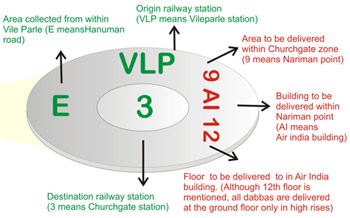
Recently, a friend started a lunch delivery service. She makes healthy, delicious, and affordable lunches every day. The lunches are delivered in an aluminum container, also known as a tiffin. She got this idea after watching a documentary about Mumbai’s Tiffinwallahs aka Dabbawallahs (those who deliver tiffins). Each day in Mumbai, “approximately 4,000 dabbawallahs deliver 160,000 home-cooked lunches from the kitchens of suburban wives and mothers direct to Mumbai’s workers.”Harvard’s Business School has studied this intricate delivery service, calling it “the world’s most ingenious meal distribution system.” What makes this service so fascinating to me is the coding system the tiffinwallahs have created. Although many do not have traditional literacy skills of reading and writing, they have re-defined literacy by creating a of successful and efficient communication through elaborate colour coding. Forbes magazine has awarded the “dabbawallahs a 6 Sigma performance rating (a term used in quality assurance if the percentage of correctness is 99.9999999 or more).” The business is also growing at a steady pace of 5-10% year.

The colour/numerical code created for the lids of tiffins:

code

Watch the Tiffinwallahs in action:

Read more about the Tiffinwallahs in Mumbai here:

http://signalvnoise.com/posts/2882-the-incredible-delivery-system-of-indias-dabbawallahs

The Canadian Society for the Study of Education

conference

This week The Canadian Society for  the Study of Education (CSSE) is being held in St. Catharines, Ontario at Brock University.

The team, Clare, Clive, Lydia, Cathy, Pooja, and me (Yiola) will be sharing a number of presentations over the course of the week. Some of these presentations include the following titles:

Teachers’ Professional Identity Development Over Their First 8 Years, With Implications for Preservice and Inservice Teacher Education

Teachers’ Ongoing Learning over Their First 8 Years, with Implications for In-Service Professional Education

Exploring literacy teacher educators’ negotiations of a critical stance in pre-service teacher education

Teachers’ critical literacy practices in the early years classroom

Instructional Practices of Critical Literacy within an Inquiry-Based Learning Environment

Presenting at conferences is a great way to share research with the community.  For more information about the CSSE conference click here:  

Conference


Wonder is Wonderful

I (Cathy) download audio books from audible.com onto my Ipod nano and listen while I walk, garden or cook. I just finished the book Wonder by R. J. Palacio. It is a very touching juvenile fiction novel about a ten year old boy with severe syndromes that dramatically alter his facial features. The story takes us on his journey surviving his first year in a public school as a grade five student. I cried a lot. This wasn’t so bad when I was in the kitchen cooking or even in my own back yard planting and digging. But walking?   Hmmm. People notice. Oh well. When people asked me if I was all right, I just said, “It’s the power of great literature,” smiled and thanked them for their concern. This is a must read my friends, but keep the Kleenex handy and warn the family in case they ‘wonder’ about you!

wonder

What has happened to education in the U.S.?

We are just back from New York and New Jersey where we interviewed a number of teachers who are part of our longitudinal study. Since we have been following these teachers for 7 years, I (Clare) feel I know them well. These are very able educators who are now working in very difficult conditions because of external constraints. I heard stories of them having to submit DETAILED lesson plans regularly (for the following two weeks), being observed/assessed five times per year, having to change their programs in order to comply with the Common Core, assessing the children an excessive amount, having to forgo pedagogies/books/activities they know are what the children need, and tying their teacher evaluations to student performance on standardized tests. All of these supposed measures to improve education in fact are undermining education. These teachers are spending so much time testing and writing lesson plans, they do not have time to actually work with the children. And they know what needs to be done and how to do it! All reported HIGH levels of stress. They are being deprofessionalized as these overbearing compliance methods are imposed on them. The phrase, lack of respect, was uttered over and over again by them. When asked the question — If you had to do it over again, would you become a teacher? – the responses were disheartening. Most said no and many said they are actively thinking about other careers. What has happened to education in the U.S.?

Can a hashtag make a difference?

Recently, a Globe and Mail article questioned the impact of the Twitter campaign #BringBackOurGirls, designed to draw attention to the abduction of hundreds of Nigerian schoolgirls by an extremist group. The article noted that such online campaigns often ignite fierce, yet fleeting concern for a cause, which ultimately fails to provoke any “particular” action. Indeed, the article echoes the sentiments of others who have critiqued the merits of “digital advocacy.” For instance Malcolm Gladwell argued that online forms of activism such as “Facebook activism succeeds not by motivating people to make a real sacrifice but by motivating them to do the things that people do when they are not motivated enough to make a real sacrifice…which he suggested “makes it easier for activists to express themselves, and harder for that expression to have any impact.” Having participated in a variety of rallies over the years, I (Lydia) understand the momentum that can be mobilized and connections cemented when people collectively gather within physical spaces to champion social causes, matters of concern, and contentious political issues. I do, however, wonder if social media platforms provide an opportunity for us to broaden our conceptions of the creation of publics, public engagement, and relational encounters within social contexts. At the very least, such social media campaigns have demonstrated that they have the potential to draw attention to social issues, communicate information, and establish connections between affinity networks on a massive scale.

Link to the Globe & Mail article: m.theglobeandmail.com/news/world/abduction-of-nigerian-girls-draws-world-outrage-but-can-a-hashtag-offer-any-help/article18596825?service=mobile&cmpid=rss1&click=dlvr.it

IMG_0925

Spending Too Much Time On Your Phone?


photoLike most, I (Pooja) find myself engaged with my smart phone too much. I often make attempts to limit my usage. I tell myself things like “I won’t check Facebook until it’s time for bed”, but these promises I make myself are hardly ever kept. Perhaps a doggy cone is not such a bad idea!