Category Archives: literacy

A Constructivist Approach to Literature

On the weekend, Clare and I (Clive) saw a wonderful production of Chekhov’s Uncle Vanya Uncle Vanyaat the Shaw Festival in Niagara on the Lake. We were struck (once again) with how “dark” the play is; but it is so well written and was so well done that we really enjoyed it.

A central theme of the play is how boring life can be. And one thing that occurred to me is how important it is not to take plays (or any literature) too literally. In experiencing such a play – or discussing it with students – we don’t have to accept that life is utterly boring, or even think that Chekhov believed it was.

Rather, we can take this idea as a starting point and go on to consider ways to overcome boredom in our lives, to the extent possible. We can enjoy ourselves, both as we experience the beauty and cleverness of the literary work and try to resolve the problems it raises. We can use the work for our own purposes, rather than feeling tied to a literal interpretation. I think this is part of what is meant by a “constructivist” approach to learning, and it can make literature more enjoyable and useful to teachers and students alike.

Putting Aside My Ear Buds

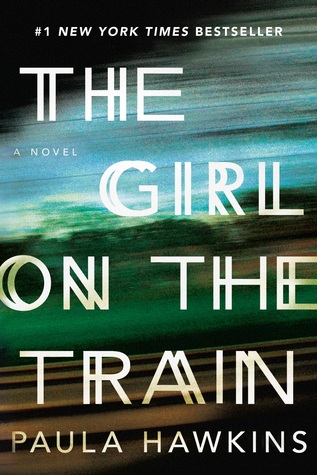
Lately my friends (Cathy’s) have been talking about two novels that they all love.  As these books are not available in audio format yet, I am setting aside my ear buds and taking up hard copy for the summer.  The books, The Girl on the Train by Paula Hawkins and The Girls by Emma Cline, have rave reviews on line as well as from my friends.  Below are the online summaries I found to prepare myself for my literacy journey:

The Girls

Northern California, during the violent end of the 1960s. At the start of summer, a lonely and thoughtful teenager, Evie Boyd, sees a group of girls in the park, and is immediately caught by their freedom, their careless dress, their dangerous aura of abandon. Soon, Evie is in thrall to Suzanne, a mesmerizing older girl, and is drawn into the circle of a soon-to-be infamous cult and the man who is its charismatic leader. Hidden in the hills, their sprawling ranch is eerie and run down, but to Evie, it is exotic, thrilling, charged—a place where she feels desperate to be accepted. As she spends more time away from her mother and the rhythms of her daily life, and as her obsession with Suzanne intensifies, Evie does not realize she is coming closer and closer to unthinkable violence.


The Girls

The Girl on the Train

EVERY DAY THE SAME
Rachel takes the same commuter train every morning and night. Every day she rattles down the track, flashes past a stretch of cozy suburban homes, and stops at the signal that allows her to daily watch the same couple breakfasting on their deck. She’s even started to feel like she knows them. Jess and Jason, she calls them. Their life—as she sees it—is perfect. Not unlike the life she recently lost.

UNTIL TODAY
And then she sees something shocking. It’s only a minute until the train moves on, but it’s enough. Now everything’s changed. Unable to keep it to herself, Rachel goes to the police. But is she really as unreliable as they say? Soon she is deeply entangled not only in the investigation but in the lives of everyone involved. Has she done more harm than good? 

Girl on train

It has been a few years since I delved into a hard copy novel and I am curious about how it will feel.  I am actually quite attached audio books now.  No listening in the dark for the next few weeks, but no ear bud cords to untangle either.  Should be interesting.  I’ll let you know what I prefer!

Star Trek, Drafting & Pat Barker


Image Sue DymokeI (Clare) read this blog by my good friend Sue Dymoke. I thought she had many excellent points about writing. If you have not seen Sue’s website definitely check it out. https://suedymokepoetry.com/

Sue Dymoke's avatarSue Dymoke Poetry

WeShatner went to hear novelist Pat Barker speak on Thursday. She was in fine conversation with Sharon Monteith at Nottingham Playhouse in a benefit for Nottingham Unesco City of Literature funds to support literature/literacy initiatives across the city. She read from new work in progress, inspired by Homer’s Iliad, that brought alive the previously silent voices of two young women. In a wide ranging discussion afterwards, with some excellent questions from the audience, she talked about her writing processes. She urged the writers in the audience to go into the writing ‘wanting to surprise yourself’ because if you can’t do that then no-one else will be surprised by what you write. I love the element of risk implied in this approach: you are going out into the unknown in your writing, exploring, as Captain Kirk would say,’strange new worlds… new life and new civilisations, to boldly go where no (one)…

View original post 226 more words

Try a Graphic Novel this summer…

As summer vacation time draws nearer and schools in Ontario prepare for the summer break, teachers often think of ways to encourage children to read over the summer.  Inspiring students who ‘hate to read’ can be quite a challenge.  The authors of the blog teachingauthors.com  highly recommend graphic novels. (Graphic novels are not to be confused with Manga novels which are a genre unto themselves).  Graphic novels are similar to comic books in that they rely heavily on illustrations to convey meaning and the text is short.

Author Mary Ann Rodman suggests the following novels for students:

Young Adult

Drowned City: Hurricane Katrina and New Orleans—Don Brown

Honor Girl: A Graphic Memoir–Maggie Thrash.

Nimona-Noelle Stevenson

In Real Life–Cory Doctorow

Middle school

Anything by Raina Teigemeier (e.g., Drama)

The Dumbest Idea Ever!–Jimmy Gownley

Roller Girl–Victoria Jamieson

Sunny Side Up–Jennifer L. Holm and Matthew Holm

Into the Volcano–Don Wood.

Flora & Ulysses–Kate DiCamillo, K.G.Campbell

The Hidden: A Child’s Story of the Holocaust–Loic Dauvillier.

The Lost Boy–Greg Ruth

If you haven’t read a graphic novel, I (Cathy) suggest you try one.  The experience may surprise you.  The content can be quite sophisticated and intense.  When I taught a teacher education focused children’s literature course, I used the book Persepolis to introduce my teacher candidates to graphic novels.  Persepolis is an autobiographical graphic novel by Marjane Satrapi depicting her childhood up to her early adult years in Iran during and after the Islamic revolution. (The title is a reference to the ancient capital of the Persian EmpirePersepolis). The book depicts religious, political, and economic struggle.  Simplistic, but powerful.

Try one this summer!

http://www.teachingauthors.com/

250px-Persepolis-books1and2-covers

Allegory as a Literary Device and the big Screen

Allegory as a literary device is a powerful tool in literacy development.  Beginning in the early years teachers use allegory to explore moral lessons and critical issues. How often do we read books with animal characters who experience significant challenges and how well do children respond to the texts?… very well!

Last week I (yiola) took my children to a birthday party at the movie theatre where they watched The Angry Birds.

Angry-Birds-final-quad

I had no idea what the movie was about although my 4 year son mentioned it had to do with birds protecting their eggs from pigs. Hmmmm, sounds… interesting.  As I sat in the movie theatre I watched and chuckled at the community of birds and enjoyed the simple characters of each bird… and then I watched as ships sailed onto “Bird Island” and a King Pig with a small entourage befriended the birds, showering them with gifts and new ‘treasures’ that were unfamiliar to the birds. Slowly the pigs began to take over the island and they stole all the birds’ eggs.  The birds then tried to rescue their eggs. Lines such as: “They stole our kids… who DOES that?” and later when the birds invaded “Piggie Island” to rescue the eggs the “King Pig” exclaimed, “what are you doing here? This is a civilized brunch” left me sinking in my seat and feeling uncomfortable. Without doubt The Angry Birds, to me, is an allegory of colonialism. After viewing the movie I began researching articles and critiques and while I found several interpretations very few note colonialism.

To my surprise, many an in-depth discussions have occurred over The Angry Birds. From story line to historical facts to critical literacy to media literacy, I am pleased to see how an animated film could spark such interesting discussion. Now, imagine how using popular culture like the popular video game The Angry Birds and combining it with popular media like a Hollywood movie and applying analysis and interpretation of the use of allegory in a middle school or high school setting to discuss critical social issues like Aboriginal history or immigration. Narratives are such powerful tools for thinking about life. Allegory as a literary device has the potential to raise significant awareness and heighten a love for literacy.


The Joy of Technology

I (Cathy) have always appreciated and valued how technology, particularly Skype, can enrich our lives.  I have used it and other forms of real time communication (e.g., Face time, Zoom) in research to conduct interviews; in classrooms to allow my students to meet authors; and in my personal life to stay in touch with my children while traveling.  But this week, Skype took on a whole new level of personal meaning for me when my daughter prematurely gave birth, on the other side of the country.   Within a few hours of the birth, I could ‘see’ my daughter and knew she was all right.  Then my husband and I watched our new granddaughter. It wasn’t a still photograph, it was her in real time, moving and stretching, even crying.  What a gift.  To be able to be a part of something so precious, even when so far away. As a child I envisioned such things through The Jetsons cartoon.  I can’t even imagine what darling baby Everley will witness when her grandchild is born.  Beam me up, Scottie?  Perhaps.  Right now I am content to experience Skype and appreciate the joy it brings into our lives.

.  skype

Teaching vs Assuming

'My reading comprehension is so-so, but I do make up for it with my highlighting skills.'


While teaching a third year university course in the Early Childhood Program I(Cathy) caught myself making assumptions about my students’ levels of comprehension.  While working with with one student who seemed to lack a focus in her paper, I asked her to take the article we were examining home with her and highlight the important issues she noted on each page.  When we next met, I asked to see the article;  every paragraph was highlighed; every word was now encased in bright neon yellow.  When I asked her if she thought perhaps a point made in one paragraph could be more important than another she insisted that it was all important because it had been published.  Images of classes I had taught to elementary school children on discernment of text and critical thinking, and critical pedagogy flashed through my mind.  Was she never taught this?  I had assumed my third year students would arrive in my class with this skill. I was wrong. So now what?

I smiled at her . “Let’s look at the first paragraph together,” I said. I knew I couldn’t catch her up with her many lost years, but we could make a start. Such is teaching.


The “Books For Refugees” project

A recent article in The Atlantic highlighted an initiative spearheaded by Dr. Rachel McCormack, a professor of literacy education at Roger Williams University, to provide Arabic-language books to refugee shelters across the Netherlands. McCormack emphasized that “returning to school, particularly when it’s in a new language, is a huge adjustment for many Syrian children” and “maintaining their birth language and culture is key to every child’s identity.” She hopes providing access to Arabic-language texts will help Syrian children and their families integrate into Dutch society while maintaining their own culture and language.

Link to the article: http://www.theatlantic.com/education/archive/2016/05/balancing-integration-and-assimilation-during-the-refugee-crisis/482757/


Authors and Amazing Tales: In Awe of Lawrence Hill

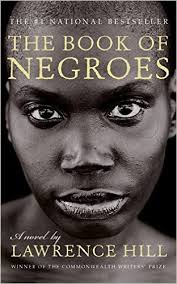
During the school year my night table fills with novels; one beautiful literary piece after the other, the books pile up. The vision is to retreat to my room early enough to read these marvellous texts at an enjoyable pace in order to get to the next… yet my  time during the academic term does not allow me the pleasure.  With the coming of summer and the end of an academic term I find some space where I can begin to read the books I attempted to read throughout the year.  This year, I begin with Lawrence Hill.  Most are familiar with Lawrence Hill, a Canadian writer whose most popular texts include: Blood: The Stuff of Life  and The Book of Negroes.

Unknown-2 Unknown

Blood: The stuff of life was turned into a lecture series. You can listen to excerpts of the Massey Lecture series here:

http://www.cbc.ca/radio/ideas/the-2013-cbc-massey-lectures-blood-the-stuff-of-life-1.2913671

Two incredible literary works that move me to think about humanity… and inhumanity. The Book of Negroes was turned into a  television mini series. Based on historical fiction The Book of Negroes is the story of young African girl, her voice, her journey in the 1700s from Mali, Africa to South Carolina, New York, Cape Breton, and London. How impactful a process to explore the novel — to try to make sense of history and our present — to think about narratives and then consider the media and digital implications for developing such an intense story into a visual series.  I think of how high school teachers could use this novel to explore so many issues and then to look at the decisions one makes when transforming such a sensitive story into film.

As I read Hill’s novels I cannot help but consider how  the narratives in these literary texts can be used to improve my own practice in teacher education. I ask myself: Can they inspire the reader to more deeply understand the intensity of the relational acts involved in teaching in classrooms?  Why do certain groups of children have a greater likelihood of failing at school? How do our systems shut people out without some of us ever realizing it? What kinds (if any) of understandings should teachers have about the histories of our communities before ever stepping into classrooms? How in teacher education can we support a deep understanding of children’s learning?

There is just so much to know while in pre-service and so much to teach in teacher education. What is most important? Why? When I think about the construction of teacher education programs I am now thinking less in terms of required courses and more in terms of broad understandings and the connections across disciplines and understandings. For example, as we teach about child and adolescent development (psychology) we must thing about language and literacy development (content) inclusive of social context (equity and foundations).  After all, when we enter classrooms we know that our work as teachers is dynamic, complex, forever evolving and completely relational.