Category Archives: literacy

Actor’s insights into Literacy

If we talk about literacy, we have to talk about how to enhance our children’s mastery over the tools needed to live intelligent, creative, and involved lives.

Danny Glover

Danny_Glover_2014

I was curious as to why actor Danny Glover would be credited with such a profound quote on literacy.  Looking into his background I discovered two things about him:

1.Danny Glover suffered dyslexia at school when he was younger and the school staff would label him retarded. This definitely was not very encouraging for him but he ended up finding ways to feel better about himself. He says that dyslexia had given him the feeling that he was not worthy to learn and that the people around him would not care of what would happen to his education. With time he eventually regained his self-esteem and became a great actor.

2. Danny Glover is a political and civil rights activist. For example, while attending San Francisco State University (SFSU), Glover was a member of the Black Students Union, which, along with the Third World Liberation Front and the American Federation of Teachers, collaborated in a five-month student-led strike to establish a Department of Black Studies. The strike was the longest student walkout in U.S. history. It helped create not only the first Department of Black Studies but also the first School of Ethnic Studies in the United States.

I am sure these two factors contribute enormously to Mr. Glover’s insightful views on literacy.  What we make of our backgrounds shape our identities as leaders, particularly in education.  My newly discovered knowledge of Mr. Glover increases my respect for him not only as an actor, but as  a human being.  I look forward to reading more about his journey and commitment to literacy development.

https://en.wikipedia.org/wiki/Danny_Glover#Civil_rights_activism

http://www.disabled-world.com/artman/publish/article_2130.shtml


Photo Journal of my Experience @ AERA

Here are some snapshots and highlights of my experience at AERA this year. If I (yiola) could name the experience I would call it:  Goosebumps and Inspirations… it was just that good.

  1.  I attended a Round Table session (this is where presenters gather at a “round table” and share their research). The Round table is a great opportunity to not only share your work but hear from others in a less formal manner.  This round table was hosted by the  Writing and Literacies special interest group (SIG) and the focus of the round table was critical literacy.  Dr. Barbara Comber from the University of South Australia presented on critical literacy pedagogy in the early years. Her work and my work are closely aligned.

2.I attended a presidential talk that was a tribute to the life and work of Dr. Phil Jackson. The focus of the talk was on the question of education.  I really like what this panel did: each panel member selected a passage from a text written by Dr. Jackson and talked about its significance to them. A paragraph was read from The Practice of Teaching and the idea of transformative teaching… such an important and central idea in progressive education. A piece was read from Handbook of Research on Curriculum: Conceptions of Curriculum and the the idea that school is systematically harming children… and how can we work against that?  Linda Darling-Hammond read a passage from his famous book Life in Classrooms and spoke of the “multi-dimensionality and simultaneously nature of teaching” and the essential relationships associated with teaching. And, one panel member shared from Dr. Jackson’s last book published in 2012, What is Education and spoke of education as pure and simple; something we must rededicate ourselves too over time.

13001211_10156947381755121_1868962252431060235_n

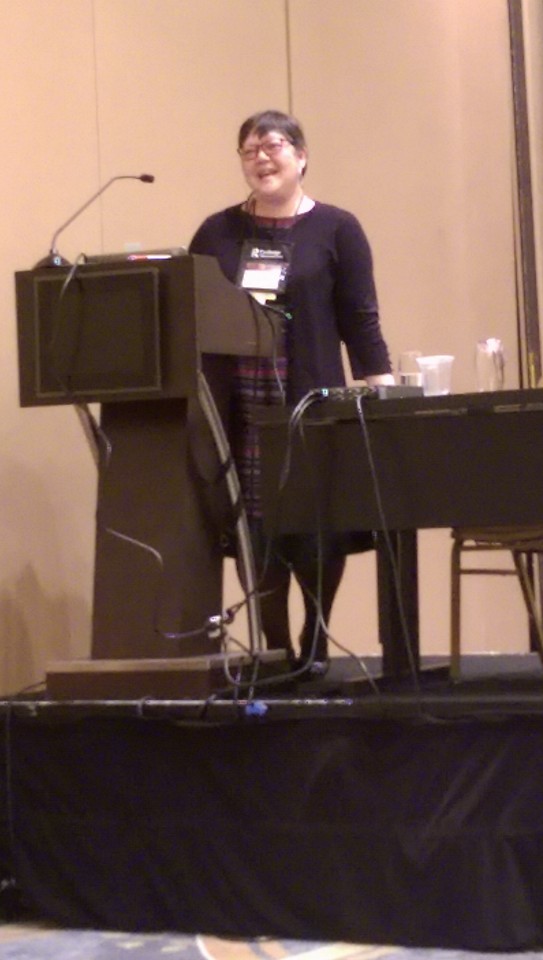
3. I was very fortunate to have the opportunity to listen to the presidential lecture  for Division K hosted by Dr. Lin Goodwin, Teachers College Columbia University.  A remarkable speaker who not only inspires with her words but truly challenged me to think about what quality teacher education requires. What I like most about Dr. Goodwin is her genuine nature. A distinguished academic and also a beautiful human being. Here are some pictures from her talk including slides from her presentation.

12998610_10156947381220121_6198746793740451746_n

13015255_10156947381525121_6392246007407300412_n13043368_10156947381450121_231103480067251929_n12994363_10156947381300121_7467634140817060326_n13012864_10156947381375121_7210803705214951729_n

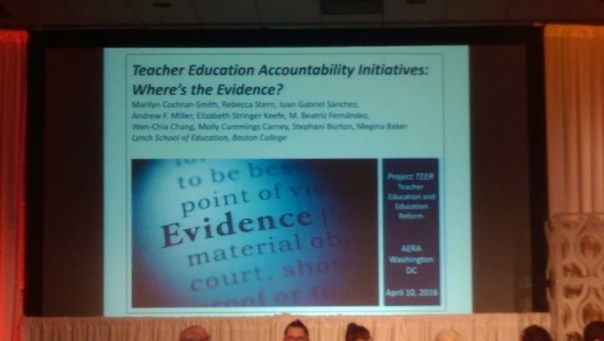
4. Yet another interesting Presidential session with Wayne Au, Marilyn Cochran-Smith, Kevin Kumashiro (and others) that explored policy and standards in Teacher Education. Laden with some controversial findings for the testing systems for new teachers and teacher education programs, the presentations were provocative and interesting:

13055504_10156947381160121_3248944785834068614_n13012858_10156947381050121_2214069562201491393_n

5. The last session I would like to share is one where we presented at the Constructivist SIG. A lovely group of people from across North America, we exchanged ideas of what it means to teach in constructivist ways. Our team leader Dr. Clare Kosnik presented work from the Literacy Teacher Education research and presented on a group of literacy teacher educators who had strong constructivist pedagogies.

Finally, AERA is held at such interesting places. One has to take some time to enjoy the beauty of the district and take in some of the sights.

HOT off the press: Teaching Literature to Adolescents

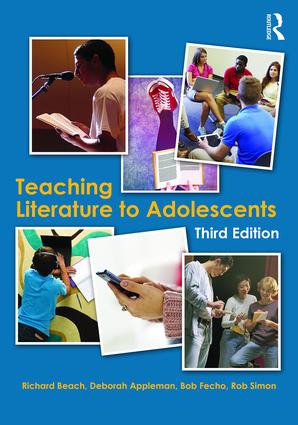
My good friend Rob Simon is one of the co-authors of the third edition of Teaching 9781138891241Literature to Adolescents. Co-authored with Richard Beach, Deborah Appleman, and Bob Fecho this is an amazing new text. As a professor of literacy methods courses I (Clare) am always on the lookout for texts that go beyond the typical plodding through various topics. This text appealed to me because it emphasizes a critical approach to reading and interpreting text. The aim is to engage students with authentic issues. Well done Rob and your fellow authors. This text will be a staple on my bookshelf. Here is the link to the Routledge site: https://www.routledge.com/products/9781138891241

Below is a summary of the book.

This popular textbook introduces prospective and practicing English teachers to current methods of teaching literature in middle and high school classrooms. It underscores the value of providing students with a range of different critical approaches and tools for interpreting texts and the need to organize literature instruction around topics and issues of interest to them. Throughout the textbook, readers are encouraged to raise and explore inquiry-based questions in response to authentic dilemmas and issues they face in the critical literature classroom. New in this edition, the text shows how these approaches to fostering responses to literature also work as rich tools to address the Common Core English Language Arts Standards.

Each chapter is organized around specific questions that English educators often hear in working with pre-service teachers. Suggested pedagogical methods are modelled by inviting readers to interact with the book through critical-inquiry methods for responding to texts. Readers are engaged in considering authentic dilemmas and issues facing literature teachers through inquiry-based responses to authentic case narratives. A Companion Website [http://teachingliterature.pbworks.com] provides resources and enrichment activities, inviting teachers to consider important issues in the context of their current or future classrooms.


Social Justice Study at AREA

I was once again thrilled to attend the AERA conference this past week.  It is such a remarkable opportunity- so many knowledgeable and committed educators from around the world.  Quite inspiring.  At the conference this year, one consistent theme emerged in the sessions I attended: Know your students. One particular study in a session entitled Preparing Preservice Teachers to Teach for Social Justice, resonated with me quite profoundly.  The study was called Candidate Change in a Community -Engaged Teacher Education Program and was led by Patricia Clarke from Ball State University.  Patricia maintained, ” a good teacher must understand the context in which a child lives grows and learns.”

Her team conducted a study which examined: preservice teacher candidates’ attitudes towards diversity and community, and how they changed over the course of a semester-long community-engaged experience. As teacher candidates came to know the community in which they were working, their expressed attitudes and beliefs changed from explicit statements of bias and stereotype to ones that sought community involvement and social action. 

This teacher education program at Ball University emphasized community involvement by holding classes in local community centers (as opposed to the university).  Student teachers also attended the local church on Sundays to be part of the community gatherings.  The teacher educators arranged for “community ambassadors” to welcome the student teachers to their neighborhood and guide the student teachers throughout their weeks in the school.  The results were remarkable.  The student teachers moved from “being nervous” and “afraid” in the neighborhood to feeling like a community member.

Patricia closed her session with a sweet anecdote shared by one of her student teachers, which I will share with you here. The student teacher was working in a class of grade two students and asked the children to share the markers.  She handed the basket of markers to the child beside her who seemed a bit confused.  Remembering what she had experienced the previous Sunday when she  attended the community church with the children, she said, “pass the basket like you do at church.” The child nodded, and said “Hallelujah!”  all the of the children immediately responded with “Praise be the Lord!” and they promptly passed the basket of markers around the circle. The student teacher was somewhat surprised by the response, but because of her inclusion in the community completely understood why the children responded they way they did.  She smiled, nodded, and continued on with the lesson.

basket

The commitment of the teacher educators in this program was outstanding and quite inspirational.  I sincerely hope teacher education programs worldwide can learn from not only this study, but the model of teacher education Ball University has implemented.

Arriving in Washington DC

AERA_Logo

I (Cathy) am delighted to be arriving in Washington D.C. today to attend the American Educational Research Association Conference.  I will be presenting a paper entitled, Examining the Influences: Literacy Teacher Educators who us a Multiliteracies Approach. This study is a subset of a larger study on which I have been a researcher.  I examined 7 participants who demonstrated a proclivity toward multilitercies.  As I used a grounded theory approach (which does not begin the research with a hypothesis) I was  both intrigued and surprised by the findings.   Hope you can join me on Monday, April 11, 11:45am to 1:15pm, at the Marriott Marquis, Level Three, Mount Vernon Square.

Abstract:

According to Dewey (1974) “[e]ducation, experience, and life are inextricably intertwined”.  This study examined how early life experiences and other influences affected the practices of 7 literacy teacher educators (LTEs) who currently enact a multiliteracies approach.  Early childhood experiences, mentors along their journey, personal and professional turning points, and developing notions of literacy were explored.  Three findings (a) an innate love of language/literature, (b) inspiring mentorship, and (c) a unique set of dispositional qualities were significant contributing factors to these literacy teacher educators adopting a multiliteracies approach. The participants for this study were a subset from a large-scale study entitled, Literacy Teacher Educators: Their Backgrounds, Visions, and Practices which examines the lives of teacher educators from four countries:  Canada, the USA, England and Australia.   

Hope you can join me!

http://www.aera.net/EventsMeetings/tabid/10063/Default.aspx


Nell Duke: 10 Things Every Literacy Educator Should Know About Research

In my (Clare) graduate literacy course last night we talked about Nell Duke’s excellent Library book shelvesarticle: 10 Things Every Literacy Educator Should Know About Research. This is a highly informative article because Duke systematically addresses key questions about research – often questions that are not posed because the instant the word “research” is attached to a statement it seems to have more weight. She begins the article: Research-based,” “research-proven,” “scientifically based”—in the reading world these days, it seems that the term research is being used everywhere. it is also being misused and misunderstood.

My graduate students found the article very accessible and enlightening. Many said they will look at “research claims” more closely. It is well worth the read. Here is a link to article which was published in Reading Teacher. 10_things_to_know_about_research_duke_trtr1002

Duke addresses the following questions.

  1. what research can do.
  2. what research is.
  3. what research is not.
  4. the difference between research-based and research-tested.
  5. Many kinds of research have valuable contributions to make to our understanding of literacy learning, development, and education.
  6. different kinds of research are good for different questions.
  7. high-quality research has a logic of inquiry.
  8. conclusions drawn from research are only as sound as the research itself.
  9. where and how research is published or presented requires particular attention.
  10. educational research proceeds through the slow accumulationof knowledge.


Finns aren’t what they used to be


I (Clare) came across this interesting article on Finland by Sean Couglan from the BBC. . But unlike most other articles it is a “counter point” to the Finnish miracle. Thought you might find it interesting. http://www.bbc.com/news/business-32302374·

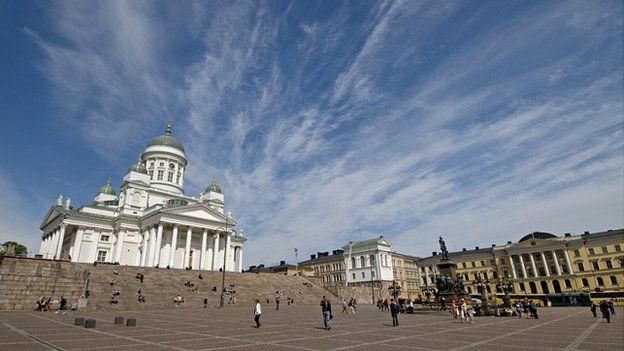
No international education conference is complete without a reference to Finland._82320693_helsinkibbc

Ever since it appeared at the top of international league tables more than a decade ago, it has been endlessly hailed as how to run an education system.

Finland, which faces a general election this week, has been the poster child for education reform and overseas delegations have made pilgrimages to learn from its example.

In particular it has been used to argue that you can have high results without an overbearing system of testing and inspection.

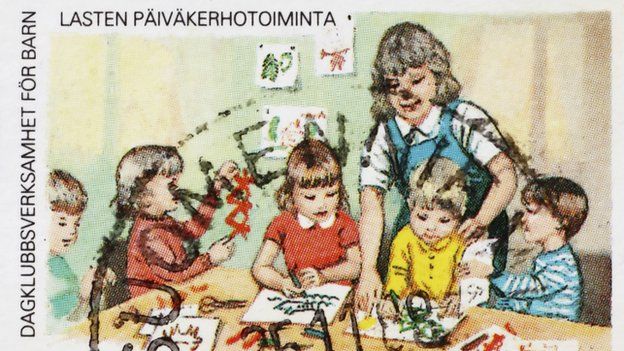
It was the country where pupils did not have to start school until they were seven, enjoyed the longest holidays and then basked in the glow of global approval when they topped the tables in the international Pisa tests. _82320689_finnishstamp

But is the gloss coming off the image of Finland as an education superpower?

More like an Asian tiger

A study from Gabriel Heller Sahlgren, director of research at the Centre for Market Reform of Education, argues that Finland’s education standards are in decline.

He says it is a misunderstanding of Finland’s success to attribute it to a liberal culture without league tables or a formal curriculum and giving much autonomy to teachers.

Finland faces a general election this week

In a report published by the right-wing think tank the Centre for Policy Studies, Mr Sahlgren argues that Finland’s star performance in the 2000 Pisa tests was built on the legacy of an older, very traditional education system, which had been part of the country’s process of nation building.

But this wasn’t the image of Finland wanted by education experts, he says. Instead, when Finland was the top performer in Europe, it was used as a “counter-argument” to the success of east Asian school systems in Singapore, Shanghai and Hong Kong.

While they were seen as successful because of hard work and grindingly long hours, Finland was seen as the way to achieve success with a much more creative and less centralised approach.

Mr Sahlgren, based at the London School of Economics, says there was “never any real evidence” for such an impression.

“It was simplistic, looking at how Finland’s system looked today, without looking at its history.”

Finland’s school system became part of its building of a national identity

Rather than being the opposite of east Asian countries, he says in many ways Finland was like those emerging economies.

Compared with its Nordic neighbours, Finland was a “late developer”, much poorer and with lower levels of education in the early part of the 20th Century.

Finland’s approach of investing heavily in education and seeing rapid improvements was in many ways more like the pattern of Tiger economies in east Asia than the more sluggish progress in western Europe.

‘Fairy stories’

Mr Sahlgren’s research argues there is a reluctance to accept that Finland’s education system, under which many of its successful teachers had trained, had been very structured and centralised.

IFinland has been the European country that matched East Asian countries in education tests

He quotes a research group from the UK visiting schools in Finland in 1996, a few years before the Pisa tests brought the world’s attention to the country’s schools.

“We have moved from school to school and seen almost identical lessons, you could have swapped the teachers over and the children would never have noticed the difference,” said the researchers from the University of East Anglia, observing Finnish classrooms.

Another study challenges what it calls the “misconceptions and misrepresentations” about Finland’s success in the Pisa tests.

Tim Oates, director of assessment research for the Cambridge Assessment exam group, has published a study called “Finnish fairy stories”, in which he debunks what he claims are myths about the Finnish system.

‘Education tourism’

He says the waves of “education tourism” that followed the success in Pisa tests failed to look at how the system had improved.

Image captionHow much of Finland’s success was the legacy of an earlier, more traditional school system?

“They got off the plane and asked the Finns about the system in 2000 – not what it was like during the 1970s and 1980s, when standards were rising.”

He also warns of a tendency for people to use Finland’s school system as a way of confirming what they want to find.

The claim that Finland does not have an Ofsted-style inspection and national testing is an incomplete picture, says Mr Oates. He says there has been a strong system of accountability and inspection and gathering of data.

The difference from a system such as England, says Mr Oates, is how the information is used – for example in Finland exam results are not published in school league tables as they are in England.

Pisa tests 2012 top 10
Reading Maths
1. Shanghai 1. Shanghai
2. Hong Kong 2. Singapore
3. Singapore 3. Hong Kong
4. Japan 4. Taiwan
5. South Korea 5. South Korea
6. Finland 6. Macao
7. Ireland 7. Japan
8. Taiwan 8. Liechtenstein
9. Canada 9. Switzerland
10. Poland 10. Netherlands

It is also misleading to think there are not high-stakes exams or academic selection, he says, with entrance to some secondary schools being determined by test scores.

And Mr Oates argues it is “hopeless myopia” to see Finland’s system as a model of high levels of autonomy.

Finland is facing another set of controversial changes, away from traditional subject teaching. And Mr Sahlgren warns of a school system in decline. It is no longer in the top 10 for maths in Pisa tests, having been in second place in 2003 and 2006.

Andreas Schleicher, the OECD’s director of education and the creator of the Pisa tests, rejects this analysis.

“In the 1960s, Finland was an average performer at best and that was when it had a very traditional education system,” says Mr Schleicher.

“Finland changed its system only in the late 1970s and 1980s and that’s when we saw the results rise. The most recent decline is quite modest,” he said.

Mr Oates says the problem has been that people have used Finland as a way of discussing their own national education debates, without really thinking about what made Finland different.

“People have been seriously misled by stories told by people who have looked at Finland through their own, restricted lens,” he says.


Global Conversations in Literacy Research

One of the amazing things about our research team is we share common interests in literacy teaching and teacher education while at the same time we explore our own avenues of research. My areas of interest are in critical literacy pedagogy and teacher development.  I (yiola) have been enjoying and learning a great deal from another amazing literacy research based website and would like to share it with you.

Here is the link: https://globalconversationsinliteracy.wordpress.com

Global Conversations in Literacy Research (GCLR) is a series of interactive open access web seminars that feature cutting-edge literacy research conducted by international literacy researchers. GCLR is grounded in critical literacy, and sees as its mission to use networked technologies to connect global audiences in a virtual space that allows participants to exchange ideas on literacy theory, research, and practice. Each year, GCLR features scholars whose work addresses a range of literacy areas of interest to international audiences.

Some of my favourite researchers in critical literacy have shared webinars on the site.  I appreciate the global nature of the site and the sense of shared understandings through varied contexts.

An inspiring site — enjoy!

Keeping up with Technology in Education

I (Cathy) am not sure that keeping up with technology in education is possible.  This is where collaboration in the classroom becomes a necessity. The ‘technology-gifted’ students become our greatest resource, in effect- the teachers.   Unlike the cartoon below, I’m not referring to the  students who can afford the latest gadgets, I’m referring to the students who are ‘technologically intelligent’.  Several years ago, Howard Gardner suggested this was possibly  a new intelligence to add to his list, but unfortunately never followed up.  Personally, I have relied on such students in the past.  They are our mentors. They ‘see’ the digital world and the possibilities. It’s a gift.  Look for these students in your class.  They may be a fantastic untapped resource.


'Our school computers are one year old. How can we be competitive in the job market if we're being trained on obselete equipment?'
‘Our school computers are one year old. How can we be competitive in the job market if we’re being trained on obselete equipment?’

The Wrong Way to Teach Math (and Other Subjects)

In the New York Times Sunday Review on Feb 28, Andrew Hacker published an article (p. 2) checkmark imagescalled “The Wrong Way to Teach Math,” based on his forthcoming book The Math Myth and Other STEM Delusions. It begins with this remarkable statement:

“Most Americans have taken high school mathematics, including geometry and algebra, yet a national survey found that 82 percent of adults could not compute the cost of a carpet when told its dimensions and square-yard price.”

Hacker, who teaches political science and mathematics at Queens College in New York, argues that while “calculus and higher math have a place…it’s not in most people’s everyday lives.” Students need to learn “numeracy” or “quantitative literacy”: “figuring out the real world – deciphering corporate profits or what a health plan will cost.”

I (Clive) find Hacker’s ideas and examples very helpful and plan to buy his book. But it occurs to me that similar things could be said about other subjects such as literacy (reading, writing, literature), history, science, etc. While “academic” aspects of these subjects have to be taught to prepare students for later education and (possibly) work settings, teachers need to do both (as I have posted before). It isn’t appropriate just to focus on Shakespeare and classical novels, for example, and not prepare students to find enjoyment and make wise choices in their everyday fiction and non-fiction reading.

Addressing both – the academic and the everyday – is not easy, given the extensive subject content teachers are expected to cover; but in teaching and teacher education this should be our goal, and over the years we should move as far as humanly possible in this direction.