Category Archives: Teacher education

Global Conversations in Literacy Research

One of the amazing things about our research team is we share common interests in literacy teaching and teacher education while at the same time we explore our own avenues of research. My areas of interest are in critical literacy pedagogy and teacher development.  I (yiola) have been enjoying and learning a great deal from another amazing literacy research based website and would like to share it with you.

Here is the link: https://globalconversationsinliteracy.wordpress.com

Global Conversations in Literacy Research (GCLR) is a series of interactive open access web seminars that feature cutting-edge literacy research conducted by international literacy researchers. GCLR is grounded in critical literacy, and sees as its mission to use networked technologies to connect global audiences in a virtual space that allows participants to exchange ideas on literacy theory, research, and practice. Each year, GCLR features scholars whose work addresses a range of literacy areas of interest to international audiences.

Some of my favourite researchers in critical literacy have shared webinars on the site.  I appreciate the global nature of the site and the sense of shared understandings through varied contexts.

An inspiring site — enjoy!

Keeping up with Technology in Education

I (Cathy) am not sure that keeping up with technology in education is possible.  This is where collaboration in the classroom becomes a necessity. The ‘technology-gifted’ students become our greatest resource, in effect- the teachers.   Unlike the cartoon below, I’m not referring to the  students who can afford the latest gadgets, I’m referring to the students who are ‘technologically intelligent’.  Several years ago, Howard Gardner suggested this was possibly  a new intelligence to add to his list, but unfortunately never followed up.  Personally, I have relied on such students in the past.  They are our mentors. They ‘see’ the digital world and the possibilities. It’s a gift.  Look for these students in your class.  They may be a fantastic untapped resource.


'Our school computers are one year old. How can we be competitive in the job market if we're being trained on obselete equipment?'
‘Our school computers are one year old. How can we be competitive in the job market if we’re being trained on obselete equipment?’

Parsing the Practice of Teaching


I (Clare) and Clive both read the most amazing article on teacher education by Mary puzzle_pieces300x199Kennedy. For those who have followed this blog you will know that we are big fans of her work. You will also know that we believe in thinking about teacher education holistically. Trying to break it down in discreet bits misses the core issue- What are the goals of education? I would highly recommend this article to all teacher educators. Below is the Abstract and here is the link to the article. Well worth the read.Mary Kennedy_2016

Abstract:

Teacher education programs typically teach novices about one part of teaching at a time. We might offer courses on different topics—cultural foundations, learning theory, or classroom management—or we may parse teaching practice itself into a set

of discrete techniques, such as core teaching practices, that can be taught individually. Missing from our courses is attention to the ultimate purpose of these discrete parts—how specific concepts can help teachers achieve their goals, or how specific procedures can help them achieve their goals. Because we are now shifting from a focus on bodies of knowledge to a focus on depictions of practice, this article examines our efforts to parse teaching practice into lists of discrete procedures. It argues that we need to pay less attention to the visible behaviors of teaching and more attention to the purposes that are served by those behaviors. As a way to begin a conversation about parsing teachers’ purposes, I offer a proposal for conceptualizing teaching as a practice that entails five persistent problems, each of which presents a difficult challenge to teachers, and all of which compete for teachers’ attention. Viewed in this way, the role of teacher education is not to offer solutions to these problems, but instead to help novices learn to analyze these problems and to evaluate alternative courses of action for how well they address these problems.

Motto for Education

I (Cathy)  came across this quote and felt it was most applicable to education.  As teachers and teacher educators we must be forward thinking and forward acting.  We must look to where or students and society is going to be and prepare them. Thank you # 99 for reminding us of our role in the progress of educational theory and praxis.


I skate quote


Can you spot a good teacher from their characteristics?


12644854_10156632304500121_7940976327917128279_nI (Clare) found this really interesting article in the Guardian newspaper about traits of effective teachers. Here is the link for the article: http://www.theguardian.com/teacher-network/2016/mar/02/can-you-spot-a-good-teacher-from-their-characteristics
I believe that the admission process is one of the most important steps in teacher education but the question that has vexed me for years is: What do you look for in an applicant? In previous posts we have talked about the admission process used in Finland which is very intense, focused, and pointed. They know what they are looking for! More to come in future blogs. And I highlighted in red a few key passages that resonated with me.

Professor Rob Klassen explores the latest research into what traits effective teachers have and how this could inform recruitment
What would you do in the following situation?
As students in your classroom begin a writing task, one of them, Kata, starts throwing paper around and distracting the others. You know from previous incidents that Kata often becomes frustrated when she does not understand how to complete activities; she often displays this by being disruptive.
Would you …
a) Ask her to leave the class?
b) Show her how to get started on the task?
c) Encourage her by telling her that she is capable of completing the task?
d) Ask a passing teacher to talk to her?

Your answer gives important clues about how you think and operate as a teacher (see below for answers). In future, similar questions could help researchers understand how prospective teachers might interact with students, and enable trainers to recruit people who are best suited to work in schools.

The debate over what makes a good teacher isn’t new – as far back as 500BC Confucius was portrayed as a model teacher. But despite this, there’s been little systematic research into how we can measure the personal characteristics that make a teacher effective – and how we can reliably select people for teacher training.
Part of the problem is that teaching is often portrayed as something that’s too magical and cryptic to decode. While there is something special about the idea of passing on knowledge, teaching is no more mystical than other professions. Research has shown that some teachers are routinely more successful than others – and science can predict who is likely to be the most effective.

A recent study by Dr Allison Atteberry from the University of Colorado followed more than 3,000 teachers over the first five years of their careers, measuring their effectiveness by looking at student outcomes. Atteberry found that even after statistically controlling for external factors such as school, family and student characteristics, teachers who were most effective tended to maintain this over time. Similarly, those in the bottom group for effectiveness stayed there, even when they moved schools.
Anecdotal experience backs this up: it’s not uncommon for someone to remember having a great – or not-so-great – teacher at school.

This indicates that multiple factors, which interact in complex ways, make some teachers consistently effective. Academic ability is one of them, hence the UK government’s introduction of tougher entry requirements for teacher training in 2013. But it’s not the only thing that matters; non-¬cognitive attributes – personal characteristics such as empathy and communication – are also essential.

A recent large-scale review of the factors associated with student achievement showed dramathat teacher-student relationships outweighed the contribution of teachers’ subject knowledge, teacher training, or home and school effects. In fact, John Hattie’s research in Australia shows that teacher characteristics, such as interpersonal skills, are more closely associated with student achievement than curriculum or teaching approach.
Our research in the UK and internationally – funded by the European Research Council – takes this further, examining how we can identify key teacher characteristics and assess them for entry into teacher training. There can be a lot of leeway in how personal characteristics are expressed, but we want all teachers to have qualities such as empathy, resilience and adaptability in the face of challenges. Our results show that these attributes are broadly the same across secondary and primary schools, although there are some variations between cultures. In Finland, for example, cooperative skills are particularly desirable because there’s a strong tradition of collaboration in schools, where teachers plan and work together.

Instead of using personality tests, we use scenario-based questions, known as situational judgment tests, to measure characteristics. These tests have more validity in predicting job performance than personality tests, which people can fake more easily. Studies in organisational psychology suggest that face-to-face interviews are also an unreliable way to gauge characteristics as interviewers are prone to hidden bias: even when we try to be open and fair, we’re inclined to select people who are a bit like us.

As teaching faces a manpower catastrophe, Holly Welham meets those failing to join the profession because of a ‘ludicrous’ math test

IMG_2508It is possible to improve some traits – such as communication or organisation – through professional development. But this may not be possible for all non¬-cognitive attributes – it’s harder to build skills such as empathy, for example. This is why it’s essential that we pay more attention to personal qualities when
recruiting prospective teachers.

That’s not to say that the goal of selecting prospective teachers is to pick candidates with only one type of personality or teaching style, but we do want to make sure the people educating our children, grandchildren, friends and family have some basic personal quality building blocks. This is already happening in fields as diverse as medicine and the military, for example.

We have already piloted situational judgment tests with universities in Cambridge, Newcastle and York, and are working with universities and education ministries in Australia, Finland, Hungary and Lithuania. After further validation of the tests, we are excited about introducing this new selection procedure nationally in some settings and an online version using video scenarios.

Back to the scenario at the beginning of this article. Although there’s no perfect response, if you chose “b” you might show adaptability in the classroom. Choose “c” and you probably have a growth mindset and believe that with effort children are capable of improving their attainment. Choosing “a” might show a lack of resilience when facing challenging situations, and “d” might show a lack of self-efficacy to engage all pupils in learning. Which quality do you have? Maybe you would be a great teacher.

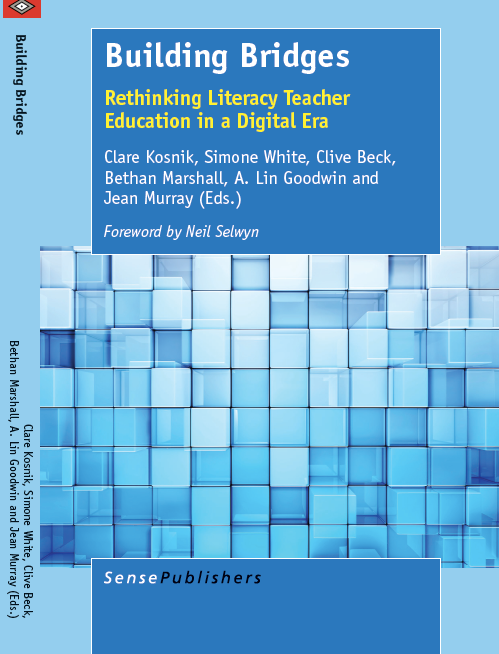
Building Bridges: Rethinking Literacy Teacher Education in a Digital Era

I (Clare) love sharing good news. Our book Building Bridges: Rethinking Literacy Teacher BookCoverCroppedEducation in a Digital Era has just been published. Being modest (tee hee) I think it is blockbuster!!!! Attached is a flier for the book and when you look at the Table of Contents you will see what I mean — incredible contributors. Here a flier for the book Building Bridges_Flyer
If you are comfortable share this info on your FB page/Twitter/Website. The tiny url is http://tinyurl.com/hwtvoua
I am so proud of this book and learned so much editing it!

Digital literacy conference in teacher education


12798928_10156708872385121_2089872921210593270_n

I (Yiola) am excited to share news on a technology conference hosted in the Child Study and Education program at OISE/UT last week.  The conference, Technology for Learning, was designed for our first year MA students. To develop the conference, we surveyed the students to better understand their knowledge of technology use in the classroom. We discovered that while most students were users of technology, very few used technology in the classroom and very few were familiar with educational approaches and applications for the classroom. The survey was helpful in developing the structure and content for the conference. We then carefully examined which technology based topics and themes  were covered in program courses and from there we decided which areas would be best for the conference.

Students expressed they lacked knowledge in, and seemed most interested in, applied uses of technology in educational settings so we decided to host sessions on: blogging, online literacy, assessment, social media in the classroom, gaming, formal and informal learning sights, coding, assistive/adaptive technologies. For a complete list of the sessions and their descriptions click on the website we designed for the conference here:

http://technologyforlearning2016.weebly.com/

Students signed up for the conference via the website and after significant planning, emails and bookings,  we were set to go.

12805919_10156709071825121_2273530965894725691_n
Ready for student registration. There were 77 students in attendance.

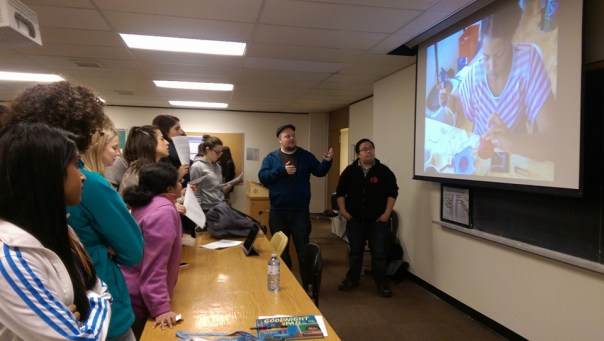
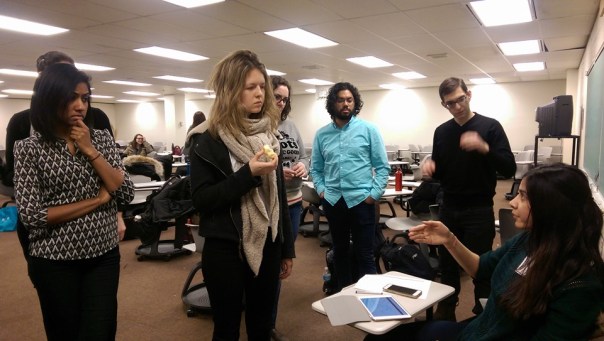
The full day conference included: an introduction, 2 one-hour sessions, lunch break, a 3rd one-hour session, student led poster presentations, Q & A and closure. The introductory session led by myself and Heather (co-designers and hosts) set the stage for the day. I introduced the notion of digital citizenship, its themes and local resources and Heather introduced theoretical frameworks for thinking about technology in education. She shared 3 frames: 1) T-Pack  2) Ed Tech Quintet and, 3) SAMR.  Each framework was explained and examples were provided. We left students with the suggestion to select one theme from digital citizenship and one framework that resonated with them and to think about them in relation to the 3 sessions there were about to attend.  Here are some pictures from the day:

We worked hard to include a variety of presenters, from a variety of settings. Included were the Director of OISE library, a lab school Teacher, Professors from the university, a Teacher from the public school board, and Doctoral students.The images above show some of our amazing presenters.

We provided a lunch where the presenters along with Department Chair Professor Earl Woodruff and Program Chair Professor Rhonda Martinussen gathered to share ideas regarding technology for learning.

10363564_10156708871960121_5825733526601624333_n

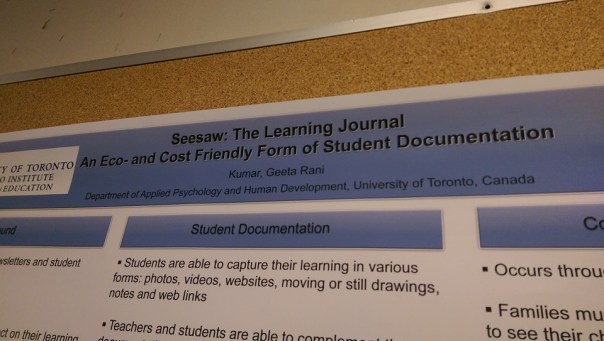
After lunch there was one more set of sessions followed by student-led poster presentations (see images below for student led poster presentations). Students submitted proposals which were reviewed and returned with feedback. The poster presentations provided a wonderful opportunity for students to share their expertise and knowledge in an academic setting. It was a moving and motivational part of the conference.The following 4 images show examples of the student-led poster presentations.


12801662_10156708871645121_4206799058803873009_n12742151_10156708871750121_1128362526582931950_n12809618_10156709128965121_6949606248217141683_n1936228_10156708871480121_3391995255196851811_n

We closed the conference with a Q & A and an unplugging of technology through the fun and fitting picture book “Good night iPad”.

Unknown

It was a wonderful day. The informal feedback from students has been positive. We plan to send out a post survey about the conference to deepen our understanding of student learning and to improve our own practice in the area of digital literacy teaching. For more information about our conference please feel free to contact us via our blog.

Teaching with Technology- A Constant Challenge


trust technology1


This cartoon reminded me (Cathy) of an incident from when I was teaching grade four.  The math problem for the day was:

A man went to bed at 11:00 p.m. and got up at 7:00 a.m. the next day.  How many hours did the man sleep?

One of my students just couldn’t figure it out it.  He usually didn’t have problems with mathematics, but he just couldn’t “see it”. In an effort to guide him, I told him to draw a clock and count the hours in between 11 and 7.

Sometime later I noticed he was sitting at his desk just staring at his notebook.  I walked over to see what he was staring at. This is what he had drawn:11


I guess my technology wasn’t matching up with his technology.  It’s a constant challenge!

Teacher Education for High Poverty Schools

Jo Lampert and Bruce  Burnett have recently edited an amazing text,Teacher Education for High Poverty Schools. The text is available from Springer.

http://www.springer.com/us/book/9783319220581Image_LampertBookcover

This volume captures the innovative, theory-based, and grounded work being done by established scholars who are interrogating how teacher education can prepare teachers to work in challenging and diverse high-poverty settings. It offers articles from the US, Australia, Canada, the UK and Chile by some of the most significant scholars in the field. Internationally, research suggests that effective teachers for high poverty schools require deep theoretical understanding as well as the capacity to function across three well-substantiated areas: deep content knowledge, well-tuned pedagogical skills, and demonstrated attributes that prove their understanding and commitment to social justice. Schools in low socioeconomic communities need quality teachers most, however, they are often staffed by the least experienced and least prepared teachers. The chapters in this volume examine how pre-service teachers are taught to understand the social contexts of education. Drawing on the individual expertise of the authors, the topics covered include unpacking poverty for pre-service teachers, issues related to urban schooling as well as remote and regional area schooling.

Our (Clare) research team contributed a chapter to the text which focused on six literacy teacher educators who purposefully prepare student teachers to work in high poverty schools. Here is the chapter: TchingforHighPovertySchools

Second Wave Change

Every once and a while I check online to see if my favorite literacies scholar, Allan Luke, has presented something new I can learn from.

Allen

Although not ‘new’, this time I happened upon a  short and poignant video called Second Wave Change.  It’s a succinct  explanation of  the kind of substantive content our students need to be discussing and thinking about to change our world.  This is a perfect video for student teachers.

So worth watching, but Allen Luke always is.