Category Archives: teachers

The Teacher Curse No One Wants to Talk About

I (Clare) read this really interesting article on Edutopia

I believe it has relevance for both teachers and teacher educators. Having to unpack and remember how we learned a topic/skill is hard. How do you break down the steps to learning so that our students can acquire the knowledge and skills.  This article has some highly useful examples and suggestions.  As a teacher educator I often make assumptions about my student teachers. They all have university degrees so they should be able to master the content easily. Wrong assumption! It takes time and good teaching. Here is the link to the full article. The Teacher Curse No One Wants to Talk About 


Knowledge is a curse.
 Knowing things isn’t bad itself, but it causes unhealthy assumptions — such as forgetting how hard it was to learn those things in the first place. It’s called the Curse of Knowledge.

In this post, we’ll identify how the Curse of Knowledge affects educators. Then we’ll outline seven ways to alleviate the curse. The ultimate goal is to improve instruction.

The Curse of Knowledge

The Curse of Knowledge has been variously described in articles by Chip and Dan Heath, Carmen Nobel, and Steven Pinker, and also in books such as The Sense of Style and Made to Stick. It has been applied to a variety of domains: child development, economics, and technology are just a few.

All of the resources describe the same phenomena — that a strong base of content knowledge makes us blind to the lengthy process of acquiring it. This curse has implications for all teachers:

  • We do not remember what it is like to not know what we are trying to teach.
  • We cannot relive the difficult and lengthy process that learning our content originally took.

As a result, we end up assuming that our lesson’s content is easy, clear, and straightforward. We assume that connections are apparent and will be made effortlessly. Assumptions are the root cause of poor instruction. And acknowledgment is the first step to recovery.

Lifting the Curse

Here are seven ways to make learning easier for your students.

1. Emotion

Barbara Fredrickson, a champion in the field of positive psychology, has studied the effects of mild positive emotions on desired cognitive traits like attentiveness and ability to creatively solve problems. In what she coined the broaden-and-build theory, Fredrickson found that pleasant and mild emotional arousal before experiencing content leads to greater retention. A quick joke or humorous movie can serve as the positive emotional stimulant. So learning is easier and the Curse of Knowledge is potentially circumnavigated when injecting a bit of emotion into your lesson.

2. Multi-Sensory Lessons

Though Howard Gardner’s influential work states that we each have a preferred learning modality, new research highlights the fact that effective lessons need not be unisensory (only kinesthetic, only auditory, etc.) but multi-sensory. Multi-sensory experiences activate and ignite more of the brain, leading to greater retention. So use a multisensory approach in your lessons to make learning easier.

3. Spacing

Blocked practice is ancient and is no longer considered best practice. An example of blocked practice is cramming. Though it feels like learning, blocked practice results in learning that is shallow, and the connections quickly fade. The preferred alternative is the opposite of blocked practice: spaced practice.

Exposing yourself to content and requiring your brain to recall previously learned concepts at spaced intervals (hours, days, weeks, or months) makes the content sticky and results in deeper retention with solid neural connections. As spaced practice is the way that you learned the content you teach, it makes sense to employ the same technique with your students. So thinking of your content as a cycle that is frequently revisited makes learning easier for your students while helping alleviate the curse.

For more information on spacing content, check out Make It Stick or 3 Things Experts Say Make A Perfect Study Session.

4. Narratives

Everyone loves a great story because our ancestral past was full of them. Stories were the dominant medium to transmit information. They rely on our innate narcissistic self to be effective learning tools — we enjoy stories because we immediately inject ourselves into the story, considering our own actions and behavior when placed in the situations being described. This is how we mentally make connections, and if students are listening to a story interlaced with content, they’re more likely to connect with the ideas. So connecting with content through a story is at the heart of learning and can help alleviate the stress associated with the Curse of Knowledge.

5. Analogies and Examples

An analogy is a comparison of different things that are governed by the same underlying principles. If understanding a process is what we’re after, looking at the result of the process proves informative. An analogy compares two unlike things by investigating a similar process that produces both. Said differently, an analogy highlights a connection, and forming connections is at the core of learning.

Whereas an analogy compares similar processes that result in different products, an example highlights different processes that result in similar products. Copious use of examples forces the brain to scan its knowledge inventory, making desirable connections as it scans. So learning is easier when analogies and examples are used to facilitate mental connections.

6. Novelty

New challenges ignite the risk-reward dopamine system in our brains. Novel activities are interesting because dopamine makes us feel accomplished after succeeding. Something that is novel is interesting, and something interesting is learned more easily because it is attended to. So emphasis on the new and exciting aspects of your content could trip the risk-reward system and facilitate learning.

7. Teach Facts

Conceptual knowledge in the form of facts is the scaffolding for the synthesis of new ideas. In other words, you cannot make new ideas with out having old ideas. Disseminating facts as the only means to educate your students is wrong and not encouraged. However, awareness that background knowledge is important to the creation of new ideas is vital for improving instruction. Prior knowledge acts as anchors for new incoming stimuli. When reflecting on the ability of analogies and examples to facilitate connections, it is important to remember that the connections need to be made to already existing knowledge. So providing your students with background knowledge is a prerequisite in forming connections and can make their learning easier.

Making It Easier

The Curse of Knowledge places all of our students at a disadvantage. As educators, it’s not enough to simply recognize that we are unable to remember the struggle of learning. We need to act. By incorporating facts, highlighting novelty, liberally utilizing examples and analogies, cycling our content, telling content-related stories, making our lesson multi-sensory, and harnessing the power of emotion, we can make learning easier for our students.


By incorporating facts, novelty, examples, analogies, and emotion; and cycling content, telling content-related stories, and making lessons multisensory, we can make learning easier for our students.

Source: The Teacher Curse No One Wants to Talk About

5 More Years for Our Longitudinal Study of Teachers

In mid-December, I (Clive) received a nice holiday gift: word came that we had ethical approval from the University of Toronto to continue our longitudinal study of teachers for another 5 years (news of the extended funding by SSHRC came earlier). This is not a “high risk” study, but it is always a relief when the approval comes. We can now look forward to following the first cohort of 20 participants into their 16th year of teaching and the second cohort, also of 20, into their 13th year. This is a welcome development, as a longitudinal study obviously becomes more significant as the years pass.

Clive BeckThis study, co-directed by Clare Kosnik (who also directs her SSHRC study of 28 teacher educators) – and involving a wonderful team of researchers – began in 2004 with 22 new teachers; the second cohort of 23 was added in 2007. Over the years, 3 participants have left the study but are still teaching, while another 2 have left teaching and hence the study; so the total is now 40. This is an unusually high retention rate both for teaching and for a longitudinal study.

It is likely the high retention is due in part to the teachers’ participation in the study itself, which they often tell us is very beneficial to them; sometimes they say it is the most useful PD they experience all year! This is a limitation of the study, since it means they are a relatively motivated group (although it is not something we could have avoided). However, it is interesting that teachers would find it so helpful to have someone listen to their experiences and views about teaching for an hour of so once a year. Perhaps it is a form of “PD” that should be used more often, as an alternative to top-down lectures by “experts” on how to teach!


Voices of seriously ill children

One of my doctoral students (Katie Doering) works at Ronald McDonald House for serious ill children. She is an AMAZING classroom teacher. Her students were interviewed and these are views. Here is a link to the entire article. http://www.ctvnews.ca/canada/if-i-were-pm-students-with-serious-illnesses-list-their-priorities-1.2640578


A group of students facing serious illnesses had some advice for prime minister-designate Justin Trudeau on what he should make his top priorities once he takes office, including free medicine, longer maternity leave, and a wild animal for everyone who desires a pet.

The students, who were in Grades 4 through 8, take classes at Ronald McDonald House Charities Toronto School. They offered these responses and more, in a class exercise where they were asked to write a speech on what they would do if they were the prime minister of Canada.

The private school, located in downtown Toronto, is part of the Ronald McDonald House charity, which offers housing and services for families with ill children. The school is free for students to attend, as it is funded through donations, but it is not open to the public.

When these families require long-term medical care in downtown Toronto, the charity can offer them housing and schooling. In order to be eligible to receive these services, families must live a minimum of 55 kilometres away from the House, and must be referred by a hospital social worker.

The on-site school is unique in that it offers classes based on the Ontario curriculum for their children to attend, so that they don’t miss out on their learning while seeking treatment.

The school’s principal, Katie Doering, said the speech-writing exercise was part of a unit on government and democracy that happened to coincide with the federal election.

At the end of the unit, the students relied on everything they’d learned, and combined it with their own beliefs in a speech on what they’d do if they were the leader of Canada.

Some of the proposed changes were exactly what you might expect from children.

“I would make a machine that could make pets talk,” said Shivam.

But others showed that they were deeply in tune with the daily struggle of Canadians across the country.

“I would provide free medicine because it’s not your fault you got sick and need medicine,” said Aliviah Goode.

“Also, anyone under 85 should get free health care,” she added.

Aliviah’s sister Adaya recently had open-heart surgery.

“She’s doing good, she got discharged,” said Aliviah.

Aliviah also said that children should have access to “free school supplies.”

Nine-year-old Rayne Shim devoted part of her speech to asking for people to get their birthdays off from work, with pay.

But she too tackled the issue of universal pharmacare.

“I would give free medicine to everyone,” she said.

“Like, you don’t have to pay a lot of money for medicine because medicine can be really expensive,” she added.

Rayne’s sister is the middle of a battle with cancer.

Rayne said that the rich should also have to pay higher taxes, and advocated for a national daycare strategy.

“Maybe the daycare should be paid by the government because some parents can’t afford hundreds of dollars so kids can go to daycare,” she said.

Doering said the students’ speeches were telling of everything they learned about the responsibilities of government, but also of their own personal circumstances.

“It was a mixture of things we had talked about in class, but then they brought in their own ideas about things that were really relevant to them right now,” she said, noting that many talked about improving the healthcare system.

“And then of course we saw a lot of their personalities come out too,” she said, adding that there were specific requests for annual teddy bear picnics, as well as a statutory holiday once a month.

Here’s a further look at some of the students’ speeches:

“If I were prime minister, I would provide every family with a free healthcare plan because people can’t help it when they get sick,” 11-year-old cardiac patient Adaya wrote.

“I would also plan an annual teddy bear picnic, just for children! Children can bring their favourite teddy bear or stuffed animal and come to a beautiful meadow of flowers and have a lovely picnic. All food and blankets will be supplied!”

Her sister, Aliviah, said if she was prime minister, she would provide everyone with free medicine. Once that was done, she’d proceed to overhaul the education system and outlaw littering.

“I also have some personal ideas,” she wrote. “I think there should be a zoo in every city. My favourite rule would be that you can have a wild animal as a pet.”

Twelve-year-old Chayse, who is recovering from brain surgery, said if she were the country’s leader, she would build more affordable housing.

“Why you ask? Because I think people should have a nice place to stay and not have to stay outside on park benches or underground subway heaters,” she wrote.

Her younger sister, Jordan, said she would put more money into nursing homes and lower tuition for private schools. And, in an apparent nod to her sister, she said she’d create more schools for neurosurgery.

Up next on her ambitious agenda? More holidays.

“There would be a statutory holiday every month because sometimes you just need a break,” she wrote.

Doering said at the end of the unit, the students had the opportunity to read their speeches to their classmates and their families.

“They had a phenomenal time doing it,” she said. “It was very powerful to hear the messages that they had.”

With a report from CTV Toronto’s Natalie Johnson

Teacher Researcher Group Celebration

I (Clare) was approached by Rosemary Evans, the principal of University of Toronto School IMG_0885IMG_0873(UTS), to assist with forming a teacher research group. Rosemary had received funding for the Eureka Fellowship program from Newton Foundation to start a teacher researcher group. Clare happily accepted Rosemary’s invitation then invited  current and former doctoral student (Pooja, Elizabeth, and Shelley) to co-facilitate because they had much to offer and the team approach would model collaboration. .Over the next two years we met on a monthly basis for approximately two hours. IMG_0879

The teacher researchers presented their findings last week and it was one of the most IMG_0867special moments of my professional life. The teachers did an amazing job presenting their research. Their research was high quality and it informed their practiceWe plan to turn their reports into an ebook. Here is a list of the projects that the teachers completed: IMG_0874


  • An Examination of Admission Profiles and Early Student Success at UTS by Garth Chalmers –
  • Exploring the Use of the Fort McMoney Documentary-Game in Grade 9 Geography Classrooms by Mike Farley
  • Using Digital Tools in the Guidance Classroom by Catherine Wachter
  • Maximum City by Josh Fullan
  •  Integrative Thinking in a Classroom Setting by Christopher Federico
  • Self-study of My Work as a Vice Principal by Heather Henricks
  • Reflections on Being a Member of the Eureka Fellowship Program – Amy Parradine
  • Reflections on the Eureka Fellowship Program for Teacher Researchers Clare Kosnik, Pooja Dharamshi, and Shelley Murphy
  • Final Thoughts – Susan French

IMG_0888IMG_0890

Creating Cultures of Thinking: An Amazing PD Experience

I (Clare) blogged in a previous post that I am incoming Director of the Jackman Institute of Child Studies. http://www.oise.utoronto.ca/ics/ JICS includes a lab school, teacher education program, and research centre. It is truly an amazing place!

Last week I had an opportunity to attend the Lab School teachers’ faculty meeting. They 618L8vDZYNL._SX376_BO1,204,203,200_had a week of PD and central to their activities was reading and discussing the text Creating Cultures of Thinking: The 8 Forces We Must Master to Truly Transform Our Schools by Ron Ritchhart. http://www.amazon.ca/Creating-Cultures-Thinking-Transform-Schools/dp/1118974603/ref=sr_1_1?ie=UTF8&qid=1442084403&sr=8-1&keywords=Ron+Ritchhart

The teachers had read the book over the summer and were reporting on chapters, selecting key quotes, and discussing implications for their practice. This was truly PD at its best – the teachers were thoughtful, involved, and relating theory to their practice. Under the leadership of the principal Richard Messina so much learning occurred and the community was strengthened.

Below are a few quotes they selected from Ritchhart’s text which I found very inspiring:

“…when both teachers and students have the expectation, or mindset, that one gets smarter through one’s efforts, then challenge and mistakes can be embraced as learning opportunities.” p. 7

“…traditional academic skills…do not adequately define the kind of students we collectively hope to send into the world. Nor do they define the kind of employee [skills] businesses are looking for…professionalism, work ethic, collaboration, communication, ethics, social responsibility, critical thinking, and problem solving…” p. 17

“…in a learning-oriented classroom, teachers and students focus their attention on the learning as a priority, letting the work exist in context and serve the learning.” p. 45

“…lots of new teachers, and perhaps some experienced ones, struggle with learning to listen, yet listening is one of the powerful ways we show respect for and interest in our people’s thinking.” p. 82

“for classrooms to be cultures of thinking for students, schools must be cultures of thinking for the adults” p. 102

Being part of a school where teachers are decision-makers, expert educators, treated as intellectuals, and work collaboratively is a true honour. I suspect there are going to be many more blogs about what I am learning at JICS.

Revisiting Mysteries in Canadian History

A project entitled Great Unsolved Mysteries in Canadian History, engages inquiry-based pedagogy to encourage students’ critical thinking and research skills. The project, based at the University of Victoria, the Université de Sherbrooke and the Ontario Institute for Studies in Education at the University of Toronto, has developed a collection of websites, which invite high school and university students to examine primary source documents, photographic evidence, archival material and historical interpretations, in an effort to solve a historical puzzle (e.g. the mystery of the doomed Franklin expedition; the mysterious death of artist Tom Thomson). John Lutz, University of Victoria history professor and one of the founders of the project noted, “history is too important to be boring, and these mysteries are too intriguing to be left to historians alone.”  All the materials and teachers’ guides are free. Link to project site: http://canadianmysteries.ca/en/index.php Link to the CBC article: http://www.cbc.ca/news/canada/british-columbia/how-franklin-expedition-mystery-could-be-solved-by-high-school-students-1.3086927

Ashleigh Woodward: A Natural Blogger

In my (Clare) literacy course (at the graduate level) this past year I gave my students options for their final assignment. It had to be a “product” and could take any form. Many chose to use digital technology (e.g., Powtoons) while others did artistic presentations (e.g., original painting, scrapbook). Ashleigh Woodward chose to start a blog. It is truly terrific – here is the link to it. http://educatorscollection.blogspot.ca/?view=classic

I think that Ashleigh is a natural blogger. I love her range of topics: 20 books to read in 2015, bullying, books about residential schools, Three Ring (a program designed for teachers to use when collecting evidence about student learning) …

Here is one of her blogs:

Teaching vs. Googling: Purposeful Technology in the Classroom

My grandma was a teacher for many, many years. She taught all over public schools in Ontario and Quebec, every grade K-8, and spent many of the final years of her career in special education classrooms. My three great aunts were also wonderful teachers, as was my great-grandma – all on the same side of the family. Times were different, teaching was different – but some things were surely the same. When I think about their careers, though, I’m left with a burning, frantic question.

How did they teach without the internet?!

Can’t spell a word I want to use? Apple’s dictionary program. Want to share files with a colleague? DropBox or AirDrop. Need somebody to cover my yard duty? Group email. Want my students to meet and interview an MPP? Skype. Stuck for a graphic organizer or a primary PE game? Pinterest. Need general information or want to find a good math game? Google. Want to get some interactive map work going? SmartBoard. Want to get my students watching some videos about the nervous system? QR Codes and iPads. Need to gather instant feedback as we prepare for a test? Smart Clickers. Shared writing as we practice quotation marks? Laptop and Word. Inputting marks and generating grades? GradeKeeper. Writing and publishing report cards? Trevlac. Posting class field trip forms and reminders? Whipplehill website.

… I could go on, and on… and I probably already have overshared. I didn’t even touch on YouTube, PowerPoint or social media!! There’s no denying how the word wide web has allowed us to connect with other educators, around the world, to share ideas, resources and strategies. Look at Teachers Pay Teachers! That’s an entire other blog post in and of itself. All these resources are out there and available to anyone who knows that search terms to use, and who is willing to spend some time and possibly a little bit of money.

This brings me to my point. Grandma would have considered all the students in her class, and created assignments, lessons and tasks for them to complete, from scratch. They were tailor-made, in many cases, likely using a textbook as their base. While we pride ourselves on moving away from textbooks in an effort to differentiate our students’ learning, I worry that printing booklets from TPT or showing instructional videos is merely repurposing the textbook.

My view, for what it is worth, is that technology is a tool to help us, as teachers, deliver content, and to help our students demonstrate their understanding. It is not a catch-all of worksheets to be printed  and distributed without purposeful instruction, meaningful learning or engaging inquiry. Technology can support us in our teaching, in our ability to meet the needs of the students in our classroom, but it should not be the only place we turn to for Monday’s lesson. I think that in Ontario we still have a lot of creativity and “craft” associated with our profession, as we do not follow the scripted, step-by-step lessons mandated by many school boards in the States, and this is to our students’ immense benefit.

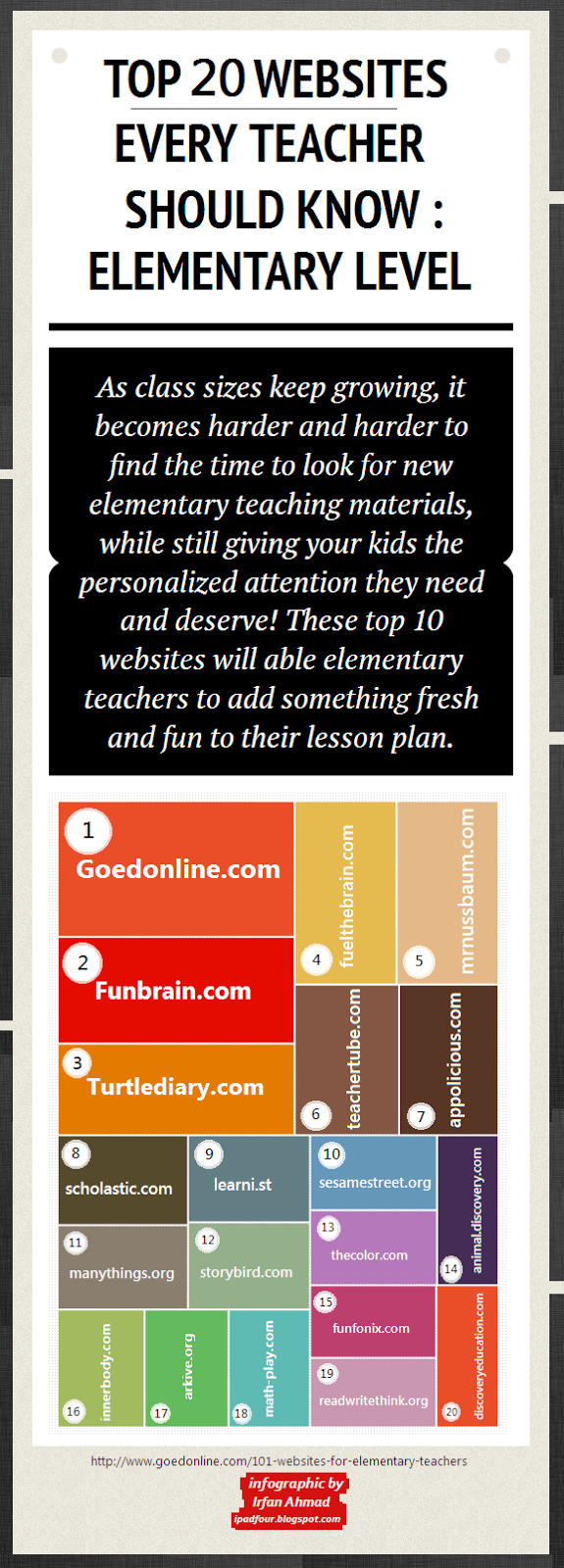
Image 20-Best-Websites-Elementary-Teacher-Should-Know-Infographichttp://elearninginfographics.com/wp-content/uploads/20-Best-Websites-Elementary-Teacher-Should-Know-Infographic.png

School Board Proposes Multi-language Immersion Program

The Toronto Catholic District School Board has plans to establish a multi-language specialty school. The proposed immersion program, being considered for north Scarborough as early as this fall, would offer instruction in French, Spanish, German, and Mandarin. Michael Del Grande, chair of the TCDSB noted “my view is we’re not preparing our students for the world stage, we barely do a passing job with French, and we’re a bilingual country! So we’re asking parents if they’d like to educate their children in the languages of some of the largest economies in the world.”  What do you think about this type of immersion program? Should other languages be included in the program?

Link to the Toronto Star article: http://www.thestar.com/yourtoronto/education/2015/04/28/multi-language-elementary-school-proposed-by-toronto-catholic-board.html

Moving From Outsiders to Insiders: Working With a Teacher Research Group

I (Clare) have been involved in a teacher researcher group for the last 2 years. Along with Pooja and Shelley (regular IMG_2508contributors to this blog and pictured to the left) we have facilitated  a group in a secondary school. The work the teachers have done is outstanding! The three of us facilitators did a self-study of our work with this group. Since we did not know the teachers beforehand which was a bit unnerving we felt it was good to study our work. We now feel very much part of the group and feel we have become a learning community. We are presenting on our work with the teacher researcher group at AERA. Here is a draft of the paper Moving From Outsiders to Insiders: Working With a Teacher Research Group. It is still in “draft” form but if you are interested in teachers as researchers you might find this paper useful because we talk about logistics, identity, forming a community, and our learning. AERA 2015 EurekaPaperFinal

For those of you who read this blog and are at AERA I hope our paths cross.

And now for something totally different… but not really: The power of the teacher/student relationship

In teacher education, and on this site in particular, we often discuss the power of the relationship between teacher/student for fostering student success.  My blog today is about the teacher/student relationship but not the kind we  typically discuss in teacher education where we look to the classroom teacher and the child in a school setting. My blog today is about a Muay Thai (martial art)  trainer and his fighter.  There is much to learn about teaching and learning from the martial arts world. While the two contexts, martial arts and traditional schools, are vastly different the elements of the teacher/student relationship are transferable. In my experiences as a classroom teacher, teacher educator, and student and fighter of Muay Thai, there is much to be gained from thinking about and understanding the elements of such relationships and thinking about them in relation to one’s own practice. My partner is a martial artist and trainer of world class fighters. I have observed his practice for over a decade, watching closely and listening carefully in order to better understand his interactions with his students/fighters. One thing is for certain, the relationships involved for students who achieve greatness and significant improvement in, not only the martial art but also,  their overall quality of life have consistently demonstrated the following as leading elements to their success:

1. Love. Both teacher and student must love what they are teaching and learning.  Passion, excitement, and engagement seem to be necessary components for building a love for learning and achievement.

2. Respect. Both teacher and student must have respect: respect for themselves, each other, and the discipline they are learning. Respect includes training for the discipline itself. Consistency, practice, repetition, commitment to improvement  is part of demonstrating respect.

3. Belief.  When a student is able to visualize their success and believes they can achieve that success, they most likely will. Their teacher instills the belief and supports its development. Belief is likely to be most difficult because it requires trust, vulnerability, and will. However, belief is what generates the most power to achieve.

Love ~ Respect ~ Believe

My partner, Ajahn Suchart, believes. He believes in his students and he shows this in a number of ways: in his genuine care and belief in his students, in his belief in his own pedagogical content knowledge, in the giving of knowledge, his commitment to students’ development, in the time he devotes to his students. Over the years I have asked students “what is it about this place (Siam No1, the martial arts school) that make you love learning and strive for success?” The dominant responses are  “Ajahn Suchart believed in me”, “He is one of the few teachers I felt truly cared about me” and “Ajahn Suchart’s passion for Muay Thai is contagious”.  I am certain that the art itself, Mauy Thai, is a leading factor for wanting to improve and excel, yet just as with regular classroom teachers, it is the teacher and their commitment and belief in their students that holds much of the power to influence the learning experiences and achievement of students.

And when the teacher truly believes in their students, the possibilities for student achievement are endless… students are empowered to achieve.

Ajahn Suchart’s first World Champion, Clifton Brown, wrote this on social media:

Without the patience, dedication, sacrifice, of time, mind, and body, of Ajahn Suchart, I would not be the man I am.

When people comment on my power as a fighter, strength of my body, beauty of the technique I don’t believe they truly understand, it was buit by this man. Standing immovable at 5’5 taking us hitting him full out, for years. Pressuring us, more than any opponent could. Turning coal to Diamond… Yet, more than his physical dimensions, it was the immovability of his spirit, that forged me, and others into men.

I have become what I am as a man because of you, your faith and belief in me and my potential, even at times when I didn’t believe myself.

Thank you Ajahn(Professor). I love you.

clifton

Image is of Ajahn Suchart with World Champion Clifton Brown.

Ajahn Suchart and his students exemplify the elements of an effective teacher/student relationship. The image below reflects the beauty of a teacher/student relationship:  students’ successes are the teacher’s  fuel to continue teaching with passion, commitment and determination.

11091333_980103405335694_3785385439910581182_n

Watching Ajahn Suchart teach — with utter passion and complete belief — reminds me of what teaching is all about — believing — genuinely believing — in students and through this belief, helping reach their potential and fulfill their dreams.

I am inspired by Ajahn Suchart. His work as a teacher has left significant imprints on the lives of many. As a teacher (educator) this is what I strive to achieve as well — an imprint on the lives of my students.

To view Simon’s last competition click the link below… wait for the end to see the teacher rejoice in his student’s achievement:

https://www.youtube.com/watch?v=3oUZ-rDQ7rU&feature=youtu.be