Category Archives: Uncategorized

The Wikipedia Gender Gap

Wikipedia is  believed, by many, to be a democratic model of content creation because of WIKIit’s design which allows anyone to create/edit content. While listening to CBC Radio’s Spark, I (Pooja) learned that Wikipedia suffers from a severe gender gap. In fact, a study in 2011 conducted by the Wikimedia Foundation, found that only 13% of Wikipedia contributors were women, making men the overwhelming contributors to Wikipedia.

Sue Gardner, the Executive Director of the Wikimedia Foundation, uses comments posted by women on articles related to the wiki gender gap to explain reasons women do not contribute more to Wikipedia:

1)     Some women don’t edit Wikipedia because the editing interface isn’t sufficiently user-friendly.

2)     Some women don’t edit Wikipedia because they are too busy.

3)     Some women don’t edit Wikipedia because they aren’t sufficiently self-confident, and editing Wikipedia requires a lot of self-confidence.

4)     Some women don’t edit Wikipedia because they are conflict-averse and don’t like Wikipedia’s sometimes fighty culture.

5)     Some women don’t edit Wikipedia because the information they bring to Wikipedia is too likely to be reverted or deleted.

6)     Some women don’t edit Wikipedia because they find its overall atmosphere        misogynist.

7)     Some women find Wikipedia culture to be sexual in ways they find off-putting.

8)     Some women whose primary language has grammatical gender find being addressed by Wikipedia as male off-putting.

9) Some women don’t edit Wikipedia because social relationships and a welcoming tone are important to them, and Wikipedia offers fewer opportunities for that than other sites.

Like many, when I want to learn the basics about anything, Wikipedia is often the first place I go. However, before listening to the Spark radio show on Sunday, it never crossed my mind to edit or contribute to a Wikipedia page. Some of the reasons Gardner presented resonate with me, while others not at all. So what is it that’s keeping me (and you) from Wiki’ing?

Listen to CBC Radio Spark on the Wikipedia Gender Gap:

http://www.cbc.ca/spark/blog/2014/03/16/wiki-gender-gap/

Read Sue Gardner’s blog here:

http://suegardner.org/2011/02/19/nine-reasons-why-women-dont-edit-wikipedia-in-their-own-words/
The Power of Introverts

“In a gentle way, you can shake the world.” – Gandhi

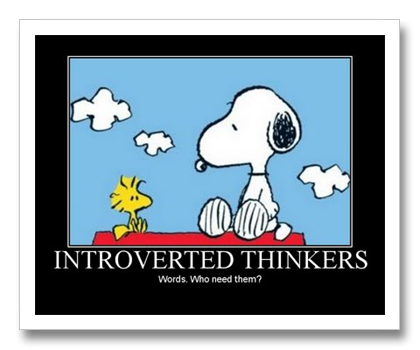
Introverted-Thinkers

At a professional development session I (Pooja) attended this week, I joined a conversation about the power of introverts. The conversation was framed around Susan Cain’s book entitled Quiet: The Power of Introverts in a World That Can’t Stop Talking. We live in a society where extroverts are the ideal; we value personality over character. This presentation, given by some of my quieter colleagues, was  powerful because it forced me to reflect on ways I engage and include introverts in the classroom. The presenters explained that introversion and extraversion is not a black or white matter; rather we all fall somewhere along the continuum depending on the situation we find ourselves in. I also learned that introversion is not to be confused with shyness- a mistake many people (including myself) make when speaking about introverts.

images

I mostly identify as an extrovert. Knowing this is important because it can influence how I design my  course to be more inclusive for all my students. As a more extroverted person, I walked out of the session with practices to consider revising in my classroom. Here are a few of the things I’ve been thinking about:

  • Mindful of airtime- I often become uncomfortable in silence, and so I will fill in silent moments with talking or engaging only the most vocal members of the class in discussion. Silence can be a powerful thing; these are the moments where reflection occurs.
  • Independent Work vs. Group Work- I try and put my students into pairs and/or groups every chance I get. I now am beginning to realize this is not the optimal working condition for all. I need to find a balance of group work and independent work.

Learn more about the power of the introverts here:

http://www.thepowerofintroverts.com


The Power of Believing

Building on Clare’s blog from yesterday and the notion of connecting well-­‐being to schooling, I (Yiola) feel compelled to share with you the story of Simon Marcus. He is a member of my extended family and one of Canada’s top athletes in the sport of Muay Thai. In fact, Simon is a 5 time World Champion.

http://en.wikipedia.org/wiki/Simon_Marcus

Simon’s story is not uncommon: a Black, male disengaged with traditional school. As a child, he was an active boy and excelled in sports but had very little patience and interest for learning inside the classroom. He has shared his schooling story with me numerous times and the story has been consistent, “It is not that I was not capable of doing the work, I just had no interest or motivation”. As his schooling years progressed he found himself deeper and deeper in spaces of alienation and low expectation for successful schooling. And then, he met Master Suchart, a Master teacher of Muay Thai.  Through a pedagogy that engaged him (physical literacy), a teacher that knew how to connect to his well-­‐being, and a developing belief in himself as a learner and a winner, Simon went from detentions and failure to being on top of the world. The one statement that rings in my ears about Simon’s journey to success is this turning point, “I knew Master Suchart believed in me. His belief in me made me believe in myself”. The ideas of well-­‐being, trust, care and belief paved the way to Simon’s success. A teacher’s role in the well-­‐being of a student is key: the social conditions created in a classroom, the relationships fostered and the pedagogical decisions a teacher makes are key.

From my own experiences as a Muay Thai fighter, I can say it is much easier to prepare for and pass a science test at school than it is to prepare for and step into a Muay Thai ring and yet the big questions worth exploring are: how did the teaching and learning at the Muay Thai school connect well-­‐being to schooling success? What process took place for Simon to connect with the learning, embrace the teacher and believe in himself? Perhaps the kinesthetic element of the pedagogy, perhaps the content, perhaps the teacher as role model and unconditional supporter, perhaps the challenge and, very likely the overheard whisperings of his teacher: “see that  boy over there, he’s my future champion”.

yiola

Simon’s victory in Buenos Aires, Argentina against Argentina’s #1 fighter.

yiola 2

Simon with his teacher, celebrating a victory together.

Semiotic Linguistic Quiz

Saussure   Ferdinand de Saussure (1857-1913)

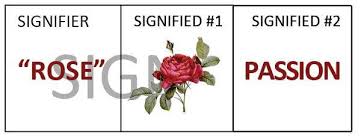
As of late, I (Cathy) have been exploring semiotic linguistics to further  my understanding of multimodality (Jewitt & Kress, 2003). Ferdinand de Saussure is considered to be one of two fathers of 20th century semiotic linguistics.  He described semiotics a as a system of signs that are created within a cultural context.  Sausuure defined a sign as being composed of:

        • a ‘signifier’ – the form which the sign takes; and
        • the ‘signified’ – the concept it represents.

On the internet I stumbled upon these diagrams which are intended to illustrate the meaning of signifier and signified.  Do you think they are both correct?

tree

rose

A multitude of communication resources

cartoon_newliteracies

When I saw this comic it made me chuckle.  I enjoyed the comic’s gentle reminder that children/youth routinely engage with and expertly navigate a variety of communication tools. Clare and I (Lydia) conducted a two-year collaborative self-study of our efforts to incorporate various technological resources (e.g. a wiki) into our pre-service literacy methods courses. This research helped us identify both the challenges and successes we encountered along the way.  Our research efforts also made us more mindful of why we chose to incorporate certain technological resources into our pedagogical practice — questioning for what purpose and to what end.   Through the analysis of our efforts we realized that we had initially seen technology as an end in itself, not as a tool to support learning. In the second year of the study, we focused much more on student learning and became more systematic in our efforts. Over the two years of the study, our identities as teacher educators shifted as our pedagogies became richer, our use of technology more fully integrated into our literacy courses, and we received validation from others and from each other.

Family Day

In Ontario we have a public holiday called “Family Day”, a day in the depths of February where most adults have the day off from work and children stay home from school for the purpose of spending time together. It is a day meant for us to relax and enjoy the wonderful people in our lives.
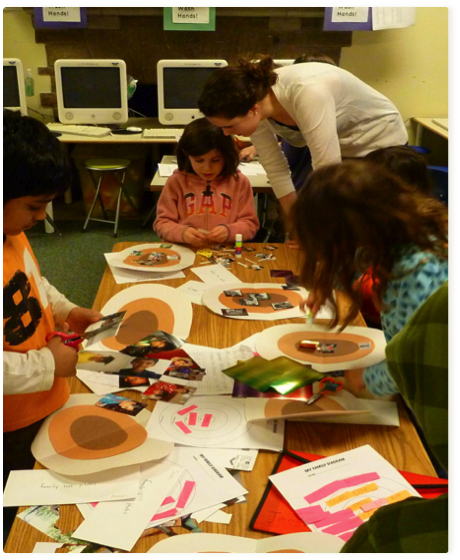
In honour of Family Day, I (Yiola) would like to share an interesting and inclusive way of thinking about family from the perspective of a child.  This idea comes from the descriptive findings from my research project on critical literacy practices of elementary school teachers.  In the Grade two classroom students designed their autobiographies and published books called “Selfologies”.  The published books include a variety of literacy process and forms of writing including: interviewing family members, writing narratives, developing timelines, creating family trees to mention just a few.
Instead of a traditional family tree that is a chart representing the family structure, often with the child at the bottom of the tree and the space for the father on one side and the mother on the other, the teacher used something different.  The teacher recognized the traditional family tree chart normalized the nuclear family and left no space for all the wonderful family structures that exist. The teacher introduced a “family circle”.  This graphic organizer places the child at the centre of the page and bigger circles that include family members surround the child (see image below).  This way of organizing the concept of family changes the perspective and value we place on “what is a family” and “who is in a family”.  The family circle empowers the child to decide on their own who is in their closest inner circle. That may be siblings, two mothers, a grandparent, a family friend. By using a new and improved structure we are teaching students how to read the world differently. Family today is a broader and more inclusive term.

The first image is of the children designing their family circles.

Image Family YC

Family Circle


Book Clubs + Canada Reads

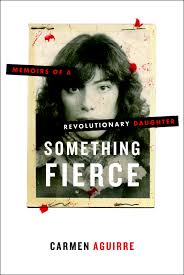
As a Ph.D. student and an educator, I (Pooja) find myself mostly reading academic journal articles or student writing these days. While I enjoy reading both types of text, I miss reading for pure pleasure; in particular, I miss reading novels. Novels are a commitment of both time and energy, but when you read a truly great novel it is totally worth it.somethingfierce

I recently formed a book club with some colleagues/fellow educators. Although I have a lot of my plate already (don’t we all?!), I thought this would be a great opportunity to connect with colleagues on a more personal and informal level, (not to mention being pulled into the world of a fascinating  novel). We selected Something Fierce: Memoirs of a Revolutionary Daughter by Carmen Aguirre. This book, written by a Canadian author, was the official selection of the 2012 Canada Reads initiative. I’m currently reading the final pages of this gripping memoir, and I highly recommend it to anyone looking for a great read while supporting a Canadian author. I made time for reading this book during every opportunity I could: riding the subway, sitting in the doctor’s office, waiting for my oatmeal to cook in the morning. I was surprised to find how many of those small moments I had each day, which would usually be taken up by scrolling through my smartphone. Our book club meets for the first time tomorrow evening at a colleague’s home.  I’m looking forward to discussing the book in a relaxing atmosphere.

Learn more about the Canada Reads project:

http://www.cbc.ca/books/canadareads/

A Short Summary of the book:This dramatic, darkly funny narrative, which covers the decade from 1979 to 1989, takes the reader inside war-ridden Peru, dictatorship-run Bolivia, post-Malvinas Argentina and Pinochet’s Chile. Writing with passion and deep personal insight, Carmen Aguirre captures her constant struggle to reconcile her commitment to the resistance movement with the desires of her youth and her budding sexuality. Something Fierce is a gripping story of love, war and resistance and a rare first-hand account of revolutionary life.

Source: (http://www.amazon.ca/Something-Fierce-Memoirs-Revolutionary-Daughter/dp/1771000368)

Studying Beyonce… in Higher Ed?

Lately, Beyonce has been in the news a lot more than usual. Recently, without any warning(or PR), she released a self-titled  album to the public. She was also, debatably, the most talked about performance at the 2014 Grammy’s a few weeks ago. However, the most interesting news I (Pooja) have recently read about Beyonce has to do with the world of academia.

Rutgers University now offers a course called “Politicizing Beyonce,” in which her musical career is used as a lens to investigate“race, gender, and sexual politics.”  The instructor of the course, a Ph.D. student, says “he’s seeking to help students think more critically about media consumption.”

I am intrigued by this course, yet not sure what to make of it. Is this a relevant and contextualized way of studying issues of race and gender or is this normalizing our (society’s) idolization of celebrities by creating a place for it in higher education?

What do you think?

Read more about this course:

http://www.huffingtonpost.com/2014/01/30/rutgers-beyonce-course_n_4697541.html

http://newsfeed.time.com/2012/01/27/rutgers-beyonce-course-5-potential-lessons-on-the-syllabus/

Source: www.policymic.com
Source: http://www.policymic.com

Tim Fletcher Comment

Hi Everyone,
Tim Fletcher posted the following comment. Thought that I would put it in a blog post in case you missed it.
Clare

Thanks very much for all the kind words. I was lucky enough to learn about researching teachers/teacher education from two of the best (Clare & Clive)! BTE was also such a powerful experience for me — here is a link to an article I wrote with my UK colleague Ash Casey (founder of another teaching blog: http://www.peprn.com ) about how strongly BTE influenced my thoughts about learning to teach teachers: http://journals.humankinetics.com/jtpe-back-issues/jtpe-volume-31-issue-4-october/trading-places-from-physical-education-teachers-to-teacher-educators.
Loving the blog by the way!
Tim