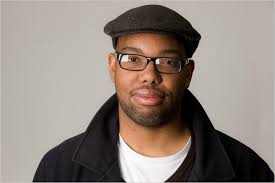
Celebrated writer and editor of blog The Atlantic, Ta-Nehisi Coates, provides advice to writers. Coates writes about social, cultural, and political issues for The Atlantic, The New York Times, and has published several books. In this short yet powerful video, Coates describes writing as an “act of courage.” He explains: “I always consider the entire process about failure, and I think that’s the reason why more people don’t write.” Coates reminds new writers that ultimately writing is about perseverance.
When developing the photo essay assignment for my course, I came across an excellent resource for teachers and students. The New York Times has started a blog entitled Lens: Photography, Video, and Visual Journalism. The topics covered in the blog posts touch on several critical issues such as immigration, race, and class. The photos captured in each of the photo essays serve as a great entry point into rich discussion. When using the Lens Blog in my classroom I find myself drawing on skills I developed during workshops many years ago.
When I was a public school teacher, I participated in a fascinating series of professional development workshops called Visual Thinking Strategies (VTS). By analyzing carefully selected images, students were able to develop critical literacy skills as well as visual literacy skills. Teachers were facilitators in this process and asked three open-ended questions:
1. What’s going on in this picture?
2. What do you see that makes you say that?
3. What more can we find?
I found myself using the VTS approach when presenting students the photo essays from the Lens blog. Students in my class really engaged with the photos and rich discussion took place as a result. I will definitely be using this blog for years to come in the classroom.
Below are some powerful images from photo essays on the Lens Blog.
Photo Essay: Garifuna Immigrants in New YorkPhoto Essay: Connecting with Syrian RefugeesPhoto Essay: One Year Later, Remembering Eric Garner
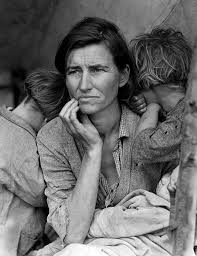
I have just started teaching a unit on media, specifically social documentaries. So far we have studied the important work of American photographer Dorothea Lange related to the rise and significance of “concerned photography” (also known as “compassionate photography”). Students have engaged deeply with the photos and answered questions adapted from New York Times Critical Lenses guide such:
What feelings does this photograph create for you, the viewer?
How personal/impersonal is this photo? What elements make it this way?
Why do you think this photograph was taken?
Is this photo timely? Does it have a timeless quality? Why or why not?
Photos of Lange’s we analyzed in class:
Migrant Mother, Photographed By: Dorothea LangeRichmond, CA Photographed By: Dorothea Lange
Beyond studying the background of photo journalism, students will learn the basic principles of photography (e.g., rule of thirds, movement, lines, etc.). Following this, students will have the opportunity to create their own social documentary in the form of a photo essay. Students are still thinking through topics, but they are to tell an “untold story” from their lives. Topics which we have brainstormed so far have included: The shifting landscape of the Regent Park neighbourhood in Toronto, Canada; Cultural traditions of the First Nations people in Ontario, Canada; and A Day in the Life of the Pan Am Games 2015.
I am looking forward to seeing what stories students decide to tell. I will keep you posted on the process! I am learning so much along with my students!
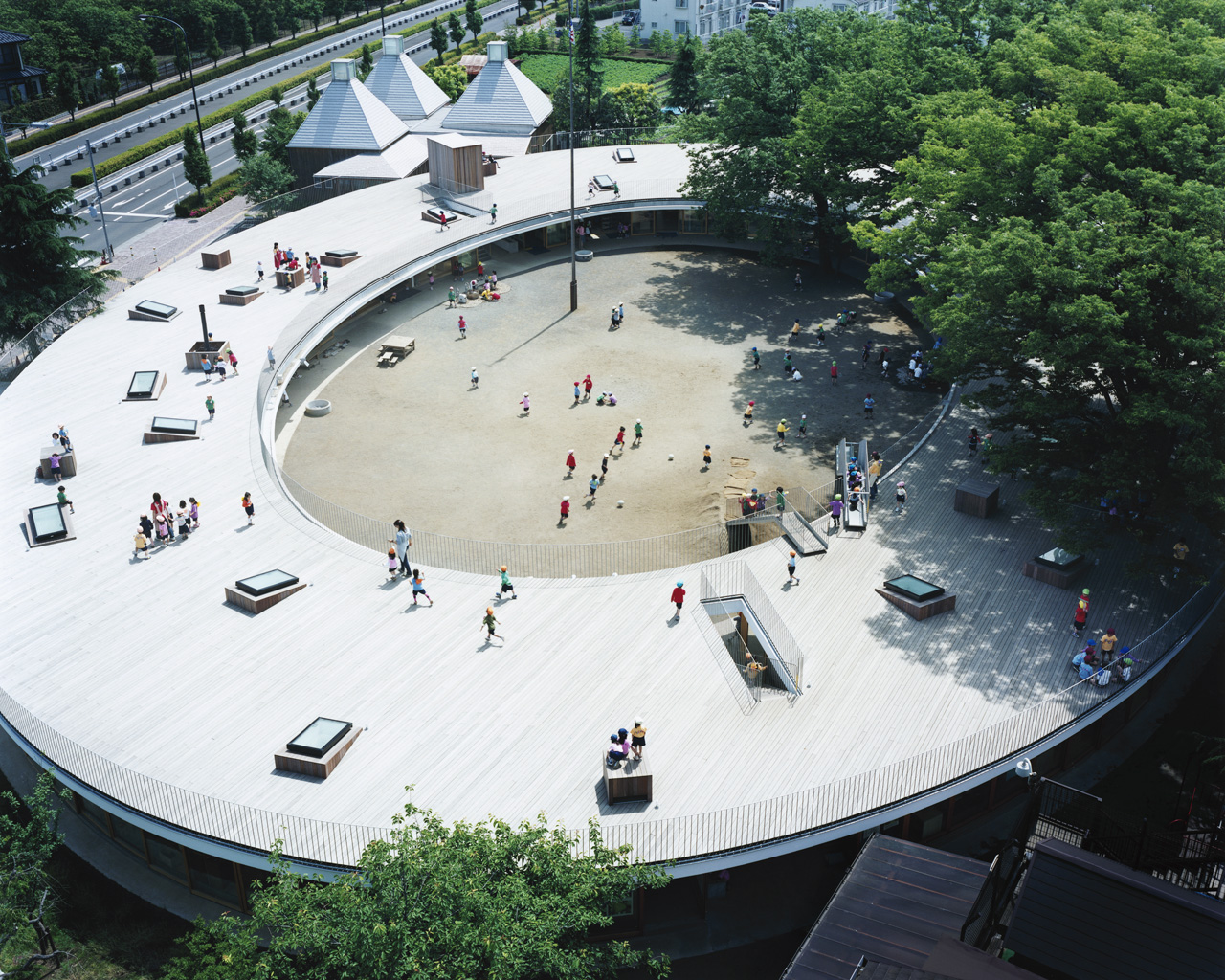
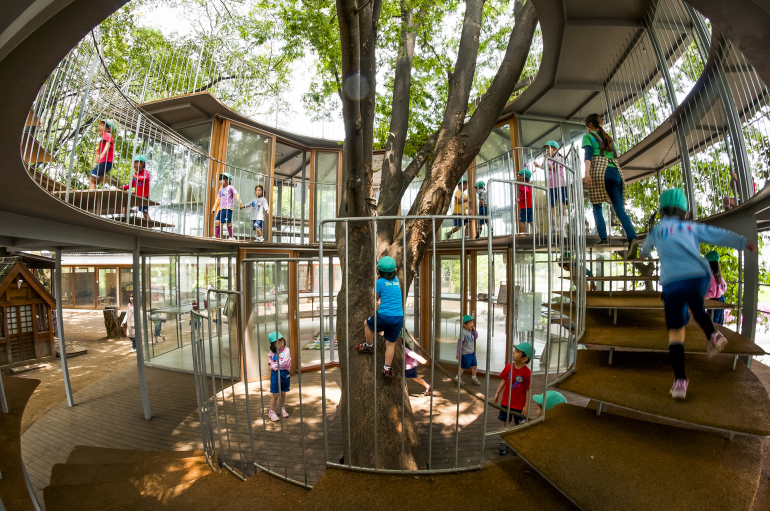
Takaharu Tezuka is the architect behind Fuji Kindergarten, deemed by some as the best Kindergarten in the world. Tezuka followed around his own young children to inform his school design. He designed a school which encourages pupils to move, play, dream, imagine, and grow.
Thu-Hoang Ha, author from Ideas.Ted.Com describe the schools’ most notable features:
Circular playground lets the kids run forever
“We designed the school as a circle, with a kind of endless circulation. When we started, I had no preconceived notions. Studying other kindergartens was like looking in the rearview mirror of a car: Even if you look very closely, you can’t see anything in front.”
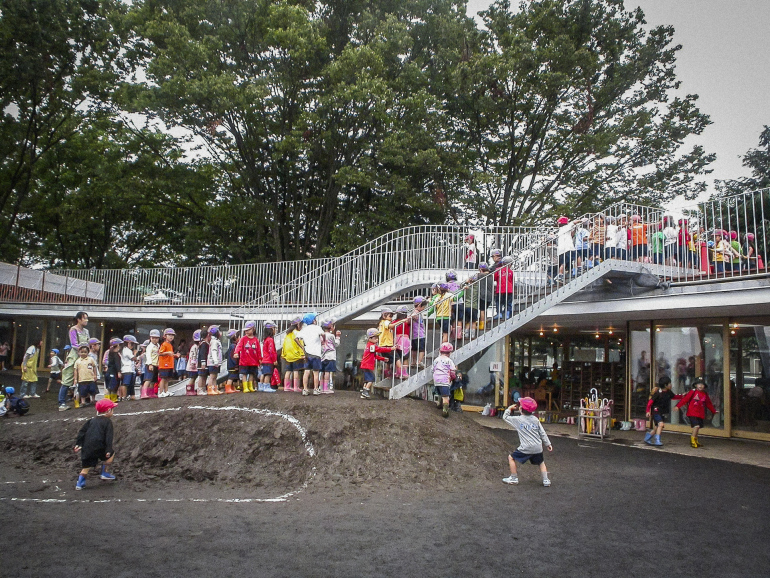
Pupils can slide to class
Pupils can climb to class
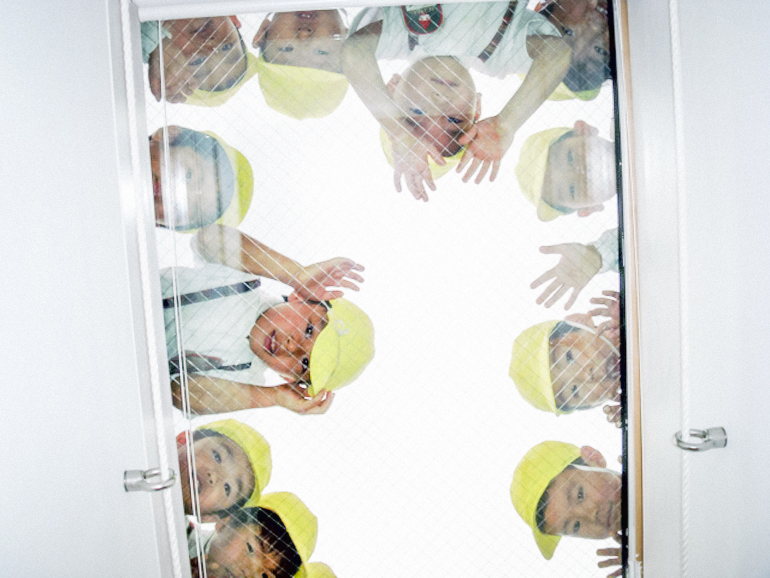
Intentional Distractions
“The kids love to look through the skylights from the roof. ‘Where’s my friend?’ ‘What’s going on underneath in class?’ And when you look down, you always see kids looking up from below. Here, distraction is supposed to happen. There are no walls between classrooms, so noise floats freely from one class to the other, and from outside to inside. We consider noise very important. When you put children in a quiet box, some of them get really nervous.”
I (Yiola) cannot help but sing Kool and the Gang’s popular 80s song Celebrate these days. There is just so much to celebrate. A warm and special congratulations to Professor Clare Kosnik for her appointment as Director at the Dr. Eric Jackman Institute of Child Study (JICS).
JICS is a remarkable place. It is a place where exemplary Teacher Education (The Child Study and Education Program) meets exemplary teaching (The University of Toronto Laboratory School) meets world class research and faculty (The Laidlaw Research Centre). This tripartite forms a powerful relationship for developing all that is exceptional in teaching and learning.
Clare Kosnik is a remarkable academic. She brings considerable experience in academic leadership to this important role. She was Director of the Elementary Preservice Program at the Ontario Institute for Studies in Education at the University of Toronto from 2000 to 2003, Head of the Centre for Teacher Development from 2007 to 2009, and Director of the Master of Teaching Program in the Department of Curriculum, Teaching and Learning from 2009 to 2011. Her colleagues, students and online followers know of her international contributions to scholarship on teacher education, action research and teacher inquiry, and literacy education which are made possible through large research funds, including support from the Social Sciences and Humanities Research Council of Canada, the Carnegie Foundation, the Spencer Foundation, to mention just a few. But, so much more than this, Clare Kosnik is a remarkable person. Like past Directors at the Dr. Eric Jackman Institute of Child Study, Clare brings compassion, care, and deep commitment to student learning and teacher development through teacher education and research.
Welcome to the Dr. Eric Jackman Institute of Child Study, Clare. I look forward to working with you!
Everyone around the world, come on! Yahoo! It’s a celebration.
Tomorrow Canada turns 148 years old! We are a relatively young country but have plenty to be proud of. Below are some super interesting facts about Canada (as of 2013). Wishing all my fellow Canadians a relaxing, FUN, and warm Canada Day!
An article in Time Magazine makes an interesting case for why iPads should be left out of the classroom. Author Jervey Tervalon from Los Angeles argues that his school district (and perhaps several others) after spending millions “saw the iPad as a magic talisman that could just about transplant knowledge into students’ brains directly, bypassing teachers.” Through classroom teaching experience, Tervalon understands that “teaching isn’t always efficient. Often it’s messy, and because it’s messy, the process can produce epiphanies, and sparks of creative thinking.”
Tervalon warns that technology isn’t a shortcut to major educational reforms:
“An iPad is an amazing device but it isn’t so amazing without content or the right pedagogical context. School reform isn’t expensive tech and high-stakes testing; it’s the incredibly difficult task of creating highly functioning, transformative educational communities.
And so, this week marks the last week of school for my Sylvia Clare. For those who have read my (Yiola) FDK blog posts you may recall that this year my daughter, Sylvia Clare, attended school for the very first time. As a four year I could only imagine what thoughts and ideas ran through her mind as she entered the big institution of schooling.
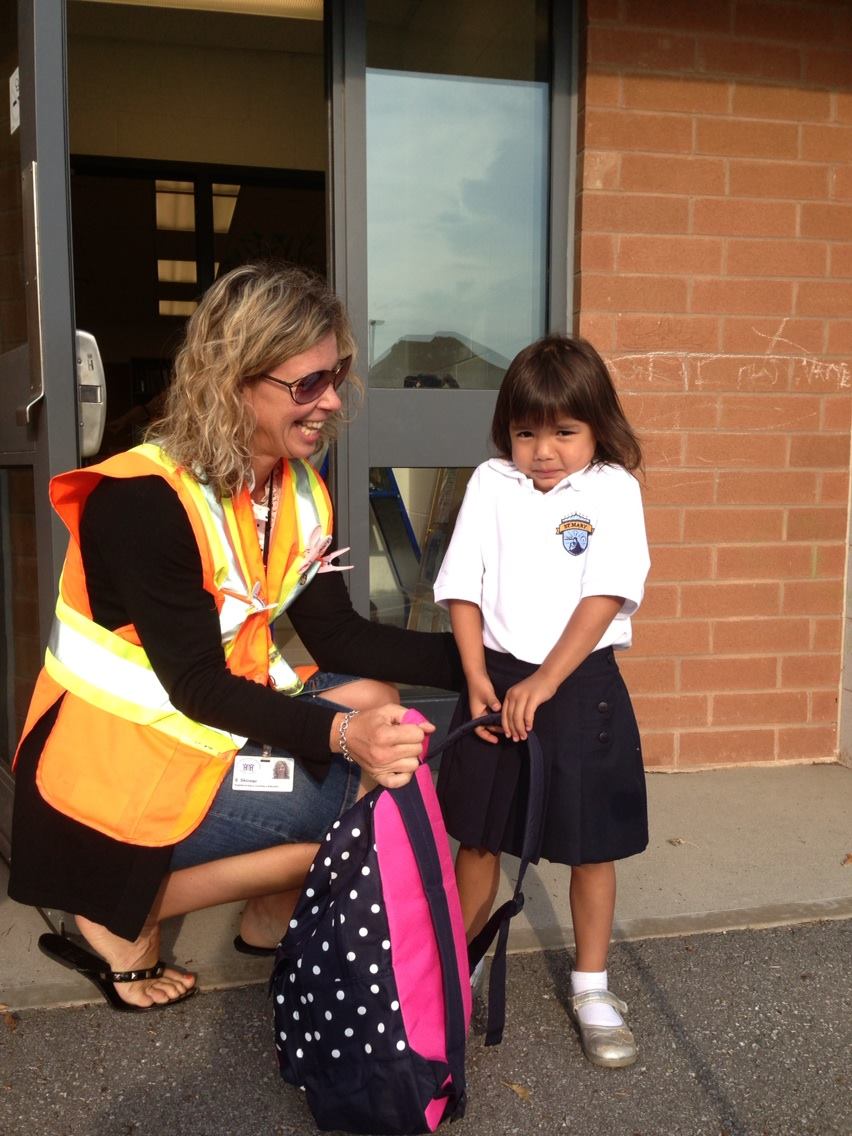
Here is an image of Sylvia Clare on her very first day:
1st day of school. The teacher purposefully crouches to be at the same level as the child — smiles and gentle demeanour go a long way in the early years classroom.
This little human being, with only four years experience in the world, ventured alone into an unfamiliar place with strangers for full day school. How grand is that expectation? I imagine in the mind of my Sylvia Clare it was a significant challenge. And yet, from the first day there was calm and there was success. What is success you ask? From my (a parent’s) perspective it is this: a child who is confident and competent in her environment; a child who is provided opportunities to play, explore, inquire and make decisions about their own learning; and success is when a child is able to manage her day in ways that are comfortable, productive, and enjoyable. This is what full day learning in Junior Kindergarten (JK) means to me. Through this, I have witnessed Sylvia Clare develop skills: critical thinking, creativity, collaboration, and of course literacy skills.
When Sylvia Clare began JK she could not spell her name, she was just learning her ABCs and 123s, and there was no experience with print. Reading was one dimensional, where mommy or daddy read to her. Somehow, by the end of JK, things now are quite different.
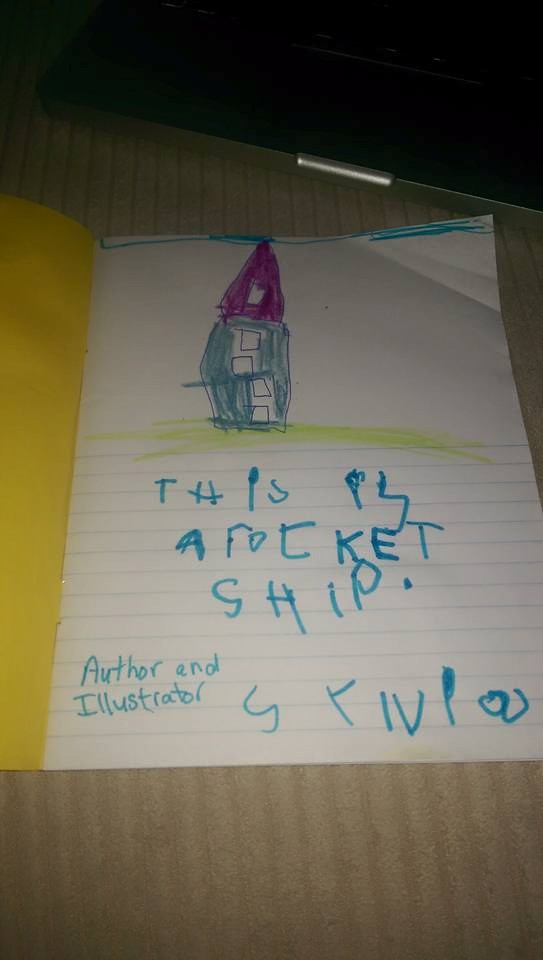
The following example sums up just how much Sylvia Clare has changed. The other other day she stumbled across some of my old school supplies from back when I was a teacher. She helped herself to a journal book and immersed herself in activity. Independently, this is what she produced:
While I was thrilled to see that YES Sylvia Clare understands the beginnings of language, how to write, how to spell, how to produce a sentence, how to tell a story!!! This experience told me so much more about my daughter as a learner: the initiative, confidence, risk, and desire “to do” were even more thrilling for me to witness.
From this simple experience I see the work that has gone into bringing Sylvia Clare to this point. I wish to tell her teachers this:
Thank you for fostering a learning environment that is safe, secure and open for exploration.
Thank you for encouraging Sylvia Clare to speak and to be heard.
Thank you for fostering friendships and encouraging inclusive play in the classroom and the playground.
Thank you for modelling respect and kindness and expecting that from all children in your school.
Thank you for teaching phonemic awareness and for providing direct instruction.
Thank you for listening to Sylvia Clare’s stories about “Old Man’s Lake” and asking her questions.
Thank you for encouraging her sense of invention and creation (I have more cereal boxes than I know what to do with!)
Thank you for using your smart board in ways that enhance students’ awareness of technology and literacy.
Thank you for developing fun games that helped her develop her literacy and numeracy awareness.
Thank you for encouraging Sylvia Clare to sound out words and to try reading books on her own.
Thank you for instilling a love of reading.
Thank you for teaching in ways that are so transparent that Sylvia Clare is able to come home and tell me exactly what she did in school. In fact, she clearly instructs me on what I need to do to have her prepared for the next day!
Thank you for fostering a love and care for the environment. We will be sure to visit “Woody” (the tree) in our local forest.
Thank you for the consistent routines and systematic communication with parents.
Thank you for celebrating my child and every child in the class.
Thank you for caring so deeply about my Sylvia Clare. Your care is evident in her development.
Thank you for working with me to ensure Sylvia Clare is happy, secure, confident, and learning.
You see, teaching literacy is not only about teaching phonics or repetitive worksheets as the proven way to acquire language… or whether direct instruction is proven to increase awareness… without the thoughtful consideration and doing of all of the above, that is the “teaching of children”, something is missing in learning development.
And so here we are, the final week of JK. It has been a remarkable year for Sylvia Clare.
Here is Sylvia Clare during her last week of school with her teachers:
Last week of school- standing tall, Sylvia Clare feels comfortable in hear learning environment.
In the image immediately above, I see comfort and trust. I see calm and happiness. I see a readiness to enjoy a day filled with learning. In my teacher education classes I work hard to share with student teachers the nuances of teachers’ work in order to understand that these elements of school are not innate or simply exist. These elements are crafted with thoughtful consideration on the part of teachers. Our research on literacy teacher educators and on classroom teachers over the years demonstrates these nuances well.
This post present one story, of one child, in her early years schooling experience. It is not the experience of every child. It is, in my opinion, an exemplary experience because of the teachers. We know from research that teachers’ work is the leading factor of student achievement: what teachers plan, do, say, and develop within a classroom often dictates how children experience school and learn. Sylvia Clare’s teachers are an incredible team — and we also know from the research on early years classrooms that the relationship between the teams of teachers is paramount to the success of the program. Teachers, partnerships, pedagogy, and content all come together to form a young child’s experience.
In my final FDK blog post, I want to say, Thank You teachers for bringing all of the above together, for making Sylvia Clare’s (and my) first year of schooling such a wonderful experience. Wishing all teachers and parents and children a wonderful and safe summer holiday.
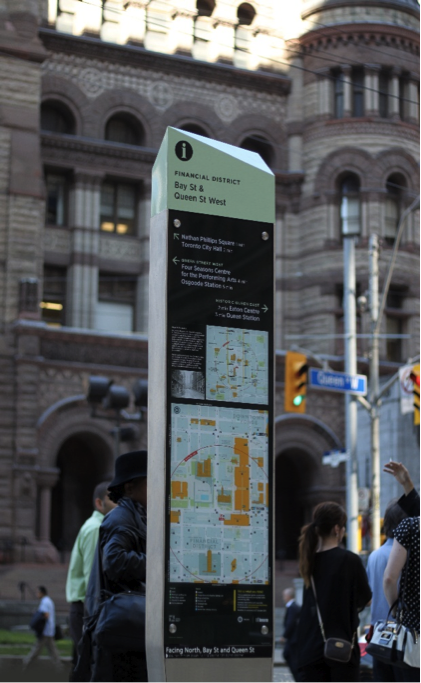
In preparing for the 2015 PanAm games, Toronto is installing new signage to make the city an easier place to navigate. A wayfinding approach is being used which is defined on Wikipedia as: “ the ways in which people and animals orient themselves in physical space and navigate from place to place.” In addition to traditional maps, the wayfinding strategy uses multimodal approaches to make a city more “legible.” Landmarks, new media, public art, and street furniture are examples of ways the wayfinding strategy uses multimodalities. The project is currently being piloted in 21 locations around the Toronto.
Below are examples of Wayfinding signage in cities:
Interactive signage up currently up in Toronto, CanadaWayfinding public furniture in a London, U.K. shopping centre.
Brent Raymond, a partner at the design firm responsible for the new signage, commented on in the Globe and Mail on the wayfinding approach:
“It isn’t just about signs. It’s about helping people navigate space. The best examples are always places like airports. People who aren’t familiar with a place at all, they need to be able to find information quickly and feel confident about their environment.”
Read more about this approach to city living here:
We are now well into the month June and our Masters students have recently graduated from their teacher education program. Another year passes with new teachers eager to journey into their own classrooms.
The hustle and bustle of the year: the class discussions, the stressful assignments, the dreaded group work, the interesting one on one meetings, the challenging practicum placements, and the joys of watching students learn … is distant now as the halls and student lounge are empty and there is a quiet calm at the faculty. At our graduation celebration last week I felt the relief, rejoice, and excitement of the graduates. I also sensed the uncertainty, concern and frustration.
Right now, in Ontario, there are significant challenges in teaching: jobs are still sparse, the unions are in tension with the Ministry and teachers are on “work to rule”, curriculum is being protested, and positions that are in most need continue to be cut. It is hard teaching these realities of teaching to new teachers who only want to celebrate the learning of children in their classrooms. Can you ever prepare new teachers for the realities of the classroom?
It seems we do a fine job of curriculum preparation but because teaching is a relational act, so much of the learning remains to be had. I (Yiola) believe our graduates are very well prepared for the classroom. They have learned and experienced enough and more to be able to enter a classroom and teach with confidence and competence. There will be set backs and disappointments, there will be hurdles and successes. Teaching is dynamic, unpredictable, and spontaneous. Our graduates have the tools they need but they will need perseverance and strong hearts along the way. I wish our graduates all the best as they enter the profession.







 Literacy Teaching and Teacher Education