Global Conversations in Literacy Research

One of the amazing things about our research team is we share common interests in literacy teaching and teacher education while at the same time we explore our own avenues of research. My areas of interest are in critical literacy pedagogy and teacher development.  I (yiola) have been enjoying and learning a great deal from another amazing literacy research based website and would like to share it with you.

Here is the link: https://globalconversationsinliteracy.wordpress.com

Global Conversations in Literacy Research (GCLR) is a series of interactive open access web seminars that feature cutting-edge literacy research conducted by international literacy researchers. GCLR is grounded in critical literacy, and sees as its mission to use networked technologies to connect global audiences in a virtual space that allows participants to exchange ideas on literacy theory, research, and practice. Each year, GCLR features scholars whose work addresses a range of literacy areas of interest to international audiences.

Some of my favourite researchers in critical literacy have shared webinars on the site.  I appreciate the global nature of the site and the sense of shared understandings through varied contexts.

An inspiring site — enjoy!

Learning Policy Institute

I (Clare) continue to be concerned about our often “over assessment “of students. Last year at AERA I was at a presentation where the presenter talked about one elementary school teacher with whom he was working who had to conduct 30 standardized tests in one year! Yes 30 (that is not a typo). What does this number of assessments do to children? The teacher? The curriculum? The climate in the classroom. I just received the announcement below which I hope will bring some “common sense” to assessment.


How Can Schools Measure True College and Career Readiness? Learning Policy Institute Receives Award to Support More Authentic Assessments for California Students

The Learning Policy Institute (LPI) was named today as one of 12 organizations nationwide th-2to receive a grant award from the Assessment for Learning Project (ALP) to fundamentally rethink the roles that assessment should play to advance student learning and to improve our K-12 education system. LPI is supporting the California Performance Assessment Collaborative (CPAC), a newly launched pilot project that enables schools, districts, and networks in California to share, research, and document current efforts to graduate students using competency-based approaches. Instead of assessments based only on testing, these will assess applied learning focused on deep understanding of content and demonstration of 21st century skills in order to inform other schools as well as state policymakers.
CPAC’s work has deep implications for teaching and learning in participating schools and for the work of both practitioners and policymakers who are rethinking assessments with the passage of the new Every Student Succeeds Act (ESSA). ESSA requires states to implement assessments that measure “higher-order thinking skills and understanding” and explicitly invites the use of “portfolios, projects, or extended-performance tasks” as part of state and local assessment systems.

Born from the vision of a group of committed educators, policymakers, and researchers in response to the current policy environment, CPAC serves as an “innovation site” within the state where educators from various contexts are now working together within a professional learning community dedicated to the advancement of authentic, meaningful assessments for California children.

CPAC is composed of the Learning Policy Institute working with schools from the CORE network, including the Fresno, Long Beach, Los Angeles, Oakland, and San Francisco Unified School Districts; Envision Schools; High Tech High; Internationals Network for Public Schools; Linked Learning Alliance; and New Tech Network; plus East Palo Alto Academy (Sequoia Union High School District); Hillsdale High School (San Mateo Unified School District); John Muir High School (Pasadena Unified School District); and Oceana High School (Jefferson Union High School District). In addition to ALP, support for this collaborative program comes from the William and Flora Hewlett Foundation.

Notes Linda Darling-Hammond, CEO and President of the Learning Policy Institute, “This work will inform both those seeking to develop more meaningful assessments in their schools and those seeking to develop policies that can support the deeper learning opportunities today’s students need to succeed in today’s and tomorrow’s world. Ultimately, the goal is to enable students to pursue – and colleges and employers to be able to receive – more productive measures of students’ genuine accomplishments and readiness for postsecondary college, career, and civic life. “

“For too long, assessment has been something that is ‘done to’ kids instead of with them,” said Gene Wilhoit, Executive Director of the Center for Innovation in Education, one of the organizations partnering with the Assessment for Learning Project (ALP). “These 12 grantees have promising plans to use assessment to build student agency, support a broader definition of student success, and envision new systems of assessment and accountability.”

Out of 148 proposals, ALP selected its 12 grantees based on the “boldness of their ideas, the quality of their learning plan and general orientation toward learning, potential for scale and routes to ‘systemness,’ and their potential contribution to the learning agenda.” Next Generation Learning Challenges is the the co-partner of this initiative, with funding provided by the Bill & Melinda Gates Foundation and the William and Flora Hewlett Foundation.

The Learning Policy Institute and CPAC proudly join the Center for Collaborative Education, Colorado Education, Del Lago Academy, Fairfax County Public Schools, Hawai’i Department of Education, Henry County Schools, Large Countywide and Suburban District Consortium, New Hampshire Learning Initiative, Summit Public Schools, Two Rivers Public Charter School, and WestEd as recipients of the initial round of ALP grants. For more information on the project and the 12 grant recipients, visit http://www.assessmentforlearningproject.org.

###

About the Learning Policy Institute
The Learning Policy Institute conducts and communicates independent high-quality research to improve education. Working with policymakers, researchers, educators, community groups, and others, we seek to advance evidence-based policies that support empowering and equitable learning for each and every child. For more information, visit http://www.learningpolicyinstitute.org.
Connect with Us

Learning Policy Institute
1530 Page Mill Road, Suite 200
Palo Alto, CA 94304

1301 Connecticut Ave., Suite 500
Washington, DC 20015
info@learningpolicyinstitute.org

Keeping up with Technology in Education

I (Cathy) am not sure that keeping up with technology in education is possible.  This is where collaboration in the classroom becomes a necessity. The ‘technology-gifted’ students become our greatest resource, in effect- the teachers.   Unlike the cartoon below, I’m not referring to the  students who can afford the latest gadgets, I’m referring to the students who are ‘technologically intelligent’.  Several years ago, Howard Gardner suggested this was possibly  a new intelligence to add to his list, but unfortunately never followed up.  Personally, I have relied on such students in the past.  They are our mentors. They ‘see’ the digital world and the possibilities. It’s a gift.  Look for these students in your class.  They may be a fantastic untapped resource.


'Our school computers are one year old. How can we be competitive in the job market if we're being trained on obselete equipment?'
‘Our school computers are one year old. How can we be competitive in the job market if we’re being trained on obselete equipment?’

Thesis Defense = Celebration of Learning

I (Clare) am a very active doctoral supervisor and have two students near completion of stress-lego-faces-popular-science_2400x1800their Ph.D. At the University of Toronto like many other universities the final stage in the doctoral program is the thesis defense. It is a complicated process requiring 2 external examiners, a student presentation, discussion, and voting. The entire exam is so so so stressful for the students. No matter how much I reassure them that they will be fine because their work is high quality they are still nervous, stressed, tense, anxious …. From my perspective it should not be so stressful nor so high stakes. These students have worked for years under careful supervision and presented at their doctoral committee meetings.

Some universities have a much more informal (and civilized) approach to the final exam. I try to see it as a celebration of the student’s work rather than a grueling experience. I think it is time for many universities to rethink the final stage of the process to make it less stressful for the student (and supervisor) and more joyous.

The Wrong Way to Teach Math (and Other Subjects)

In the New York Times Sunday Review on Feb 28, Andrew Hacker published an article (p. 2) checkmark imagescalled “The Wrong Way to Teach Math,” based on his forthcoming book The Math Myth and Other STEM Delusions. It begins with this remarkable statement:

“Most Americans have taken high school mathematics, including geometry and algebra, yet a national survey found that 82 percent of adults could not compute the cost of a carpet when told its dimensions and square-yard price.”

Hacker, who teaches political science and mathematics at Queens College in New York, argues that while “calculus and higher math have a place…it’s not in most people’s everyday lives.” Students need to learn “numeracy” or “quantitative literacy”: “figuring out the real world – deciphering corporate profits or what a health plan will cost.”

I (Clive) find Hacker’s ideas and examples very helpful and plan to buy his book. But it occurs to me that similar things could be said about other subjects such as literacy (reading, writing, literature), history, science, etc. While “academic” aspects of these subjects have to be taught to prepare students for later education and (possibly) work settings, teachers need to do both (as I have posted before). It isn’t appropriate just to focus on Shakespeare and classical novels, for example, and not prepare students to find enjoyment and make wise choices in their everyday fiction and non-fiction reading.

Addressing both – the academic and the everyday – is not easy, given the extensive subject content teachers are expected to cover; but in teaching and teacher education this should be our goal, and over the years we should move as far as humanly possible in this direction.


Dora in the 21st Century

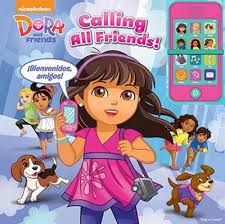
A few weeks ago, I (Pooja) was watching an episode of Dora the Explorer with my niece and nephew. Dora and her friends were on an adventure and as per usual got lost. I expected Dora to whip out her handy animated friend, Map (see below).

map

For as long as I could remember, Map had been an integral character of the Dora the Explorer Show. Map helped the viewers understand the cardinal directions, locate familiar landmarks, and use a compass. So, I was surprised when I saw Dora reach into her pocket and pull out her phone and open Map App!!! After my initial surprise, I started to understand why the Map character had been replaced with an app. Viewers, like my 5-year-old niece and nephew had never held a map or seen a map, so of course they couldn’t relate to it. Now, an app? They know all about those!

mapapp

The initial character Map was introduced to teach life skills. Do you  think the Map App will be able to teach the same skills or more?

Butterfly Books: An amazing resource

It is common to find educators and parents in search of good books for children.  What makes a book good? What is a worthwhile read? What kinds of books do we want children to read? Why?  I have discovered a resource for thinking about and finding children’s books and am excited to share it with you.

Helen Antoniades, founder and operator of Butterfly Books, has embarked on a most inspiring journey in search of great books for children.

A front line social worker in Toronto, Ontario Canada, Helen has spent her adult life counselling children and adults from all walks of life. The  last 4 years of her practice was at the Hospital for Sick Children.  After 17 years of social work Helen, feeling burned out,  decided to start something new and explore her passion for healing others in an alternative way. Always passionate about books, she chose to share her knowledge of and experience with using books to help children understand and deal with issues in their lives.

Helen began her search by asking a lot of social worker colleagues for their go to books. Then she began asking friends in related fields. This interest grew into the blog, where she alternated “regular” pictures books with therapeutic books as suggested readings for children. As her journey continued Helen began exploring the “regular” books she was coming across and has broadened her scope to quality books that are reflective of diversity.  You can find Helen’s website at:

http://www.butterflychildrensbooks.com

Butterfly Book’s mission statement:

Butterfly Books is a children’s book subscription service whose goal is to make receiving a new book an eagerly anticipated, joyful event with an aim to foster and sustain a love of reading in children.
In addition to creating excitement about reading, the service will give children the opportunity to explore other worlds and experiences through books.  Part of the focus will therefore be on ensuring diversity of characters and topics within the books chosen.
This service is also a way to make giving books as a gift more inviting.  This personalized approach will connect families through the love of books and the satisfaction of a quality gift given and received. 
There is also a handy Facebook page with wall postings that share a book per week. It is an efficient and helpful way to access interesting books and gain insight to how they can be explored with children, often including book reviews.
Check out the website, like the FB page, and get connected with Butterfly Books!

Parsing the Practice of Teaching


I (Clare) and Clive both read the most amazing article on teacher education by Mary puzzle_pieces300x199Kennedy. For those who have followed this blog you will know that we are big fans of her work. You will also know that we believe in thinking about teacher education holistically. Trying to break it down in discreet bits misses the core issue- What are the goals of education? I would highly recommend this article to all teacher educators. Below is the Abstract and here is the link to the article. Well worth the read.Mary Kennedy_2016

Abstract:

Teacher education programs typically teach novices about one part of teaching at a time. We might offer courses on different topics—cultural foundations, learning theory, or classroom management—or we may parse teaching practice itself into a set

of discrete techniques, such as core teaching practices, that can be taught individually. Missing from our courses is attention to the ultimate purpose of these discrete parts—how specific concepts can help teachers achieve their goals, or how specific procedures can help them achieve their goals. Because we are now shifting from a focus on bodies of knowledge to a focus on depictions of practice, this article examines our efforts to parse teaching practice into lists of discrete procedures. It argues that we need to pay less attention to the visible behaviors of teaching and more attention to the purposes that are served by those behaviors. As a way to begin a conversation about parsing teachers’ purposes, I offer a proposal for conceptualizing teaching as a practice that entails five persistent problems, each of which presents a difficult challenge to teachers, and all of which compete for teachers’ attention. Viewed in this way, the role of teacher education is not to offer solutions to these problems, but instead to help novices learn to analyze these problems and to evaluate alternative courses of action for how well they address these problems.

Concept of Design will “weave their lives back together”

While investigating how educators interpret the “concept of design” when using a multiliteracies approach, I (Cathy) came across this intriguing application. I felt it was most appropriate in understanding how our definition of literacy or literacies is now so incredibly comprehensive. This ‘concept of design’ integrates the processes of narrative with issues of social justice, environmental change, and elements of traditional culture.abeer

Designer:  Jordanian-Canadian Abeer Seikaly received her Bachelor of Architecture and Fine Arts from the Rhode Island School of Design in 2002. Over the span of 10 years, she has built a foundation of interdisciplinary skills that span architecture, design, art, fashion, textile design, and curation. She won the 2013 Lexus Design Award for her work, “Weaving a Home.” Abeer’s work is rooted in the process of memory – journaling, documenting, archiving, and collecting – to create objects, spaces, and experiences that exist in the realm of her narratives.

Purpose: Abeer hopes her Weaving a Home design will allow refugees who have been displaced by global and civil war, and climate change to have the chance to “weave their lives back together”. Inspired by elements of nature such as snake skin and traditional cultural aspects such as weaving, nomadic life and tent dwellings, this weather proof, strong but lightweight and mobile fabric tent is designed to collect rain water for drinking and bathing. 

Product: The Weaving a Home tent has a flexible dual layer tent structure has the ability to close out the cold of winter and wet weather. Solar energy hits the tent fabric and is stored in a battery for use at night providing renewable electricity. The tent sides also open up to allow cool air in and hot air out in summer. Rainwater is collected in the top of the tent and filters down the sides so the tent does not become flooded. The tent also has the ability to become a showering facility with water being stored in pockets on the side and drawn upwards via a thermosiphoning system providing basic sanitation.

tenttent at night

http://www.abeerseikaly.com/weavinghome.php