Voices of seriously ill children

One of my doctoral students (Katie Doering) works at Ronald McDonald House for serious ill children. She is an AMAZING classroom teacher. Her students were interviewed and these are views. Here is a link to the entire article. http://www.ctvnews.ca/canada/if-i-were-pm-students-with-serious-illnesses-list-their-priorities-1.2640578


A group of students facing serious illnesses had some advice for prime minister-designate Justin Trudeau on what he should make his top priorities once he takes office, including free medicine, longer maternity leave, and a wild animal for everyone who desires a pet.

The students, who were in Grades 4 through 8, take classes at Ronald McDonald House Charities Toronto School. They offered these responses and more, in a class exercise where they were asked to write a speech on what they would do if they were the prime minister of Canada.

The private school, located in downtown Toronto, is part of the Ronald McDonald House charity, which offers housing and services for families with ill children. The school is free for students to attend, as it is funded through donations, but it is not open to the public.

When these families require long-term medical care in downtown Toronto, the charity can offer them housing and schooling. In order to be eligible to receive these services, families must live a minimum of 55 kilometres away from the House, and must be referred by a hospital social worker.

The on-site school is unique in that it offers classes based on the Ontario curriculum for their children to attend, so that they don’t miss out on their learning while seeking treatment.

The school’s principal, Katie Doering, said the speech-writing exercise was part of a unit on government and democracy that happened to coincide with the federal election.

At the end of the unit, the students relied on everything they’d learned, and combined it with their own beliefs in a speech on what they’d do if they were the leader of Canada.

Some of the proposed changes were exactly what you might expect from children.

“I would make a machine that could make pets talk,” said Shivam.

But others showed that they were deeply in tune with the daily struggle of Canadians across the country.

“I would provide free medicine because it’s not your fault you got sick and need medicine,” said Aliviah Goode.

“Also, anyone under 85 should get free health care,” she added.

Aliviah’s sister Adaya recently had open-heart surgery.

“She’s doing good, she got discharged,” said Aliviah.

Aliviah also said that children should have access to “free school supplies.”

Nine-year-old Rayne Shim devoted part of her speech to asking for people to get their birthdays off from work, with pay.

But she too tackled the issue of universal pharmacare.

“I would give free medicine to everyone,” she said.

“Like, you don’t have to pay a lot of money for medicine because medicine can be really expensive,” she added.

Rayne’s sister is the middle of a battle with cancer.

Rayne said that the rich should also have to pay higher taxes, and advocated for a national daycare strategy.

“Maybe the daycare should be paid by the government because some parents can’t afford hundreds of dollars so kids can go to daycare,” she said.

Doering said the students’ speeches were telling of everything they learned about the responsibilities of government, but also of their own personal circumstances.

“It was a mixture of things we had talked about in class, but then they brought in their own ideas about things that were really relevant to them right now,” she said, noting that many talked about improving the healthcare system.

“And then of course we saw a lot of their personalities come out too,” she said, adding that there were specific requests for annual teddy bear picnics, as well as a statutory holiday once a month.

Here’s a further look at some of the students’ speeches:

“If I were prime minister, I would provide every family with a free healthcare plan because people can’t help it when they get sick,” 11-year-old cardiac patient Adaya wrote.

“I would also plan an annual teddy bear picnic, just for children! Children can bring their favourite teddy bear or stuffed animal and come to a beautiful meadow of flowers and have a lovely picnic. All food and blankets will be supplied!”

Her sister, Aliviah, said if she was prime minister, she would provide everyone with free medicine. Once that was done, she’d proceed to overhaul the education system and outlaw littering.

“I also have some personal ideas,” she wrote. “I think there should be a zoo in every city. My favourite rule would be that you can have a wild animal as a pet.”

Twelve-year-old Chayse, who is recovering from brain surgery, said if she were the country’s leader, she would build more affordable housing.

“Why you ask? Because I think people should have a nice place to stay and not have to stay outside on park benches or underground subway heaters,” she wrote.

Her younger sister, Jordan, said she would put more money into nursing homes and lower tuition for private schools. And, in an apparent nod to her sister, she said she’d create more schools for neurosurgery.

Up next on her ambitious agenda? More holidays.

“There would be a statutory holiday every month because sometimes you just need a break,” she wrote.

Doering said at the end of the unit, the students had the opportunity to read their speeches to their classmates and their families.

“They had a phenomenal time doing it,” she said. “It was very powerful to hear the messages that they had.”

With a report from CTV Toronto’s Natalie Johnson

Chimamanda Ngozi’s Book Being Distributed to ALL 16- Year-Old Students in Sweden

I have written about the powerful words of Ms. Adiche before. Her words stop us in our tracks and make us re-consider notions of identity, language, and gender. She has a new book out entitled We Should All Be Feminists. It is based on a speech she delivered at a TEDx conference a few years ago. I have already ordered it!

The most amazing thing about her new book is how it is being distributed. The Swedish Women’s Lobby has decided to distribute Adiche’s book to every 16-year-old student in Sweden. In a CBC article, publisher Johanna Haegerström believes her book will be an entry point into a larger discussion about gender roles in society. He said:

“Our hope is that the Chimamanda Ngozi Adichie text will open up a conversation about gender and gender roles, starting from young people’s own experiences”

adichie-composite

http://www.cbc.ca/books/2015/12/we-should-all-be-feminists-by-chimamanda-ngozi-adichie-is-being-given-to-every-16-year-old-in-sweden.html

Teacher Researcher Group Celebration

I (Clare) was approached by Rosemary Evans, the principal of University of Toronto School IMG_0885IMG_0873(UTS), to assist with forming a teacher research group. Rosemary had received funding for the Eureka Fellowship program from Newton Foundation to start a teacher researcher group. Clare happily accepted Rosemary’s invitation then invited  current and former doctoral student (Pooja, Elizabeth, and Shelley) to co-facilitate because they had much to offer and the team approach would model collaboration. .Over the next two years we met on a monthly basis for approximately two hours. IMG_0879

The teacher researchers presented their findings last week and it was one of the most IMG_0867special moments of my professional life. The teachers did an amazing job presenting their research. Their research was high quality and it informed their practiceWe plan to turn their reports into an ebook. Here is a list of the projects that the teachers completed: IMG_0874


  • An Examination of Admission Profiles and Early Student Success at UTS by Garth Chalmers –
  • Exploring the Use of the Fort McMoney Documentary-Game in Grade 9 Geography Classrooms by Mike Farley
  • Using Digital Tools in the Guidance Classroom by Catherine Wachter
  • Maximum City by Josh Fullan
  •  Integrative Thinking in a Classroom Setting by Christopher Federico
  • Self-study of My Work as a Vice Principal by Heather Henricks
  • Reflections on Being a Member of the Eureka Fellowship Program – Amy Parradine
  • Reflections on the Eureka Fellowship Program for Teacher Researchers Clare Kosnik, Pooja Dharamshi, and Shelley Murphy
  • Final Thoughts – Susan French

IMG_0888IMG_0890

Division K Newsletter

Hi Folks,

The new AERA Division K newsletter is chock-a-block full of great information.

It includes information on:

  • invited sessions
  • Division K award nomintations
  • Program co-chairs update
  • Division K highlighted sessions
  • Travel award deadlines
  • Graduate student seminar deadline
  • New faculty seminar deadline

Here is the entire newsletter: DivisionKFall 2015 Newslettter1

I (Clare) know that many of you will be going to AERA in Washington.


When is it a good time to start reading?

The literature on language development varies. What we know: the major components of Language include: (phonology, semantics, syntax, pragmatics, lexicon, and metalinguistics); language development is based on biological (maturation) and behaviouristic (environmental) and interactive and contextual factors; there are several components of the reading process (decoding, understanding, and fluency) and each component has multiple elements.

So, is there a “critical period for language acquisition”?  The critical period hypothesis suggests that if certain conditions related to language development are missing (internal and/external conditions), then a child will never acquire language. I don’t buy that. While I  agree language acquisition in the early years is central to development,  children can acquire language skills later in life.

There appears to be some universal patterns in language acquisition yet there are also important individual differences that depend on a number of variables. For example, studies have shown great variation in the growth of children’s vocabulary across typically developing youngsters.

So, from reading readiness to emergent reading, when is it (if ever) a good time to focus on ‘reading’ in the early years?  There are some schools of thought (i.e. Waldorf) who do not begin formal language teaching until 2nd or 3rd grade. So why are some of us excited when a child in kindergarten “can read”? What is the hurry?

Setting up a literacy based environment that is balanced is key. However, there is an underlying tone of high expectation that we, as educators and teachers,  need to be mindful of. The article I share below takes an interesting perspective on reading development and the implications of starting the expectations too soon.

https://www.washingtonpost.com/news/answer-sheet/wp/2015/01/13/report-requiring-kindergartners-to-read-as-common-core-does-may-harm-some/

As a mother of 2 children in the early years I see first hand their curiosity and interest in texts. They love stories, they love books. They love to be read to… but, they are not yet ready to read. Should they be at age 4 and 5? Why press the issue? Why not develop vocabulary? Play with language? Explore sounds and letters? Why press the formal reading of books? My daughter, now 5, is just beginning to make sense of sentence structure through a computer program called “Raz Kids”. This online program has hundreds of level books children can listen first, then read, then answer comprehension questions. For this little learner, it is amazing to see her answer the comprehension questions 100% of the time yet not yet recognize basic sight words (my, this, the) but use the illustrations and understanding of pattern to guide her through. I wonder… why start now? why set these expectations now?  So, I tread very slowly, because she is motivated to earn her “Raz stars” to build her rocket ship… but I place no pressure on to know those site words. I see she “gets” it… but doesn’t quite yet “have it”.  I also often feel a sense of worry about literacy and numeracy and whether or not my children will “get it” sooner rather than later.

Thankfully, her teachers have no worry at all and feel no pressure to push reading. Thankfully, her teachers have a good sense of child development.

Reflections on My Teacher Education Program

I (Clare) am currently teaching a graduate course Current Issues in Teacher Education. The first assignment asks students to:

Write a reflection paper on your experiences in a professional program (teacher education, Teaching English as a Second Language ….). Provide a very brief description of the program. Some questions to consider are: What were the strengths/weaknesses of the program? How well did the program prepare you to assume the duties of a teacher? What were the limitations of the program? Have your views of the program changed since graduation? How could the program have been improved? Did the program prepare you to assume the duties of a teacher (or other position)? Do NOT respond to all of these questions. Select one or two and respond to them. In the fourth class of the course, you will work in small groups and share your paper with your fellow students.

Since all of the students in the course are teachers they have a good perspective on their program. Their assignments were so stellar I felt these would be of great value to share with other teacher educators. Over the next few weeks I will be sharing these papers. I learned much and I suspect you will too. I have changed the name of the university so that no school of education is identified.

Making Connections

When deciding where to apply for my teacher education program I only knew two things; I wanted to fix what I thought was wrong with schools and I wanted a concurrent program. I had awful and awesome experiences in both elementary and secondary school and could not fully explain why, but I wanted to. I also knew that my timid nature would benefit from the extra practicum hours and practice present in a concurrent program. This narrowed my view to XXX University, YYY University, and ZZZ University. Amazingly, I had my pick so I turned to my teacher friends to help me make my decision. It honestly came down to a conversation I had with a friend in which she said, “If you want to learn the theories that drive education go to YYY and if you want to learn how to be a teacher, go to ZZZ.” On this conversation alone I decided on YYY because my interest was in educational reform and my mind was far from thinking about the necessity of knowing how to be a teacher.

The program was a one year teacher’s ed program taken part time concurrently with my undergrad program for 3 years. My first year of undergrad and one other year of my choice was to be entirely devoted to undergraduate studies. There were two mandatory courses for all teacher candidates in the first year of the program, Inquiries into Schooling and Inquiries into Learning. There was also a panel specific course. Being in the secondary panel I was required to take The Adolescent and The Teacher, a psychology course about child development from birth to adolescence. Each year of the teaching program there was a year long practicum. The first year is a community education placement that focuses on an education initiative in a community. As an example, in my first year, I collected children from three different elementary schools in the queen west area of Toronto, took them to a bookstore and ran an afterschool literacy program that included reading buddy time between the younger and older students. This year is ended by a one week observation block in a school. The following two years are in school placements that are one day a week for the university’s academic calendar and followed by one month practical block after exams are finished. With the practicums there is a non-credit, once a month class that is aimed at unpacking the experiences in the practicums and gives strategies to help student teachers be successful. They were either held on campus, at the practicum schools, or at a school nearby (I had one of each of these arrangements).

The strengths of the program rest on the amount of time you spend in schools. I found I was very comfortable with school routines and the students by the time I was asked to take over the class in May. It would have been helpful to start the year off with an observation block so student teachers get to know the students and routines very quickly rather than the month or longer that it takes only going once a week. Once you get to know those routines and the students though, the practicum becomes part of your regular week and that is very helpful. It is still one of the better practicum programs in my opinion. There was one professor I had as well who was truly inspiring and a real mentor to me. She truly embodied a constructivist approach as well as knowing her students as a pedagogical tool. She saw how even in my first year of teacher’s college I was highly critical of our education system and showed me how to connect my personal experiences to theories of reform that already existed in education. Her strengths in this area, however, exposed that this was a weakness in the program overall.

Though I had one amazing professor who profoundly affected me as a learner and educator, I cannot say the same for any of my other professors. This leads me into one of the three biggest weaknesses of YYY’s Education program. Through my time in the concurrent system I was the student of 12 different teacher educators. Many of these professors fell into two types. There were many professors who were so well versed in the research and theories of education that they could not make the material accessible to us. Either from a lack of practical or phronetic experience in the classroom, or from the material being too advanced too early, the professors did not have an impact on us. The difficult theoretical readings paired with what seemed to be easy and meaningless reflective papers meant that the courses did not seem appropriate or purposeful. The other problematic teaching style was that of the teacher model. This is where the professor assumes the role of elementary or secondary teacher and treats the student teachers as children and rarely as professionals. The purpose is explicit – to model classroom strategies- but the tone is condescending. These courses also had challenging theoretical readings but they were rarely discussed in class and so the learning from them was left to the individual learning and their ability to access that learning on their own.

Struggling with these professors and the material further highlights another weakness in the program: a lack of a unifying goal. I went into teachers college already knowing that there was a distinct difficulty in education of a defined goal of public education. Before entering university I understood that there was problem with our education system that promoted or at least maintained class distinctions. I could see that the end goal of school varied depending on which economic class the child belonged to (not in theory of course, but in practice). As a new student teacher it only took one or two get-to-know you activities in my classes to understand that we all had different ideas on what the end goal of school should be. Is it to maintain social order, prepare students for jobs, create independent and creative thinkers? It was plain to see that we all had different ideas about what we were really learning to do. What wasn’t plain to see was what the university thought the end goal of public education should be. There was no conversations around it, there were no chances for us to explore our own ideas and have them challenged. There were just professors, with their own ideas, teaching conflicting ideas to young student teachers that didn’t have enough concrete experience with which to ground the multiple theories in. The result was disjointed classes that all used the same philosophers and experts in education to argue different pedagogical approaches to subjects and students. The two different types of professors further show that they didn’t even agree on the end goal of our university experience; one type embodying the academic theory based pedagogical approach, and the other, a concrete and practitioner based approach. Though I think a combination of some sort could be the most beneficial for student teachers, it needs to be far more intentional and clear so that student teachers have a better sense of what they are supposed to be learning. The distinction between the two types of professors was so obvious and opposing that on several occasions I heard other classes and unnamed professors spoken ill of. Only upon later reflection have I realized how this problem I witnessed in my elementary and secondary education was also present in my teacher’s education program.

The final weakness of the YYY program that I will explore, and have already hinted at, is the idea that we had very little control over our own learning. The very thing that drove me to become an educator, what I am the most passionate to learn about, has rarely been addressed. The mandatory courses we were forced to take were problematic in that they were too general, the material was complex, and we didn’t have enough experience to understand the theories. The elective courses were much more specific but often did not take into account the realities of public education (Ie. a technology in education class that will be out of date by the time the school I’m teaching in sees half the technology we were using). Furthermore, there wasn’t an elective course that had anything to do with what I wanted to learn about. There was only one opportunity, my first year of the teacher’s program and my second year in my undergrad where I got to explore a topic that was a key factor in my decision to become a teacher. In that year, our observation and community placement year, we were assigned a community mapping project in which we also had to research and devise a thesis on how education in that community was affected by a particular factor outside the actual school. I mapped my rural hometown and wrote about how the class divide in the community leads to a class divide in the school that is not addressed and causes many of the problems I witnessed when growing up there. I was passionate about the topic, the professor helped my find academic papers that addressed the issues I was writing on, and we talked about our projects in class as we developed them. I learned more in that project than I did in the entirety of my other classes put together because I was in control, I knew the purpose, I was connected to the content with experience and interest, and I was supported in that. In most of my other courses I felt like my voice and opinions were dismissed or there was no space for my thinking. The reflections we did were not enough for me as I am sure they were not enough for many of my peers. I had already done so much reflecting which is what led me to choose teaching as my profession, I wanted more meaningful learning experiences that addressed my individuality as a student teacher.

Though my experience was largely negative, the one professor I had, and the one project that was meaningful had a huge impact on my career as a teacher. It validated my personal perspective on education and when I presented my project (early because I was so interested I finished it months in advance) my professor told me that I should do my masters one day and further explore that topic. I had never considered myself a candidate for anything beyond university (being the first in my family to attend a university) but I ended up pursuing that path based on her acknowledgement of my academic skill and the hope that I could further study the topics that I was interested in.

Ultimately, I feel teacher’s education programs have the reputation that they deserve but that it embodies something that is a much larger problem. In my personal opinion, education is so desperately in need of radical reform to deal with the systematic and institutional problems that studying and reforming on aspects of it, and that includes teacher education programs will only go so far. Until we really take a look at the system as a whole and create a cohesive goal only minor gains will be made.

10 Things Grateful People Do Differently

I (Clare) found this article very interesting and thought I would share it with you. From the Huffington Post: http://www.huffingtonpost.com/entry/habits-of-grateful-people_565352a6e4b0d4093a588538

More gratitude = Better life.

Lindsay Holmes Healthy Living Editor, The Huffington Post

Posted: 11/26/2015 08:39 AM EST

GirlswithBalloonsRalph Waldo Emerson once said that in order to achieve contentment, one should “cultivate the habit of being grateful for every good thing that comes to you, and to give thanks continuously.”
Turns out Emerson — who explored the meaning of a good life in much of his work — wasn’t far off when it comes to what we now know about counting our blessings. Research is continually finding that expressing thanks can lead to a healthier, happier and less-stressed lifestyle.

“Life is a series of problems that have to be solved — and a lot of times those problems cause stress,” Robert Emmons, a gratitude researcher and psychology professor at the University of California, Davis, told The Huffington Post. “Gratitude can be that stress buster.”

The way we celebrate holidays often includes a rhetoric of adopting an attitude of gratitude — but what about after the leftovers and family china have been put away? How do we, as Emerson advised, be thankful for each thing that contributes to our lives?

Below find 10 habits that will help you cultivate gratitude on a regular basis.

  1. Journal.

Research has shown that writing down what you’re thankful for can lead to a multitude of wellness benefits. Keeping a gratitude journal can reinforce positive thoughts — something particularly helpful as the brain tends to naturally focus on what goes wrong. Putting pen to paper can also help you make more progress as you work toward personal goals.

In order to reap the full benefits of journaling, Emmons recommends writing for five to 10 minutes every other day. “You really need to commit to doing it, and if you write it down eventually it will become more automatic,” Emmons says. “It’s like exercise — you’re not just going to get up one morning and go running, you need to have a plan. You need to have a gratitude action plan, whether it’s waking up and writing in the morning or in the evening before you go to sleep — no one size best fits all.”

  1. Don’t avoid the negative.

Expressing gratitude may generate more optimism, but thankful people also don’t shy away from the negative. Emmons says that while we often associate gratitude with focusing on the good and avoiding the bad, the key to leading a thankful life is embracing setbacks as part of your overall journey. Emmons suggests recalling a hard time you once experienced — chances are, you’ll start to feel grateful for your current state and overcoming former challenges.

  1. Spend time with loved ones…

Thankful people know they didn’t get to where they are by themselves — and they make it a habit to spend time with those people who matter most. “Gratitude really helps us connect to other people,” Emmons says. “It actually strengthens relationships and relationships are the strongest predictors of happiness and coping with stress.”

  1. …And tell them you love them.

Expressing appreciation for loved ones can also help create a closeness by allowing others to see how you look at them. “More than other emotion, gratitude is the emotion of friendship,” Michael E. McCullough, a University of Miami researcher, told the New York Times in 2011. “It is part of a psychological system that causes people to raise their estimates of how much value they hold in the eyes of another person.”

And stating how much you appreciate your loved ones pays off. A recent study published in the journal Personal Relationships found that couples who expressed gratitude in their relationship had better marriages. Higher levels of thankfulness in the relationship also seemed to reduce men and women’s likelihood of divorce.

  1. Use social media mindfully.

In our plugged-in culture, it’s impossible to avoid social media altogether. However, Emmons says, thankful people mindfully take advantage of these networks. “[Thankful people] use whatever cues that exist in everyday environments to trigger grateful thoughts,” he says. “Pictures and information on social media — that’s a very good way to do it.”

Research has found that positive thoughts shared on social media spread faster than than negative — something that makes the gratitude process a lot easier when turning to the Internet. Emmons suggests assembling an archive of postings on Facebook and Instagram to pull from when you need a reminder to be grateful. This method will help you cue happy memories through pages that you normally visit on a daily basis. “Technology and devices are criticized because you’re less connected, but if used correctly I think it can be the opposite,” Emmons said.

  1. Know the value of the little things…

There’s power in the small, ordinary moments, like catching the subway before the doors close or your pet greeting your happily when you get home. Looking for a few things to add to your gratitude list? Here are 100.

  1. …Then help others appreciate them, too.

Small acts of kindness make a difference in a big way when it comes to cultivating gratitude. Thankful people make it a habit to acknowledge and pay forward each bit of kindness that comes their way, whether it’s a simple compliment, help on a task or getting flowers “just because.” Research shows this type of kindness makes both you and the other person happier.

  1. Volunteer.

Everyone needs a little help sometimes — and grateful people know there’s no other way to acknowledge this than by actively doing something about it. In his book Thanks!, Emmons notes that those who volunteer often feel grateful for the experience to give back. “Since service to others helped them to find their own inner spirituality, they were grateful for the opportunity to serve,” he wrote.

As research published in BMC Public Health points out, volunteering can result in lower feelings of depression and increased overall well-being. Emmons suggests examining your own talents and using them to help others, noting that people become more grateful as givers rather than receivers.

  1. Get moving.

They may not seem similar, but gratitude and fitness can go hand-in-hand. According to Emmons’s 2003 study, people who practiced gratitude also engaged in more exercise. The results also found that study participants had fewer dietary restrictions and were less likely to smoke or abuse alcohol.

Exercising has been proven to clear your mind and reduce stress, all key components in setting yourself up for gratitude. Thankful people who move their feet experience an overall healthier mind and body, therefore making gratitude one of the best medicines, Emmons says.

  1. Love yourself.

Grateful people know that their thankful attitude can also fuel self-compassion. A study published in the journal Personality and Individual Differences found that higher levels of gratitude were associated with greater self-esteem. And it’s no wonder: When your well-being is a priority, you can’t help but feel great.

Thankful for being the person that you are? That should be at the top of your gratitude list.

What Children Hear

grew some

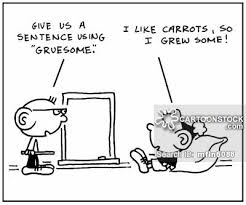
This charming cartoon reminded me (Cathy) of an incident I had as a young child.  My family was staying at a cottage of friends’ located on the shores of James Bay.  One evening we all sat by a large camp fire on the beach.  As the children roasted marshmallows, the parents chatted.  I happened to hear the grown ups  mention “fairy.” Puzzled I listened more intently.  “Oh, she’s grand to see, really.  She turns around right over there, off the end of our dock.”  My parents’ friend pointed out over the dark water.  I looked at my dad.  He was listening  and nodding.  No smile.  “Really?”  asked my mother.  “I’m surprised she’d come so close to shore.”  “Yeah, so were we,” said the friend.   “We’ve seen her a few times now.   All lit up, reflecting in the water.  Quite a sight really.  Maybe you’ll see her.”

I remember holding very still and being slightly afraid.  I was sure they had told me fairies weren’t real…  yet here they were discussing “her” like they would talk about dinner or the car.

I watched for “her” but never saw those wonderful lights.  Perhaps just as well.  It gave me a couple more years of believing in the impossible.

Reflections on a Teacher Education Program with a First Nations Focus

I (Clare) am currently teaching a graduate course Current Issues in Teacher Education. The first assignment asks students to:

Write a reflection paper on your experiences in a professional program (teacher education, Teaching English as a Second Language ….). Provide a very brief description of the program. Some questions to consider are: What were the strengths/weaknesses of the program? How well did the program prepare you to assume the duties of a teacher? What were the limitations of the program? Have your views of the program changed since graduation? How could the program have been improved? Did the program prepare you to assume the duties of a teacher (or other position)? Do NOT respond to all of these questions. Select one or two and respond to them. In the fourth class of the course, you will work in small groups and share your paper with your fellow students.

Since all of the students in the course are teachers they have a good perspective on their program. Their assignments were so stellar I felt these would be of great value to share with other teacher educators. Over the next few weeks I will be sharing these papers. I learned much and I suspect you will too. I have changed the name of the university so that no school of education is identified.

My teacher education program was at University XXX, where I was part of the primary/junior cohort (K-grade 6) cohort in the year of 2013-2014. The cohort had a First Nations focus. There were about sixty students from various places, with vast variety of experiences, knowledge, interests and skills. My teacher education program consisted of many strengths and areas of improvement. Due to the areas of improvement, I feel that my teacher education program could have prepared me better.

During my teacher education program at University XXX, I had witnessed many strengths and weaknesses of the program. I will start off by addressing the strengths and then the weaknesses. To begin with, coming to class at XXX everyday was the highlight of my day, as the program culture was very supportive, caring and one that respected diversity. I found all my professors to be extremely genuine and caring, as they treated every single student teacher as a whole (emotionally, physically and mentally). The student teachers in my class were a pleasure to learn with, as we provided one another with assistance with course assignments, we had lunches together in big groups, and we also made time to socialize after class by going to a near by pub. A quote from the article titled Teacher Education at the University of Virginia: A Study of English and Mathematics, that resonated with my experience at XXX, “There, she says, professors worked to create a strong, caring community that respected diversity…. being a part of a strong, supportive community was a key experience” (Merseth & Koppich, p.75). This quotation resonated with my experience at XXX, as I felt part of a community of educators who learned together by supporting one another. However, half way through the program, many students started getting in arguments with one another and complaining how they were not getting a lot out of their teacher education program. My cohort coordinators dealt with the situation in a very positive manner. My coordinators split the class in half, and we had a community circle where a talking stick was used, and everyone had the opportunity to say what was on their mind. Soon enough, the conflict was resolved and strategies were put in place for improvements. In addition to this, another strength of my teacher education program was during my practicum experience at YYY Public School in a grade 4 classroom. One and a half weeks in to my practicum, my associate teacher had been going through a great deal of back pain, to a point where she had to take a couple weeks off and had back surgery. I was in her classroom with a Long Term Occasion (LTO) teacher (supply/substitute teacher), whom I did not get along with as she did not let me teach a single lesson. I gave the LTO teacher a couple of days to settle in, in the hopes of her providing me with a chance to teach my lessons that I had prepared. I felt like a volunteer in her class, and the way she dealt with the students did not fit my teaching philosophy. I remember coming home and crying and making a connection of my experience with the LTO teacher to the song ‘Wrecking Ball’ by Miley Cyrus. Although I did have three other student teachers from my class at the same practicum school, I felt like I needed more support. I contacted my practicum coordinator and expressed my concerns with the LTO teacher. My practicum coordinator was very helpful and quick in dealing with the situation, as she had arrived at my practicum school the very next day, and had my placement changed with another associate teacher in the school. I was very impressed with the quick change.


Although my teacher education program had many strengths, through a critical lens, I found there to be a couple of weaknesses/areas of improvement in the program. To begin with, there were sixty student teachers in the class; I feel that class sizes should be smaller; about thirty to forty students maximum. Small class sizes allow for a lot more individual attention, and more critical questioning. Although my cohort had a First Nations focus, I felt that there was not enough infusion. Although we used a talking stick and were exposed to and provided with a certain level of knowledge, we were not provided with First Nation resources such as books, videos or lesson plans to use in class. I would have liked to receive a ‘First Nations Resource Tool Kit’ that had a package of important rituals, resources and activities to do with the students as a starting guide to educating students about First Nations. In addition to this, I did not gain much knowledge from one of my foundations courses. My professor was not an effective educator on this particular subject. I am not even sure up to this date, what I was suppose to learn from that class. My professor was of First Nation descent, which I really valued because I gained an immense amount of knowledge regarding First Nations, however I did not gain an efficient amount of knowledge dealing with the subject I was suppose to be taught. A quote that resonates with this experience is from the article titled How Teachers Learn and Develop, Teachers are even more important than the material they use because the ways in which they present material highly influence how they are viewed by students” (Hammerness, Darling-Hammond, Bransford, et al. p. 384). Another weakness I found in the program was not enough class time; especially in math seeing as how numeracy is really big within school boards and it is the number one subject students struggle with. I found my math class to be very engaging as we had our ‘math tool kit’ that included a variety of manipulatives, however the learning was rush and clustered together due to time constraints.

My teacher education program could have prepared me to fulfill my duties as a teacher more effectively. My teacher education program did not introduce us to the report card system, how to provide students with final grades or about the types of comments one should include in report cards. In addition it would have been beneficial for student teachers to know about specific buzzwords and interview questions that could be asked during school interviews. I would have felt better prepared if my teacher education program provided us assistance and guidance with job search. However, due to the competitive teaching market, my teacher education could have provided us with suggestions of what else we can do with our degree, other than just teaching in a classroom. I also believe that the program could have prepared me better by making the teacher education program for 2-3 years, instead of 1 year. A longer teacher education program would be able to provide students with more practicum experiences, critical thinking, learner- centered teaching, community based activities among diverse groups, and an increased and effective amount of content knowledge that covers all core subject areas. An example of an effective teacher education program is the Curry School of Education, which is a 5 year BA/MT program in Virginia. As stated in the article, by the end of this program “Somebody who comes out of the Curry School is going to be able to walk into a classroom prepared for almost anything. They’ll be knowledgeable in the subject area, knowledgeable in a variety of strategies of teaching methods, of classroom procedures and discipline” ( Merseth & Koppich, p. 64). This is the type of framework and actions that University XXX needs to implement for a more effective and improved teacher education program.


This reflection paper has really provided me with some in-depth insight about my teacher education program. From an overall stance, I had only considered the strengths for the program. Through this paper, I was able to critically assess my teacher education program and what could be done to improve the program for future student teachers.

Some questions that still arise about teacher education programs are: When choosing placements for students, I am aware that the University has relationships among specific schools and teachers that have acted as associate teachers in prior years. Is the health and well being of those associate teachers checked each year? Or are student teachers just paired up with those teachers, because that particular teacher was used in the past? Another question I still have is, when preparing and improving teacher education programs, who has the say and input of what should be improved? How is this determined? Do student teachers have a voice in this? Are their opinions and advice considered for improvements of the teacher education program?


Works Cited

Darling-Hammond.L. (Ed). (2000). Studies of excellence in Teacher Education: Preparation in a five year program. New York: AACTE Publishers. ISBN NO: 0-9654535-5-3


Darling-Hammond, L. & Bransford, J. (Eds.) (2005). Preparing Teachers for a Changing World: What Teachers Should Learn and Be Able to Do. Jossey Bass.

Upcoming Book Release: Courageous Leadership in Early Childhood Education: Taking a Stand for Social Justice

I am excited for a new book edited by scholars Vivian Vasquez, Mariana Souto-Manning, and Susi Long. The book focuses on social justice practices in the context of pre-school and elementary schools.

51aoKndPxSL._SX338_BO1,204,203,200_.jpg

The book gives voice to educators, family members, and school administrators, offering several insights on social justice in early year classrooms, including:

* Highlights the actions of administrators as they take a stand to transcend standardized approaches to teaching and learning, creating more equitable educational environments.

* Portrays strategies and resources used to engage teachers in critical examination of self and the institutions in which they work.

* Describes principles and practices that guide administrators as they support the development of culturally relevant practices and policies.

* Offers powerful ways early childhood administrators can approach inequitable mandates. (http://www.amazon.com/Courageous-Leadership-Early-Childhood-Education/dp/0807757411)

The book will be released in the end of December/early January!