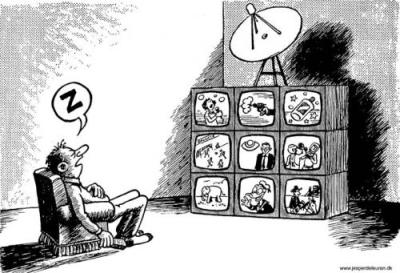
Some things never change…
I (Clare) was at an orientation for new graduate students. And some of these metaphors about grad school were shared. Thought I would share them with you. It is worth reading the whole post because some are quite hilarious. Will only take a moment.
Now that I’ve survived my first full week of classes in grad school, I am clearly a grad school expert.
Kidding.
But I have been spending quite a lot of mental energy trying to figure it out – noticing how it’s similar to, and especially different from, undergrad; working to figure out what’s expected of me, by others and myself; and trying to articulate what exactly my goal(s) is/are.
 This look is pretty consistently on my face.
Image: http://janiebryant.com/blog/265/
I’ve also been a bit preoccupied with metaphors, as I’m working on a metaphor-based research proposal for a fellowship application. I guess the two have become intertwined in my subconscious, because my first (coherent) thought upon waking up this morning was, “grad school isn’t a sprint; it’s a marathon!” Not long after I began giving myself credit for this clever analogy, I was racking my brain for more. As a firm…
View original post 226 more words
——————–
A poem I wrote today to try to relieve some first day jitters:
T’was the night before a new school year and all the through the house
Papers were flying and textbooks arouse
The course syllabi posted online with such care
In hopes that the students soon would be there
The readings updated and carefully writ
Ensuring inquiry, equity and technology fit
And I in excitement yet dutifully prudent
Wait for the joy of engaging with each student….
——-
Revising university courses is not a simple task. I (Yiola) have spent several weeks reworking my courses and developing new ones for the coming year. While my courses have been consistently well received by students I felt they needed updating: readings, perspective, pedagogy as though the domino effect could not be more evident. Piecing together what to share and how to share it so that student learning is not only deeply enjoyable but also optimal is no easy feat. As teacher educators we need to model good practice — after all, how can you spend an entire 3 hour class talking about the importance of inquiry pedagogy with power point presentations and lecture notes and expect students to understand and transfer their learning to the classroom? And then, on the other hand, how does a Masters level instructor justify spending hours having Masters level students “inquire” as children would in their elementary classrooms?
Finding the balance between theory and practice, between scholarship and the “daily grind” of classroom life, between academic rigour and child centred practice is, for me, an exceptional challenge. I want student teachers to know what to do when they enter their elementary classrooms and I want to model it for them in our class (i.e. small group activities, equitable practices, varied experiences, and direct instruction) and I also want students to understand WHY we do it (i.e. research based literature and engaging discourse). I want students to be self-directed learners (to share their ideas, to bring news to the classroom, to extend their own learning outside our class time) and I also want to provide students with connections between best practice and what they see out there (use of technology, positive learning environments, etc…)
Some changes I have made to my courses this year:
Researching teaching education, speaking with colleagues who are deeply invested in teacher education and knowing what other great educators are doing not only keeps me motivated but is one of the best professional development tools out there.
I wish all teachers and teacher educators and wonderful school year!
I (Clare) cannot get over how much I enjoy blogging! I found this great article on Teachers College Record about using blogging in the classroom. Since we have a blog I thought I would share the link with you. http://www.tcrecord.org/Content.asp?ContentID=18070
An excerpt of the article is below.
by Toni Ann Brzeski — August 17, 2015
Do you know what the most common electronic device that college student’s possess? According to Joshua Bolkan, a multimedia editor for Campus Technology and The Journal, “85% of college students own laptops while smartphones come in second at 65%”. If technology is becoming a common practice among our students, what are we doing as professors to incorporate it into our classrooms? How can students use technology to reflect on their work? How can instructors use technology as a supplement in reading and writing courses? How can technology be used to deepen our student’s critical thinking skills? These are questions we should be asking ourselves in a world where technology is paving the way to learning.
INTRODUCTION
After attending school, working at part time jobs and internships, participating in extracurricular activities and spending time with family, it might seem that college students are too busy to fit all of their activities into the hours of the day. Given the hustle and bustle of their everyday lives, most students simply do not have the time to reflect on any part of their day, let alone what they learned in their college courses (Sharkov, 2012). It is our responsibility as educators to keep up with our students, to understand them, and to make reflection on course work a priority. If our students are not reflecting on their learning as a part of their everyday lives, then we are not really doing our jobs as educators.
In order to get to the bottom of this issue, and make reflection a priority, we must ask ourselves what we are we doing inside of our classrooms to promote reflection outside of the classroom. What are we doing in our classes to develop better reading, writing, and critical thinking skills?
MAKING A CONNECTION WITH TECHNOLOGY
Each semester, students step foot into my classroom with needs and interests different from those students with whom I worked before. Every semester, it is my job to take needs and interests and learn how to integrate them into my courses. While every semester is different and challenging, I have found that today’s advances in technology have been the key to bridging the gap between my students’ needs and the course curriculum.
Four years ago, during my first semester at Bronx Community College, I asked my reading students to purchase the book Tuesdays with Morrie by Mitch Albom. At that time my students purchased the book from an actual bookstore or an online source and came to class with a paperback copy. In the fall of 2012 I asked my students to purchase the same book. What they did next surprised me: my students took out their Kindles and iPads and immediately purchased the book. It was simple: given the speed with which these electronic devices allowed my students to purchase the book, we were prepared to start reading it the following week.
There was not one student waiting on a delivery or taking time out of their busy lives to purchase it at the bookstore. What I learned from this experience is that we are in a world where our daily activities are rooted in our electronic devices. Kindles, iPads, and smartphones are devices that our students are not only actively using, but using comfortably. This is just about the time when I discovered blogging.
If my students were using technology to complete very ordinary tasks, such as buying a book for their college course, I then asked myself what other ordinary tasks my students are using technology for. At first I was hesitant—call me old fashioned—but I didn’t believe students would become better readers and writers by posting their reflections online. I continued to question myself. What good is this? Aren’t journals a place for reflecting and expression?
BLOGGING AND THE BENEFITS TO THE COLLEGIATE COMMUNITY
WHAT IS BLOGGING ANYWAY, AND HOW IS IT BENEFICIAL FOR THE COLLEGE STUDENT?
As stated by George Couros, the Principal of Innovative Teaching and Learning at Parkland School Division in Alberta, Canada, “We want students to think critically about what they write. They are more likely to do this when they write for a larger audience as opposed to simply [writing] for the teacher. [Blogging] gives students the ability to archive their work for many years to come.” Therefore, having the “ability to [blog] [and] write for a worldwide audience has made an impact on many of our students” (Couros, 2013). Like Couros, I have found that blogging has had a significant impact. In fact, blogging is the very form of technology that has helped bridge the gap between my students’ interests and required course work.
Blogging gives those students an outlet for expressing their own ideas and reflecting on what they learned in class from the comfort of their own homes. As less interactive students continue to exercise their writing skills through blogging, re-reading, and building on their blog posts, their writing gradually improves over the semester. The fact that students can go back to previous blog posts and add thoughts or reflect on their own blogs—thereby, revising their work on their own without being told to do so by their teacher—is extremely beneficial and rewarding (Sharkov, 2012).
Blogging can be done on a train, bus, or even in a student’s own bedroom. Blogging doesn’t require the school library, or even pen and paper. A student can simply use a smartphone to connect to the world through blogging. When you present this type of accessibility to the busy student, he or she has the opportunity to engage with classmates beyond the short period of time that the student spends sitting in the classroom before heading out to a job or internship.
I have witnessed the benefits of blogging first hand. Last semester, I posted a question as a homework assignment on my blog site regarding a reading on Edgar Allan Poe. Within an hour of my students leaving class, they started to write blog posts on the site. My students were responding to my question, expressing their views, and in turn completing their homework assignment, while commuting home from school.
As I read my students’ blog posts, I was amazed at the level of insight that they were expressing in their entries. I had created a place where my students’ voices could be heard, and a place where they were able to interact and discuss a topic outside of the classroom using information that they learned while inside of the classroom. In essence, my students were taking time to reflect on what they learned in class, even with their busy schedules. In the past I would have taken a more conventional approach to this homework assignment by passing out comprehension questions on white paper and telling students to answer and bring them back to class the following week.
Blogging is beneficial to the teacher as well. For example, in my EDU 10 class, our class blog page contains all our work and posts can be found in one place with easy access. I find my students accessing our blog page from their cellphones, which tells me that they are able to complete assignments from anywhere—very convenient for them.
As a professor, I can easily assess my students’ reading, writing, and critical thinking progress by observing the improvement in their blog entries. This also keeps the line of communication open between my students and myself, which is helpful since our class only meets twice a week for a little over an hour. This blogging platform keeps the reflection ongoing throughout the week. Further, blogging allows me to learn my students’ point of view on certain topics and demonstrates their level of comprehension on what we are learning in class, in turn, helping me to create a lesson plan for the next class.
“While the West Des Moines Community School District Superintendent was beginning her speech to the staff of WDMCS at the district-wide welcome back meeting, the teachers of the district created a flash mob to the enjoyment of their unsuspecting colleagues. With only one more day of preparation left, the teachers shared their talents by performing a parody of the song, “One more day” from Les Miserables.”
Enjoy! And have a terrific year!
As many of us are getting ready to go back to school (preparing course syllabus, organzing readings ….) I (Clare) thought you might like this little cartoon. Good luck with your back to school prep.

Education Week recently published an article outlining 8 (more) reasons the education system in the U.S. is failing. Matthew Lynch (2015) has put out a multi-series of articles discussing the issues which surround U.S. schooling today.Take a look at the list below. Do you feel all these items belong on this list? What is missing from this list? After reading the earlier parts of this series, I don’t see much attention paid to the state of teacher education or how teaching is viewed as a profession. I would love to hear your thoughts on this list:
To read the entire article click here:
To read the rest first part of the series, click here:
I (Yiola) have been hard at work preparing my teacher education courses. This year was an complete review and reconceptualization of the courses — significant updates to not only the literature but to the ways in which we will explore the content. I will share some of the changes to the pedagogy of my courses next week. This week I want to start at the start. Where does accelerated begin and how does it begin? I came across this interesting post and wanted to share it here. It is about paperless early years classrooms.
I remember when I taught first and second grade, I seldom used worksheets but I also did have the inquiry-based play either. My pedagogy was somewhere in between. But, truth be know, the teacher across the hall who had a full curriculum of worksheets was often commended for being highly organized and “on the ball” with her program. I always wondered if that way of teaching was better. Her students, most of them, were learning to read and write. That is another truth. However, were they creative thinkers and problem solvers? Again, another truth, we did not pay much attention to those sorts of skills. This was but a mere 10 – 15 years ago.
But now, I think we can all agree, that critical thinking and creativity and problem solving are very important skills for children to develop early in life. These skills do not develop from worksheet tasks. The link above talks about this and other inspirational considerations.
And so I share this post to begin at the beginning — play in the early years and how we move forward from there to more sophisticated modes of learning, through the grades and into post secondary teaching. Next week I plan to share some of challenges and questions I faced when reconstructing my courses.
I (Cathy) looked up the definition of technology the other day because I had lost track of the meaning outside of my association of technology with computers. According to Dictionary.com, technology is “the application of scientific knowledge for practical purposes, especially in industry. This refresher helped me to better grasp the technological clothing my husband has been wearing as of late.
For Father’s Day my husband was given an UnderArmour shirt (from our son-in-law) and challenged to wear it for a day. My husband has been a stanch believer in wearing cotton for many, many years, yet our son-in-law insisted that the new technology in fabric was far advanced in comfort and temperature control. I was intrigued. Fabric technology? I had to look it up and found this on the net…
“As a fullback at the University of Maryland, Kevin Plank got tired of having to change out of the sweat-soaked T-shirts worn under his jersey; however, he noticed that his compression shorts worn during practice stayed dry. This inspired him to make a T-shirt using moisture-wicking synthetic fabric. After graduating from the University of Maryland, Kevin Plank developed his first prototype of the shirt, which he gave to his Maryland teammates and friends who had gone on to play in the NFL. Plank soon perfected the design creating a new T-shirt built from microfibers that wicked moisture and kept athletes cool, dry, and light”
My husband agreed to try the shirt and fell in love with the texture, weight and maintained coolness of this new technologically advanced fabric against his skin. He has several shirts now and is looking at other forms of apparel. My husband may not be up to date in computer technology, but he is sure ‘in’ when it comes to fabric technology.
My new awareness of technological fabric has given me pause to reconsider what technological advances are in store for us in education that are not computer based. What will change? Desks? Art materials? Windows? Will the entire classroom environment transform? Will we dress differently as a result of technology? The possibilities are endless… and exciting.
https://en.wikipedia.org/wiki/Under_Armour#Early_history
Pooja and I (Clare) did an analysis of 6 literacy teacher educators who truly intertwined digital technology into their literacy methods courses. (Book chapter will be published soon and we will post that info.) In the meantime I thought this chart might be useful for literacy teacher educators who are preparing for the upcoming school year.
| Overall Goal: Teaching 2.0 | |
| Specific Goals | Example |
| Make literacy classes participatory | · Post comments on each other’s work (e.g., Wall Wisher, Text tagging, Voice Thread)
· Post comments in asynchronous time · Provide student teachers with feedback on-line and encourage them to respond to the feedback · During class student teachers post questions or contribute comments to a shared space · Before class student teachers post comments about the readings · Create Wordles when analyzing a text |
| Create an infrastructure for accessing resources and for sharing resources | · Develop a repository of resources on a university platform (e.g., Blackboard) or on their own website
· Share books, videos, websites on a class Wiki · Use DT tools (e.g., Smartboard) to access info on the spot while teaching · Access materials/videos for use in teaching (e.g., Globe Theatre productions of Shakespearean plays) |
| Provide authentic learning experiences | · Student teachers make an iMovie on a specific topic (e.g., on bullying)
· Analyze videos student teachers created during their practice teaching · Skype with authors they are reading · Participate in teacher communities by contributing to blogs and Twitter feeds · Participate in teacher-focused events (e.g., contribute a piece to a BBC competition on current affairs/news) · Student teachers create podcasts on an aspect of literacy to share with broader community · Watch videos of authors they are reading (both scholarly articles and children’s literature) · Student teachers post photographs of themselves on the university platform as a way to introduce themselves to their classmates |
|
Gain an understanding of the increasingly globalized nature of literacy |
· View videos from other countries (e.g., teachers in Japan) to see similarities and differences with their own context
· Participate in world-wide teacher communities · Participate in crowd-sourcing · Share statistics on literacy beyond home country · Use visual representations (e.g., photographs) to move student teachers beyond their immediate world to unpack a range of issues (e.g., gender representation in children’s literature) |
| Reframe issues related to literacy and literacy teaching | · Watch videos of teaching (exemplary or poor practice) and analyze them
· Use videos from their practice teaching classes as “data” for their inquiry projects · Student teachers select a picture from a photo array and relate the action in the photograph to a theory they have been working on |
| Bridge practice teaching and the academic program | · Reflect on practice teaching by sharing and analyzing photographs/videos they took
· Use email and social media to remain connected during practice teaching and as a place for student teachers to ask questions or share concerns · Create a video case study of pupils which relates to a theory of literacy |
We also created a graphic to capture the elements of their pedagogy:

Their courses were fundamentally different because they had truly reconceptualized their teaching, not simply tinkering by adding glitzy DT; rather, they constructed highly participatory experiences that occurred before, during, and after the official 3-hour class. Learning occurred in multiple ways: readings, f2f discussions, online communities, viewing, analyzing, and providing feedback on texts which immersed student teachers into the issues of literacy. It went far beyond introducing “methods” to teach literacy; it was framed by learning to teach literacy as a global citizen. This ambitious goal was matched with unparalleled support by the professors. Their multimodal/technology-rich teaching practices modeled the possibilities available to teachers and students; however, they were constantly trying to balance preparing student teachers to address the traditional forms of literacy, which they will probably observe in schools, with more expansive understandings. They had not discarded typical elements of literacy methods courses such as teaching the writing process or components of a balanced literacy program.


 Literacy Teaching and Teacher Education