Practicing Situated Practice through Storytelling

As mentioned before, I (Cathy) am a committed supporter of  implementing a pedagogoy of mulitliteracies (New London Group, 1996) in the classroom.  There are many components to multiliteracies, but for this post I will highlight my use of  only one  component- situated practice.    The situated practice component suggests that pedagogy must consider “the affective and sociocultural needs and identities of all learners” (NLG, 1996, p. 85).  By the inclusion of  students’ “lifeworlds” or home-life and culture, a classroom environment is created where students feel secure and will take risks (NLG, 1996, p. 65).

In a recent storytelling workshop I delivered to ECE students (in a higher education setting), I was intrigued at how the significant situated practice became.   Prior to the class,  I asked the professor what cultures were represented, so I could reflect at least some of these cultures through my story selection.  The list was long, so I had to be selective.  I decided to tell a story from Jamaica, the US and one from India.  These represented not only a range of the participants’ cultures, but also a broad range of storytelling styles, which I thought might be useful for the students to see.   During the workshop I explained to the students that eventually being inclusive of all of the cultures and backgrounds represented in their classrooms  through the stories we tell (and books we read) was essential.  It was our responsibility to get to know our students and know what was important to them.  They agreed that this was important.  But I had a lot to learn about how important,  even when working with adults.

I knew how much the  participants  enjoyed and learned from the experience, as they were highly engaged during the workshop, but i was also treated to written feedback  as the  professor asked the students to post their critiques online.  The following comments caught my interest:

“The workshop really resonated with me… I learned about stance, gestures and facial expressions”

“I was amazed to see how storytelling could grab our attention”

“I am excited to step out of my comfort zone a little bit and try out these strategies with children”

My favourite was:

“I really enjoyed the ending of the workshop using the Urdu [story] “Ek thi Raja, ek thi Rani, doono margy khatm kahanni'” as Urdu is my mother tongue and I was able to understand this very famous [story].”

I did indeed end the workshop with a very short story in Urdu.  In case you do not understand Urdu, in this story there is a  king and a queen, they  die, so the story is over.   That’s it.  It is a traditional ending to a storytelling set.  I usually ask a participant to translate the story for the rest of the group.  Even though my Urdu is not the best, I can always tell who understood the story, because they are the only ones laughing.  Children  are usually delighted that I took the time and effort to be able to tell , regardless of how short,  a story from their culture.  But this small gesture never became more evident  to me than at the conclusion of this workshop.   I was approached by a woman wearing  a khimar (a long, cape-like veil that hangs down to just above the waist, but leaves the face clear).  The woman introduced herself and told me that she was most impressed that I told a story in Urdu.  She said she felt it made her Urdu speaking colleagues very happy.  She then asked me to do something I was not expecting.  “Would you”, she asked timidly, “consider sometimes ending your storytelling in Arabic?”  I smiled and immediately answered “of course, if you will teach me!”   She was delighted and proceed to teach me  the following traditional ending:

Touta touta.  Kelset el haa do tah.

This is now part of my repertoire.  I was never more convinced of how significant it is to honor the cultures of our students.   Young or older, it is their identity and they need us, their teachers, to validate this.  I will endeavor to enlarge my commitment to situated practice by sometimes speaking in Arabic for my students and hope my  students, whether ECE students, student teachers, or teacher educators will consider doing the same.

What Happened to Greg Louganis?

I (Clare) watched the most fascinating documentary Back On Board: Greg Louganis about the diving champion Greg Louganis. His story is tragic – he won 4 Olympic gold medals (1984 and 1988 Olympics) but once it was revealed that he was HIV+ sponsorships vanished. In 2011, four-time Olympic champion Greg Louganis is far from the public eye and struggling to pay his mortgage. Now, the openly gay, HIV+ world-class athlete returns to diving to mentor the USA Olympic hopefuGreg Louganis ls. Here is a little clip from the documentary:

http://www.hbocanada.com/details/?id=98898

The documentary is extremely well done – not sentimental, Louganis tells his story, and the viewer can draw his/her own conclusions. We have come a long way in accepting gay athletes but there is still so much work to be done. This documentary would be so useful to show to students both in terms of structure and in content. It is being rebroadcast on HBO a number of times this month and I think it is on Netflix. It is well worth watching (be sure to have a hanky or two available because Louganis is almost destitute, he loses his house, is selling his Olympic gold medals …. And he seems like the nicest fellow. Yes he was naïve but then he was very young).

A New Dr. Seuss Book

I am looking forward to reading the recently released Dr. Seuss book entitled What Pet Should I Get? His widow Audrey discovered the manuscript and illustrations a few years ago, however, it is believed that Seuss originally created the work between 1958 and 1962. A New York Times review describes the book as “short and Seuss-ish” and “filled with creatures both real and zany.”  Another book to share with the student teachers in the primary division.

Link to the review:

http://www.nytimes.com/2015/07/20/books/review-what-pet-should-i-get-a-new-book-from-dr-seuss.html?_r=0

Bored? Try Mindfulness.

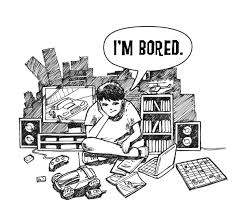
bored pic


I (Cathy)  sometimes wonder if children  just need go outside and be part of nature.  Life isn’t just about about  being entertained.  In our society of things, gadgets and high tech, this is sometimes overlooked.   An experience can be  about being contemplation or just learning to listen or observe.  My high school visual arts teacher, Robert Bateman was gifted at encouraging us (his students) to practice this.  He would tell us to just go sit in a field an look at one thing and listen. Pay attention.  I think now this practice would be called “mindfulness”.  As teachers, as parents, do we do  encourage this?  Just a thought.

Are you happy?

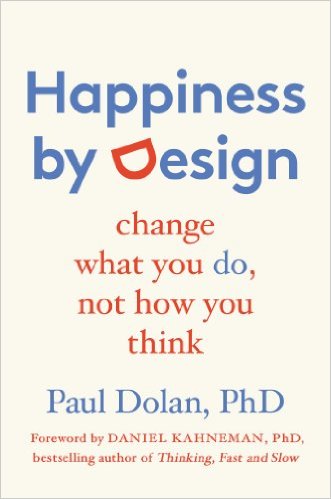
41e13pkIBfL._SX329_BO1,204,203,200_I (Clare) was reading Paul Dolan’s latest book: Happiness by Design: Change what you do not how you think. http://www.amazon.ca/Happiness-Design-Change-What-Think/dp/159463243X/ref=sr_1_1?ie=UTF8&qid=1438260329&sr=8-1&keywords=Paul+dolan

There are many interesting parts – understanding happiness, defining happiness … on page 77 there is an interesting chart which reports a survey conducted in the UK re: who are happy. Below are the results:

Florists and gardeners – 87%

Hairdressers and beauticians – 79%

Plumbers and water workers – 76%

Marketers and PR people – 75%

Scientists and researchers – 69%

Leisure and tourism workers – 67%

Construction workers – 66%

Doctors and dentists – 65%

Lawyers – 64%

Nurses – 62%

Architects – 62%

Child care and youth workers – 60%

Teachers – 59%

Accountants – 58%

Car workers and mechanics – 57%

Electricians – 55%

Caterers – 55%

HR and personnel staff – 54%

IT and telecom workers – 48%

Bankers – 44%

Some of these results surprised me! So are you happy? Do you think the results have changed over time? Do you teachers in previous decades were happier? And bankers at 44%. Hhhhmmm…..

Lens Blog and Visual Thinking Strategies

When developing the photo essay assignment for my course, I came across an excellent resource for teachers and students. The New York Times has started a blog entitled Lens: Photography, Video, and Visual Journalism. The topics covered in  the blog posts touch on several critical issues such as immigration, race, and class. The photos  captured in each of the photo essays serve as a great entry point into rich discussion. When using the Lens Blog in my classroom I find myself drawing on skills I developed during workshops many years ago.

When I was a public school teacher, I participated in a fascinating series of professional development workshops called Visual Thinking Strategies (VTS). By analyzing carefully selected images, students were able to develop critical literacy skills as well as visual literacy skills. Teachers were facilitators in this process and asked three open-ended questions:

1. What’s going on in this picture?

2. What do you see that makes you say that?

3. What more can we find?

I found myself using the VTS approach when presenting students the photo essays from the Lens blog. Students in my class really engaged with the photos and rich discussion took place as a result. I will definitely be using this blog for years to come in the classroom.

Below are some powerful images from photo essays on  the Lens Blog.

Photo Essay: Garifuna Immigrants in New York
Photo Essay: Connecting with Syrian Refugees
Photo Essay: One Year Later, Remembering Eric Garner

Link to VTS site: http://www.vtshome.org/

Link to NYT Lens: http://lens.blogs.nytimes.com/

Blending old and new world literacies: Storytelling and Technology

I (Cathy) was recently asked to give a storytelling workshop for a third year Early Childhood Education Class. The professor felt the experience might broaden her students’ concept of literacy.   As a practitioner of multiliteracies (New London Group, 1996) I felt compelled to blend “old world literacy” which in this case would be storytelling (it is the oldest form of entertainment for our species), and new world literacy, which in this case was an online interactive learning system called Today’s Class.  (I have mentioned Today’s Class in an earlier post.  Today you get to hear how I put it into practice).

Initially, the students (a broad range of ethnicities, ages, and English language proficiencies) shared they had never previously experienced storytelling.  They had been read to and assumed this was the same thing.  Most admitted they had never heard of Todays’ Class either, but were game to give it try.  I warmed them up by delivering an old folktale (old world style, just me, them and their imaginations) which blew them away.  “I could see the story!”, and “I was captivated” were some of the responses.  The class was then arranged into small groups of three, each group having a lap top with access to the internet.  Each group was “invited” into the Today’s Class site and asked to give their group a “nick name”.  On the large screen at the front of the room, I posted questions about the storytelling experience for them to consider.  After some deliberation, the groups posted their responses, using only their nick names for identification.  I was intrigued by their reactions as the team responses popped up on the screen.  They were highly engaged.   I could have heard a pin drop they were so intent on reading the other groups’ answers.  When I used to do this kind of activity, the groups used chart paper and markers to record their answers and these were posted around the room.  I usually read out the answers because the printing was often not legible across the room.  Also, I often filtered what I read aloud, instantly deciding what the key points were and only sharing those.   However, with the big screen, it became each students’ responsibility to do the reading and the  filtering. The accountability and engagement levels were higher.

As we moved through the workshop, experiencing different forms of storytelling, the groups returned to conferencing at their computers, analyzing the responses and discussing the salient points.  Both my students and myself were delighted with the results.  Storytelling and technology were a perfect fit.  The students left with a much deeper understanding of an ancient literacy form, many vowing to use it in their child care centers, but also left with a much broader view of the usefulness of modern literacies.   Old and new world do blend.   I couldn’t help but wonder how Aesop might have felt about Today’s Meet.    I think he would have liked it.

New London Group. (1996) A pedagogy of multiliteracies: Designing social futures.  Harvard   Educational Review,1, 60-89.

https://todaysmeet.com/


Funding for Private Schools

Image Flag AustraliaClive and I (Clare) are still in Australia where we are having a great time. On Friday, July 17th I was reading an article in The Sydney Morning Herald by Eryk Bagshaw about funding for schools. Australia has a significant number of private (independent) schools – approximately 35% of pupils attend private schools. From my Canadian perspective this number is staggering! Having so many children in private schools impacts on the viability of public schools. Unlike Canada private schools in Australia receive government funding – substantial funding. Eryk Bagshaw reports that by 2020 the average public school student could receiver $100 less a year in state and government funding than a similar independent school student. Just wondering why private schools are receiving any funding let alone more funding than public schools.

Writer’s Block

Many of us who write frequently have at one time or another had to cope with the dreaded writer’s block. Through a simple web search one can uncover various strategies recommended to avoid or cope with writer’s block, such as, engaging in a free write, brainstorming ideas, talking out the ideas, concept mapping or the bride/reward yourself technique. A friend of mine finds it helpful to cover her laptop screen with a towel and then proceeds to free write any ideas that come to mind. The inability to see her computer screen prevents her from trying to edit her work as she is trying to get the ideas down. Her mantra is “editing is different than writing, the processes are separate.” Any of us who have experienced writer’s block might find it interesting to hear what some established writers have to say about how they deal with writer’s block: http://www.clickhole.com/article/6-worlds-greatest-writers-explain-how-they-deal-wr-2748?utm_campaign=default&utm_medium=ShareTools&utm_source=facebook For example, Neil Gaiman notes, “the secret to writing is just to write. Write every day. Never stop writing. Write on every surface you see; write on people on the street. When the cops come to arrest you, write on the cops. Write on the police car. Write on the judge. I’m in jail forever now, and the prison cell walls are completely covered with my writing, and I keep writing on the writing I wrote. That’s my method.”

The Power of Photo Essays

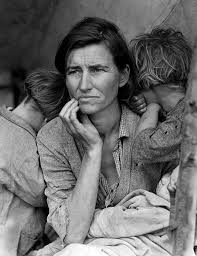
I have just started teaching a unit on media, specifically social documentaries. So far we have studied the important work of American photographer Dorothea Lange related to the rise and significance of “concerned photography” (also known as “compassionate photography”). Students have engaged deeply with the photos and answered questions adapted from New York Times Critical Lenses guide such:

  • What feelings does this photograph create for you, the viewer?
  • How personal/impersonal is this photo? What elements make it this way?
  • Why do you think this photograph was taken?
  • Is this photo timely? Does it have a timeless quality? Why or why not?

Photos of Lange’s we analyzed in class:

Migrant Mother, Photographed By: Dorothea Lange
Richmond, CA Photographed By: Dorothea Lange

Beyond studying the background of photo journalism, students will learn  the basic principles of photography (e.g., rule of thirds, movement, lines, etc.). Following this, students will have the opportunity to create their own social documentary in the form of a photo essay. Students are still thinking through topics, but they are to tell an “untold story” from their lives. Topics which we have brainstormed so far have included: The shifting landscape of the Regent Park neighbourhood in Toronto, Canada; Cultural traditions of the First Nations people in Ontario, Canada; and A Day in the Life of the Pan Am Games 2015.

I am looking forward to seeing what stories students decide to tell. I will keep you posted on the process! I am learning so much along with my students!