In both my experience teaching pre-service literacy courses and my current research with student teachers I (Lydia) have witnessed the sense of anxiety and discomfort many student teachers voice when they are faced with the prospect of teaching poetry during their practice teaching placements. Often, their associate teachers are themselves not comfortable with poetry and therefore, they have difficulty scaffolding the teaching of poetry or providing supportive resources for student teachers. This awareness has motivated Clare and I to delve into poetry within the first few weeks of the P/J and J/I literacy courses, in an effort to ease some of the initial anxiety student teachers experience in anticipation of teaching poetry. We attempt to provide multiple entry points into the teaching of poetry by presenting student teachers with various forms of poetry, and by highlighting the creative expression and emotive potential offered by this medium. We also provide them with a number of resources and pedagogical strategies they can utilize during their practice teaching placement. I recently picked up a copy of the book Love that Dog by Sharon Creech, which I hope to use in the literacy methods courses this year because the insight provided into how students might feel about reading and writing poetry is useful for both teachers and students. Throughout the book, the main character a young boy named Jack journals back and forth with his teacher Ms. Stretchberry, cleverly expressing his initial resist and eventual connection to poetry. Jack initially pronounces, “I don’t want to because boys don’t write poetry. Girls do”; however, through his ongoing dialogue with his teacher Jack experiments with word choice, sounds, and rhythm as he is engages with various poetic formats. My favorite entry in the book is “November 22.” Hopefully the student teachers in the literacy courses this year will enjoy this touching book as much as I did.
Google Doodles for FIFA World Cup 2014
Google’s daily doodles tend to put a smile on my (Pooja) face, as I suppose they are intended to do. The past eight days of Google’s doodles have been dedicated to the FIFA World Cup being hosted in Brazil. To keep pace with the World Cup, the doodles have been changing multiple times a day to reflect in real time what is happening in Brazil.
Google doodles are usually created in California, U.S.A. However, this is the first time doodles are being created outside of the U.S.A.: “[A] handful of the team’s 17 members are reacting almost in real time to games, results and events happening in the 12 World Cup venues.” (http://gadgets.ndtv.com/internet/news/google-doodles-go-international-with-fifa-world-cup-2014-544758)
Doodles are usually made months in advance, but to keep the doodles relevant they are being created only hours before we see them. The doodle team leader, Ryan Germick, stated:
This has never been done in real time response, there is not really an event so singular where the whole world is watching. The fact is that this is a singular sport, one game is on at a time and the whole world is fixated on one match and so it is a chance to be part of the dialogue. The part we are celebrating is that the whole world comes together.
Here are stills of my favourite Google doodles so far:
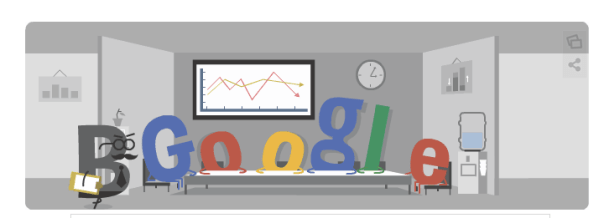
Today’s doodle was a familiar scene for many people working in offices all around the world:

This doodle is set in Rio De Janeiro’s favelas. The “L” from Google is kicking the soccer ball around by itself:

This doodle was featured on the first day of the World Cup. This moving doodle featured many of Rio de Janeiro’s famous sites:

Graduation Time and New Journeys Begin
It is that time of year again when thousands of University graduates wear their gowns and receive their degrees of academic achievement.
I (Yiola) work in the most amazing graduate/teacher education program. The Child Study and Education program (MA CSE) that is part of the University of Toronto (OISE/UT). The program’s vision, structure, and content, are premised on the child being at the centre of learning. How children learn and what research says about children’s learning are central to the program. The program looks at child development and learning and grounds these notions in the varied contexts (social, cognitive, spatial) that children experience. With this focus in mind, I teach a curriculum course and a teacher development/instructional methods course. Equity and inclusion, collaborative practice and professionalism frame my courses.
http://www.oise.utoronto.ca/ics/
This two year Masters level graduate program prepares teacher candidates for teaching in elementary classrooms (early years to sixth grade). The program now admits sixty students per year. Included here is a photo of some of our graduates at our graduation reception last week. This photo is taken in front of our beautiful and unique building, the McCarthy house, located at 45 Walmer Rd. in Toronto. It is an old Toronto mansion that not only houses the MA CSE program but also contains the Toronto Laboratory School and the Laidlaw Centre (faculty from the University of Toronto).
As I watched and celebrated with our graduates this year I heard of the many journeys that were upcoming: many are now on the Toronto District School Board hiring list and will be occasional teachers in Fall, some are going on to PhD programs, a few are traveling to places around the world to explore and contribute to schooling systems abroad (India, Brazil), some graduates are entering the independent school system. I wish every graduate much success and happiness as they embark on new challenges and adventures.
Mostly, I wish the graduates of the MA CSE program a continued sense of commitment and passion for instilling a love of learning, a sense of confidence and an “joie de vivre” in the lives of all the children they teach.

World Cup: A Global Celebration
 My (Clare) work productivity has taken a real tumble the past week with not much hope of it improving for the next three weeks. Watching the World Cup seems to have become my main occupation. For many years I have been a real fan of the World Cup. I was introduced to the World Cup in 1988; however, at that time, few games were broadcast because the television market in Canada was miniscule. Oh how things have changed. The entire tournament is now broadcast (and repeated throughout the night). The World Cup has its drama – questionable calls by the refs, diving players, FIFA’s “unusual” decisions, and rowdy fans. Nevertheless, I love the way the world comes together to cheer their team and join in a global celebration.
 At this point, I am not celebrating my team — Italy. Their recent play was lackluster as they lost to Costa Rica. But I will be watching them on Tuesday (probably on live feed on my computer at work) and if disaster strikes I will transfer my allegiance to another team. One of my dreams is to attend a World Cup game. I will probably never see Canada on this stage but I am still rejoicing in this amazing show of athleticism and strategy. In Toronto – the most multicultural city in the world – every team has a fan base. Many cars have flags attached to their car windows revealing their allegiance. I love that some cars wave flags for a number of teams. What team are you cheering for? Who do you think will win the tournament? (With Spain and England packing to go home the field has opened up.)
Exploring a Vision of Teaching with Japanese Student Teachers
 For many years, I (Clive) have had a connection with Kobe Shinwa Women’s University in Kobe, Japan. https://www.kobe-shinwa.ac.jp
The University has just established an International Education Research Center with a global perspective and I was asked to be a visiting scholar there. On Thursday I returned from a brief visit, having given lectures and engaged in discussions about our SSHRC longitudinal study of teachers and its implications for teacher education.
On Tuesday I conducted two classes with second year students. We discussed the growing sense of expertise among the teachers in our study, their decision-making about which topics to emphasize and how to teach them, their increasing emphasis on integration and individualization, and their search for a degree of work-life balance so they could “survive and thrive” as teachers and be a role model for their students.
 Despite the constraints of the national examination system, the student teachers were very interested in these ideas and seemed keen to explore them during their pre-service program and subsequently. They felt there was some room for flexibility within the system and they should begin during their preparation program to figure out how to take advantage of this flexibility as much as possible.
Kobe Shinwa Women’s University has an outstanding reputation for teacher education at the elementary level and a high proportion of their graduates get jobs immediately. This encourages the teacher candidates to think deeply about pedagogy because they have a good chance of having a classroom of their own in the near future.
Because of Mr. Terupt- I was touched
I’ve been striking it lucky with my pick of children’s literature lately. Because of Mr. Terupt is a juvenile fiction novel well worth reading to a junior level class. Also perfect as a sample novel for student teachers experiencing literature circles. This touching story, by Rob Buyea, brings up many discussion points regarding what makes a good teacher, plus many other school issues: diversity, inclusion, forgiveness, and bullying just to name a few. Terrific resource for ‘hot seat’ /role playing explorations. A must read for children’s literature fanatics like me!

Guest Blog: Living the Inter-generational Novice/Expert Flip Flop
 My (Monica) husband and I live with our two teenaged children. Anyone who is or has lived with teenagers knows that it can be challenging at times. I imagine that this dynamic has been difficult for many generations, yet I think this generation is living through a unique twist on an old problem. Teenagers have always been experts in their own world as compared to their parents. They know what is cool to say, wear and do, and their parents definitely do not. Traditionally, they knew a great deal less about the world their parents inhabited. However, now teenagers are also experts in aspects of their parents’ worlds. For example, just last week our 16-year-old daughter helped her dad with his business website, and our 13-year-old son taught me how to use Google docs for my research. In some ways, they are quite proud to be able to teach their parents something (to be the experts), and proud that we are doing our best to keep up with technical innovations in communication (eager novices), but they are also irritated when we ask them for technical help. Partly I think they are just annoyed that we are taking them away from whatever they were doing, but I also think they are a little uncomfortable dealing with their parents as novices. On the other hand, they are not too happy when we are experts either. They get annoyed when we are better able to navigate material that they have so expertly found on the internet. Our “expert” old-school skills of skimming for relevant information, synthesizing and evaluating material leave them exasperated. How dare we understand more about their world than they do! When I asked my kids how they would rate themselves and us on a scale of 1-10 regarding proficiency with ICT, they rated themselves a 10 and us a 4!
Recently (May 8, 2014), CBC’s The Nature of Things ran a fascinating documentary called Surviving 🙂 The Teenage Brain. They present a great deal of interesting research on teenagers and conclude that, “Today marks the first time in history when children are an authority on something really important – the digital revolution. With social media, human social evolution is unfolding before our eyes and under the leadership of teenagers.” Check it out: http://www.cbc.ca/natureofthings/episodes/surviving-the-teenage-brain
Rescue Time
Self tracking applications (e.g. Fitbit, Sleep Cycle, Moodpanda, MyFitnessPal) have gained much popularity over the past few years. People want to track how many calories they are consuming; how many steps they are taking; how many hours of deep sleep they are getting.
I was recently introduced to another self-tracking application, Rescue Time. This application monitors your computer and tracks usages such as hours spent on e-mail, hours spent writing, and hours spent on facebook (too many!) According to their website (https://www.rescuetime.com), Rescue Time believes their application can help you be the most efficient with your time:

On one hand, with so many possible distractions at play while working, I see that Rescue Time could be a useful tracking tool. However, on the other hand, I wonder if Rescue Time could add to my already long list of possible distractions!?
Has anyone used this application? What have been your experiences? I would love to hear from you!
Chronicles of a Parent & Teacher Educator on Full Day Kindergarten
Last Thursday was “Kindergarten Parent Information Night” at the school my Sylvia Clare is going to attend in September. I (Yiola) hugged my children goodnight at 6:45pm and I made my way over to the local elementary school. As I walked to the school I felt excited and interested to attend the information session and to hear about the priorities of the school. I know there are going to be at least 5 kindergarten classes; so, 5 x30 children equals 150 sets of parents… that makes for a room full of curious listeners. I walked into the school just past 7:00pm and was greeted in the front lobby by the principal. In the gymnasium sat about 80 parents and in the course of one hour we heard from the principal and all 5 kindergarten teams (teacher and early childhood educator).
Parts of the presentation that stood out :
1) Emphasis on Intentional Play – The principal provided wonderful examples and rationale of what play-based learning is about and why it is a powerful approach for early learning.
2) Emphasis on Inquiry – The principal spoke a lot on inquiry as part of the play-based program and that through intentional play children are engaged in inquiry
3) Outdoor time – Children explore, inquire and play outside everyday, for a good part of the day.
As an experienced pedagogy researcher and a teacher educator I was happy to hear all that was shared and felt that “in theory” this school has the elements that are not only in keeping with Ontario Ministry guidelines but are also evidenced-based best practice. I was hoping to hear more about the balance and connection between literacy and numeracy development and intentional play and inquiry. The principal spoke about how students develop language and literacy skills through intentional play but I also wanted to hear about time spent on phonics and phonemic awareness and whether or not these fundamental skills were taught with focus.
The teams of teachers shared rules and routines for kindergarten and the early years schedule. The schedules will go something like this:
Open Entry 8:40 – 8:55
Outdoor Play 9:00 – 9:30
Intentional Play/Inquiry 9:30 – 11:30
Lunch and Outdoor Play 11:30 – 1:00
Intentional Play / Inquiry 1:00 – 3:00
Outdoor Play 3:00 – 3:25
During the intentional play 6 curriculum areas are covered: Language, Mathematics, Science/Technology, Health and Physical Education, the Arts, Personal and Social Development. Again, how lovely it was for me to see a schedule that was designed for authentic integration of curriculum.
I then had the opportunity to tour the classrooms. Gone were bright primary colours and in their place were neutral tones and a good amount of natural and wood materials. Very little plastic. No “toys”. I sensed a good deal of Waldorf influence in the aesthetics of the room. I was able to see that the child is at the centre of the classroom — student work displayed throughout in tasteful and meaningful ways. Almost everything in the classroom, including the alphabet was student made, not store bought. Images of the children, their photos were also present in the room. The classrooms, 4 out of 5, were bright, spacious and inviting.
Next step: a letter is to arrive in the mail with details of an interview. Sylvia Clare and I are going to meet with her new teacher and be introduced to her classroom. This is to happen in August.
Overall I was impressed with what I heard and saw. I enjoyed speaking with the principal and some of the teachers. I am going to look into scholarly articles that discuss literacy development and intentional play so I am better prepared for what to expect in the daily life of the classroom. I am also going to write articles based on my own research — coming soon! Parents/grandparents/teachers/principals/teacher educators with early years/kindergarten experience — share your insights of FDK and interesting articles that connect FDK with literacy development.
The Future is Here: Social Media in the 21st Century
 Our Symposium was held at Tug Agency http://www.tugagency.com
Founded by Nick Beck Tug Agency is “a search marketing led agency, specialising in pay per click
advertising, biddable display, search engine optimisation, affiliates and
social media marketing.” (If this is a new world to you, definitely check out their website.)
A HUGE benefit of having the Symposium at Tug was the opportunity  to interact with some of the amazing staff. Nick found time to join our informal discussions on digital technology and teacher education. Luckily, two of his staff who specialize in social media found time to discuss their work with us. Eoin O’Neil and Simon Jenkins talked about “how” social media “works,” how search engines can use our past searches to “predict” what we might look at next, the complex formulas used by companies to identify patterns, and so on. Hearing from experts on the power and use of social media contributed to our discussion on place of digital technology in teacher education. Nick, Eoin, and Simon clearly showed that the “future is here” and we need very tech-savvy teachers who understand being digital citizens and the place of digital technology in education. We definitely made connections between teacher education and search engine optimization!
Please note that under the Connection Grant tab I (Clare) have added a photoarray from the Symposium; some of the ppt presentations; and some scholarly articles. More to follow.
 Literacy Teaching and Teacher Education

